BOOZHOO! We've amassed tons of information and important history on this blog since 2010. If you have a keyword, use the search box below. Also check out the reference section above. If you have a question or need help searching, use the contact form at the bottom of the blog.
We want you to use BOOKSHOP to buy books! (the editor will earn a small amount of money or commission. (we thank you) (that is our disclaimer statement)
This is a blog. It is not a peer-reviewed journal, not a sponsored publication... WE DO NOT HAVE ADS or earn MONEY from this website. The ideas, news and thoughts posted are sourced… or written by the editor or contributors.
EMAIL ME: tracelara@pm.me (outlook email is gone)
THANK YOU CHI MEGWETCH!
SEARCH
Showing posts with label adoptee narratives. Show all posts
Showing posts with label adoptee narratives. Show all posts
Growing up as an adopted child in a Jewish family in Winnipeg, Lisa Wilder knew she was different. She just didn’t know why.
She found out when she was in her mid-20s.
She was of Métis ancestry.
SUPPLIED by Lisa Wilder
“I felt misaligned as a child,” said Wilder, 53, who was part of the ’60s Scoop.
It wasn’t the fault of her family or the Winnipeg Jewish community, she said.
“I had a good upbringing, and my adoption was presented in a positive
manner by my parents,” she said. “I just felt something was off.”
Later in life, as Wilder learned more about her adoption, she
discovered her mother was 17 when she was born. Shortly after, her
mother was told Lisa would soon die. Hospital officials convinced her to
sign papers to pay for the burial.
But the baby was not dying. Instead, she was put into a foster home
where she was adopted by her new parents — who didn’t know she had been
“scooped.”
Today Wilder, a mother of three who now lives in Calgary, is on a
quest to learn more about her Indigenous roots and combine them with her
Jewish life.
There are similarities between the two, she said, adding both groups “suffered a genocide.”
She also noted that Indigenous people, like Jews in Nazi Germany,
were prevented from performing their ceremonies or celebrating their
spirituality. They were also confined to reservations, like Jews were,
for a time, confined to ghettos.
As she learns more about the Indigenous side of her heritage, she is
looking for ways to amalgamate the two. At the same time, although she
is of Métis ancestry, Wilder is careful not to call herself Indigenous.
“I’m not trying to pass myself off that way,” she said. “I have not
led an Indigenous life. I grew up Jewish. Métis is my ancestry. I’m
reaching out to Indigenous people for guidance. I want to learn more.”
Wilder spoke about her experience at a presentation called
Uncovering my Métis Roots: A Jewish Woman’s Journey.
“I’m a bit terrified to share my story in the community I grew up
in,” said Wilder, noting her adoptive parents, who were supportive of
her search for her biological family, will be there.
Her hope in sharing her experience is to promote understanding between Indigenous and non-Indigenous Canadians.
“I hope I can move the needle of awareness a little bit, to make this
a more peaceful and understanding world,” she said. “I’m no expert. I’m
just a person with a story who wants a better world.”
To register for the event, which is presented by the Jewish Federation of Winnipeg — Women’s Philanthropy, call 204-477-7426 or visit their website.
‘Growing up I kind of thought, why am I this lone person…”
Leah Ballantyne was just 11 days old when she was adopted out to a
Scottish family in Winnipeg – by the time she was 13, she was already
searching for her birth parents.
Riding the bus to school through Winnipeg’s downtown core, she would see Indigenous people and wondered if they were relatives.
“Growing up, I kind of thought, why am I this lone person and adopted
into a family? Why didn’t my family want me and what were the
circumstances? And as I learned that the ‘60s Scoop was actually a part
of a process that started with reservations, and the Indian Act, and
residential schools, and day schools,” she says on the latest episode of
Face to Face.
“Then I realized that I was part of something that was a separation that was going on through government policy.”
The push to finally find out where she came from came after an event in Vancouver.
She says she was inspired by speeches by former Assembly of First
Nations national chief Ovide Mercredi and Mohawk Council of Kahnawake
grand chief Joe Tokwiro Norton
After, she went digging into her past.
Ballantyne’s birth mother had registered her for a status number at birth so she knew she was from Mathias Colomb Cree Nation. She wrote the chief at the time, the late Pascal Bighetty, asking for help.
Not long after, Ballantyne received a call from Bighetty, who, as it
would turn out, was her uncle, telling her he knew who she was and to
come home.
Advocating for her community
Ballantyne says the rally and reunification with her community, a
“light went on” and she decided she would push for positive changes in
law and policy by becoming a lawyer.
To this day, Ballantyne remains the only member of Mathias Colomb
Cree Nation to become a lawyer. She is currently working with her nation
on child welfare laws and bringing children home, whether they were
part of the 60s Scoop, aged out of the care, or still in care.
Ballantyne is vocal about representation and believes those who falsely claim Indigenous identity, should face criminal charges.
“There is a couple of sections in the Criminal Code of Canada for
identity and identity fraud and so Indigenous identity fraud is very
much a charge that could be laid by any institution that has addressed
this kind of issue and people that are claiming false Indigenous
identity,” she says.
“And there is no statute of limitation on this type of identity fraud within the Criminal Code.”
NEYAASHIINIGMIING — Kegedonce Press proudly announces the release of These are the Stories: Memories of a 60s Scoop Survivor by
author, editor and journalist Christine Miskonoodinkwe Smith. This
timely collection of auto-biographical essays addresses a topic that has
gained increasing attention in Canadian news and cultural media; the
historical and ongoing treatment of Indigenous children in Canada.
Miskonoodinkwe Smith relates her experiences in the child welfare
system after she and her siblings were taken from her mother on Peguis
First Nation. The stories describe the author’s failed adoption by a
non-Indigenous family, her quest to find her birth mother, and address
the lasting harm caused by the seizure of First Nations children from
their homes and communities. While this is a story of the lamentable
failures of the Canadian Child Welfare system, it is also one of hope,
as Miskonoodinkwe Smith relates her journey towards home and healing.
Cynthia Wesley-Esquimaux, Chair for Truth and Reconciliation, Lakehead University writes:
“Christine’s story illuminates a pathway trod by far too many
Indigenous children over the last 100 years. When Indian Residential
Schools didn’t ‘kill the Indian in the child’, Child Welfare agencies
stepped in to finish the job. There was light; however, in the darkness
for Christine. Light that healed her brokenness through kindness, the
connection of friends, and the reconstitution of a family. Lost and
found, and lost again is a tragic summary of her experience of being
scooped, to abandoned, to finding solace in the arms of a mother who
died far too soon. Still, her strength shines through in her hope, her
joy of storytelling, and her endearing ability to break open the hearts
of those around her. She has a rare courage, and I’ve always admired her
ability to show us all how it’s done, because this is a woman who truly
understands how to ‘walk in beauty.’”
Christine Miskonoodinkwe Smith is a Saulteaux woman from Peguis First
Nation who currently lives in Toronto. She graduated from the
University of Toronto with a specialization in Aboriginal Studies and
received her Master’s in Education in Social Justice. Her first
non-fiction story, Choosing the Path to Healing, appeared in the 2006
anthology, Growing Up Girl: An Anthology of Voices from Marginalized Spaces. She has written for the Native Canadian, Anishinabek News, Windspeaker, First Nations House Magazine, New Tribe Magazine, Muskrat Magazine, and the Piker Press.
Kegedonce Press hosted an online book launch for These are the Storieson
January 22 with moderator Nathan Niigan Noodin Adler and introduction
by Cynthia Wesley-Esquimaux. Details on Facebook @60sScoopBookLaunch.
Kegedonce Press is a dedicated Indigenous publisher, based in
Neyaashiinigmiing and Owen Sound, Ontario. It has been publishing books
involving Indigenous peoples at all levels of production since 1993.
As a child of the ’60s Scoop
who was beginning to re-discover her birth family, Betty Ann Adam
thought journalism was a good profession to pursue. Adam, who was raised
in a non-Indigenous home, was looking to discover who she was as an
Indigenous person and learn more about Indigenous people.
But, Adam didn’t just want to be the “Indigenous reporter” in the
newsroom, despite being the only Indigenous person reporting for the
Saskatoon Star Phoenix at the time.
“I felt a bit like they wanted to assign me to the Indigenous stories
and I didn’t feel ready to do that at that point,” says Adam on the
latest episode of Face to Face. “I hadn’t trained as a journalist. I had
done some work and they saw some potential, so they gave me that
opportunity.
“But, I didn’t feel comfortable doing Indigenous stories,
exclusively, because I just felt at a disadvantage and I sometimes felt
as though Indigenous people that I interviewed expected me to understand
them, more than I did at that time.”
In 1989, Indigenous representation in newsrooms in Canada was pretty
sparse says Adam who felt she didn’t have a lot of power to influence
the way stories about Indigenous Peoples were being told.
Adam says she noticed things beginning to change following the
criticism newsrooms received over coverage of the crimes of Saskatoon
serial killer, John Crawford.
That criticism was documented in Warren Goulding’s 2001 book, Just Another Indian: A Serial Killer and Canada’s Indifference.
Adam worked at the Star Phoenix for three decades covering a range of issues.
Many big stories stick with her including the Neil Stonechild
inquest, the Saskatchewan Treaty Land Entitlement framework agreement,
the so-called Spiritwood Incident where two RCMP officers were shot and
killed by Curtis Dagenais, and the wrongful conviction of David
Milgaard.
Adam broke the story on the practice of coerced sterilization of
Indigenous women without free and informed consent. The practice is now
the focus of a class-action lawsuit.
Despite stepping away from the daily news grind, Adam has not slowed
down. She has taken on the role of associate editor with Eagle Feather
News.
Adam, who is a member of Fond Du Lac Denesuline First Nation, is also working on the latest season of Connie Walker’s podcast, Stolen.
Adam is also the chair of the Sixties Scoop Indigenous Society of Saskatchewan that recently released Everything is Connected,
a documentary that highlights how intergenerational trauma and the
separation of Indigenous children from their families are connected to
the issue Missing and Murdered Indigenous Women and Girls.
“It starts with the residential schools and that was often leading to
former students whose children got scooped. And then those same
families would have people who were dying in this terrible scourge of
MMIW. And we thought it was important for Canadians to understand that
these things don’t happen in silos,” says Adam.
“All of the negative issues that face Indigenous people can be linked to government policy.”
Everything is Connected is not the first documentary Adam has worked on. Filmmaker Tasha Hubbard’s 2016 film, Birth of a Family documents Adam and her birth siblings, meeting together for the very first time.
“Birth of a Family was a great experience. When I see it, it’s like
seeing the best ever family holiday album that you ever saw but it was
our family being together for the first time. And in fact, this past
Christmas, my sister Rose came to Saskatoon and it was the first
Christmas in any of our lives where two of us at least ever got to be
together for Christmas and she stayed through New Years.
“You know, Sixties Scoop people are surviving and thriving and we’re
trying to find our way back to family and community. And there are
stories of happiness, joy and hope too.”
After the
residential school in Nova Scotia closed in the late ‘60s, Debbie Paul
was kidnapped by a nun and brought to a white family in the U.S. She
always told people this, but was missing the evidence. Until now.
By Trina RoacheJan 4, 2022
WARNING: This story contains distressing details.
Standing at the site of the former Shubenacadie Indian Residential
School in Nova Scotia, Debbie Paul clutches a black and white picture of
herself taken when it shut down in June 1967.
Paul was the last Mi’kmaw student to leave.
“This picture was taken to give to my mother and my mother never
received it,” said Paul, who lives in the Sipekne’katik First Nation,
just five kilometres away from the former residential school.
In the photo, she is 12 years old, wearing new shoes and a new watch,
unaware her life was about to take an incredible turn. Rather than
return Paul to her mother, a nun with the Sisters of Charity – Halifax
took her without consent to live with a white family in the United
States.
When Paul pushed for answers years later, her mother said she just
never came home when the school closed. “She signed no papers for me to
be adopted out or taken across the United States border,” said Paul.
Debbie Paul, age 12, outside
the Shubenacadie Indian Residential School on the day it closed in June
1967. (Submitted by Debbie Paul)
After the residential school closed
and the rest of the students left, that nun, Sister Mary Gilberta, kept
Paul back at the institution. Paul says she told her to keep out of
sight. Within days, they left for the airport.
Paul would spend the next year with Sister Gilberta’s brother, John Wentworth, and his wife, Mary, in Massachusetts.
“They took me without permission,” said Paul. “And all that family did was abuse me.”
Debbie Paul survived the residential school only to become part of
the Sixties Scoop, the practice of adopting or fostering Indigenous kids
to white families.
Canada signed a class-action settlement agreement in 2017 and within a
year, survivors of the Sixties Scoop, like Paul, were able to apply for
compensation.
“I think I deserve it, to live the end of my life,” said Paul, who is now 66. “Because I went through hell.”
But in March 2020, her claim was rejected. She wasn’t told why, but
she has a strong suspicion. Collectiva, the administrator for the
Sixties Scoop class action settlement, can access adoption and foster
records, which for the most part are held by the provinces. But Sister
Gilberta acted on her own, leaving no apparent paper trail.
Kim Wheeler was adopted during the Sixties Scoop and fought to find her way back to her culture
My name is Kim Wheeler but some know me as Kim Ziervogel. Others will remember me as Kim Bell, and to a small group of people I will always be Ruby Linda Bruyere. But the name game doesn't stop there. Why would someone have so many different names? Are they all aliases? Are they hiding from their past? From the law?
In my case, it's none of these. I'm a Sixties Scoop survivor and those names were given to me through birth, adoption and two marriages.
Dark painful secrets
A lot of things go unsaid
because I've handled my trauma so well, I think. I've been told often I
am a well-adjusted human. It comes from how I was raised and all the
dirty secrets I had to keep in my childhood. Victims of sexual abuse are
great at keeping secrets. At least I was.
My adopted father
turned out to be a pedophile. It's something even until last year, my
oldest adopted sibling and I argued about. That is, until I went into
graphic detail about the abuse inflicted on me and then she seemed to
accept it was the right term.
My
adoptive mother was a different case. She was psychologically abusive.
She wore me down until all I could be was a "yes" person to everyone I
met. It wasn't until I was in my 30s that I started to stand up for
myself and began to say "no" to people. To this day, I still struggle
with saying no, although some people wouldn't believe that. It's an
internal process that unfolds in milliseconds.
My brother, who
is also First Nations, was adopted as well. Our adoptive parents would
drive us down to Logan Ave. and Main Street in Winnipeg and point out
the Indigenous people who were homeless or living marginally.
“My
problem is secrecy. I believe that perpetually secret adoptions assure
un-accountability and lack of transparency. And secret adoptions are only the
tip of the iceberg. The secrecy permeates the process: secret identities,
secret parents, secret records, secret foster care providers, secret social
workers, secret judges and lawyers (all their identities are sealed, typically), secret
physicians, secret statistics and, in the case of some adoption-oriented
organizations, secret budgets and secret boards of directors. In any social
practice, when people in positions of power hide behind masks, one can be
pretty sure that they have something to hide.”
-Albert S. Wei, Special Advisor to the Bastard
Nation Executive Committee
“Storytelling is an
important aspect of Ojibwe culture. My ability to tell a good tale can be used
as a tool for teaching and connecting. Even though I grew up outside of my Native
community and culture, my stories helped me to become a part of the community
that I had lost. Adoption is part of the contemporary tales that Native people
need to tell…”
- Tamara Buffalo, published
author-poet-visual artist
“Everyone has a right to knowledge
about their lineage, genealogy and identity. And if they don’t, then it will
lead to cases of incest...”
-Lord David
Alton quoted after married adoptee twins were granted annulment in Great Britain (January 2008)
“We, as adoptees and birth
mother’s, have become so conditioned to keep quiet and take the living in shame
as just a part of our life that we don’t unite. As if we are not allowed to
unite. The fear and stigma is so incredibly strong, it is all controlling. I
truly don’t think adoptees realize this.”
- 73Adoptee Blog: Chynna Girl, November 14, 2008 [www.blogger.com/comment]
🔺I saved these quotes I used in my memoir One Small Sacrifice - they speak volumes and as you can see they are from 2008 and earlier... Trace
in the next few posts you will learn more about complex PTSD like this:
"With life's depradations, perpetrated against the vulnerable, the Great
Mystery is raising an amazing group of whom I coin 'Warrior Survivors'.
As the chief of the Turtle Island Warrior Society, and advocate for
Sky, Earth and All In Between, I also stand with these Survivor Warriors
in what in all reality is a battle against the crimes of abuse
perpetrated by those whom we are supposed to trust. In my journeys, I
met such a warrior. Her name is Annie O'Sullivan; an extraordinary human
being, with Sacred Fire which burns in her. Annie tells her story
eloquently, bringing readers, or listeners, to a place and time beyond
one's own realities. She takes us successfully out of the comfort zone,
and into a world of such cruel reality as to make it virtually
experiential. Yet, through the truth of her ordeals, this Warrior
Survivor shines with strength, power and hope - not just for herself -
but for all who have been through literal hell on Earth. It is a great
honor to know Annie, and I know that through her story, you will come to
know - and honor her - too." —Chief David Little Eagle, The Turtle
Island Warrior Society
Adoptee Annie O’Sullivan was born in the New England area. Growing up in a
military family she travelled much of the US with her family as they
followed her father’s military career. Soon after graduating from high
school she left to serve in the USMC. While on active duty she married
had two children attained the rank of Sergeant and ultimately entered
therapy. In the end Annie would log ten years of counseling, private,
group and hospitalization.
June 29, 2018; Indian Country Today
The stories mass media tells about Native Americans tend to be
inaccurate, if any stories are told at all. New, old, and emerging
sources present narratives that are both conflicting and inaccurate. We
are shown images of people who are impoverished and people who have become rich from casinos; the noble warrior and the
savage warrior. Last week, a report was released by a project that has
set out to identify, understand, and strategize to dispel these images.
As reported by Indian Country Today,
First Nations Development Institute and Echo Hawk Consulting released a
report that shares research conducted with support from the Kellogg
Foundation, the Robert Wood Johnson Foundation, and others. “Reclaiming Native Truth: A Project to Dispel America’s Myths and Misconceptions” looks at how Native Americans are perceived and some ways to change and improve the accuracy of those perceptions.
In its coverage of the report, Indian Country Today highlights four takeaways:
Discrimination: Only 34 percent of Americans
believe that Native Americans face discrimination. On the other hand,
images of wealth from Indian gaming and free hand-outs by the federal
government fuel bias.
Narratives: According to the research, few people
have experience with Native Americans, but instead accept negative
images others present. Oddly, these negative perceptions rise with
proximity to Native communities. Only 56 percent of those living near
Native communities feel that the federal government should do more to
help, compared to 64 percent of those who live further away.
Invisibility: Many consider Native Americans part
of a “romanticized past.” Their invisibility in almost all aspects of US
society worsens this.
Desire for Complete History: People are aware that
they do not know enough about Native American culture and history, and
most (78 percent) want to learn more.
The report stresses how important it is for Native Americans to
reclaim the narrative and change it to more accurately reflect the
truth. For those who are ready to change the dominant narrative, there
are two guides that accompany the research report: One for Native peoples and their organizations, and another for engaged allies.
The latter guide presents a framework for allies to tell stories and
explore issues using four specific elements: values, history,
visibility, and a call to action. It shares some example stories
structured in that fashion.
Here is an example from the report,
stressing the importance of upholding the Indian Child Welfare Act:
All children deserve to be raised by loving families in supportive
communities, surrounded by the culture and heritage they know best. In
Native cultures, family is defined very broadly. Everyone plays an
active role in raising a child and is ready to help in times of crisis.
(Values)
But when the U.S. child welfare system was created, it was biased
against raising a child in this way—as a community. As a result, the US
government removed Native children from their families—not because of
abuse or neglect, but because of this communal way of being. The Indian
Child Welfare Act (ICWA) was passed in 1978 to prevent Native American
children from being unjustly taken away and adopted outside their
culture. (History)
Today, however, ICWA is not consistently respected. (Visibility)
We need to uphold and improve the law to make sure we are doing what is best for Native children. (Call to action)
Mark Trahant, editor of Indian Country Today and author of
the article, says that a master narrative is important because it sets
the overall tone—it “tells each of us what’s right, what’s fair, and how
we all fit into a larger story.” But he also states that Native people
must not simply consume the story, they must tell it and make sure it is
based on Native truths. The call to action for allies is to make sure
we do what we can to raise the visibility of those truths.—Rob Meiksins
Remember this photo? In the big world out there, few people even knew about the Indian Child Welfare Act until Baby Veronica was adopted out... Then headlines were screaming for months. Indian Country responded and fought back using the federal law but even that wasn't enough to allow a Cherokee father to keep and raise his own daughter.
I have wanted to say something about the RadioLab program/podcast about Baby Veronica and the Supreme Court Case. This was a few years ago and rebroadcast a few days ago.
More
Perfect presents: Adoptive Couple v. Baby Girl
I spoke with the interviewer. He didn't use one word of my story in his RadioLab report. I have no clue why not. I did give him names of other adoptees he could speak to... He spoke to many many people and quoted them but not one adoptee! I recall I told him I was Baby Veronica just 50 years later. My dad would have raised me. There was no Indian Child Welfare Act when I was adopted by strangers. I was traumatized. I was not going to stop looking for my family, even if my records were sealed in Wisconsin and Minnesota. I was one of thousands who lost their family connections and tribal connections. I didn't want Veronica to go through what I did. Our culture matters and adoption steals years of our lives.
These Goldwater and RadioLab people didn't and don't want to hear me, or adoptees (young or old). They simply don't. Their bias is blaring. (It's been drilled into their minds how adoption is always good and saving poor kids.)
I wrote an essay in 2013 about this case and submitted it to the Atlantic editors but they didn't publish it. WHY? I didn't get a reason but it's clear...they don't consider Indians and adoptees interesting enough or news-worthy, let alone a federal law concerning Indians.
Finally (with utter frustration) I sent it to Indian Country Today Media in New York. They published it.
I’m a “lost bird," one of thousands of Native children adopted-out of
tribal communities from the late 1950s to late 1960s as part of a
federal program called the Indian Adoption Projects. The Project came
after the decades long boarding school era when government and
missionary schools aimed to “kill the Indian to save the child.”
Read more at https://indiancountrytodaymedianetwork.com/2013/08/12/baby-veronica-case-david-vs-goliathIs that fair reporting and analysis if "THEY" (the mainstream radio, TV, newspaper media) don't consider WHY there is an ICWA? Have they considered Baby V will grow up and not be a child anymore and imagine her loss of family and culture? Who better to ask than an adoptee who has lived through it? Why are they ignoring the ADOPTEE STORY in this story? In San Diego a few weeks ago, Diane Tells His Name, Leland Kirk, Karen Vigneault, Tom Lidot (Tribal Star) and I had breakfast and we discussed this. (We were together, presenting at the California State ICWA Conference on June 7, 2016.)
"...There is an ICWA because of us, all the American Indian Adoptees, Lost Birds, Stolen Children, 60s Scoop, and Indian Adoption Project adoptees. WE are the reason there is a law. We are still called the Stolen Generations. We are the second phase of atrocities committed against Indian People before during and after the boarding schools. (WE were supposed to permanently disappear in closed adoptions with sealed records, living "happily ever after" with our white parents.) There is a federal law ICWA because of us, because adoption trafficking in Native babies and children was clearly genocide. With ICWA, there will be many less adoptees... We get that; in Indian Country we know this."
“And finally this, when the sun was falling down so beautiful we didn’t have time to give it a name, she held the child born of white mother and red father and said, ‘Both sides of this baby are beautiful.’”
—Sherman Alexie
The ICWA Penalty Box: In Defense of Equal Protection for Indian Children By Timothy Sandefur (Goldwater Institute) used this quote.
Sheila Pelletier in
her home in Regina on Friday. She is an adoptee who was part of what is
now known as the 60s Scoop. (TROY FLEECE / Regina Leader-Post)
By Kerry Benjoe, Leader-Post March 23, 2015
After years of rejection, a self-professed loner’s life changed after a single phone call.


Two weeks ago, Sheila Pelletier composed the most important Facebook post of her life:


“My
 (birth) name is Sheila Jean Marie Halkett ... I was born in 1982 in
Prince Albert. I am from Montreal Lake First Nation ... Possible birth
date of mother was April 21, 1948. Please share if you might have any
information. Please call me ... Sheila. Thank you.”


It was a bold move but after three decades she was ready to find out the truth about her First Nation family.


“I didn’t think I would get a response so fast,” said Pelletier, who is still in shock.


She had been told by government agencies it would take about three years to get any information about her birth family.


Hours after her post, her phone rang and a man asked for her by name.


“I said, ‘This is Sheila,’ ” she said. “He said, ‘I am Howard Halkett. I’m your uncle. We’ve been looking for you.’ ”


Pelletier says she is part of what has become known as the 60s Scoop.


“In
 Saskatchewan, we had the Adopt an Indian or Metis program that was
started in the late 1960s,” said Tara Turner, assistant professor for
the School of Indigenous Social Work at the First Nations University of
Canada.


As part of the program, aboriginal children were taken from their birth families and adopted out to non-aboriginal families.


“It was just a re-imagining of the residential school system,” said Turner.

She
 said isolating aboriginal children from their culture is not healthy
because it impacts their ability to understand themselves.


“It’s
really difficult for people to navigate identity when it’s been removed
from them,” said Turner. “Then finding your way later in life,
reconnecting with family or community. That’s not necessarily
straight-forward or easy for people.”

Pelletier, who was raised on
 a farm in Theodore, initially had no idea her Ukrainian father and
British mother were not her biological parents — until she started
school.


Pelletier’s earliest memories are not pleasant.


“I was called, ‘Squaw and dirty indian,’ ” she said. “I didn’t know what those words meant.”


Pelletier told her parents and it was then she was told about her adoption.


Being
 the only aboriginal person in the area was far from easy and although
her parents did try to defend her — often that only made things worse.


“Even if I had a bad day, I would say I had a good day.” said Pelletier.


After
 elementary school, she attended high school in Yorkton and although
there were other aboriginal students in Yorkton, they rejected her
because they thought she was “too-white.”


It was a lonely life.


“I learned to keep to myself,” said Pelletier. “I am still like that. I don’t like people.


She has begun to rethink that attitude.


To hear there were people looking for her and wanting to meet her has been overwhelming.


“I just want to go there and meet them and give them a hug,” said Pelletier.


Prior to speaking with her uncle, all she knew about her birth family was from her adoption records.


When Pelletier turned 18, her mother gave her the papers.


“I’m surprised I never lost them,” she said.


For the past 14 years, she has read and reread the information, but they never provided her any answers.


Pelletier has discovered that she is the youngest of nine — four brothers and four sisters.
However, it is not all happy news.


Her mother Hilda Bird passed away in 2006.


“I didn’t know how to feel about that, you know?” said Pelleter before the emotion took over. “I didn’t know her.”


She has also lost one sister and one brother.


Pelletier
 does not want to waste any more time and plans to make a family trip
this summer, which includes a visit to her mother’s gravesite.


Although
 she has a good relationship with her adopted parents, she feels
relieved to finally connect with her First Nation family.


Pelletier
 said it was also a relief to finally tell her own children about her
past and is looking forward to sharing a new future with them, one with
even more family.


She also hopes her story will encourage other adoptees to reach out and find their family before it’s too late.
South Carolina court drops contempt charge against Dusten Brown Dusten Brown and the Cherokee Nation rea...
Bookshop
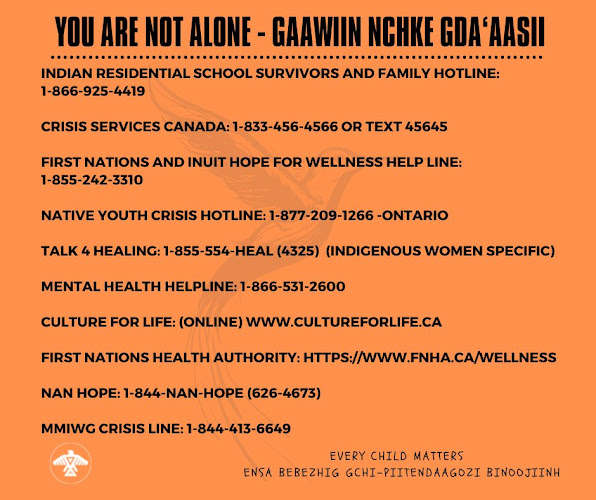
You are not alone
To Veronica Brown
Veronica, we adult adoptees are thinking of you today and every day. We will be here when you need us. Your journey in the adopted life has begun, nothing can revoke that now, the damage cannot be undone. Be courageous, you have what no adoptee before you has had; a strong group of adult adoptees who know your story, who are behind you and will always be so.
Diane Tells His Name
click photo
Lost Birds on Al Jazeera Fault Lines
click to read and listen about Trace, Diane, Julie and Suzie
NO MORE STOLEN SISTERS
click image
We conclude this series & continue the conversation by naming that adoption is genocide. This naming refers to the process of genocide that breaks kinship ties through adoption & other forms of family separation & policing 🧵#NAAM2022#AdoptionIsTraumaAND#AdopteeTwitter#FFY 1/6 pic.twitter.com/46v0mWISZ1
As the single largest unregulated industry in the United States, adoption is viewed as a benevolent action that results in the formation of “forever families.” The truth is that it is a very lucrative business with a known sales pitch. With profits last estimated at over $1.44 billion dollars a year, mothers who consider adoption for their babies need to be very aware that all of this promotion clouds the facts and only though independent research can they get an accurate account of what life might be like for both them and their child after signing the adoption paperwork.











 Posts
Posts

