They Took Us Away

They Took Us Away
click image to see more and read more

it's free

click

How to Use this Blog

BOOZHOO! We've amassed tons of information and important history on this blog since 2010. If you have a keyword, use the search box below. Also check out the reference section above. If you have a question or need help searching, use the contact form at the bottom of the blog.


We want you to use BOOKSHOP to buy books! (the editor will earn a small amount of money or commission. (we thank you) (that is our disclaimer statement)

This is a blog. It is not a peer-reviewed journal, not a sponsored publication... WE DO NOT HAVE ADS or earn MONEY from this website. The ideas, news and thoughts posted are sourced… or written by the editor or contributors.

EMAIL ME: tracelara@pm.me (outlook email is gone) THANK YOU CHI MEGWETCH!

SEARCH

Showing posts with label form of genocide. Show all posts

Monday, December 9, 2024

COST CUTTING: Federal government nickel-and-dimes Indigenous Peoples

THINH NGUYEN
In an example of Ottawa’s cost-cutting and penny-pinching when it comes to spending on First Nations concerns, only five per cent or so of the government’s promise to spend $724 million on supporting Indigenous women and girls with new shelters and transitional housing has so far been spent.

Back in July, the governing Liberals decided to quietly announce they were cutting funding to Indigenous searches for unmarked children’s graves around residential schools.

Indigenous communities were initially offered up to $3 million per year to help defray the costs of identification.

However, the federal government chose to cap those funds — in the absence of any consultations with Indigenous leaders — at $500,000. Thankfully, the Trudeau government reversed course in August and restored the original funding allotment of $3 million.

It is instructive to note that Ottawa has constitutional competence for — and thus a fiduciary responsibility to — Indigenous Peoples in Canada.

All of this got me thinking about one of the most enduring features of Indigenous/non-Indigenous relations in Canada — namely, the federal government’s obsession with pinching pennies when it comes to our Indigenous communities.

DELIBERATE FRAMEWORK

One of the critical areas of investigation around this topic is fully understanding its key drivers.

Why would monetary considerations be top of mind for colonial and Canadian governments for hundreds of years? What should we infer from that fixation with dollars and cents?

Significantly, I’m not talking about budget constraints, lower reserve costs, special circumstances or an increase in wealthier Indigenous communities.

I’m suggesting there has been a deliberate and ongoing mindset in Ottawa that starts with this premise: How do we find ways to cut funding for Indigenous Peoples?

The whole point of colonial and Canadian government policies toward Indigenous Peoples was to assimilate them and, if that didn’t work, to eradicate them outright. (kill off)

That way, the federal government’s “honour of the Crown” and its fiduciary commitment would come to a screeching halt. Crudely put, the costs associated with “Indian status” would no longer be necessary.

SEVERING BONDS

Residential schools in Canada were intended, among other things, to sever the bond between Indigenous children and their parents and reserve community. As they assimilated into white society, this would eventually lead to fewer First Nations people on the government’s payrolls.

The schools (many were of poor construction and deadly firetraps) were a case study in cost-cutting: Indigenous children constantly complained of being hungry and cold and often went without medications. Even when children died at these schools, the government refused to pay the costs of returning them to their Indigenous families.

Similarly, the horrible “Sixties Scoop” was a continuation of this same line of thinking: force Indigenous kids into foster care and foreign adoption to reduce costs over time.

The federal government moved in the late 1950s with the express intention of saving money by turning the care and welfare of Indigenous children over to provincial child protection services.

With respect to the National Inquiry into Missing and Murdered Indigenous Women and Girls, the Trudeau Liberals have been excruciatingly slow in implementing many of the final report’s 231 “calls for justice.”

Only five per cent or so of the government’s promise to spend $724 million on supporting Indigenous women and girls with new shelters and transitional housing has been spent.

From the advent of colonial governments in Canada in the mid-1700s, each one has sought to reduce expenditures for Indigenous Peoples. Officials in the old Department of Indian Affairs — long before its current iteration as the Department of Crown Indigenous Relations — were always crunching the actuarial numbers to identify when payments to Indigenous communities would finally end.

Don’t forget the cost-savings sought through violating solemn treaties, withholding annuity and land dispossession payments, building low-budget “Indian hospitals” and even denying benefits for returning Indigenous soldiers from the world wars.

Much of the cutting of Indigenous monies is consistent with a colonial mindset or project that has devalued, dehumanized and degraded Indigenous Peoples from the very beginning.

The racist rationale was simple: they were only going to die off anyway, they would forever be ””uncivilized,” pagan “savages,” they would never be smart enough to know what to do with the land and financial resources, and they would always be expendable, largely invisible and, most assuredly worthless.

I’m sure that I’ve missed many other examples of damaging government cost-cutting. But one common theme that is painfully obvious is that Canadian governments have historically sought to short-change Indigenous Peoples.

In the end, the First Peoples just weren’t worth spending government money on. You have to conclude that the real power brokers of this country never really accorded them much value from the outset.


Friday, November 22, 2024

My family experienced Indian boarding schools – and genocide

By Rosalyn LaPier  | 11/20/2024

This article was originally published by The Conversation and is republished here by permission. Read the original article.

I am a direct descendant of family members that were forced as children to attend either a U.S. government-operated or church-run Indian boarding school. They include my mother, all four of my grandparents and the majority of my great-grandparents.

On Oct. 25, 2024, Joe Biden, the first U.S. president to formally apologize for the policy of sending Native American children to Indian boarding schools, called it one of the most “horrific chapters” in U.S. history and “a mark of shame.” But he did not call it a genocide.

Yet, over the past 10 years, many historians and Indigenous scholars have said that what happened at the Indian boarding schools “meets the definition of genocide.”

From the 19th to 20th century, children were physically removed from their homes and separated from their families and communities, often without the consent of their parents. The purpose of these schools was to strip Native American children of their Indigenous names, languages, religions and cultural practices.

The U.S. government operated the boarding schools directly or paid Christian churches to run them. Historians and scholars have written about the history of Indian boarding schools for decades. But, as Biden noted, “most Americans don’t know about this history.”

As an Indigenous scholar who studies Indigenous history and the descendant of Indian boarding school survivors, I know about the “horrific” history of Indian boarding schools from both survivors and scholars who contend they were places of genocide.

Was it genocide?

The United Nations defines “genocide” as the “intent to destroy, in whole or in part, a national, ethnical, racial or religious group.” Scholars have researched different cases of genocide of Indigenous peoples in the United States.

Historian Jeffery Ostler, in his 2019 book “Surviving Genocide,” argues that the unlawful annexation of Indigenous lands, the deportation of Indigenous peoples and the numerous deaths of children and adults that occurred as they walked hundreds of miles from their homelands in the 19th century constitute genocide.

The mass killings of Indigenous peoples after gold was found in the 19th century in what is now California also constitutes genocide, writes historian Benjamin Madley in his 2017 book “An American Genocide.” At the time, a large migration of new settlers to California to mine gold brought with it the killing and displacement of Indigenous peoples.

Other scholars have focused on the forced assimilation of children at Indian boarding schools. Sociologist Andrew Woolford argues that scholars need to start calling what happened at Indian boarding schools in the 19th and 20th century “genocide” because of the “sheer destructiveness of these institutions.”

Woolford, a former president of the International Association of Genocide Scholars, explains in his 2015 book “This Benevolent Experiment” that the goal of Indian boarding schools was the “forcible transformation of multiple Indigenous peoples so that they would no longer exist as an obstacle (real or perceived) to settler colonial domination on the continent.”

A black and white photo shows students seated in rows in a classroom, while the instructor is standing in front.
First- and second-grade students sit in a classroom at the former Genoa Indian Industrial School in Genoa, Neb. Researchers are now trying to locate the bodies of more than 80 Native American children buried near the school. National Archives/AP

Indigenous writers have explained how this transformation at Indian boarding schools occurred. “Federal agents beat Native children in such schools for speaking Native languages, held them in unsanitary conditions, and forced them into manual and dangerous forms of labor,” writes Indigenous law professor Maggie Blackhawk.

Friday, September 13, 2024

Inuit Voices: What is lacking is political will #MMIWG

Pauktuutit leader calls for Inuit voices to be heard in fight against violence

Nancy Etok shares experience from meeting with Indigenous women from U.S., Mexico earlier this month in Mexico City

Pauktuutit president Nancy Etok, left, speaks at the Sixth Convening of the Trilateral Working Group on Violence Against Women and Girls in Mexico City, which ran Sept. 3 and 4. (Photo courtesy of Pauktuutit Inuit Women of Canada)

By  Kierstin Williams

Inuit voices must be included in conversations about ending violence against Indigenous women, girls and gender-diverse people, says Pauktuutit president Nancy Etok.

Etok attended a trilateral working group that included representatives from Canada, the United States and Mexico on Sept. 3 and 4 in Mexico City on behalf of Pauktuutit Inuit Women of Canada, the national non-profit Inuit women’s organization.

The meeting aimed to address the alarming rates of violence against Indigenous women and girls.

“We were able to share what kind of work we do at Pauktuutit,” Etok said, adding she also had the chance to listen to what Indigenous women had to say about finding solutions.

“If I were to close my eyes and just listen, all women were facing all of the same struggles with violence,” she said.

The trilateral working group was established as a result of the North American Leaders Summit in June 2016, which brought national leaders from Canada, the U.S. and Mexico together to discuss the “alarming” rates of violence against this demographic, a joint statement from the group released Sept. 5 said.

This month’s meeting marked the sixth time the working group has convened.

Etok said the discussions in Mexico City highlighted the ongoing failure by governments to implement promises made to Indigenous communities.

For Canada specifically, she said the federal government must be held accountable on following through on recommendations stemming from the National Inquiry into Missing and Murdered Indigenous Women and Girls.

The MMIWG inquiry was hosted across Canada between 2016 and 2019. It gave Indigenous women and girls the chance to provide testimony about their experiences with violence, police, the justice system and other colonial systems.

In its final report, released in 2019, the inquiry said high rates of violence against Indigenous women and girls amounts to a genocide. It released 231 calls to action aimed at governments, institutions and the public.

“The Government of Canada has been given a clear path forward to end this genocide. What is lacking is political will,” said Etok.

In a joint statement from the meeting, the trilateral working group called on the three countries’ governments to respond to the group’s demands from previous years by Nov. 25, the International Day for the Elimination of Violence Against Women.

The group wants to see a “matrix” of each of the trilateral group’s demands by year. It should provide corresponding information as to how the governments have responded to these demands, and include resources developed and future plans for continuing efforts on the group’s requests.

“Pauktuutit is going to keep asking on what the government committed to. They need to start delivering,” said Etok.

“Inuit women’s voices must be heard and it’s absolutely essential that Pauktuutit is included in those conversations because we have the ideas, we have the solutions, and we are ready.”

Members of the working group are scheduled to have quarterly meetings to allow Indigenous leaders to independently shape the group’s agenda and focus on priorities outside the influence of the three national governments.  Indigenous leaders in the U.S. are set to host the first meeting on Jan. 15.

“With unwavering resolve and collective commitment to justice, we stand united in our mission to create a future where Indigenous rights are honoured, respected, upheld, and protected,” reads a portion of the group’s statement.

Tuesday, February 28, 2023

SOUTH DAKOTA tweets - Adoptees OBC + more


Sunday, November 21, 2021

Manitoba: Missing Indigenous tuberculosis patients

U of W researcher wants to empower families, communities to navigate records, government agencies

The Ninette Sanatorium opened in May 1909 and over the next several decades, the facility grew into the largest sanatorium in the province, comprising over a dozen buildings and taking in thousands of tuberculosis patients. With advances in medicine it was eventually not required and closed in 1972. (Gordon Goldsborough/Manitoba Historical Society)

A University of Winnipeg researcher is developing an online research tool to help Indigenous communities and families find missing tuberculosis patients who were sent to Manitoba hospitals and sanatoriums but never came home. 

Anne Lindsay is a post-doctoral fellow at the University of Winnipeg and will be working with the university's Manitoba Indigenous Tuberculosis History Project on the initiative. 

Lindsay has spent several years working as an archivist and researcher. Her experience includes working with the Truth and Reconciliation Commission. Some of her work has involved helping families research connections to residential and Indian hospital schools, and find where missing residential school children may be buried. 

Due to privacy laws, the tool won't be a database of records of missing tuberculosis patients, but will instead empower families and communities to do their own research, Lindsay said. 

"I think it needs to be something that is not just a set of links, but that gives people some information about where to start looking and how to use the information from that to get other information, and sort of helps to give people a bit more of a step-by-step understanding of how to perform their own research," she said. 

KEEP READING

Friday, July 30, 2021

In Many Cases, Children were Abducted

Will U.S. Christians Atone for Church Boarding Schools? Indigenous Leaders Are Skeptical

On July 16, a brigade of cars and motorcycles crossed over the Missouri River via the Chief Standing Bear Bridge. Their arrival in South Dakota marked the conclusion of a three-day journey to return the remains of nine children to the Rosebud Sioux Indian Reservation more than 140 years after the children died at Carlisle Indian Industrial School in Carlisle, Pa.

The remains of a tenth child were returned to the Aleutian people in Alaska in June. During the 10 exhumations, a set of unidentified remains was also uncovered.

According to the Carlisle Indian School Digital Resource Center of nearby Dickinson College, there are known to be more than 180 graves at the Carlisle Indian School Cemetery. But as the Anchorage Daily News reports, “The true number may never be known, historians say, given poor record keeping, sloppy burial practices and the relocation in 1927 of a cemetery so that a parking lot could be constructed.” Some of the graves contain errors in both children’s names and their tribes.

These recent exhumations follow the discovery of hundreds of unmarked graves in residential schools in Canada in June.

For Indigenous communities, the existence of these schools and the abuse, neglect, and murder committed within them are not new; Indigenous communities have been aware of — and harmed by — boarding schools, many of them run by Christian groups, for generations. And though Indigenous people have ideas about how Christian communities can atone for their involvement in the schools, many are not sure Christians are willing to listen.

The Christian legacy

For Rev. Jim Bear Jacobs, a citizen of the Stockbridge-Munsee Mohican nation and co-director of racial justice for Minnesota Council of Churches, the fact that there’s a graveyard attached to any school is unconscionable.

“Christians sometimes want me to acknowledge the good intentions of the boarding schools at the time,” said Jacobs, whose great grandfather was taken to Carlisle. Jacobs finds such attitudes dismissive. “There’s a graveyard attached to a school. At what point does that become OK? They were forcibly taken from their families and they died. Regardless of what the cause of death was, their bodies were never returned to their families. These families are left devastated not knowing where their child is. There’s no justification of that at all.”

Opened in 1879, the Carlisle Indian Industrial School was the first boarding school in the United States that housed Indigenous children in an off-reservation setting, far from their homes. In 1891, the U.S. passed a compulsory attendance law that required Indigenous children to go to the schools. The Carlisle school eventually served as the blueprint for over 300 boarding schools for Indigenous children across the U.S. as well as a similar program in Canada

While the U.S. government opened 25 federal off-reservation boarding schools, more than 300 other schools were run by Christian groups with support from the government.

Upon arrival, the schools forced students to cut their long hair, a significant element of Indigenous faith and culture. The schools gave children English names and forbade them to speak their native language. In short, the church-run schools worked in cooperation with the government to strip the children of their spiritual and cultural practices and replace them with Christianity.

Some children were also exploited for free labor: They were sent to farm or perform housecleaning for local non-Natives. There are numerous reports of children at these schools being underfed, malnourished, and sick.

Dr. Tink Tinker, a citizen of the Osage nation and professor emeritus of American Indian cultures and religious traditions at Iliff School of Theology, said that people in the United States don’t want to know “that they killed Indians, cheated Indians, and stole land in order to create this romantic experiment called the United States.”

“Americans don’t want to know that children at boarding schools were fed a diet that put them at great risk of disease,” Tinker told Sojourners. “What the boarding schools demonstrate is that genocide was planned and supported by the state, that is the federal government of the United States.”

This is not news

While the existenece of Indigenous boarding schools has largely been erased from U.S. history, Indigenous people have been advocating for greater truth-telling for decades. And they hope change is coming.

On June 22, following the discovery of mass graves of Indigenous children at Canadian residential schools, Deb Haaland, the U.S. Secretary of the Interior, announced the creation of a Federal Indian Boarding School Initiative to conduct a comprehensive review of the troubled legacy of federal boarding school policies in the United States.

“The Interior Department will address the inter-generational impact of Indian boarding schools to shed light on the unspoken traumas of the past, no matter how hard it will be,” Haaland said to the National Congress of American Indians. “I know that this process will be long and difficult. I know that this process will be painful. It won’t undo the heartbreak and loss we feel. But only by acknowledging the past can we work toward a future that we’re all proud to embrace.” Haaland is a member of the Laguna Pueblo; her great-grandfather attended the Carlisle school.

Colette Yellow Robe, a citizen of the Northern Cheyenne, grew up knowing about boarding schools. Her mother survived boarding school and her grandfather attended and survived Carlisle. In April, she said at least one of her family members died under suspicious circumstances at a boarding school.

“We knew this was there, the cover-up of the death or murders,” Yellow Robe told Sojourners.

“When some of us went to high school, some went to the boarding schools that are still open. Or historically you just knew someone’s family who went to boarding school,” Yellow Robe said. “It’s common. It’s a part of everyday existence. It’s like driving by a national park: It’s just there.” Though attendance is no longer mandatory, the U.S. still runs several boarding schools for Indigenous children.

Ruth Hopkins, a Dakota and Lakota Sioux writer and former tribal judge, told Sojourners her father was abducted and taken to a boarding school when he was still nursing. “My whole life I've known about it. I’ve heard different things spoken about in hushed tones,” she said.

Hopkins said that the schools were forced upon Indigenous communities: families who refused to send their children to the schools could be denied treaty rations or sent to jail. In many cases, children were abducted from their homes by nuns and priests. To this day, Hopkins said, Indigenous people are wary of outsiders or white people on reservations.

“If they see outsiders coming, or white people coming, they don’t want them to be around their children or see their children. That’s from boarding schools, because they used to come and take peoples’ kids,” Hopkins said. One of her grandmothers used to hide one of her children every time a stranger came onto her property. The rest of her children were brought to boarding schools.

Now, the legacy of boarding schools affects everything from her community’s lack of knowledge of their native language to how Hopkins folds her towels: the way her father was taught at boarding school. It’s a legacy of trauma.

“You have all of these people who were put through extreme abuse and neglect,” Hopkins said. “You have people who didn’t really learn how to parent correctly. And they have all of these missing pieces in them from their culture and their language being taken away.”

Going forward

Indigenous people have suggestions for how, after centuries of abuse, Christians can begin to make restitution for these crimes.

The experts interviewed for this piece hope that Christians will advocate against pipelines, many of which directly violate treaty rights between the U.S. government and Indigenous communities.

As Tinker put it, Indigenous communities need non-Natives “to become allies in the Indian struggle for freedom” by physically standing up for Indigenous dignity, as some did at the Dakota Access Pipeline protest in 2016 and 2017. He implores Canada and the United States “to resist the military industrial complex and its fossil fuel subsidiary as they try to lay pipelines across Indian land or close enough to Indian land to threaten Indian water supply.”

Jacobs, who also serves as a parish associate at Church of All Nations Presbyterian Church in Columbia Heights, Minn., is calling for reparations for Indigenous people. He maintains that every predominantly white church in this country should have a line in their budget that is dedicated to local Indigenous language and cultural reclamation projects, “and it should be a significant amount of the annual budget.”

“It should be a significant amount because, for Indigenous people, the legacy of boarding schools is that it cost us everything,” Jacobs said. “We lost our language. We lost ties with our families and our culture. At a minimum, I tell churches that the work of repair looks like them paying a price to help try and mitigate and reverse some of the damage that came out of those boarding schools.”

However necessary, reparations and anti-fracking advocacy might be a big leap, especially for U.S. churches that have not claimed responsibility for the boarding schools or the murders of Indigenous children within them. The national Native American Boarding School Healing coalition lists 14 different religious groups that operated boarding schools in the United States, including Roman Catholics as well as Presbyterian, Quaker, Episcopal, Methodist, Baptist, Mennonite, and other Protestant denominations.

There’s some hope this is changing: While the Vatican has refused to release residential school records, two religious communities in Canada have released records as well as the United Church of Canada.

In December, the pope is scheduled to meet with representatives of Canada’s three biggest Indigenous groups — the First Nations, the Métis, and the Inuit — to “apologize for the church’s role in operating schools that abused and forcibly assimilated generations of Indigenous children.” A statement from the Canadian Conference of Catholic Bishops said that Pope Francis is “deeply committed to hearing directly from Indigenous Peoples, expressing his heartfelt closeness, addressing the impact of colonization and the role of the Church in the residential school system, in the hopes of responding to the suffering of Indigenous Peoples and the ongoing effects of intergenerational trauma.”

Christian organizations would do well to not only tell the truth about boarding schools but to release any information pertaining to them.

Amber Starks, an Afro-Indigenous activist who is a citizen of the Muscogee (Creek) Nation, said that acknowledgement looks like an honest verbal acknowledgement and concrete action, not a halfhearted committee or one-time donation.

“There’s a lot of talk about restitution, but it just doesn’t seem authentic,” Starks said. “It doesn’t seem like the church as an institution genuinely cares about the ongoing harm of its participation in colonialism, in imperialism, and in genocide. Since it doesn’t care about those things, it doesn’t care about the healing that has to go into that.”

For Native communities, it’s clear that Christians are both complicit in and beneficiaries of the legacy of U.S. boarding schools. Will Christians acknowledge this reality?

Starks hopes so.

“Be willing to be exposed for the wrong that you’ve done,” Starks said. “It shouldn’t take years to return the bodies of our relatives to tribes so that tribes can bury them in accordance with tradition and protocol. Where’s the humanity in that? Why would it take that long?”

“There are all of these lives buried underneath this place that you call holy ground,” she continued. “And it’s not holy. It’s been desecrated because you committed genocide.”

Monday, March 4, 2019

I am living proof that it’s best to keep Native children with their tribal communities


Strong relationships with family and culture should be a priority for Native foster youth.


(excerpt) No placement may be perfect when you are a foster youth. I can speak from personal experience.
I have been in and out of the foster system with my younger siblings since I was 9. Amid so many unknowns, one thing remains certain: I am grateful I was placed within my tribal community....

I am now raising my younger siblings, getting a degree in anthropology at Central Washington University and applying to law school. I wouldn’t be able to say that I’m graduating in June without the strength of my culture and the support from my family. In five years, I hope to be surviving law school while raising a teenage girl, my youngest sibling.

Losing our culture is not an option for us.

We go to longhouse when we can; we feast and perform traditional funerals for departed loved ones. My siblings know this history. They know these protocols and they know how to complete them in the traditional way. They know their identity. We are all stronger for this connection to our people.

It is imperative that the appeals court keeps ICWA intact, because it has allowed me to build the strong foundation to the person I am today.

READ: I am living proof that it’s best to keep Native children with their tribal communities | The Seattle Times

Tuesday, November 22, 2016

An Act of Genocide: Canada's Coerced Sterilization of First Nations Women


an act of genocideThere are hundreds of indigenous stories in Canada that never make headlines. Some of them are taking place right now while others stem back centuries. In the case of Canada coercively sterilizing Indigenous women, we have an ongoing and almost completely unreported story that begins before the United Nations Declaration on the Rights of Indigenous Peoples, before the Convention on the Prevention and Punishment of Genocide, even before the holocaust. Courtney Parker digs deep to uncover the truth that no Canadian ever learned about in school.
KEEP READING

Monday, December 9, 2013

AMAZING new scholarship on Indian Slavery and Genocide

Honorable Justice Murray Sinclair


Photos by Trace
By Trace A. DeMeyer

I was very fortunate to attend some of these panels at Yale in November and had planned to write about some of what I heard. It would actually be better if you watched the panels yourself! This was a ground-breaker - since many of the presenters are Native authors working on new research!

Please watch all of them but especially The Honorable Justice Murray Sinclair, Chair, Truth and Reconciliation Commission of Canada
VIDEO

THE CONFERENCE:
Indigenous Enslavement and Incarceration in North American History
 
Video from the Gilder Lehrman Center’s 15th Annual International Conference, held November 15-16, 2013 in Luce Hall at Yale University is now online.
 
Studies of indigenous slavery have multiplied in the past decade, changing not only the ways we think about slavery, but also race, citizenship, and nation. This conference brought together some of this exciting new work and traced its effects on and within Native American communities. It did so self-consciously in its expressed focus on slavery and incarceration. Such an emphasis, we hope, connected new slavery scholarship done in early American history with contemporary investigations into incarceration and prison studies.
Video of the conference is online at: http://www.yale.edu/glc/indigenous-slavery/schedule.htm

AND:
I was also able to meet the esteemed author Margaret D. Jacobs who has a new book coming out about American Indian Adoption. As we hugged, we both cried. It was my honor to meet this scholar and thank her for her academic scholarship on our behalf. I didn't know she would be aware of this blog American Indian Adoptees or my two books - but she knew.
Margaret Jacobs is seated at left
  • Margaret Jacobs, University of Nebraska
  • Tsianina Lomawaima, University of Arizona
  • Tiya Miles, University of Michigan
  • Ned Blackhawk, Yale University
  • Moderator: David W. Blight, Yale University VIDEO

Wednesday, February 6, 2013

NPR: Lack of ICWA Compliance, Genocide

Bryan Brewer, Tribal Council Chairman, Oglala Sioux Tribe (Pine Ridge)
It has to be exposed nationwide what [South Dakota is] doing to our Lakota people. It’s a form of genocide (Chairman Brewer).

NPR: South Dakota Tribal ICW Directors’ Studies on State’s Incredible Lack of Compliance with the Indian Child Welfare Act

Here, via Pechanga.
An excerpt:
South Dakota’s Indian Child Welfare Act (ICWA) directors have issued two reports to Congress: “Reviewing the Facts: An Assessment of the Accuracy of NPR’s ‘Native Foster Care – Lost Children, Shattered Families,’” and “Is South Dakota Over-Prescribing Drugs to Native American Foster Kids?” The first of these reports cites evidence that South Dakota’s Department of Social Services (DSS) is placing 87% of Indian children into non-Indian homes or group care, even while anywhere from 20-43% of licensed Native American foster homes in the state sit empty. This, according to the authors of the report, is in clear violation of the federal ICWA law which requires states to keep Native foster children with their extended families and tribes whenever possible. The study also affirms NPR’s assessment that the state’s ICWA violations are partly motivated by the tens of millions of federal dollars that South Dakota receives for placements of Native children each year.
 
This is HUGE NEWS! Good movement forward! I am so honored to share this with you... Trace

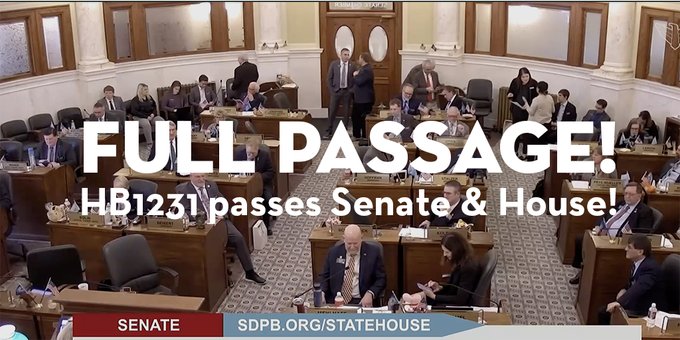
Happy Visitors!

NEW WEB ADDRESS

Because we don't want to lose information on this blog, we now have a domain name: American Indian Adoptees.com - click and save this link:

2026: WE HAVE A BACK UP BLOG COMING SOON: www.americanindianadoptees.blog (on wordpress) We are no longer on Facebook. We deleted our accounts.

WRITTEN BY HUMANS!

WRITTEN BY HUMANS!

Blog Archive

Featured Post

Your History Class Was a F*cking Lie | #NOMOAR

  Your History Class Was a F*cking Lie by Sean Sherman (Or: How the American Educational System Has Always Been a Racist Propaganda Program...


Native Circles

Native Circles
click logo for podcasts!

Most READ Posts

Bookshop

You are not alone

You are not alone

To Veronica Brown

Veronica, we adult adoptees are thinking of you today and every day. We will be here when you need us. Your journey in the adopted life has begun, nothing can revoke that now, the damage cannot be undone. Be courageous, you have what no adoptee before you has had; a strong group of adult adoptees who know your story, who are behind you and will always be so.

Diane Tells His Name


click photo

Lost Birds on Al Jazeera Fault Lines

Lost Birds on Al Jazeera Fault Lines
click to read and listen about Trace, Diane, Julie and Suzie

NO MORE STOLEN SISTERS

NO MORE STOLEN SISTERS
click image

ADOPTION TRUTH

As the single largest unregulated industry in the United States, adoption is viewed as a benevolent action that results in the formation of “forever families.”
The truth is that it is a very lucrative business with a known sales pitch. With profits last estimated at over $1.44 billion dollars a year, mothers who consider adoption for their babies need to be very aware that all of this promotion clouds the facts and only though independent research can they get an accurate account of what life might be like for both them and their child after signing the adoption paperwork.

Original Birth Certificate Map in the USA

Google Followers