IMPORTANT


IMPORTANT

“We call on the Government of Canada to act now to ensure full implementation of the Calls for Justice, not only on human trafficking, but also policing, corrections, the impacts of resource extraction, and interjurisdictional and cross-border coordination,” said National Chief Woodhouse Nepinak. “We know what’s possible when governments and institutions act with political will. That same commitment is needed now for every First Nations woman, girl, and 2SLGBTQQIA+ person across this country.”
The report is available here: 2025 Progress Report on Breathing Life into the Calls for Justice: Thematic Analysis on Human Trafficking.
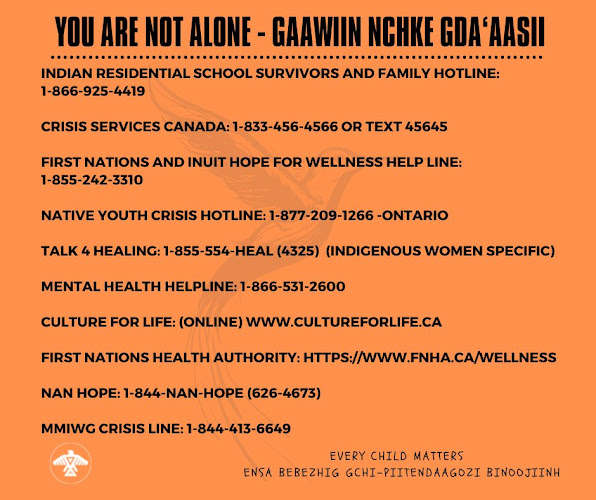
Support is available. The Hope for Wellness Help Line provides immediate mental health counseling and crisis intervention to all Indigenous people across Canada. This toll-free service is accessible 24 hours a day, 7 days a week. To talk with someone, please call 1-855-242-3310. Phone and chat counselling is available in English and French. Phone counselling is also available in Cree, Ojibwe, and Inuktitut, upon request.
 |
| The monument to Missing and Murdered Indigenous Women, Girls and 2SLGBTQQIA+ People outside the NWT Legislative Assembly. Emily Blake/CabinRadio |
A Wednesday press release from Crown-Indigenous Relations and Northern Affairs Canada stated the new reporting tool presents the results of its annual progress reports on the calls for justice “in a more accessible, visual and interactive format.”
The national inquiry released its final report in 2019, which included 231 calls for justice to various levels of government, media, service providers, police, industry and all Canadians.
Of those calls, 215 are directed at the federal government, which has also supported a further five actions.
The federal government released a national action plan to address the calls for justice in 2021.
The online reporting tool states that as of June 2024, the federal government has begun work on 115 of the calls for justice. A further 105 are “pending action.”
The tool allows users to search progress on the calls for justice by theme and government department.
The federal government said the online tool will be updated with the results of its 2024-25 progress report when it is released on June 3.
The launch of the tool was announced during opening remarks at the third annual national Indigenous, federal, provincial and territorial meeting on Missing and Murdered Indigenous Women, Girls and 2SLGBTQI+ People in Ottawa.
The NWT government has said Lucy Kuptana, the territory’s minister responsible for the status of women, is attending the meeting virtually.
The GNWT released its action plan to address the calls for justice in 2022. The territory is currently working to develop missing persons legislation, which was one of the calls for justice.
VIDEO: https://ckpgtoday.ca/2023/09/09/new-exhibit-to-raise-awareness-about-mmiwg2s-at-pgpl/

Officials with the Alberta government say grant applications are now open for communities and organizations working to address the violence, safety and economic security of Indigenous women, girls and 2S+ people.
Alberta’s government say it is committed to ensuring Indigenous women, girls and two spirit plus (2S+) people have a future that is safe, secure and respected. Officials say the Community Support Fund provides grants for community-based, Indigenous-led initiatives that address violence and increase safety and economic security for these groups.
According to the government, the fund will support $4 million in grants each year. Recipients can receive a maximum of $200,000 towards their initiatives. The fund is expected to provide immediate support for healing, preventing violence and addressing the crisis of missing and murdered Indigenous women, girls and 2S+ people, complementing the long-term work of the Premier’s Council on Missing and Murdered Indigenous Women and Girls.
“As the Premier’s Council advances collaborative work with the Government of Alberta, this dedicated ongoing funding is important for Indigenous-led projects to support Indigenous women, girls and 2S+peoples. I commend the province for taking the initiative on this grant program,” adds Rachelle Venne, chair, Premier’s Council on Missing and Murdered Indigenous Women.
“The Community Support Fund is creating projects and initiatives for Indigenous and non-Indigenous community organizations to create a safer, more supportive community for Indigenous women, girls and two spirit people. This funding will foster healing, awareness and hope among this vibrant and key demographic.,” notes LeeAnne Ireland, executive director, Urban Society for Aboriginal Youth.
The call for applications will close on Oct. 6.
Alberta government quick facts
First Nations, Métis and Inuit women face significantly higher rates of violence throughout their lifetimes than all other women in Canada.
In Alberta, Indigenous women are seven times more likely to be murdered, three times more likely to experience sexual assault, and twice as likely to be assaulted compared with non-Indigenous women.
In 2021, Alberta had the second-highest reports of homicide for Indigenous people behind Saskatchewan.
Red Road Institute is proud to announce two new initiatives protecting our people and saving lives. We do need your help to see these through.
As you might know, tribes are rarely able to prosecute non-tribal citizens for crimes they commit on our reservations. As a result, our reservations are breeding grounds for wicked people to rape, murder, and assault our people.
Because the local police are rarely allowed to prosecute crimes outside their jurisdiction, the FBI is the only department able to investigate crimes committed by non-Natives on tribal land.
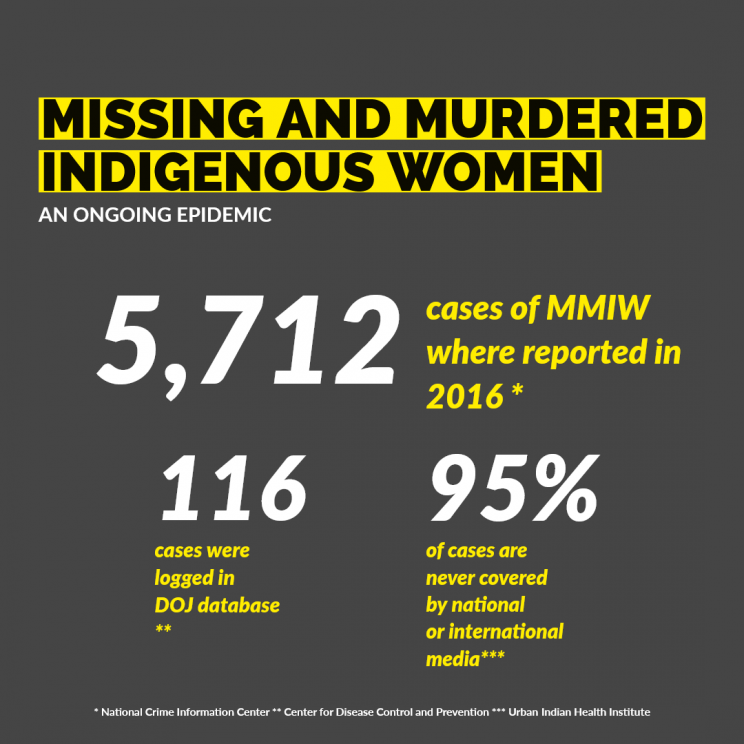
In 2016, the last year these stats were kept, there were 5,712 known cases of missing or murdered indigenous women. However, only 116 were logged into the DOJ database. For over 90% of the crimes, a real investigation never happens.
So we're putting together these programs to help our people because the government will not.
This is similar to an Amber Alert and will help our people be on the lookout for our relatives and share information. We
plan to expand this to other states as funds and grants become
available. However, we need $19k more to ensure this is financed for an
entire year.  Red Road Alert:
On July 1st, we will roll out the Red Road Alert in South and North
Dakota. This system will allow tribal police departments and police in
cities surrounding reservations to send a text alert to people who have
subscribed to our service when one of our relatives is missing.
Red Road Alert:
On July 1st, we will roll out the Red Road Alert in South and North
Dakota. This system will allow tribal police departments and police in
cities surrounding reservations to send a text alert to people who have
subscribed to our service when one of our relatives is missing.
|
|
|

|
Red Road TV is the premier TV station for all of your Native American and First Nations content. We are the largest indigenous TV station in the world. We’re all Indigenous, All the Time! Visit Red Road TVDownload Red Road TV to your home TVRed Road TV – Native American | TV App | Roku Channel Store | Roku A New Show on Red Road TV |
|
|
MMIW: Unsolved Cases: Have you heard about Red Road TV? This is our 100% free indigenous programming available on Roku and other smart TVs. Since we don’t charge for our programming, we must raise money for anything we produce.
We’re currently working on the first five episodes of a show that will highlight unsolved MMIW cases. We’re hiring private investigators to go where the federal government will not.
On April 15th, we will release a new website that will allow us to share information and hopefully bring some of our stolen sisters home. Our budget is tight, and we are short $11k for advertising and equipment if you want to donate money or equipment.
We want you to know that 100% of all Red Road Institute’s donations return to our communities. Not one person on our staff receives compensation. |
|

Hawaiʻi State Representative Stacelynn K.M. Eli championed HCR11: “For too long we Native Hawaiian women, like our land, have been commodified. Our bodies and our stories are used and forgotten. This is vital work for us as a State, to provide us with meaningful data to ensure the protection of our most vulnerable population: Native Hawaiian women and girls.”
The legislation also formally recognizes that “harmful colonial stereotypes have resulted in the sexual fetishization of Native Hawaiians” and that “land dispossession and incarceration have increased vulnerability of Native Hawaiians” to violence.
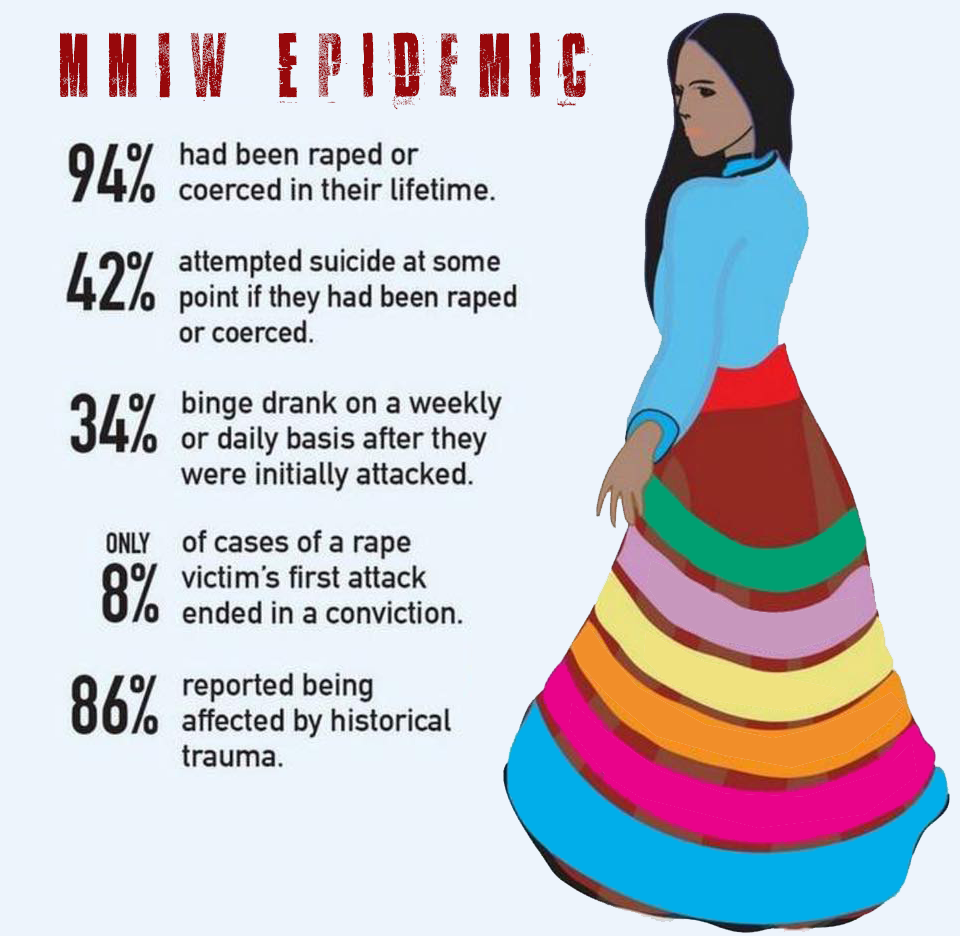
"People ask why is an MMIWG taskforce needed in Hawaiʻi? Preliminary data shows that Native Hawaiians are disproportionately trafficked into the sex trade, which fuels the MMIWG crisis. From 2017 to 2019, one out of every three child sex trafficking victims reported to the State of Hawaiʻi, Child Welfare Services hotline were Native Hawaiian. In addition, 64% of 97 sex trafficking victims identified in 2019 by Child & Family Services were Native Hawaiian,” said Khara Jabola-Carolus, Executive Director, of the Commission.
“We lose Indigenous girls in Hawaiʻi through many means--through the foster care system, through predators who quietly lure children into human trafficking, and of course through domestic violence. This issue exists because we do not care about Indigenous women. We allow unforgivable numbers of women to be murdered in our country and yes, even in our state. So, we have decided that we need to do something to raise awareness in Hawai`i, and honor the families here whose daughters are missing and murdered. Today, to raise awareness and support our Indigenous Sisters, we will wear red, with red handprints over our faces to represent their voices being silenced, as we say NO MORE STOLEN SISTERS,” emphasized Stacey Moniz, Maui Commissioner of the State Commission.
Edie Ignacio-Neumiller, Kauaʻi Commissioner of the State Commission stated, “All islands including Kauaʻi will be at the table to interrogate this cycle of violence. There is a crisis of missing and murdered indigenous women and girls and widespread rampant of violence among women and girls. There needs to be more specific data to find local solutions and locations of MMIWG.”
“This day also provides an opportunity for our government to reaffirm their commitment to stop exploitation of other humans for profit, particularly Native Hawaiian women and girls. We will address the systemic shortcomings of national and local governments to adequately focus on issues of Human Trafficking that most often leads to Missing and Murdered Indigenous Women and Girls,” said Cyd
Hoffeld, Hawaiʻi Island Commissioner of the State Commission. “We will continue to bring public awareness and ongoing island-wide discussions about human trafficking in Hawai’i, through the support and partnerships of the Hawai’i State Commission, and our County Committees on the Status of Women.”

 |
| Arctic MMIWG issue: here |
WEBCAST: Missing and Murdered (MMIP) WATCH

transcript
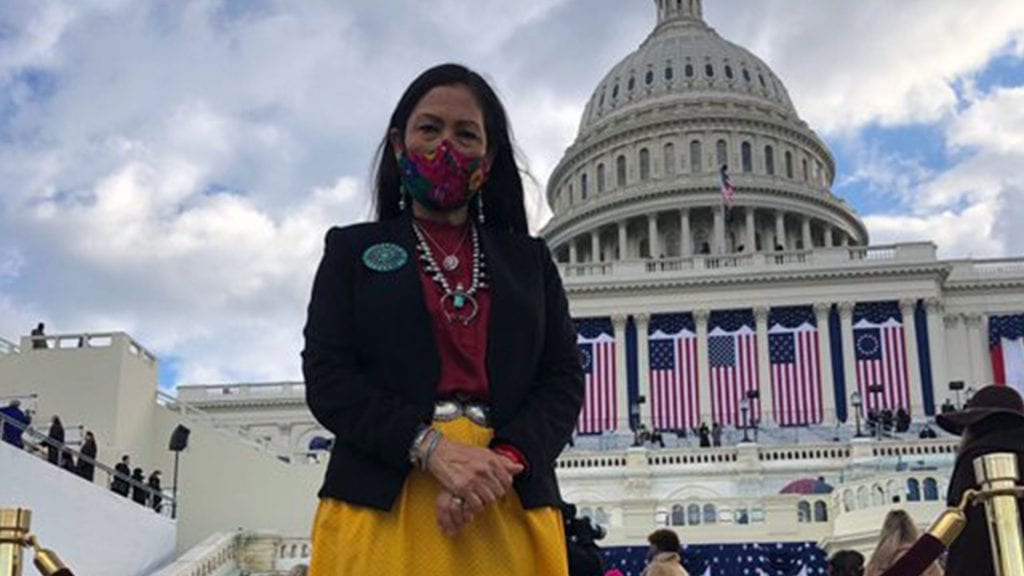
Deb: I'm Secretary Deb Haaland
at I'm honored to join you from the ancestral homelands of the Anacostia and
Piscataway people on what President Biden has proclaimed as National Missing or
Murdered Indigenous Persons Awareness Day. I wish we didn't need to be here. I
wish that this day was obsolete, that we didn't have to keep fighting year
after year for our people to be honored and respected. But we are here. And I
want to use today to shine a light on the national crisis of missing and
murdered indigenous peoples and give space to others to share the work they are
doing on this issue. Everyone deserves to feel safe in their communities, but
the MMIP crisis is one that communities have faced since the dawn of colonization.
For too long, this issue has been swept under the rug by our government with a
lack of urgency, attention, or funding. The rates of missing persons cases and
violence against American Indian, Alaska native, and native Hawaiian
communities are disproportionate, alarming, and unacceptable. It is
heartbreaking to know that our loved ones are at an increased risk of
disappearing without warning, leaving families and communities devastated. I
want to extend my gratitude to the organizers, advocates, native women who have
been shedding light on MMIP crisis for decades. People who have had an empty
chair at their kitchen tables, loved ones who tirelessly searched or their
relatives, service providers who hear the heartbreaking stories of family
members of the missing. I want you to know that I see you and I stand with you.
In our first year, there is much the Biden-Harris administration has done to
take this issue seriously. As many of you know, last year, I announce the
formation of a new missing and murdered unit within the Bureau of Indian
affairs office of Justice services to provide leadership and direction across
departmental and interagency work involving missing and murdered American
Indians and Alaska natives. The MMU is marshaling resources across agencies and
throughout Indian country to focus on this crisis. Since the launch ofMMU, the
department has built up personnel and increased infrastructure capacity by
launching new offices. Today, 17 BIA offices located throughout the nation have
at least one agent dedicated to solving missing and murder cases for American
Indians and Alaska natives. In December, the BIA announced on lots of its new
website dedicated to solving missing and murder cases in Indian country. The
website is bia.gov/mmu. Bia.gov/mmu. The site is an important tool to help law
enforcement, families, and communities to share critical information about
missing and murdered individuals that can help the MMU solve cases and give
closure to families. The website showcases individual missing and murdered case
profiles that can be quickly shared via social media and other digital media to
raise visibility of victims. It also provides multiple pathways to submit
important tips and other case information that may help investigators with
detection or investigation of an offense committed in Indian country. The MMU
has enabled the Department to expand its collaborative efforts with other
agencies such as working to enhance the DOJ's national missing and unidentified
persons system. Staff are also developing strategic partnerships with
additional stakeholders such as the FBI, behavioral analysis units, FBI
forensic laboratories , U.S. marshals missing child unit, and the National
Center for missing and exploited children. This unit and interior will continue
to engage in collaborative efforts with tribal, federal, and state stakeholders
to ensure accurate data and enhance community outreach. The MMU is a critical
tool in our work to address this crisis, and today, we announce steps for
another. In Congress, the Not Invisible Act now in partnership with the Justice
Department and with extensive engagement with tribes and other stakeholders, we
are putting that law into action. Today, our agencies announce the membership
of the new Not Invisible Act Commission which we formed the last year. For the
first time, the interior and Justice Department will be guided by an advisory
committee composed of law enforcement, tribal leaders, federal partners,
service providers, family members of missing and murdered individuals, and most
importantly, survivors. This commission will ensure that we hear the voices of
those who are most impacted by this issue. It includes diverse experience,
backgrounds, and geographies to provide balance once of use. The commission will
hold hearings, take estimate, and -- testimonies, and receive evidence to
develop recommendations for the federal government to combat violent crimes
against indigenous people. The missing and murdered indigenous peoples crisis
is centuries in the making, and it will take a focused effort and time to
unravel the many threads that contribute to the alarming rates. I'm grateful to
those of you who rang the alarm and gave a voice to the missing. My heart goes
out to the families of loved ones who were impacted by violence. We will keep
working to address this issue and together, I believe we will provide justice
for survivors and families. And that I will turn the floor over to Deputy
Attorney General Lisa Monaco, who will share recorded remarks for today's event.
keep reading👇
If you need someone to talk to during these difficult times or to assist you in navigating your way to help, support is at the end of a phone line, from Monday - Friday, 9-noon and 1-4 EST. pic.twitter.com/lKC359KLgH— NWAC (@NWAC_CA) August 6, 2021
The law on repatriation of Native American cultural items is broken. Returning that which doesn’t belong to you to the rightful owners is a simple concept—you give it right back. But this extremely limited law has resulted in laughable delay by dilatory museums for what is easy. https://t.co/4QOzwIZCkc
— Brett Chapman (@brettachapman) August 6, 2021
Survivors of the St. Michael’s Indian Residential School attended a five-day gathering on the former site of the school.
— APTN News (@APTNNews) August 6, 2021
The gathering was an opportunity to get survivors’ input on what areas need to be searched. | @priscil28509125 https://t.co/V6sHO37zur
Whites stole everything associated with land from Native Americans like my great great grandma Alberta Four Eyes. They put 12 oil wells on her land. In 1919 alone, just 1 of the 12 produced $11 million of oil—helping a White oilman control 10% of the world’s oil in 1920. Robbery! pic.twitter.com/LBqzRecGbX
— Brett Chapman (@brettachapman) August 6, 2021
"“Boarding schools — along with the entire structure of our churches and government and policing and military — combine to create a particular world. White Christians are safe in that world.” — @gindaanis" https://t.co/k4ITl0w8EI via @sojourners
— Trace kalala Hentz (@StonePony33) July 27, 2021
Criminal justice advocates are calling for the murder convictions of two Indigenous women to be immediately overturned.
— APTN News (@APTNNews) August 6, 2021
Odelia Quewezance cut off her hair as a statement – mourning the loss of her and her sister’s freedom. | @Hollyaptn | @brittany_guyothttps://t.co/o0wTpw72NP
On the largest tribal nation in Montana, climate change is further diminishing water sources that have been declining for years. “This time, there is no single enemy to fight,” wrote Crow scientists last spring: https://t.co/JmhnjwyK0U
— High Country News (@highcountrynews) August 6, 2021
(click links in tweets for access to stories)
Please support and read HIGH COUNTRY NEWS concerning Indian Country. It's fantastic!
|
|
The Confederated Salish and Kootenai Tribes worked with federal agencies to complete a first of its kind plan to address the crisis. | |
By Jessica Douglas | |
Two years ago, on a February evening, Ellie Bundy attended a tribal working group in Arlee, Montana, on the Flathead Indian Reservation. Surrounded by local and tribal law enforcement, tribal members and families, Bundy listened as people told stories about loved ones or community members who had gone missing. “What if that were my daughter?” Bundy said. “We say that a lot, but really, what if it were my daughter? What if it were my sister? What if it were my cousins? It is a visual you just can't get out of your head.” The meeting was one of four hosted by the Confederated Salish and Kootenai Tribes to encourage discussion and come up with local community responses to the epidemic of missing and murdered Indigenous people. Bundy is now a councilwoman for the Salish and Kootenai, as well as the presiding officer of the Montana Missing Indigenous Persons Task Force. For the past five months, she and other tribal officials have participated in a series of working groups with federal, state and local law enforcement and community organizations. On April 1, at a press conference at the tribal headquarters in Pablo, Montana, the Salish and Kootenai joined the U.S. Attorney’s Office for the District of Montana and the Federal Bureau of Investigation in announcing the completion of the first Tribal Community Response Plan to the crisis of missing and murdered Indigenous people. As the first plan of its kind to be developed, it will serve as a model that tribal governments across Indian Country can adapt to meet their own specific needs. It marks a critical milestone in the effort to resolve the crisis, something that advocates say must be led by tribal nations and supported by the federal government. The new plan comes at a unique time nationally, after the passage of federal legislation including Savanna’s Act and renewing the Violence Against Women Act, coupled with executive-branch initiatives, such as Interior Secretary Deb Haaland’s new unit in the Bureau of Indian Affairs, which was created specifically to investigate crimes involving missing and murdered Indigenous people. | |
|


Your History Class Was a F*cking Lie by Sean Sherman (Or: How the American Educational System Has Always Been a Racist Propaganda Program...





 Posts
All Comments
Posts
All Comments