BOOZHOO! We've amassed tons of information and important history on this blog since 2010. If you have a keyword, use the search box below. Also check out the reference section above. If you have a question or need help searching, use the contact form at the bottom of the blog.
We want you to use BOOKSHOP to buy books! (the editor will earn a small amount of money or commission. (we thank you) (that is our disclaimer statement)
This is a blog. It is not a peer-reviewed journal, not a sponsored publication... WE DO NOT HAVE ADS or earn MONEY from this website. The ideas, news and thoughts posted are sourced… or written by the editor or contributors.
EMAIL ME: tracelara@pm.me (outlook email is gone)
THANK YOU CHI MEGWETCH!
Beyond high fives and selfies … Indian youth explore policy issues
“The Indian Child Welfare act was created in order to protect the best
interest of Indian Children and to promote the stability and security of
tribal communities and families. We as youth leaders know that our
identity; is who we are, is within our culture, and within the tribal
community that raises us. Our membership and blood quantum has never
defined us as members of our tribal communities. To us, we are raised by
tribal communities, because we learn not just from our family but from
the community as a whole. They teach us our languages, our traditions,
they show us who we are as American Indian/Alaskan Native youth, that is
a right every American Indian/Alaskan Native child should have. They
should not be taken from their tribal community, because when they are, a
piece of our culture is lost.”
“The Circle of Courage is a model of positive youth development first described in the book Reclaiming Youth at Risk,
co-authored by Larry Brendtro, Martin Brokenleg, and Steve Van Bockern.
The model integrates Native American philosophies of child-rearing, the
heritage of early pioneers in education and youth work, and
contemporary resilience research.
The Circle of Courage is based in four universal growth needs of all children: belonging, mastery, independence, and generosity.
These traditional values are validated by contemporary child research
and are consistent with the findings of Stanley Coopersmith who
identified four foundations for self-worth: significance, competence,
power, and virtue.
These are summarized below:
Belonging
In Native American and First Nations cultures, significance was nurtured
in communities of belonging. Lakota anthropologist Ella Deloria
described the core value of belonging in these simple words: “Be
related, somehow, to everyone you know.” Treating others as kin forges
powerful social bonds that draw all into relationships of respect.
Theologian Marty observed that throughout history the tribe, not the
nuclear family, always ensured the
survival of the culture. Even if parents died or were not responsible,
the tribe was always there to nourish the next generation.
Mastery
Competence in traditional cultures is ensured by guaranteed
opportunity for mastery. Children were taught to carefully observe and
listen to those with more experience. A person with greater ability was
seen as a model for learning, not as a rival. Each person strives for
mastery for personal growth, but not to be superior to someone else.
Humans have an innate drive to become competent and solve problems. With
success in surmounting challenges, the desire to achieve is
strengthened.
Independence
Power in Western culture was based on dominance, but in tribal
traditions it meant respecting the right for independence. In contrast
to obedience models of discipline, Native teaching was designed to build
respect and teach inner discipline. From earliest childhood, children
were encouraged to make decisions, solve problems, and show personal
responsibility. Adults modeled, nurtured, taught values, and gave
feedback, but children were given abundant opportunities to make choices
without coercion.
Generosity
Finally, virtue was reflected in the pre-eminent value of generosity.
The central goal in Native American child-rearing is to teach the
importance of being generous and unselfish.
In the words of a Lakota
Elder, “You should be able to give away your most cherished possession
without your heart beating faster.”
In helping others, youth create
their own proof of worthiness: they make a positive contribution to
another human life.”
South Carolina court drops contempt charge against Dusten Brown Dusten Brown and the Cherokee Nation rea...
Bookshop
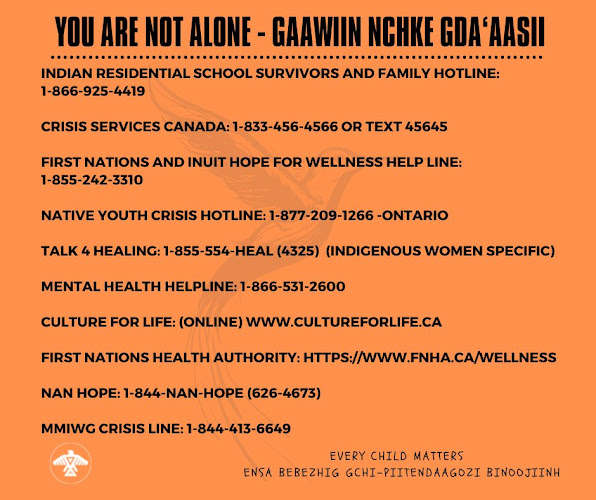
You are not alone
To Veronica Brown
Veronica, we adult adoptees are thinking of you today and every day. We will be here when you need us. Your journey in the adopted life has begun, nothing can revoke that now, the damage cannot be undone. Be courageous, you have what no adoptee before you has had; a strong group of adult adoptees who know your story, who are behind you and will always be so.
Diane Tells His Name
click photo
Lost Birds on Al Jazeera Fault Lines
click to read and listen about Trace, Diane, Julie and Suzie
NO MORE STOLEN SISTERS
click image
We conclude this series & continue the conversation by naming that adoption is genocide. This naming refers to the process of genocide that breaks kinship ties through adoption & other forms of family separation & policing 🧵#NAAM2022#AdoptionIsTraumaAND#AdopteeTwitter#FFY 1/6 pic.twitter.com/46v0mWISZ1
As the single largest unregulated industry in the United States, adoption is viewed as a benevolent action that results in the formation of “forever families.” The truth is that it is a very lucrative business with a known sales pitch. With profits last estimated at over $1.44 billion dollars a year, mothers who consider adoption for their babies need to be very aware that all of this promotion clouds the facts and only though independent research can they get an accurate account of what life might be like for both them and their child after signing the adoption paperwork.










 Posts
Posts

