BOOZHOO! We've amassed tons of information and important history on this blog since 2010. If you have a keyword, use the search box below. Also check out the reference section above. If you have a question or need help searching, use the contact form at the bottom of the blog.
We want you to use BOOKSHOP to buy books! (the editor will earn a small amount of money or commission. (we thank you) (that is our disclaimer statement)
This is a blog. It is not a peer-reviewed journal, not a sponsored publication... WE DO NOT HAVE ADS or earn MONEY from this website. The ideas, news and thoughts posted are sourced… or written by the editor or contributors.
EMAIL ME: tracelara@pm.me (outlook email is gone)
THANK YOU CHI MEGWETCH!
SEARCH
Showing posts with label Doctrine of Discovery. Show all posts
Showing posts with label Doctrine of Discovery. Show all posts
My takeaway from this excellent podcast: The Supreme Court just makes up rules ... and it has all along...and IT'S CRAZY! And it's been going on since the invention of the DOCTRINE OF DISCOVERY. - Trace, Blog Editor
MAPPING THE DOCTRINE OF DISCOVERY: Johnson v. McIntosh and Federal Anti-Indian Law with Peter d’Errico
The
goal of this Podcast is to help identify these systems of domination
that have been sustained by greed and power, through the subjugation of
human beings and the natural world.
Philip P. Arnold and Sandra Bigtree, “S02E03 - Johnson v M’intosh and Federal Anti-Indian Law with Peter d’Errico,” Mapping the Doctrine of Discovery (Podcast), July 13, 2023. https://podcast.doctrineofdiscovery.org/season2/episode-03/.
"The
greater the consensus that the Doctrine of Discovery is fundamentally
racist and immoral, the harder it is for Canadian courts to continue to
decide cases based on this fundamental doctrine," said Pearl, who is
from One Arrow First Nation, in an interview with Day 6.
(left) Tamara
Baldhead Pearl, an assistant professor of law at the University of
Alberta, is cautiously optimistic after the Vatican's repudiation of The
Doctrine of Discovery. (University of Alberta)
Pearl,
who's also an assistant law professor at the University of Alberta,
says she hopes there will be increased pressure to "try to rethink how
Canadian law can be brought into conformity with the contemporary
understanding of Indigenous rights and equality among peoples."
The
Doctrine of Discovery is a set of colonial-era theories, backed by
15th-century papal bulls, which was used to legitimize the seizure of
Indigenous lands by colonial powers. Legal decisions in both the U.S.
and Canada invoked the doctrine in some form.
The Vatican says in
its statement the doctrine was not a Catholic teaching and had been
manipulated for political purposes by colonial powers.
"The Church's magisterium upholds the respect due to every human being," the statement reaffirmed.
There
have been calls to repudiate the doctrine for decades, but they gained
more visibility in Canada during Pope Francis' visit last summer. Two
women held a banner reading "Rescind the Doctrine"
at the altar of the National Shrine of Sainte-Anne-de-Beaupré on July
29, 2022. They were escorted from the basilica without incident, but
draped the banner outside as part of a protest.
Sarain
Fox, right, and Chelsea Brunelle of the Batchewana First Nation
demonstrate outside the mass presided over by Pope Francis at the
National Shrine of Saint Anne de Beaupre, Thursday, July 28, 2022, in
Saint Anne de Beaupre, Quebec. (John Locher/The Associated Press)
During
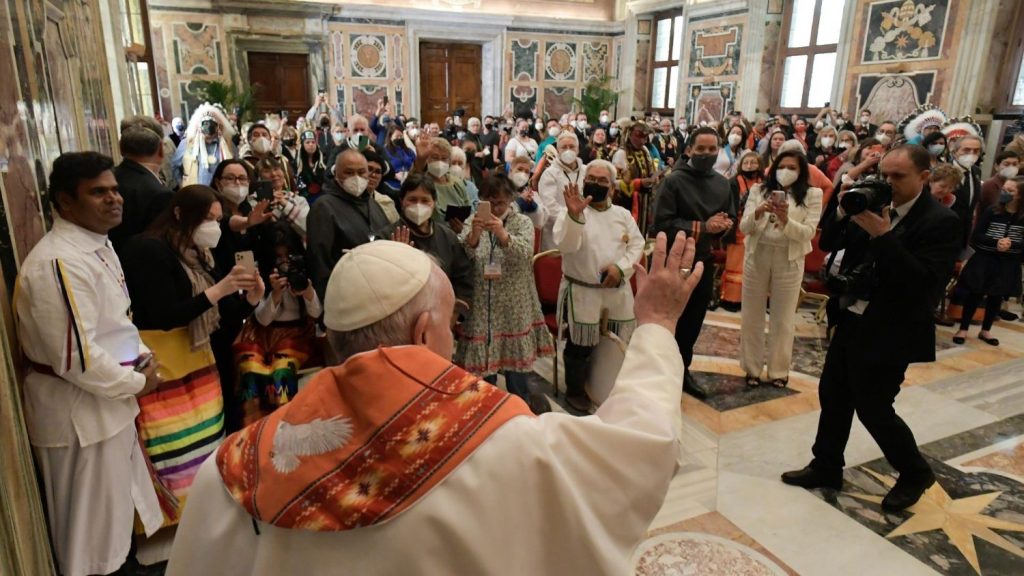
the visit, Pope Francis apologized to Indigenous people for the
residential school system that forcibly removed Indigenous children from
their homes. However, he was criticized by some for not taking the opportunity to repudiate the doctrine.
The Vatican’s recent repudiation of the
Doctrine of Discovery has been described as a “major step” by some
Indigenous leaders, but for others, the Holy See has a long way to go
before it can heal the centuries of pain caused by the doctrine’s
colonization and control. Today on Native America Calling, we speak with
Steve Newcomb (Shawnee and Lenape), author of Pagans in the Promised Land: Decoding the Doctrine of Christian Discovery and cofounder and director of the Indigenous Law Institute, and Bruce McIvor (Métis), lawyer and partner at First Peoples Law.
By ICT Newscast with Aliyah Chavez
We meet the author behind the book aiming to support young women called
'Sisterhood.' A short film explores the legacy of the Rapid City
boarding schools. The Vatican has repudiated the Doctrine of Discovery.
We discuss its influence on tribal sovereignty ... The Vatican officially repudiated the Doctrine of Discovery
on Thursday morning. This comes after Indigenous peoples across the
world demanded this action. The Doctrine of Discovery originated in the
late 1400s, as justification by the Catholic Church to seize lands that
were not inhabited by Christians. continue reading
The Pope seems to not know about the Doctrine, according to a twitter Native.
The Vatican has formally repudiated the “Doctrine of Discovery,”
which justified colonization and the taking of Indigenous lands.
Two Vatican departments issued a joint statement Thursday saying it’s not part of teachings of the Catholic Church.
Indigenous people have long called for the church to rescind the legal concept.
Joint Statement of the Dicasteries
for Culture and Education and for Promoting Integral Human Development
on the “Doctrine of Discovery”, 30.03.2023
1. In fidelity to the mandate received
from Christ, the Catholic Church strives to promote universal
fraternity and respect for the dignity of every human being.
2. For this reason, in the course of history the Popes have condemned
acts of violence, oppression, social injustice and slavery, including
those committed against indigenous peoples. There have also been
numerous examples of bishops, priests, women and men religious and lay
faithful who gave their lives in defense of the dignity of those
peoples.
3. At the same time, respect for the facts of history demands an
acknowledgement of the human weakness and failings of Christ’s disciples
in every generation. Many Christianshave committed evil acts against indigenous peoples for which recent Popes have asked forgiveness on numerous occasions.
4. In our own day, a renewed dialogue with indigenous peoples,
especially with those who profess the Catholic Faith, has helped the
Church to understand better their values and cultures. With their help,
the Church has acquired a greater awareness of their sufferings, past
and present, due to the expropriation of their lands, which they
consider a sacred gift from God and their ancestors, as well as the
policies of forced assimilation, promoted by the governmental
authorities of the time, intended to eliminate their indigenous
cultures. As Pope Francis has emphasized, their sufferings constitute a
powerful summons to abandon the colonizing mentality and to walk with
them side by side, in mutual respect and dialogue, recognizing the
rights and cultural values of all individuals and peoples. In this
regard, the Church is committed to accompany indigenous peoples and to
foster efforts aimed at promoting reconciliation and healing.
5. It is in this context of listening to indigenous peoples that the
Church has heard the importance of addressing the concept referred to as
the “doctrine of discovery.” The legal concept of “discovery” was
debated by colonial powers from the sixteenth century onward and found
particular expression in the nineteenth century jurisprudence of courts
in several countries, according to which the discovery of lands by
settlers granted an exclusive right to extinguish, either by purchase or
conquest, the title to or possession of those lands by indigenous
peoples. Certain scholars have argued that the basis of the
aforementioned “doctrine” is to be found in several papal documents,
such as the Bulls Dum Diversas (1452), Romanus Pontifex (1455) and Inter Caetera (1493).
6. The “doctrine of discovery” is not part of the teaching of the
Catholic Church. Historical research clearly demonstrates that the papal
documents in question, written in a specific historical period and
linked to political questions, have never been considered expressions of
the Catholic faith. At the same time, the Church acknowledges that
these papal bulls did not adequately reflectthe equal dignity
and rights of indigenous peoples. The Church is also aware that the
contents of these documents were manipulated for political purposes by
competing colonial powers in order to justify immoral acts against
indigenous peoples that were carried out, at times, without opposition
from ecclesiastical authorities. It is only just to recognize these
errors, acknowledge the terrible effects of the assimilation policies
and the pain experienced by indigenous peoples, and ask for pardon.
Furthermore, Pope Francis has urged: “Never again can the Christian
community allow itself to be infected by the idea that one culture is
superior to others, or that it is legitimate to employ ways of coercing
others.”
7. In no uncertain terms, the Church’s magisterium upholds the
respect due to every human being. The Catholic Church therefore
repudiates those concepts that fail to recognize the inherent human
rights of indigenous peoples, including what has become known as the
legal and political “doctrine of discovery”.
8. Numerous and repeated statements by the Church and the Popes
uphold the rights of indigenous peoples. For example, in the 1537 Bull Sublimis Deus, Pope Paul III wrote,“We
define and declare [ ... ] that [, .. ] the said Indians and all other
people who may later be discovered by Christians, are by no means to be
deprived of their liberty or the possession of their property, even
though they be outside the Christian faith; and that they may and
should, freely and legitimately, enjoy their liberty and possession of
their property; nor should they be in any way enslaved; should the
contrary happen, it shall be null and have no effect”.
9. More recently, the Church’s solidarity with indigenous peoples has
given rise to the Holy See’s strong support for the principles
contained in the United Nations Declaration on the Rights of Indigenous
Peoples. The implementation of those principles would improve the living
conditions and help protect the rights of indigenous peoples as well as
facilitate their development in a way that respects their identity,
language and culture.
“The
‘enrollment’ process was started by the Feds so they could use ‘blood
quantum’ to finish the Genocide of Native Americans. Now we are finishing the job ourselves by continuing to use it as a ‘membership’ requirement. Membership: like the Elks Club or Lions Club or the Moose Lodge. Sad.”
—Harold
Monteau, former chair of National Indian Gaming Commission and a
citizen of the Chippewa Cree Tribe, today on social media
For many Indigenous people across Canada, the death of Queen Elizabeth
II isn’t an occasion to mourn, but a chance to re-examine the monarchy’s
legacy of subjugation as colonizers, with leaders calling on the new
King to denounce the Doctrine of Discovery.
Queen Elizabeth II, the U.K.’s longest serving monarch, passed away at
the age of 96 on Thursday, sparking off official mourning periods in
both the U.K. and Canada.
But reflecting on her 70 year legacy can bring up painful memories and
anger for those who had their land and culture stolen from them in the
name of the Crown.
For
many Indigenous peoples across Canada, the death of Queen Elizabeth II
was not an occasion to mourn, but an opportunity to re-examine the
colonial monarchy’s legacy of conquest, and leaders encouraged the new
king to share the doctrines of discovery.
Nederlands: Paus Nicolas V oil on panel 1612-1616 (Photo credit: Wikipedia)
Volume 2, Issue #11, American Logo newsletter by Bill Annett
We are not descended from men who kept silent. -Edward R. Murrow
Ask
an average American (or Canadian): “What is the Doctrine of Discovery?”
You’re likely to get a blank stare, an uncomfortable pause, the
changing of the conversation to politics or rock stars, or perhaps the
stuttered response: “You mean like Dr. Oz?”
And
yet the DoD, as it is referred to by academics, unsuccessful
politicians, native people and others on the receiving end, is a basic
legal assumption, born of Holy Writ and therefore both sanctified and
legal, 500 years ago, when the sun rotated around the European world and
the earth was flat. Was it just a naïve part of that past, that
ignorant and illiterate peasant flotsam of Western Europe, and now long
forgotten?
Hell, no. That incredible, inhuman law, mindset and modus operandiis
still alive and well, solidly embedded in the ubiquitous practice of
governing law. And where? Today, it dominates, subtly but pervasively as
a daily fact of life, over 1.5 million people in Canada, three million
in the U.S., six million in Mexico and a massive population in the rest
of the Hemisphere, as well as in Australia, New Zealand and large
swatches of Southeast Asia and Oceania. Perhaps 400 million people in
total, more than the entire U.S. population.
What is it and how did it get its start?
Pope Nicholas V, on the 18th of June, 1452, stamped his bulla, or papal seal, on the bottom of a document, a papal bull known as Dum Diversas. Dumb indeed, but with enormous ramifications.
Actually,
Pope Nicholas V was a builder, and like Hitler’s autobahns in the
Thirties, he repaired infrastructure such as aqueducts destroyed during
the collapse of the Roman Empire. That construction, as a matter of
fact, was analogous to the Roman Church’s succeeding the Roman Empire as
the confluence and tributary conveying the brutality of empire
masquerading as civility and Christian humanism.
But Nicholas is best remembered for his political balancing act between the Portuguese king and the threat of the Ottoman Empire. One element was the papal bull Dum Diversas, which granted Portugal “full and free power”:
to invade, search out, capture, and subjugate the Saracens and pagans and any other unbelievers and enemies of Christ wherever they may be… and to reduce their persons into perpetual slavery.
A
follow-up document, Romanus Pontifex, allowed that same empire to seize
for itself the lands of any non-Christians they encountered. The
Doctrine of Discovery was established.
After
Columbus’s “discovered” the New World, (although indigenous people had
practised Occupy Turtle Island for some 10,000 years) Pope Alexander VI
in 1493 issued another bit of papal bull known as Inter Caetera,
commanding Spain
“to instruct the aforesaid inhabitants and residents and dwellers therein in the Catholic faith, and train them in good morals…”
opening
the way for Catholic missions to conquer everything and anybody in the
new world, except for the newly arrived Portuguese.
England
quickly got into the act four years later, when King Henry VII granted
John Cabot rights to possess all lands in the New World not already
claimed by Portugal and Spain. In return, John Cabot, like an obedient
Mafia soldier, wet the beak of his king with 20% of the total take. All
of which not only legitimized but commanded the enslavement, pillaging
and killing of millions of indigenous peoples all over the world. The
toll (as we palefaces like to journalize) so far for the Western
Hemisphere alone totals around 100 million people. According to one
academic, (Anthony Hall of the University of Lethbridge) “the greatest
re-engineering of a civilization in history.”
Does
the DoD still live? One early Supreme Court case, Johnson v. M’Intosh
in 1823, according to Robert Miller,* resolved a tribal land dispute,
ruling that Native American land is inalienable. They cited the Doctrine
of Discovery, which stated that Christian Europeans owned all land
explored and claimed, and in any event, only the federal government
could buy land occupied by Native Americans, meaning that the federal
government could therefore pretty much name its own price.
Supreme
Court cases as recent as 1973 and 1990 have used the Doctrine of
Discovery to delimit native rights to prosecute any individuals on their
lands for crimes. In 2005, certain tribes were denied sovereignty and
the ability to repurchase traditional land previously held.
“Apparently,
Euro-Americans possessed the only valid religions, civilizations,
governments, laws, and cultures, and Providence intended these people
and their institutions to dominate the North American continent. The
human, governmental, and property rights of Native Americans were almost
totally disregarded as Discovery and then Manifest Destiny directed the
United States’ expansion. Under Manifest Destiny it was ‘clear’ that
God wanted Indians to get out of the way of American progress.”
In
other words, a significant part of American political practice blindly
follows the Doctrine of Discovery, that ancient tossing off of
political intervention by the Roman church we all accept whether we want
to or not. (It’s part of of the Holy Church’s Concordat with all
civilized nations.) American acceptance of this Doctrine is a modern
world atrocity that parallels a universe of conflicting opinion, often
denied, pernicious in its global fact.
Slavery, war, genocide are all
facts that flow from this medieval nonsense. It defined the treatment of
the world’s indigenous people that remains today in all but the most
enlightened societies. It has even – in a minor key – warped our
confusion about immigration, notably the migration of indigenous peoples
in the Americas, many of whom are in constant flux (perennially fluxed)
and on the move because U.S. policy vis-a-vis Latin America has
delimited economic opportunity.
Professor Miller has delineated and compared the Doctrine’s effects as
well as practice in Australia, Brazil, Canada, Chile, England, New
Zealand, Portugal, Spain and (of course) the United States.
*The International Law of Colonialism: A Comparative Analysis, Robett J. Miller, Lewis & Clark Law Review
Indigenous
leaders and residential school survivors in Saskatchewan called on Pope
Francis to rescind the Doctrine of Discovery. The Archbishop of
Canterbury, one of the highest officials in the Church of England, also
recently promised to see what he could do about the doctrine. (Gregorio Borgia/The Associated Press)
When
the Archbishop of Canterbury visited Saskatchewan earlier this month,
those who spoke with him made him aware of the damage caused by the
Doctrine of Discovery.
Many survivors tie its existence to the
creation and presence of residential schools, and a commissioner of the
Truth and Reconciliation Commission recently said its ripple effect is
still being felt in schools today.
The commission's findings, as
survivors told the archbishop during his visit, show residential school
policy could be traced back to the doctrine and the papal bulls.
Chiefs
and leaders who attended the archbishop's visits in James Smith Cree
Nation and Prince Albert commended the promise to discuss the doctrine
with the Roman Catholic Church.
"How can we dismantle the
Doctrine of Discovery in a way so it can never be used again?" Rev.
Justin Welby asked the crowd who gathered to meet him in James Smith
Cree Nation.
Rev.
Justin Welby visited the James Smith Cree Nation to listen to
residential school survivors earlier this month. He promised to aid in
dismantling the Doctrine of Discovery by engaging with local officials
and with the Roman Catholic Church. (Bryan Eneas/CBC)
The doctrine and its powers
The Doctrine of Discovery's supposed power came from the Roman Catholic Church.
Papal
bulls, edicts from the pope guiding colonial powers on the treatment of
Indigenous people, were issued in the 15th century.
The bulls,
which empowered Christian colonial expansion, said any land "discovered"
by colonial powers could be claimed as their own.
They also
stated Indigeneous people who inhabited those lands were not Christian
and could be subjugated and converted to Christianity.
Sol
Sanderson, a Federation of Sovereign Indigenous Nations senator and
former chief, says colonial powers and nations eventually formed via the
doctrine would create their own policies designed to terminate the
rights of Indigenous people.
Only
Pope Francis can rescind the papal bulls issued in the 15th century
that gave colonial nations the power to ignore the rights of Indigenous
people. (Vatican Media/Reuters)
In Canada,
the termination of Indigenous rights came through the Indian Act, and
policies within the act led to the creation of residential schools in
Canada — a system, the Truth and Reconciliation Commission says, was
designed to destroy Indigenous people's sense of cultural identity.
Sanderson
says as he sees it, historically, the Canadian government has made
numerous attempts to diminish Indigenous rights, based on the ideas
passed through the generations that colonial powers are better suited to
govern Indigenous people, thanks to the doctrine.
But Sanderson says Indigenous people's inherent rights aren't and weren't ever superseded by the doctrine, just ignored by it.
"People
don't know nothing about inherent rights … they supersede everything,
but what are they, where do they come from?" Sanderson said.
"When
you look at the inherent rights we have, the inherent sovereignty of
our nations and inherent rights to self-determination, the inherent
right to education, health, social development, lands, resources,
economics, justice … that's the inherent rights we have."
Sanderson
says he hoped the Archbishop of Canterbury would come to an agreement
with the pope to implement a plan and put teeth into a strategy
resulting in the rescinding of the doctrine.
He says such an
agreement should recognize the sovereignty of Indigneous people, their
natural power to govern, their natural power to make treaties and their
natural power to legislate internally and externally both at home and
abroad — terms he says need to be dictated by Indigenous people.
Old history, modern effects
The
doctrine itself might seem like a relic of the past but retired Senator
Murray Sinclair, a commissioner of the Truth and Reconciliation
Commission, says its effects are still very much being felt today.
There's no doubt the doctrine contributed to the creation of residential schools, Sinclair says.
But
the doctrine also allowed for and created the thinking that colonial
powers could occupy Indigenous lands and territories — and in turn the
thinking that Indigenous people are inferior to non-Indigenous people,
particularly European settlers.
Thinking that colonial powers are
superior to Indigenous people is something he says permeated the
education system even beyond residential schools and is still being felt
today, even if schools have taken a "softer, more gentle approach" to
Canada's history.\
"They
still talk about the beauty of colonialism, the beauty of European
growth, the wisdom and intelligence of the leaders of Confederation, the
wisdom and intelligence of the people who've been in charge of
government over the years," Sinclair said.
"It's Indigenous
people who are made to look bad in the history books in this country and
that not only has a negative effect on the Indigenous children, it also
has a negative effect on non-Indigenous children."
He says
non-Indigenous children taught in school early on to believe they're
superior are potentially jeopardizing their relationship with Indigenous
people.
Sinclair says that factor is something that affected
him and other Indigenous people as children and caused a deep distrust
of all levels of non-Indigenous society — churches, educational systems,
government and many others.
'A matter of time'
The Archbishop of Canterbury himself can't rescind the papal bulls making up the Doctrine of Discovery.
His
promise to survivors gathered in James Smith Cree Nation and Prince
Albert earlier this month was to engage in discussions with the Pope
about the harms he learned about the doctrine while in Saskatchewan.
Rescinding of the document would come down to the Pope.
Murray Sinclair says he expects the Doctrine of Discovery will be rescinded in the near future. (Darin Morash/CBC)
Sinclair
says that's something this generation could see in its lifetime — and
it's something that needs to be done now for survivors' sake.
"I think it's a matter of time before the Doctrine of Discovery is ruled as being an irrelevant doctrine," Sinclair said.
He
says the question of what legal basis the Crown has to justify its
legal title over Indigenous people has appeared in the Supreme Court of
Canada a number of times, but hasn't been properly answered.
In
reading through legal decisions, he says, he's seen justices point out
the major act of reconciliation that needs to happen in Canada is
reconciling Crown sovereignty and Indigenous sovereignty.
"We're
hoping that the parties can do that, but if they leave it to the courts
to do that, then they may not be happy with the result," Sinclair said.
Q&A with Dawn Martin-Hill about truth and reconciliation
The Hamilton Spectator | Oct. 1, 2021
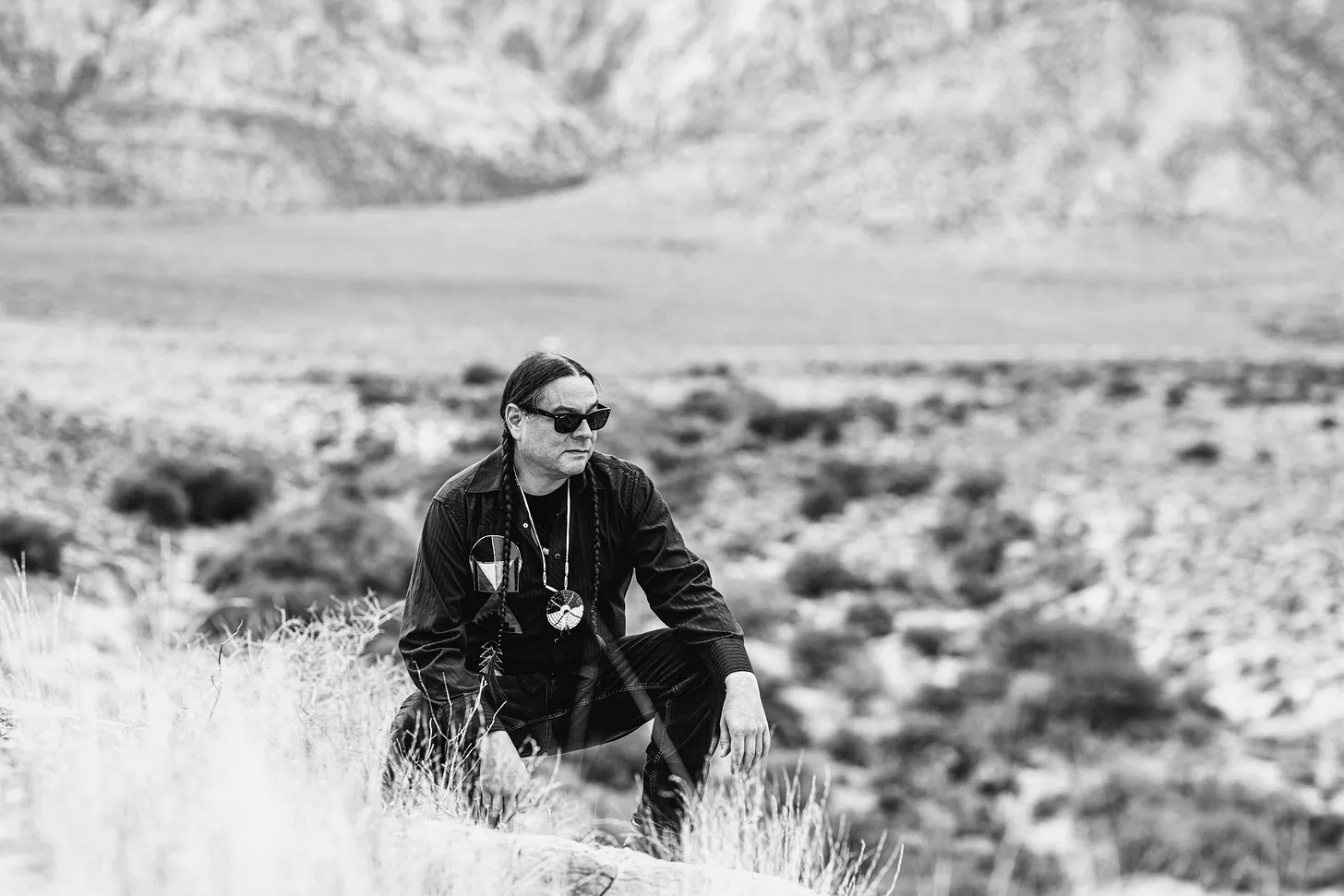
Dawn Martin-Hill is a Mohawk woman and the first Indigenous cultural anthropologist in Canada. She lives at Six Nations of the Grand River and is this year’s keynote speaker at the Gandhi Peace Festival on Saturday.
The topic of this year’s free virtual festival was truth and reconciliation with Indigenous communities.
Ahead of her lecture, The Spectator spoke with Martin-Hill about what she plans to discuss, her perception of the inaugural National Day for Truth and Reconciliation, and how society can move forward.
This interview has been edited for clarity and length.
What is your lecture about?
I’ll
look at the Great Law of Peace that our people have had for over 1,000
years, and our Thanksgiving address, which is our most ancient
acknowledgement. It’s our worldview and has everything to do with our
ecosystem and our environment.
It
doesn’t matter what you reconcile if we’re destroying our future
existence. Greed and exploitation is going to put us all in peril, and
that’s something we can all relate to, especially young people.
Also,
I’ll look at how the pillaging of lands and residential schools are the
latest outcome of the Doctrine of Discovery. Before that, we had
millions massacred, disease killing our crops, 50 million buffalo
slaughtered so we would starve. They did everything they could so we
wouldn’t exist, and the problem is we survived.
What do you hope people take away from your lecture?
We
all knew about those babies who were buried in unmarked graves. We knew
how much the Truth and Reconciliation Commission did in their
investigation, and Canada is withholding the information that should
speak to Canadians in very plain terms.
Think
about the ways in which you’ve maybe treated or dismissed Indigenous
peoples and their claims to land, their want to protect water, missing
and murdered Indigenous women, the sterilization of Indigenous women,
the economic apartheid. The fact that we’re not bitter and don’t want
revenge is due to the philosophy of our people, the Great Law of Peace,
to always move in the direction of hope and compassion, and try to
change the minds of people — you greet those people and try to heal them
and their minds.
Canadians need to
reconcile with their own history of this country and come to terms with
it, and figure out how to create a new legacy.
By doing nothing, you are part of the problem. You can’t say “get over it.”
How do you feel about the public’s response to Truth and Reconciliation Day?
Somebody
putting an “Every Child Matters” sign on their door is something that,
as an Indigenous person, you not only notice, but it really does move
you because those are the ones who matter.
Those
neighbours matter, not the government, the Pope and the bishops. The
next door neighbour in Caledonia who their kids go to school with
matter. The average citizen makes up this country, and they’re the most
meaningful.
How can we be a more peaceful society?
Rescind
the Doctrine of Discovery. Be compassionate, provide aid and assistance
to those who need it, and support human beings. Most of all, support
the land. We can’t live without water, without being able to grow food,
without rain, without our air being clean. When you fracture parts of
the Earth, you’re fracturing yourself.
Our environment will determine whether we can have peace or not.
You can stop climate change, don’t just accept it.
“Enough words, enough rhetoric, my people have been robbed with false promises for centuries. We want action. "We want money and training to build our own foster care facilities to protect our children who are sacred. We want it now.”
Bryan Brewer
Former President, Oglala Sioux Tribe
Thank you for walking the Red Road with us.
Together, we are making progress, step by step.
The
Lakota Peoples Law Project continues to advocate for the approval of
the Title IV-E Federal Planning Grant applications that Crow Creek,
Cheyenne River, Lower Brule, and Yankton have submitted by sending our
most recent report, “The New Boarding Schools,” to more than 100 officials in Washington D.C.
Our
hope is that the widespread corruption among all levels of South Dakota
government detailed in the report will urge federal officials in the
Department of Health and Human Services to fund the planning of Child
and Family Planning Service Programs that are so necessary for these
four tribes to retain their culture and their children.
A
combination of three 15th century Papal Bulls, the doctrine granted
explorers the moral and legal justification to seize land and resources
from Indigenous peoples. Its effects still linger, serving as a major
plank of United States property law which is oriented to continue to
disenfranchise, displace, and ultimately, devastate Indigenous peoples
for imperialistic economic ventures.
This
is the time for Pope Francis to rescind this doctrine, especially in
light of his recent encyclical, Laudato Si’, and his compelling speech
in Bolivia in which he said, “I say this with regret: many grave sins
were committed against peoples of America in the name of God.” He went
on to say, “I humbly ask forgiveness, not only for the offenses of the
Church herself, but also for the crimes committed against the native
peoples during the so-called conquest of America.” His apology is the
first step in respecting and honoring the innate rights of Indigenous
peoples. Rescinding the Doctrine of Discovery will prove that Francis
wants to begin a new era of cooperation.
We
have also begun a thorough legal analysis of a series of lawsuits aimed
at eliminating the Indian Child Welfare Act. A private consortium of
adoption attorneys, the American Academy of Adoption Attorneys, have
launched three strategic federal lawsuits challenging, not only the new
proposed guidelines, but ICWA itself.
These deceptive suits are clearly a
response to the Bureau of Indian Affairs’ release of the updated
guidelines for the Indian Child Welfare Act (ICWA),
We
will continue to keep you updated on our progress in returning
thousands of children stolen from their families, but until then, please
continue your support by following us on social media—Facebook, Tumblr, Twitter—by reading our daily blog, and by encouraging your friends and family to sign our petition to President Obama. We need to reach our goal of 100,000 signatures as soon as possible!
From the very beginning of US history, the founding fathers believe they are at a higher stage of Adam Smith's "four stages of history" than American Indians. George Washington favors treaties over force, writing that when forced off his land, the "savage," like the wolf, always seeks to return.
Johnson v. McIntosh determined that American Indian's land title could be extinguished "by purchase or by conquest."
February 28, 1823| In a land dispute, the Supreme Court determines that titles purchased from tribes do not supersede titles awarded by the federal government, because the indigenous occupants lost their "right of occupancy."
Chief Justice John Marshall's opinion calls American Indians "fierce savages," stating: "Discovery is the foundation of title, in European nations, and this overlooks all proprietary rights in the natives."
Even now, this "Doctrine of Discovery" continues to creep into the policies and mindset of today.
Chief Justice John Marshall composed several early and influential opinions on the relationship between American Indians and the United States.
Chief Justice John Marshall's majority opinion states that the tribe is not an independent nation, but a "domestic dependent nation" with a relationship to the United States "like that of a ward to his guardian." This ward-guardian mindset has carried into modern-day American Indian-US relations.
Congress passes the General Allotment Act, authorizing the president to divide up tribal land and parcel it out to individual American Indians. In the process, tribes are dispossessed of 90 million acres.
Meanwhile, American Indian children are forced to assimilate at mandatory boarding schools. (And Indian Adoption Programs would also begin)
Col. Richard Pratt, founder of the first off-reservation Indian Boarding School, gives a speech in 1892 where he adovcates to "kill the Indian in him, and save the man."
(Videos: UAF Tribal Management Program)
In this video, American Indian scholar and advocate Ada Deer calls the terminations a "cultural, economic and political disaster" for American Indians. Congress terminates tribal status for more than 100 tribes in the 1950s. When tribes lose their status, their lands become subject to taxation and members lose access to federal programs and services. The government further weakens tribes by relocating American Indians from reservations to cities and expanding state jurisdiction over reservations.
"The power to commit horrible crimes against children, and others, and then absolve itself and the rapists and killers it shields within its ranks, has made the Vatican a criminal, rogue body under every international standard of law and morality."
Read about the Papal Bull and what it means to federal laws here today in the US in the article "Ending Catholicism And Related U.S. Imperialism" by Thomas Ivan Dahlheimer at http://www.towahkon.org/endofimperialism.html
Papal Bull declares the legitimacy of Christian domination over (Indian) pagans, sanctifying enslavement and expropriation of property:
Romanus Pontifex, January 8, 1455 - …We bestow suitable favors and special graces on those Catholic kings and princes, …athletes and intrepid champions of the Christian faith… to invade, search out, capture, vanquish, and subdue all Saracens and pagans whatsoever, and other enemies of Christ wheresoever placed, and… to reduce their persons to perpetual slavery, and to apply and appropriate… possessions, and goods, and to convert them to… their use and profit.* (European Treaties bearing on the history of the United States and its Dependencies to 1648, Editor Francis Gardiner Davenport, pages 20-26)
HISTORY: Papal Bulls are the fabric of United States and International law. Papal authority is the basis for United States power over Indigenous peoples, not generally understood. The Doctrine of Discovery is still being used as an active legal principle by the United States Supreme Court in the twentieth-first century, revealed in the case City of Sherrill v. Oneida Indian Nation of New York decided in March 2005. The case involved a dispute over taxation of ancestral lands of the Oneida Indian Nation. During oral arguments, it became clear that the case would hinge on whether, in the opinion of the Court, the Oneida Indian Nation “has sovereignty status” with regard to the ancestral lands the Oneida Nation had reacquired. To decide the sovereign status of the Oneida Indian Nation, the Supreme Court relied upon the Doctrine of Discovery. Revealed in footnote number one of Justice Ruth Bader Ginsbergʼs decision for the Court majority: “Under the Doctrine of Discovery,” wrote Justice Ginsberg, “... fee title to the lands occupied by Indians when the colonists arrived became vested in the sovereign — first the discovering European nation and later the original states and the United States... The Supreme Courtʼs reference to the Doctrine of Discovery places the context for the Courtʼs decision in Sherrill v. Oneida Indian Nation of New York within the Framework of Dominance, dating back to the era of the Vatican Papal Bulls.”
Empire attitudes and dominance are not dead. ----Trace
Kim Wheeler was adopted during the Sixties Scoop and fought to find her way back to her culture My name is Kim Wheeler but some know me as...
Bookshop
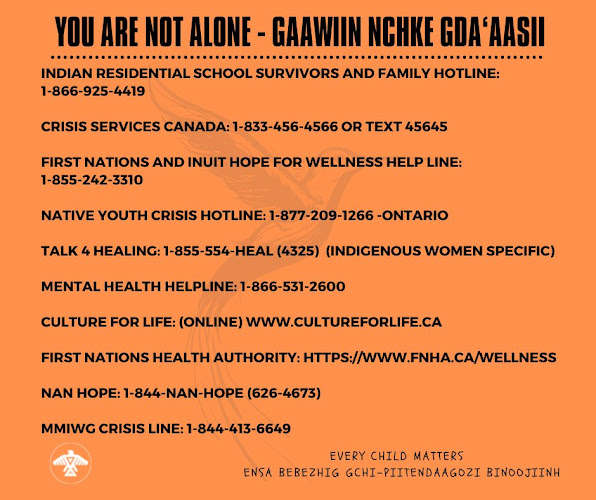
You are not alone
To Veronica Brown
Veronica, we adult adoptees are thinking of you today and every day. We will be here when you need us. Your journey in the adopted life has begun, nothing can revoke that now, the damage cannot be undone. Be courageous, you have what no adoptee before you has had; a strong group of adult adoptees who know your story, who are behind you and will always be so.
Diane Tells His Name
click photo
Lost Birds on Al Jazeera Fault Lines
click to read and listen about Trace, Diane, Julie and Suzie
NO MORE STOLEN SISTERS
click image
We conclude this series & continue the conversation by naming that adoption is genocide. This naming refers to the process of genocide that breaks kinship ties through adoption & other forms of family separation & policing 🧵#NAAM2022#AdoptionIsTraumaAND#AdopteeTwitter#FFY 1/6 pic.twitter.com/46v0mWISZ1
As the single largest unregulated industry in the United States, adoption is viewed as a benevolent action that results in the formation of “forever families.” The truth is that it is a very lucrative business with a known sales pitch. With profits last estimated at over $1.44 billion dollars a year, mothers who consider adoption for their babies need to be very aware that all of this promotion clouds the facts and only though independent research can they get an accurate account of what life might be like for both them and their child after signing the adoption paperwork.









/https://www.thespec.com/content/dam/thespec/news/hamilton-region/2021/10/01/the-problem-is-we-survived-qa-with-dawn-martin-hill-about-truth-and-reconciliation/martin_hill.jpg)








 Posts
Posts

