BOOZHOO! We've amassed tons of information and important history on this blog since 2010. If you have a keyword, use the search box below. Also check out the reference section above. If you have a question or need help searching, use the contact form at the bottom of the blog.
We want you to use BOOKSHOP to buy books! (the editor will earn a small amount of money or commission. (we thank you) (that is our disclaimer statement)
This is a blog. It is not a peer-reviewed journal, not a sponsored publication... WE DO NOT HAVE ADS or earn MONEY from this website. The ideas, news and thoughts posted are sourced… or written by the editor or contributors.
EMAIL ME: tracelara@pm.me (outlook email is gone)
THANK YOU CHI MEGWETCH!
SEARCH
Showing posts with label Mary Annette Pember. Show all posts
Showing posts with label Mary Annette Pember. Show all posts
Chief
James H. Red Cloud, grandson of the famous Chief Red Cloud who allowed
the Jesuits to set up a school on Lakota land, addresses the 1958
graduating class of Holy Rosary Mission and a Jesuit father. Credit: Courtesy of the Red Cloud Indian School and Marquette University Holy Rosary Mission/Red Cloud Indian School records
Buried Secrets: America’s Indian Boarding Schools
This week on Reveal,
we’re bringing back a two-part investigation with ICT (formerly Indian
Country Today) about boarding schools for Native children and the United
States’ effort to come to terms with an educational system that was
designed to “kill the Indian and save the man.”
ICT reporter Mary Annette Pember has been reporting on these boarding
schools for more than 20 years. Much of her work focuses on the role the
Catholic Church played in shaping federal policy toward Native people.
The church was given more than 10,000 acres of tribal land by the
federal government, as well as access to money that had been given to
tribes through treaties with the U.S. government to build and operate
the schools.
In part one
of this investigation, Pember takes us to the Catholic-run Red Cloud
Indian School on the Pine Ridge Reservation in South Dakota, which is
now trying to bring truth and healing to its community despite the open
wound from the school’s history.
WARNING: This story contains disturbing details about residential and boarding schools. If you are feeling triggered, here is a resource list for trauma responses
from the National Native American Boarding School Healing Coalition in
the U.S. In Canada, the National Indian Residential School Crisis
Hotline can be reached at 1-866-925-4419.
This
story and a two-part podcast are the result of a collaboration between
ICT and Reveal to examine Indigenous boarding schools in the United
States. The podcast, “Buried Secrets: America’s Indian Boarding Schools,” starts with part 1 on Saturday, Oct. 15, and concludes with part 2 on Saturday, Oct. 22.
Before the law more than a quarter of American Indian and Alaska Native children were removed from their homes
This
story is like a scary movie. In “Fatal Attraction” Glen Close’s
character won’t give up her murderous quest. She comes back again and
again. The legal challenges to the Indian Child Welfare Act follow a
similar plot line.
The
scene in the 1970’s for American Indian and Alaska Native children was
disturbing, some 25 to 35 percent of the population were removed from
their homes by state welfare and private adoption agencies. This was slow motion genocide by literally removing the future from the home.
The
Indian Child Welfare Act was enacted as to reverse this narrative and
to recognize that tribes, as sovereign nations, have control over the
welfare of their own children.
Attacks
on the law, enacted in 1978, have inexplicably risen in the past seven
years and attracted the support of a seemingly disparate array of high
power ultra conservative players and organizations.
Today’s
challenges to the child welfare protocols aren’t only about adoption
because if the Indian Child Welfare Act is found to be unconstitutional
that would undermine tribal governments. So much is at stake: The
authority of tribal courts, economic nationhood, including casinos, and
the control of tribal land, potentially an opening for fossil fuels and
other extractive industry development.
“Eliminating
ICWA is part of an ultra-conservative agenda to return Indian Country
to the Termination Era, abrogate tribal treaties, and made tribes and
tribal citizens fully subjects to state law,” said former tribal
prosecutor J. Eric Reed.
The
latest Indian Child Welfare Act challenge is again before the 5th U.S.
Circuit Court of Appeals. The court made the unusual decision to vacate
its August 9
decision in Brakeen v. Bernhardt finding child welfare law is not
race-based but a valid, constitutional statute; then the court announced
it would rehear the case En Banc.
The
use of En Banc, in which all judges of a particular court hear a case,
is a relatively uncommon legal procedure usually reserved for the purposes
of maintaining uniformity of the court’s decisions or to show that the
proceeding involves a question of exceptional importance.
In
its original decision finding ICWA to, indeed, be constitutional, one
of the three judges, Priscilla R. Owen wrote her dissenting opinion in
an August 16 modification.
Owen wrote that in requiring states to maintain records relating to
placement of Indian children as part of compliance with Indian Child
Welfare Act violates the constitution’s 10th Amendment
anti-commandeering doctrine. According to the 10th Amendment,
“The powers not delegated to the United States by the Constitution, nor
prohibited by it to the States are reserved to the States respectively
or to the people.”
Owens
wrote: “The defendants in the present case contend that the Indian
Commerce Clause empowers Congress to direct the States as it has done in
the ICWA. They are mistaken. Where a federal interest is sufficiently
strong to cause Congress to legislate, it must do so directly; it may
not conscript state governments as its agents.”
This
opinion underscores the rise of Federalist philosophies in conservative
politics supporting states rights over federal authority, questioning
the constitutionality of requiring state governments to carry out
federal policies.
The
5th U.S. Circuit Court of Appeals long considered the most politically
conservative court in the country, has grown more so after five
appointments to its ranks by President Trump. A total of 17 judges
occupy the court.
According
to federal court watchers, President Trump is engaged in a quiet
revolution to populate federal courts with judges who align with his
brand of politically conservative politics. Although his 157 judicial
appointments place him roughly even with both Barack Obama and George W.
Bush during the same point in their tenures, his focus on federal
appeals courts sets him apart from his predecessors according to the New York Times. If all of his current nominees are confirmed, they will account for 1.4 of the country’s federal appeals court judges.
National Public Radio’s
Carrie Johnson described Trump’s appointment of James Ho to the Fifth
Circuit Court as exemplifying the Trump era. A first time judge, Ho’s
first Fifth Circuit opinion has been described by legal scholars as
political commentary rather than legal opinion. In Zimmerman v. City of
Austin, involving limiting campaign contributions in Austin, Texas, he
wrote in his dissenting opinion, “If you don’t like big money in politics, then you should oppose big government in our lives,”
Vanita Gupta, president and chief operating officer of the Leadership Conference on Civil and Human Rights issued
a statement about Trump’s court nominees: “The majority of his nominees
have long records of hostility to civil and human rights, and too many
are unqualified. Leader McConnell and Senate Republicans are
transforming our federal courts because their agenda is failing in
Congress and the court of public opinion.”
She notes that appointments to the federal judiciary are lifetime positions.
On
October 4, 2018, U.S. District Judge Reed O’Connor of the Northern
District of Texas ruled that the Indian Child Welfare Act is
unconstitutional because it’s race-based.
The
ruling was based on Chad and Jennifer Brackeen, non-Natives, experience
in trying to adopt a Native child, an enrolled citizen of the Navajo
and Cherokee Nations whom they had fostered for a year-and-a-half. In
2017, the Brackeens filed a lawsuit in Texas seeking to adopt the
two-year-old boy, identified in the lawsuit as A.L.M. Although a Navajo
family was available to take the boy in January 2018 the Brackeens won
their case in a Texas district court, and successfully finalized their
adoption. But their lawsuit, Brackeen v. Bernhardt,
proceeded anyway, joined by several other plaintiffs, including the
states of Texas, Louisiana, and Indiana, and eventually landed before
Judge O’Connor.
Most media coverage of O’Connor’s ruling, such as a story by National Public Radio, tended to gloss over the law's political and legal context and the far-reaching implications of its reversal.
Many
failed to mention that conflicts concerning the child welfare system
that can often be traced back to the failure of state and county
authorities to notify a tribe when an enrolled child enters child
protective services. And most neglected to explain that tribal identity
is based not on racial identifiers, or whether a child “looks Indian,”
but on their political and citizenship connections to a sovereign
nation. And that gets at issues that go far beyond the ability of
non-Natives to adopt Native American children.
The
designation that the children of enrolled tribal citizens are
automatically enrolled citizens as well “is foundational to federal
Indian law,” noted a statement
released by the Native American Journalists Association. In March 2019,
the Fifth Circuit Court of Appeals in New Orleans heard oral arguments
in the Brackeen
case and issued its now vacated decision in August finding that the
child welfare law is not race based, unconstitutional nor does it
counter the 10th amendment. If the court finds during rehearing that
ICWA is unconstitutional on any front, it opens the door to overturning
tribal sovereignty.
And without sovereignty, treaties between the U.S. government and tribes could be subject to debate.
Reversing
the Indian Child Welfare Act would mean that “the hundreds and
thousands of federal statutes benefiting Indians would be open for
reconsideration,” said Michigan State University law professor Matthew
Fletcher, a member of the Grand Traverse Band of Ottawa and Chippewa
Indians and editor of Turtle Talk,
the leading blog on American Indian law and policy. “Federal services
for Indians and statutes such as the Indian Self Determination Act,
Indian Gaming Regulatory Act and others could be challenged.”
And
that might be the point. Tribal leaders, legal scholars and child
welfare advocates speculate that attacks on the law are seldom rooted in
genuine concern for American Indian children, but are merely the latest
strategy for right-wing groups to advance agendas rooted in racism,
greed and the othering of poor people.
Since 2013, challenges to the law have gained new urgency and support from wealthy right-wing interest groups. Brackeen v. Bernhardt was
itself bankrolled by an unlikely alliance of right-wing political,
legal, economic and religious groups that outwardly appear to have
little connection to Indian Country or its children. They include
right-wing think tanks, representatives of the private adoption
industry, the evangelical adoption movement, anti-treaty rights
organizations and conservative fossil fuel industrialists.
Although
the final goals of these seemingly disparate groups may differ, their
shared strategy of commodifying Native American children reveals a
colonial mindset that not only depicts Native American people as
incapable of managing their own affairs, but also frames their children
and resources as free for the taking.
According
to J. Eric Reed, former tribal prosecutor and a member of the Choctaw
Nation, the current legal fight is part of a strategy that feeds into
ending the federal government’s trust relationship with tribes as well
as challenging federal authority over states’ rights.
“Brackeen v. Zinke,” said Reed, “is a right-wing foot in the door to rewrite the Constitution.”
Although
the decision to rehear Brankeen v. Bernhardt appears to be based on
Owen’s dissenting opinion that ICWA violates the Constitution’s anti
commandeering doctrine, it will mean all plaintiff’s complaints in the
original case will be up for reconsideration.
The
law’s opponents are emboldened by each small favorable court decision
in their favor. For instance, since 2013, with an infamous lawsuit known
as “Baby Veronica” that reached the Supreme Court, challenges to ICWA
have increased. In the Baby Veronica case—formally called Adoptive Couple v. Baby Girl—powerful
interests in the adoption industry and evangelical churches joined with
high-profile attorneys to challenge ICWA’s authority regarding the
adoption of an infant citizen of the Cherokee Nation named Veronica.
Eventually the non-Native couple seeking to adopt Veronica, Matt and
Melanie Capobianco, prevailed.
Although
the court found that ICWA was, indeed, constitutional, it found in
favor of the Capobianco’s because the child’s Native father had not
maintained custody since her birth. Not long after the Supreme Court
ruled in the Capobiancos’ favor, Veronica’s non-Native biological
mother, Christina Maldonado, signed onto a lawsuit against the U.S.
government claiming that ICWA was unconstitutional. (She later dismissed
the suit voluntarily)
“ICWA
opponents want another crack at the Supreme Court,” said Nicole Adams
of the Colville Confederated Tribes and advisor at the Partnership for
Native Children.
“Redefining ICWA as race-based furthers their final agenda of dismantling Indian law as a whole,” she said.
Chiracahua
Apaches arriving at the Carlisle Indian School, 1886, and after
"training" in 1886. From the Records of the Office of the Chief Signal
Officer (National Archives)
The Roots of the child welfare act
Most
people in the U.S. have never heard of the Indian Child Welfare Act,
enacted in 1978 to stop the near wholesale removal of Native American
children from their birth families to non-Native foster and adoption
placements. Today, under that law, tribes typically try to place
children who come into tribal or state care with a family member, a
member of their tribe or, failing that, a family from another tribe.
“Typically,
the mainstream press picks up a story regarding ICWA only when a
non-Indian family has somehow been injured,” said Terry Cross, founding
director and current advisor for the National Indian Child Welfare
Association
But
the law stems from generations of abusive policies that tore Native
American families apart. Beginning in the late 19th Century, the federal
government forced or coerced the separation of thousands of Native
children from their families, sending them to federal or religious
boarding schools often many hours away from their homelands.
Created
as part of President Ulysses S. Grant’s Peace Policy of 1869, the
boarding school era was framed as a bloodless, more humane answer to the
country’s “Indian Problem.” The schools’ explicit mission was to
destroy Native cultures, languages, and spirituality, and prepare the
children for assimilation into American society. Modeled on education
tactics used on Native prisoners at Fort Mason in the 1870s by Captain
Richard H. Pratt, the boarding schools followed a punitive philosophy of
rigid order and Pratt’s motto: “Kill the Indian, and save the man.”
Today, Native American and Alaska Natives remain overrepresented in foster care at a rate 2.7 times greater than their proportion in the general population.
It’s
these dynamics that ICWA was created to address: helping ensure that
tribes, as sovereign nations, have jurisdiction over their own children.
Since the act’s establishment, several prominent child advocacy
organizations have declared it the gold standard for child welfare
policies and practices for American Indian children.
Despite
the law, tribes often decide not to transfer eligible children to
tribal jurisdiction for a number of reasons: that the child may have
close tribal and family connections in a non-Indian placement, or the
tribe may lack the resources to intervene in cases located far from the
reservation. Notably, in the Brackeen, the tribs ruled in favor of the
non-Native family’s adoptions. These scenarios, however, seldom receive
media coverage.
There is little data regarding states’ compliance with Indian Child Welfare Act, but a 2015 study by Casey Family Programs
suggests that many government child protection agencies fail to follow
the law. The lack of federal oversight for enforcing ICWA adds to gaps
in compliance.
“For
years, under ICWA, tribes have been making determinations in child
welfare cases based on the best interest of the child,” noted law
professor Matthew Fletcher. “Suggesting that tribes don’t routinely make
child welfare decisions based on the best interest of the child is just
ignorant.”
The
legal battle over ICWA will likely continue for several years, and
Fletcher and others believe that future challenges are inevitable.
Termination of tribal sovereignty
From
the mid-1940s through 1970, the federal government employed a series of
assimilationist policies designed to privatize American Indian lands,
destroy tribal cultures, and reverse the tribes’ and government’s “trust
relationship,” which protects tribal treaty rights, lands, assets, and
resources.The assault on this trust responsibility and Indian rights
became known as the Termination Era.
But the 2018 ruling Brackeen v. Bernhardt, Judge O’Connor seemed to endorse the anti-tribal government view that it’s a race-based statue.
“If
you’re a right-wing interest group and can figure out a way to get the
case heard in Judge O’Connor’s court, you can expect a sympathetic ear,”
Fletcher said.
The
leading figures in the newest anti-Indian Child Welfare Act drama
include the right-wing think tank the Goldwater Institute; the National
Council for Adoption, representing the private adoption industry; and an
evangelical Christian adoption movement that sees adoption as a means
to live out their faith.
Ancillary supporters include the Koch brothers; the DeVos family; the Mercer Family (who are among Trump’s largest donors); the Cato Institute; the American Legislative Exchange Council (ALEC); the anti-treaty group Citizens Equal Rights Alliance which advocates for the termination of U.S. and tribal treaty agreements; the Southern Baptist Convention, and others.
“It’s
like this weird triad of strange and powerful bedfellows,” said Adams.
Some of the players may have unwittingly signed on to this war and don’t
necessary share the duplicitousness of others. But their combined
opposition to ICWA represents titanic influence, power, and money in
service of an anti-tribal sovereignty agenda.
One of the richest anti-ICWA funders is the Goldwater Institute.
Since 2015, the libertarian non-profit has underwritten several legal
challenges to ICWA. Attorneys at the Goldwater Institute filed an amicus
brief in Brackeen v. Bernhardt,
reiterating its past claims that ICWA is race-based and
unconstitutional. And Timothy Sandefur, the Institute’s vice president
for litigation, compared ICWA to discrimination suffered under Jim Crow
laws, telling The Nation in 2017 that ICWA subjects Native children to an unfair set of rules based on race.
The Institute, along with the Cato Institute and the Texas Public Policy Foundation filed an amicus curiae brief supporting the current Fifth Circuit’s decision to hold En Banc hearings on ICWA.
The
Institute describes Indian communities as environments “where poverty,
crime, abuse and suicide are rampant,” and cites data showing that
American Indian children have the highest rate of foster care of any
ethnic group as an argument against ICWA. In essence, this blames
American Indians for the outcomes of generations of federal
assimilationist policies and recommends more of the same as a solution.
And
yet, as Fletcher noted, “The Goldwater Institute has no history of
expressing interest in either Indian or family law.” Although the
Goldwater Institute has created an organization called Equal Protection
for Native Children and frequently works with other ICWA opponents such
as the Cato Institute, it has no history of working to improve the
economic, educational, or health circumstances of Native children.
Indeed, according to the organization’s income tax filing from 2016, its primary areas of research include constitutional law, education reform, and healthcare policy.
Among the Goldwater Institute’s major donors are the Koch
brothers, well-known opponents to federal power and spending. Through
their various advocacy organizations, the Koch brothers fund and support
groups such as ALEC, which, like the Goldwater Institute, has called
for a constitutional convention that would focus on elevating states’
rights and reducing federal oversight and regulation.
The other ally against the child welfare law the National Council for Adoption, and the adoption movement it represents. Matthew McGill, the lead plaintiffs’ attorney in Brackeen v. Bernhardt, is part of a husband-and-wife legal team with a long history of challenging the Indian Child Welfare Act.
McGill’s
wife, Lori Alvino McGill, also a lawyer, represented the adoptive
parents and the non-Indian biological mother in the Baby Veronica case
,accompanying them on a media tour, including an appearance on the Today Show that helped make their challenge to ICWA a national story.
The couple represent a larger constituency in the private adoption industry,
which has become a powerful lobby against ICWA. Private adoptions are a
lucrative business, with attorney fees routinely running between
$10,000 and $40,000. But as obstacles to international adoptions have
grown, there is a greater interest in domestic adoptions in the U.S.—including adoptions from Indian Country.
Many
clients of private adoption attorneys like the McGills are members of a
Christian adoption movement that encourages evangelicals to see
adoption as a means to live out their faith help the needy, and
evangelize children. The statement of faith for Nightlight Christian
Adoptions — the agency affiliated with the Baby Veronica case — holds
that adoption fulfills the Bible’s mandate to make disciples of all
nations.
Practicing Christians are more than twice as likely to adopt than the general population, according to a 2013 study by the Barna Group. The study also found that most adoptive parents are White, while the children they adopt are overwhelmingly non-White.
For
many Native Americans, these demographics bear a troubling resemblance
to historical interactions between White Christians and Native
peoples—whether the Catholic Church’s 15th Century documents granting
European Christian explorers permission to use any means necessary to subdue and convert indigenous peoples, or the more recent abuses of the boarding school era.
“There
is nothing original about some of the evangelical Christian adoption
movements to focus on Native children and take it upon themselves to
decide what’s best for Native families,” said the Partnership for Native
Children’s Nicole Adams.
Sandy White Hawk, program manager with the Indian Child Welfare Act Law Center in Minneapolis, and a team of researchers, found
that adult American Indians who were adopted to non-Indian parents
experienced high rates of sexual, physical, and emotional abuse in their
adoptive families. Adoptees also experience traits common to trauma
survivors such as anxiety, intrusive imagery or nightmares, depression,
withdrawal/isolation, guilt, and unresolved grief. The National Indian
Child Welfare Association also cites studies
indicating that Indian children placed in non-Indian adoptive homes
suffer a far greater risk than the general American Indian population of
psychological damage and have a higher tendency to abuse drugs and
alcohol.
“I
believe some of the motivation for evangelical Christians to adopt
American Indian children comes from a savior complex,” said White Hawk.
“Minority populations are often portrayed as unable to care adequately
for their children; some of the adoptive parents may believe they are
offering homes for unwanted, neglected children.”
But
too often, then as now, this impulse may spring from a failure to
understand American Indian culture or extended family structure, wherein
aunts or uncles might raise a child instead of her biological parent.
As child welfare workers labeled that tradition as neglect, generations
of Indian children were removed from their homes.
“Instead
of saving Native families, these policies robbed them of the nurturing
traditional values where the whole community embraced the child,” said
Nicole Adams. “Who are these people to think they can take away ICWA,
one of the few good things Native people have to protect our families?”
What’s next?
“Right
now we know one judge from the panel (Owen) was concerned about one or
two sections of the statute, but not its entirety. It may be the En Banc
court will re-open the whole panoply of constitutional challenges; We
just don’t know yet,” said Matthew Fletcher.
Amicus
briefs are due December 16 and January 14, 2020. Oral arguments and
case hearing are scheduled in New Orleans for the week of January 20,
2020.
Mary
Annette Pember works as an independent journalist focusing on Indian
issues and culture with a special emphasis on mental health and women’s
health. Winner of the Ida B. Wells Fellowship for Investigative
Reporting, Rosalynn Carter Fellowship for Mental Health Journalism, the
USC Annenberg National Health Fellowship and Dennis A. Hunt Fund for
health journalism she has reported extensively on the impact of
historical trauma among Indian peoples. She has contributed to
ReWire.News, The Guardian, The Atlantic and Indian Country Today. An
enrolled member of the Red Cliff Band of Wisconsin Ojibwe, she is based
in Cincinnati, Ohio. See more at MAPember.com.
Portions of this article first appeared in Public Eye Magazine on November 11, 2019 for Political Research Associates
Trauma
is big news these days. Mainstream media is full of stories about the
dramatic improvements allowing science to see more clearly how trauma
affects our bodies, minds and even our genes. Much of the coverage hails
the scientific connection between trauma and illness as a breakthrough
for modern medicine. The next breakthrough will be how trauma affects
our offspring.
The science of epigenetics, literally “above the gene,” proposes that
we pass along more than DNA in our genes; it suggests that our genes
can carry memories of trauma experienced by our ancestors and can
influence how we react to trauma and stress. The Academy of Pediatrics
reports that the way genes work in our bodies determines neuroendocrine
structure and is strongly influenced by experience. [Neuroendocrine
cells help the nervous and endocrine (hormonal) system work together to
produce substances such as adrenaline (the hormone associated with the
fight or flight response.] Trauma experienced by earlier generations can
influence the structure of our genes, making them more likely to
“switch on” negative responses to stress and trauma.
In light of this emerging science and how it works with the way we react to trauma, the AAP stated in its publication, Adverse Childhood Experiences and the Lifelong Consequences of Trauma,
“Never before in the history of medicine have we had better insight
into the factors that determine the health of an individual from infancy
to adulthood, which is part of the life course perspective—a way of
looking at life not as disconnected stages but as integrated across
time,” according to the AAP in their recent publication examining the
role of Adverse Childhood Experience (ACES) on our development and
health. The now famous 1998 ACES study conducted by the Centers for
Disease Control (CDC) and Kaiser Permanente showed that such adverse
experiences could contribute to mental and physical illness.
“Native healers, medicine people and elders have always known this and
it is common knowledge in Native oral traditions,” according to LeManuel
“Lee” Bitsoi, Navajo, PhD Research Associate in Genetics at Harvard
University. (Courtesy SACNAS)
Folks in Indian country wonder what took science so long to catch up
with traditional Native knowledge. “Native healers, medicine people and
elders have always known this and it is common knowledge in Native oral
traditions,” according to LeManuel “Lee” Bitsoi, Navajo, PhD Research
Associate in Genetics at Harvard University during his presentation at
the Gateway to Discovery conference in 2013.
According to Bitsoi, epigenetics is beginning to uncover scientific
proof that intergenerational trauma is real. Historical trauma,
therefore, can be seen as a contributing cause in the development of
illnesses such as PTSD, depression and type 2 diabetes.
What exactly is historical or intergenerational trauma? Michelle M.
Sotero, an instructor in Health Care Administration and Policy at the
University of Nevada, offers a three-fold definition. In the initial
phase, the dominant culture perpetrates mass trauma on a population in
the form of colonialism, slavery, war or genocide. In the second phase
the affected population shows physical and psychological symptoms in
response to the trauma. In the final phase, the initial population
passes these responses to trauma to subsequent generations, who in turn
display similar symptoms.
According to researchers, high rates of addiction, suicide, mental
illness, sexual violence and other ills among Native peoples might be,
at least in part, influenced by historical trauma. Bonnie Duran,
associate professor in the Department of Health Services at the
University of Washington School of Public Health and Director for
Indigenous Health Research at the Indigenous Wellness Research Institute
says, “Many present-day health disparities can be traced back through
epigenetics to a “colonial health deficit,” the result of colonization
and its aftermath.”
According to the American Indian and Alaska Native Genetics Research
Guide created by the National Congress of American Indians (NCAI),
studies have shown that various behavior and health conditions are due
to inherited epigenetic changes.
Authors of the guide refer to a 2008 study by Moshe Szyf at McGill
University in Montreal that examined the brains of suicide victims. Szyf
and his team found that genes governing stress response in the victim’s
hippocampus had been methylated or switched off. Excessive trauma
causes us to produce hormones called glucocorticoids which can alter
gene expression. Chronic exposure to this hormone can inhibit genes in
the hippocampus ability to regulate glucocorticoids. Szyf suggested that
the genes were switched off in response to a series of events, such as
abuse during childhood. All victims in the study were abused as children.
Nature or Nurture? It’s Both!
Szyf, in collaboration with another scientist at McGill,
Neurobiologist Michael Meaney, did research showing a significant
difference in the hippocampus between adults rats raised by attentive
and inattentive mothers. Adult offspring of inattentive rat mothers
showed genes regulating sensitivity to stress to be highly methylated.
The rats with attentive moms did not.
To test their research they switched the parents for rat babies born
to bad and good mothers. The babies born to attentive moms but given to
inattentive moms also developed highly methylated genes and grew to be
skittish adults. The opposite proved true for babies born to bad moms
but given to good moms. As adults the rat babies born to bad moms but
raised by good mothers appeared calm.
This research seems to combine the historically polarizing theory of
nature versus nurture in determining behavior. Nature is that which is
inherited while nurture is the environmental influences.
Native researcher Teresa Brockie PhD, Research Nurse Specialist at
the National Institute of Health suggests that such gene methylation is
linked to health disparities among Native Americans. In her article in Nursing and Research and Practice,
she and her research colleagues note that high ACE’s (Adverse Childhood
Experience) scores have been linked to methylation of genes that
regulate the stress response. They further noted that endocrine and
immune disorders are also linked to methylation of such genes.
The researchers found that Native peoples have high rates of ACE’s
and health problems such as posttraumatic stress, depression and
substance abuse, diabetes all linked with methylation of genes
regulating the body’s response to stress. “The persistence of stress
associated with discrimination and historical trauma converges to add
immeasurably to these challenges,” the researchers wrote.
Since there is a dearth of studies examining these findings, the
researchers stated they were unable to conclude a direct cause between
epigenetics and high rates of certain diseases among Native Americans.
One of researchers, Dr. Jessica Gill, Principal Investigator, Brain
Injury Unit, Division of Intramural Research, National Institute of
Nursing Research wrote in response to questions to the NIH’s public
affairs office, “Epigenetic studies provide a unique opportunity to
characterize the long-term impact of stressors including historical
trauma on the function of genes. The modification of gene function
through epigenetic modifications can greatly impact the health of the
individual and may underlie some of the health disparities that we
observe in populations including Native Americans. This line of research
is of great promise for nurse scientists, as it will be instrumental in
the promotion of the health and well-being of patients impacted by
trauma and stress.”
Although epigenetics offers the hope of creating better and more
specific medicines and interventions for mental health problems, it also
suggests the notion that Native peoples and other ethnic groups may be
genetically inferior.
Researchers such as Shannon Sullivan, professor of philosophy at UNC
Charlotte, suggests in her article “Inheriting Racist Disparities in
Health: Epigenetics and the Transgenerational Effects of White Racism,”
that the science has faint echoes of eugenics, the social movement
claiming to improve genetic features of humans through selective
breeding and sterilization.
Inherited Resilience
Epigenetics is indeed a hot topic, and pharmaceutical companies are
actively searching for epigenetic compounds that will help with learning
and memory and help treat depression, anxiety and PTSD.
Many researchers caution, however, that the new science may be
getting ahead of itself. “There is a lot of research that needs to be
done before we will understand whether and how these processes work,”
says Joseph Gone, professor at the University of Michigan and member of
the Gros Ventre tribe of Montana.
Scientific developments such as epigenetics can offer exciting new
insights not only into how our bodies react not only to trauma but also
how we manage to survive it.
Native peoples ability to maintain culture and sense of who they are
in the face of such a traumatic history suggests an inherited resilience
that bears scientific examination as well, according to Gone.
Isolating and nurturing a resilience gene may well be on the horizon.
A Chilling Reminder of How Cruel Assimilation Was—And Is
Mary Annette Pember, Indian Country Today, January 01, 2013
For such small objects, the child’s handcuffs are surprisingly heavy when cradled in the palms of one’s hand. Although now rusted from years of disuse, they still convey the horror of their brutal purpose, which was to restrain Native children who were being brought to boarding schools. “I felt the weight of their metal on my heart,” said Jessica Lackey of the Cherokee tribe as she described holding the handcuffs for the first time.
Lackey, an alumnus of Haskell Indian Nations University, was working at the school’s Cultural Center & Museum when the handcuffs were unwrapped last spring after being kept in storage for several years. I had heard rumors about the existence of the handcuffs during visits to Haskell over the years and had made numerous inquiries to school authorities about them, but people seemed very reluctant to discuss this touchy artifact. This past summer, however, Haskell agreed to allow a public viewing of the handcuffs. Andy Girty, one of the elders who first blessed the handcuffs when they were given to Haskell in 1989, helped unwrap them for me.
Known as the Haskell Institute in its early years, the school opened its doors in 1884. It was originally founded as an instrument of the final solution to this country’s “Indian problem”; Haskell Institute’s mission then was embodied in the now infamous motto of Captain Richard H. Pratt, founder of the Carlisle Indian Industrial School: “Kill the Indian, Save the Man.” This mind-set led to decades of forced acculturation through brutal military-style incarceration cloaked as education in U.S. Indian boarding schools.
Although begun as a model for assimilation, native students have, over the years, transformed Haskell into a model for self-determination. The school’s early curriculum featured training in domestic and farming skills but has since evolved into four-year university.
Haskell’s Cultural Center & Museum, located on campus, tells the full—and often cruel—story of Haskell’s painful past as well as providing a venue to showcase Native art, culture from the past and present. Opened in 2002, the center features the permanent exhibit Honoring Our Children Through Seasons of Sacrifice, Survival, Change and Celebration, featuring artifacts, photos and letters from the school’s early days.
Read the rest here: http://indiancountrytodaymedianetwork.com/article/tiny-horrors-chilling-reminder-how-cruel-assimilation-was%E2%80%94and-146664?fb_action_ids=10151260247109550&fb_action_types=og.likes&fb_source=aggregation&fb_aggregation_id=288381481237582
A Mother's Day story: Mother and daughter both given up for adoption
By Mary Annette Pember (photos and story)
May 14, 2012
This year, for the first time in a long time, Mother’s Day didn’t bring with it the painful unknowns for Jeanne Winslow and Rachel Banks Kupcho of the Leech Lake Band of Ojibwe. Jeanne and her daughter Kupcho met for the second time last October, more than 35 years after Winslow gave her newborn up for adoption.
“The day I got the call was the day I knew my life had changed forever,” says Winslow. That call on a cool October day carried the news that her daughter had found her and wanted to meet.
Their reunion was not a made-for-TV event filled with balloons and flowers. Winslow recalls that seeing her daughter for the first time in such a long time was quietly powerful, a bit like the first time she heard the drum and knew deep in her body that she was American Indian.
Like Kupcho, Winslow was put up for adoption as a newborn and raised by non-Indians.
Their story puts a quintessential Indian twist on the standard Mother’s Day tale of maternal perfection, and shows the inexorable pull of blood and spirit that so many Native people describe when they speak of wanting to know their culture.
I first met Kupcho in Minneapolis back in 2008 while doing a story about the challenges faced by American Indian adoptees who want learn more about their cultures and their birth parents. At the time, she knew only that her birth mother was Ojibwe from Minnesota. Her adoptive family was supportive and understanding of her efforts. A bright, confident young woman, Kupcho is convinced that without the unconditional love of her adoptive parents she would not have been strong enough to pursue her passion and calling of working to support the Indian Child Welfare Act (ICWA). While working with the National Indian Child Welfare Association, she met Sandy White Hawk, executive director of the First Nations Repatriation Institute in Minneapolis. White Hawk, an adoptee herself, founded the organization to advocate for Native adoptees in accordance with ICWA and to help unite adoptees with their birth families, cultures and tribes.
In October, they informed me that they had found Kupcho’s birth mother, Winslow, a children’s counselor living in Iowa.
Winslow and Kupcho, along with Kupcho’s 18-month-old daughter Mika, quickly arranged a meeting. Kupcho recalls that Winslow seemed to be in quite a hurry to meet her. She soon found out why.
Winslow’s birth mother (and Kupcho’s grandmother), Audrey Banks, who Winslow had met 20 years earlier, was dying. Winslow immediately rushed everyone to her mother’s bedside.
“There were four generations in that room meeting for the first time,” Winslow recalls. “That was the first thing Kupcho and I did together. It was the greatest privilege and honor to be there with her. It was a very healing experience. This has all been about circles connecting. At first, it was just my circle but now I see that so many others are interconnected.”
Kupcho didn’t know it at the time, but she had previously connected with her grandmother—Audrey was well known and respected in the Minneapolis Native community for her work helping social service agencies maintain compliance with ICWA.
Like Kupcho, she earned a master’s degree in social work in order to better serve Native children. “There has definitely been something bigger at work in my life; there has been a path I am meant to walk,” Kupcho says of this coincidence.
In many ways, Audrey’s experience as a young Ojibwe woman may have helped set the direction of that path.
Born on the Leech Lake reservation, Audrey was sent to the Pipestone Indian boarding school at age 9 and remained there for the remainder of her childhood. After moving to Minneapolis she gave birth to three boys and three girls.
According to her daughters, social workers from Catholic Charities showed up at her bedside after each birth, pressuring the single mother to give the girls up for adoption.
“She said that she felt coerced by the social workers that said that the girls would have better lives if they were raised by white people,” recalls Bernadine Harroun, Audrey’s second daughter. “I think that influenced her decision to go into social work and help keep Indian kids with Indian families.”
Bernadine and her younger sister, Winslow were adopted by the same family and raised together. Bernadine initiated the search for Audrey and Winslow and was responsible for their first meeting in 1989. They learned that Audrey, all of her children and Kupcho all lived and grew up within 20 miles of each other.
“Most of the stories of Native adoptees finding their families are like miracles,” White Hawk says. The distinguishing factor for Native adoptees, according to White Hawk is that the children were prayed for by generations of parents who knew hard times were coming. “Native people have that spiritual pull, like a spiritual umbilical cord that compels us to seek out our families,” she says.
Many Native adoptees report that hearing the traditional drum often activates that spiritual pull. Indeed Winslow recalls the first time she heard the drum. “I heard it and I knew I was Indian. The drum goes to some place so deep,” she recalls. (She didn’t know it at the time, but her uncle, well-known activist Dennis Banks was one of the people at that drum. He was giving a presentation at Winslow’s suburban high school about the happenings at Wounded Knee.)
Except for the strange longing awakened in her by the drum, Winslow says life in her adoptive suburban home was good. Ironically, because of this positive experience, she was able to make the difficult decision to relinquish her own daughter for adoption. Newly independent and sexually inexperienced, she found herself pregnant at age 19. “I knew that I couldn’t give my daughter the chance she deserved unless I did something drastic,” she recalls.
With the support of her adoptive family, Winslow put Kupcho up for adoption. “Leaving the hospital without her was the hardest thing I’ve ever done in my life,” she says. Over time, however, she was at peace with her decision although birthdays, Christmas and Mother’s Day were hard. “I never stopped wondering about her,” says Winslow.
There was always a lingering, fear, too that Kupcho would be angry with her if and when they reconnected. She says, however, that her meetings with Kupcho and Mika have been smooth and joyous. She compares it to dancing in the circle for the first time with Audrey. “Somehow my feet knew what to do,” Winslow recalls.
“I can’t imagine the pain Winslow went through in making the brave choice to give me up for adoption. I give her tons of credit,” says Kupcho, adding that Winslow needn’t have feared she would be angry. “If anything her love gave me the wonderful life I have now. The home I was adopted into has afforded me the ability to do the work that I do.”
Kupcho is starting a new job with a non-profit organization that licenses foster homes for Native children. Her main focus is creating permanent, supportive homes. Although her adoptive placement was loving and good, advocating for a child to be in a loving home is not specific enough.
“Being with family is ideal,” Kupcho says. “Love is not always enough. Going to the occasional pow wow is not enough. We need to know about our traditions and culture. Even knowing you’re Indian is not enough. With the experience of meeting my birth family, I understand this more fully. As a mother and as an adoptee I have a better sense of myself. I have a stronger, more confident gait. This is the only thing my adoptive parents haven’t been able to give me.”
Finding her birth mother, however, was not the whole key to Kupcho’s search. “I needed to know where I came from and make that tribal connection. When visiting the reservation I am suddenly among family and I feel good,” she says.
Both Kupcho and Winslow report that they are going forward with their new relationship without expectations and going with that process as it unfolds. Their first Mother’s Day was one of quiet joy. “I’m a mother, now I have somebody,” explains Winslow. “Plus it’s great to be a grandma.”
“Mother’s Day is definitely more complicated now, but only in my mind. I’m taking it as it comes,” says Kupcho, laughing.
Sandy White Hawk’s message for Mother’s Day and every day thereafter: “We need to encourage our birth mothers to forgive themselves and remember we wouldn’t be here without them. We need to tell them that regardless of the kinds of lives we have had, we can have good lives from this day forward and for that we are grateful.”
Before 1978, most Native American adopted children were taken into non-Indian families. Some of those "Lost Birds" have found a way to make peace with the past and reclaim their native culture.
By Mary Annette Pember (published in the Daily Yonder, March 2010)
The story about the arrest of white missionaries trying to adopt allegedly orphaned Haitian children struck a chord with me. Similar media stories about well meaning white celebrities adopting pretty babies of color from poor third world countries have also rubbed me the wrong way. You see, American Indians have a long history of white folks trying to help us by taking away our children. It is estimated that between 1941 and 1978, white parents adopted 35 percent of American Indians in the U.S., often forcibly. Indians have learned that no amount of good intention can wipe away the painful loss of our culture.
Not long ago, I traveled to Minneapolis as I worked on a story about the Lost Birds. The Lost Birds are those Indian people who were adopted by non-Indian families prior to 1978. More personal than I had realized, this story caught me by surprise; it touched the center of who I am as an Ojibwe woman and as a mother.
We adopted our son Danny from my tribe in 2005 when he was 7 months old. Danny came into our lives as though directed by an outside force. Both my husband I felt that he was meant to be raised by us and that he was meant to know he is an Ojibwe man. That “knowing” has been a deep wordless tie between us and one to which I feel all people, non Indian and otherwise, are entitled.
So, it was with some trepidation that I began a story about Rachel Kupcho, an Ojibwe women and her adoptive white parents. Would I be able to keep my feelings about interracial adoption in perspective?
I worried about this and other things during my flight to Minneapolis. Unexpectedly, I noticed the Mississippi River or Great River in the Ojibwe language as the plane descended into the Twin Cities. The power of that great water caught me by surprise, pinching my heart in a nameless, primordial way and I felt a homecoming not without pain. With relief, I recalled that in Ojibwe tradition, we women are the ones who care for the water and I was comforted. I thought of our traditional Ojibwe stories describing this connection with place and the land. Once again, I was awed by the wisdom and nuance of my culture that at once understands yet celebrates the ineffable. A wave of calm washed over me; I knew that the story would emerge in the way that it should.
In the end, I came to see that many mothers, Indian and non-Indian but all women who care for the water, built Rachel’s life and strength, like the Great River.
At first glance Rachel didn’t look like much of a Lost Bird to me. In fact she appeared to be just the opposite. Confident and beautiful, she strode around the Minneapolis American Indian Center[6] with calm authority. She seemed to easily carry the pride that is so typical of an Anishinabikwe or young Ojibwe woman as she worked to organize the annual Gathering of Our Children and Returning Adoptees Powwow.
Sandy White Hawk has helped organize this powwow for several years. She is executive director of the First Nations Orphan Association[7], an organization that helps returning adoptees find their way back to their culture. Since Sandy suddenly took ill, Rachel stepped in at the last minute to coordinate the event. Organizing a powwow is no small task. There is quite a bit of protocol involved and the potential for drama is high. Rachel, however, seemed born to the task; to look at her I would have never suspected this was the first time she had overseen a powwow or that until a few years ago had had very little exposure to her culture. Like many who attended this powwow Rachel was adopted at birth and raised by white parents.
When the doors of the Indian Center opened up, people began to trickle in. It was easy to identify the Lost Birds. Their fear and guarded emotions seemed almost palpable as they stepped uncertainly into the gym. They were drawn by the sound of the drum that they may have been hearing for the first time on that day. Looking more deeply into their faces, I sensed hope, a hope that they might begin to return home. Mary Annette Pember photo -- Rachel Kupcho, herself adoped by non-Indian parents, welcomed participants at the Gathering of Our Children and Returning Adoptees Powwow in Minneapolis.
I noticed Rachel ushering people into the gym with a calm smile and I wondered how she has come by such self-assurance. The simple yet enormous answer begins with her parents, Keith and Lisa Kupcho. Typically, they are in the background, quietly helping set up tables for the event. They discretely excuse themselves once the heavy lifting is finished. They will return when their daughter needs them later in the evening for the Wanblenica or Orphan’s Song and ceremony.
Like so many Indian children prior to 1978, Rachel was given up for adoption by her birth mother from the White Earth Ojibwe Reservation in Minnesota and placed with a non-Indian family. Rachel, however, does not share the typical Indian adoptee history that is so often filled with stories of physical, sexual and emotional abuse. Painful and more insidious than the physical abuse that adoptees report, has been a rejection of their natural spirit. The shame of being Indian and therefore inferior is a lasting wound that remains open for countless adoptees. Too many try to medicate these wounds with alcohol and drugs, vainly trying to ease their pain.
This generation of “Lost Birds” as they are often called, resulted from the well -intentioned U. S federal policy of assimilation that sought to integrate Indians into mainstream culture. The policy was intended to help lift Indians out of the poverty and social ills that plagued the reservations. Instead, it supported the near wholesale removal of children from their homes, families and cultures. Before the 1978 Indian Child Welfare Act, that gave tribes jurisdiction over their own families, thousands of Indian children who entered the social services system were adopted into non-Indian families. In their misguided efforts to help raise Indian people from poverty, churches and social service agencies mistook Indian culture as the culprit in the community’s problems. Therefore all things “Indian” were to be stamped out. Language, culture and the Indian tradition of child rearing that includes extended family, were viewed as backward and wrong. Understandably, many Indian adoptees internalized these messages and have had difficulty returning to their cultures. Rachel Kupcho, however, seems to have made her way back to her people with relative ease, achieving a comfort level that is enviable.
To know her story fully, I must meet all the mothers, the water caregivers who have contributed to her life and journey home.
Rachel is one of four ethnically diverse children adopted and raised by Lisa and Keith Kupcho in Chanhassen, Minnesota about 20 miles outside of Minneapolis. Small and brown at the front, the Kupcho home sits a bit further back from the street than do the other houses. I imagine a certain sweet shyness about the house. Inside, the walls are richly covered with paintings, photos and prints of women of color and their children, lots of children. Photos of the Kupcho children and a seemingly endless convoluted photo storyline of their friends’ children and grandchildren are everywhere.
Mary Annette Pember photo -- Lisa Kupcho, at right, and her daughters (l-r) Eve, Rachel, and Sarah, catch up around the kitchen table in Chanhassen, Minnesota. The Kupchos also have a son, Aaron. All their children were adopted.
We visited over coffee in her kitchen. There was an aura of love in that kitchen that seemed to speak of bottomless acceptance. I found myself moved to tears several times during the interview.
“Fortunately, I learned early on that I couldn’t fix everything in my children’s lives,” said Lisa.
Potentially, there was a lot to “fix” in being a white mother to her racially diverse clan. Now grown, the children are; Aaron, Filipino and Norwegian, Sarah, Scotch and Irish, Rachel, Ojibwe and Italian and Eve, African American and German.
She recalled being confronted by an African American instructor years ago during a parenting class about adopting and raising mixed race children.
Lisa recovered from her sense of feeling unjustly accused and resisted storming out of the class.
“I realized that I needed to hear what this woman had to tell us. She prepared us for not thinking we could fix everything with parental love alone, “ she recalled.
Not only did she learn that she wouldn’t be able to isolate her children from the hurt of racism, she learned to be open to those who could mentor her through the parenting process.
Mary Annette Pember photo -- Sandy White Hawk, who directs the First Nations Orphan Association, began the powwow for adoptees and attended the most recent gathering with her husband, George.
Enter Sandy White Hawk, a challenging mentor if there ever was one. Sandy recalls her Indian caregiver handing her, at 18 months, through the window of a pickup truck into the hands of white missionaries who had come to the Rosebud reservation in South Dakota to “help the Indians.” Sandy internalized her adoptive parents message that she was and ever would be a pagan, a member of an inferior race. She was also physically and sexually abused in the home. Seeking to soothe her wounded soul, she turned to drugs and alcohol. Nothing seemed to take away the hurt until she found recovery and ‘came home’ over 20 years ago to her people and culture. She recalls the sense of relief and healing upon hearing the American Indian drum for the first time.
“The drum goes to that place where there are no words. As adoptees when we first hear it, we realize it has been what we were longing for.”
Since, she has been compelled, almost obsessed in an effort to share this experience with other adoptees, knowing in her belly that a healing path lies therein. Working with a number of elders and spiritual leaders including Jerry Dearly, Lakota, she helped bring the Wanblenica or Orphan’s Song and ceremony that wipes away tears to Indian adoptees. It was during a Wanblenica that she came into the Kupcho’s lives.
The first Wanblenica offered by Sandy’s group was presented at an annual National Indian Child Welfare Association conference in Duluth. Rachel had recently been hired at NICWA and was helping to organize the conference. Typically, her parents were there as well, pitching in where they could, happy to be of service to their daughter. The theme of the conference was “Reclaiming the Stolen Ones.”
Lisa recalls Keith’s look of surprise over the theme’s name. “Stolen? Ooooh, a bit harsh.” he said.
Rather than feeling threatened, Lisa saw the conference as a learning opportunity. Soothing Keith, she reminded him of their motto: “Whatever is good for our kids, is good for our family.”
Lisa has come to believe that there is a core piece of something missing for adopted kids, a piece of abandonment for which they must seek healing in their own way. She has spoken often to her children about this need and assured them of her support if they choose to explore their biological background and culture more fully.
“Whatever I can do or bring into their lives that makes them more healthy and whole advances our relationship. When you’re a mother first, you do whatever you can to make your child feel well and whole and supported.”
She was excited and honored to participate in the Wanblenica. In the end “Rachel’s growth has been our growth,” she affirms.
Mary Annette Pember photo --Rachel Kupcho stood between her parents, Lisa and Keith, at the Wanblenica, the Lakota Orphan Song and Ceremony. Rachel said it was "the most profound moment of my life.”
Lisa and Keith stood firmly behind Rachel during the ceremony, their hands resting on her shoulders. Tears streamed uncontrollably down her face during the Wanblecheya. “I felt so unbelievably loved. It was the most profound moments of my life.” Rachel recalls.
For Lisa, the ceremony represented a healthy sense of completion. “It was an embrace and acknowledgment of loss,” she said.
Although she has never felt lost or misplaced, Rachel felt the relief of being welcomed into the circle of her culture at last. Not only was the event a homecoming, according to Rachel, it was an acknowledgment from her parents that her quest for her heritage is important.
“Up until that point, it was the only thing they weren’t able to give me, but they were present when I received this gift,” she remembers.
Rachel is now convinced that without the unconditional love and support of her parents, she would not be strong enough to do the work that has now become her passion and her calling.
Working to support the Indian Child Welfare Act is now her life. She is a court advocate for ICWA and helps Sandy in her efforts to gain funding for a project to create a social work curriculum that includes knowledge about Indian families and culture. “Everything that has happened in my life has prepared me to do this work.”
Lisa sees Sandy as a wonderful mentor and role model for Rachel. “It has almost been a relief to have others in our lives who could give Rachel what she needs”, Lisa laughs, recalling some mother daughter challenges. In the end, for Lisa, she has gained a friend in Sandy.
The passion of these three women, from such different backgrounds, has intertwined to form a tapestry of family love and support. I am reminded of my earlier vision of the Great River and how it unites its many channels into one big river, much like these women or water caregivers have united to grow Rachel into an Anishinabikwe.
As the Adoptees Powwow comes to an end, the Sisseton Wahpeton Vietnam Veterans Color guards insist on having their photo taken with Rachel. Wearing full eagle feather headdresses and military fatigues, they surround her creating a vision of embrace, acceptance and support. She has, indeed, arrived home. Note: The reporting and writing for this project were supported by a grant from the USC Annenberg's Institute for Justice and Journalism.
[There will be stories from my archives and research posted -- Trace]
South Carolina court drops contempt charge against Dusten Brown Dusten Brown and the Cherokee Nation rea...
Bookshop
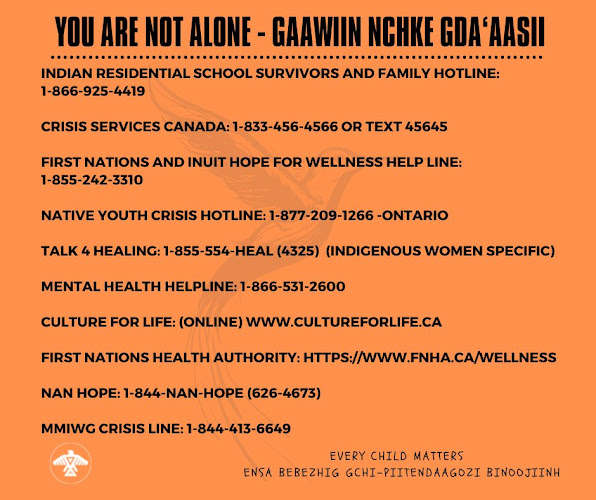
You are not alone
To Veronica Brown
Veronica, we adult adoptees are thinking of you today and every day. We will be here when you need us. Your journey in the adopted life has begun, nothing can revoke that now, the damage cannot be undone. Be courageous, you have what no adoptee before you has had; a strong group of adult adoptees who know your story, who are behind you and will always be so.
Diane Tells His Name
click photo
Lost Birds on Al Jazeera Fault Lines
click to read and listen about Trace, Diane, Julie and Suzie
NO MORE STOLEN SISTERS
click image
We conclude this series & continue the conversation by naming that adoption is genocide. This naming refers to the process of genocide that breaks kinship ties through adoption & other forms of family separation & policing 🧵#NAAM2022#AdoptionIsTraumaAND#AdopteeTwitter#FFY 1/6 pic.twitter.com/46v0mWISZ1
As the single largest unregulated industry in the United States, adoption is viewed as a benevolent action that results in the formation of “forever families.” The truth is that it is a very lucrative business with a known sales pitch. With profits last estimated at over $1.44 billion dollars a year, mothers who consider adoption for their babies need to be very aware that all of this promotion clouds the facts and only though independent research can they get an accurate account of what life might be like for both them and their child after signing the adoption paperwork.









 Posts
Posts

