They Took Us Away

They Took Us Away
click image to see more and read more

it's free

click

How to Use this Blog

BOOZHOO! We've amassed tons of information and important history on this blog since 2010. If you have a keyword, use the search box below. Also check out the reference section above. If you have a question or need help searching, use the contact form at the bottom of the blog.


We want you to use BOOKSHOP to buy books! (the editor will earn a small amount of money or commission. (we thank you) (that is our disclaimer statement)

This is a blog. It is not a peer-reviewed journal, not a sponsored publication... WE DO NOT HAVE ADS or earn MONEY from this website. The ideas, news and thoughts posted are sourced… or written by the editor or contributors.

EMAIL ME: tracelara@pm.me (outlook email is gone) THANK YOU CHI MEGWETCH!

SEARCH

Showing posts with label PTSD. Show all posts

Tuesday, November 16, 2021

50 Ways PTSD Undermines Intimate Relationships #NAAM2021


Grief may not be always considered in relation to PTSD. But what happens when you have PTSD and go to therapy? At a certain point, you come across a great loss that was sitting underneath the trauma all along. You lost someone you love. You lost your appearance due to injury. You lost an opportunity. You lost your innocence. You lost love. 

READ

Monday, January 26, 2015

Broken: Trauma Bonding? #flipthescript #validvoices


trau·ma    
A serious injury or shock to the body, as from violence or an accident. An emotional wound or shock that creates substantial, lasting damage to the psychological development of a person, often leading to neurosis. An event or situation that causes great distress and disruption. 


By Trace Hentz (adoption survivor)

After many years, in many quiet moments, I recognize that adoption has affected me very deeply.   
In my case, the day my mother left me, how she never came back, my world changed.  All I knew as this newborn baby was my own mother was not holding me, nursing me, talking to me. I was devastated by that. Broken. Part of my brain shut down. That pain was too much.

That very early experience needed to be processed as stress and trauma much later as an adult.  No one explained this to me, not even a doctor. As an adult I understand that a church/adoption agency places an infant with new parents and society says this is good and permanent. Good? Good for who?

Years pass and I accept this happened to me and my early trauma scars me.  

This monumental loss of my mother cracks me open and I am left to survive it, or not.  No one explains that I need to grieve this. I figure it out.  After years pass, I finally understand.  This experience affected me in complex ways.  This pain has layers and layers and layers.

But for others to tell me adoption was good for me? What? Or how I need to accept this is "adoption." Accept it? Are they kidding?  My scars are invisible but they are there. I know they are there.

How Catholic Charities took possession of me, handled me, first placing me in an orphanage then foster home, with no regard for my physical health, or my trauma-ridden emotional body, this speaks to the inhumanity of child trafficking and the traumatic consequences of adoption for the infant.  This speaks to the inhumanity of the deadly colonization of Indigenous people whose children were taken from them, calling us stolen generations. This speaks to a society that only sees what it wants to see.
Once adopted, you’re erased, an outsider, a stranger to your own nation, lands and people. I prefer to think of my younger self as brainwashed.

The bonding I had made with those mystery foster parents was also broken. How Catholic Charities and other churches and adoption agencies did this to millions of babies has consequences. This leaves millions of adoptees in the state of trauma, a stranger being raised by strangers, and a stranger to your first family.

Adoption is a cruel and inhumane way to treat an infant. A very sick society would do this.  And removing me from my own mother affected me in ways that are now measured and defined as post-traumatic stress disorder, or reactive attachment disorder, or severe narcissistic injury...and this explains how I was unable to bond with my adoptive parents.

What’s Trauma Bonding? What is Complex PTSD? (traumaanddissociation.wordpress.com) 


"When a mother is forced to choose between the child and the culture, there is something abhorrently cruel and unconsidered about that culture. A culture that requires harm to one's soul in order to follow the cultures prescriptions is a very sick culture indeed. This 'culture' can be the one a woman lives in, but more damning yet, it can be the one she carries around and complies with within her own mind....." -- Women Who Run With The Wolves by Clarissa Pinkola Estes 


Saturday, January 17, 2015

Trauma Change Resilience


Trauma can be incurred in many different ways. This is only now becoming understood. Our culture has trauma and abuse that is often not recognized. There is, of course, too the sort that is obviously heinous and ugly. It can all impact the general well-being of those subjected to it.
As a social worker working with “the seriously mentally ill” for many years, I never came upon someone who didn’t have fairly severe traumas in their histories. Yes, I can say those who I encountered who were in that particular labeled segment had a solid 100% rate of trauma in their histories. Mental illness in large part is a reaction to trauma. It’s quite simple really. When we start listening to people’s stories of pain rather than numbing them out and effectively silencing them with neurotoxic drugs we will start healing them. Until then people will remain broken. One of the most basic needs for a wounded human being to heal is to be seen. Recognized. Validated. Yes.

There is a drive to not only survive but to thrive.
 
A very beautiful and profound talk and message.


Without appropriate care and integration trauma changes both our bodies and minds for many years and sometimes for our entire lives. Right now the mental health system knows virtually nothing about how to care for people who have been traumatized and in fact often traumatizes them further. It’s downright dangerous to subject a traumatized person to most social services. This is a tragedy that has to end.
The woman in the above video is not alone in knowing how to approach those traumatized. We need this sort of empathic and loving care system wide.

See also: Mental illness, addiction & most chronic physical illness is the result of childhood loss & trauma

More posts on trauma, PTSD and recovery.

Recovery stories too, right here — people get better all the time

Monday, August 11, 2014

How much I changed (Part 7) Scared Silent, Four Traumas, PTSD


Family Photo
By Trace L Hentz (DeMeyer)

(Part 7)

I have met quite a few adoptees who can’t talk about being adopted. Why? They can’t put feelings into words. They didn’t talk about it as a kid and they never learned how to talk about it as an adult.

They might be as confused as I was when I was a child hearing that I was adopted - this was before first grade. What did “adopted” mean? Somehow I got it -  these were not my parents, someone else was. But who? And why?

I got used to hearing we “adopted” Trace.

They'd explained I had a different mother and father. I don’t think I took the news well at all. I sat with it a long time. All I could imagine was “bad.” Nothing  good. Something bad happened or else I wouldn’t be there. Later I was very pissy and unhappy about it. I don’t remember exactly how I acted but I do remember my a-mom Edie would tell me I didn’t like her. I never recall saying to her “I want to go home and leave here” but I would have acted out my hurt and confusion, because I had no words for what I was feeling!  She took it that I didn’t like her. (Which was the groundwork for guilt which I did feel...)

Now that we have the internet and many new ways to find useful information, I read adoptees are more traumatized than a prisoner of war. That’s right. It’s called PTSD: post-traumatic stress disorder. A prisoner of war may escape or be released, but an adoptee may suffer their entire life.

(The following is taken from my memoir ONE SMALL SACRIFICE)

I believe there are four distinct traumas in being an adoptee. They are: 1) in utero, when you feel what is happening to you or sense what is coming; 2) when you are delivered, abandoned, and handed to strangers; 3) later when you are told you are adopted and realize fully what it means; and 4) when you realize you are different, from a different culture or country, and you can’t contact your people, or know them, or have the information you need to find them.

It took me years to get this. (The adrenals do go into over-drive, the fight-or-flight syndrome.)

Some adoptees are scared silent - they are not able to communicate any emotions they feel. This is the adoption fog.  

Then some adoptees are afraid to meet their birthparents -  afraid to know why they were given up as babies.

Then we fear we might disappoint them! (Or in my case, I had no tools when I was told by my b-mother to never contact her again. How was I supposed to handle that?)

There are more traumas, too, that happen as you age – like when I’d fill out forms at the doctor’s office. I had no medical history. I had no idea if I was sitting next to someone who could be my biological brother, sister, mother or father. In my 20s it was terrifying to think I could marry my own relative! I could carry a gene or trait that I might pass down to my children – and I wouldn’t know until it’s too late. If my birth-parents were alcoholics (they were), then I really shouldn’t drink. I could be predisposed to diabetes or heart disease or cancer or depression and not even know. My list went on and on.

In 2006, I found out my birthmother had diabetes, another shock. I never knew anything about my mother’s side until the 1990s, then I met my dad when I was 38 in 1994.

Today I realize a powerful link exists between what I’m feeling and what happens in my body. There may be some adoptees who do not wish to face all this and go on as they are, holding on to these sad feelings and self-pity, rather than do the mental work to heal and go into reunions. Recognizing a pattern of belief is tough, partly because you gain sympathy by stealing (or sucking) energy from others when you act sick. Some call this co-dependent behavior. That is no way to live. You need to be your own person, self-energizing, and emotionally stable.

Some adoptees believe that when we meet first mother or father, all pain and agony will disappear. That sadly is just hope. That is not the way it works. A reunion is just one step on the journey and it helps, but there are many many more steps just as difficult.  It’s truly a test to get better.

Regardless of your ancestry, blood or skin color, adoptees can heal this.  But the only one who can fix you is YOU.

(to be continued)

Friday, May 17, 2013

PTSD and Post-Adoption Issues – What NOT to Say

I wrote about my own post-traumatic stress disorder in my memoir One Small Sacrifice. The key for me is (and was) processing emotions and knowing myself once I had the truth...

Here is a must-read column: http://www.laura-dennis.com/trauma-adoption-ptsd/

Excerpt:

“Here’s what you need to do...”

Here’s the truth: I have no idea what you specifically need to do to process yourself. To heal. I have no freakin’ clue. I can only offer suggestions, things that have worked for myself and others. And I can try to provide insight and resources for adoptees (and those who support them) as they emerge from the fog and attempt to deal with their pain, grief and loss.
So, you may be wondering why I’m constantly blogging about adoption, when I feel like I’ve processed my grief, my “what ifs,” and I’m even in a place where I can make jokes about my own secondary rejection.
That’s the thing … It’s because, like Juanima with PTSD, I’ve been at the bottom of the valley. I drove myself crazy, literally crazy trying to be the perfect person, the grateful adoptee. Because of my unaddressed post-adoption issues, I inadvertently let my latent bipolar tendencies emerge and get the better of me. I hit bottom. I nearly destroyed my mind.
But slowly, deliberately and drawing on that (in)famous “adoptee resilience,” I made the arduous trek up the hill. These days, I’m on stable footing; I can reach back and give a helping hand to my fellow adoptees.
That’s why I want to give voice to PTSD and the effects of trauma and abuse. That’s why I write about all this adoption crap all the time. ...


Laura Dennis is the author of "Adopted Reality" that I give 5 STARS! ...Trace

Happy Visitors!

WRITTEN BY HUMANS!

WRITTEN BY HUMANS!

Blog Archive

Featured Post

Your History Class Was a F*cking Lie | #NOMOAR

  Your History Class Was a F*cking Lie by Sean Sherman (Or: How the American Educational System Has Always Been a Racist Propaganda Program...


Native Circles

Native Circles
click logo for podcasts!

Most READ Posts

Bookshop

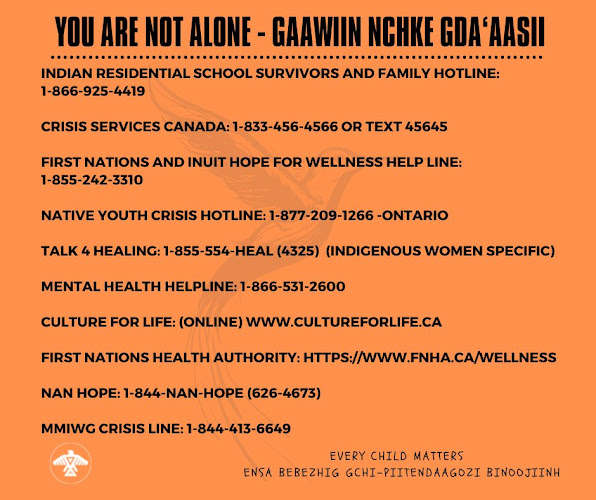
You are not alone

You are not alone

To Veronica Brown

Veronica, we adult adoptees are thinking of you today and every day. We will be here when you need us. Your journey in the adopted life has begun, nothing can revoke that now, the damage cannot be undone. Be courageous, you have what no adoptee before you has had; a strong group of adult adoptees who know your story, who are behind you and will always be so.

Diane Tells His Name


click photo

Lost Birds on Al Jazeera Fault Lines

Lost Birds on Al Jazeera Fault Lines
click to read and listen about Trace, Diane, Julie and Suzie

NO MORE STOLEN SISTERS

NO MORE STOLEN SISTERS
click image

ADOPTION TRUTH

As the single largest unregulated industry in the United States, adoption is viewed as a benevolent action that results in the formation of “forever families.”
The truth is that it is a very lucrative business with a known sales pitch. With profits last estimated at over $1.44 billion dollars a year, mothers who consider adoption for their babies need to be very aware that all of this promotion clouds the facts and only though independent research can they get an accurate account of what life might be like for both them and their child after signing the adoption paperwork.

Original Birth Certificate Map in the USA

Google Followers