BOOZHOO! We've amassed tons of information and important history on this blog since 2010. If you have a keyword, use the search box below. Also check out the reference section above. If you have a question or need help searching, use the contact form at the bottom of the blog.
We want you to use BOOKSHOP to buy books! (the editor will earn a small amount of money or commission. (we thank you) (that is our disclaimer statement)
This is a blog. It is not a peer-reviewed journal, not a sponsored publication... WE DO NOT HAVE ADS or earn MONEY from this website. The ideas, news and thoughts posted are sourced… or written by the editor or contributors.
EMAIL ME: tracelara@pm.me (outlook email is gone)
THANK YOU CHI MEGWETCH!
SEARCH
Showing posts with label National Native American Boarding School Healing Coalition. Show all posts
Showing posts with label National Native American Boarding School Healing Coalition. Show all posts
The National Native American Boarding
School Healing Coalition says that for healing to occur, the full truth
about the boarding schools and the policy of forced assimilation must
come to light in our country, as it has in Canada. The first step in a
truth, reconciliation, and healing process, they say, is truth telling. A
significant piece of the truth about the boarding schools is held by
the Christian churches that collaborated with the federal government’s
policy of forced assimilation.
Quakers were among the strongest
promoters of this policy and managed over 30 schools for Indian
children, most of them boarding schools, during the nineteenth and early
twentieth centuries. The coalition is urging the churches to research
our roles during the boarding school era, contribute this research to
the truth and reconciliation process, and ask ourselves what this
history means to us today.
Quaker teachers, families, and students at the Ottawa School, Indian
Territory, 1872. Courtesy of the Quaker Collection at Haverford College.
For
more than a century, Native American children were forcibly removed
from their families and driven into boarding schools where their hair
was cut, and they were stripped of their culture.
Now, Indigenous community members and University of Minnesota researchers are looking at the trauma caused by this practice.
The Child Removal in Native Communities Survey
centers the experiences of American Indian and Alaskan Native people
who were forced into boarding schools and the foster care system,
focusing on the generational impact of these practices. Led by Native
researchers, it is meant to study the trauma inflicted on Indigenous
communities and subsequent healing.
In April 2019, two Indigenous community-based researchers opened the
survey with a ceremony, establishing that their academic research would
be “guided by spirit, not just by the intellect,” said Sandy White Hawk,
a Sicangu Lakota tribal citizen and founder of the First Nations
Repatriation Institute.
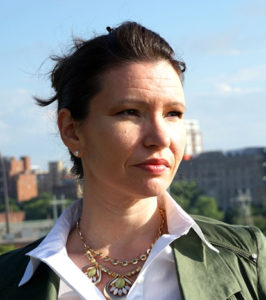
Christine Diindiisi McCleave, an enrolled citizen of the Turtle
Mountain Ojibwe Nation and CEO of the National Native American Boarding
School Healing Coalition, co-led the study and said academic research of
Native communities historically has been extractive and privileges the
voices of researchers who are not Indigenous.
This research is different.
Diindiisi McCleave said that her and White Hawk’s leadership in the
project has been critical because they had direct experience with
boarding school survivors and Native American adoptees.
“We Indigenous peoples, we don’t want to be studied from the
outside,” Diindiisi McCleave said. “We have a lot to say about our own
histories, about our own experience and about our experience with
American history.”
A survey and a ceremony
The approximately 30-minute survey looks at three different
experiences: if the respondent went to boarding school, if their family
went to boarding school, or if they were adopted or put into foster
care. Participants could fill out one or all segments, depending on
which fit their experiences.
Because of COVID-19, the researchers have stopped recruiting
participants for the survey, though it is still open online. Diindiisi
McCleave said the survey addresses difficult experiences, so the team
did not want to push the survey on people who were already under
pandemic-related stress.
Carolyn Liebler, a University of Minnesota sociologist who is helping
to lead the research alongside White Hawk and Diindiisi McCleave, said
their approach is “totally different” from other research.
“We have ceremonies and prayers as part of the research process …
talking about things holistically, recognizing that just because time
passes doesn’t mean things change,” Liebler said.
Until the pandemic is over, the team will not close the survey or
move on to analysis. The researchers are aiming for 1,000 participants
and currently have about 600, Liebler said.
She added that they plan to attend in-person events once the pandemic
is over to meet with the tribes in large groups and provide paper
copies of the survey while offering support for participants who are
sharing traumatic experiences.
“And then we will have a ceremony when the survey closes to thank the community for allowing this to exist,” Liebler said.
Generations of trauma, and the path to healing
The research unearths a painful era of federally mandated Indian boarding schools that were enforced from 1860 to around 1980.
At this time, government officials forced many Indigenous children to
leave their families to attend boarding schools and assimilate to
white, Christian culture. Eventually, the Indian Child Welfare Act of
1978 gave jurisdiction of children to tribal governments, enabling
tribes and families to be involved in child welfare cases.
White Hawk previously conducted research on Native American adoptees
and served as an honorary witness for the Truth and Reconciliation
Commission in Canada, which addressed a similar era of boarding schools
and aimed to facilitate reconciliation between former students and their
communities.
“I listened to three days of testimony from former boarding school
attendees,” White Hawk said. “And nearly every single individual said,
‘I did not know how to express love to my child [because of the boarding
schools].’”
White Hawk said boarding schools led to the “breakdown of the
family,” which continued into the adoption era where many Native
children were adopted into white families. This resulted in further
assimilation and loss of Indigenous culture — which included assigning
children “white” names, forbidding them from speaking their Native
language, cutting their traditionally long hair and converting them to
Christianity.
Today, these effects are still apparent as American Indian children
are 18 times more likely to experience out-of-home care than white
children, according to a 2019 survey conducted by the Minnesota Department of Human Services.
“The result is: You were disconnected, you were removed. You lost
that connection to your family, your language and culture, your
community, your homelands,” Diindiisi McCleave said. “If the harms and
impacts are the same or similar, then the healing path is also similar,
where the healing comes from reconnecting with language and culture,
returning home.”
The researchers said they hope gathering data will help provide a legal basis for experiences they have known for decades.
“That’s part of why we need empirical data, right? It’s part of the
westernized system,” Diindiisi McCleave said. “It’s something that
people will believe and rely upon.”
NEW IN 2020
kakichihiwewin project director S.A. hosts as Christine Diindiisi tells
her story, and elaborates on her experiences that led her to becoming
the Chief Executive Officer for the National Native American Boarding
School Healing Coalition.
U.S. and Canadian authorities took Native children from their
homes and tried to school, and sometimes beat, the Indian out them. Now
Native Americans are fighting the theft of language, of culture, and of
childhood itself.
By Andrea Smith (2015 reblog)
A little while ago, I was supposed to attend a
Halloween party. I decided to dress as a nun because nuns were the
scariest things I ever saw,” says Willetta Dolphus, 54, a Cheyenne River
Lakota. The source of her fear, still vivid decades later, was her
childhood experience at American Indian boarding schools in South
Dakota.
Dolphus is one of more than 100,000 Native Americans forced by the
U.S. government to attend Christian schools. The system, which began
with President Ulysses Grant’s 1869 “Peace Policy,” continued well into
the 20th century. Church officials, missionaries, and local authorities
took children as young as five from their parents and shipped them off
to Christian boarding schools; they forced others to enroll in Christian
day schools on reservations. Those sent to boarding school were
separated from their families for most of the year, sometimes without a
single family visit. Parents caught trying to hide their children lost
food rations.
Virtually imprisoned in the schools, children experienced a
devastating litany of abuses, from forced assimilation and grueling
labor to widespread sexual and physical abuse. Scholars and activists
have only begun to analyze what Joseph Gone (Gros Ventre), a psychology
professor at the University of Michigan, Ann Arbor, calls “the
cumulative effects of these historical experiences across gender and
generation upon tribal communities today.”
“Native America knows all too well the reality of the boarding
schools,” writes Native American Bar Association President Richard
Monette, who attended a North Dakota boarding school, “where recent
generations learned the fine art of standing in line single-file for
hours without moving a hair, as a lesson in discipline; where our best
and brightest earned graduation certificates for homemaking and masonry;
where the sharp rules of immaculate living were instilled through
blistered hands and knees on the floor with scouring toothbrushes; where
mouths were scrubbed with lye and chlorine solutions for uttering
Native words.”
Sammy Toineeta (Lakota) helped found the national Boarding School
Healing Project to document such abuses. “Human rights activists must
talk about the issue of boarding schools,” says Toineeta. “It is one of
the grossest human rights violations because it targeted children and
was the tool for perpetrating cultural genocide. To ignore this issue
would be to ignore the human rights of indigenous peoples, not only in
the U.S., but around the world.”
The schools were part of Euro-America’s drive to solve the “Indian
problem” and end Native control of their lands. While some colonizers
advocated outright physical extermination, Captain Richard H. Pratt
thought it wiser to “Kill the Indian and save the man.” In 1879 Pratt,
an army veteran of the Indian wars, opened the first federally
sanctioned boarding school: the Carlisle Industrial Training School, in
Carlisle, Penn.
“Transfer the savage-born infant to the surroundings of civilization,
and he will grow to possess a civilized language and habit,” said
Pratt. He modeled Carlisle on a prison school he had developed for a
group of 72 Indian prisoners of war at Florida’s Fort Marion prison. His
philosophy was to “elevate” American Indians to white standards through
a process of forced acculturation that stripped them of their language,
culture, and customs.
Government officials found the Carlisle model an appealing
alternative to the costly military campaigns against Indians in the
West. Within three decades of Carlisle’s opening, nearly 500 schools
extended all the way to California. The Bureau of Indian Affairs (BIA)
controlled 25 off-reservation boarding schools while churches ran 460
boarding and day schools on reservations with government funds.
Both BIA and church schools ran on bare-bones budgets, and large
numbers of students died from starvation and disease because of
inadequate food and medical care. School officials routinely forced
children to do arduous work to raise money for staff salaries and
“leased out” students during the summers to farm or work as domestics
for white families. In addition to bringing in income, the hard labor
prepared children to take their place in white society — the only one
open to them — on the bottom rung of the socioeconomic ladder.
Physical hardship, however, was merely the backdrop to a systematic
assault on Native culture. School staff sheared children’s hair, banned
traditional clothing and customs, and forced children to worship as
Christians. Eliminating Native languages — considered an obstacle to the
“acculturation” process — was a top priority, and teachers devised an
extensive repertoire of punishments for uncooperative children. “I was
forced to eat an entire bar of soap for speaking my language,” says
AIUSA activist Byron Wesley (Navajo).
The loss of language cut deep into the heart of the Native community.
Recent efforts to restore Native languages hint at what was lost. Mona
Recountre, of the South Dakota Crow Creek reservation, says that when
her reservation began a Native language immersion program at its
elementary school, social relationships within the school changed
radically and teachers saw a decline in disciplinary problems.
Recountre’s explanation is that the Dakota language creates community
and respect by emphasizing kinship and relationships. The children now
call their teachers “uncle” or “auntie” and “don’t think of them as
authority figures,” says Recountre. “It’s a form of respect, and it’s a
form of acknowledgment.”
David Nepley (left), the Byberry Friends clerk, looks over a record of
those buried in the Byberry Friends Burial Ground in Northeast
Philadelphia. Among those buried is Gertrude Spotted Tail.
Ephriam Alexander came from Yup’ik village of Kanulik on the Nushagak
River and Bristol Bay in southwestern Alaska, but died in Lititz, PA.
He is buried in the historic section of Lititz Moravian Congregation
Cemetery known as “God’s Acre.”
While the setting is quite bucolic on one side, the other side of the
grave of Gertrude Spotted Tail faces the back of nearby homes by the
Byberry Friends Burial Ground in Northeast Philadelphia. Gertude was one
of the daughters of Chief Spotted Tail of the Brule Sioux. She died
while a Carlisle student visiting the Bender family in Bucks County.
Gertrude and an unknown American Indian girl are buried side-by-side but
no one knows which grave is which. A blank marker was placed there to
mark the spot several years ago.
"People are awakening to the reality of what happened, the human-rights violations, the civil-rights violations," said Christine Diindiisi McCleave, executive officer of the National Native American Boarding School Healing Coalition, known as NABS. "We want to know the truth."
One expert estimates that the number of missing children could top 10,000. And the initial investigation leads straight to Pennsylvania.
All the children missing or buried in Pennsylvania are believed to be connected to the Carlisle Indian Industrial School, the nation's first federal off-reservation boarding school, founded in 1879 by former cavalry officer Richard Henry Pratt. Carlisle — now the campus of the Army War College — was built to solve "the Indian problem" by forcing native children to become ersatz white people, erasing their names, languages, religions, and family ties.
By Melanie Payne ( mpayne@news-press.com ) August 15, 2010 Alexis Stevens liked to describe herself as a model citizen. She was adopted fr...
Bookshop
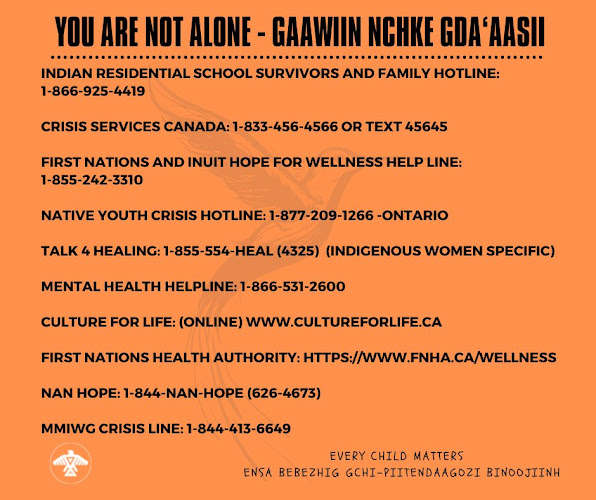
You are not alone
To Veronica Brown
Veronica, we adult adoptees are thinking of you today and every day. We will be here when you need us. Your journey in the adopted life has begun, nothing can revoke that now, the damage cannot be undone. Be courageous, you have what no adoptee before you has had; a strong group of adult adoptees who know your story, who are behind you and will always be so.
Diane Tells His Name
click photo
Lost Birds on Al Jazeera Fault Lines
click to read and listen about Trace, Diane, Julie and Suzie
NO MORE STOLEN SISTERS
click image
We conclude this series & continue the conversation by naming that adoption is genocide. This naming refers to the process of genocide that breaks kinship ties through adoption & other forms of family separation & policing 🧵#NAAM2022#AdoptionIsTraumaAND#AdopteeTwitter#FFY 1/6 pic.twitter.com/46v0mWISZ1
As the single largest unregulated industry in the United States, adoption is viewed as a benevolent action that results in the formation of “forever families.” The truth is that it is a very lucrative business with a known sales pitch. With profits last estimated at over $1.44 billion dollars a year, mothers who consider adoption for their babies need to be very aware that all of this promotion clouds the facts and only though independent research can they get an accurate account of what life might be like for both them and their child after signing the adoption paperwork.











 Posts
Posts

