They Took Us Away

They Took Us Away
click image to see more and read more

it's free

click

How to Use this Blog

BOOZHOO! We've amassed tons of information and important history on this blog since 2010. If you have a keyword, use the search box below. Also check out the reference section above. If you have a question or need help searching, use the contact form at the bottom of the blog.


We want you to use BOOKSHOP to buy books! (the editor will earn a small amount of money or commission. (we thank you) (that is our disclaimer statement)

This is a blog. It is not a peer-reviewed journal, not a sponsored publication... WE DO NOT HAVE ADS or earn MONEY from this website. The ideas, news and thoughts posted are sourced… or written by the editor or contributors.

EMAIL ME: tracelara@pm.me (outlook email is gone) THANK YOU CHI MEGWETCH!

SEARCH

Showing posts with label Wabanaki-State Child Welfare Truth & Reconciliation Commission. Show all posts

Thursday, April 9, 2026

Why isn't there a US Truth and Reconcilation Commission?

Tuesday, December 10, 2019

Dear Georgina, the film

 
THE FILM Dear Georgina...
A Passamaquoddy elder journeys into an unclear past to better understand herself and her cultural heritage.

About the film
At age two Georgina Sappier-Richardson was removed from her home and Passamaquoddy community in downeast Maine by child protection services. She would never see her parents again. Terror and abuse followed over 16 years in four different foster homes.
Dear Georgina follows this Passamaquoddy elder from Motahkomikuk as she tries to fill in the blurry outlines of her identity. Now a grandmother Georgina is still attempting to re-integrate herself into the community she barely knew.

She remembers, “When I was 30 years old and I went back to the reservation this Indian lady told me, ‘You look exactly like your mother as a young person.’ So that made me feel special, made me feel real.” This propels Georgina’s lifelong mission to find herself. 
But despite her gregarious personality and infectious laugh, she is stuck straddling two different worlds.  At the end, Georgina travels to her foster community in northern Maine. Determined to reclaim some fragment of her lost childhood she makes an incredible discovery, but will it help heal decades old wounds?

Dear Georgina is a follow-up to the Emmy® award-winning Dawnland (2018), in which Georgina told a portion of her harrowing story of surviving foster care. Georgina is just one of many thousands of Indigenous children with similar stories. 

[Sundance supports indigenous film cycles, allowing indigenous people to be captured in their creative state and bring art back into their native land. This supports indigenous people and allows for others to see things from a different perspective and gain education on indigenous people’s lives.]
As said by Maine-Wabanaki, Gkisedtanamoogk, a prior professor at USM and Ted Talk speaker bringing light to indigenous people’s stories, “One common thread that bound us together was a deep abyss of love and gratitude.” More importantly, though, he does not just mean connecting indigenous people, but he means the connection that all human beings have to one another. “The life between sky and earth, everything is connected, everything, even people.”

Thursday, June 20, 2019

Is It Time for Truth and Reconciliation in the U.S.? #BadHistory

Canada and South Africa both used similar commissions to grapple with their histories of racism and genocide. The U.S. could benefit from following suit.

GOOD READ: Is It Time for Truth and Reconciliation in the U.S.? by Yasmeen Wafai — YES! Magazine

YES, it is time for a Truth and Reconciliation Commission in the USA... We are still dealing with bad history...Trace 
 
The Maine Wabanaki-State Child Welfare Truth and Reconciliation Commissioners in 2016. Left to right Sandy White Hawk, Gail Werrbach, gkisedtanamoogk, Matthew Dunlap, and Carol Wishcamper. Photo from TRC.

Is It Time for Truth and Reconciliation in the U.S.?

For more than 100 years leading up to the late 1970s, Native children in the Wabanaki group of tribes of Maine were removed from their homes by state authorities and placed with White families in an attempt to erase their indigenous identity. To try to heal from this trauma, state and tribal child welfare workers collaborated to create the Maine Wabanaki-State Child Welfare Truth and Reconciliation Commission. “We were led by a real desire to make a difference in the child welfare system and native families, because playing nice wasn’t doing it,” said Esther Anne, a board member of the nonprofit Maine Wabanaki REACH. REACH, which stands for Restoration Engagement Advocacy Change Healing, is a cross-cultural collaborative organization with both Wabanaki people and non-Natives focused on restorative justice, education, and healing and wellness work, said Barbara Kates, a community organizer for the group. This system has been effective in other places. Canada completed a truth and reconciliation commission in 2015 to address the suffering of First Nations children in the residential school system. The report the Canadian commission produced detailed the abuse and subsequent trauma the children and families suffered. But every year since then, organizers in the village of Fort Langley, British Columbia, host a Walk in the Spirit of Reconciliation to honor the report’s release and to show solidarity with survivors.
The Maine Wabanaki-State Child Welfare Truth and Reconciliation Commissioners in 2016. Left to right Sandy White Hawk Gail Werrbach gkisedtanamoogk Matthew Dunlap and Carol Wishcamper. Photo from TRC.
Maine Wabanaki REACH conducted a 27-month investigation, which ended in 2015, into the family separations. Today, the group is continuing to stay focused on the self-determination of the Wabanaki people, said Anne, who is a member of the Passamaquoddy Tribe, one of the five in Maine and Quebec that make up the Wabanaki Confederacy. The commission’s work was the subject of the 2018 documentary, Dawnland. Kates also played a part in the commission, of which Anne was a co-founder. Kates worked in the Maine child welfare system and reached out to colleagues there to ask if they would be interested in coming forward and telling about their experience working with Native children who had been taken from their families. The truth and reconciliation commission was a grassroots effort, she said. “This came from the bottom up,” Kates said. This echoes a statement from Joshua Inwood, a geography professor at Pennsylvania State University, who said that truth and reconciliation commissions in the U.S. have typically taken a bottom-up approach. “Commissions that are successful in the United States are really grassroots driven,” he said. Inwood said how such commissions are run varies from case to case. For example, in an effort to heal from the 1979 attack on a unionization protest by members of the KKK in Greensboro, North Carolina, in which five demonstrators were killed, there was a public call for commissioners who researched archives, held a series of events to collect public testimony, and wrote a report that was then unveiled in a public ceremony. He also said several public meetings were held after the commission ran its course to keep that conversation going.
Tissues used by people who gave statements to the commission being burned in a sacred fire. Photo from TRC.
This is similar to the approach taken by the Maine-Wabanaki commission, which was modeled on the Greensboro commission, Anne said. Along with revealing the truth about family separations and promoting healing between Native and non-Native people, one of the goals for the commission was fostering change. The commission outlined 14 recommendations near the end of the report, released in 2015, that reflect the change it hoped to see, including some that touch on tribal sovereignty. Among the proposed changes for this are committing to state and tribal jurisdictions, supporting the healing and cultural resurgence of the Wabanaki people, and building cultural awareness. The commission also made recommendations pertaining to the U.S. Indian Child Welfare Act of 1978, which was created to protect Indian children and promote the stability and security of Indian tribes and families. The commission recommended funding the renewal of an ICWA work group and the regular monitoring of compliance with ICWA. There were also care-focused recommendations. One called for better and more consistent support for non-Native foster and adoptive families, while another recommended exploring the creation of more Native foster homes.
A still from Dawnland a documentary that focuses on the work of the TRC. Georgina Sappier-Richardson who was placed in foster care as a child sharing her story at a TRC community visit. Photo by Ben Pender-Cudlip/Upstander Project.
Different people had different experiences with the commission, but powerful change has been occurring in Indigenous and non-Native communities in Maine, Kates said. She explained that, because of the complicated nature of the issue, drawing absolute conclusions about what happened during the period of child separation is difficult, and as a non-Native, she said, she can’t make assumptions. But she has heard from others that people are connecting over their newfound understanding of the intergenerational trauma that occurred to the families and children. This included abuse and neglect, and suppressing the use of their Native language, according to the commissions’ report. Anne said one of the biggest changes she saw in tribal communities was that, after a long time of asking, “What is wrong with us?” they were talking about their trauma and trying to heal and understand, asking, “What happened to us?” However, not all truth commissions include a reconciliation portion. Bonny Ibhawoh, a professor of history and global human rights at McMaster University in Hamilton, Ontario, said South Africa’s commission after the apartheid ended was the first example of an emphasis on reconciliation. For Ibhawoh, the attraction of a truth and reconciliation commission is the opportunity it provides to address human rights violations on a mass scale. It allows victims to speak their truths, something you cannot always get from a trial, he said.
Nelson Mandela left receives a five volumes of the Truth and Reconciliation Commission final report from Archbishop Desmond Tutu in Pretoria on October 29 1998. The report reveals human rights abuse by various political parties during the Nationalist Party rule. Photo by Walter Dhaladhla/AFP/Getty Images.
A general debate runs within transitional justice circles as to whether or not there should be a reconciliation portion to truth commissions established by the state, Ibhawoh said. Some people argue that the state has no business trying to impose reconciliation, and that some people are just not ready to reconcile with or even confront their abusers, which risks further victimization, he said. The Truth Commission of Ecuador established by the government to investigate human rights violations committed by the government over many years serves as an example of a truth commission influenced by this view, Ibhawoh said. In other cases, as in South Africa, leaders like Nelson Mandela thought the country could be healed through a reconciliation process. In the context of the commission in Maine, Anne said she thinks the word “reconciliation” can be problematic in how people understand it and what their perspective is. During the commission’s work, White people wanted to get right to the healing, but the tribes needed to tell their truth, she said. Ibahawoh said he thinks the U.S. should seriously consider a truth and reconciliation commission as a model to try to heal from injustices like slavery and persistent racism.
The final meeting between staff and advisors from REACH and the TRC. Photo from TRC.
However, for a truth and reconciliation commission to be successful anywhere, he said, the victims and the government must communicate to find the best way to go about healing, whether it be through reconciliation or reparations. “The government wants to put (out) a reconciliation narrative at the expense of victims,” Ibhawoh said. Anne said commissions are just one way of approaching truth. Depending on the goals, restorative practices and informed knowledge in communities can happen anywhere. There is value in different ways of truth-telling and healing that do not need to be formal or institutionalized, she said. It would take a lot of time and resources, but if people were invested, she said, she thinks a commission could work nationwide. “The truth-telling that happened since the commission has been impactful,” Anne said. Editor’s note: An earlier version referred to Esther Anne with the surname Attean. 

This article originally appeared in Yes! Magazine at https://www.yesmagazine.org/social-justice/2019/06/19/reparations-truth-and-reconciliation-united-states.

Yes! Magazine is a nonprofit, independent media organization dedicated to telling stories of ... . Learn more at Yes! Magazine

Friday, March 17, 2017

Forum: Education continues on Wabanaki plight #ICWA

Forum: Education continues on Wabanaki plight:

LEWISTON — In 2015, a report focusing on Maine Wabanaki children and decades of discriminatory practices in the child welfare system was meant to spark changes and begin the healing process for the state's native tribes.

For Wabanakis and members of Maine-Wabanaki REACH, a group tasked with implementing the report's recommendations, that process is far from over.

Speaking during a Great Falls Forum in Lewiston on Thursday, Maine Wabanaki REACH Community Organizers Barbara Kates and Tom Reynolds underlined the importance of the work that had been accomplished but said more outreach and more education is needed.

The pair led a presentation titled “Truth, Healing and Change: Why Maine Needed a Truth and Reconciliation Commission,” which refers to the Maine Wabanaki State Child Welfare Truth and Reconciliation Commission established in 2013. 

The commission was charged with taking an intimate look at the causes behind the "disproportionate removal" from families of Native American children who were put into the child welfare system.
Among the biggest takeaways from its report was that Native American children in Maine were five times as likely to be placed in foster care as non-native children; Wabanaki children's native ancestry is often not identified during intake procedures; and the presence of institutional racism in state systems and the public.

The commission, made up of native and non-native members, was regarded as the first of its kind in the United States.

Since then, Kates said, the work of REACH, which stands for Reconciliation-Engagement-Advocacy-Change-Healing, has been, now that the truth is known, "What do we do now?"
A snippet from an upcoming full-length documentary detailing the emotional commission process was screened during Thursday's event, held at the Lewiston Public Library.

In compiling the report, the commission collected more than 150 statements from Wabanaki survivors, their families, foster families and employees of the state child welfare system.
In one such statement, a woman recalls being taken from her family for no reason, and as an adult, still didn't know why. Another remembered sitting in bleach with her sister while in foster care, "trying to convince each other that we were getting white."

REACH began as a collaboration of state and tribal child welfare workers who knew from their work together that major inequities existed in the way the state dealt with family issues within native communities.

Since the release of the report, REACH is still scheduling speaking events to educate Mainers on the history of the Wabanaki and native children, which have experienced forced assimilation dating back to the 1800s.

Kates and Reynolds provided a brief historical overview, including why Maine became a focal point on child welfare. During the 1950s and 1960s, national child welfare practices encouraged removing Native Americans from their communities and placing them in foster care. Boarding schools designed to assimilate Native Americans were also still prevalent.

According to the Truth and Reconciliation Commission report, the Indian Child Welfare Act, adopted in 1978, "marked one step toward upholding tribal rights, but effective implementation was another, and many states, including Maine, struggled with that process in the years after the law’s passage."
The act was meant to prioritize keeping Native American children in their homes within their tribal communities.

Reynolds said Maine was pressed by the federal government in the early 1990s to boost compliance with the act because of numbers that were still high, and was still struggling with it well into the 2000s.

"They kept finding that they were hitting their heads against a brick wall," he said, referring to continued issues leading up to the commission. "They realized they needed to dig deeper," he said.
Questions from the audience Thursday hit on education and what's next. Kates was asked whether local schools are adding the correct Wabanaki history into their curriculums.

Kates said no other state has yet to conduct a similar truth and reconciliation commission.
Penthea Burns, co-director of Maine-Wabanaki REACH, was originally scheduled to speak during the forum but had a conflict, Kates said.

Joe Hall, an associate professor of history at Bates College, introduced the speakers. 
Hall said Thursday's discussion was timely because school budgets are being drafted statewide.
"We get the opportunity to think about how we raise our children, which is not something that Wabanakis have always had the luxury of," he said. 

Kates has been involved with designing and delivering community presentations and ally-building workshops to increase understanding of Maine's shared history with the Wabanaki people.

Kates said that as a child welfare worker, it has been a "steep learning curve" in recognizing the complicated Wabanaki history. The commission found that there is still resistance to the idea that native people continue to experience "cultural genocide."

She said work to implement the recommendations from the study is ongoing. Those recommendations include the development of new trainings for the Maine Department of Health and Human Services, as well as legal and judicial offices, a policy to monitor compliance with the Indian Child Welfare Act and better support for foster and adoptive families.

The work of the commission, she said, opened the door for changes.

"It's the idea that we're here now," she said. "What do we do now?"

arice@sunjournal.com

Tuesday, May 3, 2016

About the Film: Dawnland #MaineTRC


When most people hear about children ripped from their families, they think of faraway places or of centuries past. The reality is it's been happening in the U.S. for centuries—and is still happening today. Native American children are more than twice as likely as non-Native children to be taken from their families and put into foster care, according to a 2013 study.
In Maine, a group of Native and non-Native leaders came together to acknowledge and address the abuses suffered by Native children in the hands of the child welfare system. Thanks to their commitment, the Maine Wabanaki-State Child Welfare Truth and Reconciliation Commission (TRC) was formed in 2012 to seek the truth and bring healing to those affected.

Dawnland is the only feature-length documentary to tell the inside story of this historic, first of its kind commission and the individuals—both Native and non-Native—who boldly and publicly came forward to share their stories of survival, guilt and loss, in order to illuminate the ongoing crisis of indigenous child removal.
The film follows key participants through the truth and reconciliation process: a survivor of foster care, a child welfare worker, a TRC commissioner, and the co-founder of the commission. Their intersecting journeys reveal buried trauma and intergroup disagreements that threaten to derail the whole process. Dawnland also provides essential historical context showing how these present-day conflicts are the result of 500 years of colonial domination of Native peoples.


Co-director Ben at Split Rock in Sipayik, Maine
 
 
NOTE: We do have information about the MAINE TRC in the new anthology STOLEN GENERATIONS  - LINK

Monday, February 22, 2016

Truth and Reconciliation: The Findings on Wabanaki Child Welfare in the State of Maine

S
sipayik_me
“Imagine you’re about to have a little one, the love that you have for that little one… and then imagine somebody outside of your family you don’t even know making claims on your little one. They don’t like the way you live and they’re going to take your little one by force. Imagine what the loss is when this is not just your family, but your entire community loses its children.” — gkisedtanamoogk, Truth and Reconciliation Commission member in the documentary film First Light

The U.S. government’s historical attempts to solve the so-called “Indian problem” have included stealing land, introducing disease and warfare, and killing entire tribes. The documented atrocities have been relentless, resulting in great harm to the Indigenous people of this land. One of the most painful of these has been the forced removal of Native children from their families and communities.
In the 1800s Congress authorized the Civilization Fund Act, providing funding for boarding schools for Indian children. Native children were taken far from their homes to boarding schools where they were forbidden to speak their language or practice their customs. Children were separated from siblings and were often badly abused; many died there. Those who survived returned to their communities not knowing their language and traditions, and they and their communities were never the same. The last boarding school closed in 1984.


Child Welfare
In the 1950s, the Bureau of Indian Affairs and the Child Welfare League of America created the Indian Adoption Project, through which hundreds of Native children were taken from their families and placed with mostly white adoptive parents. The 1978 Indian Child Welfare Act gave Indian children, families, and communities greater legal protections by recognizing “the essential tribal relationship of Indian people and culture and social standards prevailing in Indian communities and families.” Still, through the 1990s, Native children were being placed in foster care in Maine at a rate higher than most other states.
In 1999, Wabanaki Tribes and the state of Maine collaborated to improve state compliance with the Indian Child Welfare Act. The Muskie School of Public Service, with funding from the Maine Office of Child and Family Services, established a working group (later named Maine-Wabanaki REACH) with tribal and state child welfare representatives as members. The working group trained caseworkers, developed policy, and gathered data about compliance in many Maine communities.


Truth and Reconciliation
Despite positive steps, the working group found that significant problems remained in practice and attitudes toward working with Native children, families, and communities. In 2008, they concluded that in order to create lasting change, the past needed to be investigated and better understood. Over the next four years, the working group created the Maine Wabanaki-State Child Welfare Truth and Reconciliation Commission—the first of its kind to address issues of Native child welfare—to investigate systemic abuses and the factors that contributed to them.
The Commission’s articulated intent was to uncover the truth of what happened to Wabanaki people in state child welfare following the passage of the Indian Child Welfare Act in 1978, and to promote healing and contribute to change in child welfare practices. Its mandate was signed in 2012 by the five Wabanaki Chiefs and the Maine governor, outlining responsibilities, timelines, and guidelines for interactions with tribal communities.
Commissions rely on personal testimony, documentary research, and other sources of evidence to understand the past. The Maine Commission held listening circles, ceremonial gatherings, and interviews in six Wabanaki communities and in five regions with non-Native Mainers. Hundreds of people participated, including Wabanaki elders, children formerly in care, foster and adoptive parents, tribal leaders, service providers, incarcerated people, attorneys and judges, caseworkers and administrators, and parents and grandparents. Talking about memories, often painful and traumatic, was not an easy task, as many people had never before shared their stories.


Commission Findings
The Commission’s final report, presented in 2015, found that Wabanaki children in Maine entered foster care at an average of five times the rate of non-Native children. The report concluded that to improve Native child welfare, the state and the tribes must continue to confront:
1. Underlying racism still at work in state institutions and the public
2. Ongoing impact of historical trauma, also known as intergenerational trauma, on Wabanaki people that influences the well-being of individuals and communities
3. Differing interpretations of tribal sovereignty and jurisdiction that make encounters between the tribes and the state contentious

The report further asserted that these conditions “can be held within the context of continued cultural genocide, as defined by the Convention on the Prevention and Punishment of the Crime of Genocide,” adopted by the UN General Assembly in 1948.


What’s Next?
The Commission issued a series of recommendations, inviting communities and stakeholders to engage with the underlying conditions that contribute to the problematic relationship between the Wabanaki Tribes and the state of Maine and with child welfare practice failures. The Upstander Project represents one such effort with its films, First Light and Dawnland, companion learning resources, and teacher workshops.
Maine-Wabanaki REACH, which formed the Commission, provides education on history, trauma, resiliency, healing, and ally-building to Maine and Wabanaki communities. Healing circles, health and wellness workshops, and community events focus on resilience and capacity building in all tribal communities in the state. This includes restorative justice and peacemaking circles and creating connections to Wabanaki incarcerated relatives through a prison book drive and pen pal initiative. REACH provides educational events, ally-building, and ongoing ally supports across Maine to deepen the understanding of the shared history between Native and nonNative Mainers. Allies are encouraged to take action to create a more just relationship between Native and non-Native people in Maine via legislative hearings, rallies, letters to the editor, letters to legislators, and volunteering at Truth Commission events. REACH staff are also working with the Indian Child Welfare Act working group on child welfare improvements. REACH will play a vital role in the implementation of the Truth and Reconciliation Commission’s recommendations.
As the Commission stated in its final report, “We have heard the voices of the many who spoke with us and to remain quiet is to continue to perpetrate harms that must be known. Consider this report as a step toward refusing that silence and continuing this conversation, that will, we hope, like all the best communication, offer ample time for everyone to simply listen.”
— Penthea Burns is Maine-Wabanaki REACH co-director (www.mainewabanakireach.org)

To read the Commission’s report in full, visit www.mainewabanakitrc.org/report. 

First Light 
First Light is the first film in a series, anchored by the feature film Dawnland (to be released in 2017), conveying the stories of pain and resilience that emerged during the Truth and Reconciliation Commission’s process. It  tells a piece of the story of the Commission and its origins. Dawnland will bring viewers inside the Commission and share testimony from those who suffered because of the child welfare system, along with those who upheld its policies.

“When we tell these stories, we feel it in our bodies and our hearts. But I believe we can get to the point where it has less power over us. This was a perfect example of the readiness, that it’s time.” —Sandy White Hawk, TRC Commissioner.

First Light and its learning resources are available for free at upstanderproject.org. These resources help teachers and students deepen their understanding of the brutal and disturbing history of settler colonialism that began with the invasion of Native peoples’ homeland, and government policies that aimed to force Native people to stop being who they are. These resources are central to the Upstander Project’s teacher and student workshops.
The Upstander Project helps bystanders become upstanders through compelling documentary films and learning resources. Its goals are to help educators and students overcome indifference to social injustice, develop the skills of upstanders, and contribute to action-oriented campaigns in response to vital social issues.

View First Light here: upstanderproject.org. 


Introducing the Commissioners
• gkisedtanamoogk (key-said-TAH-NAH-mook), Wampanoag from the community of Mashpee in Cape Cod, Massachusetts, and adjunct instructor in the Native American Studies and Peace & Reconciliation Programs at the University of Maine
• Matt Dunlap, Maine’s secretary of state and former Maine state representative
• Carol Wishcamper, former chair of the Maine state board of education, the Maine Center for Educational Service, and the Maine chapter of the Nature Conservancy
• Sandy White Hawk, Sicangu Lakota from the Rosebud Reservation in South Dakota and founder and director of the First Nations Repatriation Institute
• Dr. Gail Werrbach, director and associate professor at the University of Maine School of Social Work

Source: Cultural Survival

LINK

Saturday, October 17, 2015

‘Without our children, what are we?’ Maine cited for removing Native kids

Truth and Reconciliation Commission says many Wabanaki children placed in foster care because of long-standing racism

BANGOR, Maine — A commission has found that Native American children in Maine are five times as likely to be placed in foster care as non-Native children.

The Maine Wabanaki-State Child Welfare Truth and Reconciliation Commission (TRC) presented its preliminary findings and recommendations on Thursday at the first in a series of public forums in Maine.

TRC Executive Director Charlotte Bacon told a group of a few hundred Maine residents gathered at Husson University in Bangor that the higher rate of foster care for Wabanaki children stems, in part, from racism and cultural differences in childrearing.

“One of the things we found is that there are real differences for people who are working inside the state system and people who are Wabanaki around the idea of safety — what constitutes safety, what does it look like,” Bacon said.

The Maine Wabanaki TRC was established in 2013 to document the widespread removal of Native children from their homes and address the collective trauma experienced by tribal communities in Maine. With the participation of Maine’s four Wabanaki tribes and the state government, the commission aims to propose policy changes and initiate a healing process.

For more than a century, Native American children were taken from their families and communities in systematic forced assimilation. As many as 35 percent of Native children were placed in non-Native homes and boarding schools. Some suffered abuse and neglect, and many were left with lifelong psychological scars. Extended families were irreparably fractured.

The Indian Child Welfare Act of 1978 attempted to reverse the state-sanctioned practice by mandating tribal jurisdiction over Native child custody cases. But a federal review in 1999 found Maine to be severely noncompliant, with Native children continuing to be removed from their homes at a much higher rate than white children.

A committee was formed with representatives of the state government and the Wabanaki tribes. They found that new regulations and cultural awareness training were not enough.

“We weren’t talking about what happened in the past,” said Esther Attean, a Passamaquoddy woman and a co-director of community outreach organization Maine-Wabanaki Reconciliation Engagement Advocacy Change Healing (REACH). “We were trying to do reconciliation work without the truth.”
In 2008 the committee began discussing the idea of creating a truth commission modeled after those in South Africa and Latin America. Canada and Australia have established truth commissions to deal exclusively with the treatment of indigenous peoples; the Maine Wabanaki TRC is the first to do so in the United States.

“It is innovative in the U.S. to start this kind of process,” said Eduardo Gonzalez, the director of the truth and memory program of the International Center for Transitional Justice. “But in my view, this should be seen as the avant-garde, something that should happen more extensively in all of the country, because by no means is what happened in Maine unique.”

‘Kill the Indian … save the man’

Forced assimilation of Native American children in the U.S. dates back to the 1870s, when Army officer Richard Henry Pratt founded the Carlisle Indian Industrial School in Pennsylvania. The boarding school taught Native American children English, Christianity and European art and prohibited students from speaking their Native languages and practicing their cultural traditions.
Pratt famously wrote in an 1892 essay, “All the Indian there is in the race should be dead. Kill the Indian in him and save the man.”

His philosophy served as a model for boarding schools later founded by religious groups and the federal government’s Bureau of Indian Affairs. By 1973, an estimated 60,000 Native American children were enrolled in these schools.

Foster care and adoption programs also decimated Native American communities. In 1958, the U.S. Bureau of Indian Affairs and the Child Welfare League of America established the Indian Adoption Project, through which 395 Native American children were adopted by white families. By 1972 in Maine’s Aroostook County, 1 in 3 Native children were in foster care, according to Bacon.

The trauma of storytelling

At first, Wabanaki people were reluctant to participate in the TRC. Commissioner Carol Wishcamper said they distrusted a program that had the backing of the government and were not ready to open old wounds in the company of outsiders.

“The act of storytelling can be healing, but it also can be retraumatizing.” she said. “I don’t think anybody really anticipated the fact that there wouldn’t be trust of outsiders coming in. We thought that people were much readier than they were to meet the commission and tell their stories.”

Commissioners and statement gatherers had to rethink their approach to the tribal communities. After months of outreach, healing ceremonies and sharing circles, Wabanaki people began to tell their stories. The TRC has collected 159 statements from Wabanaki survivors, their family members, foster families and employees of the state child welfare system — social workers, judges, lawyers, guardians ad litem.

These statements, not yet publicly available, will be archived at Bowdoin College after the TRC’s closing ceremony in June. Then the work of implementing the commission’s recommendations begins. Much of that reconciliation work will be taken on by Maine-Wabanaki REACH.

“For us as white Mainers and for white people in this country, our job is to really look at what enabled that to happen and what’s alive in us today that enables that still to happen,” said Penthea Burns, a co-director of Maine-Wabanaki REACH.

The treatment of Wabanaki children must be considered, Burns said, within the context of an ongoing genocide against Native Americans. Attean agreed. She places the removal of Native children on a long list of injustices and indignities suffered by the Wabanaki peoples of Maine.

“Our land was taken. We couldn’t speak our language, couldn’t practice our religion, couldn’t farm, couldn’t fish, couldn’t hunt. But at least we had our families, and at least we had our children. We could still be together. But when they take the kids …” Attean’s voice trailed off. “Without our children, what are we? They are everything.”

Friday, July 10, 2015

shattered

Editors Note: Protecting poor children, not just Native children, is a big concern across America in 2015.  Systems like adoption services and foster care are slowly being privatized, therefore companies and states are making a profit from removing children and placing them in foster care or adoption...  In some Maine tribes — in the mid-1970s — as many as one in three children were in foster care, usually with non-Native families.  In that system, children experience traumatic change, loss of culture and lost family connections.  By understanding this history, dire poverty and ongoing Third World conditions across the USA, knowing the truth is absolutely necessary to prevent and stop this from happening again...Trace Hentz
 

A historic process is exposing the injuries inflicted by Maine’s child welfare system on generations of Wabanaki people — and illuminating a way forward to bring healing and change.

By Virginia M. Wright | Photographed by Séan Alonzo Harris | SOURCE
"...I was taken from my home. I don’t know how old I was, but I was pretty young. They took all of us — my sisters, my brother, and me — and they placed us in foster care. Then, slowly, my mother got us back. I was the last one to come home.”
With her square-frame glasses and dark hair that falls loosely past her shoulders, Cheryl looks like a college student, but she is in her late 40s, a mother of four grown children and a grandmother of two. We are meeting in a friend’s office near her home on Wabanaki tribal land, away from neighbors’ curious eyes.
For the past four months, I’ve been reaching out to Wabanaki community leaders, trying to connect with people who have testified before a truth and reconciliation commission investigating Native Americans’ experiences with Maine’s child welfare system. In addition to Denise Altvater, the Passamaquoddy woman who helped launch the probe by publicly sharing her story about life in an abusive foster home in the late 1960s, only one other person with direct foster-care experience has agreed to meet with me. Cheryl is not her real name — she asks to share her story anonymously out of respect for her mother, whose own childhood was marred by forced enrollment in an Indian boarding school, where children were beaten for speaking their language and practicing their customs.
Shattered, Maine Wabanaki People - 5
Cheryl tells me she was a teenager when she began asking questions about fragments of memory that she couldn’t explain — strange faces, an unfamiliar house, places visited. It was her older sister who told her that the recollections were not a dream, that they’d been separated from their mother, and from each other, for nearly three years. Their mother never spoke of it — at least not with words.
“My mother never liked the state,” Cheryl says. “She wanted to keep us out of school, but she made us go to keep DHHS (Department of Health and Human Services) from knocking on the door. She was very strict. No phone calls. No going to see friends. No friends over, either. As a teenager, it was hard for me to understand, but she had her reasons: to protect us.”
In some Maine tribes at that time — the mid-1970s — as many as one in three children were in foster care, usually with non-Native families. “The system was pretty hard on Native Americans,” Cheryl says. “We stick out in a white community. There were always fingers pointing, women reporting on our families, and then, all of a sudden, the state would be involved. It happened to me once. I know how it feels.”
Late one hot summer night, when her children were little, Cheryl rushed her son, who was burning with fever, to the emergency room. The next day, a state caseworker came to her door. “The nurse had called DHHS because my child was dirty,” she recalls, a trace of anger in her voice. “It’s not like you’re going to put your child in the bathtub at 3 in the morning. My children weren’t taken, I only had to take parenting classes, but still.”

We would know our language and our traditions if our grandparents hadn't gone to that school.

 
— Krista Stevens, Micmac community leader
Cheryl gave a statement to the truth commission, she says, in part because she wants better things for her kids and grandkids. Mostly, though, she did it for her mother. “My hope is to be a voice for those who don’t talk, for those who are keeping it inside,” she explains. “They never share with others because the pain was so great, and it is even still. Our elders are very proud people. We respect their silence. We respect their privacy. But it’s like a volcano, where it’s quiet, but things are happening underneath. Then, all of a sudden, it erupts. Just because they’re not saying anything, it doesn’t mean that something isn’t there. Their silence is so loud.”
On an evening in late April, Carol Wishcamper, co-chair of the Maine Wabanaki-State Child Welfare Truth and Reconciliation Commission (TRC), welcomed roughly 140 people to the first of five forums airing the findings and recommendations from the commission’s 2½-year investigation (a final written report was to be presented at a closing ceremony on June 14 in Hermon). “I feel it’s important to recognize that we are in the Dyke Center at Husson College in Bangor, Maine, on Penobscot territory, and to be very aware of all that has come before in this spot,” said Wishcamper, who is a prominent philanthropist and a consultant for educational organizations.With that simple statement, softly delivered in a thin, high voice, Wishcamper was preparing the mostly white audience for the unsparing subtext of the report they were about to hear: Indian child welfare is tangled in a complex web of issues dating back to colonization, and it can only be effectively addressed by reckoning with a still-unfolding history of genocide, racism, and conflicts over tribal sovereignty.
The commission’s five members were seated in February 2013 at the behest of Maine-Wabanaki REACH, an organization comprised of both Natives and non-Natives, mostly women, who have worked in child welfare for the state, private agencies, and the four nations of the Wabanaki Confederacy: Passamaquoddy, Penobscot, Micmac, and Maliseet. REACH (the name stands for reconciliation, education, advocacy, change, and healing) evolved out of a state-tribal workgroup formed in 1999 after a federal review found that Maine was not complying with the 1978 Indian Child Welfare Act (ICWA), which sets standards for child custody proceedings that aim to keep Indian children with their relatives and tribes, even when they have to be removed from their parents.
Shattered, Maine Wabanaki People - 3
The commission’s mandate, signed by five Wabanaki chiefs and Governor Paul LePage, was to find out what happened and is still happening to Wabanaki families in the child welfare system, to recommend improvements, and to illuminate a path forward that promotes healing and cooperation. It is the first truth and reconciliation effort in the U.S. to address Native child welfare practices, and it is believed to be the first in the world to be collaboratively developed from the start by all parties — in this case, the Indian nations and child welfare workers.
Nearly 160 individuals, more than two-thirds of them Wabanaki, have given testimony to the TRC. Others who have testified are DHHS employees, guardians ad litem, family court judges, and foster and adoptive parents. The commission’s staff also has examined DHHS data for the past 12 years and found that, while the state has greatly improved its practices since it was admonished in 1999, Native children are nonetheless entering state custody at a rate that is five times greater than that of the general population.
“We are finding this continued taking must be considered within the context of genocide,” TRC’s executive director Charlotte Bacon told the gathering in Bangor. Bacon referenced the 1948 United Nations Convention for the Prevention and Punishment of the Crime of Genocide, which defines “forcibly transferring children of [an ethnic] group to another group” as a genocidal act. “As people who love the state of Maine, we want to believe that this didn’t happen here. It’s even harder to believe that it’s continuing to happen. But we have to believe it in order to make progress in terms of making change and really living with Wabanaki families as neighbors.”

A lot of people are fighting demons, and they need to realize the demons are not their fault.

 
— Dena Joseph, Micmac community leader
These are some of the stories that made front-page news in Maine in recent months: The federal government joined the Penobscot Indian Nation in its lawsuit against the state over fishing and hunting rights on the tribe’s ancestral river. The state Department of Environmental Protection announced it would disregard a federal Environmental Protection Agency order to tighten pollution standards to ensure that tribes can safely eat fish from their waters. The MSAD 54 school board rejected Wabanaki representatives’ request to stop using the name “Indians” for Skowhegan Area High School sports teams. The Maine Department of Marine Resources banned the use of elver fyke nets by Passamaquoddys licensed as sustenance fishermen, saying they were circumventing a state quota system. Governor Paul LePage rescinded a 2011 executive order promoting cooperation between the state and its “sovereign Native American tribes,” because the state’s interests “have not been respected.” And, in May, the Penobscot and Passamaquoddy nations withdrew their representatives from the Maine Legislature, citing their deteriorating relationship with the state.As a resident of this state for more than 30 years, I can’t remember another time when interactions between the tribes and Maine’s state and local governments have been so contentious. But perhaps that is largely my own failing: I wasn’t paying much attention, a shortcoming that I would comfortably bet I share with most residents of our overwhelmingly white state. When I began interviews for this story, I noticed that my conversations with Wabanaki people often ranged into other topics, many of them matters I regarded as history, like the 1980 Maine Indian Land Claims Settlement or the 17th-century’s bloody conflicts between Native Americans and colonists. Over and over, I’d try to steer the conversation back to the subject of child removals, until one day, while listening to a presentation by Passamaquoddy activist Esther Attean, I finally got it: the Wabanaki are living with the consequences of these events every day.
Shattered, Maine Wabanaki People - 1
The average age of death for Wabanaki people is 54 years. Seventeen percent of Maine Native Americans have diabetes, compared to 8 percent of the general population. Unemployment in Maine indigenous communities ranges from 15 to 20 percent, which is three to four times higher than the state as a whole. More than half of the residents of the Passamaquoddy Indian Township Reservation are living below the poverty level (the percentage of people living below the poverty level is 43.8 percent at the Passamaquoddy Pleasant Point Reservation and 33 percent at the Penobscot Indian Island reservation). Alcohol abuse or dependence is reported by 14 percent of Native Americans. And there are too many Native children in foster care. Everything is connected, Attean says. Tug on the thread of one issue, and you’ll find it is attached to everything else.

The conditions that people have been kept in are deplorable, worse than third-world countries.

 
— Gkisedtanamoogk, TRC Commissioner
Slender, with long dark hair, Esther Attean grew up on the Passamaquoddy reservation of Sipayik, or Pleasant Point, in the late ’70s and early ’80s, when the Maine Indian Land Claims Settlement was being negotiated and, she says, “the newspapers were full of racist letters to the editor.” Roman Catholic nuns served as the child welfare agents, she recalls, and “if they saw your kids were dirty, they could take them.” A founding member of the 1999 ICWA workgroup, Attean is one of the forces — if not the force, some of her colleagues say — behind truth and reconciliation. As the co-director of REACH, along with her Muskie School of Public Service colleague Penthea Burns, she has coaxed wary tribal communities into opening their doors to commissioners and their staff, and she has spent much of the last year traveling around Maine to give lectures about the grim treatment of Native people by state and federal government and about the healing power of telling the truth.
At one such gathering in Bangor, after introducing herself in both Passamaquoddy and English, Attean told her audience that Wabanaki people have suffered a 98 percent population decline since Europeans arrived on these shores. Disease is the biggest culprit, she said, but the Wabanaki were also devastated by war and forced removal from their lands throughout the 18th and 19th centuries. Only four of the 20 distinct Wabanaki tribes that once ranged throughout Maine survive. Between them, they count 8,000 members, about .6 percent of the state’s 1.3 million people.
Maine has sometimes lagged behind the rest of the nation in remedying injustices rooted in racial discrimination. Native Americans didn’t win the right to vote in state and local elections until 1967, making Maine the last state to grant them suffrage. Thirteen years later, the Maine Indian Land Claims Settlement brought millions of dollars to the impoverished Penobscot, Passamaquoddy, and Maliseet tribes. The funds would help to greatly improve living conditions, but the pact, unique in the U.S., created a muddy jurisdictional arrangement that has found the state and tribes clashing over sovereignty time and again, whether the context is fishing or logging or child custody matters.
Shattered, Maine Wabanaki People - 6
Child welfare practices have exacted their own devastating toll, Attean said. Hundreds of Native children have been removed from their homes in Maine, beginning in the late 1800s with the federal Indian boarding school movement, which set out to assimilate Indians into white society, and continuing into the 1970s with adoption projects that deliberately placed Indian children in non-Indian homes. Children lost touch with their families, their language, and their spiritual and cultural traditions. “They returned to their communities with trauma that has filtered through the next generations,” Attean said.
Intergenerational, or historical, trauma was first conceptualized by Columbia University associate professor Maria Yellow Horse Brave Heart in the 1980s as a way of understanding why so many American Indian communities are not faring well. It has since been embraced in the field of psychiatry to explain difficulties experienced by children and grandchildren of Holocaust survivors. Simply put, it describes how a parent’s post-traumatic syndrome affects his children and their children in turn, a phenomenon multiplied in Native communities where injuries have been inflicted repeatedly and experienced widely by many families and many generations.

Reconciliation is a continual process of learning how to be in the same space together.

 
— Esther Attean
“What makes all of these injuries worse is the denial of all this history,” Attean tells me. “It’s denied. It’s repressed. It’s pushed down. Because it’s too hard to admit that it hasn’t stopped. Reconciliation starts with acknowledgement of the truth about what happened, not to lay blame, but just to say yes, this happened, and what are we going to do about it now. To me, reconciliation is a continual process of learning how to be in the same space together. Reconciliation would be not seeing what my people are going through with elver fishing, not seeing what the Penobscots are going through with the river, not seeing a Penobscot woman have to write to the paper to explain what a Skowhegan Indian is.”
On the coastal Sipayik reservation near Eastport, Esther Attean’s sister-in-law, Denise Altvater, is telling me about a collection of old photographs she recently found in her mother’s home. “There was a picture of me and my sisters. It was Easter, and we all had Easter baskets. I had on a beautiful dress and new shoes, and I was sitting on my father’s lap,” she recounts with wonder. “There was another picture of us in our bedroom. Do you remember those bedspreads that had little balls like popcorn on them? Those were the kind of bedspreads we had. I’m looking at those pictures, and I’m thinking, ‘I don’t ever, ever remember living that kind of life.’”The pictures were taken in the early 1960s in Buffalo, New York, where Altvater’s father was a police officer. When her parents separated, Altvater’s mother brought her six daughters home to Sipayik. Like many of the homes on the reservation at that time, theirs was little more than a shack, with no running water or electricity. The girls slept on mattresses in the attic. They were often hungry, and Altvater remembers being humiliated by store clerks’ scorn when she presented the food vouchers that were doled out to families by the state Indian agent as payment for logging operations on Passamaquoddy land.
One day in 1966, when Altvater’s mother wasn’t home, state caseworkers came into the house, stuffed the girls’ clothing into garbage bags, loaded all of them into two station wagons, and drove to a foster home in Old Town, 2½ hours away. There, the girls — Altvater was just 7 — suffered repeated physical and sexual abuse. It would be four years before caseworkers moved them to a safe home in Hampden.

This history is denied. It’s repressed. It’s pushed down. Because it’s too hard to admit it hasn’t stopped.

 
— Esther Attean
“Sitting here today, the biggest thing on my mind is that it was set up so they had an excuse to take children from the reservations because of the conditions that we had to live in,” Altvater says. “I don’t know why I was taken to this very day. I’ve sat with the people who have access to records. I’ve made written requests to get them, and I’ve been told that they are lost.”
Altvater’s story has become symbolic of the TRC effort because she has been willing to speak publicly about her experience and the damaging effects it had on her and her family. Two sisters have died, one at age 41 from diabetes, which Altvater says went untreated during those years in Old Town, the other at age 51 from a drug overdose. A recovering alcoholic for 30 years, Altvater, 56, says she struggled to parent her three children, describing her younger self as moody and withdrawn. She wipes away tears as she describes a conversation last year with her adult son. “I said, ‘I want you to please tell me the truth because I need to know: When you were younger, did I beat you?’ He looked at me, and he said, ‘Mom, how can you not remember?’ He told me everything that happened. He said, ‘The worst thing you ever did was say you wished I’d never been born. One night I came to kiss you goodnight, and you pushed me away. I was always afraid to come home, because I never knew what kind of mood you were going to be in.’” She has worked to make amends and describes her relationship with her son as strong and loving. “You talk about the truth, you deal with it, and you apologize,” she says.
In a 2012 interview with WCSH-TV, Martha Proulx, a DHHS Office of Child and Family Services assistant administrator and REACH member, said that the state acknowledges that children often were removed from their homes simply because they were poor and Native. Even though the policies of assimilation ended when ICWA was enacted in 1978, Proulx added, Native children were still being removed at higher rates than non-Native children, and they stayed in state custody longer. “People were doing their best with the knowledge at the time,” Proulx said. “Unfortunately, this knowledge wasn’t the best, and it did impact families in a negative way.”

It was set up so they had an excuse to take children because of the conditions we had to live in.

 
— Denise Altvater
When I emailed Proulx in April to request an interview, she responded enthusiastically and said she would run it past the DHHS press office. The next day, Governor LePage rescinded his executive order promoting cooperation with the tribes. When I followed up with Proulx, she said she was still waiting for approval. I didn’t hear from her again. Likewise, my request for an interview with Child and Family Services director Jim Martin hit a dead end, and Governor LePage himself did not respond to questions submitted by email to his spokeswoman, Adrienne Bennett.
Indian families were not the only ones affected by DHHS practices. In the early 1980s, Bette Hoxie fostered the infant son of a Wabanaki woman who was struggling with substance abuse (the father had denied paternity). The boy, who had significant medical needs, had been placed in Hoxie’s care three times by the time he was 20 months old, and she began adoption proceedings with the blessing of his mother and extended family. “We made some hard decisions together that formed a bond that you can’t begin to understand if you haven’t done it,” she says.
She was blindsided when she found herself in district court, sitting across from representatives of the now-defunct Central Maine Indian Association, who had come to oppose the termination of parental rights. “Suddenly, I was worrying about whether my child is going to be my child,” recalls Hoxie, who is the executive director of Adoptive and Foster Families of Maine and the mother of 11 children, eight of whom are adopted. “I knew about the Indian Child Welfare Act, but I thought it had been circumvented with the dialogue that had gone on between DHHS caseworkers and the biological family members of my son. It was pretty shocking.”

Unfortunately, this knowledge (at DHHS) wasn’t the best, and it did impact families in a negative way.

 
— Martha Proulx
DHHS brought in a pediatrician and a child psychologist, who testified that the boy’s needs would best be met with the Hoxies, and the termination was approved. “If it hadn’t been for those doctors coming in, I probably would have been quite beyond myself,” says Hoxie, who chalks up the incident to caseworkers’ inexperience with ICWA, which was then relatively new.
The Hoxies’ attempts to maintain their son’s connection to his culture had mixed results. His mother’s tribe welcomed him to powwows and other ceremonies, and he remains close to some members of her family (the mother is now deceased). The reception was cooler in his father’s community. After being turned away from one event, Hoxie didn’t try again. “I didn’t want to force myself on anyone, and he was still young, and we were going through enough just getting him physically well,” she explains. “But I think having a stronger connection with his tribal roots would have been good for him.
“One of the things that I’ve learned about adoption is that it is bittersweet. Your joy is built on someone else’s extreme loss and sadness. I keep going back to the idea of wouldn’t it be nice if, instead of terminating parental rights, we could resolve a situation by simply adding another layer of family — adoption without termination of parental rights? That is the philosophy of Native American tribes across the United States.”

Wouldn’t it be nice if, instead of terminating parental rights, we simply added another layer of family?

 
— Bette Hoxie
Wholly reliant on grants for its funding, the TRC initially envisioned a small-budget version of the sharing panels organized by the Truth and Reconciliation Commission of Canada, which is investigating residential Indian schools, or the public hearings held by the South African Truth and Reconciliation Commission, which investigated human rights abuses under apartheid. But getting people to share their stories was not easy.“We started off bringing people together so they could share their statements publicly, but sometimes the ramifications of that, even in their own communities, created more detriment,” says TRC co-chair gkisedtanamoogk (pronounced key-said-TAH-NAH-mook), a member of the Mashpee Wampanoag Tribe of Massachusetts and a Native studies professor at the University of Maine. “So it has been a more intimate process, where we have gone into these communities by invitation and gathered statements individually. We’re dealing with a lot of pain. We have as a backdrop the policies of both the United States and Canada to destroy a culture and to do it by the forcible removal of children from their communities and families. The impact of that is horrifying for both the child and the family. You can’t begin to imagine what people have been carrying all of this time. With truth and reconciliation and their courage to share their story, they are finally getting this tremendous weight off their chest.”
DHHS employees, meanwhile, have been “forthcoming and supportive,” Carol Wishcamper says. The state has worked closely with the tribes and made “really consistent improvement” since 1999, she says. Nevertheless, the TRC found there is room to do more, including being more vigilant about identifying Native children when they come into the system and licensing more Native foster homes. (Maine currently has a severe shortage of foster and adoptive homes in general.)
“But even if those things happen, we really need to look at the larger context and try to untangle the knot of sovereignty issues and the ongoing impacts of institutional racism,” Wishcamper says. The TRC has found, for example, that conflicting cultural attitudes about child rearing may be contributing to the disproportionate removal rates. “White culture has its own judgmental attitudes toward what constitutes family, which is different than the tribal definition of family,” Wishcamper says. “In a tribal community, it’s okay if you have three aunties you’re spending your time with — you can be with one auntie one night, another the second night, and another the next, and that’s being with your family. In white communities, two parents in a house raise their children. We want the child to have his own bedroom and to be in the home in a more consistent way. So we need to think outside our own heads, which is very hard to do.”

As people who love the state of Maine, we want to believe that this didn’t happen here.

 
— Charlotte Bacon
TRC and REACH members use the word “genocide” broadly to describe not only physical destruction of the Wabanaki during the 1600s and 1700s, but also the cultural and epistemological eradication that was government policy during the boarding school and adoption project era, and which they say continues, if unintentionally, under current policies and practices. REACH’s non-Native staff members include that history in their Ally program, which is training people around the state to be advocates for the Wabanaki on various issues, like the ongoing clash between the state and the Penobscots over rights to the Penobscot River.
“One of the challenges we’re going to have is getting people to absorb how they have benefited from tribal oppression,” says Matthew Dunlap, a TRC commissioner and Maine’s secretary of state. “Because it’s easy in this conversation to say, ‘This is not my responsibility. I did not wipe out 16 nations of people, that was in the 1600s, 1700s, 1800s. That was not us.’ But it was us. We’re the heirs of that, so we have to be accountable for that personally and collectively as a community.”
A few months ago, Luke Joseph had a suggestion for his sons, Kohen, 4, and Knox, 2. “I said, ‘You know what? I think we should grow our hair out.’ Now, Knox has got a decent head of hair on him. It’s almost to his shoulders. Kohen’s hair is a little longer than mine. And they like it.”I am sitting with Luke, his wife Dena, and Dena’s cousin, Krista Stevens, in the community room of the Micmac Cultural, Community, and Educational Center, located in a small tribal housing development in Presque Isle. Once a week, Dena and Krista come here to lead healing circles for people who have given testimony to the TRC — a ritual that also is being led by REACH staff members in other tribal communities and will continue after the commission disbands.
Luke, whose roots are Micmac, Passamaquoddy, and Maliseet, says his desire for a traditional hairstyle grew out of his work as the Aroostook Band of Micmacs’ ICWA director for the past two years. In addition to working with DHHS caseworkers to make sure ICWA procedures are followed, he travels all over the state to visit children in foster care and share aspects of Wabanaki life and culture that they would otherwise miss.

We need to untangle the knot of the ongoing impacts of institutional racism.

 
— Carol Wishcamper
But Luke is just learning about many of these things himself. His parents grew up during the ’50s and ’60s in a small Maliseet settlement of tarpaper shacks near the Houlton town dump, a place so bleak it was known as Hunger Hill. When his mother was 8 or 9, she was placed in a foster home in St. Agatha, 100 miles away, and she did not come home until she was 19, an experience she has rarely spoken about. Luke’s father spent much of his adult life incarcerated for crimes related to his alcoholism, but his mother “busted her butt” and became a supermom, frequently taking in kids she encountered through her work as the Maliseets’ social services director. “We’d come home from school and these kids would get off the bus and come down the road with us,” recalls Luke, who grew up in a white neighborhood. “My mom would say, ‘Oh, by the way, these people will be staying with us for a few days.’”
Dena and Krista have inherited a similar legacy. Dena’s mother spent time in foster care and later lived in fear that her own children would be taken. Their grandmother and late grandfather were enrolled in Nova Scotia’s Shubenacadie Indian Residential School, infamous for its use of corporal punishment. “Both of them were fluent in Micmac before they went there, but now if you ask my grandmother for a certain word, she doesn’t know,” says Krista, a single mother of three. “There is a big gap, a loss. We would have known our language and been brought up in our traditions if they hadn’t gone to that school.”
They’re working, though, to reclaim their culture. Dena and Krista open and close their healing circles by smudging — burning a bundle of medicinal herbs (tobacco and sage) to purify the space. An eagle feather is passed around the circle from speaker to speaker until no one has anything more to say. Luke and Dena listen to drumming music as they go about their household chores, something they never heard in their homes when they were kids. Luke’s sister is a pipe carrier, who conducts sacred ceremonies. “It’s neat to see how this generation is picking up the stuff our parents and grandparents weren’t allowed to do — if they did, they were persecuted,” Luke says. “I see a revival in our culture, people getting back in touch with the spiritual side of our heritage.”
This too is reconciliation and healing, says Esther Attean. During her presentations, she talks about decolonizing the diet and reviving the traditions and spiritual rituals that sustained the Wabanaki for thousands of years. “There were once 20 tribes in the Wabanaki confederacy and we remain,” she told the audience at Husson College. “We are still here for a reason: we have strengths. For all that trauma that’s been handed down, there’s a lot of strength that’s been passed down too.”

Maine Wabanaki-State Child Welfare Truth and Reconciliation Commission

Key Findings
  • Native children are entering foster care at a rate that is 5.1 times greater than the nonnative population.
  • There is continued resistance to the idea that native people in Maine have experienced and continue to experience genocide.
  • State child welfare workers and Wabanaki people have different concepts of child rearing and the role of the Indian Child Welfare Act (ICWA).
  • State compliance with and training around ICWA has greatly improved, but there is a continued need for systemic change.
  • Conflicts between ICWA and the Adoption and Safe Families Act are creating tensions in native child welfare matters.
  • Tribal and state cooperation in all matters makes a significant difference, but it takes years to cultivate.
  • Nonnative people are more likely than native people to report their relationships with the other to be good and trusting.
Key Recommendations
  • Respect tribal sovereignty.
  • Honor traditions and culture that implement the spirit of ICWA.
  • Celebrate the cultural renaissance of the tribes.
  • Develop more substantive trainings in ICWA for child welfare workers.
  • Maintain conversations between all stakeholders and be willing to work past roadblocks.
  • Investigate the creation of a joint legislative commission on tribal-state affairs.
  • Encourage Governor LePage to reinstate his 2011 executive order recognizing the “special relationship between the state of Maine and the sovereign Native American tribes located within the state of Maine.”
  • Monitor ICWA compliance, develop policies, and choose liaisons with the input of tribes.
  • Resolve issues with the disbursement of Federal Foster Care Program funds.
  • Support better communication between tribal child welfare offices and foster and adoptive parents.
  • Educate state and tribal child welfare workers on the new Bureau of Indian Affairs regulations for ICWA.
  • Fund tribal courts for the Micmac and Maliseet tribes.
These are preliminary findings. A final report will incorporate feedback from five public forums.


Happy Visitors!

WRITTEN BY HUMANS!

WRITTEN BY HUMANS!

Blog Archive

Featured Post

Your History Class Was a F*cking Lie | #NOMOAR

  Your History Class Was a F*cking Lie by Sean Sherman (Or: How the American Educational System Has Always Been a Racist Propaganda Program...


Native Circles

Native Circles
click logo for podcasts!

Most READ Posts

Bookshop

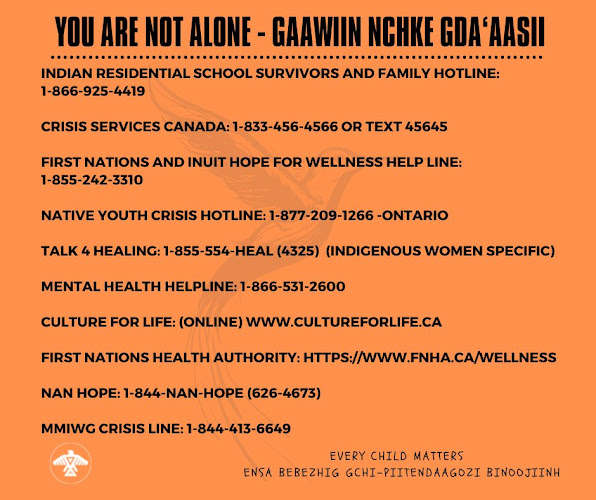
You are not alone

You are not alone

To Veronica Brown

Veronica, we adult adoptees are thinking of you today and every day. We will be here when you need us. Your journey in the adopted life has begun, nothing can revoke that now, the damage cannot be undone. Be courageous, you have what no adoptee before you has had; a strong group of adult adoptees who know your story, who are behind you and will always be so.

Diane Tells His Name


click photo

Lost Birds on Al Jazeera Fault Lines

Lost Birds on Al Jazeera Fault Lines
click to read and listen about Trace, Diane, Julie and Suzie

NO MORE STOLEN SISTERS

NO MORE STOLEN SISTERS
click image

ADOPTION TRUTH

As the single largest unregulated industry in the United States, adoption is viewed as a benevolent action that results in the formation of “forever families.”
The truth is that it is a very lucrative business with a known sales pitch. With profits last estimated at over $1.44 billion dollars a year, mothers who consider adoption for their babies need to be very aware that all of this promotion clouds the facts and only though independent research can they get an accurate account of what life might be like for both them and their child after signing the adoption paperwork.

Original Birth Certificate Map in the USA

Google Followers