They Took Us Away

They Took Us Away
click image to see more and read more

it's free

click

How to Use this Blog

BOOZHOO! We've amassed tons of information and important history on this blog since 2010. If you have a keyword, use the search box below. Also check out the reference section above. If you have a question or need help searching, use the contact form at the bottom of the blog.


We want you to use BOOKSHOP to buy books! (the editor will earn a small amount of money or commission. (we thank you) (that is our disclaimer statement)

This is a blog. It is not a peer-reviewed journal, not a sponsored publication... WE DO NOT HAVE ADS or earn MONEY from this website. The ideas, news and thoughts posted are sourced… or written by the editor or contributors.

EMAIL ME: tracelara@pm.me (outlook email is gone) THANK YOU CHI MEGWETCH!

SEARCH

Showing posts with label Oklahoma. Show all posts

Friday, February 21, 2025

Hope in resiliency

How Indigenous Oklahomans are overcoming generational trauma

Harold Meek on Indigenous Peoples Day 2024
Ben Winters/First Americans Museum | Harold Meek on Indigenous Peoples Day 2024

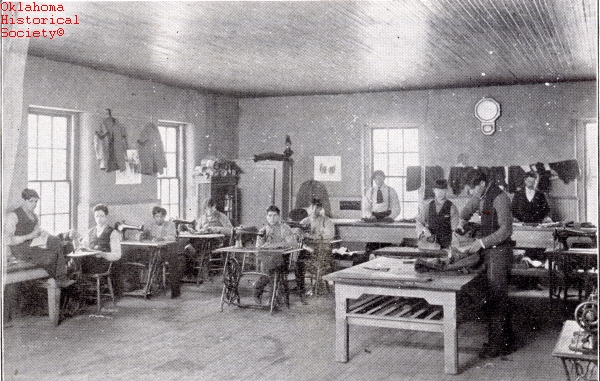
Oklahoma was home to an estimated 83 Indian boarding schools — the most in the country. These schools were popular in the early 20th century and had a genocidal campaign known under its unofficial slogan, “kill the Indian, save the man.”

But according to tribal citizens, that ‘Indian’ was never killed.

As part of a collaboration with NPR and non-profit Cortico, KOSU held community conversations with Indigenous groups across the state and asked: where do you find common ground?

The answer? Resiliency.

READ AND LISTEN:  https://www.kosu.org/local-news/2025-02-11/hope-in-resiliency-how-indigenous-oklahomans-are-overcoming-generational-trauma

Saturday, November 16, 2024

WRONG Side of History


OPINION: 

Halito! Chim Achukma? (Hello, how are you?)

It’s Native American Heritage Month again. I would like to discuss something that’s been endeared to me for some time.  I seek transparency, and I do not desire to be offensive in any way, but I’m on deck, and it’s my turn to bat.

This concerns school curriculums and at least offering ‘Native American’ studies as an elective.

We seldom hear anything about Native American history, and after all, we are Oklahoma and home to 69 tribes who were displaced here in the 1800s. The Oklahoma History course in school only skims the surface of Native studies, and, after all, with its indigenous history, no other state compares to Oklahoma.

There’s been a sudden urgency to actualize how Native American history should be taught in our schools.  For a start, why not tell the truth instead of withholding, editing, and sanitizing it? In layman‘s terms, “tell it like it is.”.

We’re talking transparency here.  It’s necessary to open ‘Pandora’s box’ and discuss land theft (I call it ‘land grab’), government corruption, hundreds of broken treaties, rape, human trafficking, taking children from parents and sending them far away, and even scalping men, women, and children and collecting ‘bounties’ for scalps.

The prestigious yet dishonest Texas Rangers even murdered Mexican people scalped them, and sold scalps as being Indians.  Rangers called it glory, and they answered to nobody.

For many years, our history books have failed miserably regarding Indigenous history.  Three years ago, Kim and I were in West Point, New York, and I finally found an 8’ x 8’ section in the museum basement devoted to ‘Indian Wars,’ which referenced it as ‘Indian Uprising.’ I might also add that Native people should never be referred to as ‘renegades’ when referencing people who were fighting for their land, families, and the honor of being the true and quintessential Americans. Unfortunately, they have been... on the wrong side of history.

Such was the case when Indigenous people fought on what I call the ‘wrong side of history.’

Friday, August 9, 2024

How Tribal Nations Are Reclaiming Oklahoma | Still Waiting on Museums


NEW YORKER: https://www.newyorker.com/magazine/2024/08/12/how-tribal-nations-are-reclaiming-oklahoma

Published in the print edition of the August 12, 2024, issue, with the headline “Promised Land.”

**

Museums closed Native American exhibits 6 months ago. Tribes are still waiting to get items back

PHILIP MARCELO Associated Press

VIDEO: https://apnews.com/video/indigenous-people-american-museum-of-natural-history-ontario-government-regulations-new-york-city-9eb66fe1b9964355b14c7057c12dd904 


NEW YORK (AP) — Tucked within the expansive Native American halls of the American Museum of Natural History is a diminutive wooden doll that holds a sacred place among the tribes whose territories once included Manhattan.

For more than six months now, the ceremonial Ohtas, or Doll Being, has been hidden from view after the museum and others nationally took dramatic steps to board up or paper over exhibits in response to new federal rules requiring institutions to return sacred or culturally significant items to tribes — or at least to obtain consent to display or study them.

Museum officials are reviewing more than 1,800 items as they work to comply with the requirements while also eyeing a broader overhaul of the more than half-century-old exhibits.

But some tribal leaders remain skeptical, saying museums have not acted swiftly enough. The new rules, after all, were prompted by years of complaints from tribes that hundreds of thousands of items that should have been returned under the federal Native American Graves Protection and Repatriation Act of 1990 still remain in museum custody.

“If things move slowly, then address that,” said Joe Baker, a Manhattan resident and member of the Delaware Tribe of Indians, descendants of the Lenape peoples European traders encountered more than 400 years ago. “The collections, they’re part of our story, part of our family. We need them home. We need them close.”

The leader of the tribe in Oklahoma said he visited the Peabody this year after the university reached out about returning hair clippings collected in the early 1930s from hundreds of Indigenous children, including Cherokees, forced to assimilate in the notorious Indian boarding schools.

“The fact that we’re in a position to sit down with Harvard and have a really meaningful conversation, that’s progress for the country,” he said.

As for Baker, he wants the Ohtas returned to its tribe. He said the ceremonial doll should never have been on display, especially arranged as it was among wooden bowls, spoons and other everyday items.

“It has a spirit. It’s a living being,” Baker said. “So if you think about it being hung on a wall all these years in a static case, suffocating for lack of air, it’s just horrific, really.” 

This story was first published on Jul. 29, 2024. It was updated on Jul. 31, 2024, to correct the scope of repatriations to tribes undertaken by the Field Museum in Chicago.


HERE:  https://apnews.com/article/museums-not-returning-native-american-artifacts-0b7428c77341a9a80f022e0167ad4c8b

Wednesday, May 1, 2024

Tornado took everything, but them | A pueblo family loses their home after a tornado ravaged their small Oklahoma town

 A GoFundMe set up for the family had raised more than $3,000 by Tuesday morning.

        SULPHUR, OKLAHOMA, Chickasaw Territory

        READ

Tornadoes Touchdown on the Mvskoke Reservation in Oklahoma


MVSKOKE RESERVATION, Okla. – The weekend of April 27-28 saw intense severe weather storms that left at least four dead and dozens injured in the state of Oklahoma. Among those killed included a four-month-old infant. The City of Sulphur in Murray County was hit particularly hard by tornadic activity, its downtown area covered in fallen building debris. MORE

Monday, July 11, 2022

‘I will never forgive this school for what they did to me'

Donald Neconie, 84, Kiowa, testifed on Saturday, July 9, 2022, as part of the U.S. Interior Secretary Deb Haaland's Road to Healing tour of the brutality he suffered while attending Riverside Indian School in Anadarko, Oklahoma, in the 1940s. Haaland, Laguna Pueblo and the first Indigenous person to sit in a presidential cabinet, kicked off the yearlong tour in Anadarko to hear testimony from survivors and descendants of Indian boarding schools. (Photo by Mary Annette Pember/ICT)

Road to Healing: Deb Haaland pledges boarding school truths will be uncovered

WARNING: This story has disturbing details about residential and boarding schools. If you are feeling triggered, here is a resource list for trauma responses from the National Native American Boarding School Healing Coalition in the US. The National Indian Residential School Crisis Hotline in Canada can be reached at 1-866-925-4419.

Mary Annette Pember |  ICT

ANADARKO, Oklahoma — A journey like no other began at last Saturday for survivors of U.S. Indian boarding schools.

Young and old, descendants and survivors, crowded into the gymnasium of Riverside Indian School in Anadarko, Oklahoma, to share their experiences as the kickoff to U.S. Interior Secretary Deb Haaland’s Road to Healing tour.

Until now, former boarding school students were largely ignored, forced to survive brutality and separation from family, culture and language, and deal with childhood traumas as best they could.

Finally, the world is listening.

“I still feel that pain,” said Donald Neconie, 84, Kiowa, who attended Riverside school in the 1940s.

Neconie, a former U.S. Marine, described physical and sexual abuse at the hands of school employees. School leaders knew of the abuse but did nothing to stop it, he said.

“You couldn’t cry or tell anyone, because if you did, you knew it would be worse,” he said. “I will never forgive this school for what they did to me.”

KEEP READING 

Related stories:
US boarding school investigative report released
Native leaders push for boarding school commission
215 bodies found at residential school in Canada
A Mother's Pray: Bring the children home


Tuesday, April 19, 2022

Christi Heath, Choctaw, 2022 Champion for Native Children


Cristi Heath is an advocate for Native American Children, having worked for the Department of Human Services for over 17 years.

Cristi Heath, Yukon, Oklahoma, has been selected by the National Indian Child Welfare Association as a 2022 Champion for Native Children.

A member of the Choctaw Nation, Heath has worked for the Department of Human Services (DHS) for over 17 years and has spent most of her career with DHS in Oklahoma county.

She received her associate degree from Rose State College with honors and was a part of the Sociological Honor Society. She received her bachelor’s degree from the Univ. of Central Okla. (UCO) in Edmond, Okla., graduating magna cum laude.

Heath said, "When I started with the Department of Human Services, I did investigations (Child Protective Services) for four and a half years. Then I was part of the pilot program that they started in Oklahoma County called Kinship Foster Care. I worked doing that for a year and then supervised Kinship Foster Care in Oklahoma County from 2006-2009."

She went on to reading home studies for people who wanted to be foster parents.

"I did what they called Family Centered Services for five years, supervised that for five years. And then I came to STPU (Specialized Placement and Partnership Unit) and have been doing that for the last two years," said Heath.

On a day-to-day basis, Heath oversees the DHS youth in shelters across the state of Oklahoma. She supervises four liaisons who are each assigned a region of Oklahoma with 21 shelters that have placement of DHS youth. The liaisons check the shelters, assess safety, and see how the kids are doing.

Keep Reading

Monday, January 17, 2022

Renewed Debate over U.S. Indian boarding schools


Oney M. Roubedeaux

As tribes wait for investigation to conclude, debate over Indian schools continues

Tribes across the Southwest dread the possibility that thousands of unmarked graves might be uncovered by a federal investigation into abandoned Native American boarding schools expected to wrap up early this year.

The investigation, ordered by U.S. Interior Secretary Deb Haaland, came in the wake of the discovery this year of more than 1,200 unmarked graves at two long-shuttered boarding schools in Canada’s British Columbia and Saskatchewan provinces.

The probe also has renewed debate over Indian boarding schools, which were established in the 19th and 20th centuries with the primary objective of assimilating Indigenous youth into white culture by denying the use of their languages, dress and other cultural aspects.

Most boarding schools were closed in the 1980s and early 1990s, but dozens of schools remain open, with 15 still boarding students as of 2020, according to the National Native American Boarding School Healing Coalition. Some are controlled by local tribes, while others are operated by the Bureau of Indian Education, a division of the Department of the Interior.

Boarding school alumni are widespread among Indigenous communities, and their thoughts about their experiences vary widely.

“She’s brought awareness for our Native people, for our children,” retired elementary school teacher Oney M. Roubedeaux said of Haaland. “I feel like that is opening up a box of worms. I mean, just a whole big old span of our people that nobody paid attention to.”

Roubedeaux, who is Ponca and Otoe-Missouria, was 6 in 1971, when she rode a Greyhound bus from Stillwater, Oklahoma, to Concho Indian Boarding School in El Reno with her brother, who was 8. She is the youngest of 17 siblings, many of whom attended boarding schools.

After her mother’s death in 1973, Roubedeaux was separated from her brother when she transferred from Concho to the Seneca Boarding School.

She said one of her other brothers was beaten to death in his room in Chilocco Indian School, 20 miles north of Ponca City, in 1980, the year it closed down. By the time she left Concho, there had been three student deaths, one being her best friend’s brother.

After her mother’s death, Roubedeaux was placed in foster care.

She went through 10 foster homes before one foster mother realized Roubedeaux – who was 16 – could not read or write. The teachers at the public and boarding schools she attended had never taken the time to teach her, Roubedeaux said.

She caught up, she said, with help from her foster mother, and eventually obtained a degree in special education from the University of Central Oklahoma. Roubedeaux, who lives in Pawnee, concluded her 20-year teaching career in March 2020.

Although “not everything was good,” she said, boarding schools gave her self-reliance, which was her biggest reclamation of agency.

“Boarding schools were a learning experience for me as a young child … it took me through life, to be able to rely on myself,” Roubedeaux said. “To this day, at the age of 57, I can still do that.”

According to the Boarding School Healing Coalition, 367 Indian boarding schools operated in 29 states, from Alabama to Alaska. Seventy-three were operating in 2020, and 15 of them still boarded students. Oklahoma had the most, with 83 schools, some of which still are operating. Arizona was second with 51 schools, 25 of which are open and three of which board students; New Mexico was fourth with 26 boarding schools.

Riverside Indian School in Anadarko, Oklahoma, organized in 1871, is the oldest of four federally operated boarding schools in the nation.

Today’s boarding schools are a good thing, said Constance Fox, who is Cheyenne and Arapaho and graduated high school from Riverside in 1984.

“I think they’re a good thing because of the uniqueness Native students have,” said Fox, who’s a self-determination adviser for the Bureau of Indian Affairs in Oklahoma. “For many, it was all they had, good and bad. I hope they continue. I know there’s been a lot of positive strides made … I go back to Riverside and it’s a whole different place.”

Fox said Riverside has upgraded its buildings and athletics department over the years. When she attended Riverside, Fox said, no advanced courses were offered, but teachers now are recruited for such courses.

“I have friends that have kids and grandkids that go to boarding schools and it’s because they want to … because there is still discrimination in public schools,” Fox said. “Being around their Native people makes them want to do better and want to succeed. So, I think that’s a dynamic that has changed over the years.”

Fox attended Concho from grades 3 through 8 and graduated from Riverside as valedictorian. She holds a bachelor’s degree in tourism management from Northeastern State in Tahlequah, Oklahoma, and a master’s degree in education from the University of Oklahoma.

Fox, who lives in Yukon, has worked for the BIA for nearly three decades, mostly in the area of self-determination.

Fox said boarding schools – specifically the adults who worked at them, who she says practically raised her – helped shape her passion for self-determination and her career working to better tribes.

“What at the time was negative to me ended up really being positive,” Fox said. “I learned so much about self-responsibility, and that came from the dorm parents, teachers, and other people who worked at both Concho and Riverside.”

Fox said she fully supports Haaland’s efforts and thinks her investigation shows goodwill to create an understanding of the traumas her ancestors suffered and the impact it has in 2022. Although closure can’t begin without acknowledging the history, she said it is hopeful to begin the healing process for the families and tribes impacted.

Hopi journalist Patty Talahongva got her start in journalism at Phoenix Indian High School in the 1978-79 school year. She is the executive producer of newscasts by Indian Country Today, a national nonprofit digital news publication focusing on Indigenous issues.

Although Talahongva, who lives in Phoenix, knows about the brutal history of her grandparents’ boarding school experiences, her year at Phoenix Indian School was different.

“People want to cling to this idea that it was always, always bad,” Talahongva said. “I would say there’s always good in whatever story, no matter how bad it got.”

By the time she was in school, Talahongva said, children were allowed to speak their languages freely, and cultural customs were celebrated, not suppressed. The overall experience, she said, made her more independent. The school, which opened in 1891, shut down in 1990.

Even the launch of Indian Country Today’s newscast in April 2020 has roots in boarding schools.

Talahongva said the newscast began a month after the pandemic was declared, so studio options were few. The solution? The former grammar building of Phoenix Indian School, built in 1935 and now used as a visitors center. Indian Country Today used it for seven months before moving into a studio at Arizona PBS.

“Those kids who went to school in that building were never encouraged to go to college, get a degree, or do whatever they wanted to do,” Talahongva said. “They were certainly never encouraged to become (television) anchors and producers. I can hear our relatives laughing. It’s like, ‘Take that, government. We’re using the building you put up to hold us down, and we’re broadcasting to the world.’”

This story was originally published by Gaylord News, a reporting project of the University of Oklahoma Gaylord College of Journalism and Mass Communication. Nancy Marie Spears, a Gaylord News reporter based in Washington, D.C., is an enrolled member of the Cherokee Nation of Oklahoma. Cronkite News contributed to this story.

Friday, August 13, 2021

New Hope for Answers (and ground-penetrating radar)

August 11, 2021

For years, alumni from the Chilocco Indian Agricultural School in Oklahoma have been searching for information about the students who died at their old boarding school, one of hundreds once set up by the U.S. government to assimilate young Native Americans.

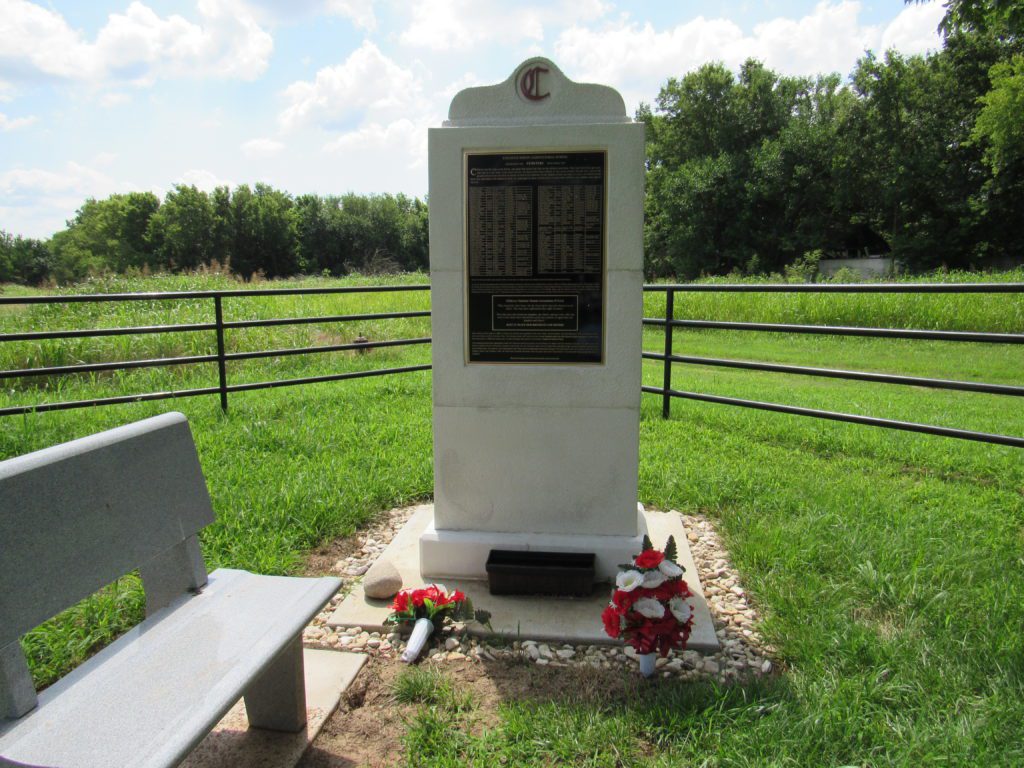
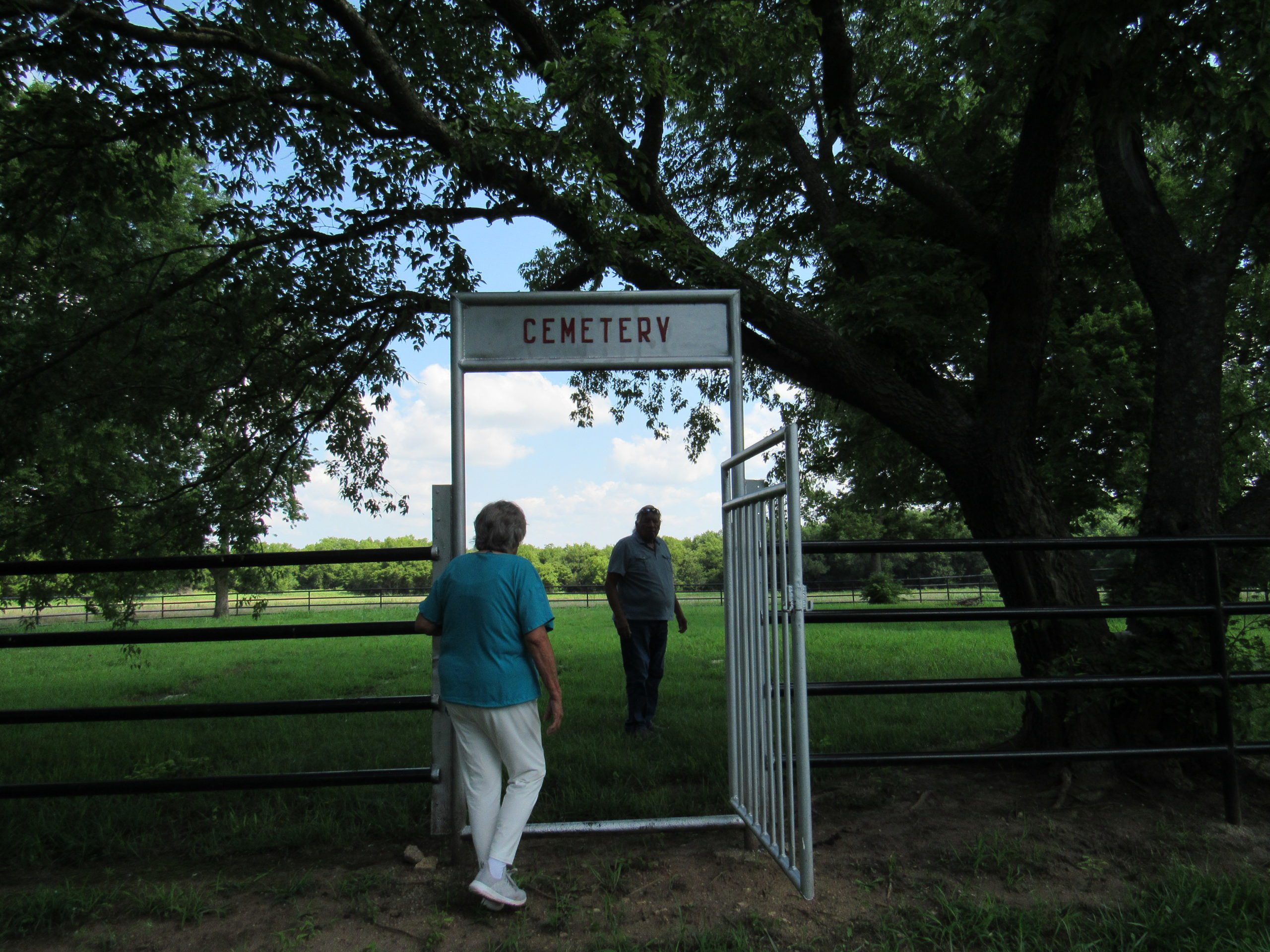
Sifting through archived records, the volunteer group has compiled 67 names, but with little funding for more research, they have no way of knowing how many of the children are buried in Chilocco’s cemetery, which bears only a single marked grave.

Theirs is one of numerous efforts by tribal historians and researchers over the past several years to uncover evidence of Native Americans who died at the boarding schools. Until now, these grass roots investigations have been stymied by limited resources and logistical hurdles.

Now, those leading the projects are hoping a new federal investigation can shed light on a mystery that has haunted Indian Country for generations. In June, Interior Department Secretary Deb Haaland launched a review of Native American boarding schools, hoping to figure out how many students died at the institutions—whether from disease, accidents or mistreatment—and where they are buried. The move was spurred by the recent discovery of mass graves of indigenous children at boarding schools in Canada.

“The government abandoned this sacred site when they closed Chilocco in 1980,” said Jim Baker, the alumni group’s president. If the Interior Department provides resources, he added, “then we can do a comprehensive ground-penetrating radar survey.”


READ ABOUT THE SCHOOL here

Wednesday, July 21, 2021

At one former Native American school in Oklahoma, honoring the dead now falls to alumni #Racist


A new federal investigation into the unmarked graves of Indigenous students unearths a complicated history and patchy records at dozens of Oklahoma boarding school sites.

Chilocco alumni only knew of 10 graves at the school when they began taking care of the site more than 20 years ago, but they’ve since uncovered 57 additional burials that occurred between 1884 to 1937 — all unmarked. 

GOOD READ: At one former Native American school in Oklahoma, honoring the dead now falls to alumni


https://artistsspace.org/exhibitions/new-red-order


Saturday, May 1, 2021

Federal ICWA lawsuit remains a case to watch despite split decision in 5th Circuit Court of Appeals

 LISTEN


A lawsuit challenging the Indian Child Welfare Act received a split decision in federal appeals court on April 6, 2021. The law, the lawsuit and the split resulted in a 300-plus-page decision that confounded experts and lay people alike. The decision won’t impact Alaska directly. But legal experts  say Alaska should still keep an eye on the case.

The Indian Child Welfare Act, or ICWA, basically provides Tribes with an opportunity to intervene when state child welfare and adoption agencies consider whether or not to remove a Native child from a home. The children can be enrolled citizens of the Tribe or be eligible for membership status. 

Tuesday, June 5, 2018

KINSHIP: State Turns to Urgent Placement of Foster Kids with Relatives, Friends

Making matters more urgent are the strict requirements under the Indian Child Welfare Act, which strongly favors placement in tribal households like the Tointighs’. The family said the fact that John Tointigh and their three biological children are members of the Apache tribe increased their appeal in the eyes of DHS. The foster kids they took in come from a different tribe.

Source: State Turns to Urgent Placement of Foster Kids with Relatives, Friends | Oklahoma Watch

Since the latter half of 2016, the percentage of children placed first in a kinship foster home by the state has increased, according to Oklahoma Department of Human Services data. Under DHS' definition, kinship can include not only close blood relatives but also more distant relatives, family friends, community members who have played an important role in the child's life, and others.
Month Children Placed in Kinship as First Placement Children Removed from Family Home and Eligible for Placement Percent of Kinship as First Placement
Baseline: July-December 20168782,54034.6%
January-June 20171,0012,59438.6%
July-December 20171,0092,26444.6%
January-June 2018 (YTD) 6641,41746.9%

Happy Visitors!

WRITTEN BY HUMANS!

WRITTEN BY HUMANS!

Blog Archive

Featured Post

Your History Class Was a F*cking Lie | #NOMOAR

  Your History Class Was a F*cking Lie by Sean Sherman (Or: How the American Educational System Has Always Been a Racist Propaganda Program...


Native Circles

Native Circles
click logo for podcasts!

Most READ Posts

Bookshop

You are not alone

You are not alone

To Veronica Brown

Veronica, we adult adoptees are thinking of you today and every day. We will be here when you need us. Your journey in the adopted life has begun, nothing can revoke that now, the damage cannot be undone. Be courageous, you have what no adoptee before you has had; a strong group of adult adoptees who know your story, who are behind you and will always be so.

Diane Tells His Name


click photo

Lost Birds on Al Jazeera Fault Lines

Lost Birds on Al Jazeera Fault Lines
click to read and listen about Trace, Diane, Julie and Suzie

NO MORE STOLEN SISTERS

NO MORE STOLEN SISTERS
click image

ADOPTION TRUTH

As the single largest unregulated industry in the United States, adoption is viewed as a benevolent action that results in the formation of “forever families.”
The truth is that it is a very lucrative business with a known sales pitch. With profits last estimated at over $1.44 billion dollars a year, mothers who consider adoption for their babies need to be very aware that all of this promotion clouds the facts and only though independent research can they get an accurate account of what life might be like for both them and their child after signing the adoption paperwork.

Original Birth Certificate Map in the USA

Google Followers