They Took Us Away

They Took Us Away
click image to see more and read more

it's free

click

How to Use this Blog

BOOZHOO! We've amassed tons of information and important history on this blog since 2010. If you have a keyword, use the search box below. Also check out the reference section above. If you have a question or need help searching, use the contact form at the bottom of the blog.


We want you to use BOOKSHOP to buy books! (the editor will earn a small amount of money or commission. (we thank you) (that is our disclaimer statement)

This is a blog. It is not a peer-reviewed journal, not a sponsored publication... WE DO NOT HAVE ADS or earn MONEY from this website. The ideas, news and thoughts posted are sourced… or written by the editor or contributors.

EMAIL ME: tracelara@pm.me (outlook email is gone) THANK YOU CHI MEGWETCH!

SEARCH

Showing posts with label Adoption is Big Business. Show all posts

Saturday, October 3, 2020

Dear Dad, You are Still Racist


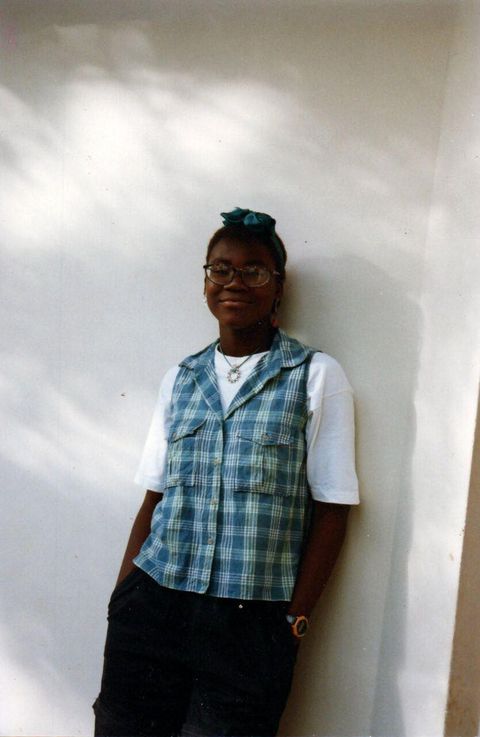
by Author Mae Claire, born in Haiti raised in the USA.

A letter to my deceased father who illegally trafficked me out of an orphanage in Haiti. 
My works: https://www.amazon.com/-/e/B00IZG9Q56
Insta: @liftingtaboos
Blog: https://solifegoeson.com/

Excerpt:

Adoption is dangerous. Oftentimes we do it and we don’t even really know or understand why we are doing it. We do it because in the moment, it ​feels​ like the right thing. We do it because we think it is going to fix something in us. Maybe it does fix something in us…but it leaves the adoptee with scars, bruises and longing for what could have been.

Dear dad, now you are dead and can probably see and understand the pain you caused. If there is any way you can infiltrate the lives of others who have adopted or are hoping to adopt and warn them of the dangers; we adoptees will forever be grateful.

May you not rest in peace until you have saved other adoptees from the same pain.

FANTASTIC WRITING: Adopted from Haiti, Mae | InterCountry Adoptee Voices (ICAV)


MORE:

Wednesday, February 12, 2020

What does history tell us about adoption

By Trace Hentz (Blog Editor and adoptee)

The Dakota expression for child, wakan injan, can be translated as “they too are sacred,” according to Glenn Drapeau, Ihanktonwan Dakota and a member of the Elk Soldier Society on the Yankton Sioux Reservation in South Dakota.

“To us, children are as pure as the holy, moving energy of the universe,” he says, “and we treat them that way.”

What does history tell us about adoption? Most telling is the timeline of adoption history: https://pages.uoregon.edu/adoption/timeline.html

Can you see the curve American Adoption took to become a profitable industry after seeing that timeline?  Do you notice how some states stepped in and made laws? Can you see the influence of the religions and their judgements of single parents? What role did poverty and racism play? Can you see how secrecy and laws protects the industry and the people who adopt?

Twenty years I've studied adoption in my own investigations and I think 20 years later... adoption is not about child care at all but has morphed into child trafficking, a response to an infertility epidemic, lawyers and judges, billions of dollars, propaganda and bad history.

Supply and demand requires: Where do you find an available baby for an infertile couple in America?

What was born of this curve in 20 years: there are camps. The two most common camps for adoptees are "be grateful" and "the activist."

Not everyone wants to hear adoptees in any camp. I simply cannot believe the adoption debate has gone on as long as it has.

If adoption hurts anyone, then it should be abolished. Period.

When you see how adoption was used against Native people, then it was a criminal act. (This was important to document in the four-part book series LOST CHILDREN OF THE INDIAN ADOPTION PROJECTS: see the books in the sidebar of this blog)

My adoptive parents were miserable people, very sick. I cannot begin to calculate the source of their behaviors but their infertility and religion resulted in my being adopted by them through Catholic Charities and then abused by both of them.

If there had been careful awareness by the adoption industry's social workers prior...maybe it would not have happened. But the social workers never returned.

Who would create a system for children that would not check on adopted children?

Child trafficking via adoption is profitable. That seems to be why it won't go away.

I'm not bitter because that was the system and how it was created. But when you see the harm, and the trauma and the lifelong issues for the child in a closed adoption, how does adoption exist in any form?

Caring for children who are true orphans, without any biological family is so rare, a community could step in and care for the orphan.  It would not require a bureaucracy to do that. The decision could be made by tribal leaders. If you are a member of a tribe, the entire tribe is your family. Kinship care always worked for children who had lost their parents.

I was not an orphan. I had two biological parents who were in their 20s. Relatives told me later they could have and would have raised me.

But someone created a system that didn't allow that, and instead the adoption industry chose strangers to raise me.

I was born before the Indian Child Welfare Act was passed in 1978. I do not have my Original Birth Certificate.

I will never stop fighting for Native children. They deserve our protection.

Read my earlier post: What Being Adopted Cost Me.

Toni Morrison says that “facts can exist without human intelligence, but truth cannot.”

Thursday, April 26, 2018

When Terrorism is Personal #BabyVeronica

AMERICAN INDIAN ADOPTEES: When Terrorism is Personal #BabyVeronica #FlipThe...:

Guest Post by ellecuardaigh


This post needs to read again and again.

So now children are taken for these reasons:


  • Poverty, or, just not having as much money as the prospective adoptive family
  • Asking for a second opinion after a medical diagnosis is made regarding your child
  • Being Native American
  • Being short
  • Considering adoption then deciding against it
  • Going to the ER for any reason
  • Using medical marijuana
  • Being a single parent
  • Disagreeing with anything a teacher or other authority figure says about your child
  • Not adhering strictly to the recommended vaccine schedule
  • Being exceptionally attractive
  • Not putting your child into preschool
  • Allowing your child to play in your own yard
  • Having an unusual birthmark
  • Your neighbor or some awful relative just wants to hurt you
  • CPS meeting their “children in care” quotas
  • And I’ll say it again, because this is the #1 reason: You don’t have the money to fight back.
CLICK HERE

Thursday, August 4, 2016

What we've known a long time

Take The Children
By Trace L. Hentz (blog editor)
First, do no harm. That is the doctor’s creed. Doctors are part of a larger group I call The Adoption Industry. Their group includes clergy, politicians, academics, psychology-types, social workers, lawyers and adoption agencies made up of similar people. Apparently this group lacks historians. If they had historians, they’d know adoption hurts the adoptee. 

Statistics don’t lie. Adoptees are among the highest population in psychiatric care. If it hurts, it harms.
The mental health of Native babies and children who go through adoption with non-Indian parents has been documented in studies for decades. Suicides, arrests and addictions are common and adoptees have known this pain a long time. The Indian Child Welfare Act of 1978 was supposed to end the harm to Indian children by placing them with other family members. Sadly, that still isn’t happening.
My friend Stephanie Woodard wrote in Indian Country Today, here (Dec. 1, 2012) about South Dakota’s ICWA violations:
“The ICWA directors found that the latest information shows South Dakota is not only taking a disproportionate number of children into custody, it is also failing to ensure that they stay with their tribes, despite ICWA provisions requiring that tribes have a say in their children’s placement. As of July 2011, they said, Native American foster homes sat empty while nearly 9 out of 10 Indian children in state foster care were in non-Native homes.
“The ICWA directors also noted the state’s tendency to equate “poverty” with “neglect,” which in turn results in more seizures of Native American children: “South Dakota’s rate of identifying ‘neglect’ is 20 percent higher than the national average,” they wrote.
“The group also found disturbing information on the fate of children once they left the (social care) system. Some youngsters are reunited with their families or adopted; or they may turn 18 and “age out.” But from 1999 to 2009, the “other” category—children who died, ran away or were transferred to correctional or mental-health facilities—grew from 6.9 percent to 32.8 percent….”
In two conversations, two different birthmothers in Minnesota confirmed what I was thinking about harm to the adoptee. One mother found her son was harmed emotionally by his adoption and is in treatment for addictions. Then an adoptee friend shared her brother, also an adoptee, is homeless and drug addicted. Her family doesn’t know what to do, other than hope and pray he finally gets mental health counseling for adoption issues and not get prison-time.
This mental health crisis has been building for decades! I sought counseling twice in my life, and even though it wasn’t focused on adoption, it helped me recover my self-esteem. Doing research for my book One Small Sacrifice changed me the most and healed what I call “the wound.” (There are adoptees who say they were not harmed, not all, but some.)
The truth that adoption harms and hurts Native children is something we’ve known a long time. But this truth never seems to reach our adoptive parents ears. They were not told by Adoption Professionals they’d need to prepare for our adoptee issues and get us help early.
Propaganda by the Adoption Industry would prefer we don’t speak the truth. Adoptees have known that a long time, too.


Saturday, July 11, 2015

Monique Vondall-Rieke on #ICWA #Goldwater

COMMENTS ON THE GOLDWATER INSTITUTE CHALLENGE TO ICWA
(or “More one-sided arguments that we get used to in Indian Country”)
 
By Monique Vondall-Rieke, J.D.,
Director, Association of Village Council Presidents Tribal Justice Center
 
BETHEL, AK – The announcement of A.D., et al. v. Washburn by the conservative group known as the Goldwater Institute comes with a bitter deja vu of “haven’t we heard this before?”  I’ve got a few things that I can say are wrong with the pleadings filed by Goldwater on behalf of minor American Indian children, “next friend,” and potential adoptive parents. Mostly, however, I’ve got even more to say on the one-sided EPIC report they have produced to coincide with their summation that ICWA should be declared unconstitutional.
First of all, the report does its purpose for Goldwater regardless of the medical and psychological research that exists and documents the loss of cultural identity and historical trauma that American Indian children have been victims of for centuries. The report also fails to point any blame at even the beginnings of Indian to federal government (i.e. “founding fathers”) relationships and what they are based upon. The truth of the harms of the Doctrine of Discovery is avoided again and the convoluted desire to have an American Indian child at the center of arguments of white conservatives is the Hail Mary of what Justice Scalia coined as “jiggery-pokery” in the recent SCOTUS decision on same-sex marriage. (Not that I would support his use of the term or dissenting opinion, of course.) It just doesn’t surprise me that the Goldwater Institute has invested time and money into a campaign to smear a federal law that undoes what historical trauma to American Indians has done for centuries in one fell swoop of a few isolated wins against ICWA.
The report begins with unmistakably sad stories of failures within American Indian communities across America where ICWA, they allege, did not protect the child. What Goldwater Institute fails to do, however, is focus on why some children are not connected to their tribal affiliation more than when they reach an ICWA stage. What they fail to point out is the overwhelming questions like: what were the incidences that led to those people being isolated from their cultural communities? The answer in most cases is because, somewhere in their lineage, someone was removed from their cultural communities and placed either in a non-Indian home, or in a boarding school. Both situations are damaging for a number of historically traumatic reasons told in stories over and over by our ancestors.

There are two reasons I support ICWA: my oldest son and my youngest son. First, my oldest son was born at a time in my life when I was a precarious young woman who was unsettled and seeking self-identity. I went from being a Catholic to a bible-banging Christian to a Buddhist and it was not until 1999, twelve years after my oldest son was born and adopted by his biological grandparents that I was able to find my spirituality and return to a circle that had been broken by cycles of Catholic influence of my ancestors. My son was nearly adopted by a white family but, thanks to ICWA, the adoption met the family exception and he was adopted by his father’s grandparents, who agreed to keep the adoption open and allowed me to see him. Today, we have a wonderful relationship and he and his beautiful girlfriend are about to give me my third grandson. As an adult, my son sought out his American Indian heritage and came to live with me, my other two children and my husband. I thank ICWA to this day for allowing me to open my eyes to allowing his grandparents to adopt him because they raised him to be a respectful young man.

The second reason I support ICWA is because my youngest son was adopted by my husband and I in 2005. He came to us through an ICWA relative placement and is the light of our life daily. My husband is a kind, caring, loving father and I would have never been able to see that side of him without ICWA giving us the gift of my son through the relative placement requirements of ICWA. In fact, his brother and sister were adopted by my sister, so ICWA has touched many of my family’s lives and has allowed these three children to be raised in our cultural family nucleus. If it were not for ICWA, the relative would not have approached us for early placement of the children, and, without going into detail, my young son could possibly not even be alive today. So, I defend ICWA against its attack and always will. My husband, in fact, wrote a song in gratitude of ICWA. He is a non-Indian (Hungarian) and our son knows his heritage. He knows he is American Indian and can be Hungarian when he wants to be, or Irish, or French, but most of all, he knows that he is safe and loved in his home by his mother and father.

Incidentally, the report by the Goldwater Institute fails to mention that keeping American Indian children in foster care is a multi-billion dollar business for state human service agencies. The Children’s Bureau, U.S. Department of Health & Human Services, AFCARS Report of 2013 reveals that American Indian children make up .9% of the population of U.S. children but represent 2% of the population of children in foster care in the U.S. Some states with high numbers of American Indian populations, like South Dakota, statistics reveal that up to 50% of the children in foster care placement in that state are American Indian.

The Association of Village Council Presidents in Alaska represents 56 tribes and villages in the Yukon-Kuskokwim Delta Region (“Y-K Delta”). The newly-developed South West Region of Alaska shows, in the University of Alaska Anchorage Institute of Social and Economic Research’s report titled “Trends in Age, Gender, and Ethnicity Among Children in Foster Care in Alaska,” that for every 1000 of children in general population, 20 Alaska Native children will end up in foster care, which is more than double the rate of any other region in Alaska. The Y-K Delta has several remote villages and the Office of Children Services for Alaska is deeply involved in the placement of children out of their communities due to the lack of (1) American Indian foster homes in the region and (2) lack of kinship foster care funding for family placements, unlike other states. Although other reasons exist, the quick judgment of removal of a child takes place far more often than in other areas of the United States versus the cost of making a “good faith effort” to place the child in an American Indian home as required by ICWA. These statistics and the removal from communities only exacerbate the loss of cultural identity and increase the stigma of historical trauma on the children.

These are the reasons that ICWA is so important to American Indian children. There are some sad casualties, but in any foster care system, whether the children are American Indian or not, there are casualties and all agencies need to strive for a no-casualty goal to preserve the health and welfare of children, regardless of race or ethnicity, or, yes, even political status. The fix to those problems, however, is not to abolish the Indian Child Welfare Act and not to exploit the misfortunes of failed systems and failure stories. These facts and statistics, Goldwater Institute, is not “pure applesauce.”
Here are the lyrics to the song written by my husband, Stuart Rieke:


Listen to Native Peoples First

Call this a protest or a culture song
There’s no changing the laws of diversity
Jesus himself battled the Romans who were wrong
Cause Rome wanted only one set of eyes to see.
Children interpret their daydreams
Through a culture they inherit.
Do you want them to be held away?
Or do you hope they share it?
You want to help write their songs?
But first understand, first sing along.
We gotta learn to listen to Native Peoples first
Before we all try to fix this broken Universe.
Call this a plea to reason
Or a personal narrative.
My son sees the seasons
Through eyes of the cultures where he lives.
Every generation is like a wave
You’ve got to give them room to feel the shore
How can you think they’re yours to save?
They need their own center, their cultural core!
You want to help write their songs?
But first understand, first sing along.
We gotta learn to listen to Native Peoples first
Before we all try to fix this broken Universe

Thursday, November 6, 2014

Child Trafficking, Illegal Adoptions Headlines #flipthescript

click on headlines


11 Facts About Human Trafficking | DoSomething.org ...

https://www.dosomething.org/.../11-facts-about-human-tra...
Do Something
 
California harbors 3 of the FBI's 13 highest child sex trafficking areas on the ... Accessed February 25, 2014, http://www.ncadv.org/files/HumanTrafficking.pdf. 4.
 
***********************************************************************

Illegal adoption 'big business' in Dominica - Dominica News ...

dominicanewsonline.com/news/.../illegal-adoption-big-business-dominic...
Apr 29, 2014 - Illegal adoption of Dominican children has become a 'big business' between Dominica and the French islands of Martinique and Guadeloupe.
 
*********************************************************************** 
 

Greece: 7 arrested in illegal adoption ring - WSMV Channel 4

www.wsmv.com/.../greece-7-arrested-in-illegal-adoption-ring
WSMV‑TV
Updated: Sep 24, 2014 6:58 AM PDT ... Illegal adoption in Greece typically motivated by frequent procedural delays and the country's relative affluence ...
 
********************************************************************** 

Illegal Adoption: Is It Human Trafficking?

Babies for Sale
This week, 382 babies were rescued and 1,000 people arrested in a Chinese sting operation against four illegal adoption rings. In January, a Chinese doctor received a suspended death sentence after her conviction for abducting and selling seven babies between November 2011 and July 2013. At least 26 other cases have been linked to this doctor, and several other people are also in criminal detention.

****************************************************
 

Trafficking in Persons Report 2014 - US Department of State

www.state.gov/.../2014/?...Trafficking...
United States Department of State
The 2014 Trafficking in Persons Report is available in PDF and HTML formats. ... Environmental Degradation and Human Trafficking [ Get Acrobat Reader ...

Wednesday, November 5, 2014

Big Business in Babies #flipthescript #adoptionindustry

The Abduction of First Nations children
Big Business In Babies: Adoption, The Child Commodities Market

By Mirah Riben (25 April, 2007) Countercurrents.org

Adoption was once a process by which the community took responsibility for orphans. Increased access to birth control pills and legal abortion, and a lessening of the stigma of single parenting, coupled with an increase in infertility resulted in a demand for babies that outstrips the “supply.” And where there is demand – be it for diamonds, drugs, sex, or babies – corruption follows.

Adoption is racist. The scarcity of “white American-born babies” has led to an increase in international adoptions, fracturing family ties and heritage in what some are calling cultural genocide. Madonna was criticized. Angelina confounds. Westerners, however, continue to believe that adoption “rescues” orphans; though saving children from poverty, one at a time, does nothing to ameliorate the conditions that continue to produce them. And, many so-called orphans are in fact stolen, kidnapped, or their parents were coerced to relinquish them under false pretenses to be sold on the black and gray adoption markets with prices set by age, alleged health, skin color, gender and nationality.


As Americans import mostly light-skinned babies, non-white children are left behind, and the number of black, American-born babies adopted by overseas families has increased significantly in recent years, with black babies being placed with Canadian couples more than ever before. Adoption trends follow poverty and sociopolitical upheaval from Latin America to Asia and Eastern Europe. Since the 1990s, China and Russia have become the largest exporters of children for international adoption. Unrest and poverty in these nations makes them ripe for corruption and trafficking. 

In April 2007, the U.S. State Department confirmed that Guatemalan babies are kidnapped for adoption and other mothers pressured to sell their babies by corrupt, inadequately supervised notaries. The previous month, a Utah adoption agency was indicted for “systematically misleading birth parents in Samoa into signing away rights to their children while telling adoptive parents in the United States that the children had been abandoned and were orphans” (“Pacific Islands Report: Utah Agency Indicted In Samoa Adoption Scam,” March 5, 2007 http://pidp.eastwestcenter.org/pireport/2007/March/03-05-01.htm). 

All of this while UNICEF is investigating child trafficking and babies being sold for adoption in Nepal (Nepal: Unicef On Inter-Country Adoption http://peacejournalism.com/ReadArticle.asp?ArticleID=17655).


READ MORE here

Mirah Riben, author of shedding light on…the Dark Side of Adoption (1988) and The Stork Market: America’s Multi-Billion Dollar Unregulated Adoption Industry (www.AdvocatePublications.com, 2007); former director-at-large, America Adoption Congress. 

Happy Visitors!

WRITTEN BY HUMANS!

WRITTEN BY HUMANS!

Blog Archive

Featured Post

Your History Class Was a F*cking Lie | #NOMOAR

  Your History Class Was a F*cking Lie by Sean Sherman (Or: How the American Educational System Has Always Been a Racist Propaganda Program...


Native Circles

Native Circles
click logo for podcasts!

Most READ Posts

Bookshop

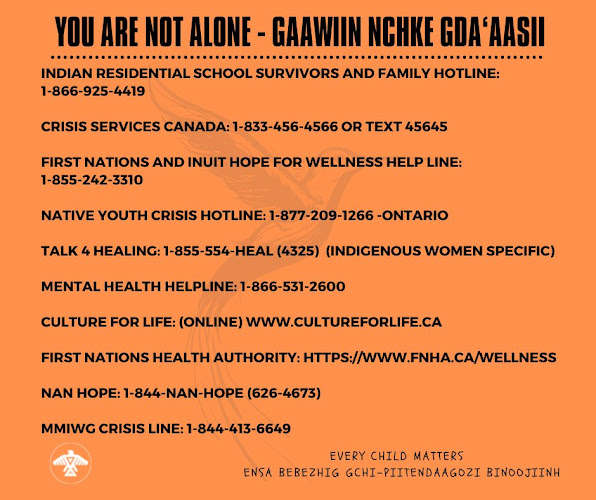
You are not alone

You are not alone

To Veronica Brown

Veronica, we adult adoptees are thinking of you today and every day. We will be here when you need us. Your journey in the adopted life has begun, nothing can revoke that now, the damage cannot be undone. Be courageous, you have what no adoptee before you has had; a strong group of adult adoptees who know your story, who are behind you and will always be so.

Diane Tells His Name


click photo

Lost Birds on Al Jazeera Fault Lines

Lost Birds on Al Jazeera Fault Lines
click to read and listen about Trace, Diane, Julie and Suzie

NO MORE STOLEN SISTERS

NO MORE STOLEN SISTERS
click image

ADOPTION TRUTH

As the single largest unregulated industry in the United States, adoption is viewed as a benevolent action that results in the formation of “forever families.”
The truth is that it is a very lucrative business with a known sales pitch. With profits last estimated at over $1.44 billion dollars a year, mothers who consider adoption for their babies need to be very aware that all of this promotion clouds the facts and only though independent research can they get an accurate account of what life might be like for both them and their child after signing the adoption paperwork.

Original Birth Certificate Map in the USA

Google Followers