Lindstrom helped tribes and counties across the nation to develop
programs to ensure that federal law was followed and Indian children
were not forcibly removed.
By Chris Serres Star Tribune| May 26, 2021
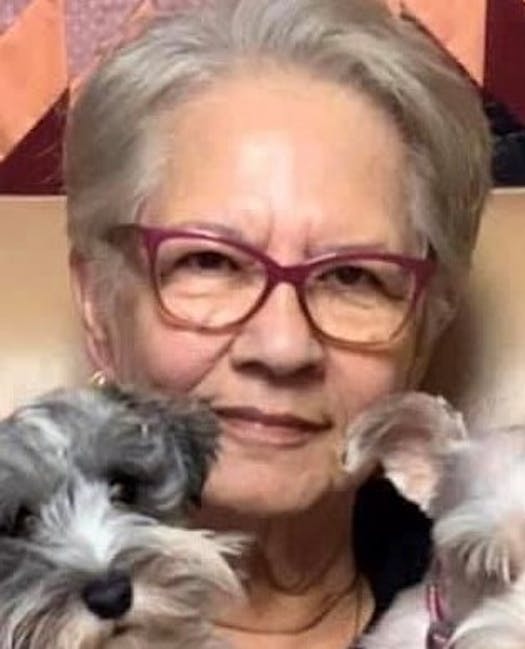
Janice
L. Lindstrom, a social worker and champion of legal rights for American
Indians, and who testified in Congress for stronger protections for
Indian children and families, died of cancer May 7. She was 75.
Lindstrom
helped tribes and counties across the nation to develop programs to
ensure that federal law was followed and Indian children were not
forcibly removed from Indian families.
Her work was made possible by the Indian Child Welfare Act
(ICWA), a landmark federal law passed in 1978 designed to end the
practice of taking Indian children from their homes and placing them in
boarding schools or foster care. The law gives tribes the right to
intervene in adoptions in which Indian children are put up for adoption
and placed with non-Indian families.
At
the time, many Indian children were being removed from their birth
parents not for abuse or neglect, but because of perceived or real
poverty. Harsh living conditions prompted social workers to make
unwarranted removals, and poverty made it difficult for Indians to
qualify as adoptive parents. Before ICWA, 25% to 35% of Indian children
were being removed from their homes; of these, 85% were placed outside
of their families and communities — even when able and willing relatives
were available.
A
member of the White Earth Nation of Ojibwe, Lindstrom experienced this
injustice firsthand. She watched as two of her younger sisters were
placed in separate homes in Stillwater with non-Indian foster parents.
Adding to the trauma of this separation, the family later discovered
that one of Lindstrom's sisters had been sexually abused and underwent
forced sterilization while in foster care.
"My
mother could not stand the desecration of our families — the way they
were breaking up our people — and she fought with tenacity to prevent
it," said Lindstrom's daughter, Sheri Riemers, government and community
relations director at the Ain Dah Yung Center, a St. Paul-based shelter for runaway and homeless youth.
Lindstrom
was the oldest of five children born on the White Earth Indian
Reservation in northwestern Minnesota. As a child, she went to live in
nearby Park Rapids with her grandparents, who lived in a rustic wood
cabin with an outhouse and wood-burning stove.
At 16, Lindstrom moved to the Twin Cities and did a series of odd jobs before being hired at the Minneapolis American Indian Center.
The center's director, Frances Fairbanks, was impressed by Lindstrom's
toughness and asked her in the early 1980s to coordinate a new program
to monitor the state's compliance with ICWA and ensure that tribes were
notified when Indian children were being removed from their homes.
Lindstrom
and her team faced numerous barriers, including local social workers
and judges who were not familiar with the new federal law and the unique
status of tribes. But she persuaded counties in the metro area to allow
her team to monitor court proceedings and to intervene in cases where
Indian children were being removed or parental rights were being
terminated. Tribes across the nation would adopt similar
court-monitoring programs.
"Janice
was tenacious," said Rose Robinson, a longtime friend and former
director of the Minnesota Indian Women's Resource Center. "She
understood that when you take a child away, then you are disconnecting
that child from their community and their relationships."
For the past 17 years, Lindstrom was executive director of Juel Fairbanks Recovery Services,
a treatment center in St. Paul for men with substance abuse disorders.
She put the center on sounder financial footing while encouraging
healing through Indigenous culture and traditions.
In
her final days, Lindstrom continued to counsel residents. "They revered
her like a mother," said Riemers, her daughter. "She took them under her
wing like they were her own sons."













 Posts
Posts

