They Took Us Away

They Took Us Away
click image to see more and read more

it's free

click

How to Use this Blog

BOOZHOO! We've amassed tons of information and important history on this blog since 2010. If you have a keyword, use the search box below. Also check out the reference section above. If you have a question or need help searching, use the contact form at the bottom of the blog.


We want you to use BOOKSHOP to buy books! (the editor will earn a small amount of money or commission. (we thank you) (that is our disclaimer statement)

This is a blog. It is not a peer-reviewed journal, not a sponsored publication... WE DO NOT HAVE ADS or earn MONEY from this website. The ideas, news and thoughts posted are sourced… or written by the editor or contributors.

EMAIL ME: tracelara@pm.me (outlook email is gone) THANK YOU CHI MEGWETCH!

SEARCH

Showing posts with label Survivor not Victim. Show all posts

Tuesday, July 6, 2021

Sixties Scoop survivor speaks her truth: 'I'm not going to hide it'


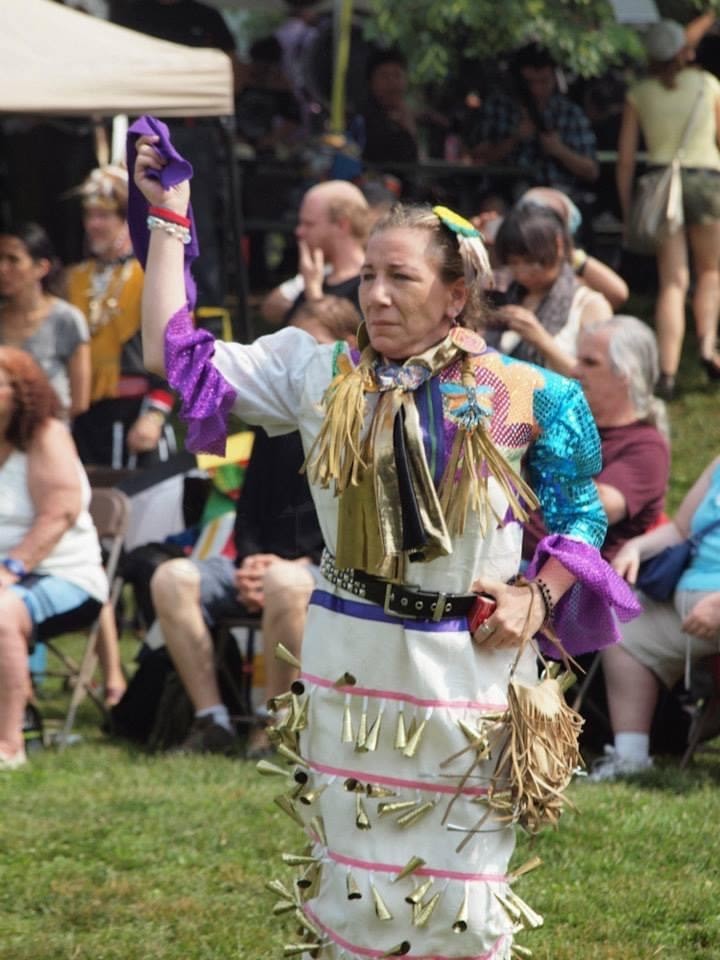
Sharon Boutilier was born in September of 1966, she is a survivor of the Sixties Scoop. (Photo courtesy of Sharon Boutilier).

CALGARY (660 NEWS) — Sharon Boutilier is of Whitefish River First Nation in Ontario, but she did not know that until she was 18 years old.

Born in 1966, Boutilier was taken from her family and adopted out to a Catholic family in Toronto, during a period known as “The Sixties Scoop”.

“My adoptive parents always told me that I was ‘Indian’, but I didn’t know what that meant, or if it was true,” Boutilier told 660 News.

“It was like growing up without an identity because you know people would ask me ‘where are you from’ and ‘what nationality are you?’ and I didn’t even really know who I was,” Boutilier explained.

“My [adoptive] mother was really good, but my dad was sexually abusive, and that was kind of hard. It was like, why are you doing this? Is it because I’m not your child?” Boutilier said.

She says that in order to move past this she had to learn to be honest about her story and speak her truth.

“I’m not going to hide it to protect anybody. Protecting other people was hurting me,” Boutilier explained.

When she turned 18, Boutilier went to the Catholic Children’s Aid Society with her adoptive mother, where she was given information about her birth family.

“You can get information about your family once you turn 18, but it’s non-disclosure so they don’t name them,” Boutilier explained.

“So when I got that information from the Catholic Children’s Aid, I knew I was Native. Even though I had blonde hair and blue eyes, now I knew for sure that I was Native,” she added.

Now that she was sure of her ancestry, Boutilier began to search for her family.

“I got the information to contact a woman on the reserve named Jenny Jocko, who happened to be friends with my family,” Boutilier explained.

LISTEN: Reporter Devon Banfield speaks with Sharon Boutilier 

Jocko was able to connect Boutilier with her birth mother.

“Then I got to meet my brother and sisters, and it was awesome,” Boutilier said.

When she reconnected with her family, she had wanted to learn more about her culture and background. But Boutilier learned that her family had been forcibly converted to Catholicism.

“They went to residential schools; they were taught from an early age to disconnect from your identity. Being traditional was sacrilegious,” Boutilier explained.

Despite this, she said that when she first went to meet her relatives, she felt like that was where she belonged.

“It was freaky but I felt like I was at home on the reserve. It’s called Blood Memory — that familiar feeling even though I hadn’t been there since I was a baby,” she told 660 NEWS.

Still looking to learn more about her ancestry, Boutilier soon got a job at the Native Canadian Centre of Toronto.

“I worked with a program called visiting schools where we would teach students about Native culture, like how to create regalia, drumming and dancing, and other things,” she explained.

Boutilier says that through her time working with the Native Canadian Centre of Toronto she gained a better understanding of how the residential school system has affected generations of families in First Nations, Metis, and Inuit communities.

“How’re you going to know how to be a parent when you never had parents, if you were raised in an institution. If you weren’t shown that love and caring of what it is to be a family or what is to be a mother, then how are you going to know when you have your own children?” Boutilier explained.
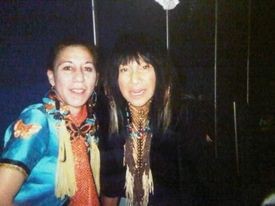
“My [adoptive] mom would always say that I was Indian like Buffy, but I didn’t understand what it meant to be Indigenous.” Boutilier with Buffy St. John, Toronto 2008.

“My mother has struggled with addictions her entire life, after spending most of her childhood seperated from her family and culture by these institutions,” she added.

It’s been over 30 years since Sharon Boutilier first reconnected with her family, and Boutilier says that meeting them was the first step in healing from her own trauma.

“One thing that really helped me in my journey was when an Elder told me that we come from the stars,” she explained. 

“We are put on this Earth to learn more, it made me feel like I was on the right path by learning about my Peoples.”

Boutilier says the Canadian Government’s reaction to recent discoveries on the grounds of former residential schools is insulting to Indigenous communities.

“When Stephen Harper made his apology in 2008 I worked at the Native Centre. I watched the Natives breakdown in tears, the Elders, watching the apology on TV and I heard the stories about what they went through,” Boutilier explained.

“I believe the Prime Minister needs to stand up and stop saying that the Canadian Government is shocked. This was planned by the government, executed by the churches as a cultural genocide,” she added.

Boutilier said that recent marches, protests and vigils in support of the Indigenous communities has given her hope for the future.

“Seeing all the people turning out to these events brought tears to my eyes, because it feels like Canadians are finally waking up,” Boutilier said.

“The Sixties Scoop” occurred from the early 1950s through the 1980s, and saw tens of thousands of Indigenous children removed from their families and adopted out to non-Indigenous families.

Tuesday, December 16, 2014

Interview: Adoption Survivor, not Victim

Note from Trace: Because of spam attacks, I am reposting this and deleting the original. Can I win the war with spambots? I guess I will try by deleting the old posts and win that way.

Friday, July 8, 2011


Von Coates interviewed me about my adoptee and my writing experience in my memoir ONE SMALL SACRIFICE, published in 2009 - I wanted to share an excerpt of this interview:

VON:  In your life was there a pivotal event that changed you from being a victim of adoption to a survivor?
Trace, 1st grade

Trace: That is a great question because lots of people won’t recognize there is a definite shift from victim to survivor.
When laws restrict opening adoption records, these policymakers make us victims. There are many adoptees ready to know their family name, meet relatives and have reunions, but cannot because of adoption laws.  Other adoptees, lulled by gratitude, may fear upsetting their adoptive family, and may not see themselves as victims of a corrupt unjust system.   
The adoptee moves from victim to survivor when they decide to break the law, when they decide to regain and restore their own identity, and get their name. That’s a giant leap forward.
My becoming a survivor happened in stages, in a sequence of events. As a child I grieved. I promised myself as a teenager that I would find answers but it looked impossible with sealed records in Wisconsin.  I felt overcoming my low self-esteem was first. In my 20s, I realized there would be “emotional processing” I’d need to do, slowly, over time.  Opening my adoption records was very important in 1978 but troubling since I had no help to locate my parents. This was before the internet.  I also had to face reality that I might not find them or my parents might not be willing to meet me.  I never met my mother Helen which felt like a second rejection in the 1990s. I was 38 when I met my father Earl in 1996. Reunions (or not having a reunion) take time to process.  Over the years, other adoptees were great teachers for me since there are no guidebooks for dealing with adoption and the trauma. There is so much to understand, obviously.
Writing and remembering everything again and research changed me most – like a light bulb went on. I started to see adoption as an industry and a measure of control over a mother’s maternity and placed orphans in a state of emotional disgrace.  Recognizing adoption as an institution, one that has outgrown its purpose, one that is damaging for mother and child, was perhaps my biggest transforming moment.  (It was actually magical…)

VON:   You say in your book adoption involves many traumas, not just the one of the loss of a mother. Many of the things that happen to us, the damaging relationships, breakdowns and illness result from those traumas. How do we move from being vulnerable, to strength and survival?

Trace: In my book, I mention four distinct traumas for adoptees and I know there are more. Adoptee and natural parents are vulnerable to the billion dollar adoption machine that still manipulates us. I felt manipulated. Restricting us from meeting, laws which prevent our meeting, then add a dose of shame, judgement and misunderstanding, all deeply affects and even harms adoptees.  I do write about this in depth.
Adoption is very isolating.  Many adoptees like me suffered in silence. I see many adoptees create stories for their missing parents. If they do not know the truth, and never meet them, adoptees can stagnate emotionally and get trapped in illusions, lies and excuses. That is a very hard way to live. It’s very difficult to tell an adoptee what to do, or how to heal and overcome this vulnerability.  I took small steps on my own and finally realized that there was only one solution for me – find the truth.
A closed adoption is the ultimate act of disruption. Because of my disgrace and orphan-status, I was not living emotionally well. I was not empowered as a human since the very act of adoption removed my identity.  I made a decision to not live this way or accept the fantasy-land my adoptive parents and adoption industry created for me. I had to open my adoption, period.  I would not give up.
It took me a long time to see how I failed myself with very troubling decisions and blamed Helen my birthmother for misery I had as a child.  I fought the idea of being a disgrace.  I fought feeling rejected by Helen when I finally found her.  I fought very hard to heal myself, know myself and release judgment.  Even as a teenager, I thought it was ridiculous to be expected to live a fantasy and project gratitude.
Finding the truth and meeting relatives moves you from feeling vulnerable to empowered, from victim to survivor.  
====================

ENDNOTE: I view adoption as torture. It's cruel and inhumane to force adoptees to live this fantasy life, with lies, with falsified records.
The blog Once was Von was actually deleted by Google because of complaints from anonymous readers who were in disagreement with Von's views on being an adoptee. 
It might happen to me, too, but I hope not. Trace

Happy Visitors!

WRITTEN BY HUMANS!

WRITTEN BY HUMANS!

Blog Archive

Featured Post

Your History Class Was a F*cking Lie | #NOMOAR

  Your History Class Was a F*cking Lie by Sean Sherman (Or: How the American Educational System Has Always Been a Racist Propaganda Program...


Native Circles

Native Circles
click logo for podcasts!

Most READ Posts

Bookshop

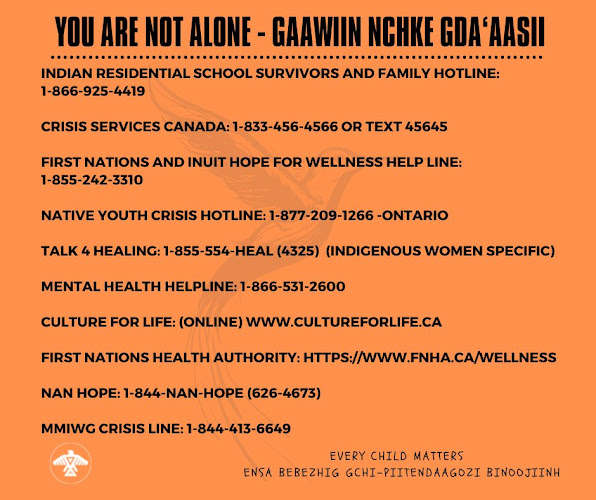
You are not alone

You are not alone

To Veronica Brown

Veronica, we adult adoptees are thinking of you today and every day. We will be here when you need us. Your journey in the adopted life has begun, nothing can revoke that now, the damage cannot be undone. Be courageous, you have what no adoptee before you has had; a strong group of adult adoptees who know your story, who are behind you and will always be so.

Diane Tells His Name


click photo

Lost Birds on Al Jazeera Fault Lines

Lost Birds on Al Jazeera Fault Lines
click to read and listen about Trace, Diane, Julie and Suzie

NO MORE STOLEN SISTERS

NO MORE STOLEN SISTERS
click image

ADOPTION TRUTH

As the single largest unregulated industry in the United States, adoption is viewed as a benevolent action that results in the formation of “forever families.”
The truth is that it is a very lucrative business with a known sales pitch. With profits last estimated at over $1.44 billion dollars a year, mothers who consider adoption for their babies need to be very aware that all of this promotion clouds the facts and only though independent research can they get an accurate account of what life might be like for both them and their child after signing the adoption paperwork.

Original Birth Certificate Map in the USA

Google Followers