BOOZHOO! We've amassed tons of information and important history on this blog since 2010. If you have a keyword, use the search box below. Also check out the reference section above. If you have a question or need help searching, use the contact form at the bottom of the blog.
We want you to use BOOKSHOP to buy books! (the editor will earn a small amount of money or commission. (we thank you) (that is our disclaimer statement)
This is a blog. It is not a peer-reviewed journal, not a sponsored publication... WE DO NOT HAVE ADS or earn MONEY from this website. The ideas, news and thoughts posted are sourced… or written by the editor or contributors.
EMAIL ME: tracelara@pm.me (outlook email is gone)
THANK YOU CHI MEGWETCH!
Gov. Kathy Hochul will make what is
believed to be the first trip by a sitting New York governor to Seneca
Nation Territory next week, when she will apologize to the Seneca people
and thousands of former Indigenous students and descendants for what
she said was New York’s role in separating them from their families and
forcing them to assimilate at the Thomas Indian School in Western New
York’s Cattaraugus Territory.
Hochul’s Tuesday visit includes meetings with survivors of atrocities
committed at the residential boarding school, which the state owned and
operated from 1875 to 1957, she and Seneca President J. Conrad Seneca
announced Friday morning.
“The atrocities that our children suffered at the Thomas Indian
School have remained hidden in the shadows for far too long,” Seneca
said in a statement Friday. “At long last, our people will hear,
directly from the Governor, the words we have waited lifetimes for the
State of New York to say — ‘We’re sorry.’”
Native American children who attended the boarding schools were
stripped of their cultural identity and suffered abuse, violence, hatred
and in at least several hundred cases, death, at the hands of school
officials, according to the report.
The school system discouraged American Indian, Alaska Native and
Native Hawaiian languages, religions and cultural practices and used
corporal punishment to enforce rules, according to the more than
100-page report, which included information on marked and unmarked
burial sites at or near school facilites, the identification of children
and investigating abuses.
Seneca’s father attended Thomas Indian School, and his grandmother
was removed from her family at the age 11 and forced to attend Carlisle
Indian Industrial School in Pennsylvania, Hochul noted.
“I know the pain and the trauma because I have seen it and felt it in
my own family, just as countless families have borne that pain and
carried it every day for generations,” Seneca said.
Hochul said her visit will fulfill a pledge she made to Seneca in Albany earlier this year.
“No words or actions will ever be able to undo the pain and suffering
of the Seneca people and other Indigenous peoples across the State, but
by visiting the Seneca Nation and the site of the Thomas Indian School
we will mark a new day in our relations,” Hochul said in a statement.
I am a direct descendant
of family members that were forced as children to attend either a U.S.
government-operated or church-run Indian boarding school. They include
my mother, all four of my grandparents and the majority of my
great-grandparents.
On
Oct. 25, 2024, Joe Biden, the first U.S. president to formally
apologize for the policy of sending Native American children to Indian
boarding schools, called it one of the most “horrific chapters” in U.S. history and “a mark of shame.” But he did not call it a genocide.
Yet,
over the past 10 years, many historians and Indigenous scholars have
said that what happened at the Indian boarding schools “meets the definition of genocide.”
From
the 19th to 20th century, children were physically removed from their
homes and separated from their families and communities, often without
the consent of their parents. The purpose of these schools was to strip Native American children of their Indigenous names, languages, religions and cultural practices.
As an Indigenous scholar
who studies Indigenous history and the descendant of Indian boarding
school survivors, I know about the “horrific” history of Indian boarding
schools from both survivors and scholars who contend they were places
of genocide.
Was it genocide?
The United Nations defines “genocide”
as the “intent to destroy, in whole or in part, a national, ethnical,
racial or religious group.” Scholars have researched different cases of
genocide of Indigenous peoples in the United States.
Historian Jeffery Ostler, in his 2019 book “Surviving Genocide,”
argues that the unlawful annexation of Indigenous lands, the
deportation of Indigenous peoples and the numerous deaths of children
and adults that occurred as they walked hundreds of miles from their
homelands in the 19th century constitute genocide.
The mass killings of Indigenous peoples after gold was found in the 19th century in what is now California also constitutes genocide, writes historian Benjamin Madley in his 2017 book “An American Genocide.”
At the time, a large migration of new settlers to California to mine
gold brought with it the killing and displacement of Indigenous peoples.
Other scholars have focused on the forced assimilation of children at Indian boarding schools. Sociologist Andrew Woolford
argues that scholars need to start calling what happened at Indian
boarding schools in the 19th and 20th century “genocide” because of the
“sheer destructiveness of these institutions.”
Woolford, a former president of the International Association of Genocide Scholars, explains in his 2015 book “This Benevolent Experiment”
that the goal of Indian boarding schools was the “forcible
transformation of multiple Indigenous peoples so that they would no
longer exist as an obstacle (real or perceived) to settler colonial
domination on the continent.”
First-
and second-grade students sit in a classroom at the former Genoa Indian
Industrial School in Genoa, Neb. Researchers are now trying to locate
the bodies of more than 80 Native American children buried near the
school. National Archives/AP
Indigenous writers have explained how this transformation
at Indian boarding schools occurred. “Federal agents beat Native
children in such schools for speaking Native languages, held them in
unsanitary conditions, and forced them into manual and dangerous forms
of labor,” writes Indigenous law professor Maggie Blackhawk.
President
Joe Biden did something that no U.S. president has done. He offered a
formal apology for the horrific, racist abuse suffered by Native
American and Alaska Native children in so-called American Indian
boarding schools. Biden apologized on Oct. 25 outside of Phoenix,
Arizona, at the Gila River Indian Community, at a meeting which included tribal leaders, survivors and their families.
The timing and place of this apology
raises eyebrows since it comes within two weeks of the Nov. 5
presidential election, and Native Americans make up 5% of the overall
population of Arizona, which is a “swing state.”
Beginning in 1819, thousands of
Native American and Alaska Native children were kidnapped from their
homes and sent away to schools (in reality, concentration camps), where
they were denied the right to their cultures, languages, histories and
spiritual beliefs. Their long hair was cut, and many of these children
were mentally and physically tortured, scarring them for life.
At least 973 children died in Indian
boarding schools operated or supported by the federal government, often
from abuse and disease. (The number is likely much higher.) Their labor
was superexploited in the schools and by white adults who adopted them
or hired them out. Most large American Indian boarding schools closed in
the 1980s and 1990s following years of activism, the passage of the
Indian Self-Determination and Education Assistance Act of 1975 and the
Indian Child Welfare Act of 1978.
Many of these schools were maintained by the Catholic Church, other Christian denominations and the Mormon Church.
This abominable treatment was an
instrumental part of a centuries-long genocidal campaign waged against
Indigenous peoples that began when the butcher Christopher Columbus
seized Caribbean islands in 1492, claiming them for the Spanish
monarchy.
While many who attended the Oct. 25
meeting were heartened to hear Biden’s apology, others said that the
apology wasn’t nearly enough to reverse the long-lasting physical and
psychological harm done to those forced to attend the schools and to the
generations that followed.
Rosalie Whirlwind Soldier, a
79-year-old member of the Rosebud Sioux Tribe, who suffered severe
mistreatment at a school in South Dakota that left her with a lifelong,
painful limp, said, “Sorry is not
enough. Nothing is enough when you damage a human being. A whole
generation of people and our future was destroyed for us.” She and
others are asking what comes next after the apology. (Associated Press,
Oct. 25)
Indigenous activists and allies protest in Boston.
United American Indians of New
England (UAINE), the main organizer of the annual National Day of
Mourning in Plymouth, Massachusetts, stated on its Facebook page in
anticipation of the president’s Oct. 25 announcement: “Biden to issue
apology, without reparations, for U.S. Indian boarding schools. Nothing
pledged to help Native children and families now dealing with
intergenerational trauma, disproportionate number of children in care
and all the other effects of genocidal U.S. anti-family policies.”
UAINE continued: “No increased
support for Indigenous language revitalization. Not to mention the
necessity of landback. Nor the fact that this is being done for votes by
an administration actively committing genocide. And free Leonard
Peltier!”
Any formal apology by a U.S.
president to an oppressed people, such as one President Bill Clinton
made in 1997 to African Americans regarding slavery and Biden made
recently to Indigenous peoples, is certainly a concession. But these
apologies for state-sanctioned atrocities are toothless, because their
white supremacist legacies remain intact.
Workers World is in total solidarity
with UAINE and other Indigenous peoples in demanding that reparations be
put in place to make any kind of apology real for those who are still
fighting for their right to basic human rights, sovereignty and
self-determination.
Otherwise, these apologies amount to nothing but grandstanding.
The timing of the APOLOGY did seem strange but it is ELECTION season... Trace
By Marianna McMurdock | Native
American leaders and survivors of the federal Indian boarding school
system are calling on the Biden administration to do more than apologize
to facilitate healing for their communities.Their calls have
been mounting for decades, but the remarks marked a milestone: the first
time a U.S. President ever acknowledged and apologized for the system
where federal agents removed children from their parents, often at
gunpoint, sending them to schools thousands of miles from home,
stripping families of their language and culture.
The
exact number of children who were forced into boarding schools in the
U.S. for over 150 years is unknown, due to poor record keeping, but
nearly 19,000 have been confirmed. Physical, sexual and psychological
abuse was rampant at the schools often run by religious institutions.
Some children were referred to only as numbers, pre-teen girls were raped and sent home pregnant. Thousands never returned home.
Native American girls from the Omaha tribe at Carlisle School, Pennsylvania. (Getty Images)
Addressing
the public on the Gila River Reservation outside of Phoenix, Arizona on
October 25, President Joe Biden fulfilled a long-delayed promise to
visit Indian country and called the boarding school system a “sin on our
soul,” adding there was “no excuse” for how long-overdue the
acknowledgement was and that “no apology can or will make up for what
was lost during the darkness of the federal boarding school policy. But
today, we’re finally moving forward into the light.”
The timing of the visit has also been noted as a tactic in the swing state to woo Native voters to cast votes for Democratic presidential candidate Kamala Harris. But many Native Americans are frustrated by government inaction to adequately protect lands, provide access to quality education and healthcare, and enact an arms embargoagainst Israel.
TOP PHOTO: A
protester holds a sign as US President Joe Biden speaks at the Gila
River Crossing School in the Gila River Indian Community, in Laveen
Village, near Phoenix, Arizona on October 25, 2024. (Andrew
Caballero-Reynolds/Getty Images)
Survivors
and descendants both acknowledge how meaningful Biden’s speech was
after centuries of fighting for recognition from the federal government,
and call on the administration to act swiftly on the apology.
“In
his last two weeks in office, we demand that President Biden also pass
S.1723/H.R.7227: The Truth and Healing Commission on Indian Boarding
School Policies Act,” said the Native American Boarding School Healing
Coalition, a nonprofit that has worked with survivors and Tribal leaders
for over a decade to educate about the system and facilitate
repatriations.
The legislation would provide a path for investing
in language and culture revitalization efforts, educating the American
public on the system via museums or curricula, and establishing
trauma-informed mental health resources.
It
would also enable subpoenas to be used to investigate the scale of the
system: Catholic entities have been able to hold onto private records
for decades, some of which contain the only known photographs or
remnants of survivors’ ancestors. Reintroduced in both the Senate and
House last year, the bill has yet to reach a vote.
The mental and
physical health concerns of survivors and lack of widespread
reconciliation reached national spotlight earlier this year when the
Interior Department released its final investigative report
on the system, which revealed at least 1,000 Indigenous children died
or were killed. The schools operated using over $23 billion federal
dollars, adjusted for inflation.
Left:
Portrait of Justin Shedee (Apache) from 1889 (Cumberland County
Historical Society) Right: Letter from Justin Shedee expressing his wish
to leave Carlisle (National Archives and Records Administration via
Carlisle Indian School Digital Resource Center)
Thousands
were subject to child labor to operate facilities and be “outed,”
working without wage for white families near the schools.
Angelique
Albert, a member of the Confederated Salish and Kootenai Tribes and
chief executive of the nation’s largest direct scholarship provider for
Native students, Native Forward, referred to the boarding schools not as
places of education but as places of “extermination.”
Just as
slavery was used as the tool to harm Black people across the Americas,
“education was the tool to harm us, to assimilate us. That’s the tool
where we lost our children,” Albert said, adding that the apology is a
testament to the work done by Interior Secretary Deb Haaland, the
nation’s first Native American cabinet member and former recipient of
their scholarships, to unearth survivor testimony and investigate the
system.
“She’s in the very position that implemented the boarding
schools. Do you understand? It gives me chills,” Albert said,
emphasizing how critical it is for the federal government to maintain
close relationships with Tribal nations and put more funding behind
college access for Native youth so their voices can be heard in
positions they’ve been historically excluded from.
While the
apology, however late, is a “critical first step in the truth and
reconciliation process for Native and Indigenous communities,” Albert
stressed, “Indian boarding school policies are not a horror of the past —
these institutions operated through 1969, and many Native people who
were subjected to these cruel policies are still living today.”
Shower in the girls dorm on the Blackfoot Reservation, Cutbank Boarding School (Bureau of Indian Affairs, Morrow, May 1951)
The
boarding school system, while the focus of President Biden’s remarks,
was not the only widespread, forced removal of Native children.
Throughout the 60s and 70s, over a third were removed from their
families and overwhelmingly placed in non-Indian homes after
discriminatory welfare investigations.
In Washington, Native
children were placed in foster care and adopted at rates 19 times
greater than their peers. The practice was widespread until 1978’s
Indian Child Welfare Act was passed by Congress, who stated “wholesale
separation of Indian children from their families is perhaps the most
tragic and destructive aspect of American Indian life today.”
Native populations now face disproportionately poor health outcomes,
including the highest rates of substance abuse, suicidal ideation and
chronic illnesses, which researchers have linked to centuries of
genocide, disinvestment and generational trauma.
Following Biden’s address, an Indigenous collective gathered to pray, mourn, sing and push for more action in South Dakota, on the lands of what will soon be the Oceti Sakowin Community Academy, a “culture-based school” for Lakota, Dakota and Nakota children.
“Tonight,
we took to the land and reminded the world that we are the children of
survivors … We will honor our ancestors by holding this country
accountable for what it has done to our people,” NDN Collective
president Nick Tilsen said in a release. “The U.S. government tried to
exterminate and erase us. We will continue to remind them they have
failed at doing so, and the warrior spirit of our ancestors lives in all
of us.”
One word not found in President Biden’s apology is "domination"
But instead of acknowledging the U.S. government’s ongoing claim of a right of domination over Native nations,
Biden’s remarks made it seem as if all of that ended a long time ago.
It’s called “A Lie of Omission” by leaving it unmentioned and out of
focus. (How funny that the word “mission” is embedded in the word
“omission”).
President
Joe Biden took the historic step to formally apologize for the
federal government’s role in the failed Indian Board School era. The
first-of-its-kind acknowledgement comes after Department of Interior
Secretary Deb Haaland released the final report from a three-year investigation
that included formal listening sessions from boarding school survivors
and their relatives. The report documented at least 18,000 Native
children who were sent to distant live-in schools where they were forced
to abandon their languages and cultures. They were subjected to
extensive physical and sexual abuse. Nearly 1,000 children died while
attending the institutions far from their families. We’ll hear from Sec.
Haaland and others who have been working on building the infrastructure
of healing from the Boarding School Era.
President Joe Biden’s remarks from the Gila River Indian Community, Arizona and Remarks from Interior Secretary Deb Haaland before Pres. Biden’s boarding schools apology:
President Biden to Make Historic Apology for Federal Indian Boarding School System
The presidential apology fulfills the first of eight recommendations made in the Federal Indian Boarding School Investigative Report, Volume II,
released by the Interior Department in June 2024. The 105-page report
was penned by Assistant Secretary of Indian Affairs Bryan Newland (Bay
Mills Indian Community) at the direction of Interior Secretary Deb
Haaland (Laguna Pueblo), the first ever cabinet secretary in U.S.
history.
“This is incredibly meaningful to have a sitting president admit the
wrongdoings of the government, and I'm just honored to see this happen
during my lifetime,” Haaland said in an interview with Native News Online. “I'm incredibly grateful to the president. He is courageous, he's kind, and he really is committed to Indian Country.”
Ed. Note: It's time Native People correct the his-story, our-story, and that won't be easy. TL Hentz
A dozen long years ago, we led the congressional effort to issue an official apology by the U.S. government to Native peoples. Now it's time for the U.S. president to make good on that sentiment and say it publicly.
It’s time — long past time — to officially acknowledge what our country
did and to speak an apology. Not only for taking children from Native
families, but for the broken treaties and the carnage visited upon First
Nations people by U.S. government policy. Without this necessary step,
the healing process our community desperately needs cannot truly
commence, and we cannot repair the resentment that stems from our
troubled past.
Haudenosaunee boarding school survivors seek justice
Kanentiio, whose name means “handsome pine,” describes life at an Indian boarding school, also known as a residential school, in the 1960s.
The first such facility, Carlisle Indian Industrial School, was founded
in the 1870s by military Capt. Richard Pratt. It was a way to
assimilate Native American children into “white” society and, in Pratt’s words, “kill the Indian to save the man.”
“The intent was to extinguish us as
Aboriginal people and destroy whatever sense of self-worth we had, and I
can say that they succeeded to a large degree,” Kanentiio said. “They killed our spirit. They killed us.”
Many students sent to these schools went missing. Last month, 215
children’s remains were discovered in British Columbia at one of nearly
500 boarding schools in Canada and the U.S.
The discovery has sparked renewed calls for justice from Indigenous
communities and for further investigations — forensic and archeological —
into more residential schools.
“It’s
high time that this American country recognizes the great value and
resource in its indigenous populations and celebrates and promotes and
supports,” said Michael Galban, curator at the Seneca Art and Culture Center at Ganondagan State Historic Site.
Last year, Democrats in the U.S. Senate introduced a bill that would
create a Truth and Healing Commission, which would investigate and
document past injustices of what they call the federal government’s
cultural genocide. So far, the bill has not progressed in any fashion.
Undoing this magnitude of injustice would take multiple long-term solutions, Galban said, starting with policy changes.
“It would involve language restoration,” he said. “It would involve environmental restorations. It would involve, in some cases, restoring people to their original homelands.”
It would also mean recording oral histories of survivors’ experiences.
“Every day, we’re losing the stories from the survivors as they age out and pass away,” he said. “Hopefully they’re sharing their stories with their families.”
Survivors’ stories Galban’s grandmother, Evelyn Evans Galban, was a residential school survivor.
In the 1920s, she was taken from her home in California and sent to
the Stewart Indian School in Nevada, where Galban said she experienced
abuse.
“The idea was that you could strip these
Indian children of their culture and their ideologies and create a new
cheap labor class that certain areas of the country could exploit,” Galban said.
During the school year, she was taught how to fold laundry, set
tables and make beds, he said. During school breaks, she couldn’t go
home.
“During the summers, these schools would
hire out the students under the guise that they would be learning how to
live amongst the whites,” Galban said. “But really, they were being farmed out to hotels and resorts to be their domestic labor.”
She attempted to run away multiple times. On one occasion, she was caught “in the middle of the winter. They took away her shoes and basically whipped her back to school with no shoes on,” Galban said.
Finally, with the help of a cousin, she managed to run away to Montana, Galban said.
No choice Indian boarding schools were compulsory at the time. It
would be another 12 years before the Indian Child Welfare Act of 1978
would give Native American parents the legal right to refuse their
children’s placement in these kinds of schools off reservations.
Until then, Native leadership and families were essentially held hostage by the federal governments of the U.S. and Canada.
“If there was ever, whether it be by
leadership or families, any action to stop or take their children
(back), they were often persecuted and arrested and faced problems for
that as well,” said Mohawk Grandchief Abram Benedict.
In 1966, Kanentiio was 11 years old when police and social services
took him from the St. Regis Mohawk Reserve near Ottawa, Canada, and sent
him nearly 350 miles west to the Mohawk Institute in Brantford,
Ontario.
He’s now one of about 40 remaining Mohawk survivors.
At the school, Kanentiio said the abuse came not just from staff but
also from older students who he said were encouraged to discipline the
younger students.
After a few years, he managed to escape — first by way of expulsion: He and his classmates were non-compliant, troublemakers.
“Our rude behavior was our survival,” Kanentiio said. “We couldn’t just simply be compliant. We had to fight, physically if necessary, to stop these things from happening.”
Still, when he was expelled, he wasn’t sent back to the reservation.
He was put into foster care and bounced around from one home to the
next until he eventually managed to run away back home, he said.
More than 50 years later, Kanentiio wishes he could confront those
personally responsible for the brutal treatment, abuse, and for ripping
families apart.
“It’s a terrible thing to walk around believing that you’re not truly a human being or a complete human being,” he said. “Something deep and wonderful has been lost. And that’s the terror of this thing.”
South Carolina court drops contempt charge against Dusten Brown Dusten Brown and the Cherokee Nation rea...
Bookshop
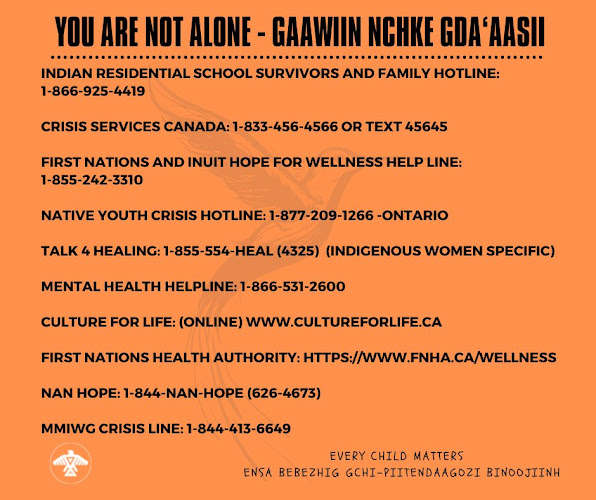
You are not alone
To Veronica Brown
Veronica, we adult adoptees are thinking of you today and every day. We will be here when you need us. Your journey in the adopted life has begun, nothing can revoke that now, the damage cannot be undone. Be courageous, you have what no adoptee before you has had; a strong group of adult adoptees who know your story, who are behind you and will always be so.
Diane Tells His Name
click photo
Lost Birds on Al Jazeera Fault Lines
click to read and listen about Trace, Diane, Julie and Suzie
NO MORE STOLEN SISTERS
click image
We conclude this series & continue the conversation by naming that adoption is genocide. This naming refers to the process of genocide that breaks kinship ties through adoption & other forms of family separation & policing 🧵#NAAM2022#AdoptionIsTraumaAND#AdopteeTwitter#FFY 1/6 pic.twitter.com/46v0mWISZ1
As the single largest unregulated industry in the United States, adoption is viewed as a benevolent action that results in the formation of “forever families.” The truth is that it is a very lucrative business with a known sales pitch. With profits last estimated at over $1.44 billion dollars a year, mothers who consider adoption for their babies need to be very aware that all of this promotion clouds the facts and only though independent research can they get an accurate account of what life might be like for both them and their child after signing the adoption paperwork.












 Posts
Posts

