They Took Us Away

They Took Us Away
click image to see more and read more

it's free

click

How to Use this Blog

BOOZHOO! We've amassed tons of information and important history on this blog since 2010. If you have a keyword, use the search box below. Also check out the reference section above. If you have a question or need help searching, use the contact form at the bottom of the blog.


We want you to use BOOKSHOP to buy books! (the editor will earn a small amount of money or commission. (we thank you) (that is our disclaimer statement)

This is a blog. It is not a peer-reviewed journal, not a sponsored publication... WE DO NOT HAVE ADS or earn MONEY from this website. The ideas, news and thoughts posted are sourced… or written by the editor or contributors.

EMAIL ME: tracelara@pm.me (outlook email is gone) THANK YOU CHI MEGWETCH!

SEARCH

Showing posts with label Ontario. Show all posts

Saturday, August 9, 2025

Indigenous historian Cody Groat credits Laurier with shaping his path as a storyteller and scholar


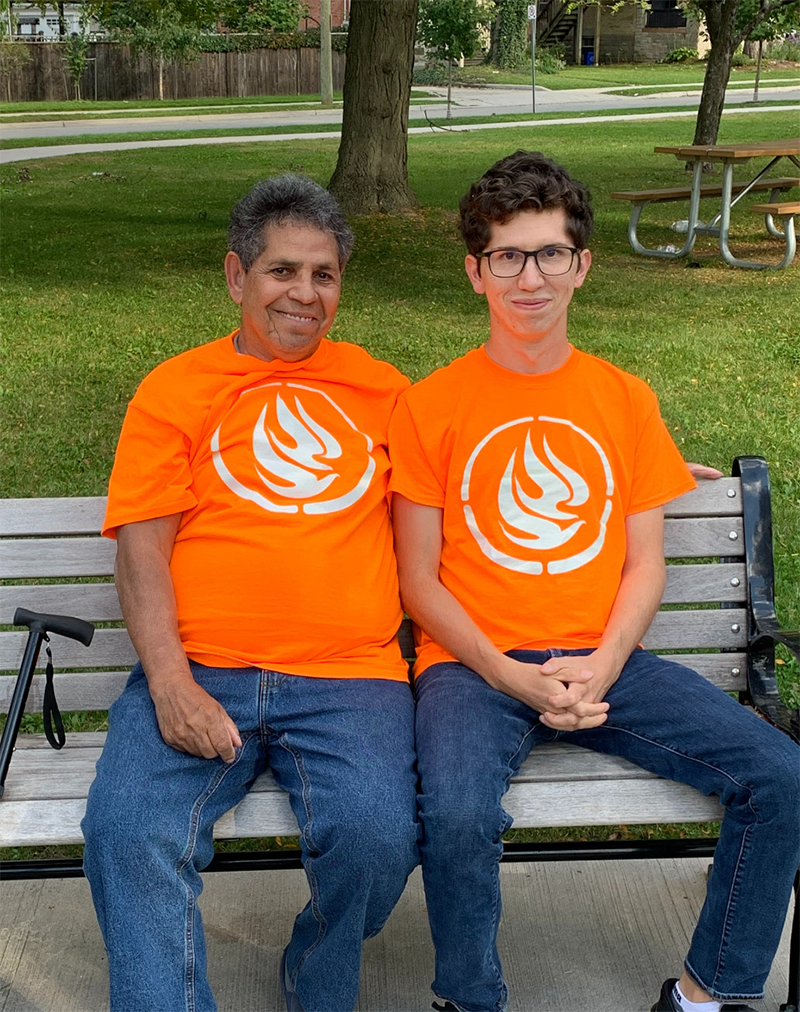
Cody Groat and his father
Groat's father, Bill (left), a survivor of the Sixties Scoop, passed away in 2022. The sharing of his story, with an examination of broader themes including intergenerational trauma, Indigenous masculinities and the long-term effects of colonial policies, is Groat’s latest project. 

Groat’s time as a PhD student also led to his first university teaching role, stepping in as a sessional instructor at St. Paul’s University College (now United College) at the University of Waterloo. The course on Indigenous Studies provided Groat with an opportunity for a deeply personal teaching moment. 

“My dad, Bill, was a Sixties Scoop survivor and a transport truck driver — just an average guy,” says Groat. “I asked him to come speak to my class about his experience as an Indigenous person in the child welfare system.  About three minutes into the lecture, he just started bawling his eyes out.  He’d never talked about his life before, and it was just a release.” 

The experience resonated deeply, and Groat’s father went on to guest lecture several more times, including for Brookfield’s History of Adoption classes at Laurier Brantford.  

“He never finished high school and had some literacy issues, but he loved being a ‘university instructor,’ as he called himself,” says Groat. “He wanted to tell his story so others could learn from it.” 

Groat is Mohawk and a band member of Six Nations of the Grand River.  

READ MORE:   https://www.wlu.ca/features/2025/summer/indigenous-historian-cody-groat-credits-laurier-with-shaping-his-path-as-a-storyteller-and-scholar.html

Monday, July 7, 2025

#60sScoop Survivor created Indigenous Survivors Day for reflection ahead of Canada Day

Troy MacBeth Abromaitis is campaigning to get the federal government to declare Indigenous Survivors Day on June 30 as a national day of recognition.   (Submitted by Troy MacBeth Abromaitis - image credit)

Troy MacBeth Abromaitis is campaigning to get the federal government to declare Indigenous Survivors Day on June 30 as a national day of recognition. (Submitted by Troy MacBeth Abromaitis - image credit)

The City of Thunder Bay proclaimed JUNE 30 as Indigenous Survivors Day and hosted several community events ahead of Canada Day.

Sixties Scoop survivor Troy Abromaitis said he created Indigenous Survivors Day to honour children who were taken from their families and lands.  He said Thunder Bay is the first city to make it a full-day event and he hopes other communities will follow.

Abromaitis said Canada Day represents celebrating a country that, for many Indigenous peoples, facilitated loss and separation from their families.

"By placing Indigenous Survivors Day on June 30, we invite Canadians to reflect before they celebrate Canada Day, and to remember the children who are taken and why this matters," said Abromaitis, a member of the Nlaka'pamux Nation from Lytton First Nation in British Columbia.

Thunder Bay is a city with painful truths to confront, he said. Choosing to lead the way in recognizing Indigenous Survivors Day is a sign of courage and growth, said Abromaitis. Other places have followed: British Columbia, Nova Scotia and New Brunswick, and municipalities including Victoria, Edmonton, Ottawa and Niagara Falls.

"They give me hope that one day this will be a national day and a national movement," he said.

While the National Day for Truth and Reconciliation on Sept. 30 honours the victims and survivors of residential schools, Abromaitis said there was a need to recognize survivors of other campaigns that separated Indigenous children from their families. Indigenous Survivors Day is meant to fill that gap, he said.

"This is not just about history. It's about healing what is still happening with regards to Sixties Scoop survivors, Millennium Scoop survivors, birth alerts and the over representation of children in the child welfare system who carry invisible pain."

The Sixties Scoop refers to the period between the 1950s and early 1990s during which thousands of Indigenous children in Canada were apprehended by child welfare agencies and placed with non-Indigenous foster or adoptive parents. Many children were subject to physical, emotional or sexual abuse while most lost connection to their cultures and languages.

The systematic removal of First Nations children from their families from 1991 on is referred to as the Millennium Scoop. The practice resulted in more Indigenous children ending up in foster care than were sent to residential schools at their peak.

Birth alerts — when child welfare organizations notify hospitals if they believe a pregnant patient may be "high risk" — led to newborns being taken from their parents for days, months or even years. The province ordered an end to birth alerts in 2022 after finding it disproportionately affected Indigenous and racialized families.

Indigenous children made up 53.8 per cent of all children in foster care across the country, according to Statistics Canada data from the 2021 census.

David Wilkinson-Simard is leading a sacred fire at the city of Thunder Bay's first-ever proclamation of Indigenous Survivors' Day. (Submitted by David Wilkinson-Simard) 

Thunder Bay Indigenous Survivors Day open to all

David Wilkinson-Simard, a traditional knowledge keeper and member of the City of Thunder Bay's Indigenous Advisory Council, will be leading a sacred fire and closing reflections at a community gathering at Hillcrest Park.

"This is a very new event, you know, even to Native people. And we're understanding where our place is too," he said.

Wilkinson-Simard said the organizers have put out calls to drum groups and hand drummers to come celebrate.  They plan to share traditional music and the stories behind some ceremonies at the gathering.

Wilkinson-Simard, who is also a survivor of the Sixties Scoop, said Indigenous Survivors Day is a time to share stories about the ongoing challenges Indigenous people have gone through and to celebrate their survival.

"It's an opportunity to help Canadians to understand why a lot of the things are the way they are and how First Nations are pulling themselves out of all of this."

While events like the Sixties Scoop and residential schools are often thought of as long-passed historical events, he said the impacts are still felt by survivors and subsequent intergenerational trauma.

The event is open to all. Wilkinson-Simard said non-Indigenous participants are encouraged to attend.

"I think that's very important that as a non-Indigenous person you take the opportunity and you also take the risk of going into and learning about something that might be uncomfortable for you at first. It also is an opportunity for you to understand the challenges that many First Nations have overcome and how you can champion them." 

Tuesday, June 24, 2025

Toronto celebrates National Indigenous Peoples Day with sunrise ceremony, powwow

CBC News | June 21

Celebrations happening amid pushback from First Nations communities over provincial legislation

Jay Lomax

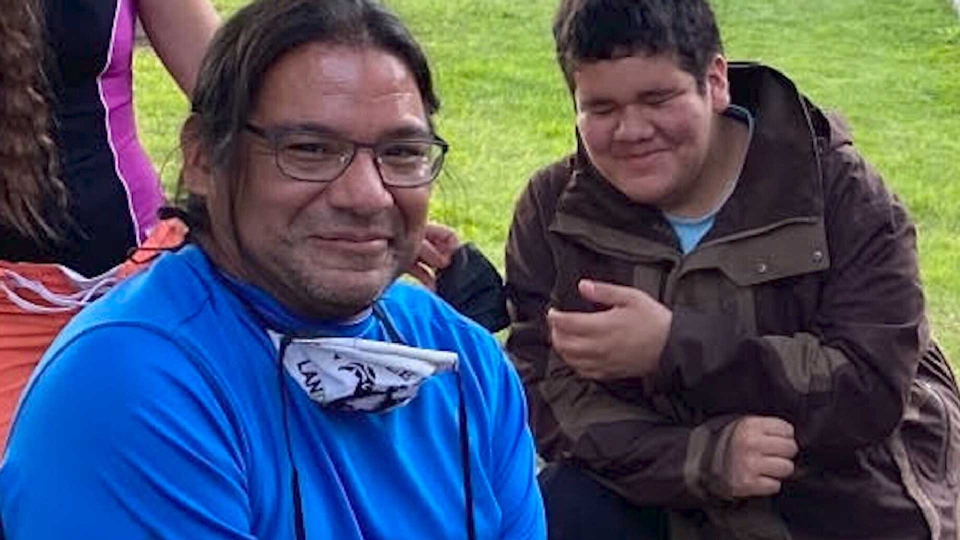
Image | Jay Lomax, a Sixties Scoop survivor who was at the Na-Me-Res Powwow celebration at Fort York, said Saturday's celebrations are a way to connect with First Nations culture, and to heal. (CBC)


National Indigenous Peoples Day was celebrated in Toronto Saturday with music, dance and a sunrise ceremony outside city hall amid pushback from some First Nations leaders over provincial laws that some say bypass consultation with their communities.
The holiday, first observed in 1996, is a day of recognition and celebration of the cultures and contributions of the First Nations, Inuit, and Métis Indigenous peoples of Canada.
Hundreds of events are taking place around the country Saturday, and in Toronto, festivities began with a sunrise ceremony outside city hall, with Mayor Olivia Chow in attendance.
Grandmother Kim Wheatley of Curve Lake First Nation led the proceedings, which included prayers, greetings to the sun and giving thanks to the Earth.
"As we walk the road of reconciliation, Canadians need to know we're still here and we have something beautiful to offer and beautiful to share," she said at the ceremony.
Celebrations are continuing all day at the Na-Me-Res Powwow celebration at Fort York, which is in part sponsored by CBC.
A crowd of hundreds watches a flag presentation at a powwow on a grassy lawn in Toronto in daytime

Fort York, Indigenous Peoples Day : The Na-Me-Res Pow Wow started Friday evening and will run until 8 p.m. Saturday at Fort York in downtown Toronto. (CBC)


The event began on Friday and is hosted by Na-Me-Res, a residence for homeless Indigenous men in Toronto. Hundreds were in attendance Saturday to take in traditional music and dance on the grassy field.
One of the dancers, Jay Lomax, said the celebrations are in part a way of healing, and connecting.
"I'm here because I'm one of the Sixties Scoop survivors and I was raised out here in Toronto. And I've been dancing since I got reconnected with the culture in my 20s, doing ceremonies, connecting through the land, connecting with our people, and that's what today is really all about."
Along with music and dance, the powwow includes the Indigenous Arts Festival, where culture is celebrated through crafts and cuisine.
Celebrations are going all day, with the powwow at Fort York continuing well into the evening.

Strained relations between province, First Nations

The celebrations come as First Nations communities push back against new provincial mining legislation that many say goes against the government's duty to consult Indigenous peoples.
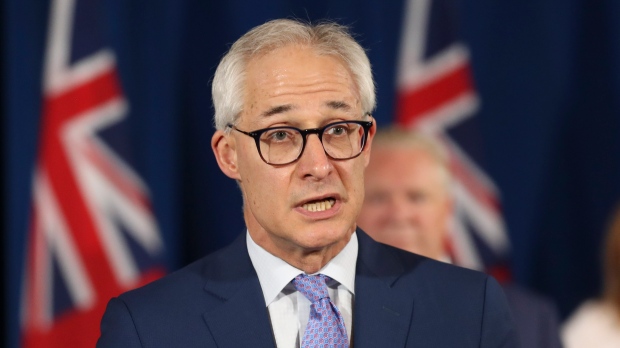
This week, Premier Doug Ford apologized for comments he made, saying he has treated First Nations "like gold" but they "keep coming hat in hand."
 
WATCH | Ford's apology to First Nations chiefs:  Ontario Premier Doug Ford apologized to First Nations chiefs representing Ontario on Thursday. As CBC’s Mike Crawley explains, this comes after the provincial government sparked anger amongst Indigenous communities over Bill 5.

Ontario Regional Chief Abram Benedict of the Chiefs of Ontario, which advocates for all 133 First Nations in the province, told CBC News Network Saturday that the comments were hurtful.
"What we've been very clear with is that the rights holders need to be at the table talking with the government about these bills, about a pathway forward," he said. "[Ford has] acknowledged that, and I'm hoping that our leadership can accept that apology, and look to a pathway forward with the premier."
Speaking about National Indigenous Peoples Day on the 10th anniversary of the publication of the Truth and Reconciliation Commission's final report, he said the holiday was in part a chance to reflect on what's been done since the commission released its 94 calls to action.
"We've made tremendous strides, but there's a lot of work to do," he said.

Wednesday, September 4, 2024

LandBack Celebration


Caldwell First Nation welcomes a new chapter

A Land Back and cultural event was held on Saturday, to welcome families who have moved back to Canada's southernmost First Nation, and leave out a welcome for those who may soon be moving back.

Chief Mary Duckworth said Saturday's celebration is the start of a new chapter in the life of Caldwell First Nation.

"It took years of strong leadership and enduring obstacles on our path home," said Duckworth. "If not for our ancestors and leaders, we would not be standing here on our land now. In ceremonies, songs, and stories, and most of all through our nationhood, we are sharing our gratitude to the Creator and to all who have come before us and contributed to saving our nation and creating a new homeland."

The celebration completed the journey of ten people -- eight adults and two children -- who began returning home on July 20. By September, 58 people are expected to return to the community.

Caldwell First Nation, which has existed since 1790, finally had a place to call home when it acquired land near Point Pelee in Leamington in 2020.  Funding for development was granted in November 2021.  Since then, new net-zero homes have been built, along with new street signs.

The First Nation persevered through war, arson, racism, the residential school system, the Sixties Scoop, and other challenges.

"This small yet strong nation persevered, meeting around kitchen tables, writing letters, and testifying to the federal government," read a release from Caldwell First Nation. "We set aside small amounts of money for our dream and, with the advocacy and leadership of Chief Carl Johnson and his son Larry Johnson, we eventually, some 230 years later, won a 198-acre small piece of our original homelands back by ratifying a land claim settlement for Point Pelee with Canada in 2011 for $105-million."

Duckworth said that Saturday's ceremony brought the story of the First Nation full circle.

"We have come through a devastating experience of land loss at the hands of colonial powers and have restored our land and our homes," said Duckworth. "Land Back is a deeply meaningful and important history for everyone who lives in Windsor-Essex, Chatham-Kent, and Elgin County to understand."

SOURCE: https://cknxnewstoday.ca/chatham/news/2024/08/19/caldwell-first-nation-welcomes-a-new-chapter


Thursday, July 25, 2024

Indigenous women recognized for children’s welfare work

 www.wellingtonadvertiser.com /indigenous-women-recognized-for-childrens-welfare-work/


Robin George 7/24/2024 

And they took away more than just culture, Stewart said – “They disposed of everything. Family. Teachings. Land. Inheritance.”


GUELPH – Family and Children’s Services of Guelph and Wellington County (FCSGW) has recognized three Indigenous women for their work in child welfare advocacy.

Tauni Sheldon, Donna Dubie and Wendy Stewart were presented with FCSGW’s Award of Merit on June 20. 

“The invaluable contributions of these Indigenous leaders and unwavering dedication to their communities serves as an inspiration to us all,” FCSGW officials state.  

“This is the first time in local history Indigenous providers have been recognized for our child welfare advocacy,” Stewart said.

Sheldon, Dubie and Stewart advocate for Indigenous children involved with child welfare societies across Ontario. They are not agents of family and children’s services but independent providers who offer culturally appropriate support to Indigenous families.

Inuit advocacy

Sheldon lives in Ospringe and is Inuk from Nunavut and Northern Quebec, a Sixties Scoop survivor, and a cultural advisor with Kamatsiarniq. 

Sixties Scoop refers to the removal of tens of thousands of Indigenous children from their families into the Canadian child welfare system. 

Kamatsiarniq translates to “a place where Inuit are welcome” and is a child welfare program at Tunjasuvvingat Inuit, a non-profit service provider. 

Sheldon oversees Inuit culture with families, supports Inuit families through navigating the child welfare system and guides children’s aid societies regarding Inuit culture and Inuit rights. 

“Its important for Inuit to have that advocacy and support,” Sheldon said, “especially as none of us are on our traditional lands” in southern Ontario. 

Tauni said Inuit are often swept under a pan-Indigenous approach, or assumed to be First Nations, instead of recognized as a distinct Indigenous group. 

When Inuit are sent to Ontario from northern Canada through the child welfare system, she said it’s important the children “remain connected to who they are as Inuit.” 

Sheldon said she “has that fire to try and be that voice for people who don’t have their voice or don’t know what to do,” because she knows how it feels to be a voiceless child.

Her family and her adoptive family are “still trying to understand the Sixties Scoop.”

“For my birth mother, it was very traumatic,” she said. Sheldon’s birth mother had arranged for a traditional Inuit adoption, but instead Sheldon was “scooped” and taken away to Ontario. 

“I was a baby when I was apprehended” and at that time, there weren’t Indigenous people in the system who could advocate for her, Sheldon said.

After decades apart, Sheldon reconnected with her mother and said they now have a loving relationship. On Sheldon’s 50th birthday, she spent the day with her mother – the first birthday with her mother since the day she was born. 

“We cried and held each other,” Sheldon said, adding she hears many stories similar to her own through her work.

Thursday, May 2, 2024

MMIWG | RED DRESS DAY + EVENTS


MMIP. The Democratic National Committee (DNC) announced today it will launch a new print and digital awareness campaign to commemorate the upcoming Missing and Murdered Indigenous Persons Awareness Day on May 5.

Sunday, March 10, 2024

‘Appalling’: AFN Chief says Indigenous youth shouldn’t be placed in for-profit care


SOURCE

Assembly of First Nations National Chief Cindy Woodhouse Nepinak says First Nations children shouldn’t be placed with for-profit companies in Ontario’s child-welfare system.

She made her remarks in an exclusive interview with Global News after the broadcast and publication online of a year-long, multi-part investigation that revealed allegations of targeting and mistreatment of Indigenous youth by some group homes.

“That’s appalling to hear,” Chief Woodhouse Nepinak told Global News. “We’ve always known that our kids were a target.

“I don’t think our children should be for-profit at all,” she said.

“It’s time that we give our children back to the people that have cared for them for thousands and thousands of years.”

Chief Woodhouse Nepinak said she would be renewing calls for Prime Minister Justin Trudeau to apologize in the House of Commons to all the Indigenous youth who’ve been wronged by Canada’s child-welfare systems.

“Unfortunately, our kids have been taken away since residential schools, day schools, the ’60s Scoop and now the child welfare system,” she said.

The Global News investigation revealed how Indigenous youth from remote communities in Northern Ontario and Nunavut are allegedly targeted by some for-profit group home companies because their owners can charge more for Indigenous children or because the kids provide a steady source of revenue, according to interviews with more than 50 former group home workers, former children’s aid employees and child-welfare experts.

The results are horrendous experiences some likened to the abuse that took place during the residential schools era, according to some workers, child-welfare experts and youth.

In northern Ontario, Indigenous child-welfare agencies care for kids who have experienced family crises or abuse or who have complex needs.

These agencies serve some of the most resource-starved communities located near the Manitoba border all the way up to Attawapiskat on James Bay, which can lack basic services like housing, running water, or mental health care.

Faced with few options, these Indigenous children’s agencies are often sent to group homes thousands of kilometres away in cities in southern Ontario — separating them from family, friends and culture.

A Global News analysis of spending data by children’s aid societies (CAS) across Ontario revealed that northern Indigenous agencies are paying higher daily fees for such care than their non-Indigenous counterparts.

On average, northern Indigenous children’s aid societies paid 26 per cent more per day for a child to live in a group home, not run by a CAS, compared with their non-Indigenous counterparts between 2012/2013 and 2021/2022.

This discrepancy meant Indigenous children’s agencies in northern Ontario spent nearly $28 million more over 10 years than if they’d been charged the average rate paid by non-Indigenous agencies across the province.

Chief Woodhouse Nepinak called the situation “disgusting.”

“It’s hurtful to communities, it’s hurtful to families, it’s hurtful to the next generation.”

Global News also spoke with multiple former workers from group homes across Ontario who said that staff and management at some companies allegedly referred to Indigenous youth as “cash cows,” “money-makers,” or even “paycheques.”

“It’s disgusting. … How could you label children like that?” Chief Woodhouse Nepinak said. “They’re our children. They’re First Nations children. And to treat them less than is horrific.” 

She said child welfare should be under the jurisdiction of First Nations, pointing to a recent Supreme Court of Canada ruling that upheld the federal government’s Indigenous child welfare law.

VIDEOS AND MORE: https://globalnews.ca/news/10335930/afn-chief-says-indigenous-youth-shouldnt-be-placed-in-for-profit-care


Wednesday, January 3, 2024

'It's our job to be mom's voice,' but despite that, number of Indigenous kids in care is climbing

This is part 2 of 3 in a series looking at the Indigenous child welfare system in northern Ontario

Nogdawindamin Family and Community Services CEO talks about two of the children in care who he thinks about the most

Indigenous children's aid CEO Kerry Francis has heard the stories of hundreds of kids, but these two stick with him.

The calls coming from the hospital were sadly very familiar to the staff at the Nogdawindamin neonatal hub in Sault Ste. Marie.

They are commonly known as "birth alerts."

"That mom should not be caring for this baby, it's not safe," recalled outreach worker Carli Ochman.

But when she got to the hospital she found an Indigenous mother who was "tirelessly" by the side of her newborn son, being treated in the neonatal intensive care unit.

"And I'm looking at the paper work that's been provided to me and I'm thinking 'Something is wrong here,'" said Ochman.

"It's our job to be mom's voice when her voice might be breaking."

READ: https://www.cbc.ca/news/canada/sudbury/nogdawindamin-children-in-care-birth-alerts-1.7035977

Tuesday, August 29, 2023

60s Scoop film: Birth of a Family


United Way film screening focuses on tragic stories of Sixties Scoop

The film, called Birth of a Family, is screening is Sept. 26

NEWS RELEASE
UNITED WAY SIMCOE-MUSKOKA
**********************

United Way Simcoe Muskoka will be screening the award-winning film Birth of a Family at the Midland Cultural Centre on September 26, 2023, as part of the 2023 Real2Reel Film Festival.  The local charity is partnering with the Barrie Area Native Advisory Circle and Mamaway Wiidokdaadwin to host the evening in recognition of Truth and Reconciliation Week.  

“They say that there can be no reconciliation without truth,” said Brian Shelley, United Way Chief Executive and Philanthropy Officer. “It is important to create space for those with lived experiences to share their stories so that we can begin to move forward with reconciliation in a good way.” 

In this deeply moving feature-length documentary, three sisters and a brother meet for the first time.  Removed from their young Dene mother during the infamous Sixties Scoop, they were separated as infants and adopted into families across North America. Betty Ann, Esther, Rosalie, and Ben were only four of the 20,000+ Indigenous Canadian children taken from their families between 1955 and 1985, to be either adopted into white families or live in foster care.  As the four siblings piece together their shared history, their connection deepens, and their family begins to take shape.


Following the film, Barrie Area Native Advisory Circle’s Heather McIntyre will moderate a panel discussion to further explore the impact of the Sixties Scoop.  

United Way Simcoe Muskoka’s Real2Reel Film Festival is sponsored by the RBC Foundation and aims to reduce stigma and raise awareness of complex community issues. Net proceeds raised through this event will support the United Way’s funding of the Wiijinokiiwag project delivered in partnership between CMHA and the Barrie Area Native Advisory Circle. 

When: September 26, 2023 – 6:30 to 9:30 p.m.

Where: The Midland Cultural Centre, 333 King St, Midland, ONTARIO L4R 3M7

Who: This event is open to the public. Tickets are $7.53

Tickets: https://www.eventbrite.ca/e/truth-reconciliation-film-screening-birth-of-a-family-tickets-700351930477

More Information: https://uwsimcoemuskoka.ca/birth-of-a-family-2023/

This film contains material of a sensitive nature, including the Sixties Scoop, that may be triggering for some individuals. Please take part as you feel comfortable.

Thursday, January 20, 2022

Healing the Family Within

Katie Roubideux: Rosebud Sioux.

Friendship Centre starts ‘60s Scoop healing group

The Brandon Friendship Centre has launched a new program focused on helping ’60s Scoop survivors navigate their healing journey.

The Friendship Centre Healing Foundation was created using grant money provided by the ’60s Scoop Foundation to help survivors heal from the trauma of their experiences, said new co-ordinator Debbie Huntinghawk. The funding will support the foundation for a year, she said, but their hope is it will be able to build a successful program that will run for many years to come.

The ’60s Scoop is part of Canada’s colonial legacy and involved the removal of Indigenous children from their parents, families, communities and cultures. It left a generation of traumatized youth who have struggled to find their place in their communities and country because they have no cultural identity or community ties, she said.

These survivors are now middle-aged community members coping with significant pain and trauma from their loss of identity and place.

“They’re homeless, they’re lost, struggling to find their identity, their language and where they belong,” Huntinghawk said.

Talking about surviving the ’60s Scoop is a heartbreaking experience that leaves survivors with raw emotions that need tending to heal. The foundation will help facilitate healing through education, support, trauma-informed care, understanding of the ’60s Scoop and meeting survivors where they are at on their life journeys.

“We’re walking with people, not pulling them or dragging them or pushing them. We’re walking with people as they are doing their healing,” said cultural support worker Deborah Tacan. “We sit there and we talk heart-to-heart.”

Tacan is a ’60s Scoop survivor. She had six brothers, who were taken and adopted across Canada and the United States.

They were never brought back together as a family when they were children, but they did find each other again as adults. But there is not that same connection as if they had grown up as a family with their other relatives.

She noted ’60s Scoop survivors faced a life-changing experience because they were physically removed from their families and communities. All of their ties to their culture and traditions were cut off when they were youth just beginning to learn who they are.

“They were stripped of their whole culture. They never went back to their communities,” Tacan said. “They were never brought back — it interrupted their kinship ties … aunties, uncles, we don’t have those connections to those people because you are taken right out of your culture.”

These experiences left survivors unmoored, without an identity and craving meaningful connections.

The goal of the foundation is to help people understand the painful loss of these familial and community connections and the trauma inflicted on survivors, Tacan said.

It is a challenging conversation because many survivors blame their parents for what happened to them as children, Tacan said. She and her siblings understand all the systemic barriers in place that led to their removal from their family.

She hopes to help people understand and heal from these traumatic thoughts that have left deep wounds on the soul.

It is important to engage in these healing and recovery practices with survivors, Huntinghawk said, so future generations do not have to carry the trauma brought on by the ’60s Scoop.

Huntinghawk said in many cases, Indigenous children taken during the scoop were placed in non-Indigenous homes. It was a context where they were raised to think their culture, heritage and traditions were inferior.

This happened to her mom, and the trauma was passed onto Huntinghawk growing up. Her mother was taken and raised in a Catholic household and removed from her Indigenous identity.

“For me when I grew up, I was always told it was no good to be an Indian. It was bad,” Huntinghawk said. “I had that ingrained in my head for years, that you don’t want to be a part of that ‘savage’ community.”

It was a toxic ideology to grow up with, she said, and it took time and work to heal from. It was challenging to hear her mother’s experiences growing up in a non-Indigenous home, especially because she had 13 other siblings she was taken from.

“I feel like I’m doing the healing work for my mom because my mom didn’t get to heal,” Huntinghawk said. “She didn’t get to do that work.”

It has been an amazing experience helping those who come to the Brandon Friendship Centre doors looking for aid, she said.

Huntinghawk recently worked with one survivor who was born in Manitoba and sent to Ontario during the ’60s Scoop.

He later returned to the province living with addiction and homelessness. Huntinghawk said he was in a challenging position because he did not know where to start on his healing journey.

His visit to the Friendship Centre was spurred by his application for a compensation settlement from the federal government as part of a class-action lawsuit was denied.

“His brother and sister got it, but not him because he messed up on his application,” Huntinghawk said. “That’s why we’re here. We’re here to support them and get them established.”

She helped him find the name of the housing co-ordinator support person and is also working to help him re-apply for ’60s Scoop compensation.

“All we do is listen to what they need from us,” Huntinghawk said.

The man was not in a unique situation, she said, as many survivors are denied their applications because they are unhoused. They do not have a way to keep correspondence during the application process because they do not have an address.

These survivors can now have applications sent to the foundation, and Friendship Centre staff will serve as a middleman to help survivors navigate the claims process.

She added the Friendship Centre will also work to help fill out applications, because the lengthy document can be intimidating for survivors. Huntinghawk said clients need help navigating these systems that can often put an end to someone’s healing journey before they even take their first step.

The goal is to build the program and tailor the supports to survivors based on their needs and ensure it operates in a good way.

“We’re just learning, too. We’re going to try and do our best, and gather information from the people that come to understand what they are wanting, what they are needing, what are they hoping to find out,” Tacan said. “We need to know those questions, so we can ask those questions on behalf of the people.”

The Friendship Centre will host a ’60s Scoop information session dubbed “Healing the Family Within” at the Mahkaday Ginew Memorial Centre at 205 College Ave. on Jan. 28 from 11 a.m. to 2 p.m.

The session will cover topics including the history of the ’60s Scoop, the effects on individuals, families and kinship ties, discussions on healing programs and resources and information on the ’60s Scoop claims process. Guest speaker and ’60s Scoop survivor Marlene Oregon will also provide a presentation.

Tacan added the title, “Healing the Family Within,” was chosen with a specific purpose.

“We all carry a family within us. It doesn’t matter who we are; we all have a family inside of us that we think about as ’60s Scoop survivors. We have that in our minds, that we’re going to get back together and we’re going to be a family,” Tacan said. “But when it happens, that’s not always the case. It’s not this romantic idea that we have in our minds — we have to heal that inside of us.”

Seating for the “Healing the Family Within” is limited and registration in advance is required. Contact the Brandon Friendship Centre at 204-727-1407 for more details.

Sunday, November 21, 2021

Ontario to release death registrations of 1,800 Indigenous children

Releasing death records was one of the recommendations in the 2015 report from the Truth and Reconciliation Commission

Ste. Anne's Residential School
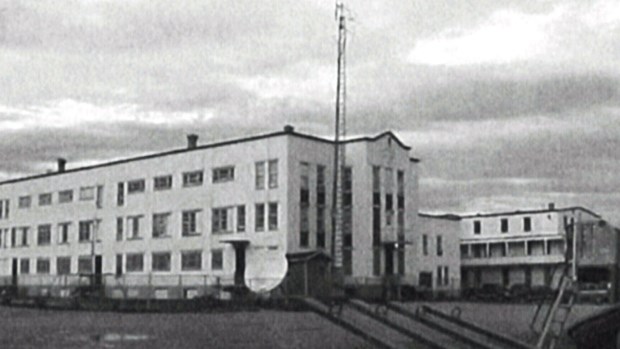
St. Anne's residential school. (Supplied)

Ontario is in the process of releasing death records of approximately 1,800 Indigenous children to the National Centre for Truth and Reconciliation.

Releasing death records was one of the recommendations in the 2015 report from the Truth and Reconciliation Commission that documented abuse suffered by Indigenous children at residential schools.

A spokeswoman for the Office of Ontario’s Registrar General says the province began gathering and archiving the records after the report was released.

The province says Service Ontario has records of deaths that occurred over the past 70 years that were registered with the provincial government. 

It says the search to find death registrations of student-aged Indigenous children began at the end of 2016 and it was determined that the approximately 1,800 records should be released.

The province says digital copies of the records will be transferred to the centre once an agreement authorizing their release is finalized.

Earlier this year, the provincial government committed $10 million to search for burial sites at residential schools following news that the remains of hundreds of people had been found buried near other residential school facilities around Canada. 

The National Truth and Reconciliation Commission has identified 12 locations of unmarked burial sites in Ontario and the province has said there are likely more.

It reported the known deaths of 426 children who attended schools in Ontario and an unknown number of children still missing.

This report by The Canadian Press was first published Nov. 2, 2021.

Thursday, October 21, 2021

Brantford discovery prompts review into cases where human remains were found in vicinity of residential schools


 A discovery of decades-old child remains near the Mohawk Institute last year was the catalyst for a larger probe into historical deaths...

Ontario’s chief coroner says he has begun the work of reviewing unidentified human remains found near former residential schools in Ontario to determine if any investigations should be reopened.

“We’re looking at our files from the past many years,” Dr. Dirk Huyer told The Spectator.

Huyer said he plans to evaluate past cases of unmarked burials “in the vicinity of residential schools” to see if they’ve missed deaths linked to the institutions that sought to systemically — and, often, violently — strip Indigenous children of their culture, language and identity.

The coroner’s office will begin with files starting in the 1980s.

Plans to review old cases follow an announcement on Friday that a newly created task force responsible for investigating deaths at the Mohawk Institute would probe an unmarked burial found by police Aug. 5, 2020, near Glenwood Drive in Brantford to determine whether it is connected to the former residential school.

Archaeologists’ report revealed the bones, initially deemed not of forensic interest, belonged to a child.

Lawyer and former Truth and Reconciliation Commission director Kimberly Murray, who is heading up a survivor-led search of the Mohawk Institute, said Six Nations archeology contacted her after receiving the report in the summer.

“It was concerning to archeology because it’s a child,” she said.

The archeology company presented its findings to survivors, community members and the task force — comprising three police services and representatives from the province’s death investigation system — it was decided there should be further investigation.

“We’re like, that needs to go to the task force because it’s starting to look a lot like this might be a residential school child,” Murray said. “We don’t know ... but there are some things pointing that way.”

Huyer said sex, race and identity have not been determined.

The remains discovered in August 2020 were not believed to be of forensic interest, in part due to their age.

“Based upon the anthropologist’s examination of the bones and the scene, it was not felt to be representative of a new crime scene or a typical crime-scene location,” he said.

Historically, remains approximately 50 years or older would not be considered “new.”

Instead, the burial site was referred to the registrar from the Funeral, Burial and Cremation Services Act, who worked with the landowner to conduct an archeological assessment. The assessment revealed the remains were bones of an adolescent — a child under the age of 14.

“In retrospect ... given the proximity to the Mohawk Institute and the recognition of unmarked burials in locations that are at or associated with residential schools, this is obviously of forensic interest,” Huyer said.

KEEP READING: Brantford discovery prompts review into cases where human remains were found in vicinity of residential schools | TheSpec.com

Ontario coroner reviews cases of unidentified human remains for links to residential schools


The office of Ontario's chief coroner is embarking on a review of unidentified human remains found in the last four decades to determine if any are linked to former residential schools.

"Burials that may have occurred within the residential school period of time could be many years old," he said in an interview Tuesday.

"We are going to look back into our files to see if there are cases ... that are at or near residential schools."

READ: Ontario coroner reviews cases of unidentified human remains for links to residential schools | CTV News

Tuesday, October 5, 2021

#60sScoop Indigenous father and son to walk 1,000 km in honour of residential school victims ++ #MMIWG


  • Alan and Nation Harrington
    #60s Scoop adoptee Alan Harrington and 13-year-old Nation Harrington are on a mission to promote accountability of the Catholic Church.
     
  •  

CTVNews.ca  |  September 25, 2021 

TORONTO -- A father and son embarked on a 1,000-kilometre journey, on foot, retracing the path their ancestors took when they escaped the residential school system.

Alan Harrington and 13-year-old Nation Harrington are on a mission to promote accountability of the Catholic Church.

Each step, from Kanehsatake, a settlement in southwestern Quebec, to Sault Ste. Marie, Ont., is being taken in memory of the children who went to residential schools, they say.

“The first day was approximately 28 to 30 kilometres,” Alan told CTV National News.

The pair walk up to eight hours per day while hauling 70 pounds of gear. People in the towns they walk through have taken notice, saying “hello” and giving them water. One hotel even put them up for a night.

Their final destination is what was once the Shingwauk Indian Residential School. They expect to reach the site by Sept. 28

“My biological father and mother were part of [the residential school system],” Alan said. “When they came back from that, they weren’t able to take care of us kids.”

He and his siblings were taken from their home and adopted out as part of the ‘60s Scoop, a period during which an estimated 20,000 Indigenous children were taken from their families between the 1950s and the 1980s, given new names and placed with non-Indigenous families, some of them outside Canada.

As a result, Alan says he struggled with identity issues, something he doesn’t want his son to experience.

“With my son here, he’s able to, you know, break that cycle,” he said. “This whole journey is about getting there, but also for him and I to connect together as father and son.”

Nation has brought along his lacrosse stick and a flag to post at the former residential school to mark their journey. He says the walk has been a learning experience for him.

“It’s teaching me what my great-great-grandfather felt when he was walking back,” he told CTV National News.

A prominent Canadian arm of the Catholic Church apologized for the first time on Friday for the horrors that occurred in residential schools it ran for the federal government for more than a century.

The Canadian Conference of Catholic Bishops issued a statement acknowledging what it described as "grave abuses that were committed by some members of our Catholic community" at the schools, as well as the residential school system's "suppression of Indigenous languages, culture and spirituality."

While individual priests and bishops have apologized for the church's role in running the schools, there had never been an official apology from the Canadian Catholic hierarchy until Friday. The Vatican has also never formally apologized, despite calls to do so.

With files from CTVNews.ca's Ryan Flanagan

 MMIWG cases: Thunder Bay, Ontario: watch below

Monday, August 23, 2021

A Crime: Police handling 4 residential school investigations across Canada

Updated August 22, 2021 

A tally from police across the country shows there are four ongoing criminal investigations and one decade-long probe into complaints involving residential schools.  The Canadian Press contacted RCMP and other policing agencies across the country over the last two weeks.  The agencies said there are four ongoing investigations in Ontario, Saskatchewan and Yukon as well as a probe that began in 2011 into the Fort Alexander Residential School in Manitoba. 

Wednesday, June 23, 2021

Culturally appropriate foster care for Indigenous children coming

VIDEO June 21, 2021 

Melissa Patriquin of the Mnaasged Alternative Care program speaks in Muncey, Ont. in June 2021. (Bryan Bicknell / CTV News)

LONDON, ONT. -- On National Indigenous Peoples Day, a day that celebrates First Nations culture, there was a major announcement for Indigenous children and youth in Southwestern Ontario.

The Muncey-based Mnaasged Alternative Care program has secured a foster care license.

It means Indigenous children in the foster system can now find love and care in culturally appropriate environments, no longer solely under the care of the Children's Aid Society (CAS).

“The system is old, the framework just doesn’t work, and it’s not appropriate for Indigenous children and youth,” said Melissa Patriquin, Mnaasged’s director of Child and Family Services.

The agency will now take direct referrals from the CAS, and will work to match Indigenous children from First Nations communities across southern Ontario with caring foster families.

Currently, there are more than 100 Indigenous children in the catchment area that would benefit from the services of the agency.

Patriqin says the goal is to bring them closer to their cultural identity.

“I don’t think that there’s any Indigenous person who hasn’t been affected in some way, shape, or form by the inter-generational effects of residential schools, the '60s Scoop, child welfare. Indigenous people are so over-represented in the child welfare system right now.”

The agency also has a new headquarters on the Muncey reserve west of London. It’s equipped with various amenities like a healing lodge, arbour centres for ceremonies, and a playground.

It will also serve as an administrative and cultural hub for the agency, said Executive Director Mike George.

“This is a really significant piece for us because it helps us repatriate some of the children who were placed in non-Indigenous families. It will help us repartriate them back to their communities, and provide that additional connection to their communities, their elders, their clans, and their culture.”

Mnaasged is actively seeking foster families. Alternative care supervisor Kyliegh Alexander said they don’t have to be Indigenous.

Education and training that recognizes First Nations culture and supports children will be provided.

“Like every other child, right? Like they’re just looking for a home, they’re looking for care and love. They’re going to thrive when their needs are met and when their care is quality.”

Those interested in becoming a foster family can check here.


Happy Visitors!

WRITTEN BY HUMANS!

WRITTEN BY HUMANS!

Blog Archive

Featured Post

Your History Class Was a F*cking Lie | #NOMOAR

  Your History Class Was a F*cking Lie by Sean Sherman (Or: How the American Educational System Has Always Been a Racist Propaganda Program...


Native Circles

Native Circles
click logo for podcasts!

Most READ Posts

Bookshop

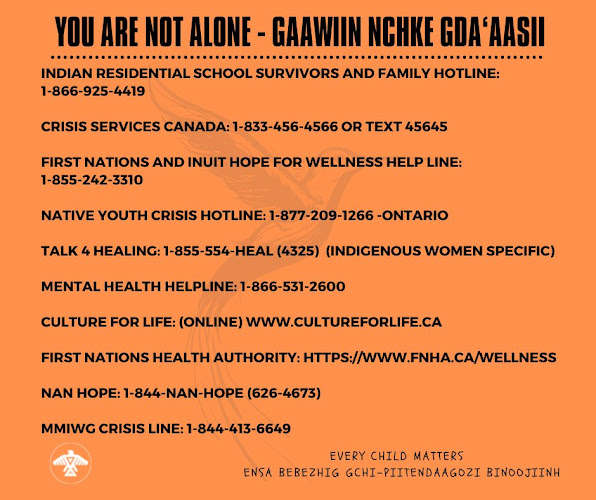
You are not alone

You are not alone

To Veronica Brown

Veronica, we adult adoptees are thinking of you today and every day. We will be here when you need us. Your journey in the adopted life has begun, nothing can revoke that now, the damage cannot be undone. Be courageous, you have what no adoptee before you has had; a strong group of adult adoptees who know your story, who are behind you and will always be so.

Diane Tells His Name


click photo

Lost Birds on Al Jazeera Fault Lines

Lost Birds on Al Jazeera Fault Lines
click to read and listen about Trace, Diane, Julie and Suzie

NO MORE STOLEN SISTERS

NO MORE STOLEN SISTERS
click image

ADOPTION TRUTH

As the single largest unregulated industry in the United States, adoption is viewed as a benevolent action that results in the formation of “forever families.”
The truth is that it is a very lucrative business with a known sales pitch. With profits last estimated at over $1.44 billion dollars a year, mothers who consider adoption for their babies need to be very aware that all of this promotion clouds the facts and only though independent research can they get an accurate account of what life might be like for both them and their child after signing the adoption paperwork.

Original Birth Certificate Map in the USA

Google Followers