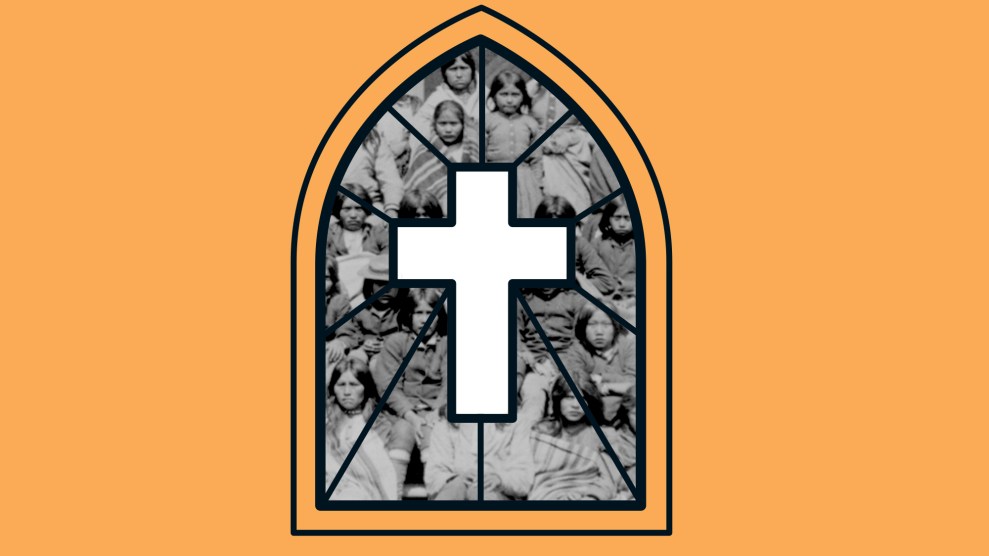
HISTORY and context of taking all children away from their tribal families
See more videos: https://www.redthought.org/

HISTORY and context of taking all children away from their tribal families
See more videos: https://www.redthought.org/
Alexandra Wittenberg | Navajo-Hopi
Observer

SANTA FE, NM. — On her great-grandmother’s 91st birthday celebration at Jemez Pueblo in April, Veronica Krupnick gave her the news she would be on the ballot for the New Mexico State Senate.
With tear-filled eyes, she looked at Krupnick, hugged her, and then sat her down to eat.
“She went from seeing Native Americans in New Mexico not be able to vote until 1948 to now seeing her great granddaughter on a ballot,” Krupnick said.
Krupnick is 28; her great-grandmother was 24 when Native Americans got the right to vote in the state.
“If you’re bold enough to dream big and fight for the changes you want to see, you can see that kind of radical turnaround in one person’s lifetime,” Krupnick said. “But you have to feel the fear and do it anyway.”
Though Krupnick lost the Democratic primary election for District 24 in Santa Fe to Linda Trujillo in June, her work in the New Mexico House of Representatives and as a fierce advocate for child welfare has anything but slowed.
“(Running) taught me a lot,” Krupnick said. “This is something that I want to do, maybe not in the near future but down the road. It definitely takes a lot out of you.”
Krupnick said although an estimated 45% of New Mexicans are under the age of 35, they don’t really have representation.
She also thought her expertise in child welfare would fill a much-needed gap in the state, especially with the upcoming retirement of two long-time legislative officials.
“One of the biggest (changes) that could really shift things for child welfare is proactively getting people with experience involved, whether that’s at a local or a state (level),” Krupnick said. “Lived-experience people are going to tell you what works and what doesn’t…I think in child welfare we get really lost in the numbers and the statistics and we forget that there’s people behind them.”
Krupnick uses her own experience in the foster and adoption systems to try and spark change, and she strives to bring others that have been in the system to use their own voices.
A selection of The Imprint’s most impactful stories from the past year

In 2018, the future of the Indian Child Welfare Act was put in jeopardy by a case that would come to be known as Brackeen v. Haaland. A federal district court judge ruled that the 45-year-old law known as ICWA was unconstitutional in its entirety. As the case progressed, many supporters of the law — which is designed to maintain the bonds between Native children and their families and tribes — feared that the U.S. Supreme Court would gut or erase ICWA.
This June, the court did the opposite in a 7-2 ruling that strongly affirmed the Indian Child Welfare Act’s constitutionality.
“The bottom line is that we reject all of petitioners’ challenges to the statute, some on the merits and others for lack of standing,” wrote Justice Amy Coney Barrett.
The Imprint’s five years of coverage on the Brackeen case includes Nancy Marie Spears’ reporting on the arguments considered by the Supreme Court and the prayers and protests outside that day. And check out The Imprint Weekly Podcast episode from the week after the court’s decision for more insight from several leading experts on ICWA and tribal law.
But Spears’ reporting in 2023 went well beyond the Supreme Court case. She profiled the Indigenous practices that ICWA is meant to protect, such as the My Two Aunties program developed by a group of tribes in Southern California. Her recent three-part series, Born of History, explores the ways in which the colonization of the past, and the present constraints of federal funding, make it difficult for many tribes to make full use of ICWA’s protections.
SOURCE:
https://imprintnews.org/best-of-2023/top-stories-2023-indigenous-rights-upheld/246657

Register at: https://cche.app.neoncrm.com/np/clients/cche/event.jsp?event=389
www.mycche.org | 218-387-3411 | office@mycche.org
In June 2023, the Supreme Court issued its opinion in the case Haaland v. Brackeen, defending the constitutionality of the Indian Child Welfare Act (ICWA). On the surface, this case appeared to be concerned with the protection of Indigenous children. However, more insidiously, the case also turned on the issue of tribal sovereignty and had the potential to severely limit the sovereignty of tribal nations. Three sessions hosted by Cook County Higher Education will explore the settler colonial origins of United States federal Indian policy, with a focus on Ojibwe relations in the Great Lakes. These sessions will delve into the social, political, and institutional structures that resulted from this history.
This session and series are open to the community (and beyond).
Join Dr. Jacob Jurss as he guides us through the intricate history of forced assimilation and genocidal policies, spanning from the early 20th century to the present day. Topics will encompass the painful legacy of boarding schools, the trauma of family separations, the influence of the Indian Child Welfare Act (ICWA), the urgent concerns surrounding missing and murdered Indigenous women, and the ongoing efforts of tribes to maintain their cultural identity, sovereignty, and traditions in the face of historical and contemporary challenges.
Biography: Dr. Jacob Jurss is a scholar of early American history and Indigenous treaty rights. He has taught at the University of Minnesota, Morris, Metropolitan State University, University of St. Thomas, and Macalester College, and is currently a faculty member at Century Community College. His research examines intertribal relations between the Ojibwe and Dakota and how those relations affected tribal diplomatic relations with the United States. He resides in Saint Paul with his wife and son, who are White Earth Ojibwe descendants.


Read my friend Peter (law professor) on Substack.

06/19/2023
Last week, in a surprising 7-2 decision, the U.S. Supreme Court fully upheld the Indian Child Welfare Act in Brackeen v. Haaland. We break down the full opinion of the court and their various reasons for siding in support of the 1978 law that was passed at a time when nearly a third of indigenous children were separated from their family.
We are joined for reaction to the Brackeen ruling by three women close to the case:
-Kate Fort of Michigan State University, one of the foremost experts on ICWA in this country, who assisted with the tribes’ preparation for the Supreme Court oral arguments
-Chrissi Ross Nimmo, deputy attorney general for Cherokee Nation, one of the the tribes that officially was party to the case
-Rebecca Nagle, journalist and architect of the podcast This Land, whose second season focused on the Brackeen case.
Guest Interview
Kate Fort is director of clinics at Michigan State University College of Law, including the Indian Law Clinic
Chrissi Ross Nimmo is the deputy attorney general for Cherokee Nation.
Rebecca Nagle is an award-winning journalist and host of the podcast This Land.


Reading Room
Indian Child Welfare Act Stands, Native Families Empowered
https://bit.ly/3PjEV3L
The Imprint’s continuing coverage of Brackeen v. Haaland, 2018-2023
https://bit.ly/3ttyzTy
Opinion in Brackeen v. Haaland
https://bit.ly/3PhDGCa
Imprint Reporting by Nancy Marie Spears
https://imprintnews.org/author/nancy-marie-spears
Justice Neal Gorsuch, the justice with extensive federal Indian law knowledge and experience of all the justices, wrote in support:
"Often, Native American Tribes have come to this Court seeking justice only to leave with bowed heads and empty hands. But that is not because this Court has no justice to offer them. Our Constitution reserves for the Tribes a place—an enduring place—in the structure of American life. It promises them sovereignty for as long as they wish to keep it. And it secures that promise by divesting States of authority over Indian affairs and by giving the federal government certain significant (but limited and enumerated) powers aimed at building a lasting peace"


When it comes to championing the health of Indigenous children in the United States, few pieces of legislation possess the profound significance of the Indian Child Welfare Act (ICWA). It is not merely a dry legal document, but a lifeline of cultural health for Indigenous nations and countless children in the foster care system.
In the coming weeks, the Supreme Court of the United States (SCOTUS) is expected to release its decision on Haaland vs Brackeen, a case that challenges the constitutionality of the ICWA. The plaintiffs, a non-Indigenous Texan couple named Chad and Jennifer Brackeen, claim that the ICWA's preference for placing Indigenous children with foster parents from their tribal nations discriminates against non-Indigenous individuals who wish to adopt Indigenous children.
Proponents of the ICWA, which include 486 tribal nations, assert the law’s preference for Indigenous families promotes cultural well-being and is based on the political status of tribes, rather than the social construct of race. According to the Native American Rights Fund (NARF), “The ICWA does this by upholding family integrity and stability and by keeping Indian children connected to their community and culture. The ICWA also reaffirms the inherent rights of tribal nations to be involved in child welfare matters involving their citizens.”
Samantha Maltais, a member of the Aquinnah Wampanoag tribe, ICWA advocate and a third-year student at Harvard Law School, shares this perspective.
“Tribes have been and always will be sovereign nations. Their status as such pre-dates America’s founding and its earliest formulations of what race is. To misunderstand this truth not only threatens the welfare of Native children today, but could also undermine the ways we write federal Indian laws and policies for future generations to come,” she said.
 |
| The plaintiffs, Brackeens, assert ICWA is an unconstitutional law |
By Trace L Hentz, blog editor and adoptee
Am I worried about the ICWA case? Yes. Very.
I am worried that the "Supreme" Court has shown no respect for our inherent sovereign rights. Just look at history. This case could rescind the Indian Child Welfare Act of 1978. I worry the impact on adoptees now and future Native adoptees. (ICWA allows adoptees to open their adoption records.) We are called The Stolen Generation and Sixties Scoop for good reason.
We lost our sovereignty when we were adopted out to white families. We lost everything - language, culture, land, family, ceremonies and our tribal stories. (Some of us lost our sanity too!) Swimming pools, college degrees, and white families in fancy houses, cannot replace this.
Sadly, I do not think these Justices actually know what our loss means!
Many years ago in Wisconsin, two tribal chiefs gave talks to new congresspeople on Sovereignty 101- I interviewed them about it and then wrote an article in News from Indian Country. They explained it used to be feds (the federal government) that dealt with tribes and the feds were keenly aware of sovereign tribal rights and history. Both chiefs said state lawmakers were not as understanding. There was also high turn-over in states and many new congressmen don't know state or federal history, even how tribes signed numerous treaties.
The Department of WAR (who authorized killing Indians) morphed eventually into the Department of the Interior.


As Rebecca Nagle explained: "A host of federal statutes—including on land rights, water rights, health care, gaming, criminal and civil jurisdiction, and tribal self-governance—treat Native Americans differently based on this political classification. In this light, I fear that the Brackeen lawsuit is the first in a row of dominoes—if the Court strikes down ICWA, everything else could soon go with it."
"Under federal law, tribes and tribal citizens are not a racial group, but a political one. Accordingly, ICWA applies only to Native children who either are enrolled in a federally recognized tribe or are eligible based on a given tribe’s citizenship requirements," Nagle said.
And this:
This cultural difference — that a family’s fitness is determined by its wealth, and that those concerns should outweigh a child’s connection to their family and heritage — is essentially why the Indian Child Welfare Act was created in 1978. The law recognizes the history of federal policy aimed at breaking up Native families and mandates that, whenever possible, Native families should remain together.
Sarah Kastelic, the executive director of the National Indian Child Welfare Association, said that ICWA acknowledges important familial and tribal bonds that have long been disregarded, and that Native ways — such as extended families living under the same roof — have often been used to show unfitness in child welfare proceedings. “No matter the picket fences and swimming pools and things, most of the time, kids want to be with their families,” she said.
READ: The Native adoption case that could dismantle the Indian Child Welfare Act, explained - Vox


I was chatting with Prof. Lorianne Updike Toler (Northern Illinois), and she mentioned some thoughts of hers on this subject, based on her recent University of Chicago Law Review article, The Missing Indian Affairs Clause. I encouraged her to write up a blog post, and she kindly passed along the following:
In the November 9th oral argument for Haaland v. Brackeen, which challenges the constitutionality of the Indian Child Welfare Act, Justice Amy Coney Barret's question about the impact of overruling Congress' plenary power over tribes underscores a centuries-old confusion about federal Indian Affairs.
It's not just the Court that is confused. Former Volokh Conspiracy posts on point reveal the deep academic fissures over the historical context of the Indian Commerce Clause. Unknown to the Court and most of academe is the root cause of all the confusion: that the Constitutional Convention initially forgot (and then later intentionally excluded) the Articles of Confederation's Indian Affairs Clause in the Constitution.
As I detail in this University of Chicago Law Review article, Pennsylvanian comparative constitutionalist James Wilson, tasked by the five-member Committee of Detail to draft the Constitution, initially checked off "Indian Affairs" to include as a Congressional power, but then failed to get the power into his final draft. He was not the only one to forget. Although the Convention had commissioned the Committee to include all the Congressional powers in the Articles of Confederation (where Indian Affairs featured), Edmund Randolph also forgot to include the power in his initial sketch of the Constitution. Odd, considering a Cherokee chief had met with him that summer in Philadelphia and he was then directly concerned with settler-tribe disputes on Virginia's frontier as the state's governor. It was John Rutledge, the South Carolinian chair of the committee, who remembered, scrawling the power in the margin of Randolph's sketch. Yet he later forgot this power in combing through Wilson's final draft, and it was reported out of the Committee sans (without mentioning) Indian Affairs.
But James Madison remembered. It was he who suggested Indian Affairs be inserted back into the Constitution. This time, the Committee of Detail intentionally excluded the Clause, instead inserting "Tribes" into the Commerce Clause. No one objected. This despite that at least three Convention members had just spent their ten-day break (for the Committee of Detail to meet) fulfilling their congressional duties in New York. There, impending tribal wars in Virginia and Georgia's Creek disputes were discussed. Presumably, the Convention thought Congress' previous powers under the Article's Indian Affairs were addressed by the Indian Commerce Clause and other provisions of the Constitution—such as the power to declare war and peace and the president's shared Treaty Power.
What does this mean for the Constitution? Put simply, Congress has no Indian Affairs power, and therefore no plenary power. Early assertion of this power was justified under the tripartite powers of Indian Commerce, War and Treaty Powers. But Congress halted tribal treaty-making long ago. If it wants to re-assert power over tribes beyond the Commerce Clause, the President needs to begin treating with tribes again.And what of any residual power? As I propose in my article linked above, the residue reverts to the sovereign tribes. Tribal sovereignty is to tribes what federalism is to the states. Powers not reserved by the Constitution to Congress and the President revert to the tribes.
This would mean that Congress lacked constitutional power to pass ICWA, however well-intentioned. ICWA was adopted in an attempt to prevent Native American erasure by allowing the community to intervene in adoption and foster cases to ensure tribal children are raised in Native American families. ICWA grants the child's tribe exclusive jurisdiction over custody proceedings and other intervention privileges. Further, it establishes placement preferences first in favor of any family members, then the tribe, and then any Native American families regardless of tribal membership.
Unless related to its Indian Commerce power (and heaven forbid if we have arrived at treating adoption of babies and children as commerce), Congress has no power over Native American adoptions. On this basis, ICWA might be unconstitutional wholesale. However, to the extent ICWA respects tribal sovereignty and refers cases to the child's tribe, it may be constitutional under a structural reading of the Constitution: The combined intratextual references to tribes as the constitutional unit of recognition— "tribes" under the Commerce Clause and the presumption that Indians are not taxed under Art I. sec. 2 of the Constitution—together with the parallel analog of federalism vis-à-vis states may permit Congress to proactively proscribe federal and state deference to tribal power. But as Congress has no plenary power over tribes and Native Americans as a people, it cannot specify adoption placement or other preferences. The Court should so rule in Brackeen.
👇👇👇This gives me hope:

read:
(to be continued)
.jpg) |
| Archive photo |
Tribes across the U.S. are outraged by the attempt to dismantle ICWA, and a “think tank” was recently formed in California to respond to what seems a foundational threat to community sovereignty, beginning with who controls Native child welfare decisions. It’s the latest in a battle as old as the United States: White Christian evangelicals fighting for the right to take Native children away from family, tribe, and culture, and re-educate them, no matter the harms—and its outcome will determine whether more Native youth are exposed to psychiatric drugs.
Chad Brackeen and his wife, Jennifer, lead plaintiffs, are White, and according to a 2019 interview with The New York Times, also dedicated members of the fundamentalist Church of Christ, which they attend twice a week, and through which they first became inspired to adopt. They began as foster parents before successfully adopting a young Dine (Navajo) boy, and then mounting efforts to adopt his sister. They contend they are being racially discriminated against by ICWA’s mandates favoring a great aunt of both of these children, who has stepped forward from their tribal community seeking to adopt the sister.
...
But what about the contention that ICWA’s dismantling will also create a surge in Native foster youth being psychiatrically labeled and drugged? It’s frankly impossible to find adequate information bearing on this topic because the U.S. Indian Health Service (IHS), primary purveyor of behavioral health services in Indian Country, has never been accountable to publicly report prescription rates and the types of psychiatric drugs it dispenses.
Yet as I detail in my new book, Coyote’s Swing, IHS has for decades been very involved in psychiatric labeling and drugging. In 2013, for example, the agency attributed 850,000 of its outpatient visits and 5,000 of its inpatient stays to a “mental disorder.” And 10 percent of the services IHS provided that same year to children and young adults aged 5 to 24 years had “mental disorder” listed as the “primary reason.”
...
The history of EuroAmerican culture in North America is rife with the theft of Native children and their childhoods and is both the root cause and effect behind today’s Native foster care system.
According to a recent joint report by Pro Publica and NBC News, 3.5 million homes are searched annually by state child welfare agencies investigating child maltreatment. Most searches happen without a warrant because caregivers may not know their rights or are intimidated by aggressive caseworkers pounding on their doors. Once inside, these workers may push their way into a caregiver’s kitchen, go through the refrigerator, sift through trash, and inspect bedrooms and bathrooms while trying to observe children present in the home. Only five percent of such coercive searches result in actual findings of child maltreatment.

ABOUT HIS BOOK:
Using a traditional Yakama tale as a motif, Coyote’s Swing combines the author’s firsthand experiences as a consulting psychologist with rare history and sociocultural critique, revealing how the U.S. mental health system reframes Native American reactions to oppression and marginalization into “mental disorders” and “mental illness,” and how the Indian Health Service’s contemporary practices echo historical injustices.
“In the IHS, dissension is often suppressed as blasphemy and whistleblowers are rarely tolerated. Walker is to be commended for his thorough research and timely recommendations for reform of the agency’s delivery of mental health services in Indian County…I join him in praying that this period of tribal history comes to an end.”—Toobshudud Jack Fiander (Yakama), attorney

Editor’s note: This short piece accompanied “Forever Home” in the March+April 2023 print edition of Mother Jones.
This spring, the US Supreme Court will hear a case that could decide the future of the Indian Child Welfare Act, the 1978 landmark law that strengthened tribes’ rights to keep Native children out of the foster care system. At the center of the current case are the Brackeens, a white Texas couple hoping to adopt a 4-year-old girl from a Navajo family. Devout Christians, the Brackeens have said that they felt called by God to adopt, telling the New York Times in 2019 that they considered adoption a way to “rectify our blessings.”
Christian groups have jumped to the Brackeens’ defense, arguing that ICWA discriminates against Native children by prioritizing potential caretakers’ Native heritage over their overall ability to provide for a child. Yet critics see that argument as merely the latest chapter in Christians’ long history of removing Native children from their communities to win more converts—a kind of a modern spin on the famous words of Richard H. Pratt, the Christian founder of the first residential school for Native children in the United States. “All the Indian there is in the race should be dead,” he wrote in 1892. “Kill the Indian in him, and save the man.”
Christian Alliance for Indian Child Welfare
Founded in 2004, this group advocates on behalf of non-Indian families who are trying to adopt children of Native descent. The group’s founder is Elizabeth Morris, author of a 2006 book called Dying in Indian Country, which she describes as “the true story of a father who realized reservation life and welfare policies were destroying his family.” In an amicus brief filed in 2021, an anti-ICWA group called the Christian Alliance for Indian Child Welfare wrote, “For nearly fifty years, ICWA has imposed race-based classifications on Indian children and their families—a clear violation of Equal Protection—and has caused horrendous individual suffering as a result.” CAICW’s public Facebook page, with 2,700 followers, regularly shares stories about what they see as the depravities of Native culture; a recent post cast doubt on recent finding of remains of Native children on the grounds of Canadian boarding schools despite abundant evidence that they are legitimate.
Nightlight Christian Adoptions
Since 1959, this evangelical adoption agency has advocated for adoption as an alternative to abortion and a boon to Christianity. Nightlight waded into an ICWA battle in 2013, when the agency facilitated the adoption of a Cherokee girl into a White Christian family. After a highly publicized custody battle between the adoptive parents and tribal leaders ensued, with evangelical activists staging rallies and circulating petitions to “Save Baby Veronica” from being removed from her Christian adoptive family. The Supreme Court ultimately ruled in the adoptive parents’ favor. In a current brochure about its faith-based mission, Nightlight states, “Adoption is one of the most effective ways to make disciples of all nations.”
Allie Beth Stuckey and Naomi Schaefer Riley
Stuckey, a Christian influencer with 441,000 followers on Instagram, devoted a recent episode of her podcast, “Relatable,” to the Indian Child Welfare Act. Her guest was Naomi Schaefer Riley, a fellow of the libertarian think tank American Enterprise Institute and author of the and the 2016 book The New Trail of Tears: How Washington Is Destroying American Indians. On Stuckey’s podcast, Riley argued that the US government’s history of abuse and exploitation of Native people is no longer relevant. “I don’t really believe in historical trauma,” she said. Instead, she blamed Natives’ poverty and suffering on modern moral failings. “Maybe it’s the substance abuse,” she said. “Maybe it’s the high crime rates. Maybe it has nothing to do with the fact that your grandfather was forced to go to a boarding school by the American government.” She claims that what “left-wing activists” really hope to achieve is “an Indian Child Welfare Act for Black children.”
That wasn’t Riley’s first appearance on Stuckey’s podcast; in an episode from last year called “CPS Has A Deadly Wokeness Problem” Riley discussed her most recent book, No Way to Treat a Child: How the Foster Care System, Family Courts, and Racial Activists Are Wrecking Young Lives, published in 2021. Riley held forth about her belief that law-and-order conservatives should think of child protective services as a branch of law enforcement. She told Stuckey, “We don’t think it’s a good idea as conservatives to abolish the police because we understand…the important role the police play in protecting our most vulnerable citizens, and we need to understand the important role that CPS plays in protecting children.” Stuckey urges her listeners to reject the notion that race and culture should play a role in custody decisions. “The world doesn’t care about children,” she says. Her listeners can help, she says, by “carrying on the legacy of Christianity.”


Minnesota was already among the 12 states with a law that mirrors some
or all of the protections of the Indian Child Welfare Act (ICWA),
federal legislation passed decades ago to protect Indigenous families
from unnecessary family separation.
But the state Legislature went further this year with enhancements to
the Minnesota Indian Family Preservation Act, which was originally
passed in 1985. The bill moves to Gov. Tim Walz’s desk as the nation
waits for a ruling from the Supreme Court on a case called Brackeen v.
Haaland, which could decide the fate of ICWA as a national law. A
decision in the case is expected this summer.
“This bill says that we agree on Minnesota land that our children
deserve the opportunity to have access to their family, their culture,
their beliefs, and what I believe is the most beautiful part of
Minnesota,” Rep. Heather Keeler told lawmakers in advance of the floor
vote.
A group of leading organizations in child welfare is working to build
a new path for quickly licensing kin as foster parents.
Episode 122: We Were Once a Family, with Journalist and Author Roxanna Asgarian
02/20/2023
Part Two: A song for orphans
On this week’s podcast, we begin a two-part interview between Imprint reporter Nancy Marie Spears and Sandy White Hawk, author of the recently released memoir A Child of the Indian Race: A Story of Return. White Hawk’s recounts her own adoption story, which began in 1955, decades before the Indian Child Welfare Act was passed to protect Indigenous families from being separated.
This conversation comes just months after the Supreme Court heard arguments in a case called Brackeen v. Haaland, in which several non-Indigenous families and the State of Texas have claimed that ICWA is unconstitutional. A decision in the case is expected to be delivered this summer.
Guest Interview: Sandy White Hawk is a Sicangu Lakota adoptee from the Rosebud Reservation, South Dakota. She is the founder and director of First Nations Repatriation Institute
An Indigenous Adoptee Reclaims Her Culture
http://bit.ly/3YI0oF9
First-of-its-kind Survey Examines Trauma and Healing Among Indigenous Survivors of Family Separation
http://bit.ly/3e3XHfd
How a Chippewa Grandmother’s Adoption Fight Ended Up in the U.S. Supreme Court
http://bit.ly/3VLeS6k
The Imprint’s Coverage of Brackeen v. Haaland
http://bit.ly/3ttyzTy


On September 20, 2022, social workers, advocates, and Hill staffers gathered in Room HV201 in the Capitol Visitor Center to discuss how Congress might respond if the United States Supreme Court rules the Indian Child Welfare Act (ICWA) is unconstitutional. Co-hosted by CRISP and the National Foster Youth Initiative, the briefing was held in conjunction with the Congressional Social Work Caucus and the Congressional Caucus on Foster Youth. Congresswoman Barbara Lee (D-CA-13), chair of the Social Work Caucus, provided a video greeting to set the tone for the briefing.
CRISP Legislative Director Angelique Day, an associate professor at the University of Washington School of Social Work and a descendant of the Ho Chunk nation, consisted of Kathryn Isom-Clause, Bureau of Indian Affairs Deputy Assistant Secretary for Policy and Economic Development; Kristen Torres, MSW, child welfare legislative aide for Rep. Judy Chu (D-CA-27); and Sonia Begay, a member of the Navajo Nation and grandparent caregiver who provided compelling testimony about her experiences with ICWA during the time she sought parental custody of her grandchildren who attended the briefing.


At age nine, tragedy struck Autumn Adams’ life. Her father passed away and her mother was deemed unfit to care for her, leaving Adams with an uncertain future.
Adams, who is a member of the Yakama Nation, a federally recognized Native tribe, recalls overhearing officers from Child Protective Services discuss the possibility of moving her to a non-Native home if they couldn’t soon find a Native family to place her with. The idea terrified her.
“At that point in my life, I had everything I recognized as home ripped away from me," she tells Teen Vogue. "I had to bury my father. I had to be ripped from my mother's arms. The only thing that was left that gave me that connection was my extended family and culture.”
Adams was eventually placed with family in a multigenerational home that included her maternal aunt and grandmother. Now a law student, Adams credits this upbringing with enabling her to stay close to her culture and achieve success. “I was directly able to learn from my aunt, my cousins, my grandmother, my other aunts and uncles during that time — what it means to have perseverance, what it means to have responsibility and respect, the definition of grit,” she explains. “It's through those lessons that I've broken every negative statistic not only about former foster youth but about Native former foster youth.”
In November, the Supreme Court heard arguments for a case that could forever change the landscape of adoption for Native youth like Adams.
I have been rereading TWO WORLDS: Lost Children of the Indian
Adoption Projects. It's first person accounts of adoptions by non-Native parents and our history.
Can we please look
at the impact of closed adoptions through the eyes of the adoptee-adult? We are called the Stolen Generation, remember that.
The word often used about being adopted is “cultural genocide and culture loss.”
If we lose ICWA, we go back to that earlier form of genocide: Less Indians on the rolls, less people on the rez, and the adoptee will lose years of ancestral knowledge and history and language we would have received from our relatives. (There are very few adoptees back on their rez.)
This cultural knowledge is not found in books. It’s learned at a kitchen table, in the kitchen cooking, hunting or gathering with your parents, at a beading circle, at a memorial/funeral, or at a social gathering like a powwow, on in ceremony. It’s learned walking the land. It’s learned hearing your grandparents tell stories. It’s learned over years of contact, contact with your people, your clan, your cousins, your tribal nations.
That knowledge is your inherent sovereign right as a sovereign citizen of your TRIBAL NATION, that lies within the boundaries of America or Canada.
Babies and children adopted by non-Natives, this ancient ancestral knowledge and language is gone, erased. Your tribal history is gone.
YOU ARE GONE.
Do you think the Supreme Court knows anything about this cultural genocide? Do you think they know about 1,000 Indian Wars? No treaty went unbroken. Do you think it matters to them what happened 100 years ago, or since ICWA was passed in 1978 to stop the adoption industry and the united states funding child trafficking?
Do adoptive parents know about cultural loss? What do they plan to do when the child asks about their tribe, or their parents, or their history, or their language?
“What is my language,” a child might ask. “Where are my people?”
Think about Arnold Lyslo who ran the Indian Adoption Projects in America. He was busy selling his story ideas to magazines so white readers would feel sympathy and want to help. He counted his successes in how many Indian children were placed with white families. (Success? Erased: off the rez, off the rolls.)
It was the perfect storm. The adopters were not told there was a massive inter-country genocidal project going on. They just thought: “Hey, were doing a good thing (adopting a Native kid.)”
How many of these adoptions failed? (I wanted to know that. I asked adoptees to write their stories in the anthologies Two Worlds, Called Home and Stolen Generations.) I sent a bunch of questions to each adoptee.
How many adoptees committed suicide? We don’t know.
How many adoptees acted out and were sent to prison? Too many actually, quite a few I heard about.
Nobody wants Indians to have anything – especially good-sized populations – that would not work for the people who make sure “Indians stay poor.”
What happens if ICWA
fails, and adoption goes widespread again and there is some new
method of closed adoptions, like the earlier INDIAN ADOPTION
PROJECT(s), or ARENA? What if they open new boarding schools and
force Indian children to attend? The governments of Canada and
America funded them, gave the churches money to take Indian kids,
some literally abducted off the rez at gunpoint?
To be continued
If you cannot afford to buy the book Two Worlds, please email Trace (tracelara@pm.me)


Your History Class Was a F*cking Lie by Sean Sherman (Or: How the American Educational System Has Always Been a Racist Propaganda Program...






 Posts
All Comments
Posts
All Comments