BOOZHOO! We've amassed tons of information and important history on this blog since 2010. If you have a keyword, use the search box below. Also check out the reference section above. If you have a question or need help searching, use the contact form at the bottom of the blog.
We want you to use BOOKSHOP to buy books! (the editor will earn a small amount of money or commission. (we thank you) (that is our disclaimer statement)
This is a blog. It is not a peer-reviewed journal, not a sponsored publication... WE DO NOT HAVE ADS or earn MONEY from this website. The ideas, news and thoughts posted are sourced… or written by the editor or contributors.
EMAIL ME: tracelara@pm.me (outlook email is gone)
THANK YOU CHI MEGWETCH!
Can't Look Away is a gripping documentary that exposes the dark side of social media and its devastating impact on young users. Directors Matthew O'Neill and Perri Peltz take viewers inside the high-stakes legal battle to hold tech companies accountable for the harm caused by their negligence and dangerous algorithms. Based on investigative reporting by Bloomberg News' Olivia Carville, the film follows the Social Media Victims Law Center fighting for justice for families whose children suffered tragic consequences linked to social media use. As families seek justice, Can't Look Away underscores the urgent need for industry reform and serves as both a wake-up call about the dangers of social media—and a call to action to protect future generations.
Vermont is one state among many passing legislation to stop kids from using cellphones during school hours (bell-to-bell).
A former U-32 student is back in Vermont to make a movie about the state’s infamous eugenics era.
Luke Becker-Lowe, fellow film students from Emerson
College in Boston and a cast of 20 were at the Center for Arts and
Learning on Barre Street Saturday and Sunday, filming scenes that staged
the sterilization of subjects.
The film is based on the Vermont Eugenics Program that
followed a 1931 law legalizing the sterilization of “idiots, imbeciles,
feeble-minded or insane persons residing in state institutions.”
Vermont’s eugenics program, headed by University of Vermont Prof. Harry
F. Perkins, led to the sterilization of 253 people, mostly women,
between 1931 and 1957, according to UVM’s website.
Becker-Lowe said growing up on dirt roads in central
Vermont gave him an appreciation of backwoods life, unique characters
and the challenges they face. He is also a fan of 20th century period
films that reflect social and cultural shifts over time. Their project,
“Dormancy,” was a response to and a reflection of a new era of political
and social intolerance in America that serves as a sobering lesson, he
said.
Lucy
Cannon Neel, Chairperson of the Vermont Commission on Native American
Affairs presented at the Benson Village School on December 21, 2016.
Lucy shared about the history and continued presence (of Indians in
Vermont)…
Vermont Eugenics: When our branding wasn’t so sweet | Rutland Reader
Excerpt: …Founded in 1925 by University of Vermont zoology
professor Henry F. Perkins, the Eugenics Survey of Vermont was built on
the “belief in the existence of racial stereotypes,” and “accepted the
myth that certain people (particularly those of
northern Europe) possess a monopoly of desired characteristics, and
thought that human differences were invariably caused by heredity.”
Armed with these beliefs, Perkins and his supporters went out into
the hills and valleys of Vermont searching for, studying and analyzing
the so-called data on the “pirate families,”
those who lived on houseboats and had French-Canadian ancestry; “gypsy
families,” those with the dark-skin of African-American, Abenaki or
French-Canadian descent; “chorea families,” those with the illness
Huntington’s Chorea; and other “defectives.” [Hunting them down? OMG]
The categorization of these “inadequates” included:
illiterate, illegitimate, insane, thief, queer, pauper, immoral,
dishonest, rapist, sex offender, syphilitic, untruthful, epileptic,
twin, stillborn, dependent, alcoholic, speech defect, “just not right,”
harelip, “a little odd,” sloppy, light-fingered, “smoked and chewed at
age 12,” wild, wanderer, cruel, deserted husband or wife, one-eyed,
tuberculosis, poor memory, breach of peace, shiftless, degenerate.
[OK OK… I am several of these, including illegitimate/adopted. How about
you?]
Footnote: Well well well… A Zoology Professor was in charge of
eugenics in Vermont – this explains so much… His worldview of Indians
was obviously “wild savages.” Again, I bet you never heard this
news/history in your textbooks and I know how this kind of BAD His-Story
shocks people in a bad way.
PS: My ancestry includes Anishiaabe and French Canadian from Quebec/Ottawa which
makes me so very happy to be alive… I'm a Pirate who is still “here…”
***
EUGENICS: ‘Reprograming the Human Genome’, The Hidden History of Bar
Harbor, MAINE…William E. Castle was an organizing member of the Second
International Congress of Eugenics (New York, 1921) which in 1922
dissolved into the American Eugenics Society (AES) which was funded by
America’s powerful industrial elite.
MONTPELIER, Vt. (WCAX) - Vermont’s Truth and Reconciliation Commission held its first public meeting Tuesday evening.
The
state-funded commission was created in March to document how state laws
and policies have discriminated against marginalized communities.
The goal is to seek ways to repair harm caused by the state.
A little over 25 members of the public attended the virtual meeting.
Commissioners introduced their new staff, and set out the goals for the meeting.
“We
can all think of a different world where everybody is included,
everybody feels safe and can be there best selves,” Melody Machin, a
Truth and Reconciliation Commissioner said. ”And in order to do that,
they have to address what’s come before that hasn’t been very conducive
to that environment.”
Tuesday evening marked the first of its monthly meetings generating ideas about reconciliation.
Hear ye! hear ye! The law of the land has changed. Fourteen states have now affirmed or restored an adult adoptee's right to request and obtain a copy of their own original birth certificates. And at least one more next year. pic.twitter.com/jAC0xxtwLz
“‘We had no idea how far this would go, and nobody ever expected boxes,’ said [Marley] Greiner, who tracks with Luce the 19 states currently authorizing the use of the boxes.”https://t.co/VXoCLZQIiS
Vermont’s
Truth and Reconciliation Commission has officially started its work
with the announcement of its first three staff: Mia Schultz, Melody
Walker Mackin and Patrick Standen.
A state-funded effort has begun to document how Vermont state laws and policies have discriminated against marginalized communities,
including people with disabilities, Black people, Indigenous people,
other people of color and people of French Canadian heritage.
The
new commissioners stressed their roles include making policy
recommendations, as well as hearing experiences of communities who
suffered injustices.
“We know this is not about what has just
happened in the past,” Schultz said. “This is about how that past
continues and is perpetuated in our present, and how we’ll learn from
it, and eradicate it in our future.”
They’ll have an annual budget of almost $750,000, and will hire an executive director and other researchers.
“First,
we're tasked with starting an office — there’s nothing like this that’s
been done before,” Schultz said. “We are starting from scratch.”
"It's a huge task," Melody Walker Mackin said.
A commission with more limited scope was created in Maine
to document the state's child welfare practice with Wabanaki people,
and Burlington City Council created a Reparations Task Force in 2020,
but the new commissioners said they're not familiar with any mandate
that's so broad in scope.
"While it may look overwhelming, it's
essential that all voices by heard," Standen said. "The resources that
are provided by the state at this point seem to be ample and welcomed."
Building better relationships with Vermont’s Abenaki tribes
Building
better relationships with Vermont’s Abenaki tribes-- that’s what the
Vermont Department for Children and Families is hoping to achieve with
the creation of their newest position. - File photo(FILE)
By Kiana Burks
Published: Sep. 4, 2022
MONTPELIER,
Vt. (WCAX) - Building better relationships with Vermont’s Abenaki
tribes-- that’s what the Vermont Department for Children and Families is
hoping to achieve with the creation of their newest position. The role
is called the Indian Child Welfare Act coordinator. The title references
the
federal law that aims to keep Native American children under the care of
relatives or tribe members whenever safe and possible. Because Abenaki tribes are recognized by the state but not by the federal government, that federal law doesn’t apply to them.
“Vermont
is one of the few states that does not have any federally recognized
tribes. But that doesn’t mean that we do not see these families,” said
Lindsay Barron, the policy and planning manager for the Department for
Children and Families.
When a child
could have tribal affiliation or heritage, the coordinator will be
responsible for verifying that information with the relevant tribes
before a child is placed in another home. Advocates like Jeff Bena,y the
director of Indian education for Franklin County public schools, say
that placing an emphasis on the child’s culture could be a game changer.
“It
breaks your heart when you see some of the stuff and some of the things
that these kids go through. And it really is a traumatic experience. If
we can reduce that level of trauma, for so many of the kids this would
be amazing… If the state of Vermont can finally say that we want to work
with you, and we understand that there’s a culture here and we
understand that there’s this distinct community, what can we do to
support kids? Well, this is going to go a long way,” said Benay.
Currently,
a paralegal with the Vermont attorney general’s office conducts these
tribal verifications after DCF workers speak with a child’s family
member.
“It’s rethinking where it’s
sitting within state government. And so, our intention first and
foremost of this position is to continue to maintain compliance with an
ICWA and all the notification work that we’re already doing that’s
already happening. It’s not just about federal compliance, and it’s not
just about the law, but it’s about doing what is right and doing what is
best practice,” said Barron.
The
Department for Children and Families hopes the coordinator will help
build collaborative relationships with Vermont’s Abenaki communities, as
well as strengthen existing partnerships.
Joanne Crawford, the chief of the Abenaki nation of Missisquoi, says she hopes the same.
“I
think this is a great opportunity for there to be more communication
and support and for us to work together and make sure that it’s
happening in a very sensitive way to all that are involved because this
is a very traumatic event for children and it’s traumatic for families. I
would love to see us be part of creating policy around this,” said
Crawford.
The application for the position has already closed and the person who is hired for the role is expected to begin in October.
I was on a call while the Massachusetts Senate PASSED H2294 on a 40-0 vote! It will now be engrossed and prepped to send to Gov. Charlie Baker for signature. pic.twitter.com/ZKW9Fvpcg7
It would join ten other unrestricted states (pictured), including Vermont, which enacted its equal rights law earlier this year, and Louisiana, whose equal rights law goes into effect on Monday, August 1. pic.twitter.com/CYYkW8hhie
Melody Walker Brook gives an incredibly powerful and touching insight into rebirth of the Abenaki Elnu tribe. Finding pride in each other and hope for the future, Melody weaves a beautiful talk about finding one's place in creation and community. Melody is an Abenaki educator, activist, and artist. She is a citizen of the Elnu Abenaki Band and currently serves as the chair of the Vermont Commission on Native American Affairs.
Kim Wheeler was adopted during the Sixties Scoop and fought to find her way back to her culture My name is Kim Wheeler but some know me as...
Bookshop
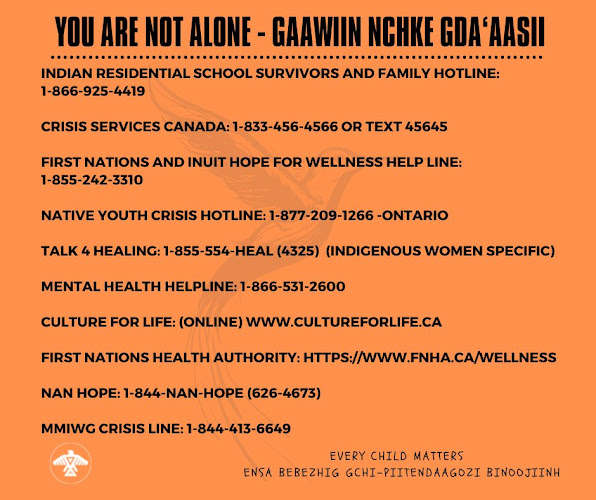
You are not alone
To Veronica Brown
Veronica, we adult adoptees are thinking of you today and every day. We will be here when you need us. Your journey in the adopted life has begun, nothing can revoke that now, the damage cannot be undone. Be courageous, you have what no adoptee before you has had; a strong group of adult adoptees who know your story, who are behind you and will always be so.
Diane Tells His Name
click photo
Lost Birds on Al Jazeera Fault Lines
click to read and listen about Trace, Diane, Julie and Suzie
NO MORE STOLEN SISTERS
click image
We conclude this series & continue the conversation by naming that adoption is genocide. This naming refers to the process of genocide that breaks kinship ties through adoption & other forms of family separation & policing 🧵#NAAM2022#AdoptionIsTraumaAND#AdopteeTwitter#FFY 1/6 pic.twitter.com/46v0mWISZ1
As the single largest unregulated industry in the United States, adoption is viewed as a benevolent action that results in the formation of “forever families.” The truth is that it is a very lucrative business with a known sales pitch. With profits last estimated at over $1.44 billion dollars a year, mothers who consider adoption for their babies need to be very aware that all of this promotion clouds the facts and only though independent research can they get an accurate account of what life might be like for both them and their child after signing the adoption paperwork.




/cloudfront-us-east-1.images.arcpublishing.com/gray/GBVH7HYVHNEV5DOQE7RMAHRD3A.jpg)


/cloudfront-us-east-1.images.arcpublishing.com/gray/JX42BYHZTZF2DKXU63ANACP7GY.bmp)








 Posts
Posts

