They Took Us Away

They Took Us Away
click image to see more and read more

it's free

click

How to Use this Blog

BOOZHOO! We've amassed tons of information and important history on this blog since 2010. If you have a keyword, use the search box below. Also check out the reference section above. If you have a question or need help searching, use the contact form at the bottom of the blog.


We want you to use BOOKSHOP to buy books! (the editor will earn a small amount of money or commission. (we thank you) (that is our disclaimer statement)

This is a blog. It is not a peer-reviewed journal, not a sponsored publication... WE DO NOT HAVE ADS or earn MONEY from this website. The ideas, news and thoughts posted are sourced… or written by the editor or contributors.

EMAIL ME: tracelara@pm.me (outlook email is gone) THANK YOU CHI MEGWETCH!

SEARCH

Showing posts with label CWLA. Show all posts

Wednesday, July 16, 2025

Child Welfare League of America CEO on the Future of Indian Child Welfare

Child Welfare League of America CEO on the Future of Indian Child Welfare

Linda Spears (Narragansett) is the president and CEO of the Child Welfare League of America. Provided photo.

One day, long before she became head of the Child Welfare League of America, Linda Spears sat in her office in tears, surrounded by archival records pulled from an old cardboard box.

The dry documents told a disturbing story. 

Between 1958 and 1967, the League partnered with the Bureau of Indian Affairs to enact the Indian Adoption Project, a federal initiative across 16 western states promoting the systematic separation of Indigenous families. Some children didn’t have families. Others were removed by social workers who went into tribal homes and arbitrarily deem families unfit — if they talked to the adults at all. Then tribal children were sent to live with white families, in an attempt to assimilate them through adoption.

Newspapers at the time colloquially called the effort the “Papoose Project.’’ A 1964 Miami Herald article stated, “Frequently the illegitimate children run wild and uncared for on reservations and help must be found among the white population.’’

It was an effort Spears’ organization once called “one of the League’s most satisfying activities.”

For Spears, that pivotal moment in her office offered a glimpse of her purpose within the League.  As the first Indigenous woman to lead the Washington D.C.-based advocacy nonprofit, she said that along with looking out for all the nation’s children, she feels it’s also her responsibility to help right the course of an organization that has historically caused harm to tribal children and families. 

KEEP READING👇 

Wednesday, May 14, 2014

Task Force Aims To Recruit More American Indian Foster Families

Anne Artley |May 12, 2014 | SOURCE


Indian Child Welfare Act task force (Kenneth Ramos)
Indian Child Welfare Act Task Force (Kenneth Ramos)

The way Navajo Indian Leland Morrill sees it; he was a victim of trafficking when he was four years old. In the 1970s, Morrill, 48, was living with his grandparents on the Arizona Navajo reservation. His mother had died in a car crash a few years earlier. Besides one picture, her relatives were all she left behind for her young son.
But, as the state government would soon decide, that wasn’t enough.
The Morrill grandparents lived in a hogan, a Navajo Indian dwelling made of dirt, branches and mud, with an open fire pit. Morrill’s grandfather was blind. One day, when his great-grandmother went out with the sheep, Morrill stepped into the fire.
At the hospital, doctors determined that he suffered from first, second and third degree burns, broken bones and malnutrition. Morrill said the last affliction was through no fault of his grandparents.
“There was no electricity and no running water on the reservation. I would say everyone in that area was malnourished,” Morrill said.
The Bureau of Indian Affairs (BIA), a federal organization designed to provide services to American Indian tribes, placed Morrill with a Caucasian Mormon couple as foster parents. The BIA paid them $65 a month to give him a home. Soon after, the Morrills adopted Leland and moved the family to Canada.
Now, tribes across the nation are trying to recruit Native American foster families to keep their children in the tribe. Morrill has fought on the front lines in this effort. He filed an amicus brief in the Supreme Court case Adoptive Couple vs. Baby Girl last year. The case interpreted the Indian Child Welfare Act and concerned a Cherokee girl whose mother adopted her to a non-native family without her father’s consent. The father, who ultimately lost, sought to obtain custody of his daughter again.
“I know the inequality of children not being able to speak for themselves,” Morrill said. “Who’s going to speak for them?” Fifteen years would pass before Morrill himself saw the Navajo reservation again.
During that time, Leland Morrill was one of about 2,000 Navajo children adopted annually by a Mormon family, according to the blog American Indian Adoptees.  This was due to the Indian Adoption Project, a plan launched in 1958 by the BIA and the nonprofit Child Welfare League of America. The project paid states to remove American Indian children and place them in non-native or religious families to assimilate them into ‘conventional’ society.  One goal was to give them opportunities the impoverished reservation could not provide for them, according to Reuters.
In the 1970s, Indian leaders went to the Senate and demanded an inquiry into the large numbers of their children disappearing. William Byler, the executive director of the Association of American Indian affairs, testified that under current conditions, tribal survival looked grim, according to American Indian Adoptees. In response, Congress passed the Indian Child Welfare Act (ICWA) in 1978. Under this law, states must do everything possible to keep Indian children with their families, or at least send them to Native American adoptive or foster families that the child’s tribe selects.
But many states, such as New Mexico, Alaska and California, lack licensed Indian foster families.
In Los Angeles, about 200 American Indian kids are in the foster system and the city has no licensed foster families, according to L.A. children’s court judge Amy Pellman. In California, 439 Native American children entered foster care in 2012. This is a large number, given that Native Americans make up slightly over one percent of the state’s population, according to the Child Welfare Dynamic Report System, a joint effort of the California Department of Social Services and the University of California at Berkeley. The disproportionate amount suggests that welfare agencies still may pull Indian children from their homes too quickly, which children’s social worker Roberta Javier confirmed.
“When I was growing up, I had a cousin in my adoptive family who stepped into a pile of burning trash,” Morrill said. This was similar to the incident Morrill suffered that resulted in his removal from his Navajo grandparents. “When I asked my adoptive family why he didn’t get taken, they had no response.”
Javier, who is Cherokee and Sac & Fox Indian, formed a task force with other Los Angeles Natives to recruit more foster and adoptive families. They are working on a public service announcement to air on local TV channels and FNX, a Native American channel. The key message, ‘lend a hand,’ evokes a cultural ideal. Morrill attends the task force meetings and has contributed ideas, but is not a member of any committee.
“It’s traditional in Native American culture when you see someone who needs help you step up. It’s part of being in a collective community,” Javier said.
Adopted Native children are often disconnected from their culture. Growing up, Morrill’s foster parents raised him in the Mormon Church. They did not teach him anything about his tribe or its customs.
“My dad once took me on a business trip to Pine Ridge reservation (South Dakota). I don’t think he really understood the importance of culture,” Morrill said. The reservation is home to the Oglala Sioux, a tribe that Morrill does not belong to.
Even if non-native adoptive parents do show appreciation for their child’s background, children can still feel alienated without others around like them. Jennifer Varenchik, 42, an adoptee and member of the Tohono-O’odham tribe, said her adoptive dad researched her tribe and hung their baskets in the house. But she said still felt like an outsider in her predominately white neighborhood.
“When I was in sixth grade, a black family moved down the street and I was so happy because I wouldn’t be the only one with dark skin,” she said.
But when Varenchik tried to learn more about her roots, the process was not as natural as she expected.
“I took some Native studies classes in college, but it felt really foreign to me,” Varenchik said. “I felt like it should have a deeper meaning, but it didn’t.”
After finishing college at St. Mary’s, in Moraga, Calif., Varenchik moved to Los Angeles, which she knew had a large urban Indian population (the second largest in the U.S., according to Indian Country Today Media Network). She started work at United Indian American Involvement, a nonprofit providing service and support to American Indians in California, and began attending powwows. She even reconnected with her biological siblings on the reservation in Arizona.
But not every adoptee’s story ends as happily. Javier’s own painful experiences compelled her to campaign for more Native foster families.
“I’ve been in 17 foster homes from the ages 6-16. I was separated from one of my (biological) sisters who then got lost in the system. A social worker took her to a group home and my sister ran away. Four days later, her social worker killed herself so there was a disconnect (in information),” Javier said. “It took me 25 years to find my sister.”
The task force efforts began two years ago, but members have yet to find a single foster family. They are collaborating with Los Angeles County, but Javier cites a lack of cultural awareness among officials as part of the problem. She gave the example of the county sending a non-native woman to an American Indian church sing to speak on the shortage of foster parents.
“This is like sending an African-American to recruit for a Chinese home,” she said.
But more Native adoptees are coming together to talk about the issue. Morrill has started a blog and a Facebook page where he shares his story and circulates others’.  He said his efforts are “normalizing the craziness of what it’s like to be an adoptee,” and helping disconnected Natives repatriate to their tribes. Though Morrill and Varenchik cannot control the past, they are combining their influence and education to improve the future for other American Indians.
“I’m the opposite of the people on the reservation, but I’m fighting for their rights and their children’s rights,” Morrill said.

Reach Staff Reporter Anne Artley here

Leland, Diane Tells His Name and I will be speaking at the Tribal Star ICWA conference at the PALA RESORT in CA on May 22 about what needs to happen for our Native children today....Trace


Saturday, February 12, 2011

About The Indian Adoption Projects and Programs

I realize many people think that the Indian Adoption Project was small, and involved a few hundred children. In fact, the BIA's Indian Adoption Project studied 395 cases. What did happen was in states like New York, they did their own Indian adoption programs. In fact, 16 states removed 85% of Native children for closed adoption, which is a staggering amount of children. No one knows exactly how many!

The following is an excerpt from Working Together to Strengthen Supports for Indian Children and Families: A National Perspective, Keynote Speech by Shay Bilchik at the NICWA Conference, Anchorage, Alaska on April 24, 2001

For a long time in the early history of child welfare, many educated middle-class Americans sincerely believed that the world would run smoothly and sweetly if everybody would just make the effort to think and behave like they did. In the name of improvement, Irish and Italian children were scooped up from city tenements that looked crowded and dirty, away from “unfit” single parents and the smells of unfamiliar cooking, taken to the countryside in orphan trains, and parceled out to rural families. Most of them never saw their parents or siblings again.

These were terrible acts, no matter how noble or “professional” the intentions of their perpetrators. Next to the death penalty, the most absolute thing a government can do to an individual is to take a child away. But these were acts against individual immigrant families, and no European national group was singled out for these removals to the point of being imperiled.

One ethnic group, however - American Indians and Alaskan Natives - a people of many cultures and governments, and the original citizens of this land - was singled out for treatment that ranged over the decades from outright massacre to arrogant and paternalistic “improvement.” CWLA played a role in that attempt. We must face this truth.

No matter how well intentioned and how squarely in the mainstream this was at the time, it was wrong; it was hurtful; and it reflected a kind of bias that surfaces feelings of shame, as we look back with the 20/20 vision of hindsight.

I am not here today to deny or minimize that role, but to put it on the table and to acknowledge it as truth. And then, in time, and to the extent that each of us is able, to move forward in a new relationship in which your governments are honored and respected, our actions are based upon your needs and values, and we show proper deference to you in everything that concerns Native children and families.

These are the facts. Between 1958 and 1967, CWLA cooperated with the Bureau of Indian Affairs, under a federal contract, to facilitate an experiment in which 395 Indian children were removed from their tribes and cultures for adoption by non-Indian families. This experiment began primarily in the New England states. CWLA channeled federal funds to its oldest and most established private agencies first, to arrange the adoptions, though public child welfare agencies were also involved toward the end of this period. Exactly 395 adoptions of Indian children were done and studied during this 10-year period, with the numbers peaking in 1967. ARENA, the Adoption Resource Exchange of North America, began in early 1968 as the successor to the BIA/CWLA Indian Adoption Project. Counting the period before 1958 and some years after it, CWLA was partly responsible for approximately 650 children being taken from their tribes and placed in non-Indian homes. For some of you, this story is a part of your personal history.

Through this project, BIA and CWLA actively encouraged states to continue and to expand the practice of “rescuing” Native children from their own culture, from their very families. Because of this legitimizing effect, the indirect results of this initiative cannot be measured by the numbers I have cited. Paternalism under the guise of child welfare is still alive in many locations today, as you well know.

Happy Visitors!

WRITTEN BY HUMANS!

WRITTEN BY HUMANS!

Blog Archive

Featured Post

Your History Class Was a F*cking Lie | #NOMOAR

  Your History Class Was a F*cking Lie by Sean Sherman (Or: How the American Educational System Has Always Been a Racist Propaganda Program...


Native Circles

Native Circles
click logo for podcasts!

Most READ Posts

Bookshop

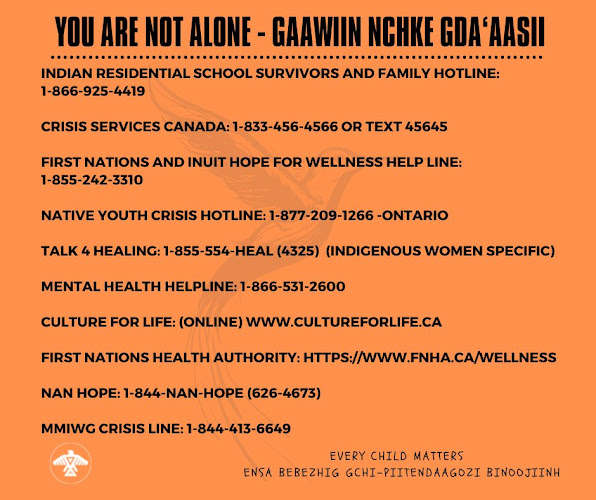
You are not alone

You are not alone

To Veronica Brown

Veronica, we adult adoptees are thinking of you today and every day. We will be here when you need us. Your journey in the adopted life has begun, nothing can revoke that now, the damage cannot be undone. Be courageous, you have what no adoptee before you has had; a strong group of adult adoptees who know your story, who are behind you and will always be so.

Diane Tells His Name


click photo

Lost Birds on Al Jazeera Fault Lines

Lost Birds on Al Jazeera Fault Lines
click to read and listen about Trace, Diane, Julie and Suzie

NO MORE STOLEN SISTERS

NO MORE STOLEN SISTERS
click image

ADOPTION TRUTH

As the single largest unregulated industry in the United States, adoption is viewed as a benevolent action that results in the formation of “forever families.”
The truth is that it is a very lucrative business with a known sales pitch. With profits last estimated at over $1.44 billion dollars a year, mothers who consider adoption for their babies need to be very aware that all of this promotion clouds the facts and only though independent research can they get an accurate account of what life might be like for both them and their child after signing the adoption paperwork.

Original Birth Certificate Map in the USA

Google Followers