


 |
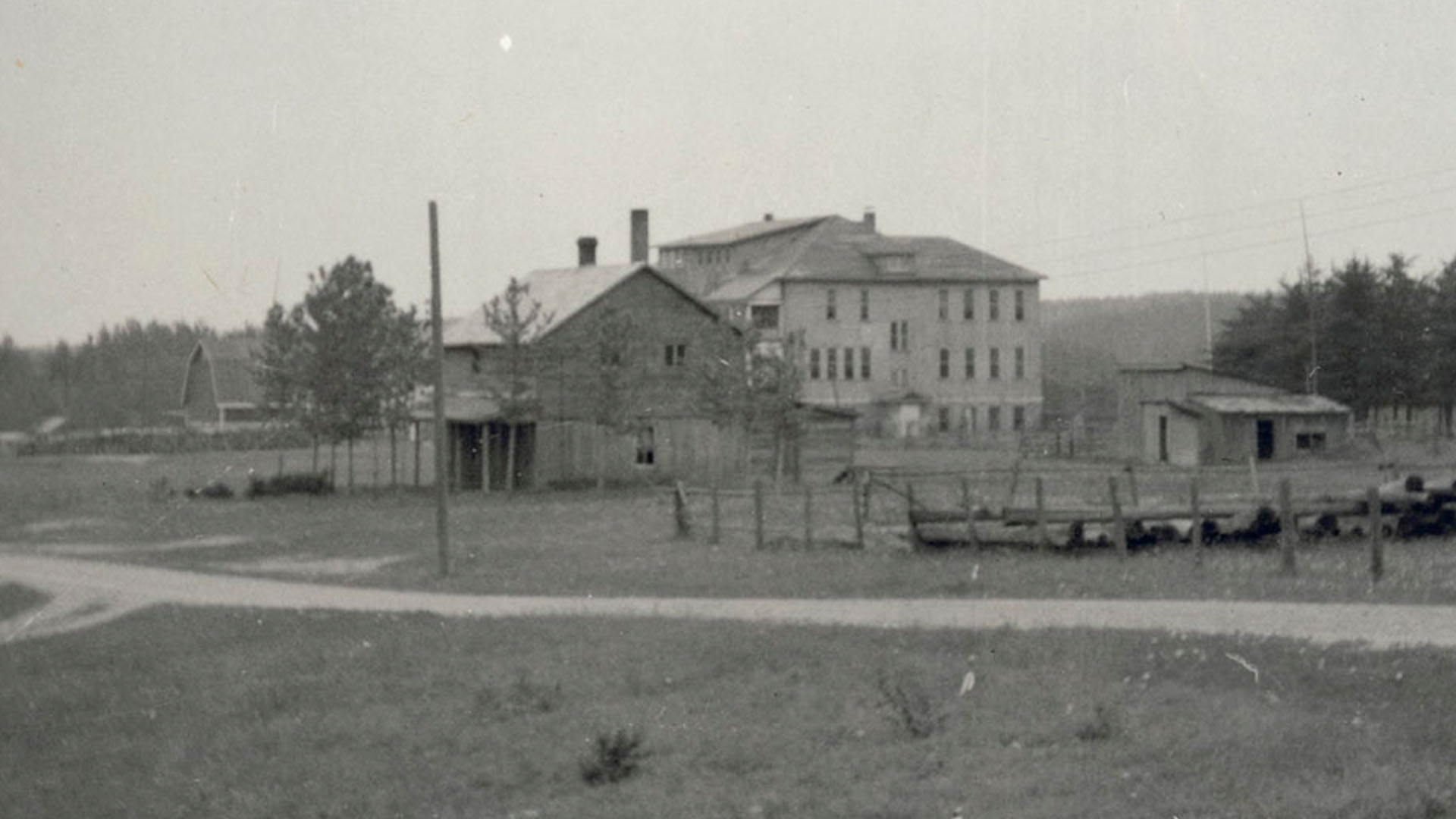
Unearthing the unmarked children’s graves on or near former Canadian Indigenous residential schools could well be the tipping point. Since the June 2021 revelations at Kamloops Indian Residential School, the broader public has finally been engaged and it has injected a sense of urgency into the movement to integrate that shameful legacy into social studies K-12 curricula from province-to-province across Canada.
Newly awakened citizens are now realizing that their education never included curriculum or discussion about residential schools and their horrible legacy. That was definitely true 25 years ago, but less common today because of gradual, incremental changes in provincial social studies curricula. The massive Truth and Reconciliation Commission of Canada (TRC) report in 2015 made teaching this history one of its highest-priority calls to action – a move that inspired a wave of First Nations, Métis and Inuit (FNMI) curriculum initiatives. Gauging the actual reach and effect of such projects is worthy of much closer scrutiny.
Mandating curriculum change does not necessarily lead to effective, consistent or discernable modifications in teaching practice. Implementation challenges can thwart policy guidelines and directives (as Michael Fullan’s book illustrates) and it’s critical to assess the gaps between the official curricula, the recently commissioned teaching resources, compulsory course offerings and the actual received curricula. The Ontario experience in integrating First Nation, Métis and Inuit (FNMI) perspectives and content into the curriculum is a case in point.
Since the TRC report, provincial and territorial governments have been entrusted with a very specific mandate – to make the history of residential schools, treaties, and historical and contemporary contributions of First Nations, Métis and Inuit a mandatory educational requirement for all kindergarten to Grade 12 students. While it emanated from the TRC, the whole idea of teaching independent, elective FNMI-focused courses and cross-curricular perspectives was hardly new to most people familiar with social studies curricula.
The Ontario Ministry of Education has invested considerable time, energy and resources into the creation and implementation of a native studies high school curriculum from the early 1970s onward. Its initial iteration, the 1975 People of Native Ancestry (PONA) curriculum guide and documents, was largely part of the Indigenous cultural revival that swept Canada after the first wave of closures of the residential schools. That curriculum was also created after the passage of the Charter of Rights and Freedoms, in collaboration with Indigenous advisers and educators.
The fundamental shortcoming of Ontario’s PONA initiative was that it was entirely focused on creating and implementing a self-standing set of optional social studies courses. It was never a required component of the curricula and it was never mandatory and never integrated with other parts of Canadian history. By the fall of 1999, the provincial curricula had expanded to a suite of 10 individual native studies courses spanning grades 9 to 12. While the initial native studies courses were innovative at the time, they were offered in only 39 Ontario high schools and in significant numbers of actual courses in only four of those schools between 1999 and 2006. Furthermore, proposals to offer several of the courses, in part, in the Indigenous language were essentially shot down by federal authorities in Indian and Northern Affairs Canada (INAC), which was more committed to advancing English literacy and raising graduation rates.
Faced with growing public demand in Ontario for improved Indigenous education, the Ministry of Education responded in 2006 with a new, broader strategy known as the Ontario First Nation, Métis and Inuit (FNMI) Policy Framework intended to expand native studies content in schools across the province. It proposed the implementation of “quality Native Studies education,” to Indigenous and non-Indigenous students, with the aspirational goal of raising the awareness of all Ontarians of Indigenous perspectives, histories and cultures.
Indigenous residential schools began to pop up in Ontario classroom resources. From 2000 onward, Ontario’s core history textbooks such as The Canadian Challenge started to include short references to the Indigenous residential schools, and that expanded following then-prime minister Stephen Harper’s 2008 formal apology for the abuses that students suffered in Canada’s residential schools.
One of the most widely used textbooks, Creating Canada: A History of Canada – 1914 to the Present, identified the abuses, referenced the 2006 financial compensation package, featured Harper’s apology and gave expression to rising demands for further initiatives addressing unresolved problems affecting Canada’s Indigenous peoples.








 Posts
Posts

