They Took Us Away

They Took Us Away
click image to see more and read more

it's free

click

How to Use this Blog

BOOZHOO! We've amassed tons of information and important history on this blog since 2010. If you have a keyword, use the search box below. Also check out the reference section above. If you have a question or need help searching, use the contact form at the bottom of the blog.


We want you to use BOOKSHOP to buy books! (the editor will earn a small amount of money or commission. (we thank you) (that is our disclaimer statement)

This is a blog. It is not a peer-reviewed journal, not a sponsored publication... WE DO NOT HAVE ADS or earn MONEY from this website. The ideas, news and thoughts posted are sourced… or written by the editor or contributors.

EMAIL ME: tracelara@pm.me (outlook email is gone) THANK YOU CHI MEGWETCH!

SEARCH

Showing posts with label Turtle Talk. Show all posts

Monday, November 13, 2023

Louis LaRose Walks On

Matthew L.M. Fletcher |Nov 13| Turtle Talk Blog

Louis LaRose, former chair of the Winnebago Tribe of Nebraska, has walked on. News profile here.

As chairman, Mr. LaRose testified on behalf of the bill that would become the Indian Child Welfare Act. Justice Brennan’s majority opinion in Mississippi Band of Choctaw Indians v. Holyfield quoted extensively from Louis’s testimony. Footnote 25 reads:

In large part, the concerns that emerged during the congressional hearings on the ICWA were based on studies showing recurring developmental problems encountered during adolescence by Indian children raised in a white environment. See n. 1, supra.See also 1977 Hearings at 114 (statement of American Academy of Child Psychiatry); S.Rep. No. 95-597, p. 43 (1977) (hereinafter Senate Report). More generally, placements in non-Indian homes were seen as "depriving the child of his or her tribal and cultural heritage." Id. at 45; see also 124 Cong.Rec. 38102-38103 (1978) (remarks of Rep. Lagomarsino). The Senate Report on the ICWA incorporates the testimony in this sense of Louis La Rose, chairman of the Winnebago Tribe, before the American Indian Policy Review Commission:"I think the cruelest trick that the white man has ever done to Indian children is to take them into adoption courts, erase all of their records and send them off to some nebulous family that has a value system that is A-1 in the State of Nebraska and that child reaches 16 or 17, he is a little brown child residing in a white community, and he goes back to the reservation and he has absolutely no idea who his relatives are, and they effectively make him a non-person, and I think . . . they destroy him."Senate Report at 43. Thus, the conclusion seems justified that, as one state court has put it, "[t]he Act is based on the fundamental assumption that it is in the Indian child's best interest that its relationship to the tribe be protected." In re Appeal in Pima County Juvenile Action No. S-903, 130 Ariz., at 204, 635 P.2d at 189.

Thanks to Lucas LaRose.

Monday, November 7, 2022

Zoom Discussion on Brackeen ICWA CASE November 9th - free to register


Brackeen Post-Oral Argument Discussion – via Zoom

Please join the Indigenous Law and Policy Center this Wednesday, November 9, at 6:00 p.m. ET for a post-oral argument discussion of Brackeen over Zoom. Wenona Singel will be moderating this conversation with speakers Matthew L.M. Fletcher, Melody McCoy and April Youpee-Roll.

The link to register is here. Please see the below flyer for more information.

Videos are not displayed in this email and must be viewed on the website.

Tuesday, October 4, 2022

Digging up Human Remains in Michigan


The End of a Michigan Law Allowing Scientists to Dig Up “Aboriginal Inhabitants”

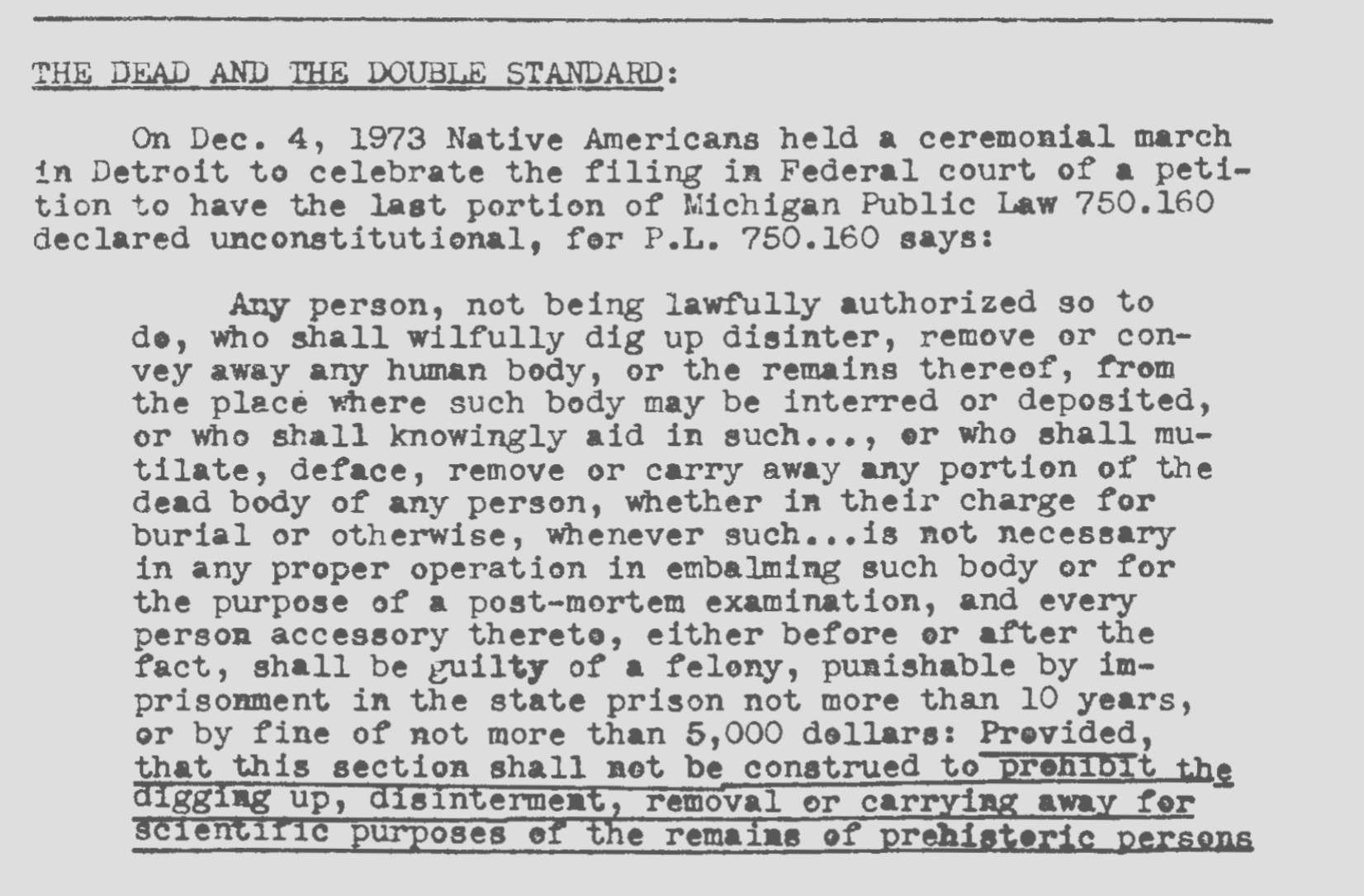
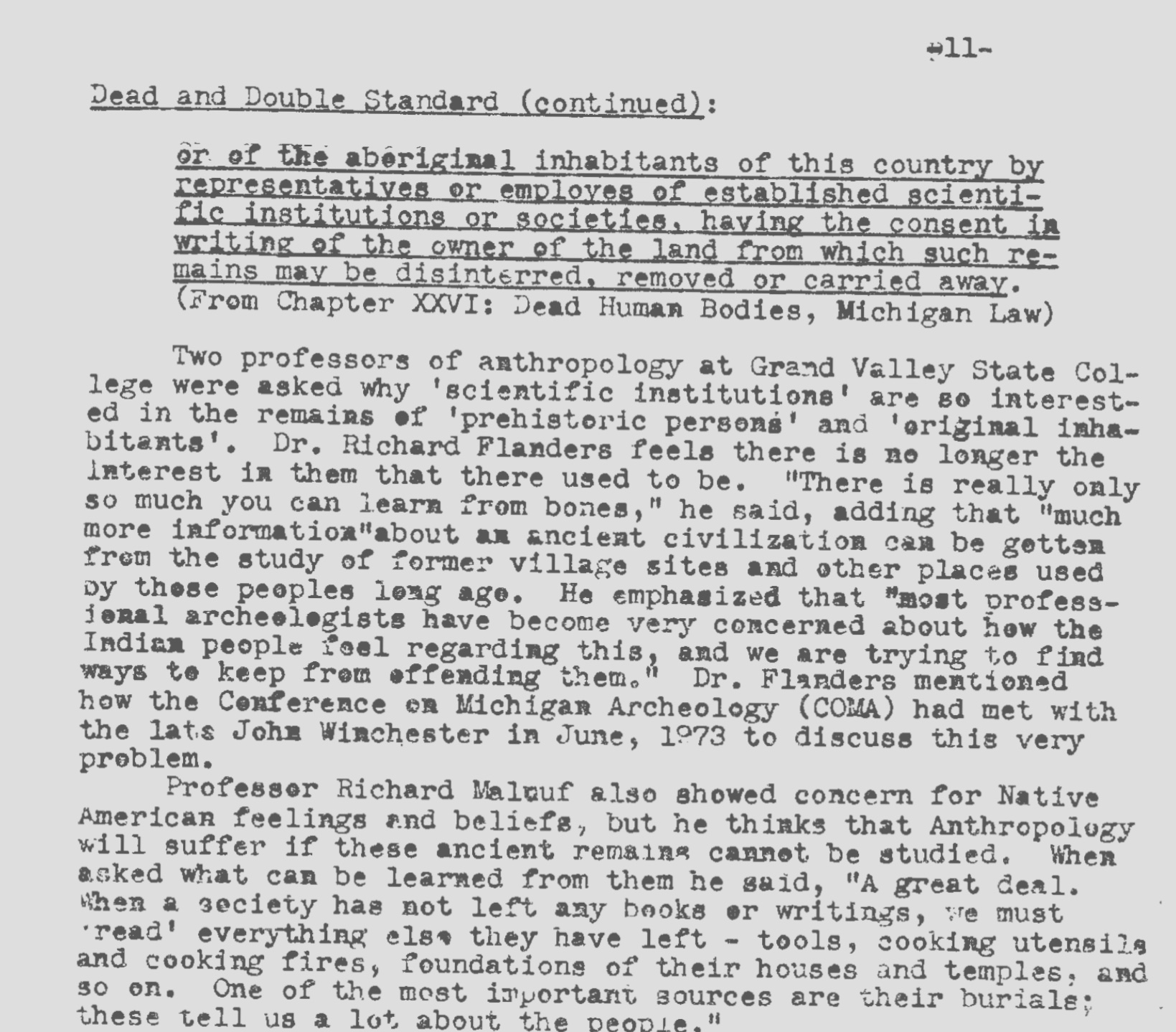
Came across this short note in Indian Talk, a 1973 newsletter by and about Michigan Indians and a precursor to the original Turtle Talk, referencing a federal lawsuit filed to have Michigan public law 750.160 declared unconstitutional. That law prohibited Dr. Frankenstein and others from digging up graves, but granted an exception to Indiana Jones in case he found some Indian bones:

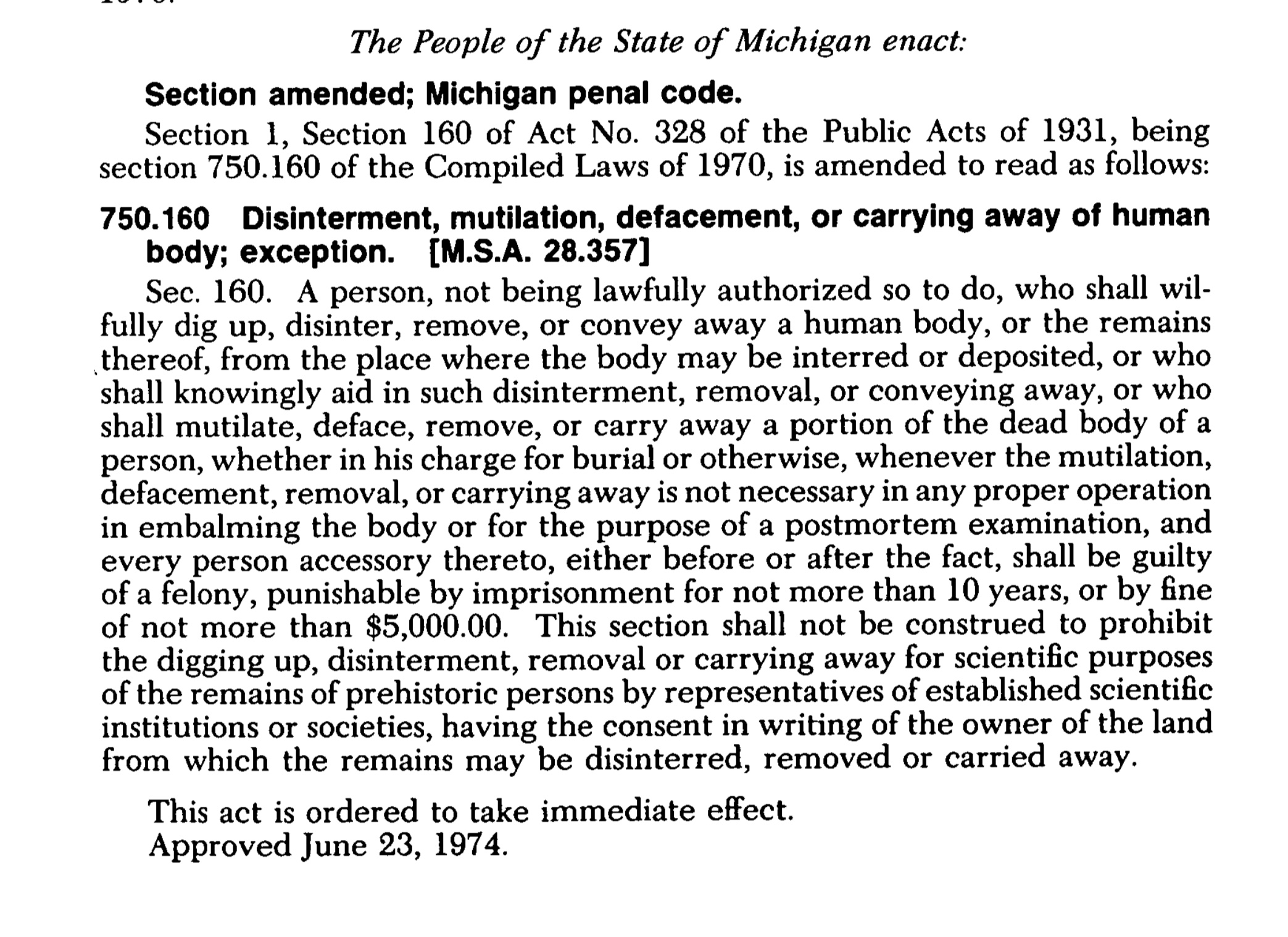
Shay Elbaum at the Michigan law library found a 1974 law repealing the part about “aboriginal inhabitants.”

Can’t find a record of the lawsuit, however. It probably went away when the state legislature repealed the exception.

Friday, August 26, 2022

The Heart of federal Indian policy #ICWA


Neoshia Roemer on ICWA as Reproductive Justice

Neoshia Roemer has posted “The Indian Child Welfare Act as Reproductive Justice,” forthcoming in the Boston University Law Review, on SSRN. Here is the abstract:

After decades of abuse through family regulation, Congress enacted the Indian Child Welfare Act of 1978 (“ICWA”) to prevent the breakup of Indian families and promote tribal sovereignty.  While ICWA seems like an outlier that addresses one category of children, it is not an outlier. Rather, I argue that ICWA is a tool of reproductive justice. By formulating a legal rights framework for reproductive justice in American jurisprudence, I discuss how the reproductive justice movement is grounded in U.S. law beyond the right to terminate a pregnancy that the Supreme Court abrogated in Dobbs v. Jackson Women’s Health Organization. By looking at the history of reproductive rights in American Indian communities, I discuss how family regulation challenges reproductive rights and tribal sovereignty considering Dobbs and Oklahoma v. Castro-Huerta. Indian child removals exist in the same history, context, and policy that disrupted the reproductive rights of American Indian families and tribal sovereignty in other areas. Before concluding that ICWA is still good law and good policy to disrupt family regulation and protect the reproductive rights of American Indian peoples, I consider where challenges to ICWA in Haaland v. Brackeen fit into this paradigm and the ongoing need for the protection of tribal sovereignty and reproductive rights for American Indian peoples.  For nearly 400 years, the disruption of reproductive rights, including family regulation, has been at the heart of federal Indian policy. The current frame of family regulation as “saving” children means that it is often divorced from the notion of reproductive rights.  As the history behind and contemporary challenges to ICWA demonstrate, it should not, and cannot, be separated from the other reproductive justice issues facing American Indian communities. To strengthen legal protections for American Indian people that disrupt these government interventions, like ICWA, is to realize reproductive rights more fully in the United States.

Highly recommended!!!

Saturday, April 30, 2022

Newspaper Editorials Perpetuate Misinformation on ICWA


Two Worlds is for sale at Walmart.com

Sarah Deer, Elise Higgins & Thomas White on Racist Editorializing about ICWA

Sarah Deer, Elise Higgins, and Thomas White have published “Editorializing ICWA: 40 Years of Colonial Commentary” in UCLA’s Indigenous Peoples’ Journal of Law, Culture & Resistance.

An excerpt:

Despite studies concluding ICWA has been a successful law to curb the crisis of child removal in Indian country when implemented correctly, a significant number of attorneys, think tanks, and politicians argue that ICWA actually harms Native children and should be repealed. Others argue that ICWA has served its purpose and is no longer necessary. This article considers how newspaper editorials perpetuate misinformation about ICWA, its history and its purpose. Moreover, we explore how anti-ICWA authors employ “words of colonialism”—in particular, the use of derogatory words and phrases to portray Native people as bad parents and Tribal Nations as dysfunctional. Providing inaccurate and racist characterizations of ICWA is one of the primary tactics used by editorials to delegitimize ICWA. Emotionally triggering and wholly inaccurate language is often employed as a sensationalist method to grab the reader’s attention by presenting the law in terms of clear-cut morality.

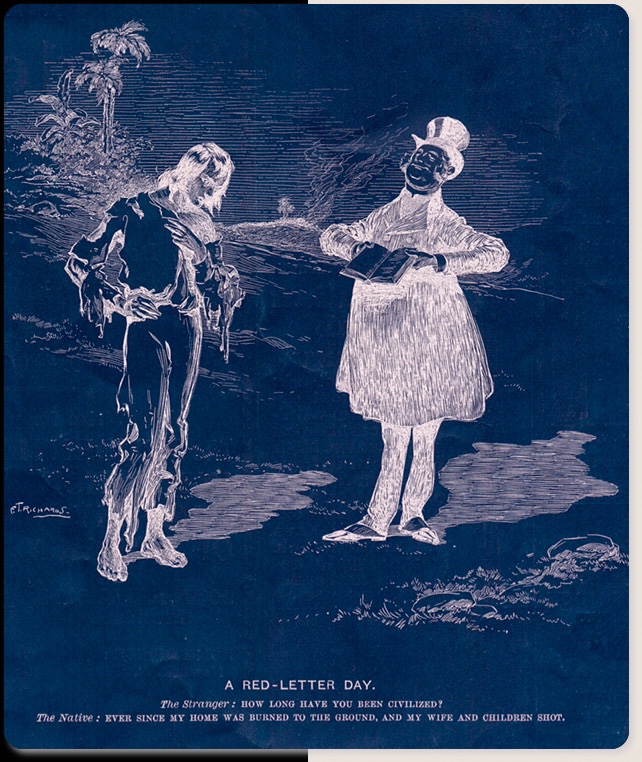
Frederick Thompson Richards, Life Magazine, 1900  (How long have you been civilized?)

Wednesday, February 16, 2022

Indian Children and Their Guardians ad Litem (GALs)


BABY Veronica :  Adoptive Couple v. Baby Girl

From the Turtle Talk blog:


North Carolina Supreme Court on Reason to Know [ICWA]

by Kate Fort

 (click headline)


Fletcher & Fort: “Indian Children and Their Guardians ad Litem”

Kate Fort and I published a short paper for a Boston University Law Review mini-symposium on Adoptive Couple v. Baby Girl: “Indian Children and Their Guardians ad Litem.”

An excerpt:

One of the primary goals of the Indian Child Welfare Act (ICWA) is to limit the influence or bias of state workers in decisions placing American Indian children out of their home and community.1 While this focus usually concerns state social workers, the officials who most often seek removal of a child, or the courts, the body that issues the orders and opinions, guardians ad litem (GALs) receive less attention.2 Despite this lack of attention, GALs exert a similar level of influence as state social workers. In Adoptive Couple v. Baby Girl,3 the role of the GAL was unusual but critical – the GAL, while officially appointed by the court, was handpicked by the adoptive parents.4 The role of the GAL remains understudied in the ICWA literature, though GALs continue to exert enormous influence in the courts. Unfortunately, many GALs throughout the nation subvert the national policy embodied by the ICWA by advocating against the implementation of the statute in case after case.5

There are three other papers in the symposium:

Perspective I by Professor Barbara Ann Atwood is available here

Perspective II by Professor James G. Dwyer is available here, and

Perspective III by Professors Naomi Cahn and June Carbone is available here.

Friday, January 7, 2022

Canada does it first, is America next?


I don't know about you but I saw this coming - that the Truth and Reconciliation (TRC) in Canada would end with money paid to victims. Canada is first. Will America be next? Or Australia?... Blog Editor TLH

In Largest Settlement in its History, Canada Comes to Agreement in Principle in Child Welfare Lawsuit

NY Times Coverage here

The Canadian government announced Tuesday that it had reached what it called the largest settlement in Canada’s history, paying $31.5 billion to fix the nation’s discriminatory child welfare system and compensate the Indigenous people harmed by it.

Agreement in principle/press release here

For those who were following this case, it involves the First Nations Child and Family Caring Society, which is led by Cindy Blackstock. The settlement attempts to reform Child and Family Services and address Jordan’s Principle. This is a major settlement and significant milestone for Native children and families in Canada.

Monday, October 25, 2021

Lawyering ICWA | White Mother to a Dark Race

Fletcher and Singel have posted "Lawyering the Indian Child Welfare Act," forthcoming in the Michigan Law Review's upcoming symposium on civil rights lawyering. Here is the abstract:

This Essay describes how the statutory structure of child welfare laws enables lawyers and courts to exploit deep-seated stereotypes about American Indian people rooted in systemic racism to undermine the enforcement of the rights of Indian families and tribes. Even where Indian custodians and tribes are able to protect their rights in court, their adversaries use those same advantages on appeal to attack the Constitutional validity of the law. The primary goal of this Essay is to help expose those structural issues and the ethically troublesome practices of adoption attorneys as the most important ICWA case in history, Brackeen v. Haaland, reaches the Supreme Court.

MUST READ book:

White Mother to a Dark Race

Settler Colonialism, Maternalism, 

and the Removal of Indigenous Children 

in the American West and Australia, 1880-1940

AUTHOR Margaret D. Jacobs

592 pages
24 photographs, 2 maps, index

Paperback

March 2011

978-0-8032-3516-8

buy


In The News

 Here are some links if you are interested in the latest news:


Indian Law Issues in the News (10/25/2021)

by Wenona T. Singel


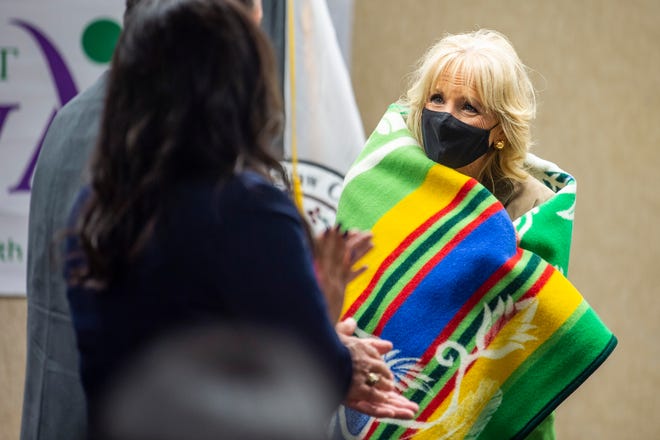
Detroit News: First lady Jill Biden visits Saginaw Chippewa center to discuss youth mental health

Arizona Capitol Times: Ducey gives tribe $30M for water rights

NYTs: Can This Tribe of ‘Salmon People’ Pull Off One More Win?

WaPo (April article): Canada’s Supreme Court says some Native Americans who are not Canadian citizens can hunt in British Columbia

Grist: EPA finally has an action plan to improve water infrastructure and sanitation for US tribes

AP: Oklahoma court adds Quapaw Nation to those covered by McGirt ruling

Curbed: A Lenape Tribe Finally Wrests Its Sacred Site Back from Developers

AZ Central: Indigenous peoples seek greater voice and more influence at COP26 climate conference

NYTs: How Is ‘Dune’ So Prescient About Climate Change? Thank This Native American Tribe.

KTAR: Apaches ask appeals court to oppose transfer of Arizona land

The Hill: Human rights panel will hear case claiming US regulators violated Navajo tribe's rights: report

Tulsa World: Tulsa, Owasso join state in seeking to overturn McGirt ruling

Great Lakes Now: Enbridge temporarily stops Michigan pipeline due to protests

NYTs: Film Club: ‘A Conversation With Native Americans on Race’

Salt Lake Tribune: Survivors see a link between Indigenous boarding schools’ harsh discipline and later domestic violence

Keloland: South Dakota ACLU says Dept. of Education may have violated federal and constitutional law by removing elements of Native American culture and history from draft of state social studies standards


Thursday, October 21, 2021

Systemic Racism and the Dispossession of Indigenous Wealth in the United States

 I always say... "The system isn't broken, it was built this way." Blog Editor TLH

Fletcher on Systemic Racism and the Dispossession of Indigenous Wealth in the United States

I developed a short paper for the Federal Reserve Bank’s series on Racism and the Economy, “Systemic Racism and the Dispossession of Indigenous Wealth in the United States,” posted here.

Here is a video of today’s program. April Youpee-Roll was part of the program, too, and provided important commentary on heirship and federal Indian policy.


Saturday, October 9, 2021

In the News: Bipartisan Coalition in Defense of Indian Child Welfare Act Protections Before the U.S. Supreme Court

 Indian Law Issues (10/8/2021)

NPR: The Indian Child Welfare Act Faces Its Biggest Challenge Yet (featuring former ILPC staff attorney and current University of Idaho College of Law Asst. Prof. Neoshia Roemer!)

NYTs: After Denying Care to Black Natives, Indian Health Service Reverses Policy

White House: A Proclamation on Indigenous Peoples’ Day 2021

Reuters: ‘Solar warriors’ train for Native America energy fight

California Attorney General: Attorney General Bonta Leads Bipartisan Coalition of 26 Attorneys General in Defense of Indian Child Welfare Act Protections Before the U.S. Supreme Court

Salt Lake Tribune: Lawmakers prep bill to protect Indigenous children in Utah’s child welfare system


**

Attorney General Bonta Leads Bipartisan Coalition in Defense of Indian Child Welfare Act Protections Before the U.S. Supreme Court

Friday, October 8, 2021
Contact: (916) 210-6000, agpressoffice@doj.ca.gov

OAKLAND – California Attorney General Rob Bonta today led a bipartisan coalition of 26 attorneys general in an amicus brief in support of the United States and four federally recognized tribes in their efforts to uphold critical protections guaranteed under the Indian Child Welfare Act (ICWA). Filed before the U.S. Supreme Court in Haaland v. Brackeen and Cherokee Nation v. Brackeen, the amicus brief highlights the states’ compelling interest in standing up for the well-being of all children, including Native American children, in state child-custody proceedings.

“The truth is that there has been a long, ugly history in the United States of policies that had the effect of separating Native American children from their culture, families, and communities,” said Attorney General Bonta. “ICWA is a critical tool for protecting Native American children, their parents, and tribes — and it is under threat. If we are to truly honor the history and legacy of our tribal partners, we must act. Alongside a bipartisan coalition of attorneys general, that’s exactly what we’re doing. We’re urging the U.S. Supreme Court to hear this case and correct the errors the court of appeals made in its decision.” 

Congress enacted ICWA in 1978 in response to a serious and pervasive problem: State and private parties were initiating state child-custody proceedings that removed Native American children from the custody of their parents — often without good cause — and placed them in the custody of non-tribal adoptive and foster homes. That practice harmed children and posed an existential threat to the continuity and vitality of tribal communities. To address this, Congress established minimum federal standards governing the removal of Native American children from their families. ICWA’s provisions safeguard the rights of Native American children, parents, and tribes in state child-custody proceedings, and seek to promote the placement of Native American children with members of their extended families or with other tribal homes. In the four decades since Congress enacted ICWA, the statute has become the foundation of state-tribal relations in the realm of child custody and family services. Collectively, the coalition states are home to approximately 86% of federally recognized tribes in the United States.

In the amicus brief, the coalition asserts that: 

  • ICWA is a critical tool for protecting Native American families and tribes, and fostering state-tribal collaboration;
  • The court of appeals incorrectly concluded that several of ICWA’s provisions violate the anti-commandeering doctrine; and
  • ICWA’s preferences for the placement of Native American children with other Native American families and foster homes do not violate equal protection. 

In filing the amicus brief, Attorney General Bonta is joined by the attorneys general of Alaska, Arizona, Colorado, Connecticut, Idaho, Illinois, Iowa, Maine, Massachusetts, Michigan, Minnesota, Nevada, New Jersey, New Mexico, New York, North Carolina, Oregon, Pennsylvania, Rhode Island, Utah, Virginia, Vermont, Washington, Wisconsin, and the District of Columbia.

A copy of the amicus brief is available here.


Friday, October 1, 2021

Indian Tribes Are Governing Well. It’s the States That Are Failing


(excerpt) 

Nowhere is the contrast between good tribal governance and failed state government more glaring than in the federal lawsuit over the constitutionality of the Indian Child Welfare Act. In Texas, the state child foster care system is a human rights calamity, where the physical, sexual, and emotional abuse of children is the norm. The state’s response was not to take responsibility, but to challenge the constitutionality of the ICWA. Texas now faces $75,000 daily in contempt of court sanctions as a result of its continued failure to reform the child welfare system.

The Texas case is not really about child welfare; the state’s own child welfare agency “fully supports” the ICWA, as it stated in its 2015 comments submitted in response to the proposed federal ICWA regulations.  

The suit is pure political theater. 

Accepting Texas’s challenge, the Fifth Circuit Court of Appeals, which covers Texas, Louisiana, and Mississippi, recently struck down several parts of the ICWA as violative of states’ rights.

A national coalition of child welfare agencies told the Supreme Court in 2013 that the ICWA is considered the “gold standard for child welfare policies and practices that should be afforded to all children.” Before the act, parents (Indian and non-Indian) whose children had been removed by the state after allegations of abuse and neglect rarely had basic due process protections. States have 48 or 72 hours after removing a child to hold an emergency removal hearing that justifies their actions, but they were not providing notice of the hearing to affected parents. If families did show up, courts would not allow them to testify, present evidence, or cross-examine witnesses. The ICWA required states to provide minimum procedural protections to Indian families.

The act also requires states to take “active efforts” to reunify Indian families. Most states rush to terminate parental rights where they can find an adoptive family. Though it only applied to Indian families, the ICWA has changed the legal culture of child welfare in this country. Nine states, including several red states, have adopted the ICWA as state law. With important exceptions, such as the right to counsel for indigent parents, states improved their child welfare systems to meet the act’s requirements for all.

After four-plus decades of the ICWA, Texas suddenly has decided that the act is unconstitutional. Texas doesn’t want to comply with the minimum due process requirements for Indian parents and doesn’t want to make active efforts to reunify families. For Texas, children are a costly burden that it very much would like to turn over to the private sector. Texas doesn’t care about good governance. Texas cares about the Tenth Amendment.

Indian tribes, on the other hand, are true laboratories of best child welfare practices. Proportionally, Indian tribes dedicate far more government services money to child welfare than any state. Tribes develop healing to wellness courts. Tribes fight the termination of parental rights whenever they can. Tribes go the extra thousand miles to try to reunify their families who struggle.

The ICWA case soon will be in front of the Supreme Court. The Court will, of course, focus on the legal questions, but the backdrop to that case will be whether sovereignty or good governance prevails.

READ HERE


Tuesday, August 17, 2021

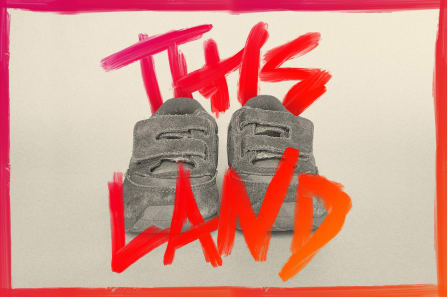
THIS LAND: Season 2 Podcast Debuts August 23


 LISTEN:  Here

This season is all about the Indian Child Welfare Act and the federal attacks on it.

ALM – as referred to in court documents – is a Navajo and Cherokee toddler. When he was a baby, a white couple from the suburbs of Dallas wanted to adopt him, but a federal law said they couldn’t. So they sued. Today, the lawsuit doesn’t just impact the future of one child, or even the future of one law. It threatens the entire legal structure defending Native American rights. 

In season 2 of This Land, host Rebecca Nagle investigates how the far right is using Native children to quietly dismantle American Indian tribes. 

Tune in beginning August 23rd.


Some White supremacists don't know we can REALLY SEE what they are doing

Monday, June 14, 2021

We Must Learn about this History

 (continuing coverage)


Deb Haaland, the U.S. interior secretary, is the first Native American to serve as a Cabinet secretary.

As I read stories about an unmarked grave in Canada where the remains of 215 Indigenous children were found last month, I was sick to my stomach. But the deaths of Indigenous children at the hands of government were not limited to that side of the border. Many Americans may be alarmed to learn that the United States also has a history of taking Native children from their families in an effort to eradicate our culture and erase us as a people. It is a history that we must learn from if our country is to heal from this tragic era.

Here.


WaPo: “Deb Haaland: My grandparents were stolen from their families as children. We must learn about this history.”

by Matthew L.M. Fletcher

Saturday, January 9, 2021

Adoptive Couple v. Baby Girl #BabyVeronica


Baby V (Cherokee)

Fletcher and Fort’s Rewritten Opinion in Adoptive Couple v. Baby Girl

Fletcher and Fort posted “Intimate Choice and Autonomy: Adoptive Couple v. Baby Girl,” forthcoming in CRITICAL RACE JUDGMENTS (Cambridge Univ. Press, eds. Bennett Capers, Devon Carbado, Robin A. Lenhart, and Angela Onwuachi-Willig) (forthcoming 2021).

As if there was any doubt, we have reached the opposite outcome as the Supreme Court did back in 2013. A few excerpts:

This case is about a little girl (Baby Girl) who is a citizen of the Cherokee Nation, like her father, grandparents, and a multitude of generations before her. American Indian tribal citizenship with a federally recognized tribe is a unique concept in American law. E.g., Santa Clara Pueblo v. Martinez, 436 U.S. 49, 55 (1978) (“[Indian tribes] have power to make their own substantive law in internal matters. . . .”). Tribal citizens are beneficiaries of the federal government’s trust relationship with Indian tribes, and the federal government has promised to tribal citizens for centuries to assist in the maintenance of tribal governments, cultures, and sovereignty. Worcester v. Georgia, 31 U.S. 515, 556 (1831) (“[The Cherokee treaty], thus explicitly recognizing the national character of the Cherokees, and their right of self government; thus guarantying their lands; assuming the duty of protection, and of course pledging the faith of the United States for that protection; has been frequently renewed, and is now in full force.”).

And:

The ethically dubious acts of the Petitioners in this case extends to this Court’s amici. Several amici invoked the racist dog whistle of referring to the Petitioners as the “only family” Baby Girl has ever known. E.g., Brief for Guardian Ad Litem, as Representative of Respondent Baby Girl, Supporting Reversal at 56 (“Indeed, it is hard to imagine what liberty interest is more important to a 27-month old child than maintaining the only family bonds she has ever known, absent a strong showing of necessity.”) (emphasis added); Brief of Amica Curiae Birth Mother in Support of Petitioners at 3 (“The decision below effectively negated Birth Mother’s decision to place Baby Girl with Adoptive Couple, and ripped Baby Girl from the only family she has ever known, in derogation of both Birth Mother’s and Baby Girl’s rights and expectations under state law.”) (emphasis added); Brief of Amici Curiae Bonnie and Shannon Hofer; Roger, Loreal, and Sierra Lauderbaugh; and Craig and Esther Adams in Support of Petitioners at 38 (“[T]he lower court took non-Indian Petitioners’ adopted Indian daughter from them – destroying the only family she has ever known.”) (emphasis added); Brief of Amici Curiae National Council for Adoption in Support of Petitioners at 13-14 (“ICWA is implemented in some cases to traumatize children by forcing them into completely unknown environments, traumatizing them by removal from the only family they’d ever felt a connection with and imposing the developmental delays that come with the traumatic removal from a secure attachment.”) (emphasis added).[1] It appears that for some of our amici, the “only family” that matters is the non-Indian Petitioners’ family. For these amici, the Indian family and other biological relatives are strangers and foreigners. The only pain and shame of removal and separation that matters is that of the non-Indian family. It is apparent the “only family” dog whistle is designed to distract our attention from the ever-present bias against Indian parents and relatives in the child welfare and adoption system. This we will not accept. As noted above, this Court long has been complicit in dehumanizing Indian people. In Professor Harris’ words, “[C]ourts established whiteness as a prerequisite to the exercise of enforceable property rights.” Harris, supra, at 1724. No longer. We additionally suspect that this form of advocacy implicates American Bar Association Rules of Professional Conduct 3.4 (Fairness to Opposing Party and Counsel), 3.5 (Impartiality & Decorum of the Tribunal), 4.4 (Respect for Rights of Third Persons), and 8.4 (Misconduct).


[1] One commentator even referred to the Cherokee family here, who descend from an Indigenous nation that has been present in this hemisphere since time immemorial, as “foreign.” Thomas Sowell, Indian Child Welfare Act does not protect kids, Denton Record-Chronicle, Feb. 1, 2018, at 6A (“This little girl is just the latest in a long line of Indian children who have been ripped out of the only family they have ever known and given to someone who is a stranger to them, often living on an Indian reservation that is foreign to them.”) (emphasis added).

**

Use the search word Baby Veronica to find our coverage and opinion on this blog...


Happy Visitors!

WRITTEN BY HUMANS!

WRITTEN BY HUMANS!

Blog Archive

Featured Post

Your History Class Was a F*cking Lie | #NOMOAR

  Your History Class Was a F*cking Lie by Sean Sherman (Or: How the American Educational System Has Always Been a Racist Propaganda Program...


Native Circles

Native Circles
click logo for podcasts!

Most READ Posts

Bookshop

You are not alone

You are not alone

To Veronica Brown

Veronica, we adult adoptees are thinking of you today and every day. We will be here when you need us. Your journey in the adopted life has begun, nothing can revoke that now, the damage cannot be undone. Be courageous, you have what no adoptee before you has had; a strong group of adult adoptees who know your story, who are behind you and will always be so.

Diane Tells His Name


click photo

Lost Birds on Al Jazeera Fault Lines

Lost Birds on Al Jazeera Fault Lines
click to read and listen about Trace, Diane, Julie and Suzie

NO MORE STOLEN SISTERS

NO MORE STOLEN SISTERS
click image

ADOPTION TRUTH

As the single largest unregulated industry in the United States, adoption is viewed as a benevolent action that results in the formation of “forever families.”
The truth is that it is a very lucrative business with a known sales pitch. With profits last estimated at over $1.44 billion dollars a year, mothers who consider adoption for their babies need to be very aware that all of this promotion clouds the facts and only though independent research can they get an accurate account of what life might be like for both them and their child after signing the adoption paperwork.

Original Birth Certificate Map in the USA

Google Followers