They Took Us Away

They Took Us Away
click image to see more and read more

it's free

click

How to Use this Blog

BOOZHOO! We've amassed tons of information and important history on this blog since 2010. If you have a keyword, use the search box below. Also check out the reference section above. If you have a question or need help searching, use the contact form at the bottom of the blog.


We want you to use BOOKSHOP to buy books! (the editor will earn a small amount of money or commission. (we thank you) (that is our disclaimer statement)

This is a blog. It is not a peer-reviewed journal, not a sponsored publication... WE DO NOT HAVE ADS or earn MONEY from this website. The ideas, news and thoughts posted are sourced… or written by the editor or contributors.

EMAIL ME: tracelara@pm.me (outlook email is gone) THANK YOU CHI MEGWETCH!

SEARCH

Showing posts with label Dusten Brown. Show all posts

Monday, March 25, 2024

The Great Divider: How the Baby Veronica case was the sign

 REBLOG from February 24, 2014

By Trace Hentz

OK, as promised, I have more thoughts after I went to the hallowed halls of Yale Law School last Friday to hear a review of the Baby Veronica Case - and to hear what NCAI, NARF and the Tribal Supreme Court Law Project at Yale were doing while this major case was going on... and I reported to you yesterday what they said essentially…

There weren't any surprises for me unless you count how these panelists didn't use the time to discuss the genocide that actually occurred prior the passing of the Indian Child Welfare Act of 1978 and the child abductions by social workers and missionaries - nor did they mention human trafficking and the Nightlight Adoption Agency dealings with Maldonado, the birthmother.  They did mention boarding schools.

So, I was truly upset. From what I heard, it appears American Indians are eons behind in civil rights and we can't seem to win a case in the Supreme Court.  I’d heard that warning years prior but this time at Yale was a bit more in my face. This case was about adoption by non-Indians, something I lived myself.

We had Justice Alito writing an opinion that Veronica is 1.2% Indian.  NARF attorney Joel West Williams asked the Yale audience, "Who in America is 1/16 or 3/256th anything?"  Yet we have a judge issuing his opinion by measuring an Indian for their Indian-ness which equates to measuring a child’s blood? This is still happening?

·        JUSTICE ALITO delivered the opinion of the Court:
This case is about a little girl (Baby Girl) who is classified as an Indian because she is 1.2% (3/256) Cherokee. Because Baby Girl is classified in this way, the South Carolina Supreme Court held that certain provisions of the federal Indian Child Welfare Act of 1978 required her to be taken, at the age of 27 months, from the only parents she had ever known and handed over to her biological father, who had attempted to relinquish his [**736]parental rights and who had no prior contact with the child. The provisions of the federal statute [*2557] at issue here do not demand this result.


·        Jun 25 2013: Judgment REVERSED and case REMANDED. Alito, J., delivered the opinion of the Court, in which Roberts, C. J., and Kennedy, Thomas, and Breyer, JJ., joined. Thomas, J., and Breyer, J., filed concurring opinions. Scalia, J., filed a dissenting opinion. Sotomayor, J., filed a dissenting opinion, in which Ginsburg and Kagan, JJ., joined, and in which Scalia, J., joined in part. Read more here
·         

I couldn’t sleep ... Dusten Brown never had a chance. He went to Iraq knowing the Capobiancos had his daughter but he had to serve a year and a JAG lawyer took his case.  The puzzle remains why Maldonado mysteriously breaks up with him and severs all communication. Was she punishing her high school sweetheart Dusten by selling his baby or was she manipulated by the adoption agency to take their money?

Then it hit me - keeping America ignorant of Indians, culture, actual history - this all works to take Indian children.  Judgment is easy.  Third World poverty (which we didn’t create) somehow equates to abuse of children.  Add their general ignorance of sovereignty and culture, what it means to be Cherokee or Lakota or Navajo or any tribe - and it means you can't win public opinion polls or cases before the Supreme Court? 

Ignorance about Indians? Exactly!

It's been going on since colonial contact.  Please, let's not call them settlers anymore but invaders.  America has always been the Great Divider, building its fences, writing its laws, counting on classism and racism to divide us. 

America wins every time when it perpetuates this ignorance of Indians.  Do Indians do a good job of educating others about culture, or what's important to us?  Not really.  We're way behind in any civil rights movement.  We've had movies romanticizing us over 100 years and it's hard to kill those "savage" “redskin” stereotypes drilled into all our heads!  

What do Americans know about Indians? Nothing.  Practically zilch.

America's "taking care" of Indians only works to create HATE among Americans who view us as privileged in some way that they are not.  Like why do we even have a law that keeps nice white people from adopting Indian babies?  Trust me, ICWA is under attack.

I do know that Indians are way ahead in surviving every broken treaty and then fighting each other over small scraps of power.  Some tribes even subscribe to "blood quantum" as if they need to purge their citizen rolls of those who may be too white or too black.

We have Supreme Court Justices using the blood quantum argument and you see that is not entirely their fault (they all went to law school but didn’t even have a course on Indian Law at those Ivy League schools) but it tells me - do not go anywhere near them.  They are not even aware of their ignorance.  Dusten Brown didn't have a chance, not in that court.

We Indians shouldn't go anywhere near that court or any court with that level of stupidity.  No, you can't tell Americans they are stupid.

What the panel did say was each and every tribe needs to create and have their own child protection network. I agree since it's pretty evident that you can't trust any non-Indian social worker to go to the reservation and use their mother- father “family unit” example.  Only Indians can decide who the right people are to care for its children.  That person might be an auntie, grandmother or another relative, depending on who in the tribal family is willing and able.

And the panel said we need more American Indian lawyers who become judges - because the way it is now - Indians can’t win.

For many years Vine Deloria and others did try very hard to educate others (with their brilliant books) on the white man’s level, even earning degrees in white man’s colleges like Yale and Harvard, but it all comes down to this:  whites don’t really care.

And if we really think about it, this is a very dangerous situation to be in.


Footnote:  I attended white schools like most everyone else - Really nothing I learned was true or real about Indian culture or history. I learned more sitting at the kitchen table of my friend Ellowyn who is Oglala Lakota, who gave me an education about Indians not written about anywhere.  Then there was my one adoptive aunt (a first-born American) who calls me a liar when I told her there were Indian Boarding Schools, and this was right after I visited Haskell in Kansas.  No, Americans are not learning about Indians or the truth of our history. 
The Baby Veronica case is the sign, whether we wish to see it that way or not - but we can no longer ignore the ignorance or the danger surrounding this case. 
 
THIS BLOG HAS MANY POSTS ABOUT THE BABY V CASE... Yes, she was adopted out...
 
BLOODISM? READ THIS

Friday, May 15, 2015

Dusten Brown issues first public comments since 'Baby Veronica' custody battle

www.tulsaworld.com | May 15, 2015

Making his first public comments since ending the legal battle over "Baby Veronica" two years ago," Dusten Brown endorsed a set of proposed federal regulations that are meant to avoid the kind of adoption dispute that he endured.

Not appearing in person, the biological father issued a statement through a Cherokee Nation attorney, breaking his silence for the first time since October 2013, when he ended a four-year custody battle with adoptive parents from South Carolina.


"Hopefully, these regulations keep other Indian children, families and tribes from suffering the heartbreak that we experienced over the last five and a half years," Brown said.

KEEP READING

Thursday, July 24, 2014

Broken: Choctaw Father in California Thwarted in Custody Battle With Foster Couple


7/24/14 INDIAN COUNTRY TODAY MEDIA

Baby A has been adrift in foster care for years. Born in November 2009, the child’s non-Indian mother had disappeared soon after its birth. The father, a member of the Choctaw Nation of Oklahoma who is from the Los Angeles area, took over raising the child and was described by friends and family as, says one, “a great father, who really tried his best to step up.”
Currently, an appellate court in Los Angeles is reviewing whether or not Baby A should be placed with relatives under the “preferred placement preferences” of both state and federal Indian Child Welfare statutes, or remain with a foster couple who are claiming “de facto parent” status, with the same rights as biological parents. The foster couple, Summer and Russell Page, are the child’s third foster home since it was placed into state custody.
According to friends, family and court watchers with knowledge of the case, all of whom declined to be identified because of the privacy rights of a minor child, although Baby A’s father was “rough around the edges,” he was a loving—even doting—parent. A mechanic for many years, he was arrested and sentenced to jail in 2010 for grand theft auto and selling stolen auto parts when the child was approximately a year old. Since he was a single father with no other family in the area (his Choctaw mother had recently passed away), Baby A was swept into the oceanic California foster care system.
“He was not fumbling or unsure of himself,” says a friend of the family who declined to be identified because of fear of retaliation  by the state. “It was clear that he was experienced with babies and children and knew how to change a diaper and even used a particular kind of diaper because he explained that his baby had sensitive skin and was prone to diaper rash. Some guy uninterested in being a father wouldn't even bother with that. He was a good parent in spite of his [jail sentence].”
After the father was released from jail on December 31, 2011, his child remained in foster care while he worked to complete a “case plan”—which is a series of checklists, forms and services mandated by the court, including parenting classes, drug testing and counseling. At one point, he even had unmonitored day visits over weekends.
And yet he never regained custody of Baby A. Eighteen months and three foster homes later, the process began to sputter as he kept getting his hopes up, only to get more additions to his case plan. Even though he had cleaned up his act, gotten a job, completed parenting classes and a multitude of other mandated programs, the father began to bristle at the seemingly endless demands placed on him by the Department of Social Services. Friends say he fell into despair, and said he considered the court keeping his child away from him as a punishment that did not fit his crime. As a non-violent offender he felt he had already paid his penance, including jail time and lengthy reunification efforts with his child.
But there were other obstacles. Some of the court-ordered classes, for example, were offered only during his work day, and he could not take off because he had just gotten hired. He did not like the court-ordered therapist he was sent to, but was not given the opportunity to find another one. He went for his regularly scheduled drug testing, but missed an appointment, which was marked as a “positive” test under California law. Nonetheless, Baby A’s father felt he was doing the best he could, according to friends.
Subsequently, sources close to the father say that he became “tired and fed up” with the endless checklists and requirements. In the meantime, bickering with the latest round of foster parents erupted after the couple had “fallen in love with Baby A” and set their sights on getting permanent custody of the child. According to people familiar with the case, the Pages began to dictate the terms and length of father's visits and began documenting a list of complaints, including that Baby A “smelled like cigarettes” when the child returned from visits with its father; that he “seemed intimidating,” among others.
Depressed and frustrated, he told friends and family in the summer of 2013 that he was “tired” of fighting with the Pages and what he called DSS’s “stalling.” So, in order to maintain some kind of relationship with his child, the father of Baby A requested that it be placed with his relatives in Utah under the “preferred placement” provision of the Indian Child Welfare Act. With the consultation and consent of the Choctaw Nation, which has 175,000 members and is the third largest tribe in the U.S., an ICWA-compliant home was found with extended relatives in Utah.
In December 2013, however, a Los Angeles judge issued a stay denying Baby A’s placement with its ICWA-compliant relatives in Utah pending further appeal, citing the foster parents’ contention that they were now the child’s “de facto” parents and that they had become “attached” to the child.
According to family friends, Baby A’s father and extended family were devastated by the decision. Legal experts contend the stay ignored five key facts in the case: 1) That he is the biological Indian parent of Baby A; 2) his parental rights have not been terminated; 3) that he still has standing in the case; 4) that he therefore has a say in determining where his child should be placed;  and 5) that the Choctaw Nation of Oklahoma, who also has standing in this case, supports father’s placement wishes.
But the concrete wall for the non-Indian foster parents and their legal team, however, is the federal- and state-mandated placement preferences under Section 1915(A) of the Indian Child Welfare Act, whose specific requirements are as follows: “1. A member of the child’s extended family; 2. A member of the child’s Indian tribe; 3. Other Indian families; or 4. an institution for children approved by an Indian tribe or operated by an Indian organization which has a program suitable to meet the Indian child's needs.” Additionally, the act specifies that if an Indian child is to be placed into adoptive or foster care that “the Indian child's tribe shall establish a different order of preference by resolution, the agency or court effecting the placement shall follow such order so long as the placement is the least restrictive setting appropriate to the particular needs of the child.”
In January 2014, Lori Alvino McGill signed on as counsel for the Pages. Alvino McGill worked on Adoptive Couple v. Baby Girl last year as a spokesperson for Veronica's mother, Christy Maldonado, who had given Veronica up for adoption to Matt and Melanie Capobianco of South Carolina before the girl’s birth in 2009. As Maldonado’s pro bono counsel, Alvino McGill argued in the media and on social websites against Veronica’s father Dusten Brown, using foul language and, in one particularly heated late-night exchange on Facebook, referred to Veronica’s biological father as a “sperm donor.”

RELATED: The Fight for Baby Veronica, Part 5
Some Disturbing Facts About Baby Veronica's Birth Mother

Alvino McGill is collaborating on this case with  Stephanie Grace, a Harvard-educated attorney with Los Angeles-based Latham & Watkins, who, as a third-year law student, came under fire in 2010 for an email in which she asserted the following: “Everyone wants to take 100 white infants and 100 African American infants and raise them in Disney utopia and prove once and for all that we are all equal on every dimension, or at least the really important ones like intelligence. I am merely not 100 percent convinced that this is the case.” The email was subsequently forwarded to the Harvard Black Law Student Association.
Alvino McGill and Grace, along with four other attorneys, are seeking to overturn ICWA in federal court on the basis that it is “unconstitutional” for its race-based placement preferences. The team is also seeking to terminate Baby A’s father’s parental rights, arguing that the Pages should retain custody of the child.

RELATED: Veronica's Birth Mother Drops Bid to Overturn ICWA in South Carolina

Baby A, however, is not the first child this foster couple has tried to adopt out of foster care. The first child was eventually reunited with its parents—but only after they fought in court with the Pages to regain custody.
“These folks are attempting to use foster care as an ad hoc adoption agency, [but it] is not a rubber-stamp to adopt the kids in their care.” says J. Eric Reed, member of the Choctaw Nation of Oklahoma and a former Special Assistant U.S. Attorney who specializes in federal Indian law. “They knew when they signed up for duty that foster care is only temporary custody. They are meant only to care for the child until the child is reunified with the biological parent. But now they're trying to switch horses in the middle of the race again and gain permanent custody with the help of Baby Veronica's legal team. But let's be clear: Dad's parental rights have not been terminated. Therefore, under the law, his rights are still in play. They cannot go into court and pretend otherwise. To do so is not only a direct violation of ICWA, but California State ICWA statutes, as well.”
Reed, who is now a Dallas-based criminal defense attorney in private practice, says that states across the country “consistently mandate complicated, near impossible goals” in their so-called reunification plans for Indian parents that create a more favorable climate for the adoption of these children by foster parents.

Jumping Through Hoops, Hoops and More Hoops
Across the United States, Native parents have complained that they face seemingly never-ending rounds of requirements and checklists that thwart their attempts to regain custody of their children after they disappear into state custody.
The problem has become so widespread that the Bureau of Indian Affairs commenced hearings at an ICWA Summit in Rapid City, South Dakota, last year in which dozens of Indian parents testified before a panel of approximately two dozen government officials, including Assistant Interior Secretary Kevin Washburn, that their parental and human rights were routinely violated by the South Dakota Department of Social Services, which forced them to “jump through hoop after hoop” which did not result in being reunified with their children.
Since those hearings in Rapid City last year, Secretary Washburn, who is a member of the Chickasaw Nation of Oklahoma, has never publicly commented on the case, which is under current review by the 8th Circuit Court of Appeals. Additionally, he has declined numerous requests from Indian Country Today Media Network to speak on the record regarding the nationwide issues with the Indian Child Welfare Act and the friction it creates between the tribes and the states under his purview.
At the Rapid City summit, Indian parents complained that each completed checklist was met only with yet another checklist and more court-ordered programs and classes, while non-Indian foster parents and facilities across the state were being paid to care for over 750 Indian children who were swept into foster care every year. Additionally, many Indian grandparents, great-grandparents, aunts, uncles, et al, testified that even though they had become certified as foster homes, they were denied the opportunity by the Department of Social Services to care for their own relatives, in direct violation of the Indian Child Welfare Act.
In response, the Oglala and Rosebud Sioux tribes and three Indian parents in South Dakota filed a class action suit in March 2013 against the state in federal court [Oglala v. Van Hunnik]. For the first time in U.S. History, the two tribes have sued the state under the doctrine of parens patriae—which means on behalf of all current and future tribal members. Currently, the legal team for the plaintiffs are awaiting a judge’s opinion in their suit, which asks for immediate declaratory and injunctive relief from the daily practices, procedures and routines in family courts that ignore ICWA.
The plaintiffs charge that for years, Native children have been taken on virtually a daily basis by social services and placed into state custody by judges and social workers who completely ignored the provisions of both the Indian Child Welfare Act and even South Dakota state law, according to the suit.

RELATED: Swept Away: South Dakota's Native Children Denied Due Process in Custody Cases
Swept Away, Part 2: Suing South Dakota to Protect Native Children

“[The social worker] said I couldn't see my kids because I didn’t fill out a form properly,” according to one parent in South Dakota who declined to be identified because of her fear of retaliation by the social service workers in that state. “I said I had filled it out three times already, how many more did she need? So she wrote down in her report that, ‘Mother appears hostile.' Well, what did she expect? A cupcake? I want to see my kids. I'm done with the forms. Let me see my kids!”
“It's a classic legal strategy,” says Alicia Nevaquaya, an Eagletown, Oklahoma-based lawyer and member of the Choctaw Nation of Oklahoma. “It's known as 'Drown them in paperwork to the point where you break them.' And it's understandable that these parents are frustrated, because it is, in fact, a 'hostile takeover' of your kids. They're actively taking them away. But the facts in [Baby A] are clear that this Native father was broken. They broke him into giving up.”
“I can't do it anymore,” he tearfully told a friend in the summer of 2013, around the same time that the Supreme Court handed down its ruling on Adoptive Couple v. Baby Girl. For 18 long months since his release from jail, dad had fought to regain custody and was only given more to do, which only gave the Pages more time to establish their “de facto” parent status. After losing his mother, being left with an infant to raise on his own, the arrest, the jail time, the separation from his child and his quest to regain custody had taken its toll. He reluctantly ceased reunification efforts, which were officially terminated in June 2013. But—his parental rights and standing in this case, however, remain in tact.
His only request was that his child be at least be placed with ICWA-compliant relatives in Utah so that they could maintain some kind of relationship. In early December 2013, Superior Court Judge Amy Pellman ordered a change of custody ruling that under the law, the child should be placed with the father’s ICWA-compliant relatives in Utah.
On December 12, 2013, the Pages filed a motion with the court to stay the child’s removal to relatives to Utah, which was immediately granted. From that point forward, attorneys for the foster couple began referring to them as the “de facto” parents of Baby A and that they therefore had the same rights as the child’s biological parents.
In spite of the legal wranglings by the foster couple and their new legal team, two obstinate facts remain: Father’s rights in this case have not been terminated; he still has standing under state and federal law.
Says Reed, “So what if Dad was in jail? Does that entitle the state to take his child away forever? No it does not. Prison inmates have more parental rights than Indian parents. Unless there was clear and present danger to this child or evidence of abuse—and I do not see that there was—then they should have returned the kid to him by now. But they've stacked the deck against him, just like they did with Dusten Brown.
“Even in prison, inmates still get access to their children and they still get visitation, because maintaining the relationship with the children is a central part of the rehabilitation process of the criminal justice system in the United States. They have parenting classes for both men and women in prison. So, whether the legal team wants to confront reality or not, Dad [still has rights] under state and federal law and I think they're putting the cart ahead of the horse. They have yet to initiate a termination of parental rights hearing, so that has to happen first. That's the law. Now the question arises: What active efforts has the state made to help him in this unique situation to reunify with this child? What could [DSS] have done to promote and protect his parental rights with this Indian child? Very little, it would appear.”

The Ugly Legacy of Termination and Relocation
How Baby A's dad wound up in California is also significant in the history of Indian people in the United States. His Choctaw mother's family was “relocated” to the Los Angeles area after the Indian Relocation Act (Public Law 959, 1956), in which Indian families were “invited” to move from their homelands and reservations to urban areas in a program designed to “integrate and assimilate” Indian people into mainstream culture. It was part of the termination policies of that era, in which tribal rolls were closed and their assets liquidated. Relocation is considered a failure by many Native historians and tribal members, not only because of its further destruction of tribes, but also its creation of the disconnect and widespread diaspora of Indian people across the U.S. that exists to this day.
As a direct result of these policies, Los Angeles has the second largest urban Indian population in the United States after New York City. According to the U.S. Census, most of the tribal members in the greater Los Angeles area are from out-of-state tribal communities.
Baby A's father fell into the familiar traps that have plagued urban Indians since Relocation began. Isolated and depressed, he was already under stress with the departure of the child's mother, caring for a newborn and dealing with the grief of his mother's passing. Then came his arrest, his time in jail,  the removal of his child and the subsequent Kafkaesque process of trying to regain custody. “He tried his very best, he did,” says a friend of dad’s family. “But it wasn’t good enough. He was broken and it seems like that's what the intention was. To break him into giving up.”
All parties in the case have declined comment because CFS v. J.E. involves a child. Nonetheless, last Tuesday, a number of courtwatchers, lawyers (who do not represent any of the parties) and ICWA experts attended the appellate hearing with the encouragement of the California Indian Legal Services, who had posted a notice of the hearing on their website.
In her argument before the three-judge appellate panel, Alvino McGill argued yet again that ICWA's preferred placement preferences are “unconstitutional,” citing an old case involving Hawaiian Crown lands, which baffled many onlookers in the courtroom. Additionally, Alvino McGill argued that the lower court's ruling that “no good cause” existed to allow the child to remain with the foster couple was “erroneous,” in spite of the fact that the child has ICWA-compliant relatives who are willing to take the child into their home.
“The case she brought before the panel actually works in ICWA's favor, because the Supreme Court ultimately ruled [in the Hawaiian Crown lands case] that tribes have a unique, political relationship with the U.S. Government that the Native Hawaiians do not have,” says a lawyer who attended the hearing. “[Baby A’s father] is a tribal member of the Choctaw Nation of Oklahoma, which has a long-established political relationship with the U.S. Government and the courts have consistently upheld that relationship in numerous decisions, which is what the Indian Child Welfare Act was intended to support: The continued existence of the tribes. So she is therefore incorrect in her interpretation of both [the Native Hawaiian] case and in her interpretation of the constitutionality of ICWA.”
In the meantime, as the case of Children and Family Services v. J.E. et al., unfolds, Summer and Russell Page are seeking to exchange their status as foster parents to adopting a Choctaw child who has living relatives available and which would allow dad to maintain contact.
The California Second District Court of Appeals, under presiding Justice Paul Turner, is expected to render its decision within the next several months.

Please visit Indian Country Today Media Network for continuing coverage of this and other ICWA cases.

Read more at http://indiancountrytodaymedianetwork.com/2014/07/24/broken-choctaw-father-california-thwarted-custody-battle-foster-couple-156035

Friday, January 17, 2014

Baby Veronica Case UPDATE

 South Carolina court drops contempt charge against Dusten Brown

Dusten Brown and the Cherokee Nation reach an agreement with Baby Veronica's adoptive parents.
Dusten Brown: The deal won’t affect a criminal complaint of custodial interference, which Brown still faces in South Carolina.

Posted: Friday, January 17, 2014 
 

A South Carolina judge dropped a contempt of court case against Baby Veronica's biological father Thursday, bringing a definitive end to the drawn-out custody battle there.
The case was dropped "with prejudice," meaning it can never be refiled, after Dusten Brown and the Cherokee Nation reached an agreement with the adoptive parents. No settlement was paid, officials said.
Matt and Melanie Capobianco had been seeking compensation for expenses they racked up during a seven-week visit to Oklahoma last year to fight for custody of their 4-year-old adopted daughter, according to previous reports.
Thursday's agreement won't affect a criminal complaint of custodial interference, which Brown still faces in South Carolina, even though authorities are no longer seeking his extradition from Oklahoma.
It also won't affect a separate civil case here in Oklahoma, where the Capobiancos' attorneys are seeking more than $1 million in fees and expenses from Brown and his tribe, which fought alongside him to keep Veronica.
An agreement in South Carolina, however, might suggest that a similar resolution is possible for that case, which was filed in Oklahoma's Nowata County, where Brown and his wife live.
"I hope so, but I don't know," said Chrissi Nimmo, an assistant attorney general for the Cherokee Nation. "We'll have to see what happens."
Meanwhile, both the Capobiancos and the Browns have steadfastly stayed away from the media.
Brown hasn't spoken publicly since early October, when he spoke at a brief press conference to announce that he was dropping all legal efforts to get Veronica back.
The Capobiancos appeared briefly on the "Dr. Phil" television show in late October but have not given interviews since.
At the time, they confirmed that Brown and his family were still in contact with Veronica, although they didn't elaborate on what kind of contact or how much.
There's no information on whether such contact is still happening.
The Capobiancos arranged a private adoption with Brown's ex-fiancee and came to Oklahoma for Veronica's birth in 2009.
Brown, who was about to deploy to Iraq with the Oklahoma National Guard, didn't find out about the adoption until Veronica was 4 months old.
He says he was tricked into a signing a document that said he wouldn't contest the adoption.
With help from the Cherokee Nation, he gained custody of Veronica in 2011, but the Capobiancos appealed that decision all the way to the U.S. Supreme Court.
The justices ruled that Brown didn't have standing under the federal Indian Child Welfare Act, but they sent the case back to a South Carolina court for a custody ruling, and the legal battles continued for months.
Brown refused orders to return Veronica to South Carolina until the Oklahoma Supreme Court issued an unfavorable ruling Sept. 23, when he gave the girl back to the Capobiancos.
SOURCE

Friday, November 8, 2013

Facebook discussing Dusten Brown, Jessica Munday #BABY VERONICA

ON FACEBOOK:
Tara Servatius Full Text:
 
Yesterday on WTMA I questioned how the Capobiancos could tell Dr. Phil last week that Veronica's biological family would be involved in her life -- and then this week attempt to ruin her biological father, Dusten Brown financially by allowing their attorneys to sue him and the Cherokee Nation for $1 million. The suit cannot go forward without the Capobiancos giving attorneys who worked for them PRO BONO the right to sue, which it appears they are doing out of spite. Is this in Veronica's best interest? 
Here's the response I got from the Capobianco's spokesperson Jessica Munday: "Veronica is doing wonderfully and the attorneys have every right to sue the Cherokee Nation. Come on Tara. You know that Brown isn't going to have to pay a dime. She is home where she should be and her teen years will be far from hell. The fact of the matter is that Veronica's birth father should have never taken her in the first place. The US Supreme Court confirmed our belief that this was wrong. More than 30 attorneys DONATED their time for nearly two years (think about that and let is sink in for a moment). This was and always has been about a birth mother that was abandoned, chose life for her child and gave her a better life than she could provide and a set of parents that did what any parents would do to reunite with their daughter. As a mother and woman, you should be appalled. A state court erroneously allowed her birth father to rip her from her family and keep her isolated from them and her birth mother for more than 20 months. This adoption occurred solely because he unequivocally rejected his parental rights. Perhaps you are unaware that he testified that he was more than happy to relinquish his parental rights so long as Veronica’s birth mother assumed full responsibility for Veronica. In other words, he made it clear that Veronica was not his problem, at least when it came to parental responsibilities. The blatant lawlessness by the birth father and his Tribe created an enormously dangerous situation for an innocent child whom the birth father and Tribe sequestered on tribal lands away from her only parents. Thankfully, with support from many incredible people, intelligent and dedicated people, we were able to bring Veronica back home where she belongs."
 

Wednesday, November 6, 2013

Capobianco's suing for $1 million

Capobiancos suing Baby Veronica's biological father Dusten Brown, Cherokee Nation for $1M in fees

 Posted: 11/05/2013

NOWATA COUNTY, Okla. - The adoptive parents of "Baby Veronica," who had been at the center of a four-year custody feud are suing the Cherokee Nation and the girl's biological father to the tune of $1 million, court documents show.
The documents, filed Friday in Nowata County district court, show Matt and Melanie Capobianco racked up more than 2,000 Oklahoma attorney hours during their fight with Dusten Brown for Veronica, now 4.
Now, the South Carolina couple is looking to recoup the $1,028,796 in fees and $6,535.27 in costs they say Brown, a Cherokee, and the Cherokee Nation, who battled for Veronica to stay with Brown in Nowata, owe them.
The lawsuit cites the 1998 passing of Oklahoma's Uniform Child Custody Jurisdiction and Enforcement Act, which states the court shall award "the prevailing party" reasonable expenses made during proceedings provided the award would be "clearly appropriate."
The Cherokee Nation opted not to comment on the motion.


This is exactly what THE LAWYERS want - to create FEAR and to show us how powerful the billion dollar adoption industry really truly is... This is disgusting and extortion... Trace

Wednesday, October 16, 2013

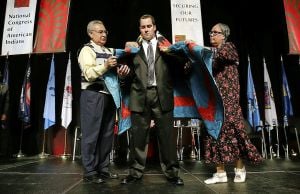
Dusten Brown honored by NCAI

Dusten Brown honored by National Congress of American Indians
Jefferson Keel of the Chickasaw Nation (left), president of the National Congress of American Indians, and Sandy White Hawk wrap Dusten Brown in a prayer quilt Tuesday. MIKE SIMONS / Tulsa World

The custody case is viewed as 

an issue of tribal sovereignty

By MICHAEL OVERALL World Staff Writer |
At the end of an open-mic session Tuesday morning, delegates were still lining up to talk about tribal sovereignty when the sergeant at arms interrupted.
"We want to take time to honor somebody," explained Dan King, a member of the Oneida Nation of Wisconsin, who introduced Dusten Brown.

At the National Congress of American Indians, it wasn't necessary to explain that Brown is the biological father of "Baby Veronica."

..."Dusten and Veronica represent many, many families all over the country," Sandy White Hawk said. "There's a reason all of this is happening."

Read here:  http://www.tulsaworld.com/news/dusten-brown-honored-by-national-congress-of-american-indians/article_b8b6d647-25f9-5037-80da-3202a4c36e83.html

Friday, August 9, 2013

Keep Veronica Home: Fact Check

Embedded image permalink 

Source: http://keepveronicahome.com/index.php/fact-check

  1. “He signed his rights away.”

TRUTH:
“It is undisputed that the only consent document Father ever signed was a one-page ‘Acceptance of Service’ stating he was not contesting the adoption, which was purportedly presented for Father's signature as a prerequisite to the service of a summons and complaint. Thus, Appellants did not follow the clear procedural directives of section 1913(a) in obtaining Father's consent. Moreover, even if this ‘consent’ was valid under the statute, then Father's subsequent legal campaign to obtain custody of Baby Girl has rendered any such consent withdrawn. Therefore, neither Father's signature on the ‘Acceptance of Service’ document, nor his stated intentions to relinquish his rights, were effectual forms of voluntary consent under the ICWA.” – South Carolina Supreme Court
There is a legal way to “sign away rights” for good reason, Dusten never came close to any legal relinquishment of parental rights.

2. “He texted his rights away”

TRUTH:
In no state in the country can a father relinquish parental rights by text message. These text messages WERE NOT EVIDENCE at trial because the attorney for the Adoptive Couple would not produce the phone that showed Birth Mother’s messages to father, instead they attempted to introduce photocopies, even though the cell phone was allegedly in a safe at the office of the Guardian Ad Litem’s attorney. The Family Court did not consider these text messages as evidence.

3. “He abandoned his daughter”

TRUTH:
“All attempts to contact Maldonado by Brown and his family members were refused by Maldonado. Shortly after the child’s birth, Brown’s family members purchased some items for the child and attempted to deliver them to Maldonado, but these were rejected. It was clear that Maldonado wanted to have Brown completely and permanently removed from her life and placing the child for adoption without his knowledge or consent would further this goal.” – Family Court
“Father testified he asked friends and family if they had seen Mother because she would not reply to his text messages. His mother testified she attempted to contact Mother on several occasions and once left Mother a voice message before Baby Girl's birth to tell Mother she had money and some gifts for the baby, including items she hand-knitted, but Mother never returned her telephone calls. Mother testified that none of Father's family members contacted her regarding gifts for Baby Girl.” – Family Court The Family Court repeatedly stated that it did “not find birth mother’s testimony credible.” – Family Court Bench Ruling, United States Supreme Court Brief

4. “It is in Veronica’s best interest to be adopted”

TRUTH:
The only findings based on evidence of Veronica’s best interests found that she should be with her father.
“Brown is the father of another daughter. The undisputed testimony is that he is a loving and devoted father. Even Maldonado herself testified that he was a good father. There is no evidence to suggest that he would be anything other than an excellent parent to this child. . . . Brown has convinced me of his unwavering love for this child.” – Family Court
“The family court order stated, ‘[w]hen parental rights and the best interests of the child are in conflict, the best interests of the child must prevail. However, in this case, I find no conflict between the two.’ Likewise, we cannot say that Baby Girl's best interests are not served by the grant of custody to Father, as Appellants have not presented evidence that Baby Girl would not be safe, loved, and cared for if raised by Father and his family.” South Carolina Supreme Court
“Plainly, the family court determined that there was no conflict between Father's best interests and Baby Girl's best interests.” – South Carolina Supreme Court

5. “He’s not really ‘Indian’”

TRUTH:
Dusten Brown has been a registered citizen of the Cherokee Nation since he was a child. Further, the South Carolina Supreme Court found true cultural ties to the Cherokee Nation:
“The Record establishes that Father's family has a deeply embedded relationship with the Cherokee Nation. For example, not only does the Record indicate that Father and his family are proud of their heritage and membership in the Wolf Clan, the home study performed on Father's parents states the following:
[Father's father] is Cherokee Indian. He grew up knowing he was Cherokee and being proud of who he was. [Father's parents] . . . prepare the following traditional foods in their home: grape dumplings, buckskin bread, Indian cornbread, Indian tacos, wild onions, fry bread, polk salad and deer meat. [Father's mother] state[d] she cooks these foods in her home on a regular basis and all of her children have eaten these items.
[Father's parents] attend the Cherokee Holiday in Tahlequah, Oklahoma[,] when they can and do participate in eating traditional foods, viewing the arts and crafts and watching the traditional games. [Father's father] participates in voting in the Cherokee elections[,] . . . . took part in learning about the Cherokee culture when his children were in high school by learning to make Indian crafts and learning to play the drum[, and] . . . . is sometimes seen at the Nowata Indian Health Clinic but receives the majority of his health care from the Veterans hospital. He claims his family is from the Wolf Clan, and he has been to, as well as participated, in stomp dances.
[H]is family had Indian land which was located in Pryor, Oklahoma and Cayuga, Oklahoma. He claims to have very traditional ties with his extended family and considers geneology [sic] a hobby by researching his Cherokee culture. [Father's parents] have many Native American items in their home. Decorative Native American pieces are scattered throughout their home in nearly every room.
Thus, the Record demonstrates that Father and his family are well-positioned to introduce Baby Girl to her Indian heritage.”

6. “He just wants her for money.”

TRUTH:
As all Cherokee Nation citizens know, we don’t get any money for “being Cherokee” or for having “Cherokee kids.” The only people who have made money in this case are the adoption agencies and attorneys.

7. “Cherokee Nation paid Dusten’s legal expenses”

TRUTH:
Cherokee Nation has never spent a single a dime on attorney fees for Dusten Brown. He and his family used every extra dollar they had to pay for attorneys and after that was exhausted, Dusten’s amazing attorneys donated their time because they believed in him and believed that Veronica belonged with her father.

8. “We didn’t know Veronica was Cherokee.”

TRUTH:
“Mother testified that she knew "from the beginning" that Father was a registered citizen of the Cherokee Nation, and that she deemed this information "important" throughout the adoption process. Further, she testified she knew that if the Cherokee Nation were alerted to Baby Girl's status as an Indian child, "some things were going to come into effect, but [she] wasn't for [sic] sure what." Mother reported Father's Indian heritage on the Nightlight Agency's adoption form and testified she made Father's Indian heritage known to Appellants and every agency involved in the adoption. However, it appears that there were some efforts to conceal his Indian status. In fact, the pre-placement form reflects Mother's reluctance to share this information:
Initially the birth mother did not wish to identify the father, said she wanted to keep things low-key as possible for the [Appellants], because he's registered in the Cherokee tribe. It was determined that naming him would be detrimental to the adoption.”
“Adoptive Mother testified that, because they hired an attorney to specifically inquire about the baby's Cherokee Indian status, ‘when she was born, we were under the impression that she was not Cherokee.’”
But, “Adoptive Mother testified that the Nightlight Agency's pre-placement report was ‘probably . . . something I read and didn't think twice about it.’”

9. “The Guardian Ad Litem supports the Adoption”

TRUTH:
The Family Court appointed a guardian ad litem (“GAL”) who has filed a brief in this Court that purports to be on behalf of Baby Girl and asserts that Baby Girl’s interests would be best served by awarding custody to petitioners. In fact, the GAL is not a neutral party. Although appointed by the Family Court, that court noted that the GAL and her attorney both “were unilaterally selected by [petitioners’] counsel”; the GAL had a continuing business relationship with petitioners’ attorney, with whom she had worked frequently in cases in 2009.
In this case, although the GAL had performed a comprehensive home study of petitioners, she resisted repeated requests from Father’s attorney to conduct a home study of Father. When the GAL finally did conduct such a study, well over a year after her appointment and some five months after counsel’s request, she informed Father and his family that “she knew the adoptive couple prior to the child being placed in their home” and “had worked with them before the child had been placed”; that petitioners were a well-educated couple with a beautiful home, could afford to send Baby Girl to any private school that they chose and, when she was older, to any college she wanted; and that there was nothing that Baby Girl needed that petitioners could not buy for her.
The GAL therefore told Father’s family that they “really need[ed] to get down on [their] knees and pray to God that [they] can make the right decision for this baby” (id. at 148), and they “needed to talk to God and pray about taking the child from the only family that she has known.” At trial, Father stated that the GAL treated him and his family as “a bunch of * * * rednecks that can’t * * * afford anything, that we’re not able to provide this child with proper education, schooling * * *. Pretty much that we weren’t fit to love this child and raise her.”
The GAL’s initial report did not note Baby Girl’s Native American heritage because the GAL thought that was “not something * * * the courts need to take into consideration.”
As for the GAL’s view of Native American culture, she stated that the advantages of having Native American heritage “include[ed] free lunches and free medical care and that they did have their little get togethers and their little dances.” Given the GAL’s obvious bias, respondents initially sought her removal.
But rather than delay the proceedings, respondents ultimately withdrew this motion on the understanding that the Family Court would not consider either the GAL’s conclusion regarding Baby Girl’s best interests or the GAL’s custody recommendation. See Pet.
Indeed, South Carolina law precludes a guardian ad litem in a private adoption from providing a custody recommendation unless one is requested by the court; no such request was made here. – United States Supreme Court Brief by Father

Cancelled transition plan for Veronica:  http://ftpcontent.worldnow.com/griffin/NEWSon6/PDF/1307/veronica_transition_plan.pdf

And this news:  http://www.tulsaworld.com/article.aspx/Baby_Veronicas_biological_family_Court_fight_will_move/20130806_11_0_ASouth583850

Thursday, August 8, 2013

Speed-up of “Baby Veronica” transfer

http://www.scotusblog.com/2013/08/speed-up-of-baby-veronica-transfer/

A family court judge in South Carolina, citing evidence that the father of the little girl now known as “Baby Veronica” is not obeying a court ruling on the child’s adoption by others, has ordered an immediate transfer to those new “lawful parents.”  The judge cancelled a “transition plan” that would have had the transfer occurring over about a week’s time, to ease the transition.  (A copy of the new order is now circulating widely on various websites; a copy taken from one of those sites is reproduced here.)
“Baby Veronica,” who will be four years old next month, was at the center of a Supreme Court ruling in late June, finding that the child’s birth father could not claim parental rights to the child under a federal Indian law.   The father, Dusten Brown of Bartlesville, Oklahoma, is a member of the Cherokee Nation and was claiming rights as an Indian parent.  South Carolina courts have awarded full legal custody of the little girl to a non-Indian couple who live near Charleston, Matthew and Melanie Capobianco.

At the end of last month, the Capobiancos won the right to adopt the child.  But they also agreed that, to avoid the shock of an abrupt removal of her from the father with whom she has been living for more than eighteen months, they would go along with a more measured transfer that would unfold in Oklahoma.  But Family Court Judge Daniel E. Martin, Jr., citing a sworn statement by a social worker named to carry out the transition plan, said that Brown did not show up at the appointed time and place last Sunday to begin the transition.
That, the judge concluded, violated his order requiring the transition plan, and thus that plan has now been scuttled, with the Capobiancos entitled “immediately” to take the child into their custody.   The judge ordered the father to produce the child and turn her over to the Capobiancos, saying that the child “is being unlawfully withheld from her lawful parents.”
The judge sent copies of his ruling to various federal and state officials, asking them to take prompt action to locate “Baby Veronica” and turn her over to the Capobiancos.  The judge also asked courts in Oklahoma to help produce the child.
Recommended Citation: Lyle Denniston, Speed-up of “Baby Veronica” transfer, SCOTUSblog (Aug. 6, 2013, 3:31 PM), http://www.scotusblog.com/2013/08/speed-up-of-baby-veronica-transfer/ 


NOTE: Dusten is on guard duty right now - not home.... which the courts do not honor with this ruling.  Be brave, little Veronica. This fight is not over...Trace

Thursday, August 1, 2013

The Gloves Come Off: Civil Rights Suit Filed as Adoption of Veronica Finalized

Veronica Brown in Oklahoma

Suzette Brewer, Indian Country Today Media, August 01, 2013

Before the adoption of Veronica Brown to Matt and Melanie Capobianco was finalized yesterday in a South Carolina courtroom, the Native American Rights Fund made good on its promised Civil Rights litigation, filing a complaint late Tuesday night in federal district court on behalf of the girl's right to due process in a “meaningful hearing” to determine her best interest. The courts in South Carolina failed to “take into account or require any inquiry” regarding Veronica's current circumstances before approving the transition plan provided by Matt and Melanie Capobianco of James Island.

RELATED: Baby Veronica Must Return to Adoptive Parents
Supreme Court Thwarts ICWA Intent in Baby Veronica Case
Anger Erupts Across Indian Country Over Baby Veronica Ruling
Native American Rights Fund: Stop the Forced Removal of Baby Veronica

Additionally, the suit (V.B. v. Daniel E. Martin, Family Court for the Ninth Judicial Circuit) declares that Veronica is a tribal member and remains an “Indian Child” under the Indian Child Welfare Act, and therefore she “possesses a federally protected right” to a best interest hearing under federal law.
Supported by dozens of tribes, civil rights and child welfare groups, adoption advocacy organizations, legal authorities and Native American groups, the complaint seeks federal jurisdiction over the case, as well as an injunction prohibiting South Carolina courts from further proceedings pending a full and “meaningful” best interest hearing.
Angel Smith, an Oklahoma attorney appointed by the Cherokee Nation to represent Veronica as a tribal member, filed the motion on the girl's behalf.
The Cherokee Nation reacted swiftly to the finalization of the adoption and transition plan in South Carolina.
“Today, a Family Court in South Carolina finalized the adoption of an almost 4-year-old Cherokee child who has been living with her unquestionably fit, loving, biological father and large extended family, for one year and seven months, half a continent away in Oklahoma and Cherokee Nation,” said Chrissi Nimmo, assistant attorney general for the Cherokee Nation. “This decision was made without a hearing to determine what is in Veronica’s current best interests and comes almost two years after the same Family Court found that Dusten Brown was a fit, loving parent and it would be in Veronica’s best interests to be placed with her father. Every parent in America should be terrified.
Dusten Brown is an honorable man and a good father. Cherokee Nation will continue to support Dusten, Veronica and the entire Brown family in their attempt to keep their family whole.”
Dusten Brown, who is currently in training with the National Guard, also issued the following statement:
“Our family is shocked and deeply saddened that the South Carolina Supreme Court has refused to allow Veronica's best interest to be considered. Even worse, that Court issued an order they acknowledge will cause my daughter to suffer harm. The Court gave its blessing to the transition plan offered by the Capobiancos that says upon transfer to them, Veronica will be 'fearful, scared, anxious, confused,'” said Brown.
“They say she will likely become quiet and withdrawn and may cry herself to sleep. That the transfer will cause 'grief' and 'loss' and she will feel 'rejected' by me and her family. They say it will leave her with many 'unanswered questions.' I will not voluntarily let my child go through that, no parent would. I am her father and it is my job to protect her. My family and I continue to pray that the justice system bring justice to Veronica.”

RELATED: Inseparable Sisters: Adoption Order Exacts Toll on Baby Veronica's Family

But legal experts acknowledged that the fight over custody of Veronica is not only not over, but has now moved into a whole new level of litigation. In spite of South Carolina's ruling yesterday, enforcement in Oklahoma courts will now be the focus of the case.
“Everything will now move to Washington County, Oklahoma, where Veronica now resides,” said a legal scholar who asked for anonymity because of the ongoing litigation. “But it will require a bit of time for any order to be domesticated in that state. You may have an order from South Carolina, but guess what? Veronica's not in South Carolina. She's been domiciled in Oklahoma for 19 months and there's no way a court in Oklahoma is going to approve enforcement of this order without a normal, legal checklist of things that would be required for any other child up that's been put up for adoption, not to mention a child who is a tribal member and is living with a biological parent.”
For example, the adoption was finalized without a current homestudy or psychological evaluation of any of the parties involved, which legal and child welfare experts say are standard operating procedures.
“It's called giving 'full faith and credit' to another state's order,” said the expert. “[The legal team] is going to go into court to argue that full faith and credit should not be given to the South Carolina order because the courts there did not follow the law. And Oklahoma, quite frankly, does not have to give full faith and credit if Veronica's constitutional right to due process has been denied.”
Additionally, observers say that because jurisdiction has been shifted to Oklahoma, the gloves have now come off in a state that was originally founded as “Indian Territory.” With nearly 40 tribes, including the Cherokee Nation, Oklahoma has the second largest American Indian population in the United States. And they have watched the events in Adoptive Couple unfold in South Carolina with growing alarm and disgust.
“How is it that Paul Clement, who wasn't even a party in this case, walks into the United States Supreme Court and insults every Indian tribe in the country by making this case about blood quantum and fiercely advocating for a 'best interest' hearing, only to have it shot down in South Carolina because the judges there think it's too hard?” asks one Tulsa lawyer who works exclusively in ICWA cases. “It simply boggles the mind that any court would callously disregard the most important party in this case: Veronica herself. The fight is definitely not over.”
Lori Alvino McGill, the attorney for birth mother Christy Maldonado, today dismissed the federal suit to stop the finalization of the adoption as a “publicity stunt,” as tribes across the country continue to unify in support of Veronica and the Indian Child Welfare Act.

RELATED: Baby Veronica's Mother Finally Speaks Out About Court Case
Baby Veronica's Birth Mother Files Suit, Claims ICWA Unconstitutional

Meanwhile, on Tuesday the Capobiancos filed their response to Dusten Brown's request to the U.S. Supreme Court that the South Carolina courts postpone finalization of the adoption until a best interest determination hearing could be held. Chief Justice John Roberts, an adoptive parent himself who sided with the majority against Brown, oversees emergency petitions for the Fourth Circuit Court of Appeals, which includes South Carolina.
Sources in Washington have pointed out that Alvino McGill's role in Adoptive Couple is more than that of a spokesperson for Christy Maldonado. As it turns out, Chief Justice Roberts and former solicitor general Ted Olson, both of whom sided with the Capobiancos, attended Ms. Alvino McGill's 2006 wedding to Matthew McGill who, coincidentally, was a clerk for John Roberts in the D.C. Circuit Court of Appeals. Therefore, given the cozy nature and small world influence in the Capitol's legal circles, observers say it was no surprise when Adoptive Couple v. Baby Girl was granted petition of certiorari in January.
“Dusten Brown never had a chance,” said the source. “His biggest sin was that he got on the wrong side of the billion dollar U.S. adoption industry and he was winning. [The Supreme Court] knew this when they took cert on this case, otherwise, why would they bother with a custody dispute that should have been nipped in the bud four years ago? And the sad part is that he's rehabilitated himself in every way in this case. He's gone to every length to keep his child, he's done everything asked of him. But it is a system that was stacked against him from the beginning. This is Worcester v. Georgia all over again.”
After the South Carolina court's ruling finalizing the adoption of his daughter, Dusten Brown made a direct plea to the Capobiancos.
“To Matt and Melanie Capobianco I want to say this: Please, for Veronica's sake, just stop. Stop, and ask yourself if you really believe this is best for her.”


Read more at http://indiancountrytodaymedianetwork.com/2013/08/01/gloves-come-civil-rights-suit-filed-adoption-veronica-finalized-150676


Wednesday, July 31, 2013

Civil Right Complaint Filed in #BabyVeronica Dispute

Posted by Turtle Talk

Complaint here.
NCAI press release:
Federal Civil Rights Lawsuit Filed on Behalf of Veronica Brown
Statement of Support Issued by Tribal Governments and Leading Native American, Civil Rights, Child Welfare and Legal Advocates along with Arizona and New Mexico State Attorneys General to Stop Violation of “Baby Veronica’s” Civil Rights by South Carolina Courts
Washington, DC (July 31, 2013) - Today, the Native American Rights Fund filed a complaint in the United States District Court in South Carolina to protect the civil rights of Veronica Brown, a citizen of the Cherokee Nation who has been denied due process in the South Carolina courts. The filing comes after the South Carolina Supreme Court issued two controversial orders to the state’s family court on July 17 and 24, calling for the removal of Veronica from her father and a transfer her to the adoptive couple without a hearing of best interest.
The lawsuit was supported in a national statement released today by a broad coalition of civil rights, child welfare, adoption advocates, legal authorities, tribal governments, and Native American advocacy groups. These groups and individuals joined with the National Congress of American Indians, Native American Rights Fund, and National Indian Child Welfare Association in releasing the national statement of support for Veronica’s civil rights, and the rights of all children, to a hearing of best interest.
The litigation was filed on behalf of Veronica, by Angel Smith, an attorney appointed as counsel for the child by the courts of the Cherokee Nation, in U.S. District Court in South Carolina, and asks the Court to determine whether Veronica has a constitutionally protected right to a meaningful hearing in the state courts to determine what is in her best interests. Furthermore, the litigation asserts that Veronica, as an “Indian child” under the Indian Child Welfare Act, has a federally protected right to have the state courts fully consider and appropriately weigh her best interests as an Indian child. Daniel E. Martin, Jr., the judge for the family court system of South Carolina, is named as the defendant in the suit.
According to the filing, Veronica “doubtless has a liberty interest in remaining with her father and such an interest justifies at a minimum a plenary hearing on her current status, her relationships with others and her genuine need for stability… Despite the finding of the family court and the implicit assumption by the Supreme Court of South Carolina that [Veronica’s] best interest would be served by being with her father, two years later the court now determines, despite the passage of time and [Veronica’s] stage of development at age four, that her ‘best’ interests will now be served by being removed from him and given back to the adoptive couple. Again, this order is without any consideration to the present circumstances, psychological and emotional well-being, and future impact on [Veronica]. This is an arbitrary result, depriving [Veronica] of any opportunity to be heard on her own behalf, irrespective of the competing interests of the adult litigants in her young life.”
Broad National Support for the Litigation
Also today, on behalf of broad coalition of civil rights, child welfare, legal authorities, tribal governments and Native American advocacy groups, the National Congress of American Indians, along with the Native American Rights Fund and the National Indian Child Welfare Association released a national statement of support for Veronica’s civil rights to be upheld. The statement of support has been endorsed by a broad coalition of tribal governments, state and federal legal authorities including two state attorneys general – Arizona and New Mexico – civil rights institutions such as the Leadership Conference on Civil and Human Rights, child welfare and adoption organizations including the Child Welfare League of America, and leading national and regional Native advocacy organizations representing the interests of almost every tribe located within the United States (see full list below).
According to the letter:
[T]he rights promised to our children are being compromised in the courts of the State of South Carolina … The recent [South Carolina Supreme Court] ruling in the case denies the basic fundamental right of an almost four-year-old Indian child to a hearing of her ‘best interests’ before removing her from her biological father after almost two years of child-rearing, bonding and establishing a loving home environment. Plainly stated, this is a denial of Veronica’s human rights and constitutional rights to due process as a citizen of the United States.
The following organizations and individuals have signed on to the letter of support for the civil rights lawsuit being filed on behalf of Veronica: Read more of this post

Happy Visitors!

WRITTEN BY HUMANS!

WRITTEN BY HUMANS!

Blog Archive

Featured Post

Your History Class Was a F*cking Lie | #NOMOAR

  Your History Class Was a F*cking Lie by Sean Sherman (Or: How the American Educational System Has Always Been a Racist Propaganda Program...


Native Circles

Native Circles
click logo for podcasts!

Most READ Posts

Bookshop

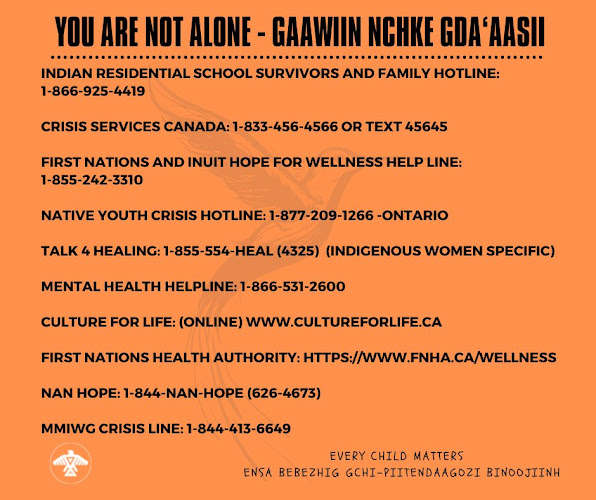
You are not alone

You are not alone

To Veronica Brown

Veronica, we adult adoptees are thinking of you today and every day. We will be here when you need us. Your journey in the adopted life has begun, nothing can revoke that now, the damage cannot be undone. Be courageous, you have what no adoptee before you has had; a strong group of adult adoptees who know your story, who are behind you and will always be so.

Diane Tells His Name


click photo

Lost Birds on Al Jazeera Fault Lines

Lost Birds on Al Jazeera Fault Lines
click to read and listen about Trace, Diane, Julie and Suzie

NO MORE STOLEN SISTERS

NO MORE STOLEN SISTERS
click image

ADOPTION TRUTH

As the single largest unregulated industry in the United States, adoption is viewed as a benevolent action that results in the formation of “forever families.”
The truth is that it is a very lucrative business with a known sales pitch. With profits last estimated at over $1.44 billion dollars a year, mothers who consider adoption for their babies need to be very aware that all of this promotion clouds the facts and only though independent research can they get an accurate account of what life might be like for both them and their child after signing the adoption paperwork.

Original Birth Certificate Map in the USA

Google Followers