They Took Us Away

They Took Us Away
click image to see more and read more

it's free

click

How to Use this Blog

BOOZHOO! We've amassed tons of information and important history on this blog since 2010. If you have a keyword, use the search box below. Also check out the reference section above. If you have a question or need help searching, use the contact form at the bottom of the blog.


We want you to use BOOKSHOP to buy books! (the editor will earn a small amount of money or commission. (we thank you) (that is our disclaimer statement)

This is a blog. It is not a peer-reviewed journal, not a sponsored publication... WE DO NOT HAVE ADS or earn MONEY from this website. The ideas, news and thoughts posted are sourced… or written by the editor or contributors.

EMAIL ME: tracelara@pm.me (outlook email is gone) THANK YOU CHI MEGWETCH!

SEARCH

Showing posts with label culture loss. Show all posts

Tuesday, February 16, 2021

Indigenous well-being | Cultural Attachment #ICWA

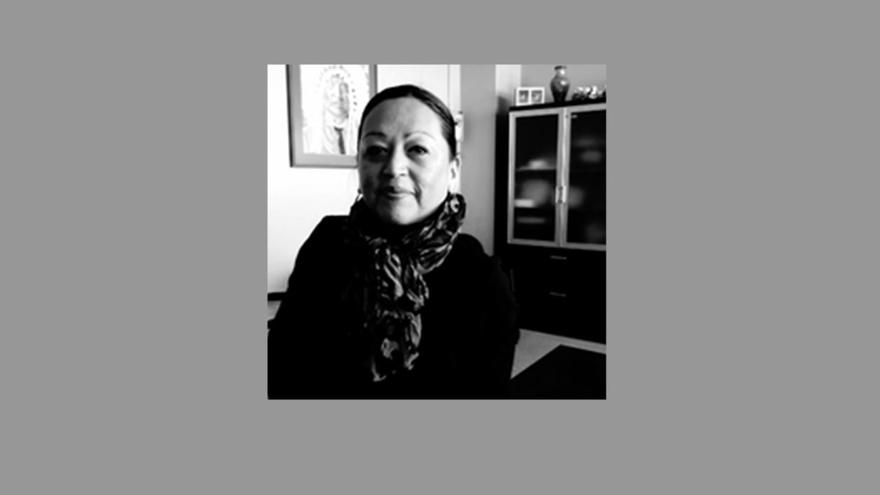
UMD Visiting faculty member Estelle Simard
DULUTH, Minnesota | February 15, 2021 | by Lissa Maki   source

Visiting scholar’s research examines the ways Indigenous culture and well-being are intertwined.


Estelle Simard is in her second year of a visiting scholar role in the UMD Department of Social Work. Her research features a theory of cultural attachment—or the idea that one’s connection to culture can help protect their well-being. 

Simard obtained a Master of Social Work degree from UMD in 2009. For the research component of the program, she wrote a paper about the need for culturally restorative practices in American Indian child welfare. This foundational work impacted her career research trajectory.

A member of the Couchiching First Nation in Canada, Simard's research seeks to bring the concept of cultural attachment from the Indigenous world into academia. She also wants it to inform mainstream social work practice, particularly as it relates to child welfare.

The dominant approach to child welfare in the United States and Canada has long ignored the significance of culture. The overarching goal of the child welfare system is to protect children from harm. But removing Indigenous children from their homes and communities strips them of their cultural identity.

Because culture plays a role in nearly all aspects of Indigenous life, Simard asserts that culturally responsive services need to be integrated into social work practice. “Any service provision there is, culture has to be embedded within it. It needs to be a driving force,” she says, noting that otherwise Native children become “casualties of the system because we’re not addressing their unique cultural needs.”

Last summer, Simard helped facilitate the development of curriculum for the new Aabinoojiiyag-Wakhanheza Un Thantanhanpi - “For All the Children”  Sacred Being: Tribal Training and Certification Partnership (TTCP), a foundational training for all Minnesota child welfare workers. This training is considered a foundational training piece for all practicing child welfare workers across Minnesota. 

Simard calls the program and curriculum offered by the TTCP “provocative” and says it helps people to understand the true intention of the Indian Child Welfare Act and how to apply it in practice. This “decolonized social work practice” aims to protect children while preserving Native families.

She’s enthusiastic about the first virtual training, and says it was “exciting and pivotal” with people across Minnesota participating—including tribal child welfare workers in Leech Lake and Red Lake.

Sunday, December 27, 2020

Is Culture How You Think?

REBLOG

By Trace L Hentz (5/14/2015)

So much about adoption is complicated for the adoptee.  If you are like me, you may feel torn between who you think you are, who you are inside, versus how you were raised and who raised you.

I am an adoptee as readers know. What a great many adoptees have told me is they feel they lost culture when not raised in their tribe, losing parents, grandparents and the language. Even typing those words hurts. Loss is loss. Loss hurts.

This has bothered me. I think that the loss is true yet culture is not completely lost.

How? You still have the blood and that is built-in culture. (It's not erasable or removable.)

I think Native Adoptees have a different thought process that was not acknowledged or celebrated or honored when they were young. Non-Indian parents may not have appreciated how sensitive or funny or curious you were or if they did see it, they didn't say anything nice about it.

Girls who were strong tomboys like me were criticized and shy boys who were sensitive were bullied.

One thing to remember: non-Indians don't think Indian. You do. It's not their fault. We're very different in how we think.

Sit back and remember all the times as a child you made people laugh. Remember how much you loved animals. Remember what made you cry - like a sunset or sunrise. Remember how you gave thanks for life and all that is sacred, even if you were alone. Remember watching westerns on TV and rooting for the Indians?

We have a choice as an adoptee to return home and what I call "go full circle." It takes patience. It requires courage. It costs money. It demands you take time to learn and relearn and listen. This return to your culture may take years! (We still have the burden of closed adoption records in many states.)

Every culture will say it's people who carry the culture.

There is no culture better than another. That is true. But the culture of Indigenous People lives in your breath, bone and blood. If you exist, it exists.

Nothing, including adoption, can ever erase it.


Please read the entire book series... it has so much important information to help you...
 
Trace is the author of One Small Sacrifice, the book series Lost Children of the Indian Adoption Projects  and the creator of the blog American Indian Adoptees.

Friday, August 14, 2015

Indigenous man credits powwow for helping step away from addictions

Gabriel Whiteduck shares his story through song and dance

By Terrence Duff and Corinne Smith, CBC News 
Gabriel Whiteduck shares his experience with First Nations youth through workshops.
Gabriel Whiteduck shares his experience with First Nations youth through workshops. (Supplied)
"When I first came into powwow, I was suffering from addictions - drugs and alcohol," said the 33-year old, in a recent interview with the Cree Radio CBC.
"It was a way to put that down and take up something. I picked up the drum and dancing, I was able to really apply myself positively."
Whiteduck is a powwow teacher, dancer, drummer and singer. Algonquin and Plains Cree, he's originally from Prince Albert, Sask., and is now based in the Algonquin First Nation of Kitigan Zibi, Que.
Gabriel Whiteduck dancing at a powwow
Gabriel Whiteduck dances traditional men's style. (Supplied)

For Whiteduck, powwow culture has been a powerful force of change in his life. While becoming a father was a defining turning point in his adult life, he credits powwow dancing and drumming as a source of renewal. He wants to share that personal experience with other First Nations youth, through his workshops and teachings.
"The odds are against our young Native men and women, unfortunately," he said.
"My story is a celebration. I really celebrate that gift that was given to me, that was given to us, the gift of being able to move and speak freely."
He started travelling in the James Bay area of Northern Quebec a few years ago, visiting communities to lead powwow workshops and attend gatherings. Last summer he took part in the first ever powwow in Ouje-Bougoumou, a predominantly Christian Cree community that has in the past resisted that kind of gathering.

Cultural identity

Powwows don't have the same long history in Eeyou Istchee as they do for other First Nations, but the practise is spreading fast. Whiteduck believes it's important for people to remember that they have a distinct aboriginal cultural identity, whether or not they participate in powwows.
As "intertribal events" they simply add another dimension to First Nations cultural expression, he said. "It's a subculture underneath who we already are."
Whiteduck says when he visits communities, he's not there to tell people how to be Aboriginal. But he believes the powwow is a way to express your culture.
"I was once a person like that, I was very shy and nervous and I think about those people in the audience, so when I dance I try to give some of my confidence off towards them as much as I can," - Gabriel Whiteduck, powwow dancer
He dances and teaches traditional men's dancing, but says everyone's style is very personal. What he keeps in mind in the powwow circle is to connect and relate to his audience.
"I like to dance for the people that are watching, the people that feel they have barriers, they want to dance but they have the confidence or the courage to get up and dance," he said.              
"I was once a person like that, I was very shy and nervous and I think about those people in the audience, so when I dance I try to give some of my confidence off towards them as much as I can."
Whiteduck says it's very important to encourage youth to find a way to express themselves and tell their story, and he hopes powwow culture is one means to do that.
He wants to meet more youth and encourage them to bring their own songs and stories, of their lives and the land, to his workshops.

Listen to the interview: https://soundcloud.com/cree-radio-cbc/gabriel-whiteduck-turned-his-life-around-from-addiction-7-years-ago

Happy Visitors!

WRITTEN BY HUMANS!

WRITTEN BY HUMANS!

Blog Archive

Featured Post

Your History Class Was a F*cking Lie | #NOMOAR

  Your History Class Was a F*cking Lie by Sean Sherman (Or: How the American Educational System Has Always Been a Racist Propaganda Program...


Native Circles

Native Circles
click logo for podcasts!

Most READ Posts

Bookshop

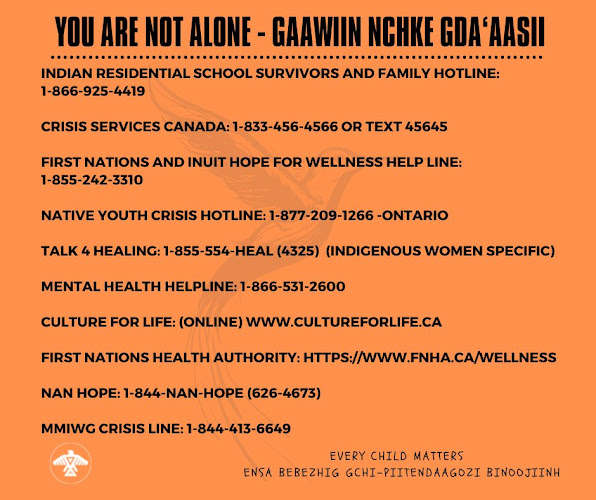
You are not alone

You are not alone

To Veronica Brown

Veronica, we adult adoptees are thinking of you today and every day. We will be here when you need us. Your journey in the adopted life has begun, nothing can revoke that now, the damage cannot be undone. Be courageous, you have what no adoptee before you has had; a strong group of adult adoptees who know your story, who are behind you and will always be so.

Diane Tells His Name


click photo

Lost Birds on Al Jazeera Fault Lines

Lost Birds on Al Jazeera Fault Lines
click to read and listen about Trace, Diane, Julie and Suzie

NO MORE STOLEN SISTERS

NO MORE STOLEN SISTERS
click image

ADOPTION TRUTH

As the single largest unregulated industry in the United States, adoption is viewed as a benevolent action that results in the formation of “forever families.”
The truth is that it is a very lucrative business with a known sales pitch. With profits last estimated at over $1.44 billion dollars a year, mothers who consider adoption for their babies need to be very aware that all of this promotion clouds the facts and only though independent research can they get an accurate account of what life might be like for both them and their child after signing the adoption paperwork.

Original Birth Certificate Map in the USA

Google Followers