They Took Us Away

They Took Us Away
click image to see more and read more

it's free

click

How to Use this Blog

BOOZHOO! We've amassed tons of information and important history on this blog since 2010. If you have a keyword, use the search box below. Also check out the reference section above. If you have a question or need help searching, use the contact form at the bottom of the blog.


We want you to use BOOKSHOP to buy books! (the editor will earn a small amount of money or commission. (we thank you) (that is our disclaimer statement)

This is a blog. It is not a peer-reviewed journal, not a sponsored publication... WE DO NOT HAVE ADS or earn MONEY from this website. The ideas, news and thoughts posted are sourced… or written by the editor or contributors.

EMAIL ME: tracelara@pm.me (outlook email is gone) THANK YOU CHI MEGWETCH!

SEARCH

Showing posts with label Critical Race Theory. Show all posts

Tuesday, September 10, 2024

Albert Bender: ‘100 Years of Lynchings’: 1962 book remains a ‘should-read’ for all

1962 book remains a ‘should-read’ for all 

September 9, 2024 By Albert Bender (Cherokee)
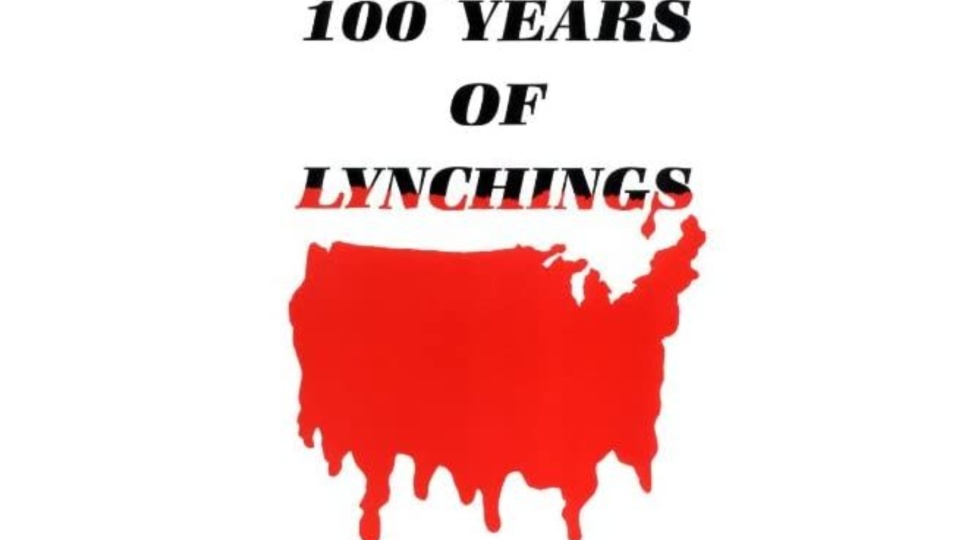
‘100 Years of Lynchings’: 1962 book remains a ‘should-read’ for all

The genocide, the horrendous deaths in the Israeli invasion of Gaza, have prompted many, this reviewer included, to reflect on the racial horror of times gone by. The book 100 Years of Lynchings, came to mind.  I had read sections of the work some years ago, but never through and through. This volume, produced by Ralph Ginzburg in 1962, presented newspaper articles spanning a century documenting the most savage murders of African-American men and, in some cases, even women in the history of the United States.

Indeed, from a historical viewpoint, these killings represented some of the most horrific in the annals of humanity on this earth, displaying a level of unspeakable horror.

The mass murder of innocents in Gaza directed my attention to a century of the killings of innocents in this country. Thousands were lynched over a century-long span.

I also felt that this needed to be brought to public attention in light of current racist politicians’ efforts to whitewash history with attacks on so-called “critical race theory” and other education efforts around racism and slavery. Another reason is Biden’s refusal to do anything meaningful to stop the Gaza massacres, something which is well within his power. When Biden takes so little account of the lost lives of thousands of Palestinians, it must be remembered the bloody background from which the United States arose.

Ginzurg hoped the tome he assembled would, “in this Centennial of the Civil War, give pause to segregationists everywhere to reflect upon their persecution of the Black man.” Of course, this did not happen, but nonetheless, it was a worthy thought.

The newspapers from which the accounts were taken run the gamut from white to Black, small to large, and liberal to radical and conservative.  Many of the accounts are so graphic, with such horrifying and vivid detail, that it would be a rare reader who would not be greatly affected.

A sampling of some of the headlines will give the reader a portent of what to expect. “Negro and wife burned.” “Lynched Negro and wife were first mutilated.” “Colored woman is hanged.” “Shoe thief suspect lynched.” “4 Negroes lynched at once.” “ Louisian Negro is burned alive screaming ‘I didn’t do it.’” “Bumps into [white] girl; is lynched.” “2 hung for jostling horse” (two Black men hung for brushing against a farmer’s horse). “Boy unsexes Negro before mob lynches him” (a 10-year-old white boy is forced to castrate the victim before he is lynched).  “Indescribable tortures inflicted on Williams” (this lynching was described as a “gala event”). “Blood-thirsty mob lynches 3 members of one family.” “Georgia mob massacres two Negroes and wives.”

These foregoing bylines are a smattering of the newspaper accounts compiled for the book.

It is a record of the most extreme racial atrocities, so constant over such a long period of time that one can get the impression of not just racial terror, but in fact, a race war being waged against the African-American population.

In many articles, descriptions are given of the most horrifying tortures that assume the aura of a festival, attended by entire white families, not just men, but their wives and children—veritable family affairs. Body appendages were often cut off the victims, sometimes while they were still alive, to be taken home as souvenirs. Postcards were fashioned of the victims and distributed far and wide. Lynchings were frequently advertised in advance to maximize turnout.

This writer shall not deem it proper to describe in detail the gory newspaper accounts in this review. The articles make the reader wince, to say the least.

The takeaway from the volume, now over 60 years old, is that large sections of the white population were in a state of savagery, racial savagery. They were living in a culture of such hate-filled racism that spawned savagery toward their fellow human beings.  

This was a legacy of the worst slavery in the chronicles of world history. 

This racism turned human beings into monsters against their fellow humans.  

Enslaved people were treated worse than animals, the result of a capitalism that, as Marx said, entered upon the world stage “covered from head to foot with blood and gore.”

It was actually the courage of the African-American people, aided by progressive white allies, that uplifted the white people of the South from a culture of racist horror.  Indeed, it is not an exaggeration to say that the Civil Rights Movement civilized the “savage South.” Led by stalwarts such as Rev. Martin Luther King, Jr., and others, it raised the cultural level of not just the Southern United States, but the country as a whole.

These are some of the reflections produced by a re-reading of this extremely poignant, emotive volume. Again, this book is a “should-read” for all adults in this country.

We hope you appreciated this article. At People’s World, we believe news and information should be free and accessible to all, but we need your help. Our journalism is free of corporate influence and paywalls because we are totally reader-supported. Only you, our readers and supporters, make this possible. If you enjoy reading People’s World and the stories we bring you, please support our work by donating or becoming a monthly sustainer today. Thank you!
Albert Bender

Albert Bender is a Cherokee activist, historian, political columnist, and freelance reporter. He is currently writing a legal treatise on Native American sovereignty and working on a book on the war crimes committed by the U.S. against the Maya people in the Guatemalan civil war. He is a consulting attorney on Indigenous sovereignty, land restoration, and Indian Child Welfare Act (ICWA) issues.


Wednesday, August 18, 2021

We are not supposed to know

Editor Note: I have said this before in a non-fiction book I wrote in 2018. We are not supposed to know or care about Native People. It's obvious we have a century of bad history to rewrite and write right...


Why Do Native People Disappear From Textbooks After the 1890s?

August 16, 2021

OPINION

The current manufactured controversy over critical race theory in American schools that has been roiling parts of the nation this summer has exposed two truths: Most K-12 teachers do not teach CRT, but they absolutely should. And while anti-education conservatives claim that CRT teaches things like “race essentialism” and that all white people are racist, the academic framework does nothing of the sort.

What it does is demand that we compare our ideals about law, justice, and the way government works with the lived experience of racial and ethnic minorities within those systems.

CRT, then, examines how America actually is in comparison with how we think it ought to be. When applied to history, critical race theory demands that we examine the American reality instead of the American mythology that has often masqueraded as history in classrooms.

U.S. Secretary of the Interior Deb Haaland’s recent visit to the former site of the government-run Carlisle Indian School highlights some of that destructive American mythology. Haaland, an enrolled member of the Laguna Pueblo of New Mexico, is the first Native Cabinet secretary in U.S. history. Last month, Haaland visited the graveyard on the U.S. Army’s Carlisle Barracks in Pennsylvania during a ceremony to repatriate the disinterred remains of nine Rosebud Sioux children who died over a century ago at the school.

Historically, the United States committed itself to a policy of cultural genocide in the early part of the 19th century, and it created an education program for which Native children were removed from their parents—sometimes violently. The schools then compelled the children to give up their culture in favor of American norms, including by forcibly cutting students’ hair, replacing their names, prohibiting them from speaking their own language, and restricting their visits home. This boarding school period of Indian education continued until the passage of the Indian Child Welfare Act in 1978, a law aimed at preventing the forced removal of Native children from their families and tribes. Understandably, many Native people remain skeptical of educational systems designed and run by the federal government.

Problems with Native education continue today. Because the land making up a reservation is generally owned by the United States and held in trust for the tribes, there is no tribal property-tax base to fund tribally-run schools. That means Native nations rely upon the Bureau of Indian Education to manage or fund the vast majority of their schools. However, for years, the BIE has ignored accountability and transparency mandates in the Every Student Succeeds Act that require schools to report the educational progress of students.

Further, because of the lack of funding, only a small percentage of Native students have access to important early-learning programs, meaning that Native students are already struggling to “play catch up” when they arrive in kindergarten. This early disadvantage could be ameliorated if Congress were to fund Head Start and similar programs on reservations at the same rate it does elsewhere.

In fact, many students are actually surprised to learn that Native peoples still exist."

In addition to present-day educational disparities, Native American history is neglected in most K-12 classrooms. In fact, many students are actually surprised to learn that Native peoples still exist. It is almost as if Gen. Richard H. Pratt, the founder of the Carlisle School, was successful in his attempt to “Kill the Indian, and save the man.” Many non-Native students assume Native people must have died off since they largely disappear from textbook narratives after the 1890s. (They also make up about 1 percent of the national student population, so it’s possible that many non-Native students might not have been exposed to their Native peers.)

Students do not learn that many Native people don’t have access to running water or electricity. They do not learn that the U.S. Supreme Court has limited how tribes can exercise their governmental power—such as police power—to serve and protect their citizens. They certainly do not learn about the inequalities in the educational system between predominantly white schools and those serving Native students. If they did, then they might question how we treat our Native neighbors.

Where I live on the Navajo Nation—which straddles Arizona, Utah, and New Mexico and is about the size of West Virginia—about a third of the population lives without running water or electricity. In 1936, when President Franklin D. Roosevelt created the Rural Electrification Administration, the program only offered electrification loans to states and counties, not to tribal governments. The result was that while most rural Americans quickly gained electricity in the next decade or so, many living on reservations did not.

Even before the pandemic, my college students told me stories about charging their laptops in their cars overnight and then traveling to the closest town for Wi-Fi to turn in their homework. These same students travel 20 miles to the closest gas station to get ice to keep food cold, which they cook on gas-powered camping stoves. They use outhouses. They drive several miles to windmill-powered water tanks. They drive 30 miles to the closest truck stop about once a week to take a shower. While this is difficult under normal circumstances, it is nearly impossible to overstate the burden that a lack of electricity and running water has created during the ongoing spread of COVID-19 on the reservation.

Like much of America, my neighbors also have urgent, albeit different, complaints about the police. The Navajo Police Department does not employ a single white officer, so racism in law enforcement on the reservation manifests itself in different ways from how it does in the rest of the country. Instead, Navajo people complain about a lack of police because of funding and the fact that the U.S. Supreme Court has limited the effect of tribal criminal jurisdiction on non-Native Americans. So, when someone on the Navajo Nation dials 911, there is a high probability that police will be unavailable for help. And, if officers are available, in most cases, they are limited in their ability to arrest and charge non-Native suspects for violations of tribal law.

Policymakers have good reason to protect the mythological narrative of America that their political power is rooted in. If American K-12 teachers used critical race theory to inform their social studies curriculum, students might learn the real truth about the country’s failures to live up to its own ideals.


Happy Visitors!

WRITTEN BY HUMANS!

WRITTEN BY HUMANS!

Blog Archive

Featured Post

Your History Class Was a F*cking Lie | #NOMOAR

  Your History Class Was a F*cking Lie by Sean Sherman (Or: How the American Educational System Has Always Been a Racist Propaganda Program...


Native Circles

Native Circles
click logo for podcasts!

Most READ Posts

Bookshop

You are not alone

You are not alone

To Veronica Brown

Veronica, we adult adoptees are thinking of you today and every day. We will be here when you need us. Your journey in the adopted life has begun, nothing can revoke that now, the damage cannot be undone. Be courageous, you have what no adoptee before you has had; a strong group of adult adoptees who know your story, who are behind you and will always be so.

Diane Tells His Name


click photo

Lost Birds on Al Jazeera Fault Lines

Lost Birds on Al Jazeera Fault Lines
click to read and listen about Trace, Diane, Julie and Suzie

NO MORE STOLEN SISTERS

NO MORE STOLEN SISTERS
click image

ADOPTION TRUTH

As the single largest unregulated industry in the United States, adoption is viewed as a benevolent action that results in the formation of “forever families.”
The truth is that it is a very lucrative business with a known sales pitch. With profits last estimated at over $1.44 billion dollars a year, mothers who consider adoption for their babies need to be very aware that all of this promotion clouds the facts and only though independent research can they get an accurate account of what life might be like for both them and their child after signing the adoption paperwork.

Original Birth Certificate Map in the USA

Google Followers