BOOZHOO! We've amassed tons of information and important history on this blog since 2010. If you have a keyword, use the search box below. Also check out the reference section above. If you have a question or need help searching, use the contact form at the bottom of the blog.
We want you to use BOOKSHOP to buy books! (the editor will earn a small amount of money or commission. (we thank you) (that is our disclaimer statement)
This is a blog. It is not a peer-reviewed journal, not a sponsored publication... WE DO NOT HAVE ADS or earn MONEY from this website. The ideas, news and thoughts posted are sourced… or written by the editor or contributors.
EMAIL ME: tracelara@pm.me (outlook email is gone)
THANK YOU CHI MEGWETCH!
SEARCH
Showing posts with label Late Discovery Adoptee. Show all posts
Showing posts with label Late Discovery Adoptee. Show all posts
Most
children take their parents' words as gospel while growing up, but
Melissa Guida-Richards had more than a few reasons to question what her
parents told her.
The 31-year-old's life went through a seismic
shift after she discovered at the age of 19 that she had been adopted
from Bogotá, Colombia. Her Italian-Portuguese parents, who are based in
the U.S., had always kept Guida-Richards' adoption story hidden from
her. For nearly two decades, she lived under the assumption that she was
biologically related to her parents, who had chosen to raise her in a
"colorblind" environment, in which she was oblivious to her true ethnic
heritage.
"Love is not enough in adoption. Children need support and resources,"
Guida-Richards said, warning about emotional issues if the latter is not
provided. "When you take a child and place them in a family of another
ethnicity, the parents need to incorporate that child's birth culture
and hygiene needs, like hair care, and provide racial mirrors of people
that look like them."
"Like many adoptees of color, I was raised by a white
American family," Guida-Richards, who went on to publish a book about
her experience, told Newsweek. "I grew up in the middle-class suburbs of New York and was very sheltered.
‘It’s great to embrace
who I am.’ Rob Michno, 50, is only now discovering his Native American
roots after being adopted and raised by a family of German and Polish
descent.
OSHKOSH
- Throughout much his life, Rob Michno went along with whatever people
assumed he was, whether that was Mexican, Italian or Jewish.
“I went out of my way to deny I was Native American,” he said.
It
wasn’t until a few years ago that Michno, 50, of Oshkosh, really
started delving into his heritage and found it has been an enlightening,
life-changing experience.
“It’s been so empowering,” he said. “The puzzle pieces are coming together. … Now, it’s great to embrace who I am.”
Michno was adopted by a family of German and Polish descent from Merrill in 1973.
“Somehow, I knew I was Native American, but it was not discussed when I was growing up,” he said.
Michno’s adopted parents wanted to appear they were a biological family.
“My
mom dyed her hair black and would tan to try to look like me,” he said.
“According to who I call my brother, he said our parents had about
seven miscarriages, so protecting our family of four seemed to be of
utmost importance. I understand that … and they did the best they could,
so there’s no negativity.”
Michno still had
emotional issues from not knowing his heritage and felt a degree of
being different, abandoned and rejected while growing up.
“Growing
up in a very German-rooted town, I felt so different and was afraid to
explore myself, of course, my coping mechanism of avoidance was my best
tool I could counter some of those taunts on the playgrounds,” he said.
Those feelings helped fuel his alcoholism for 22 years, Michno said, until he sought help.
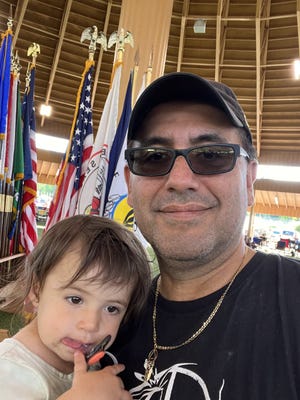
Michno
is now 10 years sober, and after remarrying in 2017, he found an
interest in discovering his heritage, especially so his 3-year-old
daughter, Audrey, can know more about where her people came from.
After becoming sober, he accepted he is Native American, but hadn’t known to which tribe he belonged.
During a fellowship sobriety meeting, Michno was asked which tribe he was from and struggled with an answer.
“I
answered because I was born in Rhinelander and that Rhinelander is in
Oneida County, I think I’m Oneida,” he said. “That’s how oblivious I
was.”
Michno eventually reached out to the Wisconsin Department of Children and Families
and connected with an adoption coordinator in Madison who told him his
birth mother was half Ho-Chunk and half Forest County Potawatomi.
He
later learned he had been enrolled in the Forest County Potawatomi
Tribe in 1978 by another biological family member under his birth name
of Mark Edward Johnson.
“What was odd with that
first reading of the adoption paperwork is that I could read a few
pages at a time and had to process this all,” Michno said. “It was the
story of Mark Edward Johnson and it was odd reading Mark’s story and
having it sink in that Mark was me.”
He also later learned his birth mother, Pauline Johnson, died in 1989 and is still uncertain who his birth father is.
Michno
has been meeting his birth cousins from the Johnson family for the
first time in the past few years, mostly virtually during the pandemic,
and is eager to start meeting more family members in person.
He’s been attending pow-wows and other community events with his family, trying to learn more about his heritage.
“I’m a cultural infant,” Michno said.
One of his cousins is Manny Johnson, who serves as the tribal treasurer for the Forest County Potawatomi.
“Growing
up, I knew my aunt had a child, but we didn’t know if it was male or
female,” Johnson said. “It was a closed adoption. We didn’t talk about
it back then.”
He said his father had tried to
find his biological nephew, Mark Johnson, not knowing his adopted name
was Rob Michno, in the hopes of connecting as a family. But he was
unsuccessful.
“I’m saddened we missed a lot of
years together,” Johnson said of Michno. “We couldn’t believe we found
each other. It was almost something out of a movie.”
He
said he speaks with Michno on a monthly basis, but still has yet to
have a proper long meeting going through photo albums, because of the
ongoing pandemic.
“He has some of the same mannerisms as his mom, such as in the way he laughs,” Johnson said of Michno.
Michno was adopted before the passage of the Indian Child Welfare Act of 1978, which gives preference to tribal families in adopting Native children.
Johnson
wonders how Michno’s life would have been different had he been adopted
by another Potawatomi family, or even his own family.
For
his part, Michno said his adopted parents loved him as best they could
and hasn’t formed an opinion on a new U.S. Supreme Court case that
challenges the validity of the Indian Child Welfare Act.
A
white couple from Texas is challenging the act after it nearly thwarted
their adoption of a Navajo child, claiming the act is discriminatory
based on race.
Tribal attorneys, including
those representing the Oneida Nation of Wisconsin, said the law is not
based on race, but on tribal sovereignty, and that tribes are sovereign
nations that should look after their own citizens.
A decision on the case is not expected until early to mid 2023.
By Melanie Payne ( mpayne@news-press.com ) August 15, 2010 Alexis Stevens liked to describe herself as a model citizen. She was adopted fr...
Bookshop
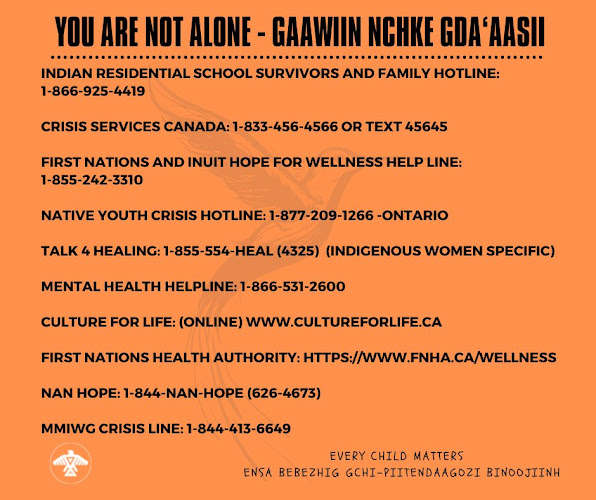
You are not alone
To Veronica Brown
Veronica, we adult adoptees are thinking of you today and every day. We will be here when you need us. Your journey in the adopted life has begun, nothing can revoke that now, the damage cannot be undone. Be courageous, you have what no adoptee before you has had; a strong group of adult adoptees who know your story, who are behind you and will always be so.
Diane Tells His Name
click photo
Lost Birds on Al Jazeera Fault Lines
click to read and listen about Trace, Diane, Julie and Suzie
NO MORE STOLEN SISTERS
click image
We conclude this series & continue the conversation by naming that adoption is genocide. This naming refers to the process of genocide that breaks kinship ties through adoption & other forms of family separation & policing 🧵#NAAM2022#AdoptionIsTraumaAND#AdopteeTwitter#FFY 1/6 pic.twitter.com/46v0mWISZ1
As the single largest unregulated industry in the United States, adoption is viewed as a benevolent action that results in the formation of “forever families.” The truth is that it is a very lucrative business with a known sales pitch. With profits last estimated at over $1.44 billion dollars a year, mothers who consider adoption for their babies need to be very aware that all of this promotion clouds the facts and only though independent research can they get an accurate account of what life might be like for both them and their child after signing the adoption paperwork.











 Posts
Posts

