BOOZHOO! We've amassed tons of information and important history on this blog since 2010. If you have a keyword, use the search box below. Also check out the reference section above. If you have a question or need help searching, use the contact form at the bottom of the blog.
We want you to use BOOKSHOP to buy books! (the editor will earn a small amount of money or commission. (we thank you) (that is our disclaimer statement)
This is a blog. It is not a peer-reviewed journal, not a sponsored publication... WE DO NOT HAVE ADS or earn MONEY from this website. The ideas, news and thoughts posted are sourced… or written by the editor or contributors.
EMAIL ME: tracelara@pm.me (outlook email is gone)
THANK YOU CHI MEGWETCH!
SEARCH
Showing posts with label Truth and Reconciliation. Show all posts
Showing posts with label Truth and Reconciliation. Show all posts
This
year’s Toronto International Film Festival features a record eight
Indigenous films. One of the feature films, Ni-Naadamaadiz: Red Power
Rising, tells the story of an Indigenous uprising in northern Ontario in
1975. Producer and co-writer Tanya Talaga discusses the importance of
Indigenous films in truth and reconciliation.
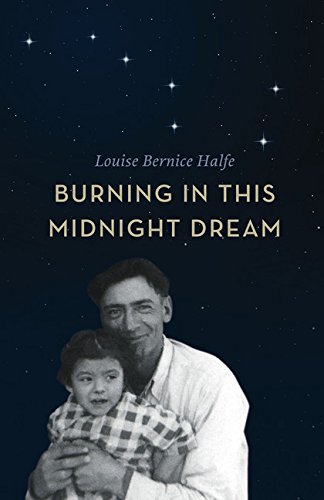
Louise Bernice Halfe Sky Dancer has published a third volume of poetry, Burning In This Midnight Dream, and it is a burning indictment, a hushed prayer, an angry account. Burning In This Midnight Dream articulates
some of Canada's worst history from the inside looking out.
These
poems are an insider's nightmare memories of Canada's residential
schools.
Halfe/Sky Dancer is a quiet poet of considerable reserve yet these poems
rumble with thunderous revelations that reverberate off of the page,
run up your arms and attack your guilty heart.
nipin nikamowin - summer song
I listened to outrageous laughter
there by the stone-carving shelter
where children painted and listened
to Alex Janvier.
Year after year
on the grounds of Blue Quills
I shared a tent with a friend and we told stories
of those lonely nights and how we preserved
our broken Cree.
I walked, ran, skipped
swore and sang the fourteen miles
from that school all the way to Saddle Lake.
We were told by our guide to meditate, be silent
in our walk. How could we after our voices
where lost in the classrooms of that school?
When I reached my home reserve
the Old Ones received me
and danced me on my blistered feet.
Water, tea, fruit, bannock and deer stew.
What food would heal this wound
bundled against my back?
A child still crying in those long school nights.
I know of a man who still carries his suitcase,
began at six, now sixty years, carrying
those little treasures of home
that was forever gone.
...
Burning In This Midnight Dream is a peat fire of poetry. You
don't see any flames on the surface but you know for certain that you
are on hot footing and that all is ablaze underneath, smoldering and
determined.
Halfe/Sky Dancer has included several family photos along with the text
and this case is the exception that proves the rule about photos and
poetry. These photos are necessary. The poems work just fine on their
own, they are all strong, exude the strength of a brave survivor, but
these photos make the stories blood, flesh and bone. We see the young
children in a new and different context, we see them as clearly as the
"boy in the striped pajamas," the red-coated lost girl in the opening
frames of Steven Spielberg's Shindler's List. The fine and perfect
faces in these photos are calling out through these poems.
Residential School Alumni
An uncle shot his wife
left her lying behind the house
with the rifle at her side.
Their four children peered
behind the curtains.
He was never able to look at anyone.
A lake held him as he froze, standing,
clutching his traps.
One son joined the marines
a mosquito killed him in Vietnam.
In a police chase another son
hit a slough and drowned in his grave.
Their little brother slept in a flaming
house with needles, spoons, heroin and cocaine.
My cousin was left alone.
I remember them.
...
Our morning read here in the Today's book of poetry offices was a little
more sombre than usual but that's not to say we didn't enjoy the poems.
We certainly respected them.
Louise Bernice Halfe Sky Dancer wants the Truth and Reconciliation process to succeed. Burning In This Midnight Dream is an honourable attempt to plow as much truth into the open as the open can bear.
WINNIPEG – Priests, nuns and oblates have lost a small court battle related to residential school documents.
More than 30 Catholic organizations across Canada tried to stop the
new National Research Centre (NRC) from participating in a hearing on
the future of survivor testimony.
But Justice Paul Perell of the Ontario Superior Court decided
otherwise. On June 14th, he granted intervenor status to the centre
which will be located at the University of Manitoba.
Groups including the Truth and Reconciliation Commission (TRC) and
the Indian Residential School Adjudication Secretariat are at odds over
whether to archive or destroy documents collected through the
Independent Assessment Process (IAP). So Perell will hear arguments from
the centre and other groups seeking his direction on what to do with
the documents. The hearing will happen July 14-16 in Toronto.
The IAP is a confidential, legal process where former students
disclose the abuse they suffered to be eligible for financial
compensation. It was created to help resolve claims of sexual abuse,
serious physical abuse and other wrongful acts perpetrated by school
staff and students.
The agency in charge of the IAP argues these highly personal and
sensitive accounts should be destroyed. But the TRC wants to preserve
them as part of the historical record.
As APTN Investigates reported last week, some survivors favour saving their stories, so their suffering is not forgotten.
The NRC will be directly affected by the decision because it is mandated to archive information collected by the TRC.
The 33 Catholic groups argued the NRC didn’t meet intervenor status
due to self-interest. But argued it could be a “friend” of the court and
only offer information, without the legal standing that intervenor
status would give. They also said Perell’s court did not have the
authorization to add the NRC to the case.
But the judge, who is one of nine national supervising judges of the
Indian Residential Schools Settlement Agreement (IRSSA), disagreed.
“In my opinion, the NRC satisfies the criteria for being added as a
party to the [Request for Directions] RFDs and that it would assist the
court in having its evidence and argument. In this regard, it is worth
noting that the court in providing directions pursuant to an RFD is not
just exercising its adjudicative function, but it is also exercising its
administrative authority to supervise a class action settlement,” the
judge said in the nine-page decision.
“While not a party to the IRSSA, the NRC is already a participant in
the administration of the RFDs, and it has an interest that may be
affected positively or negatively by the outcome of the RFDs. Depending
on the outcome of the RFDs, which remains to be seen, responsibilities,
and obligations may be imposed on the NRC.”
Perell also said the administration of the IRSSA is an ongoing responsibility of the courts across Canada.
“The court has an ongoing obligation to oversee the implementation of
the settlement and to ensure that the interests of the class members
are protected. Where there are vulnerable claimants, the court’s
supervisory jurisdiction will permit the court to fashion such terms as
are necessary to protect the interests of that group,” Perell added.
The Catholic groups, who are a “party” to IRSSA and oppose NRC involvement, are:
Les Oeuvres Oblates de l’Ontario, Les Residences Oblates du Quebec,
Soeurs Grises de Montreal/Grey Nuns of Montreal, Sisters of Charity
(Grey Nuns) of Alberta, Les Soeurs de LaCharite des T.N.O., HotelDieu de
Nicolet, The Grey Nuns of Manitoba Inc.- Les Soeurs Grises du Manitoba
Inc., The Sisters of Saint Ann, Sisters of Instruction of the Child
Jesus, The Sisters of Charity of Providence of Western Canada,
Immaculate Heart Community of Los Angeles CA, Missionary Oblates-Grandin
Province, Les Oblates de Marie Immaculee du Manitoba, Oblates of Mary
Immaculate-St. Peter’s Province, Order of the Oblates of Mary Immaculate
in the Province of British Columbia, La Corporation Episcopale
Catholique Romaine de Grouard, Roman Catholic Episcopal Corporation of
Keewatin, The Catholic Episcopale Corporation of Mackenzie, Roman
Catholic Episcopal Corporation of Prince Rupert, Sisters of Charity
Halifax, The Roman Catholic Bishop of Kamloops Corporation Sole, Roman
Catholic Episcopal Corporation of Halifax, Sisters of Presentation, and
Roman Catholic Archiepiscopal Corporation of Winnipeg, Les Soeurs de
Notre-Dame Auxiliatrice, Les Soeurs de Saint-François d’Assise,
L’institut des Soeurs du Bon-Conseil/Les Soeurs de Notre-Dame du
Bon-Conseil de Chicoutimi, Les Soeurs de Saint-Joseph de
Saint-Hyacinthe, Les Soeurs de Jésus-Marie, Les Soeurs de l’Assomption
de la Sainte-Vierge, Les Soeurs de l’Assomption de la Saint-Vierge de
l’Alberta, Les Soeurs Missionnaires du Christ-Roi, and Les Soeurs de la
Charité de Saint-Hyacinthe, andThe Sisters of St. Joseph of Sault Ste.
Marie.
The Adjudication Secretariat says it has received 37,716 IAP
applications and resolved 20,413, so far, with 17,303 in progress.
Approximately $2 billion has been paid in compensation and legal fees.
The Truth and Reconciliation commission
into Indian residential school abuse faces a deadline to wrap up, while
historical documents pile up.
Blair Gable Photo
The Truth and Reconciliation Commission is looking through documents
stored at the Library and Archives Canada Preservation Centre in
Gatineau, Que. Christopher Smith, collection management clerk, works in
an area containing documents being examined by the Truth and
Reconciliation Commission.
The race is on for the
Truth and Reconciliation Commission probing abuse in Indian residential
schools to comb through mountains of historical government records in
search of documents pertaining to this painful chapter in Canada’s
history.
For the past four
years, the commission has been holding public hearings across the
country during which survivors have told riveting personal stories about
mistreatment in residential schools.
Those hearings have
wrapped up and by June 2015 the commission must write a report that
includes recommendations for preventing a similar tragedy in the future.
Kimberly Murray, a lawyer and executive director for the commission, says there’s not enough time left.
“There’s no way we’ll be able to go through and collect every document,’’ says Murray, a Mohawk from the Kanesatake reserve.
A major piece of the
commission’s work is pulling together all the witness statements,
documents and research on residential schools and putting the massive
haul in a new National Research Centre to be located in Manitoba.
The document search is a sleuthing job not unlike one Sherlock Holmes would undertake.
Already the federal government has, under duress and court order, provided 4.2 million documents to the commission.
But recently, Ottawa
issued an RFP to hire a firm that will pore through an additional
estimated 60,000 boxes stored in vaults in five Library and Archives
Canada locations across the country.
Not every box will
contain documents germane to the commission and that’s the tricky part.
The job requires painstaking sifting to flag the relevant records.
While there hasn’t
been an eyeball on every one of the 4.2 million documents already
provided, important ones involving incidents like the deaths of students
in residential schools have been looked at and reviewed, Murray said.
“We have key topics
that we’re writing about. Every Health Canada record we’ve looked at.
Every hospital record we have we’ve looked at,’’ she says.
Researchers follow a
trail, like following breadcrumbs. When they come across documents with
dialogue pertaining to a subject the commission is writing about, that
dialogue is traced back through other records. Often these dialogues
happened between federal departments — the RCMP, for example, talking to
Health Canada.
The residential schools intersected with many government agencies, including National Defence.
“We’ve seen
photographs of the Department of National Defence taking (residential
school) children to hospitals,’’ Murray said. “Some children were also
temporarily housed in military barracks.’’
Murray pointed out
that aside from 33 federal departments in Canada, including Aboriginal
Affairs, the commission is also waiting for documents from churches that
ran the residential schools.
“Many Catholic entities have not produced their documents to us yet,’’ Murray said.
Canada’s residential
schools for aboriginal people began in the 1870s and the last one closed
in 1996. There were more than 130 of these government-funded schools
across the country that were set up to eradicate parental involvement in
aboriginal children’s cultural, intellectual and educational
development.
Residents suffered
horrible sexual and physical abuse. More than 150,000 First Nations,
Métis and Inuit children were placed in the schools. An estimated 80,000
former students are still living today.
The $60-million, five-year commission was formed as part of a settlement agreement.
There’s been finger pointing at Ottawa over the fact the remaining time is too short to sort through all the relevant records.
When asked about that
complaint, Andrea Richer, a spokeswoman for Aboriginal Affairs and
Northern Development Minister Bernard Valcourt, pointed out the federal
government helped the commission get a one-year extension to complete
its mandate.
“Our government
remains committed to achieving a fair and lasting resolution to the
legacy of Indian Residential Schools,’’ Richer said in a statement.
Gordon Williams, 73, a
former residential school student and member of the commission’s
survivor committee that advises the inquiry, said survivors like him did
their part by telling their stories to the commission.
“A lot of people were very emotional about what happened,’’ he said referring to the testimonials the commission heard.
Now it’s time for the
documents and records to speak, said Williams, who attended the Birtle
Indian Residential School, west of Winnipeg, from 1957 to 1961.
Murray says although the commission’s mandate wraps up next year, the story won’t end there.
“When we’re done,
we’re not walking away without making sure that the legal obligation to
produce those records continues past the commission, and those records
be given to the National Research Centre,’’ Murray said.
I was very fortunate to attend some of these panels at Yale in November and had planned to write about some of what I heard. It would actually be better if you watched the panels yourself! This was a ground-breaker - since many of the presenters are Native authors working on new research!
Please watch all of them but especially The Honorable Justice Murray Sinclair, Chair, Truth and Reconciliation Commission of Canada
Indigenous Enslavement and Incarceration in North American History
Video
from the Gilder Lehrman Center’s 15th Annual International Conference,
held November 15-16, 2013 in Luce Hall at Yale University is now online.
Studies
of indigenous slavery have multiplied in the past decade, changing not
only the ways we think about slavery, but also race, citizenship, and
nation. This conference brought together some of this exciting new work
and traced its effects on and within Native American communities. It did
so self-consciously in its expressed focus on slavery and
incarceration. Such an emphasis, we hope, connected new slavery
scholarship done in early American history with contemporary
investigations into incarceration and prison studies.
I was also able to meet the esteemed author Margaret D. Jacobs who has a new book coming out about American Indian Adoption. As we hugged, we both cried. It was my honor to meet this scholar and thank her for her academic scholarship on our behalf. I didn't know she would be aware of this blog American Indian Adoptees or my two books - but she knew.
Kim Wheeler was adopted during the Sixties Scoop and fought to find her way back to her culture My name is Kim Wheeler but some know me as...
Bookshop
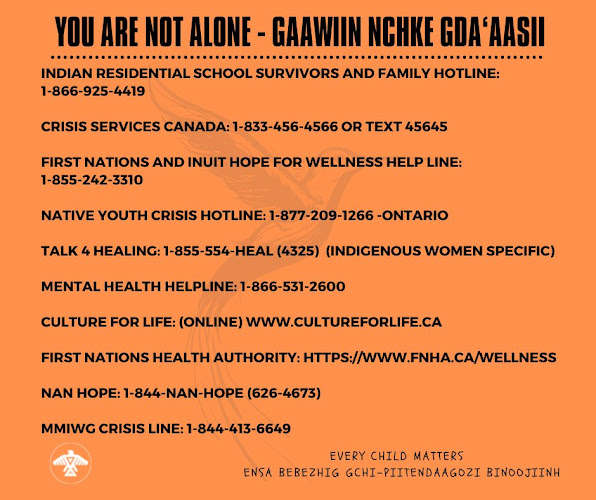
You are not alone
To Veronica Brown
Veronica, we adult adoptees are thinking of you today and every day. We will be here when you need us. Your journey in the adopted life has begun, nothing can revoke that now, the damage cannot be undone. Be courageous, you have what no adoptee before you has had; a strong group of adult adoptees who know your story, who are behind you and will always be so.
Diane Tells His Name
click photo
Lost Birds on Al Jazeera Fault Lines
click to read and listen about Trace, Diane, Julie and Suzie
NO MORE STOLEN SISTERS
click image
We conclude this series & continue the conversation by naming that adoption is genocide. This naming refers to the process of genocide that breaks kinship ties through adoption & other forms of family separation & policing 🧵#NAAM2022#AdoptionIsTraumaAND#AdopteeTwitter#FFY 1/6 pic.twitter.com/46v0mWISZ1
As the single largest unregulated industry in the United States, adoption is viewed as a benevolent action that results in the formation of “forever families.” The truth is that it is a very lucrative business with a known sales pitch. With profits last estimated at over $1.44 billion dollars a year, mothers who consider adoption for their babies need to be very aware that all of this promotion clouds the facts and only though independent research can they get an accurate account of what life might be like for both them and their child after signing the adoption paperwork.












 Posts
Posts

