BOOZHOO! We've amassed tons of information and important history on this blog since 2010. If you have a keyword, use the search box below. Also check out the reference section above. If you have a question or need help searching, use the contact form at the bottom of the blog.
We want you to use BOOKSHOP to buy books! (the editor will earn a small amount of money or commission. (we thank you) (that is our disclaimer statement)
This is a blog. It is not a peer-reviewed journal, not a sponsored publication... WE DO NOT HAVE ADS or earn MONEY from this website. The ideas, news and thoughts posted are sourced… or written by the editor or contributors.
EMAIL ME: tracelara@pm.me (outlook email is gone)
THANK YOU CHI MEGWETCH!
The Sámi (/ˈsɑːmi/SAH-mee; also spelled Sami or Saami) are the traditionally Sámi-speaking indigenous peoples inhabiting the region of Sápmi, which today encompasses large northern parts of Norway, Sweden, Finland, and of the Kola Peninsula in Russia. The region of Sápmi was formerly known as Lapland, and the Sámi have historically been known in English as Lapps or Laplanders, but these terms are regarded as offensive by the Sámi, who prefer their own endonym, e.g. Northern Sámi Sápmi.[8][9] Their traditional languages are the Sámi languages, which are classified as a branch of the Uralic language family.
Skolt Sámi Heini Wesslin did not learn about her culture – now she hopes that truth and reconciliation process changes education
The recently founded Truth and Reconciliation Commission aims at
acknowledging and assessing the wrongs done against the Sámi in
Finland. Two Sámi tell now about their experiences and what they expect
of the Commission.
Yle Sapmi | November 30, 2021| By Inger-Elle Souninen
For Skolt Sámi Heini Wesslin, loss of language has been the
tough issue in her life, while Inari Sámi Rauni Mannermaa still feels
the burden of her days in a dormitory.
The stories and experiences of Wesslin and Mannermaa are
familiar to the Sámi. The old events that still cause pain for the next
generations would presently be considered serious violations. The
purpose of the Truth and Reconciliation Commission is to look at these
issues now.
After years of preparation, the historical Sámi Truth and
Reconciliation Commission has started its work. The objective is to
acknowledge and assess the wrongdoings that have been, and are still
being, done against the Sámi. In addition, the Commission also aims at
admitting and assessing the State’s assimilation policy and violations
of rights.
The report of the Commission is to be submitted by the end
of November 2023. Before that, the Commission has an enormous amount of
work to do. The variety of experiences and expectations equals the
number of people, but there is a common history behind them all.
Returned home when she got children
Heini Wesslin lives in the village of Sevettijärvi in the
northeastern part of Inari Municipality. There is a strong sense of
Skolt Sámi community in the village, and the local language and culture
play a central role in Wesslin’s everyday life. But this has not always
been the case.
When Wesslin was six, her family moved from her parent’s
home village Sevettijärvi to Utsjoki. Wesslin got her primary and
secondary education there. Although Utsjoki is in the Finnish Sámi Area,
it is not the home region of the Skolt Sámi. Thus Wesslin did not get
to learn about the Skolt Sámi and their culture at school.
Later, life and studies took Heini Wesslin to Helsinki,
Inari and Rovaniemi. Finally, twelve years ago, she returned to
Sevettijärvi. She moved there above all because she wanted to give her
children a sense of belonging from the very day they were born.
“Despite the fact that I’ve lived in Sápmi, I have not
lived in my own community. Therefore, it felt natural and important to
move here.”
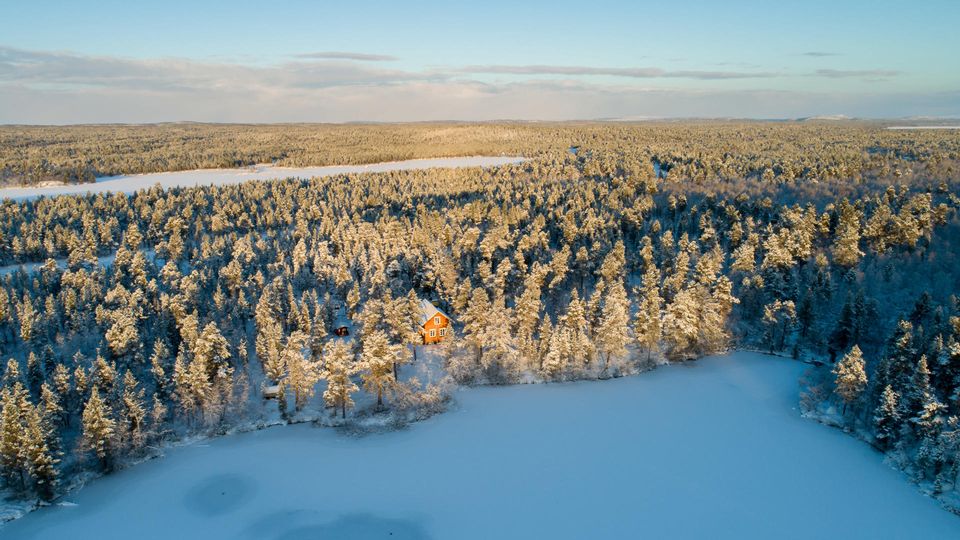
Heini Wesslin’s home is situated right on Lake Sevettijärvi. Photo: Vesa Toppari / Yle
The Skolt Sámi language has had a great impact on Heini
Wesslin’s choices in life. She did not learn her native language from
her mother, who believed that not knowing the language would make
Heini’s life easier. But Heini began to study the language as soon as it
was possible.
At first, speaking the language was difficult for Heini
Wesslin: she felt that she should already know the language. Today, she
accepts that she does not always speak correctly, but at least she uses
the language.
She speaks Sámi with her children. The children speak Skolt
Sámi also with their grandmother, but for Wesslin herself it does not
yet feel natural to speak the language with her mother.
“It’s extremely difficult to switch languages with certain people.”
Used handicraft to connection with culture
At present, Heini Wesslin knows the language and lives in a
community with a strong Skolt Sámi culture. However, she has sometimes
bad feelings about not having learned the language as a child.
“I’ve thought a few times that I could also be doing
something else in the evenings instead of conjugating Skolt Sámi verbs
via Teams.”
At first, Wesslin used doing Sámi handicraft, or duodji, to build up a connection to her culture.
“There’s also another language I speak: duodji.”
Many people know Heini Wesslin as a skilled craftmaker.
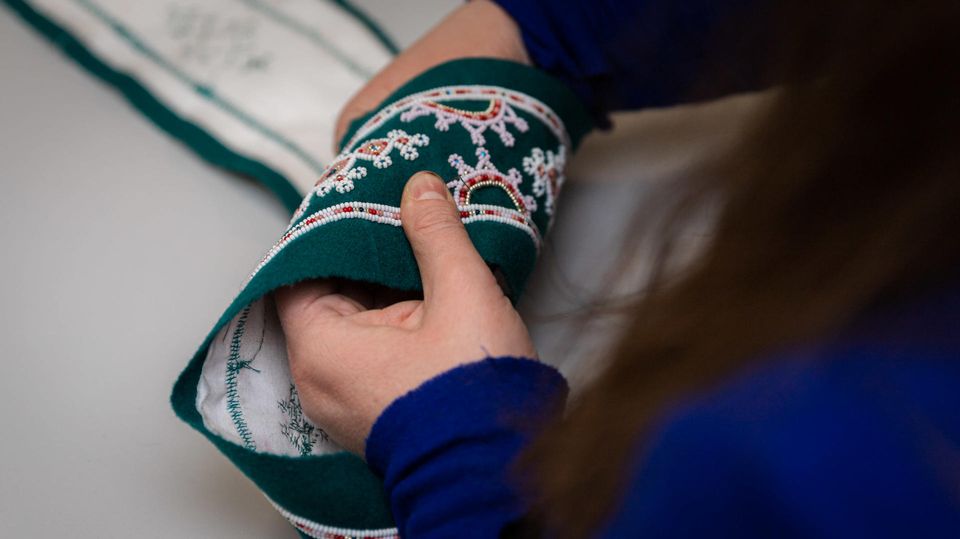
Beadwork is an important part of Skolt Sámi culture. Photo: Vesa Toppari
/ Yle
Wesslin began to wear the traditional Sámi clothing after
her secondary education. She had crafted the Skolt Sámi dress together
with her grandmother. Wearing Skolt Sámi clothing, finally, evoked many
feelings in her.
“It was an important thing. I didn’t have a very strong sense of belonging then. It took a while to feel part of the community.”
At present, she makes the clothes for both her children and
parents, helping them wear them. Wesslin’s parents belong to the
generation who had to stay in dormitories, so they never learned to wear
the traditional clothing. When Wesslin dressed her children in Skolt
Sámi clothing, her parents also dared to start wearing it.
Today, she is a carrier of culture – as a result of many
conscious choices. She did not get to learn about her culture at school,
but hopes that everyone will have the opportunity in future.
“The biggest problem is that we’re not allowed to learn
about ourselves. We learn the history and way of thinking of the
dominant culture.”
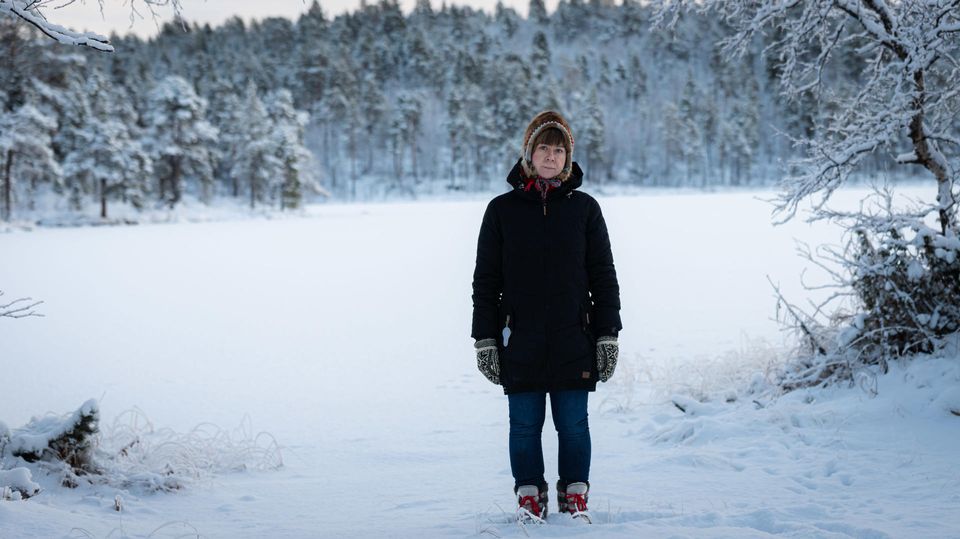
Wesslin believes that if the truth and reconciliation
process is carried out properly, it will benefit everyone. Photo: Vesa
Toppari / Yle
Kim Wheeler was adopted during the Sixties Scoop and fought to find her way back to her culture My name is Kim Wheeler but some know me as...
Bookshop
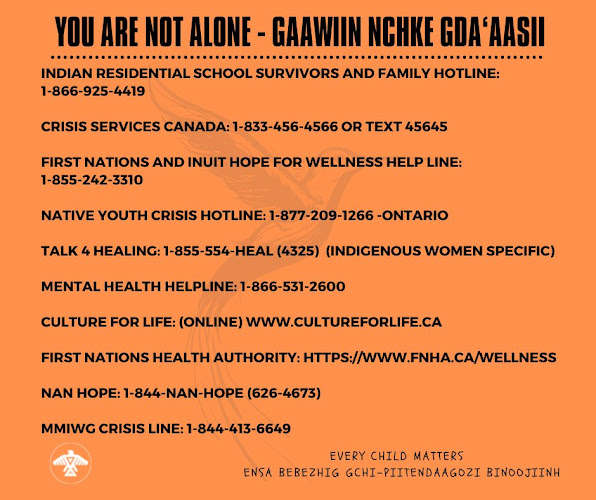
You are not alone
To Veronica Brown
Veronica, we adult adoptees are thinking of you today and every day. We will be here when you need us. Your journey in the adopted life has begun, nothing can revoke that now, the damage cannot be undone. Be courageous, you have what no adoptee before you has had; a strong group of adult adoptees who know your story, who are behind you and will always be so.
Diane Tells His Name
click photo
Lost Birds on Al Jazeera Fault Lines
click to read and listen about Trace, Diane, Julie and Suzie
NO MORE STOLEN SISTERS
click image
We conclude this series & continue the conversation by naming that adoption is genocide. This naming refers to the process of genocide that breaks kinship ties through adoption & other forms of family separation & policing 🧵#NAAM2022#AdoptionIsTraumaAND#AdopteeTwitter#FFY 1/6 pic.twitter.com/46v0mWISZ1
As the single largest unregulated industry in the United States, adoption is viewed as a benevolent action that results in the formation of “forever families.” The truth is that it is a very lucrative business with a known sales pitch. With profits last estimated at over $1.44 billion dollars a year, mothers who consider adoption for their babies need to be very aware that all of this promotion clouds the facts and only though independent research can they get an accurate account of what life might be like for both them and their child after signing the adoption paperwork.











 Posts
Posts

