They Took Us Away

They Took Us Away
click image to see more and read more

it's free

click

How to Use this Blog

BOOZHOO! We've amassed tons of information and important history on this blog since 2010. If you have a keyword, use the search box below. Also check out the reference section above. If you have a question or need help searching, use the contact form at the bottom of the blog.


We want you to use BOOKSHOP to buy books! (the editor will earn a small amount of money or commission. (we thank you) (that is our disclaimer statement)

This is a blog. It is not a peer-reviewed journal, not a sponsored publication... WE DO NOT HAVE ADS or earn MONEY from this website. The ideas, news and thoughts posted are sourced… or written by the editor or contributors.

EMAIL ME: tracelara@pm.me (outlook email is gone) THANK YOU CHI MEGWETCH!

SEARCH

Showing posts with label kinship adoption. Show all posts

Sunday, March 12, 2023

Part 3: What if We Lost ICWA? Kinship Care

👉Nicole Chung on the family who tried to end racism through adoption: “The reality, of course, is that transracial adoption has no intrinsic power to heal racial prejudice.” | The Atlantic

Part 3: What if We Lost ICWA?

By Trace L Hentz, blog editor

Last November I wrote a post: WE ARE NOT GOING BACK and ended the post with: If the Indian Child Welfare Act (ICWA) fails we will write a stronger law.  I meant it, and states are enacting their own laws right now to protect Indian children from the predatory billion-dollar Adoption Industry.

I had a friend, Jagade, who dreamed for others.  (Yes, that is a real thing. Sadly she passed on a few years ago.) She told me about a dream she had that many more adoptees were coming.  I didn't want to believe her.  She told me that is why I was directed to do the anthologies, so that future adoptees would know the history of the Indian Adoption Projects and what happened.  And how to return to their tribes as adults.

This dream can means two things: There is still too much poverty in Indian Country and the authorities (social workers) will come for Native children, judging families based solely on living conditions. It's happened before.  They need an excuse to remove children so the judges and lawyers and adoption industry can continue making profits.  (It also means that there are not enough Native people to foster and adopt children, and become adoptive parents.) 

Poverty Porn? Yes.

High levels of perceived Poverty justifies removal of American Indian children (again?) #PovertyPorn

Individuals with little exposure to or experience with American Indian communities would have little to no knowledge of these forms of social safety nets (ie. kinship care). 

Second: The other thing her dream might mean is: adoption will not be closed, and people who are adopted will know the truth when they become adults, and access and open their adoption file. And then have a reunion.

Yes, adoption has changed that much since I started studying it back in 2004/5.

Let's look at prior stats:

How many children were adopted in 2000 and 2001? STATiSTiCS

 AFCARS reported 54,627 adoptions in the United States during fiscal year 2000 and 50,136 adoptions in fiscal year 2001.

1992


PUBLIC: 18%

INTERCOUNTRY: 5%

PRIVATE, INDEPENDENT, KINSHIP AND TRIBAL: 77%

2001


PUBLIC: 39%

INTERCOUNTRY: 15%

PRIVATE, INDEPENDENT, KINSHIP AND TRIBAL: 46%
This number includes private agency, independent, and tribal adoptions with public agency involvement that were reported to AFCARS.

Is this the future? Kinship care?

Kinship care missing from survey

2010 excerpt:
Terry L. Cross, executive director of the Portland-based National Indian Child Welfare Association and an enrolled member of the Seneca Nation New York, said the results have their roots in cultural backgrounds.

“Cultural norms, including sustaining strong extended families, handing down of culture and traditions, and establishing a positive identity, contribute to perceptions of our foster care system and notions of your place within that system. What is missing from the survey is how many people would support ‘kinship care,’ or relative care, over foster care placements in a stranger’s home,” Cross said.

Cross said kinship care is considered by most to be a cultural norm of Indian Country, and when a crisis arises other family members step in to share the burden of taking care of the children. Given a choice of a child being removed from a home due to maltreatment and being placed in a licensed foster home with strangers in a new community, Cross said, it appears most Indians will choose informal kinship care arrangements, even if it means little financial support for the kinship caregivers.
 
and finally in 2018:

KINSHIP: State Turns to Urgent Placement of Foster Kids with Relatives, Friends


A family from the Cheyenne River tribe plays together near Turtle Island during a protest against plans to pass the Dakota Access pipeline near the Standing Rock Indian Reservation, near Cannon Ball, North Dakota, U.S. November 26, 2016. REUTERS/Stephanie Keith - RC11F6A7B3D0


*
Editor Note: The government takes the land AND causes the poverty, then they want more LAND and take the children to achieve this goal. The genocide cycle never ends...  That is the sport of colonization and empire. Trace

to be continued


Thursday, June 30, 2022

The Danger Ahead

That's me in the braids.

By Trace Hentz, Blog Editor

Hi everyone. Do you realize that this blog/website has been here since 2010? 

It's even hard FOR ME to remember all that I wrote and posted. 

There are hundreds of posts from/about the adoptee perspective. There were many adoptees who started writing in the 2000s, posting on blogs, some even writing books. 

It was an avalanche but who was reading? Adoptees mostly. Social Workers/Academics, definitely.

Did it work?

Our intended target was the adoption industry and all the people who planned to adopt a baby. Apparently we failed. We thought people would realize that closed adoption (by strangers) causes harm, trauma, stress, injury and lifelong mental/emotional/physical health issues.  We hoped that people would realize the word "adoption" actually means child trafficking,

We hoped that potential adoptive parents (PAPS) would reconsider adopting newborns/babies.  

We made suggestions like KINSHIP ADOPTION and LEGAL GUARDIANSHIP instead of the archaic closed adoption system.  If a child was a true orphan, with these options at least an adoptee would still have their identity intact. (Yes, there would still be trauma losing birth parents.)

There is also the HISTORY of the Indian Adoption Projects (genocide) HORROR show, as that truth leaked out -- out of that came the book series LOST CHILDREN OF THE INDIAN ADOPTION PROJECTS with Adoptee Voices and history - we had a platform to tell our story.

Here we are in 2022 - we are reentering a NEW dangerous time - some people are listening to adoptees but most are not.  (Twitter apparently replaced the blogs. #AdopteeVoices is their hashtag. #FlipTheScript was also used.)

Adoption is touted the solution since Roe v. Wade was overturned.  

Some are chanting "adopt adopt" - as if all we adoptees worked for since 2005 was ERASED - WIPED OUT!

But adoptees are not silent: we are still here like my friend Karen:

Karen's website: www.adopteereading.com


Can I ask you a favor? Would you please read this? I wrote about WHAT MY ADOPTION COST ME. My story is your story.

https://blog.americanindianadoptees.com/2012/01/lost-daughters-what-my-adoption-cost-me.html?spref=tw

What did being "adopted" cost you? 

I look forward to your comments.   Trace


(p.s. Thank you for being here and reading.)

Friday, August 24, 2012

Yurok Traditional Adoption

Cal. COA Decides ICWA Case involving Yurok Traditional Adoption Statute

by Matthew L.M. Fletcher
Turtle Talk on the web
Here is the opinion:
An excerpt:
In 2010, legislation was enacted establishing “tribal customary adoption” as an alternative permanent plan for a dependent Indian child who cannot be reunited with his or her parents. Tribal customary adoption is intended to provide an Indian child with the same stability and permanency as traditional adoption under state law without the termination of parental rights, which is contrary to the cultural beliefs of many Native American tribes. In this case, the Yurok Tribe (the tribe) intervened in the dependency proceedings prior to the jurisdictional hearing and recommended tribal customary adoption as the permanent plan for the minor. The tribe now contends the juvenile court erred in terminating parental rights and selecting traditional adoption as the permanent plan. We disagree with the tribe's contention that the court was required to select tribal customary adoption as the child's permanent plan simply because the tribe elected such a plan but conclude that, in the absence of a finding that tribal customary adoption would be detrimental to the minor, the court erred in failing to select such a permanent plan in this case.

Sunday, March 25, 2012

Broken Circle: What is an orphan?

Adoption was invented for orphans, children who lost their parents and needed immediate attention and help - to save their lives literally. The family circle was broken with the death of parents.
Children were orphans because there were no other relatives to care for them.
We know how "adoption" created new families for these orphans. That makes sense - it was a safety net.

Ask yourself:  how is the word orphan to be interpreted today?
In the Third World and Indian Country, those places on Earth where the most destitute live in poverty, an orphan is not necessarily without parents: some of these children are without necessities: food, water, medicine and clothing.
We know Americans will rescue the child but not their parent. Americans will call these children orphans. Is that true? Is it not selfish for an American to choose a child over the parent of that child?
Are Americans OK with separating that child from their parent via closed adoption?
The numbers of adoptees (7-10 million) today answers that question - yes.

In Indian Country kinship adoption means an orphaned child is raised with an auntie, grandparent or other relative.  Families remain intact and the child will not lose their family, language or their culture.
America's closed adoption model for Indians was purely destructive, severing a child's contact with culture, language and tribal kin, erasing their sovereign membership and their treaty rights. A few Americans involved in the Indian Adoption Projects have apologized, so we know they admit they did this heinous thing.
Can you imagine - Native children (thousands!) removed by the Indian Adoption Projects for the sole purpose of destroying families and tribal nations? It happened and yes, it was devastating.

America still places a stranglehold on Indian people with its judgement of us. This has gone on many years. Every treaty that was made was broken; all because American leaders wanted to secure more land and what was on those lands (minerals, water and food).
Plot after plot, year after year, you see the American government screwing Indians and stealing from tribes, or turning us against one another, one way or the other.
It's about control. It's about creating poverty and making us fight each other over scraps. This America goverment does not want us to be united in our struggle. They'd prefer us fighting each other over what little we're lucky enough to be granted or given by them.
A Northern Cheyenne friend said they start a fire in your front yard so you don't know what they are doing in your backyard.  They divert our attention this way, and have used it many times successfully.
That is why states historically do not deal with Indians - only the federal government. This is supposed to mean the feds are more fair or the feds have a better grasp of treaties and history - yet they control us with their beauracy, laws and delays.

Fast forward. Do you see American kids being sent to Africa or Russia for adoption? No.
Americans are the biggest adopter in all the world.  It's their savior complex. Americans believe they offered a better life for Indians, International and Third World adoptees.
As an adoptee, it was real pain for me. I cannot grasp how deep that pain went or my confusion and fear when my mother disappeared after I was born. She never returned.  Eventually I stopped crying. I blanked out the hurt yet that deep pain reached into every aspect of my life. It took many years for me to step into the circle and rejoin my relatives... My mother was not dead but I was orphaned.

I hope you will leave a comment.

Sunday, November 20, 2011

How many children were adopted in 2000 and 2001? STATiSTiCS

It's important to know the most recent statistics on adoption; here is the most recent report (2004)...

The Children’s Bureau and its Child Welfare Information Gateway (Information Gateway) are grateful to the National Center for State Courts (NCSC) for its important work in verifying adoption information from courts, bureaus of vital records, Native American Tribes, and private adoption agencies.

The purpose of this ADOPTION report is to estimate the number of children adopted in each of the States for 2000 and 2001 and to use these numbers to estimate the composition and trends of all adoptions in the United States.
Key findings are summarized below:
  • In 2000 and 2001, about 127,000 children were adopted annually in the United States. Since 1987, the number of adoptions annually has remained relatively constant, ranging from 118,000 to 127,000.
  • The source of adoptions is no longer dominated by kinship adoptions and private agency adoptions. Public agency and intercountry adoptions now account for more than half of all adoptions.
  • Adoptions through publicly funded child welfare agencies accounted for two-fifths of all adoptions. More than 50,000 public agency adoptions in each year (2000 and 2001) accounted for about 40 percent of adoptions, up from 18 percent in 1992 for those 36 States that reported public agency adoptions in 1992 (Flango & Flango, 1995).
  • Intercountry adoptions accounted for more than 15 percent of all adoptions. Intercountry adoptions increased from 5 percent to 15 percent of adoptions in the United States between 1992 and 2001 (U.S. Department of State, n.d.).
  • The other two-fifths of adoptions are primarily private agency, kinship, or tribal adoptions. With the available data, it is not possible to separate figures within this group, although the percentages of all adoptions in that group as a whole have decreased. In 1992, for example, stepparent adoptions (a form of kinship adoption) alone accounted for two-fifths (42 percent) of all adoptions.
No one agency is charged with collecting data on adoptions. The National Center for State Courts’ (NCSC’s) Court Statistics Project collects data by calendar year (which most States use) and State fiscal years for the total number of adoptions processed  through courts. NCSC’s figures are incomplete, however, for several reasons. Some parents who adopt in foreign countries choose not to file in a U.S. court. While all domestic adoptions are finalized in U.S. courts, adoptions are such a small percentage of court caseloads that they are sometimes included in a larger category, such as “other civil petitions,” and cannot be separated from other civil petitions.

Three other sources of adoption information provide numbers of adoptions by type: the Federal Adoption and Foster Care Analysis and Reporting System (AFCARS), the State Department, and the Office of Immigration Statistics within the Department of Homeland Security. AFCARS provides data on adoptions through public agencies, and the State Department and the Office of Immigration Statistics provide the number of visas issued for intercountry adoption. There is no overlap between the AFCARS data and the data provided by the Department of State and the Department of Homeland Security. Other data sources are inconsistent in terms of reporting period and population reported and are not mutually exclusive.  The number of adoptions in the third category—private agency, kinship, or tribal—can be approximated by subtracting the AFCARS and intercountry adoption numbers from the total adoptions reported by courts. The result is an approximation, but any difference due to gaps and overlap among counts from the three types is probably only slight.
To access a copy of these Highlights, go to www.childwelfare.gov/pubs/s_adoptedhighlights.cfm.
This material may be freely reproduced and distributed. However, when doing so, please credit Child Welfare Information Gateway. Available online at www.childwelfare.gov/pubs/s_adopted/index.cfm.

CITATION: U.S. Department of Health and Human Services. (2004). How many children were adopted in 2000 and 2001? Washington, DC: Child Welfare Information Gateway.

Adoption by Type

Three sources of adoption information provide numbers of adoptions by type: the Federal Adoption and Foster Care Analysis and Reporting System (AFCARS), the State Department, and the Office of Immigration Statistics within the Department of Homeland Security.
AFCARS reported 54,627 adoptions in the United States during fiscal year 2000 and 50,136 adoptions in fiscal year 2001.


1992

PUBLIC: 18%

INTERCOUNTRY: 5%

PRIVATE, INDEPENDENT, KINSHIP AND TRIBAL: 77%

2001

PUBLIC: 39%

INTERCOUNTRY: 15%

PRIVATE, INDEPENDENT, KINSHIP AND TRIBAL: 46%
This number includes private agency, independent, and tribal adoptions with public agency involvement that were reported to AFCARS.

Adoption information in AFCARS is updated continually based on new reports submitted by the States. The data in this report were those available on May 15, 2003. In Illinois, Oklahoma, Iowa, and Arizona, in both 2000 and 2001, the public agency adoptions comprised the largest share of all adoptions. More than half of all adoptions in these States were public agency adoptions. Of all States, Alabama and Wyoming had the smallest percentage of public agency adoptions.
More stats available online at www.childwelfare.gov/pubs/s_adopted/index.cfm.

[I was asked recently how many children are adopted each year...These statistics tell us plenty...Trace]

Happy Visitors!

WRITTEN BY HUMANS!

WRITTEN BY HUMANS!

Blog Archive

Featured Post

Your History Class Was a F*cking Lie | #NOMOAR

  Your History Class Was a F*cking Lie by Sean Sherman (Or: How the American Educational System Has Always Been a Racist Propaganda Program...


Native Circles

Native Circles
click logo for podcasts!

Most READ Posts

Bookshop

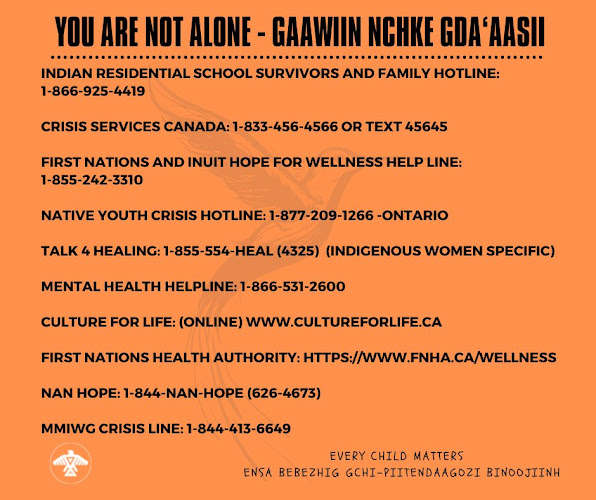
You are not alone

You are not alone

To Veronica Brown

Veronica, we adult adoptees are thinking of you today and every day. We will be here when you need us. Your journey in the adopted life has begun, nothing can revoke that now, the damage cannot be undone. Be courageous, you have what no adoptee before you has had; a strong group of adult adoptees who know your story, who are behind you and will always be so.

Diane Tells His Name


click photo

Lost Birds on Al Jazeera Fault Lines

Lost Birds on Al Jazeera Fault Lines
click to read and listen about Trace, Diane, Julie and Suzie

NO MORE STOLEN SISTERS

NO MORE STOLEN SISTERS
click image

ADOPTION TRUTH

As the single largest unregulated industry in the United States, adoption is viewed as a benevolent action that results in the formation of “forever families.”
The truth is that it is a very lucrative business with a known sales pitch. With profits last estimated at over $1.44 billion dollars a year, mothers who consider adoption for their babies need to be very aware that all of this promotion clouds the facts and only though independent research can they get an accurate account of what life might be like for both them and their child after signing the adoption paperwork.

Original Birth Certificate Map in the USA

Google Followers