SOURCE
The federal government has unveiled its $40-billion agreement in
principle to provide compensation to First Nations children and their
families harmed by an underfunded child welfare system and establish
long-term reform.
As a result of the largest class action lawsuit in Canadian history,
Ottawa will provide $20 billion to children on reserve and in the Yukon
who were unnecessarily removed from their homes between April 1, 1991
and March 31, 2022. This extends to their parents and caregivers.
Compensation will also be provided to those impacted by the narrow
definition of Jordan’s Principle between Dec. 12, 2007 and Nov. 2, 2017.
Children who didn’t receive essential public services between April 1,
1991 and Dec. 11, 2007 will also be eligible for financial reparation.
The second half of the funding will go towards reform of the First
Nations Child and Family Services Program, to be spread out over five
years.
Approximately $20 billion will support young First Nations adults
transitioning out of the child welfare system, as well as bolster
prevention mechanisms to keep children at home, in their communities –
work that’s expected to start in April, 2022.
KEEP READING
**
Indigenous child welfare settlement leaves out Sixties Scoop survivors: advocate
Reaction to $40B settlement not all positive
A
settlement that may become the largest ever in the history of Canada is
raising concern among some over the specific date of April 1, 1991
being the cut-off point for Indigenous people to be eligible for
compensation. Mark Neufeld reports.
Summary
- Ottawa secured agreements in principle to compensate First Nations children harmed by its underfunding of child welfare
- If the $40 billion agreement is approved, it would represent the largest settlement in Canadian history
- But an advocate says the cut-off dates for the potential settlement excludes Sixties Scoop survivors
While
welcoming an agreement in principle to compensate children harmed by
Canada’s underfunding of child welfare, an Indigenous organization says
it also excludes many Indigenous people – specifically Sixties Scoop
survivors.
The federal Liberal government says of the $40 billion earmarked to
be spent on the matter, $20 billion will pay for compensation and the
other $20 billion will be spent on reforming the system over five years.
It says First Nations children living on reserve and in the Yukon who
were removed from their homes between April 1, 1991, and Mar. 21, 2022,
are set to be compensated, along with their parents and caregivers.
If the agreement is approved, it would represent the largest settlement in Canadian history.
But not everyone agrees with the cut-off dates for the potential settlement.
“I feel like they could have expanded it a little bit more to include
those of us taken before 1991 and those of us taken off reserve,” said
Katherine Legrange, the director of 60s Scoop Legacy of Canada.
“I think overall it’s a good thing, I just wish they had consulted
with Sixties Scoop survivors and our families to include us if
possible.”
RELATED:
The Sixties Scoop is when an estimated 20,000 Indigenous children
were taken from their families and placed in non-Indigenous homes over a
period of about three decades.
The Canadian government maintained it was acting in the best interests of the children.
Some survivors remain displaced and disconnected from families and their home communities to this day.
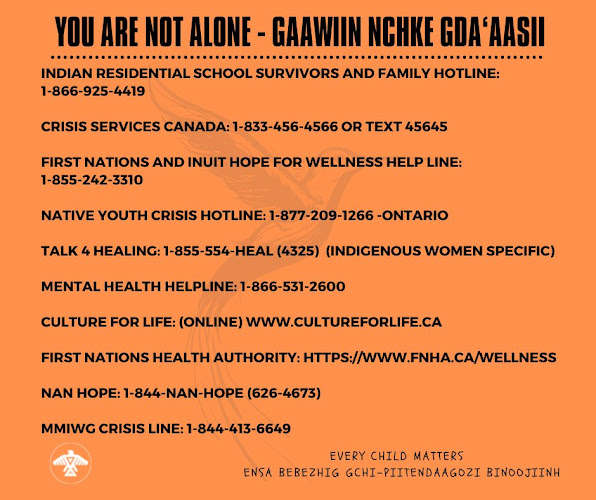
For First Nations children and families that are included in the
settlement, Legrange cautions there could be a reopening of old wounds
and relived traumas over the historical harms done to them.
She believes the guidance of First Nations elders and caregivers will
be needed to prevent more pain as people come forward in the
settlement.
“We need to, as Indigenous people, need to lead what that looks
like,” said Legrange. “Have an advisory committee and figure out what’s
the best way. How do we do this while mitigating the risks and harm to
people?”













 Posts
Posts

