They Took Us Away

They Took Us Away
click image to see more and read more

it's free

click

How to Use this Blog

BOOZHOO! We've amassed tons of information and important history on this blog since 2010. If you have a keyword, use the search box below. Also check out the reference section above. If you have a question or need help searching, use the contact form at the bottom of the blog.


We want you to use BOOKSHOP to buy books! (the editor will earn a small amount of money or commission. (we thank you) (that is our disclaimer statement)

This is a blog. It is not a peer-reviewed journal, not a sponsored publication... WE DO NOT HAVE ADS or earn MONEY from this website. The ideas, news and thoughts posted are sourced… or written by the editor or contributors.

EMAIL ME: tracelara@pm.me (outlook email is gone) THANK YOU CHI MEGWETCH!

SEARCH

Showing posts with label 60s Scoop Nakuset's Story. Show all posts

Wednesday, January 10, 2024

I was taken from my home and raised as a “nice Jewish girl,” but I’m Indigenous...


👆Nakuset's story is in the anthology Stolen Generations (book 3). Did you read it?  It's like LITTLE BIRD but it's true. Manitoba was a huge place where First Nations children were put in catalogues and placed with non-Native families across the US and Canada and Europe.  


What does history tell us about adoption


By Trace Hentz (Blog Editor and adoptee) REBLOG

The Dakota expression for child, wakan injan, can be translated as “they too are sacred,” according to Glenn Drapeau, Ihanktonwan Dakota and a member of the Elk Soldier Society on the Yankton Sioux Reservation in South Dakota.

“To us, children are as pure as the holy, moving energy of the universe,” he says, “and we treat them that way.”


What does history tell us about adoption? Most telling is the timeline of adoption history: h
ttps://pages.uoregon.edu/adoption/timeline.html

Can you see the curve American Adoption took to become a profitable industry after seeing that timeline?  Do you notice how some states stepped in and made laws? Can you see the influence of the religions and their judgements of single parents? What role did poverty and racism play? Can you see how secrecy and laws protects the industry and the people who adopt?

Twenty years I've studied adoption in my own investigations and I think 20 years later... adoption is not about child care at all but has morphed into child trafficking, a response to an infertility epidemic, lawyers and judges, billions of dollars, propaganda and bad history.

Supply and demand requires: Where do you find an available baby for an infertile couple in America?

What was born of this curve in 20 years: there are camps.  The two most common camps for adoptees are "be grateful" and "the activist."

Not everyone wants to hear adoptees in any camp.  I simply cannot believe the adoption debate has gone on as long as it has.

If adoption hurts anyone, then it should be abolished. Period.


When you see how adoption was used against Native people, then it was a criminal act. (This was important to document in the five-part book series LOST CHILDREN OF THE INDIAN ADOPTION PROJECTS)

My adoptive parents were miserable people, very sick. I cannot begin to calculate the source of their behaviors but their infertility and religion resulted in my being adopted by them through Catholic Charities and then abused by both of them.

If there had been careful awareness by the adoption industry's social workers prior...maybe it would not have happened. But the social workers never returned.

Who would create a system for children that would not check on adopted children?


Child trafficking via adoption is profitable. That seems to be why it won't go away.

I'm not bitter because that was the system and how it was created. But when you see the harm, and the trauma and the lifelong issues for the child in a closed adoption, how does adoption exist in any form?

Caring for children who are true orphans, without any biological family is so rare, a community could step in and care for the orphan.  It would not require a bureaucracy to do that. The decision could be made by tribal leaders. If you are a member of a tribe, the entire tribe is your family. Kinship care always worked for children who had lost their parents.

I was not an orphan. I had two biological parents who were in their 20s.  Relatives told me later they could have and would have raised me.

But someone created a system that didn't allow that, and instead the adoption industry chose strangers to raise me.

I was born before the Indian Child Welfare Act was passed in 1978. I do not have my Original Birth Certificate.

I will never stop fighting for Native children. They deserve our protection.

Read my earlier post:
What Being Adopted Cost Me.

Toni Morrison says that “facts can exist without human intelligence, but truth cannot.”

In the new book ALMOST DEAD INDIANS, you will read history about this ethnic cleansing/paper genocide that will completely shock you.  This new book is not hard to read but hard to put down... Trace


Saturday, September 30, 2023

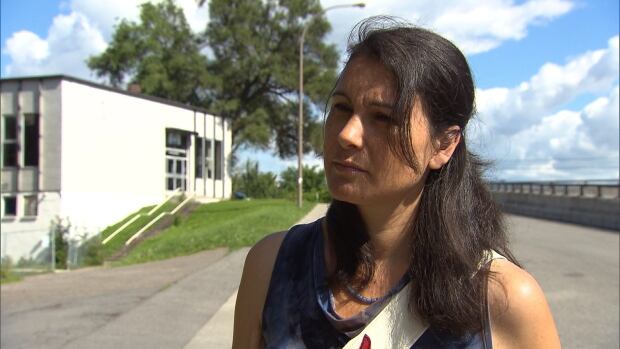
#60sScoop survivor turned community leader Nakuset honoured in Montreal

Becoming Nakuset

As a small child, Nakuset was taken from her home in Thompson, Manitoba and adopted into a Jewish family in Montreal. She was part of the Sixties Scoop, a generation of Indigenous children who were forcibly removed from their families and communities throughout Canada, and adopted into settler homes.

Told through personal archives, Nakuset details the abuse and confusion she suffered as a child and chronicles how, along with the help of her Bubby (Jewish grandmother), she was able to reclaim her identity and become a powerful advocate for her people. WATCH

 HONORED👇


MORE: Truth and Reconciliation in action: docs that highlight the experiences of Indigenous people in Canada

Thursday, September 23, 2021

How Bill 96 could harm English-speaking Indigenous people

Opinion: It may further embolden those who, regardless of official policies, already won't provide health or police services to Indigenous people in English.


An Indigenous woman is raped.

She summons the courage to report her assault to Montreal police, but they won’t let her recount it in English. Adding to this humiliating experience, she doesn’t understand that the police have to process the crime scene at her apartment.

So when the police show up at her door unannounced, she has to pack up her things and spend the night at a friend’s house, unsure exactly what’s going on. The experience left her shattered.

This happened to someone I know and it’s one example of how access to English services is crucial for Indigenous people living in Quebec. So when I testified about Bill 96 Tuesday at the Quebec Community Groups Network hearings, I expressed my fears that the new language law will have dire consequences for Indigenous people in life-or-death situations.

Apparently, this drew the ire of La Presse columnist Patrick Lagacé.

To Lagacé, who claims I’m fear-mongering, I would simply say this:

As a Cree woman, whose mother is a residential school survivor, and who was subsequently stolen from her family and community during the ’60s scoop, much of my life has been defined by a loss of culture and language.

Subjected to aggressive assimilationist policies, I have seen much damage and suffering to Indigenous people who have moved to urban areas and tried to make a better life. I watch how they fall through the cracks. It was this awareness that led me to seek an education and dedicate my life to improving the situation.

In the early days of residential schools, children had to learn English and were told that their language was evil, the devil’s language. The language was beaten out of them. Upon returning from residential schools, they had difficulty communicating with their parents, as they lost their Indigenous language, further alienating them from their family, community and culture.

While many of the laws that were created to explicitly deny rights to Indigenous people have since been repealed, we still live in a society whose foundation was built on our oppression. The result is that we live with systemic racism and racial profiling. Here in Quebec, few of the 142 Viens Commission recommendations have been implemented and Indigenous youth in care are still denied the right to use their traditional languages.

And so, Indigenous people are struggling. Most were sent to English residential schools and have had difficulty accessing services in the only language they speak. Regardless of what the official policies may be, they are already getting services refused because they can’t speak French. I know this because I run a women’s shelter where Indigenous women routinely report these kinds of incidents to me.

Now imagine what it would be like if you’re homeless, have been assaulted, raped or are otherwise in crisis and Bill 96 further emboldens those who already think they don’t need to bother to speak English to Indigenous people. How will you explain your predicament if you can’t express it in French?

Indigenous people, be they English-speaking or French-speaking, are still afraid of entering hospitals since the death of Joyce Echaquan. As systemic racism is still rampant in institutions, we now have to worry about the way we communicate our emergencies and whether they will be understood. In her documentary Indecently Exposed, diversity educator Jane Elliott says “If you make the situation uncomfortable enough, people will refuse to tolerate it, and they will leave.”

Indigenous people will continue to experience emergency situations, but if the climate of the institutions is oppressive, they will not subject themselves to this treatment. It is far too painful.

In 2008, Brian Sinclair arrived at the Health Sciences Centre ER in Winnipeg. When he passed out in a wheelchair, staff assumed he was drunk, when in fact he had died. I was outspoken when the government announced the COVID-19 curfew and had stated at a protest that someone could die because of the failure to acknowledge the realities of homeless people.

Unfortunately, Raphaël André was collateral damage, and therefore, I spearheaded the establishment of the Raphaël André Memorial tent, in the hope of keeping others safe.

My testimony at the hearings was meant to demonstrate our reality and no, we are not fearful, we are terrified.

Nakuset is executive director of the Native Women’s Shelter of Montreal and the director of development and philanthropy for the day shelter Resilience Montreal.

Saturday, October 7, 2017

Sixties Scoop survivor hopes federal settlement leads to healing

Raven Sinclair wants portion of money to go to counselling, healing retreats, culture camps

Raven Sinclair
Raven Sinclair was taken from her mother at age four, along with her siblings. She hopes Friday's settlement helps fund ways to help people like her heal from their past trauma. (University of Regina)
143  shares
A Saskatchewan survivor says the federal government's settlement with Indigenous survivors of the Sixties Scoop — the details of which are expected Friday morning — has provoked mixed reactions within herself.
"A small bit of money for a lifetime of change and turmoil and in some instances pretty extreme trauma — I don't know if the compensation really matches," said Raven Sinclair, now a professor of social work at the University of Regina.
"But it's at least an overture that they're making."

Money expected for reconciliation

Multiple sources speaking on the condition of anonymity told CBC News on Thursday the settlement will include some $800 million in compensation, or between $25,000 and $50,000 for each claimant. Roughly $100 million will be dedicated to other reconciliation initiatives.
Carolyn Bennett, federal minister responsible for Crown-Aboriginal Relations and Northern Affairs, announced on Monday in addition to the $750 million earmarked for individual compensation, $50 million would be set aside for a foundation to provide aid and supports for Sixties Scoop survivors.
Another $75 million will be provided to cover legal fees accumulated over the years for the plaintiffs.
Conditions of the legal fees compensation, which is capped at $75 million, include the agreement that lawyers will not go back to the survivors to try and get more money out of them.
During the time period known as the Sixties Scoop, thousands of First Nations children were forced out of their homes and placed in non-Indigenous care between 1965 and 1984, which resulted in psychological harm that has dogged survivors into adulthood, according to an Ontario Supreme Court ruling.

'Endless ways' to bring survivors together

Sinclair, a member of the George Gordon First Nation in southern Saskatchewan who was taken from her mother at age four, knows what she'd like the $10-million reconciliation portion to fund.
"I want to see adoptees have the opportunity to access healing programs, whether that's individual counselling, group counselling, healing retreats, culture camps," she said.
"There's endless ways that we can bring people together and help them to deal with past traumas and find more effective ways of living."

Placing a dollar amount on trauma

Nakuset native women's shelter
Nakuset said if she knew her language and culture, she could pass the teachings on to her own children. For now, they have Cree names and that's a start, she said. (CBC)


Nakuset, a Cree woman from La Ronge who was taken from her family at age three and adopted to a family in Montreal, told CBC Radio's The Morning Edition the ruling will mean different things to different people.
"What we learned from the residential school pay outs is that those that weren't able to sort of -- if they weren't able to receive the moneys, then the money disappeared quite quickly," she said. "It didn't really help."
Nakuset questions how a dollar amount can be placed on loss of culture, trauma and loss of familial connection.
Nakuset is the executive director of the Native Woman's Shelter of Montreal.
For Nakuset, she said if she went back to her community, she doesn't think she would survive.
"I'm so urban — I don't speak the language. I don't know how to live off the land. I don't know how to fish. I don't know how to hunt. I don't know how to do beadwork; I don't know how to do any of the things I'm supposed to know how to do."
If she knew how to do those things, then the teachings could be passed on to her children. Nakuset's children have Cree names and that's a start for now, she said.

Apologies awaited

She's still waiting for an apology, one promised by Premier Brad Wall.
"To me an apology is a recognition of wrongdoing, and also ideally an apology is made because it's not going to happen again."
Indigenous leaders have also called on Prime Minister Justin Trudeau to formally apologize for the wrongs of the Sixties Scoop.

Nakuset shared her story in the anthology STOLEN GENERATIONS. Use the seach bar on this blog.

Tuesday, March 15, 2016


Happy Visitors!

WRITTEN BY HUMANS!

WRITTEN BY HUMANS!

Blog Archive

Featured Post

Your History Class Was a F*cking Lie | #NOMOAR

  Your History Class Was a F*cking Lie by Sean Sherman (Or: How the American Educational System Has Always Been a Racist Propaganda Program...


Native Circles

Native Circles
click logo for podcasts!

Most READ Posts

Bookshop

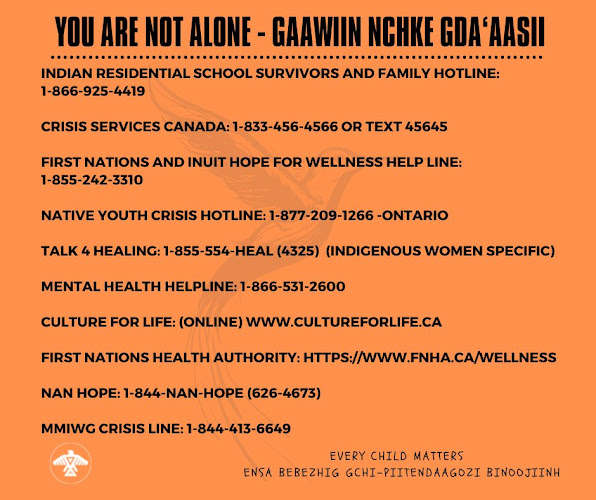
You are not alone

You are not alone

To Veronica Brown

Veronica, we adult adoptees are thinking of you today and every day. We will be here when you need us. Your journey in the adopted life has begun, nothing can revoke that now, the damage cannot be undone. Be courageous, you have what no adoptee before you has had; a strong group of adult adoptees who know your story, who are behind you and will always be so.

Diane Tells His Name


click photo

Lost Birds on Al Jazeera Fault Lines

Lost Birds on Al Jazeera Fault Lines
click to read and listen about Trace, Diane, Julie and Suzie

NO MORE STOLEN SISTERS

NO MORE STOLEN SISTERS
click image

ADOPTION TRUTH

As the single largest unregulated industry in the United States, adoption is viewed as a benevolent action that results in the formation of “forever families.”
The truth is that it is a very lucrative business with a known sales pitch. With profits last estimated at over $1.44 billion dollars a year, mothers who consider adoption for their babies need to be very aware that all of this promotion clouds the facts and only though independent research can they get an accurate account of what life might be like for both them and their child after signing the adoption paperwork.

Original Birth Certificate Map in the USA

Google Followers