They Took Us Away

They Took Us Away
click image to see more and read more

it's free

click

How to Use this Blog

BOOZHOO! We've amassed tons of information and important history on this blog since 2010. If you have a keyword, use the search box below. Also check out the reference section above. If you have a question or need help searching, use the contact form at the bottom of the blog.


We want you to use BOOKSHOP to buy books! (the editor will earn a small amount of money or commission. (we thank you) (that is our disclaimer statement)

This is a blog. It is not a peer-reviewed journal, not a sponsored publication... WE DO NOT HAVE ADS or earn MONEY from this website. The ideas, news and thoughts posted are sourced… or written by the editor or contributors.

EMAIL ME: tracelara@pm.me (outlook email is gone) THANK YOU CHI MEGWETCH!

SEARCH

Showing posts with label mixed ancestry. Show all posts

Friday, May 8, 2026

Black-Inuk woman traces history of Black settlers in the North in pursuit of answers to racial divisions today

Jaelyn Jarrett believes Black and white settlers had very different experiences in the North

older woman uses her hands to hold younger woman's face
Jaelyn Jarrett and her aunt Leah Ford. Jarrett, a woman originally from Nain, N.L., has Inuit and Guyanese roots. She's embarking on a journey to trace the history of Black settlers in the North. (Submitted by Jaelyn Jarrett)

Jaelyn Jarrett remembers moving from Nain, N.L., to Ontario as an eight-year-old when she started being called a ‘Puatugi’.

“I didn't really understand what that term meant at the time, but I knew people would reference my hair, and so I figured that it meant black,” she said.

After conversations with her grandmother, Jarrett discovered that word meant Portuguese. She wondered why she — a Black-Inuk woman with Guyanese roots — was being referred to as Portuguese.

That memory led the Carleton University master’s student on a journey to trace the origin of the word, where she came across Canadian historian Kenn Harper’s Names We Call Each Other. 

The book explains many of the whalers in the Arctic were Black men from Cape Verde — islands located off the west coast of Africa once colonized by Portugal. 

Many Cape Verdeans emigrated to the United States starting in the 1800s, particularly to coastal towns with thriving whaling ports like New Bedford, Massachusetts. From there, some Cape Verdean men joined whaling ships travelling to the Hudson’s Bay and Cumberland Sound. 

black and white photo of men on a ship
A photo by Captain George Comer, estimated between 1897 and 1899, showing the crew on deck of a whaling schooner. Brass Lopes is believed to be in the far right of this photograph. (Mystic Seaport Museum)

Those Black whalers were then referred to by Inuit as ‘Puatugi’, which was adapted from the word Portuguese to flow better in Inuktitut. 

While Black whalers did head North for economic pursuits, Jarrett believes those men had very different experiences than their white counterparts. 

"They were able to get opportunities to come to the North and make money, but they were still under the confines of racism and colonialism," she said. 

She thinks many people don't realize that part of Nunavut’s history, which she believes could offer answers to the racial divide that exists to this day.


Happy Visitors!

WRITTEN BY HUMANS!

WRITTEN BY HUMANS!

Blog Archive

Featured Post

Your History Class Was a F*cking Lie | #NOMOAR

  Your History Class Was a F*cking Lie by Sean Sherman (Or: How the American Educational System Has Always Been a Racist Propaganda Program...


Native Circles

Native Circles
click logo for podcasts!

Most READ Posts

Bookshop

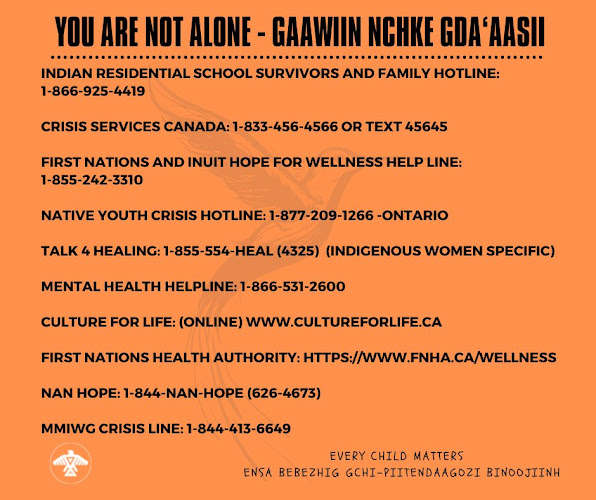
You are not alone

You are not alone

To Veronica Brown

Veronica, we adult adoptees are thinking of you today and every day. We will be here when you need us. Your journey in the adopted life has begun, nothing can revoke that now, the damage cannot be undone. Be courageous, you have what no adoptee before you has had; a strong group of adult adoptees who know your story, who are behind you and will always be so.

Diane Tells His Name


click photo

Lost Birds on Al Jazeera Fault Lines

Lost Birds on Al Jazeera Fault Lines
click to read and listen about Trace, Diane, Julie and Suzie

NO MORE STOLEN SISTERS

NO MORE STOLEN SISTERS
click image

ADOPTION TRUTH

As the single largest unregulated industry in the United States, adoption is viewed as a benevolent action that results in the formation of “forever families.”
The truth is that it is a very lucrative business with a known sales pitch. With profits last estimated at over $1.44 billion dollars a year, mothers who consider adoption for their babies need to be very aware that all of this promotion clouds the facts and only though independent research can they get an accurate account of what life might be like for both them and their child after signing the adoption paperwork.

Original Birth Certificate Map in the USA

Google Followers