BOOZHOO! We've amassed tons of information and important history on this blog since 2010. If you have a keyword, use the search box below. Also check out the reference section above. If you have a question or need help searching, use the contact form at the bottom of the blog.
We want you to use BOOKSHOP to buy books! (the editor will earn a small amount of money or commission. (we thank you) (that is our disclaimer statement)
This is a blog. It is not a peer-reviewed journal, not a sponsored publication... WE DO NOT HAVE ADS or earn MONEY from this website. The ideas, news and thoughts posted are sourced… or written by the editor or contributors.
EMAIL ME: tracelara@pm.me (outlook email is gone)
THANK YOU CHI MEGWETCH!
SEARCH
Showing posts with label Child and Family Services. Show all posts
Showing posts with label Child and Family Services. Show all posts
When Adoptions Fall Apart, But the Money for Kids Keep Flowing
For
decades, federal and state governments have shared the cost of
subsidies for families that adopt children out of foster care. The goal
is to bring added stability to the lives of kids who have often
experienced deep trauma.
WHAT SUBSIDIES?
Adoption subsidies are provided either through the Title IV-E program or the non-Title IV-E program. Children cannot qualify for both Title IV-E and non-Title IV-E benefits.
But
when those adoptive families fall apart and children end up back in
foster care or worse, out on the streets, those monthly payments can
continue to be sent to parents who are no longer involved.
“The money must follow the child,” said state Sen. Roxanne Persaud, the bill’s author.
Regarding
those who accept payments for absent children, she added: “That’s just
greed, in my opinion. If you gave up the child, then you shouldn’t be
entitled to the money.”
Dawn
Post, who has long advocated for youth in New York who experience
broken adoptions, said the proposed law in New York would make it the
first state in the nation to meaningfully monitor the continuation of
adoption subsidies under these circumstances.
“I
am ecstatic that this is the first bill in the country that’s really
going to address this,” Post said. “This provides a real opportunity
for youth to continue to be supported with the funds that were
originally intended for them.”
👇 Child Welfare Autonomy for Canada’s First Nations
Years
after an initial settlement was reached to atone for Canada’s horrific
record of family separation among its First Nations, the country has committed more than $40 billion to fund child welfare reform in those Indigenous communities.
“This
is a pivotal moment for reconciliation in Canada,” Minister of
Indigenous Services Patty Hajdu stated in a press release. “This reform
would put First Nations in the driver’s seat delivering child and family
services to their communities, because they know better than anyone
what they need. It would mean First Nations children can grow up in
their families, with the services they need, and surrounded by love and
their culture.”
👉Campaigning for Child Welfare
Opinion:
Child welfare leaders must make a concerted effort to educate national
and state office-seekers about a vision for better supporting families
and children, Paul DiLorenzo writes.
Cowichan Tribes will not practice child
apprehension and placements “that have alienated children from their
families and our community for generations,” says the chief of Vancouver
Island’s most populous First Nation.
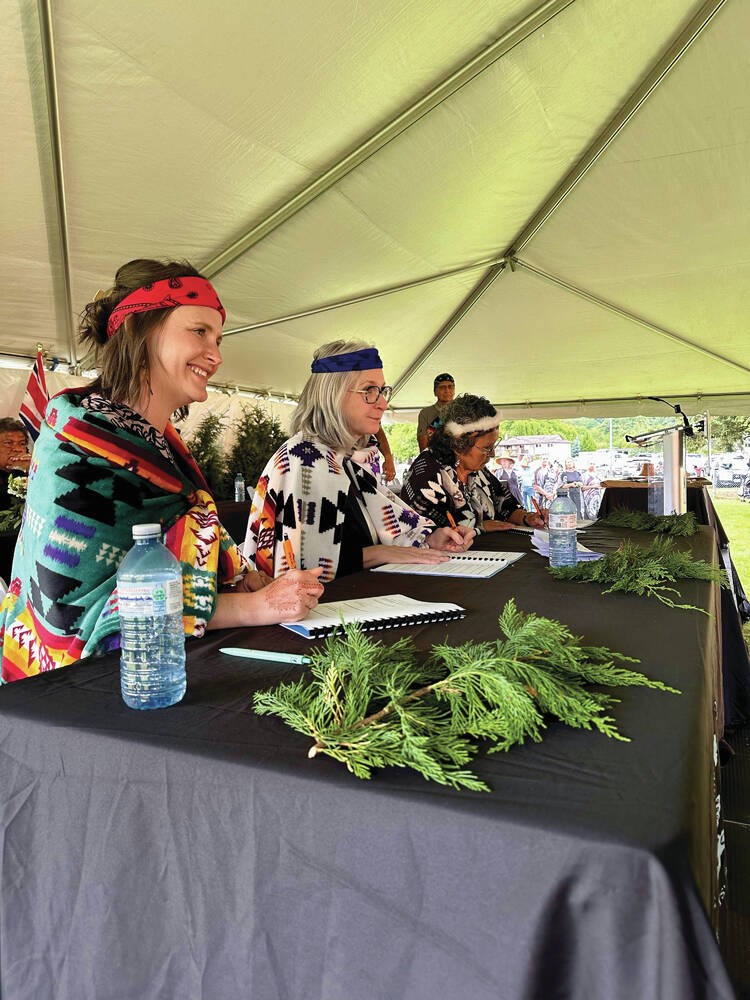
From
left, Grace Lore, B.C. Minister of Children and Family Development,
Patty Hajdu, Federal Minister of Indigenous Services of Canada and Cindy
Daniels, Chief Cowichan Tribes sign an agreement on June 24, 2024.
COURTESY MINISTRY OF CHILDREN AND FAMILY DEVELOPMENT
As the Cowichan Tribes assumes control over its child and
family services, it plans to leave behind the practice of child
apprehension that its chief says has traumatized members of her nation
for generations.
“Today, we are making history,” said Chief Cindy Daniels of the Cowichan Tribes, Vancouver Island’s most populous First Nation.
“We are putting in place our law.”
Representatives from Cowichan Tribes, B.C. and Canada officially
signed a tripartite agreement on June 24 under a tent on the soccer
fields next to the community’s Si’em Lelum Gymnasium.
The agreement allows for Cowichan Tribes to assume full management of
all aspects of child and family services for its community, including
prevention, protection measures and operations.
Daniels, whose traditional name is Sulsulxumaat, said her thoughts
were with the generations of Cowichan children who experienced the
trauma of being removed from their families and their community.
Cowichan Tribes will not practice child apprehension and placements
“that have alienated children from their families and our community for
generations,” she said.
Grace Lore, B.C.’s minister of children and family development, said
state intervention in Indigenous families has a long history of causing
harm, from residential schools to the Sixties Scoop.
Lore said the agreement means her ministry will no longer oversee Cowichan Tribes child and family services as of Aug. 1.
“By recognizing their inherent right to jurisdiction, we do not have
oversight. The services are provided by the Nation for Nation members
from prevention to protection, provided by Cowichan Tribes in
accordance with Cowichan law,” she said. “They never gave up the
responsibility and honour of caring for their kids and families.”
Federal Minister of Indigenous Services Patty Hajdu, representing
Canada, said the agreement allows the Cowichan Tribes to take back
control of their child and family services, “something that should have
never been taken away in the first place.”
The Cowichan Tribes have been pushing for child and family services
to be under its control since 2020, after the passage of the federal
government’s Bill C-92 in 2019 allowed for Indigenous groups to assume
full jurisdiction over child and family services.
Cowichan citizens voted last November
to reclaim child services from B.C. and for Cowichan Tribes regulations
concerning its child and family services to prevail over federal or
provincial law in cases of disagreement.
Nation-provided service will initially cover Vancouver Island and the Gulf Islands.
Lore said her ministry will continue to be involved in cases that
involve Cowichan members in other parts of the province not covered by
the agreement.
The nation’s child protection services will be managed by a services
authority named Stsi’elh stuhw’ew’t-hw tun Smun’eem, which is in the
process of appointing a CEO, the province said.
Cowichan Tribes council will regulate, support and ensure that the
authority functions properly but will otherwise be uninvolved in
day-to-day operations and case decisions.
The Cowichan Tribes have delivered prevention and protection services
through its child and family service, Lalum’utul’ Smun’eem, since 1993.
The agency currently operates under the authority of the provincial government.
Indigenous children are vastly over-represented in foster care in
Canada, making up 53.8 per cent of children under 14 in care, despite
the fact they are just 7.7 per cent of the population under 14,
according to 2021 census data.
Kim Wheeler was adopted during the Sixties Scoop and fought to find her way back to her culture My name is Kim Wheeler but some know me as...
Bookshop
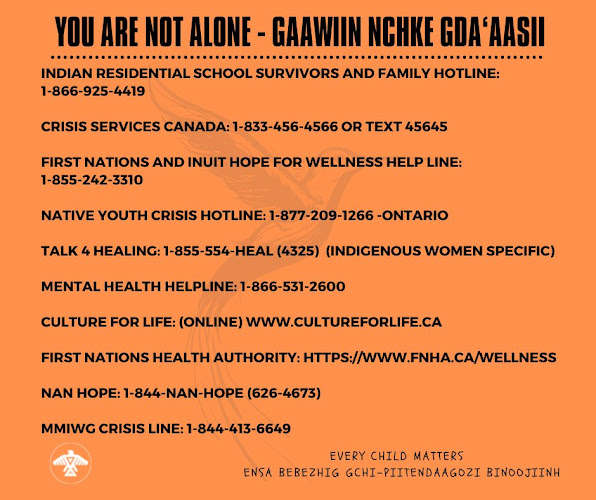
You are not alone
To Veronica Brown
Veronica, we adult adoptees are thinking of you today and every day. We will be here when you need us. Your journey in the adopted life has begun, nothing can revoke that now, the damage cannot be undone. Be courageous, you have what no adoptee before you has had; a strong group of adult adoptees who know your story, who are behind you and will always be so.
Diane Tells His Name
click photo
Lost Birds on Al Jazeera Fault Lines
click to read and listen about Trace, Diane, Julie and Suzie
NO MORE STOLEN SISTERS
click image
We conclude this series & continue the conversation by naming that adoption is genocide. This naming refers to the process of genocide that breaks kinship ties through adoption & other forms of family separation & policing 🧵#NAAM2022#AdoptionIsTraumaAND#AdopteeTwitter#FFY 1/6 pic.twitter.com/46v0mWISZ1
As the single largest unregulated industry in the United States, adoption is viewed as a benevolent action that results in the formation of “forever families.” The truth is that it is a very lucrative business with a known sales pitch. With profits last estimated at over $1.44 billion dollars a year, mothers who consider adoption for their babies need to be very aware that all of this promotion clouds the facts and only though independent research can they get an accurate account of what life might be like for both them and their child after signing the adoption paperwork.




.jpg)








 Posts
Posts


