They Took Us Away

They Took Us Away
click image to see more and read more

it's free

click

How to Use this Blog

BOOZHOO! We've amassed tons of information and important history on this blog since 2010. If you have a keyword, use the search box below. Also check out the reference section above. If you have a question or need help searching, use the contact form at the bottom of the blog.


We want you to use BOOKSHOP to buy books! (the editor will earn a small amount of money or commission. (we thank you) (that is our disclaimer statement)

This is a blog. It is not a peer-reviewed journal, not a sponsored publication... WE DO NOT HAVE ADS or earn MONEY from this website. The ideas, news and thoughts posted are sourced… or written by the editor or contributors.

EMAIL ME: tracelara@pm.me (outlook email is gone) THANK YOU CHI MEGWETCH!

SEARCH

Showing posts with label Split Feathers. Show all posts

Wednesday, December 7, 2022

REUNION: ‘Where do I belong?’

Another White Earth Adoptee... are you one?  Were you raised in a Jewish family? Please leave a comment on our website.  Let's share your stories... Trace

Native roots, hard realities surface in woman’s search for her past

two women stand shoulder to shoulder
Anita Fineday (left) and Peggy Mandel, on the day they first met.
Courtesy Peggy Mandel- Fineday learned that family members at White Earth tried to adopt Peggy

Feeling trepidation and hope, Peggy Mandel dropped a letter in the mail to a woman she’d never met but who held the key to a secret piece of her past.

Adopted and raised in a loving middle-class Jewish family, Mandel didn’t know her own origin story. As a kid, she could remember people asking, “Are you sure you're Jewish? You're too tall to be Jewish.”

She wasn’t sure either but needed to find out.

After decades of searching, she’d come across a name — someone who might be a blood relative, someone who would lead her to a wrenching history of Native people in Minnesota she wasn’t supposed to find.

Mandel had been so scared she couldn’t write the letter. Her husband Joel wrote it. For weeks, there was silence. Then came a voicemail that changed lives across two families and three generations.

“I am pleasantly surprised. I'm shocked,” said the voice. “And I would like to connect with you.”

...

Mandel, who moved to the Twin Cities at age 11, started looking for her birth mother in the 1990s. However Kentucky adoption records were closed and no information was available.

About eight years ago she sought help from a staff member at the Children’s Home Society, a St. Paul adoption agency.

In early 2014, an agency staff member called. “She said, ‘We found her. She is alive and well. But we can't tell you where she lives. And she doesn't want anybody to know. She doesn't want to meet you,’” recalled Mandel.

READ

Tuesday, May 26, 2020

How Being Separated From My Family and Tribe Affected Me


By Jacqueline Davis, Activist          

Today the Supreme Court will hear Adoptive Couple v. Baby Girl, a case about a South Carolina Indian girl who the South Carolina Supreme Court ruled that the child must be returned to her Indian father. The child's mother ignored the Indian Child Welfare Act (ICWA) of 1978, a federal law designed to protect Indian families from "abusive child welfare practices that resulted in the separation of large numbers of Indian children from their families and tribes through adoption or foster case placement" and, as a result, both the tribe and the father were denied their rights under ICWA.
As the Supreme Court hears this case, the coverage has been largely one-sided. I thought it was important for people to hear my story, and how being separated from my family and tribe has affected me.

My name is Jacqueline Davis. I am one of six siblings affected by a decision made by the state of South Carolina. I am a member of the Cheyenne River Sioux Tribe in South Dakota and my grandfather is Chief Dave Bald Eagle. My father, who is African-American, met my mom and married her while he was stationed in the Air Force. They eventually moved off the reservation to South Carolina. Their lives changed one day when my mother applied for WIC and the nurse realized that she spanked her children as a form of discipline. Their children were taken and placed in foster care. We were split in pairs. The charges were piled on, and our parents lost custody. The Bald Eagle family offered to take us on the reservation and for reasons I still don't know they were told our case had nothing to do with ICWA. I can remember my parents coming to visit us for years.

Read the rest here:
http://www.aclu.org/blog/racial-justice/how-being-separated-my-family-and-tribe-affected-me

Wednesday, January 9, 2019

BITTERROOT: Adoption Didn't Solve the Indian Problem


Adoption didn’t solve the “Indian Problem.” Its weight simply shifted to our small shoulders. No one told us “we” represented “them.” We had to find that out for ourselves. Some of us are still looking. Bitterroot is a roadmap. - Susan Harness
An author recounts how 1960s policies ripped apart families and communities, including her own.

MUST READ: Adoption didn’t solve the ‘Indian Problem’ — High Country News

See her other posts on this blog... HERE
 HERE

Susan Devan Harness, author of Bitterroot: A Salish Memoir of Transracial Adoption is a member of the Confederated Salish Kootenai Tribes, a writer lecturer and cultural anthropologist living in Fort Collins, Colorado.
10-16-2019
This past weekend Bitterroot: A Salish Memoir of Transracial Adoption took home two awards at the High Plains Book Festival:  Creative Nonfiction and Indigenous Writer.  I am so honored to be among so many really great authors.

Thank you goes to the readers and staff of the High Plains Book Festival, the University of Nebraska Press for their seeing the value of this project, my advisers Kate Browne and John Calderazzo, the overwhelming support from friends and family and the many voices who contributed to this work.

It is humbling.

All my best,
Susan
Susan Harness, M.A.

STOLEN GENERATIONS

Sunday, May 27, 2018

Keep Dancing: We are NOT Victims

THIS IS AN EARLIER POST from this blog
By Trace L Hentz (blog editor)

“I get up. I walk. I fall down. Meanwhile I keep dancing.” That is a line in the book “Bird by Bird” by Ann Lamott.  Her comical book offers instructions on writing and life and so far -- I’ve had good belly laughs. Yep, Ann made a funny book!
In part two, Ann was fighting herself over jealousy of another writer friend. She wrote, “Sometimes this human stuff is slimy and pathetic - jealousy especially so - but better to feel it and talk about it and walk through it than to spend a lifetime poisoned by it."

Poison is nothing to mess with.  I spoke with an adoptee friend last night and Levi is sure we adoptees need to create new ceremonies, even some just for us adoptees. I was nodding at every word Levi said.  A lifetime of isolation from what we know to be ours, our blood rights as Indigenous People, our language and culture and the healing offered by participating in ceremony, it was not ours growing up white and adopted and assimilated.

But we adoptees are not victims, Levi said. No, we are changed by adoption but not its victims.

I thought about ceremony, what ceremony I missed growing up, and what other Indian people probably took for granted growing up. That does make me jealous. I didn’t get to meet my grandmothers in flesh, only in dreams.
I am sad I do not how to make my own regalia. I see others dance at powwow and wish someone had time to teach me what I need to know.

I can think of a million things I’d like to know. When I met relatives in Illinois last year, I was over the moon happy.  My Harlow cousins filled many holes in my heart.
I am in reunion. Jealousy is not my poison.

For those not in reunion, their hearts ache.  We need to find a way to heal them.

Tuesday, November 14, 2017

60s Scoop: Sharing their stories #NAAM


Shaun Ladue

Shaun Ladue calls himself the “survivor of a horrific childhood.” Adopted into a white family at the age of 3, Ladue, 48, says he endured abuse while growing up in Watson Lake, Yukon. So, at 14, Ladue left and never went back. He later became the first child in care in the Yukon to graduate high school and go on to university. And despite grappling with mental health issues for more than a decade, he’s “put all that behind” him and has reconnected with members of his biological family.
Looking back, Ladue recalls hearing the wind blowing in his backyard as a child — a unique, comforting sound he’s never heard anywhere else. “I now think on that wind, my ancestors were speaking to me, and they were giving me the strength to survive day-by-day abuse and ridicule,” Ladue says.
====================================================================

For three decades across Canada, thousands of aboriginal children were taken from their homes and adopted.


KEMPTVILLE — The scent of tobacco and sage fills the air as members of Canada’s aboriginal communities gather around a fire on the shores of the Rideau River.

Each takes a turn fanning medicinal smoke towards their bodies in a cleansing smudging ritual. Then, one by one, the 40 or so attendees of this Indigenous Adoptee Gathering introduce themselves to the group. Some are from Ontario, others from Manitoba or the Yukon. Some are Cree, others Métis or Ojibway.

Most are members of a stolen generation.

Beginning in the mid-1960s — and for several decades after — thousands of indigenous children across Canada were removed from their homes and typically placed with white middle-class families in Canada and abroad.

Patrick Johnston, author of the 1983 report Native Children and the Child Welfare System, dubbed it the Sixties Scoop.
 

Here is the link to the 60s Scoop story, photos, profiles and video in the Toronto Star HERE

Tuesday, October 18, 2016

Called Home: The RoadMap

[2nd Ed.] An important contribution to American Indian history told by its own lost children/adult survivors, American Indian and First Nations adoptees and family... Editors Patricia Busbee and Trace L. Hentz are writers and adoptees who reunited with their own lost relatives. From recent news about Baby Veronica, Canada’s 60s Scoop, and history such as Operation Papoose, this book examines how Native American adoptees and their families experienced adoption and were exposed to the genocidal policies of governments who created Indian adoption projects. "Adoptees do need a road map and that is what other adoptees have created," Hentz said about this anthology and book series.

CALLED HOME offers even more revelations of this hidden history of Indian child removals in North America, their impact on Indian Country and how it impacts the adoptee and their entire family. “We have created a body of work, a roadmap for adoptees coming after us. Governments stole the land and stole children. It’s time the world know,” Hentz said.

paperback

The second anthology in the Lost Children of the Indian Adoption Projects Book Series is published by Blue Hand Books in Massachusetts. 

Monday, October 3, 2016

#60sScoop survivors: birth records 'mysteriously' lost or destroyed

This is amazing series of stories! Stay tuned!

'I was told I don't exist,': survivors search for paper trail to their past

Lori Ann O'Cheek
Sixties scoop survivor Lori O'Cheek was told her adoption records were destroyed in a fire. (Donna Carreiro (CBC))


When Lori Ann O'Cheek went to search for her birth records, she was told her files burned in a fire. When Carla Williams asked a different agency for her birth records, she too was told they burned in a fire. Likewise Trevor Bass. Likewise Jessica Sear.

Wayne Snellgrove, on the other hand, was not told his birth records were destroyed. He was told there were none to begin with.

"I got a very nice letter from Vital Statistics telling me I don't exist," Snellgrove said. "I am nowhere to be found."

Different survivors dealing with different agencies from across Canada facing similar barriers to access their past.

Carla Williams (left) and daughter
Carla Williams (left) leans on her daughter for support as she recalls the abuse in her adoptive home. (Donna Carreiro (CBC))

It is a yet another twist in the evolving legacy of the Sixties Scoop. Survivors, pulled from their Indigenous homes and adopted by white families around the world, now search for their birth and treaty records only to be told they cannot be found.

"There was no record of my adoption, no record of the adoption agency," Lori Ann O'Cheek said. "I just kept getting answers that the agency burned down and that's it."

Carla Williams was told the same thing. She didn't believe it.

"A fire that I don't believe ever happened, that [the child welfare agency] couldn't confirm at all," she said.

Survivors and critics say it is another example of forced assimilation and the federal government's effort to erase their Indigenous identities.

"If we grow up not knowing we're Indigenous and we're entitled to the land and treaties and status, then they don't have to honour those treaties," said Colleen Cardinal, a Sixties Scoop survivor, author and advocate. "They don't have to resource or revenue share."

That's why so many survivors can't find their way home, she said.

"There are so many Indigenous adoptees out there that have no idea what their rights are," Cardinal said. "That they are connected to the land and to status and to treaties."

Lori Ann O'Cheek was a toddler in Camperville, Man, when her mother began to warn her about strangers in the town.
Media placeholder

"She used to warn us if a strange car came onto the reserve, to run as fast as we could," O'Cheek said. "Because kids went missing all the time."

Sure enough, child welfare officials drove up and knocked on their door. Some of her siblings escaped. She did not.

"I tried to run away but I was too young to flee," she said.

She was adopted to a family who moved to Vermont, and she spent the next several years trying to come home.

"I was always running away, just to find somebody I belonged to," she said, adding she was eventually placed in foster care.

Once she found her birth family, she returned to Canada.

To this day, her birth certificate lists her adoptive parents as her parents. Her original birth certificate remains "mysteriously" non-existent.


Former MLA calls for national inquiry

Eric Robinson is a former NDP MLA and was Manitoba's former Aboriginal and northern affairs minister. He said he's "disappointed but not surprised" to hear some survivors can't access their birth records.
"I've heard stories like this for years," he told the CBC. "It's a further violation of these people."
Robinson noted that in 2014, the province attempted to improve access to archived adoption records from before 1999.
But that doesn't help survivors born in other provinces.
"That's why I have long been calling for a national inquiry into the Sixties Scoop," he said. "We need a proper investigation and we need answers."

Sunday, May 15, 2016

Big Surprise #1 (last week)

This is a reblog from June 2011.

I wish for every adoptee out there that they can find out how they arrived, who their parents are and what actually happened.


Can one day change your life?

Like so many adoptees out there, too many of us have blank pages in our Chapter One. Most adoptees don’t know much (if anything) about the year we were conceived or events leading up to our birth. Our parents might be mythical figures; so dreamlike, we create stories for them. We might make our parents into martyrs who were coerced into giving us up because they were too young or too poor or unmarried. We might imagine them as star-crossed lovers like Romeo and Juliet, better to think of them as two people who were in love.

All I knew: my parents lived together. Sadly because Earl and Helen have died, my beginning was lost and I never expected to know what happened 50+ years ago. Up until now, the only people I’d met on my adoptee journey did not recall my parents together. My parents did not get married in Chicago. After me, each made new babies they kept.

One of my cousins Buddy and I share the same great-grandma… Even though I’ve been to Illinois more than a few times to visit my siblings, Earl’s kids, I had not met this cousin. I wrote to Buddy a few years ago but never heard from him.

Buddy is the Harlow-Allen-Morris family historian in Illinois.

So last week we spoke for the first time. I heard the one thing I never expected to hear. Buddy knew my parents - Earl and Helen – when they were living together in Chicago in 1955/6.  He is the only person who remembers them as a couple.

Yes, it was a long time ago. Buddy was 12 and stayed at their apartment. Buddy said my mother was so nice, how he really liked her.  He thought Earl and Helen were married.  When he went back home to Pana, he didn’t know they broke up until Earl married his next wife Caroline.  Yes, my father had already been married before but not to Helen, my mother.

Adoptees like me have a hard time imagining our parents in their 20s. Fantasy seems better than the reality I had a dad who didn’t marry every woman he slept with and he decided to split with my mother because she got pregnant with me.

The new anthology Stolen Generations has stories just like mine, how they were able to find out where they fit in their parent's life story... READ MORE HERE


Saturday, April 30, 2016

Andrew Jackson’s Adopted Indian Son

Lyncoya was a living argument for the supremacy of the white way of life. Jackson killed Creek people, took Creek land, and raised their children as his own—a primal act of domination.
The soldiers took 84 captives, including Lyncoya.

Was bringing home an Indian boy—after slaughtering his family—an act of compassion or of political expedience?


By Trace Hentz

I know the answer - psychopaths and politics for land theft!
A few days ago, my friend John Hopkins told me about the infamous "Indian Killer" Andrew Jackson, yes that guy famous for the Trail of Tears, adopting an Indian child.  I never knew about this.
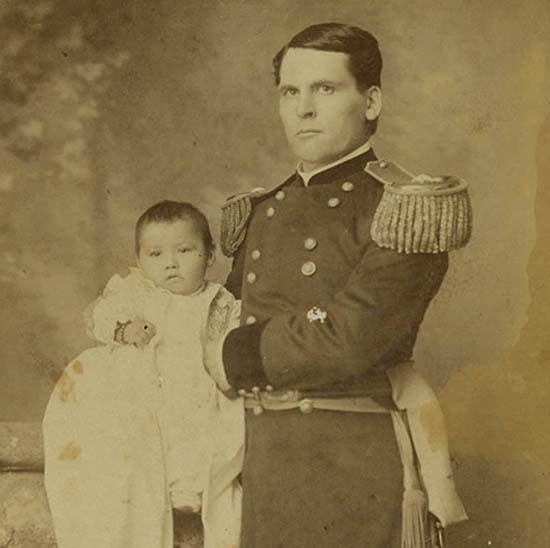
We do know that Lost Bird (below) was taken from her massacred dead mother and adopted by a military man. She only lived to age 29.
Lyncoya died at the Hermitage in 1828, at age 16, of tuberculosis.
Andrew Jackson named all his kids Andrew Jackson? That's a very special kind of egomania right there.

Read this astounding article at SLATE.
 In case you didn't know, adoption was genocide.

Thursday, November 5, 2015

60s Scoop: Sharing their stories


==================================================================


Cole Burston/Toronto Star

Shaun Ladue

Shaun Ladue calls himself the “survivor of a horrific childhood.” Adopted into a white family at the age of 3, Ladue, 48, says he endured abuse while growing up in Watson Lake, Yukon. So, at 14, Ladue left and never went back. He later became the first child in care in the Yukon to graduate high school and go on to university. And despite grappling with mental health issues for more than a decade, he’s “put all that behind” him and has reconnected with members of his biological family.
Looking back, Ladue recalls hearing the wind blowing in his backyard as a child — a unique, comforting sound he’s never heard anywhere else. “I now think on that wind, my ancestors were speaking to me, and they were giving me the strength to survive day-by-day abuse and ridicule,” Ladue says.
====================================================================

For three decades across Canada, thousands of aboriginal children were taken from their homes and adopted.


KEMPTVILLE — The scent of tobacco and sage fills the air as members of Canada’s aboriginal communities gather around a fire on the shores of the Rideau River.

Each takes a turn fanning medicinal smoke towards their bodies in a cleansing smudging ritual. Then, one by one, the 40 or so attendees of this Indigenous Adoptee Gathering introduce themselves to the group. Some are from Ontario, others from Manitoba or the Yukon. Some are Cree, others Métis or Ojibway.

Most are members of a stolen generation.

Beginning in the mid-1960s — and for several decades after — thousands of indigenous children across Canada were removed from their homes and typically placed with white middle-class families in Canada and abroad.

Patrick Johnston, author of the 1983 report Native Children and the Child Welfare System, dubbed it the Sixties Scoop.
 

Here is the link to the 60s Scoop story, photos, profiles and video in the Toronto Star HERE

Happy Visitors!

WRITTEN BY HUMANS!

WRITTEN BY HUMANS!

Blog Archive

Featured Post

Your History Class Was a F*cking Lie | #NOMOAR

  Your History Class Was a F*cking Lie by Sean Sherman (Or: How the American Educational System Has Always Been a Racist Propaganda Program...


Native Circles

Native Circles
click logo for podcasts!

Most READ Posts

Bookshop

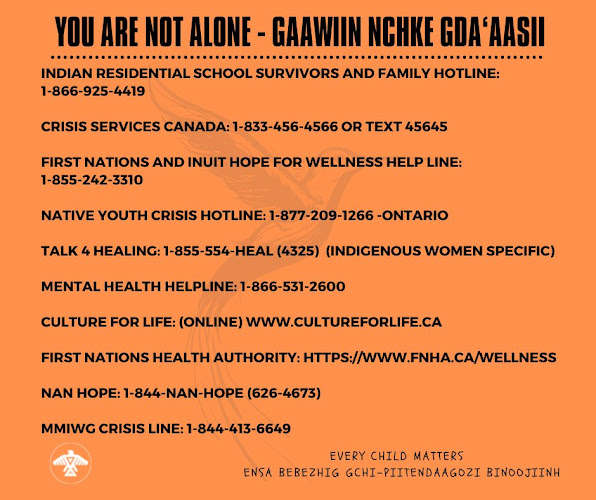
You are not alone

You are not alone

To Veronica Brown

Veronica, we adult adoptees are thinking of you today and every day. We will be here when you need us. Your journey in the adopted life has begun, nothing can revoke that now, the damage cannot be undone. Be courageous, you have what no adoptee before you has had; a strong group of adult adoptees who know your story, who are behind you and will always be so.

Diane Tells His Name


click photo

Lost Birds on Al Jazeera Fault Lines

Lost Birds on Al Jazeera Fault Lines
click to read and listen about Trace, Diane, Julie and Suzie

NO MORE STOLEN SISTERS

NO MORE STOLEN SISTERS
click image

ADOPTION TRUTH

As the single largest unregulated industry in the United States, adoption is viewed as a benevolent action that results in the formation of “forever families.”
The truth is that it is a very lucrative business with a known sales pitch. With profits last estimated at over $1.44 billion dollars a year, mothers who consider adoption for their babies need to be very aware that all of this promotion clouds the facts and only though independent research can they get an accurate account of what life might be like for both them and their child after signing the adoption paperwork.

Original Birth Certificate Map in the USA

Google Followers