They Took Us Away

They Took Us Away
click image to see more and read more

it's free

click

How to Use this Blog

BOOZHOO! We've amassed tons of information and important history on this blog since 2010. If you have a keyword, use the search box below. Also check out the reference section above. If you have a question or need help searching, use the contact form at the bottom of the blog.


We want you to use BOOKSHOP to buy books! (the editor will earn a small amount of money or commission. (we thank you) (that is our disclaimer statement)

This is a blog. It is not a peer-reviewed journal, not a sponsored publication... WE DO NOT HAVE ADS or earn MONEY from this website. The ideas, news and thoughts posted are sourced… or written by the editor or contributors.

EMAIL ME: tracelara@pm.me (outlook email is gone) THANK YOU CHI MEGWETCH!

SEARCH

Showing posts with label Alaska Natives. Show all posts

Tuesday, April 15, 2025

Dancing who we are | Alaska Native Art, Ep. 5


This video is a part of our Alaska Native Art series, produced in partnership with the Alaska Native Heritage Center. For more, go to https://www.famsf.org/stories/close-l...


Learning about art is . . . learning a new way, new language, almost. A new way of seeing the world . . . cultural education.

—Abel Ryan


MORE: https://www.famsf.org/stories/close-look/alaska-native-art

Alaska Native leader Hensley subject of new documentary

Willie Hensley is a well-known Alaska Native leader, but a documentary that premiered this week in Anchorage gives you a chance to get to know what makes him tick.

Rhonda McBride from our flagship station KNBA has this preview.

Willie Hensley has worn a lot of hats, and you can see a lot of them in this film that filled with snapshots of his life, as well as something else, says the film’s producer Marla Williams.

“That was really fun in this film to look at how many different hairstyles Willie has had throughout life. He’s gone from a flattop and a nerdy little side part, to long sixties sideburns and now to a ponytail all the way down his back.”

The film showcases Hensley’s charisma and traditional Inupiaq humor. It’s called “Homeland and chronicles his rise as a champion for the Alaska Native Claims Settlement Act and eventually a statewide leader.

“I think he’s a man of his times. He’s always current. He’s always looking forward, but he’s not stuck in his past. He uses his past to keep him moving forward.”

The documentary is filled with moments that explores Hensley’s talent for walking between two worlds – that of Native culture and the modern world of business and politics.

It traces his roots to a sod house near Kotzebue, Alaska.

In the film, Hensley takes his daughter Priscilla to show her where he was raised as a small boy.

Only a few pieces of wood and mounds of sod remain.

“Not a table, not a chair, not a bed. This was home. It kept us warm on the coldest of days.”

The film also takes you to a religious boarding school in Tennessee where Hensley arrived as a teenager with only a shopping bag full of belongings.

His classmates didn’t know what to make of him and the care packages of whale meat and other subsistence foods he received, but were happy to have him on their football team, because he was one of the fastest on the field.

“In those days, if you’re a young Iñupiaq that age, if you survive TB and chicken pox, and influenza and everything else that everybody caught, you’re pretty damned tough.”

The documentary’s next showing will be in Kotzebue on April 17 and will be available on online in the future.

It’s the tenth installment of the Magnetic North: The Alaska Character series, which has profiled political figures like Governor Bill Sheffield and Native leaders like Jacob Adams and carver Nathan Jackson.

The series was made possible by the Alaska Humanities Forum and the Rasmuson Foundation.


Thursday, April 3, 2025

Dark Past: “We were basically human flagpoles”

'Human Flagpoles': Dark story behind Inuit scene on $2 bill

Musician Lucie Idlout says the discontinued bank note reflects a dark time for Canada's Inuit

Circulated between 1974 and 1979, the two-dollar bill features Joseph Idlout and his relatives preparing their kayaks for a hunt. (Bank of Canada / National Currency Collection)

If you’re a Canadian of a certain age, you’ve likely seen the Idlout family. In fact, you’ve probably carried them around in your back pocket.

The reason: they’re featured on the back of the 1974 two-dollar bill.

Part of the Scenes of Canada series, the discontinued bank note depicts a group of six Inuit men preparing their kayaks for a hunt.

One of the men is Joseph Idlout, the grandfather of Canadian musician Lucie Idlout. On a recent episode of the CBC Radio program DNTO, she revealed how the photograph of her grandfather and his relatives came to be taken.
Photographer Douglas Wilkinson spent years documenting Joseph Idlout and his community. (Douglas Wilkinson / Library and Archives Canada (PA-189095))

“My grandfather was known to be an excellent hunter,” said Idlout.

“He was one of the first few Inuit to receive the Coronation medal from the Queen - I kind of view him as a superhero, even though I never met him.”

Based on a photograph taken by documentarian Douglas Wilkinson, the bill features Joseph Idlout and his relatives hunting nearby the Baffin Island community of Pond Inlet.

On its surface, the bill appears to reflect nothing more than an innocent scene of daily Inuit life. But dig a little deeper, and the story behind the photograph becomes much more complicated.

“We were basically human flagpoles.”

In the 1950s, the Canadian government relocated a number of struggling Inuit families from Inukjuak (Quebec) to the communities of Resolute Bay and Grise Fiord - hundreds of kilometres to the north.

Ostensibly done to improve their standard of living, the realities of life in the High Arctic proved difficult for families accustomed to the warmer temperatures and more fertile tundra of Quebec. To ease their transition, Joseph Idlout was hired to instruct the southern Inuit on life in the unforgiving northern climate.

“His role in Resolute Bay was to assist with teaching Inuit how to survive in a much harsher climate than what they were used to,” said Idlout.

As the transplanted Inuit struggled to adapt to their new surroundings, the motivation behind their relocation became increasingly clear.  

“The sad story is that we were basically human flagpoles, so the Canadian government could assert sovereignty over the high arctic.”
Lucie Idlout: "It is another example of how Inuit were part of asserting sovereignty" (Facebook)

In 2010, the Minister of Indian Affairs and Northern Development issued an apology to Canada’s Inuit people, expressing regret “for the hardship and suffering caused by the relocation.” 

And while adjusting to a new and unfamiliar landscape was challenging, Lucie Idlout said that it was the actually the change in lifestyle that had the biggest consequences - both for the transplanted communities and for her grandfather. 

“With the amenities and modernness of southern life coming to the north … it really changed the way Inuit lived," said Idlout.

“It was a lot of change that happened really quickly, and it had a lot of negative impacts on the people who lived there.”

And though he was considered to be an exceptionally skilled and well-respected man, the move proved to be particularly traumatizing for Joseph Idlout. Although reports of his death vary, Lucie Idlout says that her grandfather’s eventual suicide can be traced back to the relocation.

“The transition of life was just too fast and too much.”

Bills were meant to inspire Canadian pride

The Scenes of Canada series, which was printed and put into circulation between 1969 and 1979, was meant to instill pride and reflect Canadian settlements from sea to sea.

When asked how she feels looking at the bill today, Idlout says she has mixed feelings. 
Detail of the 1974 "Scenes of Canada" two-dollar bill (Bank of Canada)

“I don’t think there’s any coincidence the photograph was shot in the 50s, just before the relocation,” said Idlout. “It is another example of how Inuit were part of asserting sovereignty over different parts — so Canada could claim it as their own.” 

But despite the darkness the bill represents, Idlout still feels a certain pride when she looks at the image of her family on the $2 note.

“It became less of a photo and more of a piece of our history - that involved important people from my family and people I love very much.”

Thursday, December 12, 2024

Alaska tribe, WA agency sign child and family services agreement

The Tlingit & Haida Indian Tribes of Alaska (Tlingit & Haida) and Washington’s Department of Children, Youth and Families have signed an agreement on how to provide support services to the Tribe’s enrolled members — the first formal partnership between that department and an out-of-state Native nation.

Around 23%, or 1,600, Tlingit & Haida tribal children and youth under 18 live in Washington state.  This agreement specifies roles and responsibilities shared by the tribes and the Department of Children, Youth and Families to administer services under the Indian Child Welfare Act, including child protective services, foster care, dependency guardianship, termination of parental rights and adoption proceedings for those children. The department has similar agreements with a number of tribes based in Washington.

The Tlingit & Haida is the largest federally recognized Alaska Native nation, with 22,000 citizens throughout the United States

In November 2023, the Tlingit & Haida opened an office in Lynnwood with at least 20 staff members to serve more than 8,000 tribal citizens who live in Washington, according to Alaska television station KTOO.  These services include tribal court, enrollment and case management of child welfare cases.

SOURCE: https://www.cascadepbs.org/briefs/2024/12/alaska-tribe-wa-agency-sign-child-and-family-services-agreement 


 CENSUS DATA:

https://www.census.gov/library/stories/2023/10/2020-census-dhc-a-aian-population.html

Tuesday, February 20, 2024

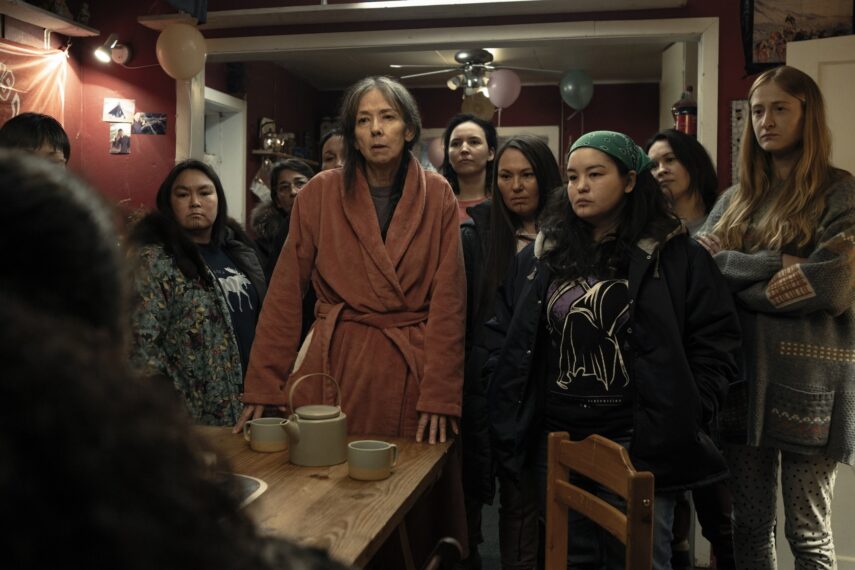
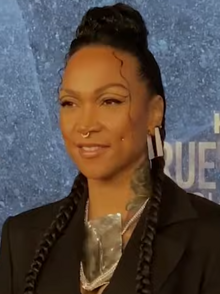
‘True Detective’: Kali Reis on #MMIP


Putting a spotlight on missing and murdered Indigenous women is something Kali Reis (Wampanoag) has been passionate about throughout her career and is one of the reasons she signed on to play Navarro. “That’s the whole reason why I started bringing awareness to different issues in the community with my boxing career,” Reis says.

READ MORE 

Spoiler alert: Ending the TV Mystery HERE 


ABOUT KALI:

Reis was born in Providence, Rhode Island, on August 24, 1986 and is the youngest of five children.[8] She and her siblings were raised by their mother in East Providence, Rhode Island.[8][9] Reis claims Cape Verdean ancestry, and identifies as being of Native American descent, specifically Cherokee and Nipmuc ancestry.[10] She is a member of the Seaconke Wampanoag Tribe,[10] an unrecognized tribe in Massachusetts. 

In June 2022, Reis was announced as the co-lead of True Detective: Night Country, the fourth season of HBO's anthology crime series. Reis starred alongside Jodie Foster as a detective investigating the disappearance of eight men from an Alaskan research station. WIKI

Monday, October 23, 2023

Totem Raising, Potlatch, ROAD TO HEALING TOUR in Alaska


National Native News

LISTEN to our special AFN coverage: Alaska’s Native Voice with Antonia Gonzales

U.S. Interior Secretary Deb Haaland (Laguna Pueblo) was greeted with a standing ovation at the Alaska Federation of Natives, when she addressed the convention Friday.

From subsistence to Native veterans, Sec. Haaland touched on a range of topics.

But one issue on this trip to Alaska will get a lot of her attention.

On Sunday, Sec. Haaland held a listening session in Anchorage on the trauma caused by Native boarding schools.

“We must reckon with the past to address the injustices we still face, because we know that intergenerational trauma connects so much of what hurts us.”

Sec. Haaland has been traveling the country on what she calls a “Road to Healing Tour,” taking testimony on the boarding school era about the damage it caused.

“My grandma used to share stories about this trauma with me about how a priest showed up one day in her village, took her and other children away from her parents and families, and sent them on a train to a Catholic boarding school, when she was only eight years-old.”

Sec. Haaland’s listening session was held at the Alaska Native Heritage Center and followed by the raising of a healing totem.

The Heritage Center has been investigating church records to learn more about how Alaska Natives were impacted.

Benjamin Jacuk (Kenaitze Indian Tribal Member), one of the researchers, says his grandfather is a boarding school survivor, which got him interested in learning more.

“The road to healing is going to be a very, a very emotional event, because it’s a lot of people, actually telling their stories. Some maybe before, some for the first time. One thing you know, is never leave people in that space.”

The healing totem is the work of two Haida master carvers – Joe and T.J Young.

An elder developed the concept for the design.

The totem pole depicts mother bear, who is holding two cubs, while the father, in human form, sits above her, embedded in a Raven’s tail.

Two children rest comfortably in Raven’s ear.

The totem raising, which was followed by a potlatch, was open to the public, but the Road to Healing Tour was closed to the general public, to give boarding school survivors and their famiies some privacy.

Friday, September 8, 2023

Protecting Alaska Native Children — Connections to Culture and the Environment

Research scientist Heather Sauyaq Jean Gordon calls subsistence ‘a preventive and protective cultural practice for well-being.’

Ivan Encelewski, executive director at Ninilchik Traditional Council, fishes for salmon with a gillnet on the Kenai River in Alaska. Provided photo.

Research released on September 5th highlights an issue rarely discussed in the field of child welfare, but vital to the health and well-being of Indigenous children and families: their stewardship of the natural environment. 

The unique study focuses on many generations of the Alaska Native Ninilchik Village Tribe, and the harmful impacts of colonization and federal and state mismanagement of traditional homelands. Tribal members contributed to the research, conducted over 12 months in South Central Alaska.

“Subsistence is a critical part of Alaska Native cultures and that the ability to pass subsistence practices to children is an important protective factor for their well-being,” reads a policy brief outlining the findings.

The report is authored by Heather Sauyaq Jean Gordon, a research scientist with the nonprofit research and policy institute Child Trends. Gordon, 38, is Iñupiaq and an enrolled member of the Nome Eskimo Community. She defines Indigenous subsistence as reaching far beyond hunting, fishing, and gathering food. 

KEEP READING


HUNT FISH GATHER - that is a treaty right too in North America.

Tuesday, April 11, 2023

Boarding School Abuse: “To Heal We Must Know the Truth”

"They always go for our babies." -Emily Edenshaw, President & CEO at Alaska Native Heritage Center

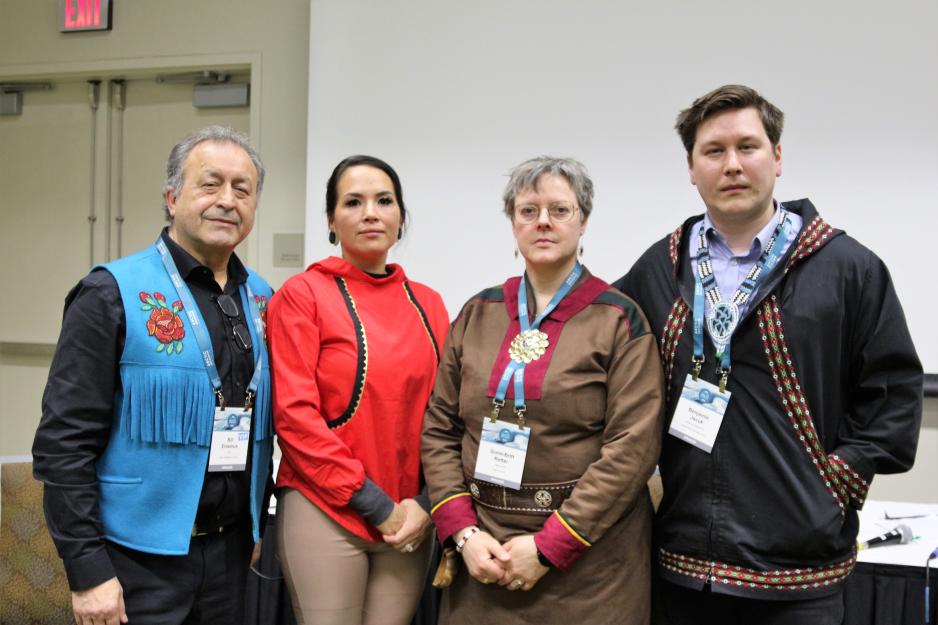
Chief Bill Erasmus, Emily Edenshaw, Gunn-Britt Retter and Benjamin Jacuk.JPG
Chief Bill Erasmus, Emily Edenshaw, at the Alaska Native Heritage Center, Gunn-Britt Retter at the Saami Council and Benjamin Jacuk at the Alaska Native Heritage Center. (Photo: Trine Jonassen)
 
Anchorage Alaska (High North News): 
He admitted that this was genocide. -Chief Bill Erasmus
 
Most Arctic nations have been affected by assimilating and oppressive boarding school policies. Now indigenous community leaders are looking for healing as they brace for the dark truth of a government-led genocide.

Ground zero

The boarding school practice started in Alaska in 1879, 12 years after the USA purchased the Arctic state from Russia without consulting the indigenous population.

Maybe that is also where the healing has to start.

"Alaska may be ground zero for all of this.  But ground zero can also be the place of healing for indigenous peoples from all over the world," Jacuk concludes.

In 2015 the Truth and Reconciliation Commission of Canada concluded what happened was "cultural genocide". It identified more than 3,000 children who died from disease due to overcrowding, malnutrition, and poor sanitation or died after being abused or trying to run away.

Most schools had their own cemeteries, and sometimes when children died, their parents were never informed.


How early churches used schools to separate Alaska Native peoples from their land


April 11, 2023 | Podcast: Play in new window | Download | Embed 

The Alaska Native Heritage Center says its study of church records that go back to the 1800s is not research for research’s sake, reports Rhonda McBride from our flagship station KNBA.

Researcher Benjamin Jacuk-Dolchok (Kenaitze) says he hopes to reconstruct the story of how early churches used schools to separate Alaska Native peoples from their land, their culture, and their spirituality.

He says the impacts are still felt today.

“You can’t understand what you need healing from, unless you pull back the band aid and understand the wound.”

Jacuk-Dolchok says most Alaskans don’t realize how closely churches coordinated their efforts.

“While these might be different denominations, the ideology was mostly the same. And that was forced assimilation.”

Jacuk-Dolchok says some of the research looks at the role of boarding schools — and how Americanization and Christianity intersected to break the close connections Alaska Natives had with their land.

He says the forced use of English took away the “heart language” of the people, which sped up the process.

“The major takeaway from what we’re doing is understanding the truth to bring healing, so that younger generations can thrive.”

Jacuk-Dolchok has studied Native boarding schools for more than a decade and credits his grandfather, who attended boarding school, for inspiring his work.

The Princeton Seminary graduate says his theology studies has helped him with his research and given him access to important documents.

Jacuk-Dolchok will share some of his research at the Alaska Native Heritage Center in Anchorage on Friday.

Monday, June 6, 2022

Alaska’s ‘failing, dangerous’ foster care system

Alaska’s child welfare system is failing, dangerous and routinely violates the rights of children, asserts a first-of-its-kind class-action lawsuit filed against the state Office of Children’s Services in federal court Thursday.

The 90-page complaint alleges that systemic issues have long festered in almost every facet of Alaska’s child welfare system, and asks a federal judge to order immediate and sweeping changes.

“There has not, in Alaska, been a comprehensive lawsuit (on this subject)” until now, said Mark Regan, an attorney with the Disability Law Center of Alaska, one of the entities representing the plaintiffs.

The lawsuit is filed on behalf of 13 child plaintiffs by a partnership of attorneys, including the Northern Justice Project, the Disability Law Center of Alaska, Perkins Coie and A Better Childhood, a national nonprofit headquartered in New York. The Alaska Department of Health and Social Services and the Office of Children’s Services are named as defendants.

“Without a doubt,” the class-action lawsuit represents the biggest opportunity for foster care system reform that the state has seen, said Marcia Robinson Lowry, the director of A Better Childhood and a longtime litigator on child welfare issues.

DHSS and the Office of Children’s Services did not immediately respond to a request for comment about the lawsuit.

The state of Alaska has long known about the magnitude of the problems in its child welfare system but hasn’t acted to fix them, the lawsuit alleges.

Robinson Lowry’s organization, A Better Childhood, has filed similar class-action lawsuits seeking to reform child welfare systems in nearly a dozen other states or jurisdictions, including Oregon, Indiana, West Virginia and New York City. Some states, such as Oklahoma, have made improvements based on court orders. Many of the lawsuits are still in progress.

Alaska’s child welfare system “is not the worst,” said Robinson Lowry. “But it’s certainly not good.”

Some of the biggest problems in Alaska, according to the lawsuit: OCS worker caseloads are too high, sometimes three times the national average. Turnover is at a crisis level, topping nearly 60% annually and leading “mission critical tasks to go unmet,” according to a legislative report cited. Children are shuffled between foster homes too much. And Alaska Native children, who make up nearly two-thirds of the youths in foster care, aren’t provided with Alaska Native foster homes or other services, violating the Indian Child Welfare Act and “often inflicting deep wounds of cultural loss in the process.”

“All too often, children in OCS custody face unnecessary institutionalizations, inappropriate placements with non-relative foster families, and unconscionable delays in receiving timely health screenings and interventions,” Regan, with the Disability Law Center of Alaska, said in a statement.

The complaint includes stories about the Alaska plaintiffs, including a 16-year-old girl who’d lived at six different foster placements since 2020. Twice, the Office of Children’s Services sent her to residential treatment centers, where she reported being overmedicated and sexually abused by another child.

The lawsuit describes OCS placing children in North Star Behavioral Health Center, a locked, for-profit hospital in Anchorage, for more than 30 days “based on lack of other placement.” Another foster youth was allegedly called a racial slur and hit by their foster parent. That child is still in the same home. A sibling group of five racked up more than 40 placements between the group — within one year.

Other reports, lawsuits and audits have documented similar problems with the Office of Children’s Service.

The lawsuit seeks a court order that would force major reforms, including ordering the state to reduce OCS worker caseloads; meet federally required time limits for children’s case plans; provide licensing and financial support to extended family foster placements so more kids can live with relatives; and ensure that care recommended for kids in their case plans actually happens. Children with disabilities would need to get services in their home communities. And kids couldn’t be put into hospitals like North Star simply because other foster care placements weren’t available.

How those changes would be funded or implemented is less clear. Other states have made concrete changes as a result of lawsuits, Robinson Lowry said. She cites Tennessee, which has reduced the number of children in institutions. Oklahoma eliminated shelters where some children were sent because foster placements weren’t available.

“Class-action lawsuits can have a major impact on child welfare systems,” she said.

SOURCE 

MORE:

Class-action lawsuit says state is failing Alaska foster kids

Under the Indian Child Welfare Act, or ICWA, child welfare agencies are federally compelled to work as hard as possible to house Native foster ...
 
The year of the graves: How the world's media got it wrong on residential school graves
Most important of these efforts were the widely publicized undertakings of the 2008-2015 Truth and Reconciliation Commission of Canada (TRC), ...


Thursday, December 9, 2021

Taking back control of child welfare services is a turning point for the Inuvialuit


Opinion

Growing up in Inuvik, in the Inuvialuit Settlement Region in Canada’s Western Arctic, I lived next to a group home.

The children – Inuvialuit like me – were in the care of Northwest Territories social services, separated from their families, sometimes far from their home communities, with no connection to their identity.

Even as a child, I could see how hard it was for them, going through life and school without any people, without any sense of who they were in the world.

This week, the Inuvialuit Regional Corporation, which was established in 1984 to represent the Inuvialuit under one of Canada’s oldest and most comprehensive land claim agreements, passed our first law: Inuvialuit Qitunrariit Inuuniarnikkun Maligaksat.

This law re-establishes our jurisdiction over child and family services, and in doing so, makes us the first Inuit region to assert this important right.

KEEP READING

Writer:

Duane Ningaqsiq Smith is the chair and CEO of Inuvialuit Regional Corporation, which represents the communities of Aklavik, Inuvik, Paulatuk, Sachs Harbour, Tuktoyaktuk and Ulukhaktok in the Northwest Territories.


Happy Visitors!

WRITTEN BY HUMANS!

WRITTEN BY HUMANS!

Blog Archive

Featured Post

Your History Class Was a F*cking Lie | #NOMOAR

  Your History Class Was a F*cking Lie by Sean Sherman (Or: How the American Educational System Has Always Been a Racist Propaganda Program...


Native Circles

Native Circles
click logo for podcasts!

Most READ Posts

Bookshop

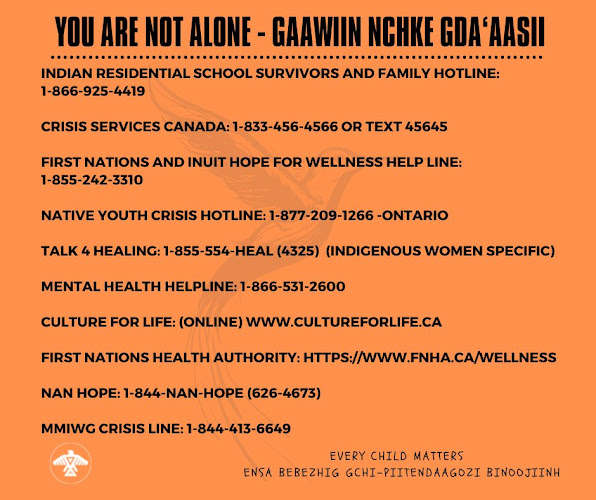
You are not alone

You are not alone

To Veronica Brown

Veronica, we adult adoptees are thinking of you today and every day. We will be here when you need us. Your journey in the adopted life has begun, nothing can revoke that now, the damage cannot be undone. Be courageous, you have what no adoptee before you has had; a strong group of adult adoptees who know your story, who are behind you and will always be so.

Diane Tells His Name


click photo

Lost Birds on Al Jazeera Fault Lines

Lost Birds on Al Jazeera Fault Lines
click to read and listen about Trace, Diane, Julie and Suzie

NO MORE STOLEN SISTERS

NO MORE STOLEN SISTERS
click image

ADOPTION TRUTH

As the single largest unregulated industry in the United States, adoption is viewed as a benevolent action that results in the formation of “forever families.”
The truth is that it is a very lucrative business with a known sales pitch. With profits last estimated at over $1.44 billion dollars a year, mothers who consider adoption for their babies need to be very aware that all of this promotion clouds the facts and only though independent research can they get an accurate account of what life might be like for both them and their child after signing the adoption paperwork.

Original Birth Certificate Map in the USA

Google Followers