BOOZHOO! We've amassed tons of information and important history on this blog since 2010. If you have a keyword, use the search box below. Also check out the reference section above. If you have a question or need help searching, use the contact form at the bottom of the blog.
We want you to use BOOKSHOP to buy books! (the editor will earn a small amount of money or commission. (we thank you) (that is our disclaimer statement)
This is a blog. It is not a peer-reviewed journal, not a sponsored publication... WE DO NOT HAVE ADS or earn MONEY from this website. The ideas, news and thoughts posted are sourced… or written by the editor or contributors.
EMAIL ME: tracelara@pm.me (outlook email is gone)
THANK YOU CHI MEGWETCH!
Sixties Scoop Survivors and Indigenous leaders marched through
Winnipeg Wednesday calling on the federal government to ensure long-term
support for residential school investigations, healing and community
programs.
The march through downtown came on National Day of Action, five years
after the discovery of 215 unmarked graves at the former Kamloops
Residential School.
At Oodena Circle Survivors shared stories of residential schools, the
Sixties Scoop, family separation, and the healing work still happening
today.
“The pain did not end when the schools closed,” said Christina
Kitchekesik, a residential school Survivor. “It lives in our families,
it lives in our communities, and it lives in our spirits.”
Sixties
Scoop Survivors and family members shared stories of residential
schools and family separation in a Oodena circle on National Day for
Action in Winnipeg on May 27, 2026 (CityNews)
Ava Halpin was eight years old in 1964 when she was taken from her family and sent to live with three different white families.
Halpin says programs supporting Survivors have helped many reconnect in a variety of ways.
“That is why we need to keep these programs going to help the
survivors heal, to keep learning about who we are and stay connected,
stay together,” Halpin said.
Ava Halpin speaks about her experience of being taken from her family in 1964 when she was an 8-year-oldon National Day for Action in Winnipeg on May 27, 2026 (CityNews)
By late morning, hundreds walked from The Forks to the Manitoba
Legislative Building where the focus shifted toward calls for continued
federal funding tied to truth, healing, and investigations into children
who never came home.
A national e-petition, sponsored in the House of Commons by Winnipeg
MP Leah Gazan, calls for long-term support for Survivor healing,
cultural supports, and community-led efforts connected to unmarked
burial site investigations.
“We’ve been asking for answers from the federal government what is
exactly happening with the funding and the services that we have been
receiving as First Nations and our organizations, our communities, and
we still have not received any commitment, and the messaging right now
is that the funding is going to be sunsetting,” said Kyra Wilson, Grand
Chief of Assembly of Manitoba Chiefs.
by Rico Moore, High Country News February 20, 2024
This story is a collaboration betweenbioGraphic, an editorially independent magazine about nature and conservation powered by the California Academy of Sciences, and YES! Magazine, a nonprofit and independent publisher of solutions journalism. It is republished here with permission.
From our vantage point in a motorboat on the reservoir known as Franklin D. Roosevelt Lake in eastern Washington, we scan the rocky canyon walls of the Confederated Tribes of the Colville’s Hellgate game reserve for bighorn sheep (Ovis canadensis). Before it was a reservoir, manufactured by the United States government’s Grand Coulee Dam, this was once a mighty, salmon-rich stretch of the Columbia River that formed the basis of an entire ecosystem — and that supported the 12 tribes of the Colville Confederated Tribes since time immemorial.
The boat belongs to Rose Piccinini, the tribes’ Sanpoil district wildlife biologist. She is part of a team that manages the herd of bighorn sheep that the tribes’ wildlife department first reintroduced in 2009. She also leads the tribes’ efforts to restore lynx populations back into the ecosystem here.
Tribal Wildlife Biologist Rose Piccinini counting bighorn sheep from the Hellgate herd along the Columbia River on the Colville Tribes reservation. These animals were restored to the reservation by the tribes.
The animals who shared this landscape were once fully integrated into every aspect of tribal members’ lives. They harvested bighorn sheep and other game for food, tools and clothing. Intricate myths, legends, and teachings about the animals were passed down by elders to descendants and bound them to who they were — and who, as a result, their descendants came to be.
But then American settlers brought domesticated sheep and goats, and with them, diseases that bighorns weren’t able to recover from. The succession of disease exposures, against which bighorns had little defense, significantly reduced their numbers and made them more vulnerable to impacts they might have otherwise withstood. Save for a few small pockets in secluded locations, the bighorns died off, and the herds disappeared from the landscape and the lives of the tribes.
As we crane our necks and squint our eyes upward in the hot midday July sun, shadows reveal more than a dozen bighorn sheep on the north side of the canyon, less than 30 meters (100 feet) above the reservoir. Ewes and lambs weave paths through stalks of mullein (Verbascum thapsus), leaving their crescent-shaped tracks in the sand, all the while feeding on shrubs that dot the hillside and scree. Their sharp horns curl back from their heads as their amber eyes attend to their surroundings. Two of the animals walk onto a sandy section of the slope, licking at minerals. They kick up dust and cascades of sand, which form rivulets and accumulate into plumes, slowly fanning down the sandy slope to the shoreline below.
Bighorn Sheep from the Hellgate herd along the Columbia River on the Colville Tribes reservation. These animals were restored to the reservation by the tribes.
For the 12 tribes of the Confederated Tribes of the Colville, whose reservation is located in north-central Washington state, their ecosystem isn’t complete without the animals and plants who have long inhabited the land alongside them. Maintaining these relationships of reciprocity in modern times involves the protection and reintroduction of native species, as well as the restoration of their habitats, an ambitious effort that the tribes’ wildlife department has been leading since its inception in the 1970s.
As the tribes work together to restore populations of more native species like bighorn sheep and salmon to their lands and waters, they bring collective healing with them. This healing is felt by the people who have long endured cultural trauma from the forces of European and American colonization. It further strengthens their enduring resilience.
BIGHORNS WERE AMONG the tribes’ first relatives to be extirpated from the region, but the world-shattering impacts of colonization only intensified henceforth.
Salmon have always been at the center of the tribes’ culture and, until the mid-20th century, their diet and economy. The fish fed the people and the land with, among other things, the nutrients stored in their bodies. The fish consumed sea life and later carried this sustenance upstream in their migratory journey inland. Tribal representatives cite reports of 20,000 salmon per day, weighing on average 15 kilograms (35 pounds) each, swimming up the Columbia. With their death and decomposition, the nutrients brought by the salmon in their flesh and bones nourished the forests, prairies, and riparian areas, as well as the coyotes, deer, elk, bighorn sheep, lynx, pronghorn, buffalo, wolves, eagles, and innumerable other beings interconnected within these systems.
Shelly Boyd, cultural leader for the Lakes Band, also known as the Sinixt, of the Colville Confederated Tribes photographed at the location of Kettle Falls, a traditionally vital fishing location, which was drowned by the Grand Coulee Dam.
But in 1942, the U.S. government built the Grand Coulee Dam and “ended a way of life,” according to a documentary produced by the tribes. The dam blocked 2,250 kilometers (1,400 miles) of salmon spawning habitat and flooded 22,600 hectares (56,000 acres) of land, as well as the ecosystems that supported whole communities of animals and people. This included critical winter habitat for deer and elk, and areas the tribes relied on for native food and medicinal plants, all of which were drowned by the government’s dam construction.
No fish passage was built then, nor since.
“Overnight, it was shut off,” says Richard Whitney, a member of the Sinixt band of the Colville Confederated Tribes and the tribes’ wildlife department manager, who assumed leadership of the department in 2014. All at once, salmon, who were the tribes’ staple food and the foundation of their culture and economy, were gone.
The Grand Coulee Dam on the Columbia River, finished in 1942 by the US federal government destroyed all anadromous salmon runs above. The dam is a mile wide, 550 feet tall and backs up the river for over 150 miles. The river marks the boundary of the Colville Reservation (which lies to the north, lower section of photo).
To survive, the tribes turned to other species native to the ecosystem, and started a decades-long effort to restore wildlife populations in the area. By 1975, the tribes had established a wildlife management department with funding from the Bureau of Indian Affairs, in accordance with the Bureau’s trust responsibilities to the Indigenous peoples with whom it had signed treaties. Elk (Cervus canadensis nelsoni), Whitney says, have, “stepped up to offer themselves so [the tribes] could persist.”
Today, thanks to the tribes’ reintroduction efforts, their elk herds are strong, growing from 481 total elk counted in 2002, to more than double that in 2022. Whitney says elk numbers on the reservation are at a 20-year high, which gives Tribal members additional opportunities for harvest.
With elk reintroduction efforts underway, the tribes next turned their attention to sharp-tailed grouse (Tympanuchus phasianellus) in the late 1990s, then bighorn sheep in 2005 and pronghorns (Antilocapra americana) in 2014, followed by lynx (Lynx canadensis), salmon, and buffalo (Bison bison).
Although they have not reintroduced wolves (Canis lupus), the tribes have allowed the apex predators to recolonize their lands since discovering evidence in 2008 that wolves had started returning on their own. Wolf packs are now managed here at a stable level.
The Colville Confederated Tribes’ plan to re-establish bighorn sheep began with six translocations that ultimately brought 136 bighorns back to the reservation. Although the herds have continued to suffer from diseases carried by domesticated goats and sheep—exposure that is worsened by drought as it concentrates animals around smaller watering areas — Whitney says the population has since grown to more than 250.
Wildlife Manager Richard Whitney oversees all of the tribes' projects to restore wildlife to their unceded lands.
As Whitney assumed leadership of the wildlife division and took over the restoration of bighorn sheep, it was suggested to him that the tribes sell licenses for trophy bighorn hunts to non-tribal hunters to help pay for more staff. Some state fish and wildlife departments sell hunting licenses via auction or raffle for a number of species considered to be trophies to the highest bidder to generate revenue. For example, in Washington this year, one bighorn sheep hunting license generated $181,460, while a similar license was auctioned for $370,00 in Oregon.
Whitney was adamantly opposed to the idea, and his reasoning provides insight into the approach he takes to wildlife management: “That animal is worth more to me than a biologist position. That animal has value and it’s not in dollars,” he says. With so much wildlife management reliant on hunters paying license fees, which in turn fund conservation and management, Whitney says the priorities are off. “If it just comes down to money, then you guys are in the wrong business. You’ll never get it right.”
“That animal has value and it’s not in dollars.”
In addition to providing sustenance for tribal members, the restoration of native species serves to restore a community of species of which people are an integral part. “There’s a harmony there, and anything that’s missing breaks that balance,” Whitney says. “There’s still a harmony, but it’s missing a note here and there.” With each member of the ecological community Whitney’s wildlife department restores, the whole community sings fuller-voiced.
Pronghorn antelope on the Colville Tribes reservation. The tribes restored pronghorn to their reservation in the 2010s.
RICHARD WHITNEY WAS RAISED on the reservation, and was always in the woods, cutting firewood, hunting, fishing, or just being “out there, on the rez,” especially with his father and uncle. “It’s always been an important part of my life. I feel like I belong in nature,” he says. This sense of belonging, rooted in a culture with ancient ancestral connections to the land they reside on, dovetailed with the scientific management of natural resources when Whitney began a series of internships with the tribes’ forestry, fisheries and wildlife departments at the age of 14. He went on to earn his Master’s degree from Washington State University in natural resource sciences, studying sharp-tailed grouse. Nearly a decade ago, Whitney took his current position as the tribes’ wildlife program manager.
Soon after taking the position in 2014, Whitney began leading pronghorn restoration efforts for the tribes. Using knowledge gained from habitat evaluation surveys he’d worked on previously, as well as feasibility reports from the 1990s and early 2000s, he determined that the region offered plenty of suitable pronghorn habitat. In addition, he and his team looked at pronghorn reintroduction attempts by a number of other agencies to determine what had worked and what hadn’t. The Yakama Nation, for example, had successfully restored pronghorn in the past, while the state of Washington had tried, but failed.
Pronghorn antelope on the Colville Tribes reservation. The tribes restored pronghorn to their reservation in the 2010s.
In January 2016, after determining there was adequate habitat and food on the reservation, Whitney and his team reintroduced 52 pronghorn. Some of those animals died, likely due to stress and overexertion during transport. In the project’s second year, the team introduced 98 pronghorn — earlier in the year (in October rather than in mid-winter) and in smaller groups, shortly after they had been captured. Survival of reintroduced animals greatly improved in year two, providing valuable information on reintroductions for the future
Now, on a sunny July day, Sam Rushing drives us in his pickup truck through the hills outside of Bridgeport on the reservation to see the results. He is the tribes’ Omak-Nespelem district wildlife biologist and is looking for some of the pronghorn the tribes reintroduced from Nevada seven years earlier. We scan the open, grassy hillsides in the valley, near a wildfire burn scar, until we spot a herd in the flats near a creek bottom, between two tall ponderosa pines. Spooked by our presence, the group of nearly two-dozen animals — does, fawns and one large buck — trot uphill together. Rushing says the tribes’ herd now numbers 225.
For Whitney and his relatives, animals are friends and often referred to as such. “We don’t rule the kingdom, but are part of it by relating with friends,” he says. “We’re reuniting with old friends. We’re restoring a community, restoring the system.”
“We’re reuniting with old friends. We’re restoring a community, restoring the system.”
Assistant Director of Fish and wildlife Jeanette Finley releases chinook salmon into the San Poil River on the Colville Reservation.
FOLLOWING PREVIOUS CEREMONIAL releases, in late July 2023, tribal members gather at the San Poil River’s edge. As they wait, the sun illuminates the sky—blue, save a few passing clouds—and shines down through the ponderosa pines and into the river, the rays of light twirling through currents and dappling the round stones below.
Members of the tribe form a line between a fish-hauling truck and the river. They pass Chinook salmon (Oncorhynchus tshawytscha)—one after the other, from one to another—in specially designed rubber bags toward the river, returning the generous offering of life to the salmon, and in turn, the animals and land. At the end of the line, in one continuous motion, Patrick Tonasket, Keller District representative for the tribal council, gently pulls a large Chinook by the tail from a bag and orients the fish in the current’s flow. He holds his right hand on the salmon’s broad back until the fish feels the current’s rush, then flicks her tail and jets upstream.
“We’re dedicated to bringing those salmon back,” Tonasket says quietly.
Darnell Sam, Salmon chief for the Wenatchi standing in the San Poil river watching chinook being released into the river.
Tribal Wildlife Biologist Rose Piccinini releases chinook into the San Poil River.
By day’s end, the tribes will release 70 summer Chinook salmon. Prior to the operation, biologists working for the tribes had ensured that the fish were free of disease and had inserted tiny monitoring tags before trucking them upriver for the ceremonial release. These releases give tribal members the opportunity to hold ceremony with and for the salmon. With each salmon released, healing and hope surges through those gathered by the river. Later on, the proof that salmon can spawn in this river will most likely reinforce habitat and model assessments, aiding in future reintroduction efforts by proving they can succeed.
“The salmon used to run strong here,” says Darnell Sam, a descendant of the Sanpoil Band of the Colville Confederated Tribes. Sam is the Wenatchi Salmon Chief, and leads a ceremony for these fish, whom, he says, in the beginning, offered themselves to the people so they could survive. Sam is also the great nephew of Chief Jim James of the Sanpoil, who presided over the Ceremony of Tears, when his relatives’ millennia-old salmon fishery at Kettle Falls was inundated following the construction of Grand Coulee Dam. Now, Sam stands in the river, his shirt adorned with images of mountain lions and white and blue ribbons that pulse in breeze, and he releases a salmon to the river, as the sun shines down.
Sam says the salmon have always run parallel to his people, specifically regarding their resilience: “They’ve endured a lot. Our people have endured a lot. … They’ve been colonized; they’ve been oppressed. So has the salmon, but yet, they still endure, and they still survive, and they’re still here.” Recalling the Ceremony of Tears for Kettle Falls, where his ancestors mourned the loss of the salmon from Grand Coulee Dam, he says, “This is an opportunity for us to wipe them tears.”
First light on the forested Kettle Mountains where the Colville Tribes are recovering Canada Lynx.KEEP READING👇
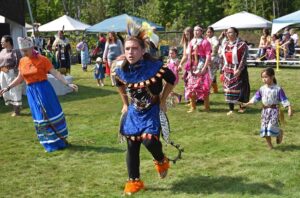
NIPISSING FIRST NATION — Nipissing First Nation’s 35th Traditional
Pow Wow took place September 3-4 in Garden Village attracting a bigger
crowd with more vendors.
MC Bob Goulais entertained while informing the dancers of upcoming
songs and pow wow protocol for the growing crowd as the Ottawa River
Singers and Eagle Flight sang to the beat of the big drums. Sunrise
ceremonies started the day Thursday to Sunday.
Jingle dancer Ava Couchie looks forward to the two-day Nbisiing Nation Dewegigewaad.
“It’s a really nice community and I am grateful to call this home.”
2023-2024 Miss Nipissing First Nation Sassa Linklater was also feeling grateful at the sunny, popular pow wow.
“I feel very welcomed, and cared for by the pow wow committee and the community of Nipissing.”
Head dancer Samantha Mianskum talked about community in the Nipissing First Nation powwow.
“It’s all about unity. It’s all about truth and reconciliation and us healing as a whole nation from all the trauma.”
Then Samantha spoke of a big event in her life early this summer,
meeting her sister Cynthia. Samantha’s son Tayton Mianscum acts in the
mini-series, Little Bird, a Crave drama about the Sixties Scoop that
released in Canada late May.
“I met my sister in June, a Sixties Scoop survivor. I didn’t know. We
didn’t know about her, nothing. We met her in June when that Little
Bird started to air. She came here today. She is in the ribbon skirt
right here. She would be the eldest of all of us. She’s here with us
today, visiting and getting to know our family and our culture.”
Cultural and Heritage Manager Mindy Lariviere called the Nipissing Traditional Pow Wow extra busy compared to last year.
“We have double the vendors this year than we did last year — it’s a
great turnout. Last year, we had about 1,500 come through; we are
anticipating between 2,000 and 2,500 people come through.”
Mindy explained the Nbisiing Nation Dewegigewaad theme is Trying to live a balanced life.
“We are trying to help our community to see that we don’t need to be
perfect, but we need to live good. A lot of our families in the
community are seeing a lot of trauma in alcoholism and drug abuse and
even excessive food eating. Our theme is really wrapped around just
people trying to live a healthy life, a balanced life; not perfect, but a
good life.”
Tory Fisher was asked by the pow wow committee to be arena director.
“My spirit name is Waswaabik and I am from the Oojiik (fisher) Clan.
Our pow wows are a time of celebration coming together in song and
dance. Also, it is a time of healing for our people through the drums,
songs, the dance and being together as a pow wow community. It is
showing our community a place to be safe and welcomed into the circle
and visit with family. A place to ask for help and healing through the
drums or Jingle Dress dancers. They will sing for us and dance for us.
It is part of our beautiful Anishinaabe way of life to look after each
other through our shared gifts.”
What is talked about in these three videos has many implications for all sorts of trauma and for both individuals and oppressed populations in general all over the world. When we start understanding people’s pain and suffering from this perspective compassion and empathy for all sorts of things we might not have understood becomes possible. Compassion and empathy can heal us all.
Dr. Solanto discusses what trauma is, how the experiences of colonization “qualify” as trauma, how trauma might be transmitted across the generations, crime and other social problems as understandable responses to trauma and implications for healing
individuals, families and communities. Go here: Intergenerational Trauma and Healing – Beyond Meds
Historical Boarding School Healing Symposium provides
framework for moving forward
Boulder, Colo. – May 19, 2011 – More than 30 representatives from the Boarding School Healing Project, Native American Rights Fund, American Indian Law Clinic at the University of Colorado Law School, and Human Rights Clinic at the University of Wyoming and other organizations came together on May 14-15, 2011 to create a framework for healing from the abuses suffered by American Indian children as a result of the U.S. boarding school policy.
“This is a historical event, one that gives optimism that something is really going to happen,” said Don Coyhis of White Bison, Inc.
The goal of the two-day conference was to discuss and craft a national strategy to achieve both national recognition of and an apology for the wrongs visited upon individuals and communities of Indian Country by the U.S. boarding school policy. The strategy would also seek reparations to provide the framework for healing the wounds from these historic and enduring wrongs.
“Intergenerational trauma was a huge theme of the conference,” said Jill Tompkins, director of the American Indian Law Clinic at Colorado Law. “American Indian children forced into the boarding school system later on unintentionally imposed onto their children and their children’s children the scars of growing up without knowledge of their language and their culture, without affection and without a loving family support network. When they finally returned to their tribal communities, they did not know who they were or where they fit anymore. “
Many point to the proliferation of alcoholism, drug abuse and suicide among Indians as evidence of the on-going effects of this period.
Although early in the planning stages, three key themes were expressed at the conference: acknowledgement, justice and healing.
Some of the ways expressed to achieve these themes included:
- The desire and need for a meaningful apology
- Support for language and cultural revitalization
- The implementation of healing programs in each tribe, controlled locally so as to be significant and effective within each community
“All school children graduate knowing about slavery in the United States and its devastating effects on black people and the human toll of the Civil War,” said Coyhis. “No student should graduate high school without knowing about this period of American history and its devastating effects as well.”
The symposium participants agreed to formally establish the Boarding School Healing Coalition which will move forward with a plan for gathering support and implementing the results of the symposium. This may include, but is not limited to: public education efforts, litigation, remedial legislation, and international policy advocacy.
Beginning about 1880 and continuing for nearly the next century, the U.S. government began to promote boarding schools for American Indian children, modeled on Colonel Richard Henry Pratt’s militaristic Carlisle Indian Industrial School in Pennsylvania, as a primary means to assimilate Indian children. By 1902, 154 boarding schools housed 21,500 American Indian children. In some instances the U.S. government subcontracted the operation of these schools to churches. Some of these children were held at the boarding schools from age 5 to 18, many never being allowed to return home to their parents or tribal communities.
They were generally forbidden to speak their native languages, taught Christianity instead of their native religions, and in numerous other ways forced to abandon their Indian identity and adopt European-American culture. They were taught to be ashamed of being Indian, of their culture and religions. Tragically, many cases of mental and sexual abuse have been documented.
Important participants at the Symposium were Chief Wilton (Willie) Littlechild and Marie Wilson, Commissioners of Canada’s Truth and Reconciliation Commission (TRC). Canada modeled its Indian Residential School system on the U.S. model. Thousands of individual and community lawsuits were brought against the Canadian government for abuses, particularly sexual abuse, inflicted on Aboriginal people. The cases were eventually resolved in the Indian Residential School Settlement Agreement, the largest class action in Canadian history, in 2007.
The settlement provided for a payment to all former students who were held in federally supported residential schools, additional compensation for those that suffered sexual or serious physical abuse or other abuses. The Canadian government also made a contribution to the Aboriginal Healing Foundation to support commemoration projects and to establish the TRC. The TRC’s three-prong mission is: to inform Canadians of what happened in the schools; to honor the lives of former students and their families; and, to create a permanent record of the Indian Residential School legacy. Although the Settlement has made some progress in bringing healing to residential school survivors, Chief Littlechild told the U.S. Symposium attendees, “You have a chance to do things better.”
To date, no U.S. Presidential apology or plan to provide redress for American Indian boarding school survivors has been proposed by the federal government. “The time to seek justice and healing for our ancestors and families who suffered the boarding school experience is long overdue, The establishment of the Boarding School Coalition and the development of a mutual shared vision for future action are critical steps forward,” said Tompkins.
[I am still reading "White Mother to a Dark Race" and making notes. Intergenerational Trauma affects Indian Country in so many ways- land loss, loss of children to residential boarding schools, massive adoption of Native children to non-Indians, and outright aggression toward Indian people by the American government. This press release and the seminars are a good sign of progress and healing... Trace]
South Carolina court drops contempt charge against Dusten Brown Dusten Brown and the Cherokee Nation rea...
Bookshop
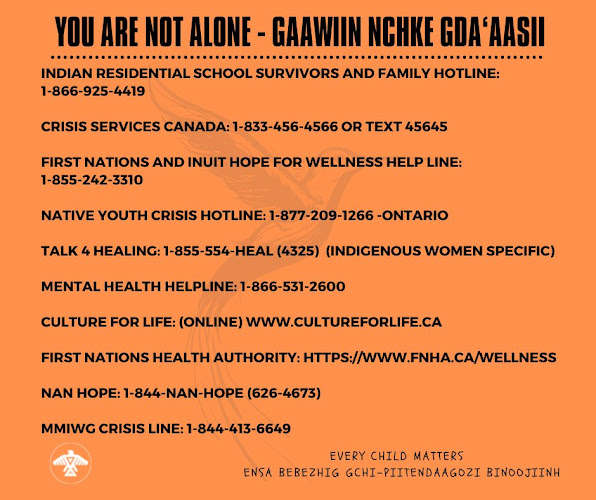
You are not alone
To Veronica Brown
Veronica, we adult adoptees are thinking of you today and every day. We will be here when you need us. Your journey in the adopted life has begun, nothing can revoke that now, the damage cannot be undone. Be courageous, you have what no adoptee before you has had; a strong group of adult adoptees who know your story, who are behind you and will always be so.
Diane Tells His Name
click photo
Lost Birds on Al Jazeera Fault Lines
click to read and listen about Trace, Diane, Julie and Suzie
NO MORE STOLEN SISTERS
click image
We conclude this series & continue the conversation by naming that adoption is genocide. This naming refers to the process of genocide that breaks kinship ties through adoption & other forms of family separation & policing 🧵#NAAM2022#AdoptionIsTraumaAND#AdopteeTwitter#FFY 1/6 pic.twitter.com/46v0mWISZ1
As the single largest unregulated industry in the United States, adoption is viewed as a benevolent action that results in the formation of “forever families.” The truth is that it is a very lucrative business with a known sales pitch. With profits last estimated at over $1.44 billion dollars a year, mothers who consider adoption for their babies need to be very aware that all of this promotion clouds the facts and only though independent research can they get an accurate account of what life might be like for both them and their child after signing the adoption paperwork.











 Posts
Posts

