They Took Us Away

They Took Us Away
click image to see more and read more

it's free

click

How to Use this Blog

BOOZHOO! We've amassed tons of information and important history on this blog since 2010. If you have a keyword, use the search box below. Also check out the reference section above. If you have a question or need help searching, use the contact form at the bottom of the blog.


We want you to use BOOKSHOP to buy books! (the editor will earn a small amount of money or commission. (we thank you) (that is our disclaimer statement)

This is a blog. It is not a peer-reviewed journal, not a sponsored publication... WE DO NOT HAVE ADS or earn MONEY from this website. The ideas, news and thoughts posted are sourced… or written by the editor or contributors.

EMAIL ME: tracelara@pm.me (outlook email is gone) THANK YOU CHI MEGWETCH!

SEARCH

Showing posts with label reunion. Show all posts

Saturday, November 9, 2024

Adoption Reality: UK Sea Change in Attitudes

ADOPTION REALITY: UK

Adopted children should be able to meet birth parents, says top judge

Report calls for ‘sea change’ to make face-to-face contact with birth families the norm to help all involved with issues such as identity

Angela Frazer-Wicks
Angela Frazer-Wicks is reunited with her eldest son who was adopted aged five, along with his brother, in 2004  Credit: X.com

Adopted children should have face-to-face contact with their birth parents, a major report has recommended.

The report, commissioned by Britain’s most senior family court judge, said the system where face-to-face contact was the exception rather than the rule was outdated.

Its author, Mrs Justice Judd, said there needed to be a “sea change” in the approach to enable children under 18 to regularly see their birth families provided it was safe to do so.

Most adopted children have little or no contact with their birth parents but, under current laws, they have a right to see their birth records and reach out to them. An adoption contact register allows the birth parents to indicate whether they want to be contacted, if it should be limited or none at all.

Until the 1970s, mothers would give up their babies for adoption with no expectation of future contact.

The report said: “The stigma attached to illegitimacy and infertility meant that the decision not to promote contact was considered to be a protective factor for the adopter, the adopted child and the birth family.”

KEEP READING:  https://www.telegraph.co.uk/news/2024/11/07/adopted-children-should-meet-birth-parents-says-top-judge/

Saturday, July 13, 2024

Going Home

Sudbury chef bids farewell to find peace with her Indigenous family in Saskatchewan

Tammy Maki will close her downtown chocolate boutique at the end of the summer

 Nishat Chowdhury · CBC News : July 10

https://www.cbc.ca/news/canada/sudbury/downtown-sudbury-tammy-maki-sixties-scoop-1.7259456


Tammy Maki and her dog Frankie sit for a moment in her shop surrounded by pictures of her late daughter and her grandchildren. (Kate Rutherford/CBC)


A well-known Sudbury business woman is packing her bags and leaving the downtown to explore and connect with her Indigenous heritage in rural Saskatchewan.

Adoptee Tammy Maki, 59, owner of Raven Rising-Global Indigenous Chocolates on Cedar Street, says she'll close the doors to her shopfront at the end of the summer and someone else will take over the lease.

A child of the Sixties Scoop and member of White Bear First Nations, a community located about 210 kilometres southeast of Regina, Maki says she wants to reconnect with her Indigenous relatives after spending most of her life in Sudbury.

"I've never had a chance to experience my culture, my relatives, my people, ceremonies," she said. "I feel like an interloper in my own heritage."

The sudden loss of her only daughter last year and her grief became a catalyst for her to explore where she belongs, and is the final push for her departure. 

"This shop, we came to look at it together when I was looking for a place to lease. She worked here, she sat in the chair. It's always her, her, her in my mind," said Maki.

The chocolate shop won't be closing forever. Instead, the e-commerce business will be running out of White Bear First Nations.

Reconnecting with biological family

Maki was taken from her birth mother in the 1960s and a Sudbury family adopted her at a young age.

In the last five years, Maki found out she had three brothers and she was 56 when she saw a picture of her biological mother for the first time. 

"It's so weird, you go through life and you wonder, 'oh, do I look like anybody?" she said.

The Department of Indigenous Affairs indicates that the number of Indigenous children adopted between 1960 and 1990 was more than 11,000. However, more recent research suggests upwards of more than 20,000 First Nation, Métis and Inuit children were removed from their homes.

According to the Canadian Encyclopedia, the number of children taken away from their birth families varied by province, but the practice was most common in the Prairies.

In Saskatchewan, there were specific programs designed to facilitate adoptions.

"I'm going back with the attitude of not what my First Nation can do for me, but what I can do for them, and hopefully I find some peace there as well," said Maki. 

Looking forward to the move

While personal soul searching is the prime reason for the move, Maki says it's also been challenging to operate a business in Sudbury's core.

She says major changes need to be made to address the issues of homelessness connected to the toxic drug crisis.

"To tell me that I need to have a storefront downtown Sudbury in order to create foot traffic is fine, but when people are worried about coming here, then what does that do for me?"

Maki says she's looking forward to living in rural Saskatchewan where she says she feels like she can finally breathe, and where she has scattered some of her daughter's ashes.

"As sad as it's going to be, it's also very exhilarating and I'm really looking forward to experiencing that Indigenous side of myself, that side that's been just crying for years," she said.


Tuesday, April 11, 2023

#60sScoop Interactive project raises awareness, creates connections and reunites long-lost relatives

From Île-à-la-Crosse to Brighton, England: '60s Scoop survivors map journey of reconnection

Daniel Frost seated in a hotel boardroom.
Daniel Frost is Métis and Cree. Born in northern Saskatchewan, he was adopted by British parents in 1968 at just two years old. (Francis Ferland/CBC)

Thinking about meeting his sister Patsy for the first time seven years ago is still tough for Sixties Scoop survivor Daniel Frost.

"All I could do was look at her hands," he recalled, still overwhelmed with emotion as he remembered how much those hands looked like his.

"I couldn't look at her eyes."

Frost is Métis and Cree, one of about 22,000 Indigenous kids who were torn from their homes and placed in foster care or adopted into non-Indigenous families between 1951 and 1991, a system known today as the Sixties Scoop.

He came to Ottawa this week to share his story with the interactive mapping project, In Our Own Words.

Coloured arrows dart all over a map of Canada shown on a projector screen.
The In Our Own Words map tracks where Indigenous kids were taken after being torn from their families. (Francis Ferland/CBC)

Born in Île-à-la-Crosse in northern Saskatchewan, two-year-old Frost was adopted by British parents in 1968, taken to White Rock, B.C., and then finally to Brighton, England. He now lives in Spain.

He spoke with CBC News at downtown Ottawa's Novotel Hotel, where Sixties Scoop survivors gathered this week from far-flung places all over the world to share stories and connect.

Frost explained how a federally funded Saskatchewan-based organization, Adopt Indian Métis (AIM) scooped seven youngsters from his 13-sibling family. The organization is known for placing ads in newspapers and aggressive public relations campaigns.

Frost began learning his history by reading legal documents, including the court files that tell how his mother ran out of the courtroom when she learned her children were being taken.

"What they were saying in the 1960s and '70s was, 'We're not going to help you. We're just going to take your children,'" Frost said.

"I don't know if I'll heal from it, but I think being able to work my way through it is something which is necessary."

He visited Île-à-la-Crosse in 2016 and met his family, which he said changed him from a scared outsider to a man deeply proud of his Indigenous identity, and this trip to Ottawa includes a hop across the river to Gatineau, Que., to pick up a copy of his first Indian status card.

KEEP READING

Tuesday, May 4, 2021

There are no rules. None! #AdopteeReunion


By Trace L Hentz, Blog Editor


Children would never choose to be adopted.  It was not our fault.  It happened.  As adults we have to be strong to go into reunion.  There are no rules – none.  You just go back and meet relatives.  You do risk losing your adoptive parents.  It’s like climbing a mountain on a tightrope.  It hurts me to think about this but I have to…

American, what have you done?  You really attempted to destroy Indian Country, didn’t you?  You attempted to eliminate every Indian, right?  If you couldn’t murder us all, you invented an adoption project to deal with us – to end our tribal heritage as small children, to assimilate us.


This was posted in 2013 on my LARA blog:

I am not myself.  I feel like I am transforming again, maybe like a part of me is dissolving, disappearing, no longer necessary.  I rarely feel like this and I don’t like it.  I can’t control it.  It won’t pass.

This time is different.  Really different.  It’s like a dark foreboding cloud.  Like I felt two days before 9-11.  It’s hard to put into words.  It’s bigger than I have words for.

I am not sure if this is/was triggered because I lost my friend Rocio very recently or how so many others (friends and family) have been dealing with major health issues, like my brother Danny who just had surgery and is going to start treatment soon. There is not a day that goes by that I don’t think about Veronica Brown who was placed with strangers in an adoption that her father did not agree to – and he fought hard for his daughter but lost.  This little girl didn’t deserve this upheaval – Ronnie was abandoned by her birthmother at birth and essentially sold to strangers.  Her father lost her in court after court.  How does this happen in America?

Very hard things are happening right how.  Not just to me but to my circle of friends.

Yesterday I spoke with my close friend who lost her job with her tribe.  She’s an adoptee like me.  She wants to be closer to her birthmother.  This is so important for adoptees to do this hard work and to go full circle and be in reunion.  Her job loss was pure politics, the dysfunction we know that exists is our tribal world.  This friend also had an autoimmune disease that is now in remission, completely.  This is a miracle.  A deeply spiritual transformation happened to her.  Despite the loss of her excellent job with her tribe, and with much work and prayer, she just received a fantastic job offer with a university.  She won’t have to move.  She will be able to stay in reunion with her mother.  She witnessed how bad things can happen to you, even a serious illness, and yet Great Spirit is often clearing the way for a bigger job and better health.

I do believe in miracles. I believe in hard work.  Prayer works.  I know that we work for Great Spirit.  I am simply a channel for work that needs to be done.  It’s not about ego or about me at all.

You see I want all adoptees to know they can return to their families.  They can work for their tribes, too.  They can get to know their birth parents as people.  We can eventually blend in with all the relatives – but it takes time and effort.  Doing this will not be easy.  I do know this!

What America did to adoptees like me and my friend caused enormous pain and upheaval.  America removed children from our Indian families as part of a plan.  It was meant to destroy our connection to our tribes and families.  The result of a closed adoption was to alienate us from each other.  American Indians are unique and culturally rich and diverse.  Adoptees who are raised away from this culture must be allowed to step back in the circle and relearn what we missed growing up in non-Indian families.

2013 is when I wrote this... and it is still true... TLH 


Monday, November 21, 2011

QUESTIONS: a new journey begins...

By Trace L Hentz (blog editor)

Whenever I find new adoptees, I want them to know immediately we share this experience.

Here is someone who is in the first stages of discovery...
http://urbanhaas.blogspot.com/2011/08/unexpected-connection.html

What strikes me about this new adoptee and his new adoptee journey are the QUESTIONS: " Is it right to contact someone who carried you and gave you up 42 years ago? What if reaching out is painful or opens old wounds? What if it’s better not knowing? What if they’re bad people? What if …. Many questions rolled around in my head as I considered what to do...."

These are our thoughts. What do we do, how do we handle contact and reunions, what ifs, etc. There are no guidebooks for this which is why I wrote my memoir One Small Sacrifice. I had to explain to others we are not alone and if they are Native adoptees, I want them to know the history and how the Indian Adoption Project files are sealed to hide their hideous intentions to erase us as Indians.

I feel for this adoptee: He writes:
"...Contact. What happens next? We’ve been corresponding via email and are making plans to meet face to face. It’s exciting. Both of us felt shock at the sudden connection. Neither of us have experienced the pain that could have come. Not yet at least...."

One reason I blog and read other adoptee blogs is our shared experience. Sharing our stories is how we heal...

Have you found any new adoptee blogs?

Tuesday, June 21, 2011

"Dad" Reunions ( and what I learned about REUNION meeting my dad)

Maryland father finds his son after 35 years: After many false starts, DNA test leads to reunion http://www.baltimoresun.com/news/maryland/bs-md-adoption-search-ryba-20110619,0,1793711.story

Father, daughter, find each other, in life and song
http://www.ajc.com/lifestyle/father-daughter-find-each-982010.html?cxtype=rss_news_128746


There is great truth and importance in these stories, dispelling myths how reunions between adoptee and first parents won't work...  I have my own reunion story with my dad Earl Bland in my memoir "One Small Sacrifice." I met my dad in 1996.

This is what I learned about REUNION:
  • After our first phone call, I wrote my dad a letter and explained what I knew about my adoption and gave details, like my date of birth, where I was born and what I knew from my adoption file. It gave him and his family time to process and adjust to my showing up in their life.
  • We made plans to see each other - later we'd talk on the phone, just the two of us. (Repeat after me: "We can't start over. We start here and now.") My dad and I began our lives together when we reunited in person for the first time.
  • Plan to meet. Schedule DNA tests if there is any doubt about paternity. Not sure at first, our DNA test said Earl and I were a 99.9% match. Hooray!
  • Expect to feel very overwhelmed at first. Reunion is not about rivalry but if you have siblings, expect their surprise (and maybe some jealousy, too). Avoid controversy and meet one-on-one, just you and your parent first. Later spend quality time with the entire first family (your siblings, their kids, your kids and all the relatives.) Don't rush into this one but take lots of pictures! Meet your siblings one at a time, too. It takes time and energy to get to know one another.
  • Watch your expectations, adoptees. Earl and I knew there was no way to go back to reverse the past or fix it. He did not apologize nor I didn't expect him to... My dad didn't ask me about my life or what I experienced being adopted. This might happen in your reunion, too. Plan your future together as time, money and distance will allow. Each and every reunion is unique. Share your story if and when you are asked.
  • Listen and be patient: that is what I did.  I had no idea how my dad spent his life but I knew it was going to take time to hear his story. I took copious notes!  My siblings and relatives shared much more than my dad and gave me tons of genealogy.
  • I knew my dad had no clue how hurt I was being adopted.  That was the truth for me. (Again, don't expect an apology.) I never expected he would fix my brokeness but hearing his voice the first time healed me in so many ways.  The fog I'd walked in started to disappear. Old illusions vanished. My grieving faded.
  • Depending on your adoptive family, only you the adoptee can determine if they can handle any news of your reunions.  I know just one adoptee who connected his mothers - now they are friends.  That takes some very strong loving women (and men) to make this happen. Many adoptees did share their reunion stories and it abruptly ended their relationship with the adoptive parents. Be sensitive and don't share details if they don't want to hear them. Many adoptive parents do not realize the importance of reunions in an adoptees life. It is up to the adoptee how to procceed and if you share the news. The risk of rejection by your adoptive family is a whole new chapter to reunion.
  • Last but not least, get counselling if you need to and early.  Spouses and friends may not be able to help you process all this. Go slow and be gentle with yourself but try and proceed with the reunion - since noone knows how much time you'll have to reconnect in this life.  In my reunion, I had a little over a year before Earl died. We made the best of our time. I knew he was very sick when we first met. Earl and I spoke often and I wrote letters and cards. When Earl became very ill and was hospitalized, I was updated by my family constantly. Sadly, I only met Earl once but I did attend his funeral and was listed as his daughter in his obituary.
Closed adoption advocates want us to believe secrecy is best and privacy was promised. That was not true in my experience at all. Yes, my mother Helen did not want to meet me but that was her choice, and I respected that. But ADOPTEES have TWO PARENTS. If one reunion fails, there is still hope we can meet someone else in our first family. It may be relatives - aunts, uncles or siblings. Never give up hope or your search! First, we have to permanently end closed adoptions - they do not serve the adoptee or their emotional and spiritual well-being. We must unseal adoption records and shine the light on the truth. We must demand Unconditional Access - so birthparents cannot withhold your original birth certificate or your adoption records.
I pray for each adoptee and natural parent to have a good reunion. There is good medicine and healing waiting for all of you.

Friday, March 25, 2011

Reunion: What you need to know about rejection

Perhaps one of the best analysis of the “reunion of adoptee and birthparent” I have found is called The Second Rejection, Part 1 and 2 by Marcy Wineman Axness (available on the website: www.reunite.com/adoption-records/the-second-rejection.html)

The Second Rejection
Your phone call takes too long to be returned. Your letter goes unanswered for an unnerving number of weeks. You concoct exaggerated scenes inside your overtime mind, clamoring to make sense of it all, to somehow feel sense of it all.
Ah, reunion.
Now that we as a movement have gotten past the reunion-as-panacea stage, we are beginning to address the very complex issues imbedded in the process, the relationship, the roller coaster experience that attends reunion. And the big old elephant sitting squarely in the middle of this room, the one almost everyone sees -- or rather feels, trampling their already-bruised toes -- but hates to mention for fear of making it real, is named Rejection. But whether we name it or not, it’s very real.
For many adoptees, it’s experienced as The Second Rejection. My friend Amy’s birthmother, upon being found, said that she needed time to adjust. She told Amy to call her in six months, and upon doing so Amy found that she had moved to Germany. Amy has channeled her renewed feelings of abandonment into her own healing, thereby transforming what might have been an immobilizing turn of events, but she still knows frustratingly little about what’s at the heart of her birthmother’s rejection.
Dr. Randolph Severson explains that behind many kinds of reunion rejection lies a sort of grieving for the might-have-been. And people respond to that grief in different ways.
“I think there is a stage that some people go through where they feel rejected, really, by life. That all these things that could have been, or, along a different kind of life trajectory, would have occurred, simply aren’t going to be -- too much of life has already been lived. And people withdraw. The anxiety is just too great, the disappointment is too great.”
This kind of withdrawal can happen on the part of the adoptee as well. “What a lot of adoptees seem to go through is a stage where they realize that the birthmother or birthparents are really not going to be able to answer to their wish when their fundamental wish is ‘I wish none of this had ever happened to me.’"
Dr. Severson says that an underlying desire of many adoptees -- subconscious, irrational, and understandable -- is that through reunion they will somehow become un-adopted, become like everyone else.
“The second rejection sort of occurs when folks realize that this just simply can’t happen. And sometimes it creates a little bit of a distance that the birthparent then complains about, too. It’s like an almost impersonal rejection that occurs as a result of finding that the reunion simply can’t erase, eliminate or undo everything that’s gone before. The wounds still exist.”
It is the different way we address these wounds that is at the heart of my own experience with the second rejection. As long as I was still in the deep sleep of denial over how adoption etched me, my birthmother felt safe to be very forthcoming in our relationship. The fact that I’ve come to address these issues, these wounds of mine, holds a certain terror for her, I think, since she has always minimized her adoption experience, as in “I had a great pregnancy, I knew I was carrying you for Bee and Bob, and I’ve never believed in ownership of children.”
In her blithe attitude about this profound experience -- one we intimately shared -- I experience a certain basic rejection, a dismissal of the part of me who doesn’t regard it blithely in the least, the part of me who feels fundamentally shaped by it.
My birthmother’s response is a variation on a theme that Dr. Severson says often occurs in the reunion experience as birthparents encounter the fullness of their children’s emotions and responses. “They can be overwhelmed about the intense, deep sorts of needs and yearning that adoptees often have. And they can just withdraw, it’s just too frightening. I think most second rejections that occur literally, occur out of fear, mostly, and not knowing how to respond.” (It can also happen vice versa, with the adoptee overwhelmed by the needs of the birthparent.)
Sometimes the birthparent -- most often the birthmother -- doesn’t feel free to respond to her newly-returned “child” in the way her instincts would guide, hamstrung as she is by allegiances to her existing family, especially her husband, notes Dr. Severson.
“When the full weight of what this means bears in on a spouse, and for awhile the birthparent becomes almost a stranger, that spouse can put a whole, whole lot of pressure on the birthparent.”
This can lead to painful choices that pit a birthmother’s instincts and heart’s desires against the harsher demands she may feel pressing in on her. In this way, the birthmother - or birthfather --experiences another kind of second rejection, of the sort that occurred when she had to reject an entire realm of response within herself -- and indeed felt it rejected by those close to her -- in order to relinquish her child for adoption. This can stir up old anger, another elephant in the reunion room, who sits in many laps.
Whenever I attend our local support group, I can count on hearing at least one birthmother complaining about her adult child’s confusing, ambivalent, “push-pull” behavior, which she will often perceive as rejection. I usually offer some insight into primal anger, for notwithstanding the old debate regarding Did-We-Or-Did-We-Not-Abandon-Them, I believe that regardless of how we -- including adoptees -- frame it within our adult, intellectual perspective, there is rooted in the adoptees’ experience a profound sense of rejection registered on the most primal level, at our most tender marrow. Dr. Severson cautions against regarding the anger as simply a “stage”, which implies some sort of term limit.
“It co-exists with all these other feelings, and it doesn’t go away. It exists because it’s reality-based. It’s human. And then when it comes boiling out it frightens everybody, especially if they’ve not read anything or talked to anybody, are not in therapy or a support group, and it’s kind of like ‘Where’s this anger coming from? It shouldn’t be there because after all, we’re having this nice, happy reunion.’"

Marcy Wineman Axness, an adoptee, lives in California with her husband and two children. She writes and lectures nationwide on adoption and pre- and perinatal issues. She welcomes correspondence at her e-mail address: axness@earthlink.net

[I am posting this from my research on adoption and what I learned while writing my memoir...Trace]

Happy Visitors!

NEW WEB ADDRESS

Because we don't want to lose information on this blog, we now have a domain name: American Indian Adoptees.com - click and save this link:

2026: WE HAVE A BACK UP BLOG COMING SOON: www.americanindianadoptees.blog (on wordpress) We are no longer on Facebook. We deleted our accounts.

WRITTEN BY HUMANS!

WRITTEN BY HUMANS!

Blog Archive

Featured Post

Your History Class Was a F*cking Lie | #NOMOAR

  Your History Class Was a F*cking Lie by Sean Sherman (Or: How the American Educational System Has Always Been a Racist Propaganda Program...


Native Circles

Native Circles
click logo for podcasts!

Most READ Posts

Bookshop

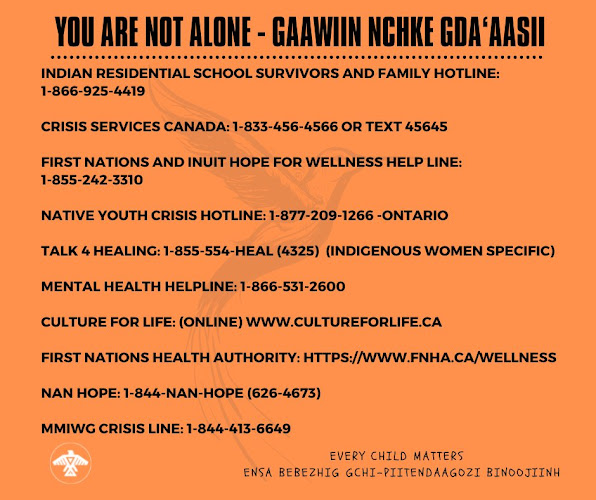
You are not alone

You are not alone

To Veronica Brown

Veronica, we adult adoptees are thinking of you today and every day. We will be here when you need us. Your journey in the adopted life has begun, nothing can revoke that now, the damage cannot be undone. Be courageous, you have what no adoptee before you has had; a strong group of adult adoptees who know your story, who are behind you and will always be so.

Diane Tells His Name


click photo

Lost Birds on Al Jazeera Fault Lines

Lost Birds on Al Jazeera Fault Lines
click to read and listen about Trace, Diane, Julie and Suzie

NO MORE STOLEN SISTERS

NO MORE STOLEN SISTERS
click image

ADOPTION TRUTH

As the single largest unregulated industry in the United States, adoption is viewed as a benevolent action that results in the formation of “forever families.”
The truth is that it is a very lucrative business with a known sales pitch. With profits last estimated at over $1.44 billion dollars a year, mothers who consider adoption for their babies need to be very aware that all of this promotion clouds the facts and only though independent research can they get an accurate account of what life might be like for both them and their child after signing the adoption paperwork.

Original Birth Certificate Map in the USA

Google Followers