They Took Us Away

They Took Us Away
click image to see more and read more

it's free

click

How to Use this Blog

BOOZHOO! We've amassed tons of information and important history on this blog since 2010. If you have a keyword, use the search box below. Also check out the reference section above. If you have a question or need help searching, use the contact form at the bottom of the blog.


We want you to use BOOKSHOP to buy books! (the editor will earn a small amount of money or commission. (we thank you) (that is our disclaimer statement)

This is a blog. It is not a peer-reviewed journal, not a sponsored publication... WE DO NOT HAVE ADS or earn MONEY from this website. The ideas, news and thoughts posted are sourced… or written by the editor or contributors.

EMAIL ME: tracelara@pm.me (outlook email is gone) THANK YOU CHI MEGWETCH!

SEARCH

Showing posts with label Missing children. Show all posts

Saturday, December 3, 2022

Seeking justice for missing children and unmarked graves uncovers ‘larger’ concerns


Kimberly Murray says an impending bill making Indigenous policing an essential service could make the process of searching burial sites much safer for Indigenous communities.

In June, Murray was appointed the country’s independent special interlocutor for missing children, unmarked graves and burial sites.

For two years, Murray is taking on the heavy task of liaising with Indigenous communities to examine how Ottawa, provinces and territories protect and investigate these sites, with the aim of improving Canadian laws and making recommendations for a new federal legal framework.

Nearly five months into the job in October, Murray says some of those challenges are more sprawling than she first believed.

“The records are proving (to be) a larger concern than originally I thought,” she told the Star.

While obtaining and accessing residential school records held by churches and the federal government have long been considered a barrier to achieving reconciliation, Murray said the issue extends far beyond those entities.

She’s encountered cases of children sent to the schools, apprehended by municipal police for running away, entered into the court system and sent to reformatories, before being shuttled back to the institutions they first fled.

“This systemic interconnection of all these organizations and entities and institutions is much larger than I thought,” said Murray, of attempts to lay out a clear paper trail in each of those cases.

The role of special interlocutor was first announced last summer, after ground searches confirmed the existence of hundreds of unmarked graves at the sites of several former residential schools. At the time, the federal government earmarked $83 million, on top of other investments, to research and locate burial sites, and to commemorate children who died at the institutions.

Since then, Indigenous communities have grappled with how to go about conducting searches of their own.  As of September, 88 communities have received federal funding to begin that work, Murray said.

The former executive director of the Truth and Reconciliation Commission said the ongoing battle to access records — including those from local police services, hospitals and universities — is mirrored in the challenges accessing potential burial sites.

She referenced the recent example involving Sioux Valley Dakota Nation in southwestern Manitoba, whose radar survey at a campground in Brandon was stalled after the site’s owner blocked access to the area.

“There’s also issues with other sites that aren’t necessarily where the residential school was located, but was associated with a residential school, or we know that Indigenous children got sent to these places,” Murray said.

“Our legislation and our legal framework doesn’t adequately address those concerns.”

These are issues Murray raised at a meeting with federal, provincial and territorial ministers of justice two weeks ago, where she was able to discuss her mandate with government officials for the first time.

Murray said she hopes to conduct similar meetings with Indigenous relations ministers across the country as part of a wider effort to improve co-ordination between hundreds of Indigenous communities.

One of the topics raised in her discussion with justice ministers was enshrining Indigenous policing as an essential service — a topic Ottawa is hoping to address in the form of new legislation this year.

At present, Indigenous police services are funded through the First Nations and Inuit Policing Program, which was established in 1991. While costs are split between provinces, territories, and the federal government, police services are still regularly underfunded.

Ottawa had initially hoped to table legislation on the matter as early as this fall, a deadline that has now been pushed back to this winter. The legislation is expected to help reform the way Indigenous police services are funded, which would provide communities with full-time, culturally-sensitive services.

Murray said having a safe policing alternative is critical for communities wrestling with how to bring law enforcement into their searches.

Such police services could fundamentally change the way investigations are conducted, Murray said, including allowing families and survivors to actively take part in the process.

“I am always offended when I hear a Crown attorney or a police officer say, ‘Well, we have to protect the integrity of the investigation. To me, that’s very demeaning and disrespectful to the families and their communities because nobody wants to interfere with the integrity of the police investigation,” Murray said.

“That to me is a buzzword, a white people buzzword, for ‘Get out of our way.’”

Having legislation in place as quickly as possible would eradicate some of that mistrust, Murray said.

“(Indigenous police) weren’t the ones taking the kids when they ran away and bringing them back. They weren’t the ones that did the failed investigation when survivors were coming forward about sexual abuse,” Murray said. “If we have First Nations police services, trained, properly resourced, with the ability to do this investigation, that could be the solution.”

Sunday, November 21, 2021

'Many pieces missing for survivors': Growing calls for a national inquiry into #60sScoop


TORONTO -- Warning: This story contains details that may be disturbing to some

There are growing calls for a national inquiry into the ‘60s Scoop, when Indigenous children were taken from their families in huge numbers to be placed in foster care.

An estimated 20,000 First Nations children were taken from their parents during that time, but survivors believe the numbers are much higher than that, and they want support to find lost loved ones.

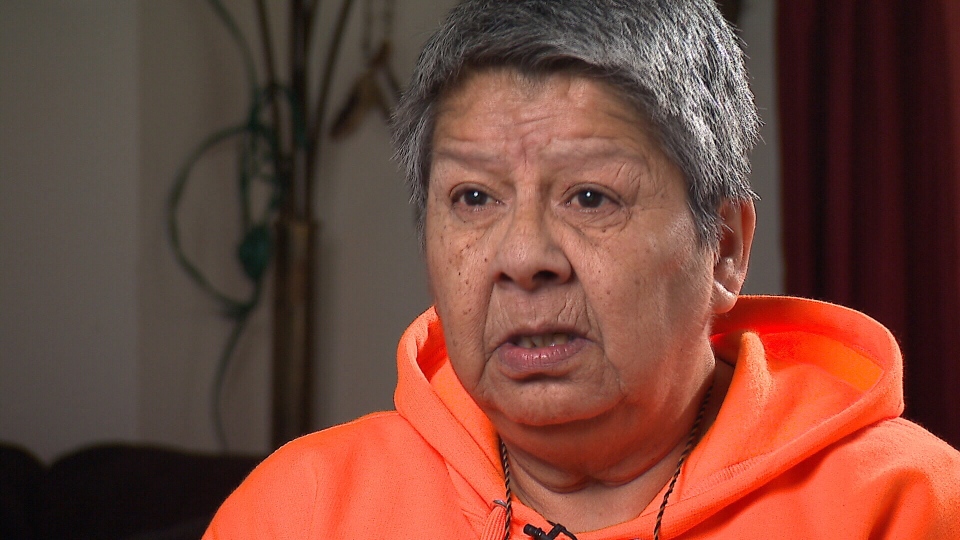
Lidia Lorane Lagard is one of those who was taken as a young child.

Now, surrounded by binders documenting part of her early life, she is trying to piece her past together and find her family.

“I would really love to get connected with my brother again and find my sisters,” Lagard told CTV News.

Known by family and friends as Mama Crow, Lagard and her siblings from Longlac in Northern Ontario were part of the ‘60s Scoop.

It’s a cycle that still continues today — now known as the Millennium Scoop.

"Me and my sisters became a ward of the courts,” Lagard said.

But being taken from her family isn’t the only pain that has haunted her.

In 1965, a social worker dropped Lagard off at St. Mary’s Residential School, when she around five-years-old.

“She talked to a nun for a bit and then she — she left me there,” Lagard said. “When she left, they cut off all my hair, shaved it down to nothing, […] scrubbed me down with steel wool and put me in the shower. And as she was scrubbing me she was saying I was just a dirty little Indian and I was going to learn to be proper.”

She said that she wasn’t allowed to speak her own language, which her grandparents spoke.

“When we were little, we spoke Ojibwe, we spoke our language,” she said.

The name “Mama Crow” comes from her grandparents, who called her “Little Crow” when she was born.

The name Lidia was forced on her, she said.

“They kept throwing the Bible at me always and saying, ‘pick a name’. And I wouldn’t,” Lagard said. “And every time I said my language I got beat.”

She kept hoping for the social worker to return — but she didn’t. Lagard was in residential school for around three years.

“Those priests in there were so horrible,” Lagard said. “They would rape us, and they would beat us, and they would never stop. It was one child after another.”

She described how at night, sleeping in a room full of many other children, she would hear priests come in and take a child out with them.

“I still listen for footsteps coming towards my room,” she confessed. “I’m 60-years-old now.”

The foster system was no respite. Two weeks before her 13th birthday, Lagard ran away to Vancouver, where she struggled with drug and alcohol addiction until 2004, when she found the strength to get sober and begin searching for her siblings.

“The government is there to protect us. And they didn’t,” she said. "The priests and nuns were there to protect us. And they didn’t. So now we have to jump through hoops to have our truth known, and our truth seen, and our truth heard.”

Many other survivors are also struggling to trace what happened to them, according to Katherine Legrange, volunteer director for Legacy of Canada.

“We want to ensure that this piece of history is not lost,” she told CTV News. “As survivors, we want to make sure that this doesn’t happen to children going forward.”

Her organization, among others, is calling for the federal government to commission a national inquiry into the ‘60s Scoop, similar to the MMIWG inquiry.

There’s been no government commitment to an inquiry, but Crown-Indigenous Relations Minister Mark Miller’s office says the government is "committed to working with all ‘60s Scoop survivors, including Métis and non-Status First Nations to establish a path forward to mend past wrongs and ensure they have what need to heal.”

“There’s still many, many pieces missing for survivors, including where their parents and siblings may be, what community they come from in some cases,” Legrange said. “And lots of files have been misplaced or in some cases redacted so that we can’t trace back our family histories.”

That’s the case for Lagard, who hopes sharing her story will help find her brother Clifford and sister Isobelle.

“I just found my niece through Facebook,” she said.

But it’s a slow journey. Many of the documents relating to her early history have names and details blacked out, she said.

“The ones that are still out there, looking for Lidia Lorane Lagard — I’m here,” she said. “I’m looking, I’m reaching. I want my family home.”

And although she’s worked hard to heal, the combined trauma of being a ‘60s Scoop and residential school survivor runs deep.

“I still carry scars in my head,” Lagard said. “But the saddest part is nobody sees the scars that we carry within us.” 

Friday, May 21, 2021

Coerced and forced sterilization of Indigenous women and girls: This is what genocide looks like in Canada | The Star


Despite Canada’s benevolent veneer, its history is replete with examples of genocidal medical violence inflicted upon Indigenous communities, including children, with Canadian physicians often leading the charge. This includes coerced and forced sterilizations targeting Indigenous women and girls.

In her landmark book, “An Act of Genocide: Colonialism and the Sterilization of Aboriginal Women,” women and gender studies professor Karen Stote describes how formal eugenic legislation in provinces like Alberta and British Columbia spanned decades in the twentieth century, while other provinces had similar practices that may have been informal, but with the same devastating end-result: the sterilization of thousands of Indigenous women and girls, forced to give up the ability to bear children.

READ: Coerced and forced sterilization of Indigenous women and girls: This is what genocide looks like in Canada | The Star


And on that other terror:

Thursday, September 27, 2018

Where are they?

Where are the Indigenous children that never came home?

An untold number of students at Carlisle Indian School disappeared. Tribal nations raise the stakes in search of answers.

This story was done in collaboration with
The Intercept.

When Yufna Soldier Wolf was a kid, she was made well aware of why her family members only spoke English, and why they dressed the way they did. Her grandfather and other elders used to recount their experiences at boarding schools, where the government sent hundreds of thousands of Indigenous children, from nearly every Indigenous nation within U.S. borders, to unlearn their languages and cultures. “A lot of them were physically abused, verbally abused, sexually abused,” she said.

READ 

Reprinted and shared with permission.


Happy Visitors!

WRITTEN BY HUMANS!

WRITTEN BY HUMANS!

Blog Archive

Featured Post

Your History Class Was a F*cking Lie | #NOMOAR

  Your History Class Was a F*cking Lie by Sean Sherman (Or: How the American Educational System Has Always Been a Racist Propaganda Program...


Native Circles

Native Circles
click logo for podcasts!

Most READ Posts

Bookshop

You are not alone

You are not alone

To Veronica Brown

Veronica, we adult adoptees are thinking of you today and every day. We will be here when you need us. Your journey in the adopted life has begun, nothing can revoke that now, the damage cannot be undone. Be courageous, you have what no adoptee before you has had; a strong group of adult adoptees who know your story, who are behind you and will always be so.

Diane Tells His Name


click photo

Lost Birds on Al Jazeera Fault Lines

Lost Birds on Al Jazeera Fault Lines
click to read and listen about Trace, Diane, Julie and Suzie

NO MORE STOLEN SISTERS

NO MORE STOLEN SISTERS
click image

ADOPTION TRUTH

As the single largest unregulated industry in the United States, adoption is viewed as a benevolent action that results in the formation of “forever families.”
The truth is that it is a very lucrative business with a known sales pitch. With profits last estimated at over $1.44 billion dollars a year, mothers who consider adoption for their babies need to be very aware that all of this promotion clouds the facts and only though independent research can they get an accurate account of what life might be like for both them and their child after signing the adoption paperwork.

Original Birth Certificate Map in the USA

Google Followers