They Took Us Away

They Took Us Away
click image to see more and read more

it's free

click

How to Use this Blog

BOOZHOO! We've amassed tons of information and important history on this blog since 2010. If you have a keyword, use the search box below. Also check out the reference section above. If you have a question or need help searching, use the contact form at the bottom of the blog.


We want you to use BOOKSHOP to buy books! (the editor will earn a small amount of money or commission. (we thank you) (that is our disclaimer statement)

This is a blog. It is not a peer-reviewed journal, not a sponsored publication... WE DO NOT HAVE ADS or earn MONEY from this website. The ideas, news and thoughts posted are sourced… or written by the editor or contributors.

EMAIL ME: tracelara@pm.me (outlook email is gone) THANK YOU CHI MEGWETCH!

SEARCH

Showing posts with label Metis. Show all posts

Sunday, March 15, 2026

We Work With Our Hands

PLEASE READ: https://canadianartjunkie.com/2026/03/12/haley-bassett-we-work-with-our-hands/#respond

Haley Bassett’s recent solo exhibition explored the multifaceted nature of Métis labour past and present and traced “how our history is reflected in our current roles within the Canadian economy.”

A colorful beaded sculpture resembling a hand, displayed on a white pedestal, with a decorative embroidered jacket in the background.
Front: Gauntlet, 2025, Vintage and contemporary seed, pony and crow beads, vintage iron cut beads, thread, imitation sinew, and worn welding glove (10.5 x 12 x 2″) Back: Second Skin, 2020-2025, vintage and contemporary seed beads, Levi’s shirt, wire, sculpting mesh, beading foundation, thread, denim (30 x 23 x 16″)
 

Haley Bassett’s website, here.

At Galerie Nicolas Robert, here.


Friday, August 30, 2024

Finding Otipemisiwak by Andrea Currie (60sScoop)

 Books  ·CANADIAN

Finding Otipemisiwak by Andrea Currie

The story of a Sixties Scoop survivor's search to find herself and her community

Otipemisiwak is a Plains Cree word describing the Metis, meaning "the people who own themselves."

Andrea Currie was born into a Metis family with a strong lineage of warriors, land protectors, writers, artists, and musicians - all of which was lost to her when she was adopted as an infant into a white family with no connection to her people. It was 1960, and the Sixties Scoop was in full swing. Together with her younger adopted brother, also Metis, she struggled through her childhood, never feeling like she belonged in that world. When their adoptions fell apart during their teen years, the two siblings found themselves on different paths, yet they stayed connected. Currie takes us through her journey, from the harrowing time of bone-deep disconnection, to the years of searching and self-discovery, into the joys and sorrows of reuniting with her birth family.

Finding Otipemisiwak weaves lyrical prose, poetry, and essays into an incisive commentary on the vulnerability of Indigenous children in a white supremacist child welfare system, the devastation of cultural loss, and the rocky road some people must walk to get to the truth of who they are. Her triumph over the state's attempts to erase her as an Indigenous person is tempered by the often painful complexities of re-entering her cultural community while bearing the mark of the white world in which she was raised. In Finding Otipemisiwak, one woman's stories about surviving, then thriving as a fully present member of her Nation and the human family are a portal. Readers who walk through will better understand the impact of the Sixties Scoop in the country now called Canada. (From Arsenal Pulp Press)

Andrea Currie is a writer, healer and activist. She lives in Cape Breton where she works as a psychotherapist in Indigenous mental health.

Monday, May 6, 2024

Lost Records: Found Roots


How a Métis genealogist helps people uncover their Indigenous ancestry

Anne Anderson has spent a lifetime trying to piece together the past


Understanding your family history can offer a sense of identity and belonging, but for people with Indigenous ancestry, that history can be difficult to uncover. Survivors of the 60s Scoop, for example, have been told years after they were forcibly taken from their families as children that their birth records were lost or destroyed, meanwhile, churches held onto residential school records for decades.

Anne Anderson, a certified genealogist who researches family trees, has been trying to piece together the past throughout her entire life. Anderson is Métis from fur trade and has Cree, Illinois, Huron-Wendat and Huron-Abenaki ancestry. Since 2011, she has fielded calls from thousands of Indigenous people seeking information about themselves and their family histories.  

Anderson spoke to Hannah Carty about growing up Métis in the Belle River area, the importance of community, and the trials and triumphs of helping others uncover their ancestry.

HC: How has your understanding of Indigenous history in Canada deepened through your research?

AA: It’s been a lifetime of learning what happened to Indigenous people in Canada, and I don’t think I’ll ever know the whole story. I kind of always knew it, but there’s a lot of intolerance. That’s what this was all about. I’m glad that people are finally allowing Indigenous people to exist and that we’ve finally gotten to a point where they’re going to be able to at least be acknowledged. But there will not be reconciliation or justice until people not only understand that Indigenous priorities are just as important as their own, but that they also cherish them as much as their own. 

Image of a Métis woman with long brown hair, brown eyebrows and white teeth, smiling
Métis genealogist Anne Anderson (Photo courtesy of Anne Anderson).
 
READ INTERVIEW: https://broadview.org/lost-records-found-roots-how-a-metis-genealogist-helps-people-uncover-indigenous-ancestry/
 

Monday, September 4, 2023

Mystery: Where is Alex James Sutherland

Alex

Survivors of Sixties scoop want to know why province is sending long-lost brother’s mail to childhood home  | IG News

EARLIER STORY

The siblings of a Métis man who has been missing for decades – ever since he was captured as a child during a sixties scoop – want to know why the Manitoba government keeps sending him requests for address verification.  The mail is mailed to the same house that the province seized the kids more than 45 years ago.

“Even after all these years, when my parents are dead, the cards are still coming in the mail,” Sandra Myers said. “Somebody know something.”

Their brother, Alex James Sutherland, was only five years old when child welfare officials apprehended him, along with his six siblings, from their Camperville, Manitoba, home in 1976.

It was part of the notoriously disastrous sixties scoop – in which thousands of Indigenous children were forcibly removed from their homes and placed with non-Indigenous families as far away as the US and Europe during the period from 1951 to 1991.

They say that Alex and his siblings, including Sandra Myers, were captured under false pretenses.  Child welfare officials claimed that his father drank heavily and abused the children.

Myers said, “I’m kind of surprised. I don’t remember there being any abuse.”

A woman with short black hair, brown eyes and brown glasses is looking directly into the camera.
Sandra Myers is shown in a photo from her Facebook page. She hopes that her brother will reach out to his family. ‘If you can hear it, look me up on Facebook,’ she says. ‘And know that I will not give up until I find you.’ (Sandra Myers/Facebook)

Meanwhile, his mother thought the fears were temporary and agreed to sign a document allowing child welfare officials to vaccinate the children.

Instead, she signed away rights as a parent.

Sutherland’s sister Marge McGillivray said, “My mother couldn’t read or write and they gave her a piece of paper and pen.  She didn’t even know she was signing us away.”

A curious clue

Three siblings, including Myers, were adopted in Louisiana.  McGillivray remained in Manitoba, moving between foster homes until reuniting with her parents as a teenager.

However, Alex Sutherland was never heard from again.

“I’ve heard from other people, but this one’s just gone,” McGillivray says.

In 2016, the siblings went public with their discovery, sharing their story with the CBC.

Through the years, as the story aired, so did the tips.  Some childhood friends arrive with memories of going to school with Alex in Mafeking, Maine.

The siblings later heard rumors that Alex was in Thompson, Manitoba.  Or Maine.  Another time, he heard he might be in Alberta.  Second time, Ontario.

Then, a few years ago, a curious clue turned up in his parents’ post office box.

The province began sending health card registration verifications addressed to Alex James Sutherland – sent to his childhood home in Camperville.

An ID card that reads 'Alex J Sutherland.  Camperville MB'
A few years ago, the province began sending health card registration verifications to Alex James Sutherland at his childhood home in Camperville. (Submitted by Sandra Myers)

As of 2023, they’re still coming.

McGillivray said, “That’s why my mom and dad thought he was still alive and in Manitoba.”

Now, the family wants to know why a provincial department is sending mail to Sutherland’s childhood home – and, as far as the province is concerned, it was his last known address.

‘I’m not giving up hope’

In a written statement, a provincial spokesperson said that if a person has not used their Manitoba health card in the past 12 months, the province sends a verification notice to the last address on file, “to ensure that his address is still current and there is no new change in his health card,” the spokesperson said.

According to the spokesperson, if the notice is returned marked “return to sender”, the health card is suspended.

They would not elaborate on whether they would send verification for a health card that was inactive for more than 12 months.

“We are engaging in speculation here that we cannot comment on,” the emailed statement said.

Meanwhile, the Manitoba Métis Federation also has questions about Sutherland, and has offered to help the family find answers.

“The federation is pleased to be working with the family to get to the bottom of this,” Francis Chartrand, vice-president of the Northwest region, said in a written statement.

“It always saddens us when we learn of survivors of sixties scoops in our area who still haven’t gotten to their homes.”

The Metis Federation, through its Sixties Scoop department, can provide the family with “wraparound programs and services tailored to the needs of individual survivors,” Chartrand said.

Myers said she would be grateful for the federation’s support.

“If anything can help find him, I’d be glad,” she said.

“I never stop searching for him. I’m not giving up hope. I know he’s out there.”

She also had a message for her brother.

Myers says, “I’m reaching out to you and if you can hear it, check me out on Facebook. And know that I will not give up until I find you or know where you are.”

MORE


Wednesday, December 7, 2022

SIXTIES SCOOP: Raised Jewish, Adoptee Sharing Story

Former Winnipegger of Métis ancestry, raised Jewish sharing her experience


Growing up as an adopted child in a Jewish family in Winnipeg, Lisa Wilder knew she was different. She just didn’t know why.

She found out when she was in her mid-20s.

She was of Métis ancestry.

SUPPLIED by Lisa Wilder

“I felt misaligned as a child,” said Wilder, 53, who was part of the ’60s Scoop.

It wasn’t the fault of her family or the Winnipeg Jewish community, she said.

“I had a good upbringing, and my adoption was presented in a positive manner by my parents,” she said. “I just felt something was off.”

Later in life, as Wilder learned more about her adoption, she discovered her mother was 17 when she was born. Shortly after, her mother was told Lisa would soon die. Hospital officials convinced her to sign papers to pay for the burial.

But the baby was not dying. Instead, she was put into a foster home where she was adopted by her new parents — who didn’t know she had been “scooped.”

Today Wilder, a mother of three who now lives in Calgary, is on a quest to learn more about her Indigenous roots and combine them with her Jewish life.

There are similarities between the two, she said, adding both groups “suffered a genocide.”

She also noted that Indigenous people, like Jews in Nazi Germany, were prevented from performing their ceremonies or celebrating their spirituality. They were also confined to reservations, like Jews were, for a time, confined to ghettos.

As she learns more about the Indigenous side of her heritage, she is looking for ways to amalgamate the two. At the same time, although she is of Métis ancestry, Wilder is careful not to call herself Indigenous.

“I’m not trying to pass myself off that way,” she said. “I have not led an Indigenous life. I grew up Jewish. Métis is my ancestry. I’m reaching out to Indigenous people for guidance. I want to learn more.”

Wilder spoke about her experience at a presentation called Uncovering my Métis Roots: A Jewish Woman’s Journey.

“I’m a bit terrified to share my story in the community I grew up in,” said Wilder, noting her adoptive parents, who were supportive of her search for her biological family, will be there.

Her hope in sharing her experience is to promote understanding between Indigenous and non-Indigenous Canadians.

“I hope I can move the needle of awareness a little bit, to make this a more peaceful and understanding world,” she said. “I’m no expert. I’m just a person with a story who wants a better world.”

To register for the event, which is presented by the Jewish Federation of Winnipeg — Women’s Philanthropy, call 204-477-7426 or visit their website.


Sunday, July 11, 2021

Vicar of Oblate of Mary Immaculate Missions and St Joseph’s Industrial School (Canada)

(WHO RAN THESE RESIDENTIAL BOARDING SCHOOLS?? It is important to remember that early Church missionaries were actively raising money to run schools to educate savages and ultimately kill children in the process. The Oblates are still in business!  TLH)


GRANDIN, HENRI (named at birth Henri-François), Roman Catholic priest, Oblate of Mary Immaculate, and educator; b. 20 May 1853 in Sillé-le-Guillaume, France, son of Florent-Thomas Grandin, a butcher, and Modeste-Françoise Morin; nephew of Vital-Justin Grandin*; d. 16 Feb. 1923 in Paris.

Like his uncle, the bishop of St Albert (Alta), Henri Grandin attended the Petit Séminaire de Précigné and the Grand Séminaire du Mans. On the occasion of the Oblates’ general chapter in France in 1873, Bishop Grandin spoke at the seminary attended by his nephew and persuaded the young man to accompany him to Canada. After his arrival the following year, Henri attended the noviciate of Notre-Dame-des-Anges at Lachine, Que., and he made his perpetual profession of faith on 27 May 1875. He then journeyed to St Albert, where he was ordained by his uncle on 30 November. The young priest celebrated his first mass the following day and his first high mass on 5 December.

Henri Grandin was immediately placed in charge of the minor seminary established by Bishop Grandin in St Albert; he also taught there. As an administrator, he demonstrated qualities that soon ensured his appointment to positions entailing more responsibility. In 1880 he was made superior of the Lac Ste Anne mission, where he provided instruction to novices who were completing their theological studies prior to ordination. Three years later he was appointed the first resident priest in Fort Edmonton (Edmonton) and curate of St Joachim’s parish. In 1889 he became superior of the Lac la Biche mission, which had been transferred from Bishop Grandin’s jurisdiction to that of Bishop Henri Faraud* of Athabasca-Mackenzie. The status of the mission had been a constant source of controversy between the two bishops, and Henri Grandin was sent there to ensure that the interests of the diocese of St Albert were protected when Faraud relinquished control. In 1897 he was named superior of the Saddle Lake district, and he later became temporary curate of Saint-Paul-des-Métis (St Paul, Alta), where he built a new church. He returned to Lac la Biche as superior for the years 1903–5.

In the latter year Bishop Émile-Joseph Legal* of St Albert decided that the Oblates serving in his diocese should have their own organization, distinct from that of the diocese, and he asked to be replaced as vicar of missions, that is, superior of all the Oblates in the diocese. Consequently, on 8 Sept. 1905 Grandin was appointed to this position. The following year, Bishop Albert Pascal of Saskatchewan also asked to be relieved of his responsibilities as vicar of missions, and Grandin assumed charge as well of the Oblates serving in the vicariate apostolic (soon to be the diocese of Prince Albert). When the Oblate province of Alberta-Saskatchewan was created in 1921, he would be appointed provincial.

As Oblate superior, Henri Grandin was responsible for, among other things, recruiting and preparing new members. To this end, he inaugurated the Juniorat de Saint-Jean l’Évangéliste in Pincher Creek, Alta, in 1908; two years later this institution was moved to Edmonton. He was also instrumental in establishing the Scholasticat de Marie-Immaculée in Edmonton in 1917 to enable western candidates for the priesthood to study in the west, rather than have to complete their theological and philosophical studies in Ottawa. Grandin had to deal with John Thomas McNally*, bishop of Calgary from 1913, who felt that there were too many French orders in his diocese. As part of his solution to what he regarded as the legacy of a “dead and useless past,” McNally ordered the Oblates to vacate their parish in his episcopal city and St Patrick’s parish in Lethbridge. The question of ethnicity also involved Grandin and McNally in a controversy over St Joseph’s Industrial School for native students at Dunbow, which was having serious problems attracting and retaining pupils from southern Alberta. 

The school was under the jurisdiction of the Oblates, and McNally alleged that it was not being properly conducted because none of the staff was English-speaking or competent to teach that language. 

For his part, Grandin argued that some of the institution’s problems resulted from the fact that the Department of Indian Affairs and its agents were not assisting the Oblates with recruitment. He would not bow to pressure from McNally to close the school, and he informed the bishop that he alone would have to make the decision as to the institution’s future.

In his capacity as religious superior, Grandin devoted much time and energy to overseeing the efficient management of the Indian residential schools administered by the Oblates. He was aware of the necessity of maintaining harmonious relations between the missionaries attached to these institutions and the female religious communities who performed certain functions in the schools. 

As a missionary and an administrator, Grandin was also concerned with the welfare of the native populations served by the Oblates. He made representations to the federal authorities for the services of a doctor to treat the Indians and asked that the Oblates be provided with medicines and instructions on how to dispense them. 

In his report to the general chapter in 1908, Grandin expressed the fear that the native population in his vicariate was on the verge of extinction as a result of epidemics and diseases. 

He was supportive of continuing the Oblate ministry among the Métis, even when their economic and spiritual welfare declined as a result of contact with whites.

In the last years of his life Henri Grandin suffered ill health, and in January 1923 he returned to France to seek medical attention. He died in Paris after undergoing surgery and was buried in the Oblate vault in Montmartre. A skilled administrator, as evidenced by his many years as religious superior, he had also demonstrated a keen interest in education. Grandin was a warm and generous individual, and his personal charm endeared him to everyone who knew him. Unfortunately, he remains relatively unknown and his contribution largely ignored because he has been eclipsed by both his uncle and the legendary Albert Lacombe*.

Written by Raymond Huel

Arch. Départementales, Sarthe (Le Mans, France), État civil, Sillé-le-Guillaume, 20 mai 1853. Arch. of the Roman Catholic Diocese of Calgary, Bishop J. T. McNally papers. PAA, Arch. of the Oblates of Mary Immaculate, Prov. of Alberta-Saskatchewan, 71.220, items 3376, 7732; 84.400, items 883, 893–95, 898, 900. “Alberta et Saskatchewan,” Missions de la Congrégation des missionnaires oblats de Marie Immaculée (Rome et Bar-le-Duc, France), 47 (1909): 133–34. P.-É. Breton, “Histoire du collège,” in Collège Saint-Jean: cinquantième anniversaire, 1911–1961, ed. A. Duhaime (Edmonton, [1961]), 32–33. Gaston Carrière, Dictionnaire biographique des oblats de Marie-Immaculée au Canada (4v., Ottawa, 1976–89), 2: 105–6. The diaries of Bishop Vital Grandin, 1875–1877, trans. A. D. Ridge, ed. B. M. Owens and C. M. Roberto (Edmonton, 1989). “Feu le R.P. Henri Grandin, o.m.i.,” Les Cloches de Saint-Boniface (Saint-Boniface [Winnipeg]), 22 (1923): 51–54. R.[-J.-A.] Huel, “La mission Notre-Dame-des-Victoires du lac la Biche et l’approvisionnement des missions du nord: le conflit entre Mgr V. Grandin et Mgr H. Faraud,” in Western Oblate Studies 1: proceedings of the first symposium on the history of the Oblates in western and northern Canada . . . , ed. R.[-J.-A.] Huel et al. (Edmonton, 1990), 17–36. “Jubilé d’or du R.P. Gabillon, o.m.i.,” Missions de la Congrégation des missionnaires oblats de Marie Immaculée (Rome), 65 (1931): 755–58. “Lettre du R.P. Leduc au P. Aubert,” Missions de la Congrégation des missionnaires oblats de Marie Immaculée (Paris), 15 (1877): 297–306. “Oblations,” Missions de la Congrégation des missionnaires oblats de Marie Immaculée (Paris), 14 (1876): 562–66. “Le premier siècle de Saint-Joachim,” Missions de la Congrégation des missionnaires oblats de Marie Immaculée (Rome), 87 (1960): 70. “Le R.P. Grandin, vicaire des missions de Prince-Albert,” Missions de la Congrégation des missionnaires oblats de Marie Immaculée (Rome et Bar-le-Duc), 44 (1906): 469. “Rapports au chapitre général de 1908: Alberta et Saskatchewan,” Missions de la Congrégation des missionnaires oblats de Marie Immaculée (Rome et Bar-le-Duc), 47 (1909): 133–41. [E.] B. Titley, “Dunbow Indian Industrial School: an Oblate experiment in education,” in Western Oblate Studies 2: proceedings of the second symposium on the history of the Oblates in western and northern Canada . . . , ed. R.[-J.-A.] Huel with Guy Lacombe (Lewiston, N.Y., and Queenston, Ont., 1992), 95–113. M. B. Venini Byrne, From the buffalo to the cross: a history of the Roman Catholic diocese of Calgary (Calgary, 1973).


Saturday, December 29, 2018

Contact! Métis survivors 60s Scoop Portal


The Métis National Council and the Government of Canada will be working collaboratively, Nation-to-Nation, to develop a process to engage with survivors, knowledge holders, and leadership to address the legacy of the Sixties Scoop. 
CONTACT
Métis National Council
#4 - 340 MacLaren Street
Ottawa, ONT K2P 0M6


Telephone: 613-232-3216
Fax: 613-232-4262

Wednesday, September 14, 2016

Vancouver Island couple lose appeals to adopt Metis toddler

A British Columbia foster family has lost its fight in the province’s highest court to adopt a Metis toddler in an emotional saga that has pitted the importance of indigenous heritage against that of blood relatives.
The B.C. Court of Appeal has dismissed two appeals launched by the Vancouver Island couple, who hoped to stop the Ministry of Children and Family Development from moving the little girl to Ontario to live with her biological siblings, who she has never met.
The foster mom is Metis while the adoptive parents in Ontario are not, and the B.C. couple had argued the girl’s aboriginal background should take precedence. The girl, who is nearly three, has been in the couple’s care since two days after birth.
But a five-judge panel ruled unanimously in a written decision released Tuesday that both the couple’s appeals of earlier B.C. Supreme Court decisions must be dismissed.
“(The foster parents) face an insurmountable hurdle to achieving the relief sought,” the ruling says. “The adoption scheme in British Columbia does not provide for adoption of a child by foster parents at the behest of a court….”

KEEP READING

Happy Visitors!

WRITTEN BY HUMANS!

WRITTEN BY HUMANS!

Blog Archive

Featured Post

Your History Class Was a F*cking Lie | #NOMOAR

  Your History Class Was a F*cking Lie by Sean Sherman (Or: How the American Educational System Has Always Been a Racist Propaganda Program...


Native Circles

Native Circles
click logo for podcasts!

Most READ Posts

Bookshop

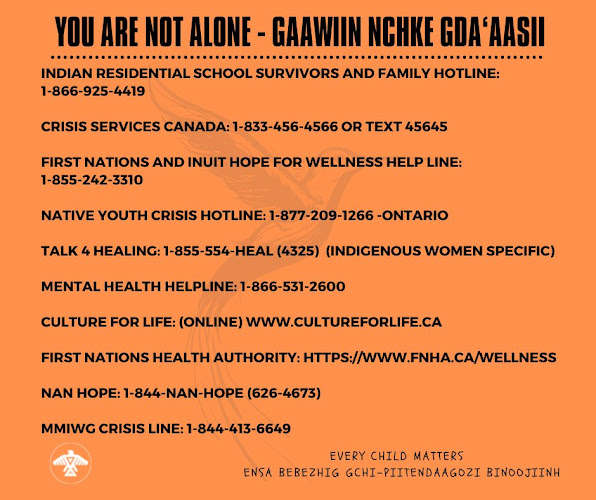
You are not alone

You are not alone

To Veronica Brown

Veronica, we adult adoptees are thinking of you today and every day. We will be here when you need us. Your journey in the adopted life has begun, nothing can revoke that now, the damage cannot be undone. Be courageous, you have what no adoptee before you has had; a strong group of adult adoptees who know your story, who are behind you and will always be so.

Diane Tells His Name


click photo

Lost Birds on Al Jazeera Fault Lines

Lost Birds on Al Jazeera Fault Lines
click to read and listen about Trace, Diane, Julie and Suzie

NO MORE STOLEN SISTERS

NO MORE STOLEN SISTERS
click image

ADOPTION TRUTH

As the single largest unregulated industry in the United States, adoption is viewed as a benevolent action that results in the formation of “forever families.”
The truth is that it is a very lucrative business with a known sales pitch. With profits last estimated at over $1.44 billion dollars a year, mothers who consider adoption for their babies need to be very aware that all of this promotion clouds the facts and only though independent research can they get an accurate account of what life might be like for both them and their child after signing the adoption paperwork.

Original Birth Certificate Map in the USA

Google Followers