They Took Us Away

They Took Us Away
click image to see more and read more

it's free

click

How to Use this Blog

BOOZHOO! We've amassed tons of information and important history on this blog since 2010. If you have a keyword, use the search box below. Also check out the reference section above. If you have a question or need help searching, use the contact form at the bottom of the blog.


We want you to use BOOKSHOP to buy books! (the editor will earn a small amount of money or commission. (we thank you) (that is our disclaimer statement)

This is a blog. It is not a peer-reviewed journal, not a sponsored publication... WE DO NOT HAVE ADS or earn MONEY from this website. The ideas, news and thoughts posted are sourced… or written by the editor or contributors.

EMAIL ME: tracelara@pm.me (outlook email is gone) THANK YOU CHI MEGWETCH!

SEARCH

Showing posts with label DOI. Show all posts

Tuesday, May 27, 2025

Stolen Trust Funds


CLICK AUDIO RECORDING:  https://www.startribune.com/tribes-say-the-us-misappropriated-funds-to-pay-for-native-american-boarding-schools/601359629


Several Native American tribes have filed a lawsuit asking a federal court to order the United States to release documentation of the brutal boarding school system that included one such institution in Carlisle.

The Wichita and Affiliated Tribes and the Washoe Tribe of Nevada and California sued the Department of the Interior, its Bureau of Indian Affairs, its Bureau of Indian Education and its current leader, Interior Secretary Doug Burgum, for breaching its legal obligations to the tribes in stealing money from their trusts to fund torture and genocide at its federal Indian Boarding Schools.

The lawsuit was filed Thursday in the U.S. District Court for the Middle District of Pennsylvania and encompasses its allegations under two counts while seeking certification as a class action lawsuit.

READ:  https://www.syracuse.com/native-american-news/2025/05/tribes-sue-for-full-accounting-of-money-used-to-fund-native-american-boarding-schools.html

Wednesday, February 26, 2025

ProPublica Updates Its Database of Museums’ and Universities’ Compliance With Federal Repatriation Law


The Arizona State Museum in Tucson is among the institutions that have gone through their collections to determine what belonged to the federal government. Credit: Michael Barera/Wikimedia

ProPublica Updates Its Database of Museums’ and Universities’ Compliance With Federal Repatriation Law

by Mary Hudetz

ProPublica is a Pulitzer Prize-winning investigative newsroom. Sign up for The Big Story newsletter to receive stories like this one in your inbox.

Series: The Repatriation Project:The Delayed Return of Native Remains

More in this series

Museums, universities and government agencies continued to make headway last year toward repatriating the remains of thousands of Native American ancestors to tribal nations after decades of slow progress drew national attention.

Nowhere was the shift more apparent than at the U.S. Department of the Interior, the agency charged with enforcing the 1990 Native American Graves Protection and Repatriation Act, which requires items and remains taken from Indigenous gravesites to be returned to tribes.

The department’s subagencies, including the National Park Service and Bureau of Land Management, collectively repatriated the remains of 1,366 Native American ancestors last year, more than a third of the number in its possession at the start of the year. The department’s efforts reflected an awareness, documented in an internal memo in late 2023, that it has a crucial leadership role to play under NAGPRA. Only the Illinois State Museum, an institution that ProPublica has reported on in-depth, came close to repatriating as many, with the transfer of more than 1,320 remains excavated from a single site.

The emphasis on repatriation increased in tandem with reporting by ProPublica in 2023 about failures to comply with the law.

“For too long ancestors and Tribal cultural items have been disconnected from their communities and resting on museum shelves,” Interior officials said in an October 2023 memo.

In response to questions from ProPublica, an Interior spokesperson did not say whether the department’s focus on repatriation will continue under Donald Trump’s second presidency but pointed to new regulations finalized in 2023 that aimed to speed up the process. The regulations, which took effect last year, require institutions to defer more to tribal accounts of their histories and ties to the regions from which remains were removed; the rules also set new deadlines for institutions to comply with the law.

In total, museums, universities and agencies across the country returned more than 10,300 Native American ancestors to tribes last year. The total makes 2024 the third-biggest year for the repatriation of ancestral remains under NAGPRA, according to an online ProPublica database that allows the public to look up the records of more than 600 museums and universities that must comply with the law. Today, ProPublica is updating the database to show repatriation progress through Jan. 6, 2025.

Outside of the Interior Department and the Illinois State Museum, state universities also recorded significant progress. For example, California State University, Sacramento repatriated the remains of 873 Native Americans previously held in its collection.

The progress made last year followed a record number of repatriations in 2023, when institutions returned 18,000 Native American ancestors.

“The progress shows the regulations are working,” said Shannon O’Loughlin, the chief executive for the Association on American Indian Affairs, a nonprofit that advocates for Native American rights.

Nearly 60% of ancestral remains reported as falling under NAGPRA over the years have now been repatriated, but that still leaves at least 90,000 that must be returned to tribes. The Interior Department has acknowledged that many of the human remains it must eventually repatriate have long been unaccounted for in federal inventories. Many of the department’s collections are scattered across the country in university and museum repositories over which the federal government has no oversight, officials said.

Agency staffers also said last year that they would need continued funding for their efforts — a factor that may prove challenging under an administration focused on cutting spending and staffing.

“We need to sustain this work until all of the ancestors that are in DOI control have been repatriated,” one Interior Department employee last year told the National NAGPRA Review Committee, a federal advisory board made up of museum, science and tribal representatives.

More Work to do at the Interior Department

Just over a year ago, the Interior Department had yet to repatriate more than 3,000 ancestors, many of which were excavated in 20th century archaeological digs and infrastructure projects on federal and tribal lands.

The department’s progress repatriating 1,366 Native American ancestors last year comes after top officials sent directives in late 2023 instructing Interior agencies to prioritize the work. Some agencies also set aside more money for repatriation work.

“If you look at previous budgets, we weren’t allocated any funding for NAGPRA,” Tamara Billie, the chief of cultural resource management for the Interior’s Bureau of Indian Affairs, told the National NAGPRA Review Committee last May.

She estimated it could cost several million dollars over the next three to five years for the bureau to repatriate the hundreds of ancestors it has yet to reunite with tribes.

Since Congress passed NAGPRA in 1990, federal staffers have tried to locate the collections excavated on federal and tribal lands, but they have often found that museums and universities transferred their holdings to other institutions without leaving much of a paper trail.

Last year, officials said only a handful of repositories, like the Arizona State Museum in Tucson, had gone through their collections to determine what belonged to the federal government — an early step in the often long repatriation process.

“Some have submitted very detailed, in some cases itemized inventory information,” said Bridget Ambler, with the Bureau of Land Management, during a National NAGPRA Review Committee hearing last year. “But to be honest, for the vast majority we’re not fully aware of what the nature of those collections are and if they include human remains or NAGPRA cultural items.”

Under the new NAGPRA regulations, museums and universities had a deadline of January of this year to hand in lists of items in their facilities that should be included in federal inventories. The requirement resulted in museums and universities submitting roughly 1,000 new notices to the Interior Department, the manager of the National NAGPRA Program said during a recorded training last month. It’s not clear how many ancestral remains are accounted for in those notices.

Progress in Illinois and Ohio

At the Illinois State Museum, which holds the second-largest collection of Native American remains, leadership was already focused on improving their repatriation record. Then, a new state law, along with the Interior Department’s updated regulations, went into effect. The state law, which followed ProPublica’s reporting, gave tribes more control over reburials. It also established a fund for repatriation work, such as paying for tribal members to travel to the museum to consult on collections, and for the reburials of remains.

Many of the remains held by the state museum came from a burial mound dug up in the 1920s by Don Dickson, a chiropractor. He turned the burial site into a roadside attraction. Over the years, Native Americans, whose tribes had been forcibly removed to other states, protested the exhibit that later became the Dickson Mounds Museum, a branch of the Illinois State Museum.

The state eventually closed the burial mounds exhibit, but the museum kept the human remains, maintaining that they could not be traced to living people and therefore would not be repatriated. That was until this past year.

On Feb. 24, 2024, the Illinois State Museum published a notice in the Federal Register saying that 1,325 ancestors and thousands of items buried with them were available to tribes for repatriation. As of the start of this year, the Illinois State Museum held the remains of an estimated 5,800 Native American ancestors.

Only the Ohio History Connection now holds more unrepatriated human remains, over 7,900 in total, according to federal data. In the roughly three decades prior to 2024, the Columbus institution had returned fewer than 20 ancestors to tribes. But it showed signs of progress last year in making more than 150 ancestral remains, or roughly 2% of its skeletal collection reported under NAGPRA, available to be repatriated. In an email, a spokesperson for the museum said it expects to complete more repatriations in consultation with tribal partners, who have asked the museum “not to rush this critical work.”

As in Illinois, the Ohio institution’s collections largely originate from centuries-old burial mounds in a state where tribal nations were forcibly removed.

“It Is Time for the State to Take Repatriation Seriously”

More state support for repatriation also could be on the horizon in Arizona. Last month, Gov. Katie Hobbs announced she would ask lawmakers for $7 million to support repatriation efforts at the Arizona State Museum.

The museum on the University of Arizona campus in Tucson is a repository for the state and federal government. Over the years, records show, it has conducted repatriations but has yet to return more than half of its collection reported under NAGPRA — the remains of 2,600 ancestors total — to tribes mostly in the Southwest.

“The hard-working staff at the museum have done their best to repatriate human remains and artifacts to tribes without any significant financial investment from the state,” Hobbs, a Democrat, said in prepared remarks to tribal leaders last month. “It is time for that to change. It is time for the state to take repatriation seriously.”

One of the museums’ challenges in trying to reach full compliance with the law stems from the fact that it continues to receive human remains because of its status as a state repository. Arizona medical examiners have sent the museum human remains that they come across in their investigations, including the ancestors of Native Americans. In some instances, looters have surrendered items and bones unearthed from graves, according to Jim Watson, associate director at the Arizona State Museum. (Looting violates federal laws.)

“We will receive an individual or remains in the mail or objects from private citizens, particularly when individuals pass away and their relatives are going through their stuff,” he told the NAGPRA Review Committee last spring. “They find a box in the garage or the attic, for example, and it says, ‘from Arizona,’ ‘artifacts from Arizona,’ ‘artifacts from Phoenix’ or ‘ancestral remains.’ So, they will ship them to the University of Arizona, often without contacting us first.”

He estimates the museum receives such packages two to three times per year.

Friday, February 7, 2025

Senate Committee on Indian Affairs Chair & Interior Department Say Tribes Should Not Be Part of DEI Executive Order

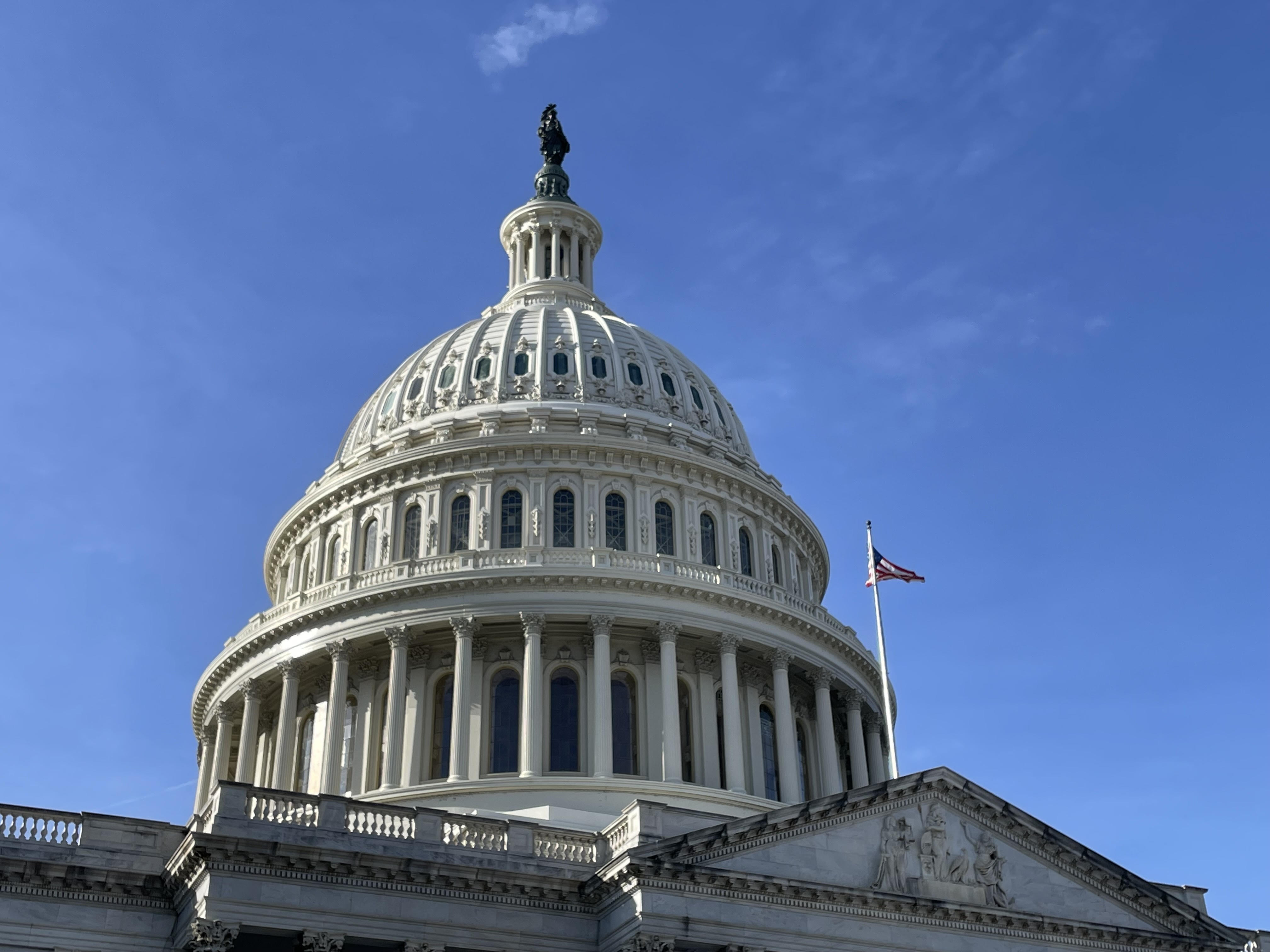
U.S. Capitol (Photo/Levi Rickert for Native News Online)

U.S. Capitol (Photo/Levi Rickert for Native News Online)

On Wednesday, Sen. Lisa Murkowski (R-AK), chair of the U.S. Senate Committee on Indian Affairs, sent a letter to the Office of Management and Budget (OMB) urging the agency to promptly issue a directive ensuring that all federal agencies protect American Indian tribes, their programs, and the federal funding they receive, from being impacted by the implementation of the President’s Executive Orders and policies.

She specifically referenced those related to diversity, equity, inclusion, and accessibility (DEIA), as well as environmental justice (EJ), explaining that tribes have a unique political status completely separate from DEIA.

“In the implementation of these Presidential initiatives, Tribes have raised concerns that Tribal programs may be misclassified as DEIA or EJ. Any pauses or elimination of these programs would undermine the United States’ trust responsibility to Indian Tribes and their ability to provide services to their members,” Sen. Murkowski wrote. “I ask OMB to take action now to reaffirm the unique treatment, programs and services to Indian Tribes based on their political and legal status, which is recognized in the U.S. Constitution, treaties, and many federal laws and policies, to ensure that there is no disruption to federal Tribal programs.”

Her letter came just days after a coalition of tribal leader councils and Native organizations sent a letter Sunday to President Donald Trump, congressional leaders and Interior Secretary Doug Burgum warning against misclassifying tribal programs as diversity or environmental justice initiatives that could face cuts under recent executive orders.

The full text of Sen. Murkowski’s letter can be found here.

On January 30, 2025, Acting Secretary of the Interior Walter Cruickshank issued Secretarial Order (SO) 3416 implementing Executive Order 14151 that limited President Donald Trump’s Diversity, Equity, and Inclusion (DEI) executive order from including tribal nations in its implementation at the Interior Department. The secretarial order cites “trust obligations of the Department and its Bureaus/Offices of Tribal nations and the Hawaiian Community.”

Executive Order 14151 directs the OMB to terminate all mandates, policies, programs, preferences, and activities relating to 'diversity, equity, inclusion, and accessibility. It also mandates that agencies must report a list of all employees in DEI and "environmental justice" positions to the OMB director within 60 days.

In her letter, Sen. Murkowski commended the Department of Interior for issuing which could serve as a model for other federal agencies as they implement these Presidential initiatives.

“At least one federal agency seems to understand this distinct legal and political relationship with Indian Tribes—the Department of the Interior. On January 30, the Department of the Interior issued Secretarial Order (SO) 3416 implementing Executive Order 14151. SO 3416 includes a limitation that acknowledges that nothing in the order should be construed to affect activities that implement legal requirements independent of the EOs, including ‘the statutory authorities, treaty, and/or trust obligations of the Department and its Bureaus/Offices to Tribal nations and the Native Hawaiian Community,’” Chairman Murkowski wrote.

In addition to issuing the requested memorandum, Sen. Murkowski requested that the OMB provide a written response outlining any additional actions they plan to take to ensure all federal agencies properly recognize the unique status of Indian Tribes based on their political classification.

Thursday, December 12, 2024

Teaching Indians how to do stuff (1950s)

WATCH:

The Indian Sanitarium Will Help You (?)

A 1940s U.S. Department of Interior film produced by the Office of Indian Affairs. A film about health practices and hospitals:

https://archive.org/details/TheIndianSanitariumWillHelpYou

During the 1950s in the USA, a large amount of prescriptive material appeared in the form of magazines, handbooks, and guidance films, teaching proper manners and good behavior in a rapidly evolving post-war society.  In this context, the U.S. Department of the Interior commissioned two short films produced by the Bureau of Indian Affairs in 1952 aimed at teaching young Native Americans how to properly use a telephone and answer calls.
The political context of the era is key here, as the 1950s represented a kind of pinnacle in the federal government's assimilationist intentions about Native American communities, whether it be the attempt to abolish protected reservation territories or the forced teaching of Anglo-American values in federal residential schools.
These short films, which at first seem to resemble the innocuous orientation films of the time in their format and approach, in fact aim not simply at the acquisition of new cultural codes, but at the complete rewriting of the most traditional thought patterns.  Analyze their scenography and purpose in the light of ethnographic and anthropological data, as specifically relevant to the Navajo culture, as the students and the examples in the movie are clearly aimed at this community. 

Two short films here: 

Telephone Etiquette
Receiving a Telephone Call

We didn't need their help.


Friday, November 15, 2024

ICWA 2050 Launched by NICWA To Honor Anniversary | UTAH ICWA | NORTH DAKOTA GOVERNOR Nomination to DOI


PORTLAND, OR – Recently, the National Indian Child Welfare Association’s (NICWA) Protect ICWA Campaign released ICWA 2050, a 25-year strategy to strengthen the Indian Child Welfare Act (ICWA) and tribal child welfare.  Honoring the 46th anniversary of ICWA, ICWA 2050 casts a vision that recognizes and upholds the critical role that tribal nations play in protecting Native children, helping families in tribal child welfare systems and assisting states as they implement ICWA.

ICWA 2050 outlines a uniting vision spanning decades and sectors. It represents a holistic vision and approach to changing the interrelated systems that protect Native kids for generations to come. Achieving that vision will require work across and within many sectors, from the courtroom to the newsroom. Each goal has a powerful impact on the cultural fabric we are weaving back together to create nurturing networks for Native children, including:

  • Increasing tribal child welfare capacity to ensure the best care for Native children within their communities.
  • Improving outcomes in state child welfare systems by strengthening relationships between tribal and state governments and improving tribal advocacy.
  • Enhancing tribal-federal partnerships to ensure federal policy supports tribal sovereignty and the well-being of Native children.
  • Improving communication about ICWA as the gold standard of child welfare policy and emphasize the importance of honoring tribal sovereignty.

“ICWA 2050 is a collective effort guided by Indian Country, including tribal leadership across all regions of the United States and the technical expertise of tribal child welfare directors,” said Sarah Kastelic, National Indian Child Welfare Association Executive Director. “We are inspired by the collaboration and shared vision that shaped this effort. ICWA 2050 represents a commitment to one generation of work that can change the trajectory of many generations of Native children.”

“ICWA 2050 not only fortifies protections for Native children today, but also builds a path for generations to come, ensuring that our children remain grounded in their cultures and communities,” said Larry Wright, Jr., National Congress of American Indians Executive Director. “This forward-looking strategy reflects the strength of tribal sovereignty and collaboration across Indian Country, empowering tribal nations to lead in defining the future of child welfare for Native families. The National Congress of American Indians and its members are proud to support and join this vision, rooted in the resilience and self-determination of our communities.”

“ICWA 2050 offers a powerful vision to strengthen and protect ICWA, ensuring that Native children remain deeply connected to their cultures and Nations,” said Kim Mettler, Association on American Indian Affairs Next Generations Director. “By supporting ICWA 2050, we help affirm and protect the fundamental human rights of every Native child – to family, cultural identity, freedom from forced assimilation, and the right to self-determination. ICWA 2050 is an investment in our shared future.”

👇

READ:  https://www.kuer.org/politics-government/2024-11-14/utahs-version-of-the-indian-child-welfare-act-could-make-a-2025-comeback
 

👉Donald Trump to nominate North Dakota Gov. Doug Burgum for Secretary of Interior

Known as an independent-minded Republican for much of his tenure as governor, Burgum has since embraced Trump's hardline rhetoric and MAGA Republicanism. Trump included Burgum on his final short list as vice president before picking JD Vance.

Burgum's second term as governor ends next month when Gov.-elect Kelly Armstrong, a GOP congressman, is sworn in.

Born and raised in the tiny farm town of Arthur, North Dakota, with a population of 328, Burgum in 1983 mortgaged farmland he inherited from his family to invest in Fargo-based Great Plains Software. He became the company's president the next year, and by 2001 sold the company to Microsoft for $1.1 billion. At Microsoft, Burgum worked as senior vice president through 2007.

Today, Burgum has a net worth of more than $100 million, according to Forbes magazine. Burgum is the founder of Kilbourne Group, a Fargo-based real estate firm, and is co-founder of Arthur Ventures, a software venture capital firm based in Minneapolis. He is also board chairman of Atlassian and SuccessFactors.

As governor, Burgum took steps to improve relations with the state's native tribes. That includes signing legislation codifying the federal Indian Child Welfare Act to give preference to Native American families in the adoption of native children.

SOURCE:  https://www.usatoday.com/story/news/politics/elections/2024/11/14/trump-cabinet-doug-burgum-interior-secretary/76203334007/


Wednesday, September 27, 2023

Ask your relatives: Interested in sharing your Indian boarding school experience?


 “I know that this process will be long and difficult. I know that this process will be painful. It won’t undo the heartbreak and loss we feel. But only by acknowledging the past can we work toward a future that we’re all proud to embrace.”  
— Secretary Deb Haaland

NABS Receives Grant From DOI to Create Permanent Collection of Stories from Survivors of Federal Indian Boarding Schools

Dear Relatives,
 

We are honored to share that NABS received a grant from the Department of the Interior (DOI) to conduct video interviews with Indian boarding school survivors across the United States to create a permanent oral history collection. This effort is part of the DOI’s Federal Indian Boarding School Initiative.
 
NABS sees this Oral History Project as a historic opportunity to highlight the voices of Indian boarding school survivors and the harmful effects of U.S. Indian Boarding School Policy. Through this project, NABS will support the storytelling and healing of survivors which has never been done before in U.S. history. Since NABS was established, we have created spaces where survivors have felt safe to share their experiences. We have sat with them, learned with them, and have been moved by their courage. They are our family.
 
We look forward to working with our relatives across Indian Country in the U.S., empowering them as they share their stories. Our commitment includes offering our love and support throughout this process.

tix̌ix̌dubut (take care of yourself),
 
Tsicyaltsa,
Deborah Parker (Tulalip Tribes)
NABS Chief Executive Officer

Interested in sharing your Indian boarding school experience? LINK

Interview Sign-Up
Interested in receiving updates on the Oral History Project?
Receive Future Updates

You can help today. The truth about the U.S. Indian boarding schools has largely been written out of the history books. The social, emotional, spiritual, and cultural devastation from boarding school experiences are passed down to Native American individuals, families, communities, and Tribal Nations today. The time for healing these intergenerational traumas is now. Help us work towards truth, justice, and healing.

Resources:

PLEASE SHARE THIS INFORMATION with all your relatives... it's vital we make this history... Trace


Friday, May 6, 2022

MMIP webcast DOI | Not Invisible Act Commission

 WEBCAST: Missing and Murdered (MMIP) WATCH


National Missing or Murdered Indigenous Persons Awareness Day Event

transcript

Deb: I'm Secretary Deb Haaland at I'm honored to join you from the ancestral homelands of the Anacostia and Piscataway people on what President Biden has proclaimed as National Missing or Murdered Indigenous Persons Awareness Day. I wish we didn't need to be here. I wish that this day was obsolete, that we didn't have to keep fighting year after year for our people to be honored and respected. But we are here. And I want to use today to shine a light on the national crisis of missing and murdered indigenous peoples and give space to others to share the work they are doing on this issue. Everyone deserves to feel safe in their communities, but the MMIP crisis is one that communities have faced since the dawn of colonization. For too long, this issue has been swept under the rug by our government with a lack of urgency, attention, or funding. The rates of missing persons cases and violence against American Indian, Alaska native, and native Hawaiian communities are disproportionate, alarming, and unacceptable. It is heartbreaking to know that our loved ones are at an increased risk of disappearing without warning, leaving families and communities devastated. I want to extend my gratitude to the organizers, advocates, native women who have been shedding light on MMIP crisis for decades. People who have had an empty chair at their kitchen tables, loved ones who tirelessly searched or their relatives, service providers who hear the heartbreaking stories of family members of the missing. I want you to know that I see you and I stand with you. In our first year, there is much the Biden-Harris administration has done to take this issue seriously. As many of you know, last year, I announce the formation of a new missing and murdered unit within the Bureau of Indian affairs office of Justice services to provide leadership and direction across departmental and interagency work involving missing and murdered American Indians and Alaska natives. The MMU is marshaling resources across agencies and throughout Indian country to focus on this crisis. Since the launch ofMMU, the department has built up personnel and increased infrastructure capacity by launching new offices. Today, 17 BIA offices located throughout the nation have at least one agent dedicated to solving missing and murder cases for American Indians and Alaska natives. In December, the BIA announced on lots of its new website dedicated to solving missing and murder cases in Indian country. The website is bia.gov/mmu. Bia.gov/mmu. The site is an important tool to help law enforcement, families, and communities to share critical information about missing and murdered individuals that can help the MMU solve cases and give closure to families. The website showcases individual missing and murdered case profiles that can be quickly shared via social media and other digital media to raise visibility of victims. It also provides multiple pathways to submit important tips and other case information that may help investigators with detection or investigation of an offense committed in Indian country. The MMU has enabled the Department to expand its collaborative efforts with other agencies such as working to enhance the DOJ's national missing and unidentified persons system. Staff are also developing strategic partnerships with additional stakeholders such as the FBI, behavioral analysis units, FBI forensic laboratories , U.S. marshals missing child unit, and the National Center for missing and exploited children. This unit and interior will continue to engage in collaborative efforts with tribal, federal, and state stakeholders to ensure accurate data and enhance community outreach. The MMU is a critical tool in our work to address this crisis, and today, we announce steps for another. In Congress, the Not Invisible Act now in partnership with the Justice Department and with extensive engagement with tribes and other stakeholders, we are putting that law into action. Today, our agencies announce the membership of the new Not Invisible Act Commission which we formed the last year. For the first time, the interior and Justice Department will be guided by an advisory committee composed of law enforcement, tribal leaders, federal partners, service providers, family members of missing and murdered individuals, and most importantly, survivors. This commission will ensure that we hear the voices of those who are most impacted by this issue. It includes diverse experience, backgrounds, and geographies to provide balance once of use. The commission will hold hearings, take estimate, and -- testimonies, and receive evidence to develop recommendations for the federal government to combat violent crimes against indigenous people. The missing and murdered indigenous peoples crisis is centuries in the making, and it will take a focused effort and time to unravel the many threads that contribute to the alarming rates. I'm grateful to those of you who rang the alarm and gave a voice to the missing. My heart goes out to the families of loved ones who were impacted by violence. We will keep working to address this issue and together, I believe we will provide justice for survivors and families. And that I will turn the floor over to Deputy Attorney General Lisa Monaco, who will share recorded remarks for today's event. 

keep reading👇


Happy Visitors!

WRITTEN BY HUMANS!

WRITTEN BY HUMANS!

Blog Archive

Featured Post

Your History Class Was a F*cking Lie | #NOMOAR

  Your History Class Was a F*cking Lie by Sean Sherman (Or: How the American Educational System Has Always Been a Racist Propaganda Program...


Native Circles

Native Circles
click logo for podcasts!

Most READ Posts

Bookshop

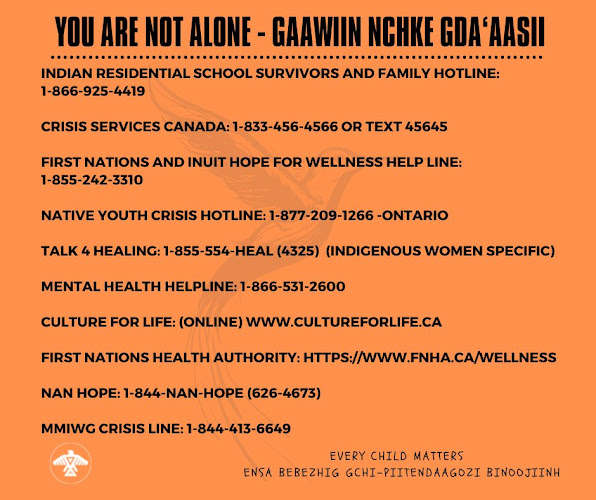
You are not alone

You are not alone

To Veronica Brown

Veronica, we adult adoptees are thinking of you today and every day. We will be here when you need us. Your journey in the adopted life has begun, nothing can revoke that now, the damage cannot be undone. Be courageous, you have what no adoptee before you has had; a strong group of adult adoptees who know your story, who are behind you and will always be so.

Diane Tells His Name


click photo

Lost Birds on Al Jazeera Fault Lines

Lost Birds on Al Jazeera Fault Lines
click to read and listen about Trace, Diane, Julie and Suzie

NO MORE STOLEN SISTERS

NO MORE STOLEN SISTERS
click image

ADOPTION TRUTH

As the single largest unregulated industry in the United States, adoption is viewed as a benevolent action that results in the formation of “forever families.”
The truth is that it is a very lucrative business with a known sales pitch. With profits last estimated at over $1.44 billion dollars a year, mothers who consider adoption for their babies need to be very aware that all of this promotion clouds the facts and only though independent research can they get an accurate account of what life might be like for both them and their child after signing the adoption paperwork.

Original Birth Certificate Map in the USA

Google Followers