They Took Us Away

They Took Us Away
click image to see more and read more

it's free

click

How to Use this Blog

BOOZHOO! We've amassed tons of information and important history on this blog since 2010. If you have a keyword, use the search box below. Also check out the reference section above. If you have a question or need help searching, use the contact form at the bottom of the blog.


We want you to use BOOKSHOP to buy books! (the editor will earn a small amount of money or commission. (we thank you) (that is our disclaimer statement)

This is a blog. It is not a peer-reviewed journal, not a sponsored publication... WE DO NOT HAVE ADS or earn MONEY from this website. The ideas, news and thoughts posted are sourced… or written by the editor or contributors.

EMAIL ME: tracelara@pm.me (outlook email is gone) THANK YOU CHI MEGWETCH!

SEARCH

Showing posts with label Missing and Murdered. Show all posts

Saturday, June 6, 2026

Thunder Bay NEWS update #MMIP


Press conference for missing Webequie member Kelsey Anderson, who was reported missing on May 9 and whose body was recovered from Thunder Bay’s Neebing-McIntyre Floodway.

Indigenous families call for permanent search team in Thunder Bay

By: Jon Thompson, Local Journalism Initiative Reporter, Ricochet


Indigenous searchers are calling for the creation of a permanent search and rescue team in Thunder Bay, where the bodies of four missing persons have been found  over the past two weeks. Meanwhile, Thunder Bay’s police chief and the region’s First Nations leaders traded barbs on social media, amid criticism of the force’s actions during the search. Nishnawbe Aski Nation Grand Chief Alvin Fiddler and Thunder Bay Police Service chief Darcy Fleury exchanged critical social media posts on Wednesday and Thursday. Fiddler accused the police of instructing searchers not to look in a set of abandoned grain elevators.

READ:  https://www.mbcradio.com/2026/06/indigenous-families-call-for-permanent-search-team-in-thunder-bay

Monday, November 24, 2025

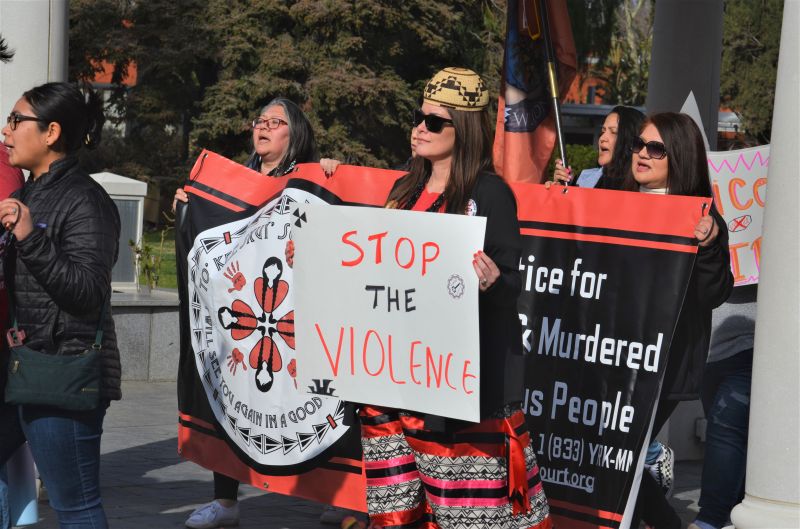
#MMIW in the United States #StolenSisters (reblog 2022)


(reblog from 2022)

Violence is the third leading cause of death for native women between 10 and 24 years of age and the fifth leading cause of death for women 25 to 34 years (Simpson 5). Today American Indian women face murder 10 times the national average according to the Department of Justice.  The government has failed to address the violence against Native women despite staggering statistics that provide evidence for the high rates of violence perpetrated against this marginalized group (Simpson 5).  In 2015, the federal government approved an act that would provide additional resources to improve tribes’ access to databases that had data of MMIW but have not followed through.  In response to the lack of a database that includes all the MMIW, I have created a web map that will visualize the Indigenous women that have been reported missing and murdered.  The ultimate goal is to try to understand what is unique about the situation that causes Native American women to experience higher rates of violence. In the future I hope to be able to provide statistical analysis for my theory about the relation between map camps and missing women.

Keep Reading 

The MMIWG2 Database logs cases of missing and murdered indigenous women, girls, and two spirit people, from 1900 to the present.

There are many lists and sources of information online, but no central database that is routinely updated, spans beyond colonial borders, and thoroughly logs important aspects of the data, and overall, there is a chronic lack of data on this violence. The Database works to address that need, by maintaining a comprehensive resource to support community members, advocates, activists, and researchers in their work towards justice for our stolen sisters.

 The Database originally included cases from the US and Canada, but starting in 2019, we have expanded its reach to include all Indigenous women, girls, and two spirit people. We will continue to pursue archival research in the US and Canada, and will rely on partnerships with Indigenous women’s collectives and organizations in other regions to include our sisters indigenous to lands occupied by other colonial entities.

The kind of information the Database cares for is determined by ongoing consultation with Indigenous communities. The Database currently logs the following:

​About Victims:

Name, Indigenous name and translation, tribal affiliation(s), birth date, age, if they were a mother, if they have other MMIWG2 cases in their family

​About Perpetrators:

Race, gender, relationship to the victim

​About the Violence:

Missing or murdered, incident date, violence perpetrated against murder victims after they are deceased, relevant issues (domestic violence, sexual assault, sex work/sex trafficking, foster care, police brutality, trans victim, death in custody, unsheltered, residential/boarding school)

​About Police & Court Response:

Reward amount (if any), case classification, conviction status, which entities located deceased individuals

​About Geography:

City, state/province, country, location type (tribal land, rural, urban)


Saturday, September 13, 2025

MMIWG: Patricia Calahasen


True North True Crime podcast

Ep. 130/

It was the early hours of August 3rd, 2001, in Edmonton, Alberta, when fire crews responded to a dumpster blaze behind a central apartment building. Once the flames were out, they made a horrifying discovery — the burned remains of a young woman.

For nearly two weeks, investigators worked to find out who she was. They canvassed hundreds of apartments and narrowed their search to a short list of missing women. Dental records would confirm the victim was 18-year-old Patricia Calahasen.

What police uncovered next was a story of trust betrayed, a violent assault, and a desperate attempt to destroy the evidence. The person responsible was just 17 years old. But for Patricia’s family, the fight for justice has lasted decades.

--

This podcast is recorded on the territories of the Coast Salish people.

Wednesday, May 28, 2025

MMIW Epidemic


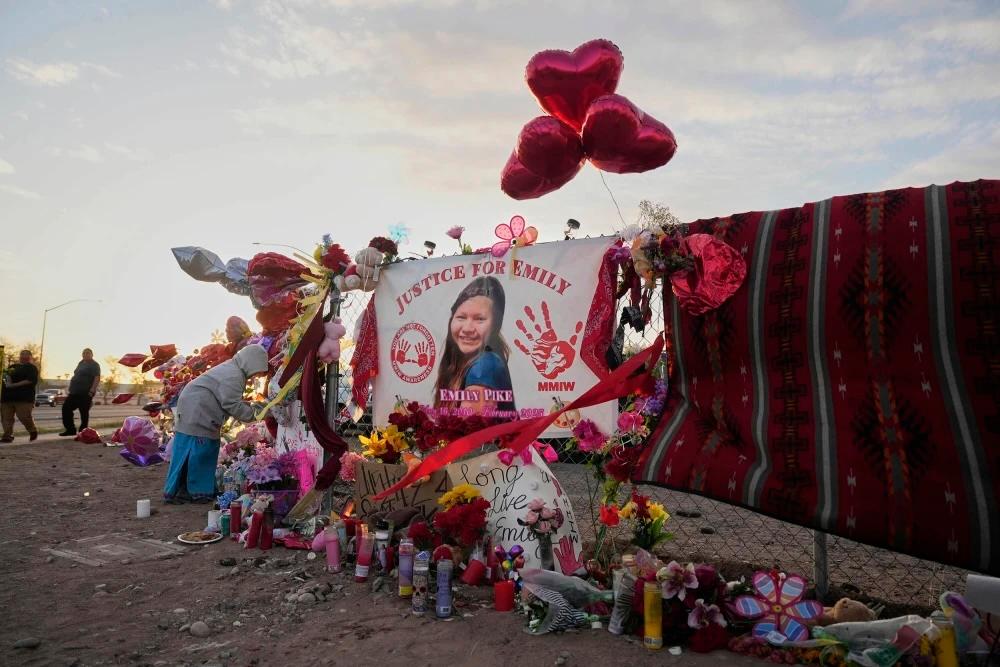
"Now Arizona has created Emily's Law to immediately alert authorities and communities when Native American's go missing. Emily's Law honors Emily Pike, whose remains were found Feb. 14 more than 100 miles (161 kilometers) from a group home she left in Mesa, Arizona, in late January."


"Pike’s death spurred a resurgence of activism aimed at bringing more awareness to the disproportionate number of disappearances and violent deaths that have gripped Native American communities for decades, and prompted lawmakers to amend the bill to recognize her. A movement began in 2022 (wonder if Alaska Daily had any influence) in Washington State to quickly share information about missing Native peoples."


READ THE FULL ARTICLE HERE

https://www.nbcnews.com/news/us-news/arizona-governor-signs-emilys-law-alert-native-americans-go-missing-rcna206692

A tribute to Emily Pike in Mesa, Arizona on 6 March.

MORE MEDIA COVERAGE OF EMILY'S LAW

https://www.nbcsandiego.com/news/national-international/what-is-emilys-law-arizonas-new-response-to-missing-native-americans-explained/3825705/


SOURCE: www.coalitionofnativesandallies.org

Wednesday, April 2, 2025

Unsolved violent crimes in Native American communities to get more attention with FBI surge

 Indian Country Crime

Families and victims advocates participate in a prayer walk around the Indian Pueblo Cultural Center to mark Missing and Murdered Indigenous Persons Day in Albuquerque, N.M., on May 5, 2024. Susan Montoya Bryan | AP

The FBI is sending extra agents, analysts and other personnel to field offices in 10 states over the next six months to help investigate unsolved violent crimes in Indian Country, marking a continuation of efforts by the federal government to address high rates of violence affecting Native American communities.

The U.S. Justice Department announced Tuesday that the temporary duty assignments began immediately and will rotate every 90 days in field offices that include Albuquerque, Phoenix, Denver, Detroit, Minneapolis, Oklahoma City, Seattle, Salt Lake City, Portland, Oregon, and Jackson, Mississippi.

SOURCE:  https://www.mprnews.org/story/2025/04/02/unsolved-violent-crimes-in-native-american-communities-to-get-more-attention-with-fbi-surge

We Are Not Garbage


Faded red dresses representing missing and murdered Indigenous women, girls, and gender diverse people hang on the fence of the Brady Road Landfill. Photo by Crystal Greene

IMPORTANT STORY:

https://ricochet.media/indigenous/mmiwg/were-not-garbage-how-buffalo-woman-was-identified-as-ashlee-shingoose/

Sunday, July 7, 2024

Sixties Scoop survivor explains issues to Algonquin College

Event was held at Pembroke Campus with the partnership of Local Immigration Partnership - Lanark & Renfrew, the Mamidoswin Centre, the '60s Scoop Network, and the Students' Association

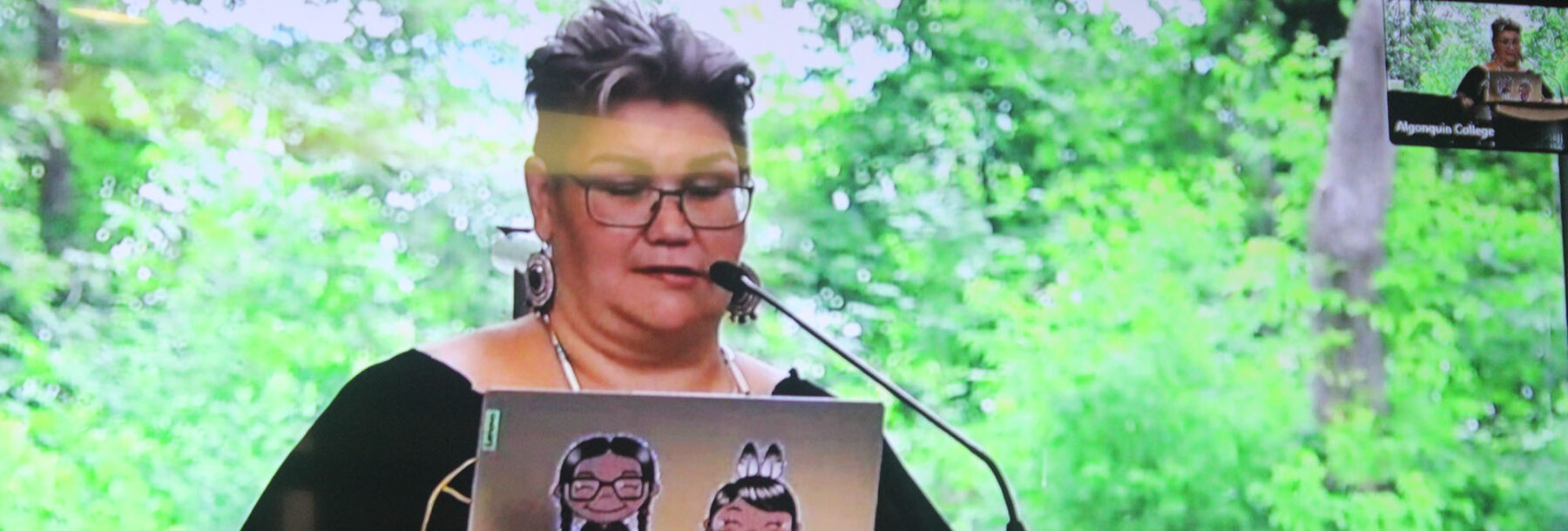
Photo: Agrani Tiwari, Colleen Hele Cardinal, keynote speaker at the National Indigenous Peoples Day Speaker Series Event, gave a presentation on the scoop of trafficking of Indigenous children through welfare policies.

Colleen Hele Cardinal, an academic and activist from Saddle Lake First Nation, spoke at the Pembroke campus as part of Algonquin College’s National Indigenous Peoples Day Speaker Series. Her speech on June 21 was live-streamed at the Mamidosewin Centre.

Cardinal spoke about contextualizing Indigenous child removals in Canada and understanding the historical and contemporary circumstances surrounding the Sixties Scoop.

This period, which actually lasted from the 1950s to mid-’80s, saw the large-scale, non-consensual removal of Indigenous children from their families and communities. The children “scooped” in this way were put in foster homes or up for adoption, often in non-Indigenous families.

The program is considered to have been cultural genocide (as described in the famous Kimelman Report) and to have contributed to long-term issues dogging Indigenous communities, including mental illness rates.

Cardinal is herself a Sixties Scoop survivor and now works to help others. She has organized six national Sixties Scoop gatherings in Ontario and raises international awareness about the displacement experienced by survivors. She noted the connections between colonial child welfare policies, missing and murdered Indigenous women, and the Sixties Scoop, drawing from personal and familial experiences. She has written a book titled Raised Somewhere Else, and led the “GIS Mapping the Sixties Scoop Diaspora” project.

“Some of our issues are very unique and sometimes we have to teach non-Indigenous folks about what life could be like for us in isolated communities or without resources,” Cardinal said.

“My colleague, Elaine Kiknosway, and I go to communities and organizations, anybody who works frontline with Indigenous people, we want to help them understand how to work with Sixties Scoop survivors and our descendants.”

“There is not one single Indigenous person that I know that has not dealt with these issues or is currently dealing with these issues . . . . missing and murdered Indigenous women, girls and Two-Spirit, as well as gender violence. My . . . older sister, Gina, and my sister-in-law, Lynn, were both murdered out in Edmonton while I was living out there. I was 16 years old at the time, and I carried that grief with me for a long time,” Cardinal said.

She said she didn’t have any context as to why that happened and wanted to know more.

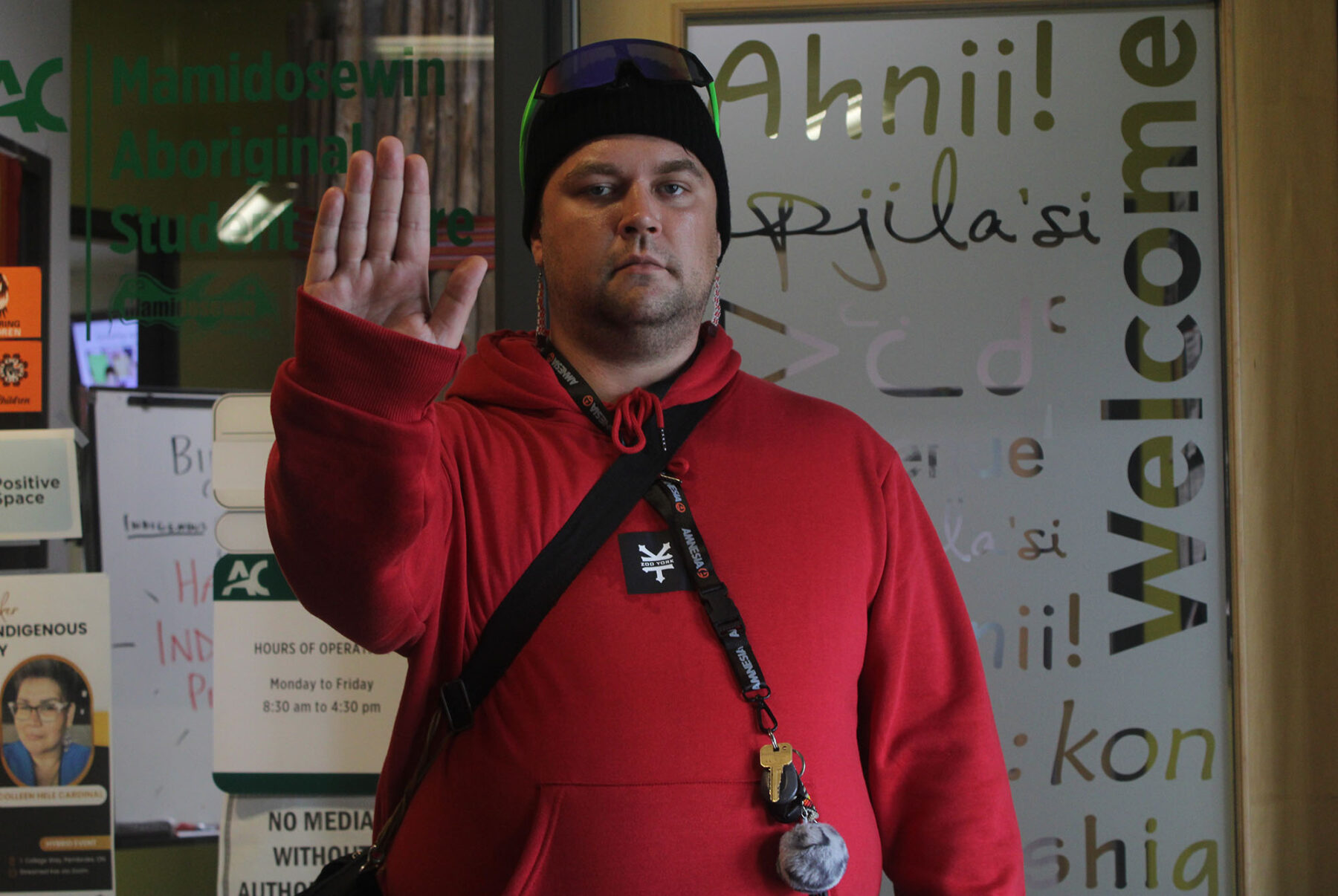
Jacob Thompson Bonaparte, a music industry arts student, said, "I want them to stop taking our children."
Jacob Thompson Bonaparte, a music industry arts student, said, "I want them to stop taking our children." Photo credit: Agrani Tiwari

Jacob Thompson Bonaparte, a music industry arts student said: “My grandfather was a Sixties Scoop survivor and today us Indigenous are over a barrel and we are just trying to live … My community has lived through the Oka crisis and has gone through generational trauma. We are just trying to go through our healing journey.”

As Sixties Scoop survivors and co-founders of the Sixties Scoop Network in Ottawa, Cardinal and her colleague Kicknosway have worked to foster a supportive community for survivors since 2014.

“There was nobody else doing this work. It was important for us to have space to reconnect with our culture and to build community with other ’60s group survivors.” “To this date, 11 years later, we’re still continuing to partner with research initiatives, raising awareness to spaces like this and workshops and creating trauma-informed curriculum, which is hard to find out there, as well as anti-racism workshops.”

Cardinal also created the Sixties Scoop Geo forms, a website where Sixties Scoop survivors tell their stories. It is a map which shows where they were taken from, and where they ended up.

Summer Wabasse, events and communications officer at the Mamidosewin Centre, said: “I think it’s really important that every student, every staff member, every faculty member here at the college takes time to attend an event like this, virtually or in person. Because we all have the responsibility to learn about not only Indigenous history, but candid history of colonialism and depression of Indigenous people.”

“I think it’s all of our responsibility to educate ourselves and so happy that we were able to partner and put on this event today … it was a great way to commemorate National Indigenous Peoples Day.”

2024 TALK 👇


Friday, May 3, 2024

Wear Red For Missing and Murdered | May 5 2024


StrongHearts Native Helpline encourages wearing the color red in honor of the National Day of Awareness for Missing and Murdered Indigenous Women and Girls (MMIWG) on May 5, 2024.


“An annual awareness day for Missing and Murdered Indigenous Women and Girls calls attention to epidemic levels of violence against Native Americans and Alaska Natives,” said CEO Lori Jump, StrongHearts Native Helpline. “We support raising awareness to ensure that our missing and murdered relatives are not forgotten and the future of our young ones can be spared this crisis.”

Sunday, January 28, 2024

‘Not just lip service’: First Nations-led private investigators help families of missing #MMIP SIGNS

In Canada, research shows that 13 per cent of missing adults are Indigenous, despite Indigenous people making up only 5 per cent of the population.

“We started MMIP [Investigations] because we thought, ‘What can we do on the ground to bring tangible results to the families that need it the most?'” said Vawn Jeddry co-founder of Alberta-based MMIP Investigations and a member of English River First Nation.

MMIP Investigations currently has private investigator licences in Alberta and British Columbia, with charitable status in Alberta, they’re working towards nation-wide charitable status as funding plays a big part in what they can offer.

LINK: https://globalnews.ca/news/10237884/first-nations-led-private-investigators-mmiwg-mmip/    


We'koqma'q First Nation raises signs as part of MMIWG campaign

"The change should be occurring on a community level,' says chief

A sign that read Mi'kma'ki remembers the Missing and Murdered. An an Indigenous woman in a red top with a red hand print.
One of two signs that have been put up at both ends of We'koqma'q, on Cape Breton Island. (submitted by Annie Bernard-Daisley )

Two new signs along TransCanada Highway 105 passing through We'koqma'q First Nation in Nova Scotia are meant to shine a light on the ongoing issue of missing and murdered Indigenous women and girls.

Chief Annie Bernard-Daisley said she wants to empower her community to tackle the underlying risk factors that make Indigenous people targets of violence.

"One part of the signage is that change is needed," said Bernard-Daisley.

"The change should be occurring on a community level, community by community."

Bernard-Daisley said the signs in the community on Cape Breton Island, about 75 kilometres southwest of Sydney, N.S., have three key goals: to shine a light on the ongoing issues, to deter human trafficking and to honour Cassidy Bernard.

Bernard, Bernard-Daisley's 22-year-old cousin, was found dead in her home in 2018. Bernard's ex-boyfriend Austin Dwight Isadore pleaded guilty to manslaughter and child abandonment in 2022, and was sentenced to 15 years in prison. 

"It was emotional for [Cassidy's mother] to see the signage in our community on many levels," said Bernard-Daisley. 

An Indigenous woman hold up a sign reading I need to be able to tell my children I did not stay silent.
Annie Bernard-Daisley at a rally in memory of her cousin Cassidy Bernard in 2019. Now chief of We'koqma'q, she says the signs are meant to keep the conversation going around murdered and missing Indigenous women and girls. (Brittany Wentzell/CBC)

She said We'koqma'q has worked to make the community safer and has applied for funding through Indigenous Service Canada's Pathways to Safe Indigenous Communities Initiative, which has committed $120 million over five years (2021-2026) to improve safety and well being in First Nation, Métis and Inuit communities.

Bernard-Daisley said through the program she hopes to add sidewalks, street lights and reliable taxi services to the First Nation. 

"Those of us that are working on the front lines know what our community needs more than the government ever will," she said.

In 2019, the national inquiry into missing and murdered Indigenous women and girls released its final report, with 231 calls for justice — recommendations on how to end violence toward Indigenous women and girls.

CBC News released a report card in 2023 tracking progress on the calls for justice, and at the time only two calls were completed, with many still in progress.

'A strong message'

Barry Bernard from Eskasoni First Nation, co-designer of the sign, was at a photo shoot working with a Mi'kmaw model when he thought about messaging around MMIWG.  

Once he saw the model with the red hand print, he said he knew it embodied strength. 

"It's a strong message to send out, but it's true there are still missing and murdered Indigenous women and children today as we talk all around North America," he said.

"I hope the message says that we need to educate everybody and it's not only just our problem, it's everybody's problem." 

An Indigenous woman in a chair in her office.
Anita Boyle, executive director of Nignen women's shelter, says she'd like to see communities return to traditional systems that valued women. (Oscar Baker III/ CBC )

Anita Boyle, executive director of Nignen, a women's shelter in Natoaganeg First Nation in New Brunswick, said addressing the issue of missing and murdered Indigenous women and girls is multifaceted.

It would require things such as ensuring law enforcement and the judicial system understand the role intergenerational trauma plays in the lives of Indigenous people, adequate housing for Indigenous women in urban centres; and for men in Canada to get more education around intimate partner violence. 

Ultimately she said she'd like to see Indigenous communities return to traditional systems that valued women.

"I think that there's a lot that we could learn from going back to those old values of respect, honesty, caring, sharing," said Boyle. 

"I think a lot of that has got displaced because of capitalism and colonization in general."


Tuesday, September 12, 2023

New exhibit to raise awareness about MMIWG2S

 VIDEO: https://ckpgtoday.ca/2023/09/09/new-exhibit-to-raise-awareness-about-mmiwg2s-at-pgpl/


Prince George – Education and awareness is what the new exhibit in the Prince George Public Library is hoping to do. Open from now until the end of September, the exhibit provides plenty of information on Murdered and Missing Indigenous Women and Girls, and has loads of visual aspects to go along with it, including red dresses along the stairway. When it comes to the educational aspects of this exhibit, it’s important to remember that the impact of the past has rippled into the present.

SEE MORE: https://ckpgtoday.ca/2023/09/09/new-exhibit-to-raise-awareness-about-mmiwg2s-at-pgpl/

Wednesday, March 29, 2023

#MMIWG on Native America Calling


Missing and Murdered: proactive tribal and state initiatives


The Yurok Tribe hired its own investigator to pursue unsolved cases of their citizens who are missing or murdered. Arizona is among the states establishing an MMIP task force that the new governor says will “ensure that not one more Indigenous man, woman, or child is a target of violence, abuse, or exploitation.” The actions are part of the attempts to address the slow momentum to investigate and solve cases with Native victims.  Today on Native America Calling, we speak with Jessica Carter (Yurok), Yurok Tribal Court Director; Daisy Bluestar (Southern Ute), member of the MMIR Taskforce in Colorado; Skye Alloway (Forest County Potawatomi tribal member), co-chair of Wisconsin’s Missing and Murdered Indigenous Women Task Force; and Annie Forsman-Adams (Suquamish), program director for the Washington State Native American Coalition Against Domestic Violence and Sexual Assault (Women Spirit Coalition).


Wednesday, September 1, 2021

#MMIWG: Dateline


As we have posted on MISSING AND MURDERED INDIGENOUS WOMEN and GIRLS on this blog here, here, please watch this episode of DATELINE:   HERE

In August 2016, Carla Yellow Bird disappeared. She suddenly stopped texting and calling, and that didn’t sit right with her mother, Loretta, and sister, Kerry.

So they reported Carla missing to the Mandan Police Department in North Dakota.

Carla’s roommate said that she may have gone to a town called Saint Michaels on the Spirit Lake Reservation in North Dakota, the day she stopped communicating.

Spirit Lake is a reservation that spans 400 square miles, and it’s located about three hours northeast of Mandan, where Carla lived.

Lissa Yellow Bird has dedicated herself to searching for missing and murdered Native American women. This time, she would be helping to find out what happened to her own niece.

And the information provided by Carla’s roommate, gave her somewhere to start…

Lissa and many others believe that, too often, the cases of Indigenous women are ignored. Lynnette Grey Bull, activist and founder of Not Our Native Daughters, agrees. Lynnette describes her organization and why the MMIW movement hits close to home. READ MORE

 You can watch on Peacock TV as well.

The podcast version of the full episode is also available.

 AND use the search bar for more on this topic: #MMIWG and MISSING AND MURDERED


My earlier research:

Minnesota is one of only seven states to have established a task force to study the prevalence of violence against Indigenous women and girls.

“Bring Her Home: Stolen Daughters of Turtle Island” opened earlier this year at All My Relations Gallery in Minneapolis, and is now on display at the Fargo Public Library.

GREAT LISTEN: Missing, but not forgotten: Fargo library art exhibit tells story of missing indigenous women | MPR News

Walkthrough of the MMIW art exhibit “Bring Her Home: Stolen Daughters of Turtle Island” from Unicorn Riot on Vimeo.

Read More: unicornriot.ninja/2019/a-walk-through-of-bring-her-home-stolen-daughters-of-turtle-island/

MMIWG on my other blog

Over 1.5 million Native women have experienced violence, including sexual violence, in their lifetime according to the National Institute of Justice. Native women experience violence of twice the rate of women in the U.S. and on some reservations, the murder rate of Native women is 10 times the national average. In 2016, 5,712 cases of missing Native women nationwide were reported to the National Crime Information Center. Only 116 of them were logged in the U.S. Department of Justice’s missing persons database, according to the Urban Indian Health Institute.

READ: The Crisis Of Murdered And Missing Indigenous Women And Why Tribes Need The Power To Address It – The Appeal


Wednesday, May 5, 2021

Domestic Violence, Sexual Violence and #MMIW

From StrongHearts Native Helpline

Centuries of Missing and Murdered Indigenous Peoples

Native American cultures, languages, lands and lives were all systematically and forcibly taken through colonization. Our ancestors endured genocide and assimilation for more than five centuries. Today, there is ample evidence that genocide still occurs through the inhumane conditions on reservations, the jurisdictional issues that prevent the prosecution of non-Native perpetrators on tribal lands and ignoring the Missing and Murdered Indigenous Women (MMIW) crisis.

The Connection to Domestic and Sexual Violence

Domestic violence isn’t a Native American tradition; it is a symptom of colonization that continues to this day.

Through colonization, Native women were devalued by non-Native people. They were degraded, they were attacked and raped. Acts that still continue today. Tribal communities still experience high rates of rape and sexual assault, largely committed by non-Native perpetrators. Native women are sexualized in the media--in costumes, in Native American imagery and caricatures, and in movies. Native women and men still struggle from the effects of colonization, marginalization and assimilation and our shared trauma. Over half of Native women, in particular, have been physically abused by an intimate partner.

StrongHearts Native Helpline understands the issues of MMIW are related to domestic, dating and sexual violence. We understand that missing and murdered victims can be children, elders, Two-Spirit, men and those with disabilities. This crisis affects all of our relatives. Survivors deserve justice.  

Research shows that women are more likely to be killed by an intimate partner (husband, boyfriend, same-sex partner, or ex) than by anyone else. Over 84% of Native women have experienced violence in their lifetime. Nationally, across all racial and ethnic groups, approximately two out of five female murder victims are killed by an intimate partner. Homicide is a leading cause of death for American Indian and Alaska Native women. Many killings linked to domestic violence occur right after recent breakups or during separations. Leaving an abusive relationship is the most dangerous time for a victim of domestic violence.

Complicated legal systems, jurisdictional confusion, and lack of resources also leave many Native victims of violence and their families without support or justice. Whether the violence is coming from inside the home, or from strangers living near Tribal communities or in urban centers, meaningful action must be taken to prevent more Native women from going missing or being murdered.

Prevention

One way to address these issues is through culturally-appropriate domestic and sexual violence advocacy. We need services that approach healing from an indigenous perspective – where victims feel understood and where their unique needs as Native people can be met. 

Created by and built to serve Tribal communities across the United States, StrongHearts Native Helpline is here to answer that call. It is a culturally-appropriate, anonymous, confidential and free service dedicated to serving Native American and Alaska Native survivors and concerned family members and friends affected by domestic, dating and sexual violence.

Advocates are available 24/7 by texting or calling 1-844-7NATIVE (762-8483) or via online chat at strongheartshelpline.org. Advocates can provide lifesaving tools and immediate support to enable survivors to find safety and live lives free of abuse. StrongHearts Native Helpline is a project of the National Indigenous Women’s Resource Center and the National Domestic Violence Hotline.

MMIW Resources

As a helpline dedicated to Native Americans and Alaska Natives impacted by domestic, dating and sexual violence, StrongHearts honors our relatives and communities impacted by MMIW and those working to end this crisis.

Check out these resources from the National Indigenous Women’s Resources Center (NIWRC).

      EXPLORE: MMIW Special Collections Resource Listing http://www.niwrc.org/resources/special-collection-missing-murdered-indigenous-women-girls

      DOWNLOAD: "Tribal Community Response When a Woman is Missing: A Toolkit for Action" in NIWRC’s Resource Library. http://www.niwrc.org/resources/tribal-community-response-when-woman-missing-toolkit-action

      MMIW DATABASE: The Sovereign Bodies Institute https://www.sovereign-bodies.org/mmiw-database?fbclid=IwAR15hpz2hfDmSFuqs0PZIvvH9e4VcGvdnk4aT0Cqhhua7DKRR5iPOv7nxag

      DOWNLOAD: Urban Indian Health Institute’s “Missing and Murdered Indigenous Women & Girls: A Snapshot of data from 71 Urban Cities in the United States.” http://www.uihi.org/wp-content/uploads/2018/11/Missing-and-Murdered-Indigenous-Women-and-Girls-Report.pdf

      DATABASE: NamUS-National Missing and Unidentified Persons System.

      EXPLORE: NIWRC’s Online Resource Library for past webinars, reports, and articles on MMIW.


Please share this post with your friends and family. Thank you! #MMIWG2S


Wednesday, December 18, 2019

#MMIWG on The View


What started out as a loose pile of beads in Manitoba is generating a discussion on American television about murdered and missing Indigenous women and girls.
Mish Daniels, a member of Sagkeeng First Nation in Manitoba, is elated after seeing her elaborate beadwork around the neck of movie star and host of The View Whoopi Goldberg.
Daniels nearly lost it when she turned on Monday's episode of The View and noticed Goldberg wearing her handmade red jingle dress dancer medallion."I lost my voice yesterday morning because I was screaming so much," said Daniels, who was raised in Winnipeg and now lives in Selkirk, Man."It's like you're winning the lottery or something, and I just can't believe my little fingers and my work made it to New York City and Whoopi Goldberg and The View."

GREAT NEWS: 'Can't believe it': Sagkeeng First Nation beader's work ends up on Whoopi Goldberg's neck | CBC News


Happy Visitors!

WRITTEN BY HUMANS!

WRITTEN BY HUMANS!

Blog Archive

Featured Post

Your History Class Was a F*cking Lie | #NOMOAR

  Your History Class Was a F*cking Lie by Sean Sherman (Or: How the American Educational System Has Always Been a Racist Propaganda Program...


Native Circles

Native Circles
click logo for podcasts!

Most READ Posts

Bookshop

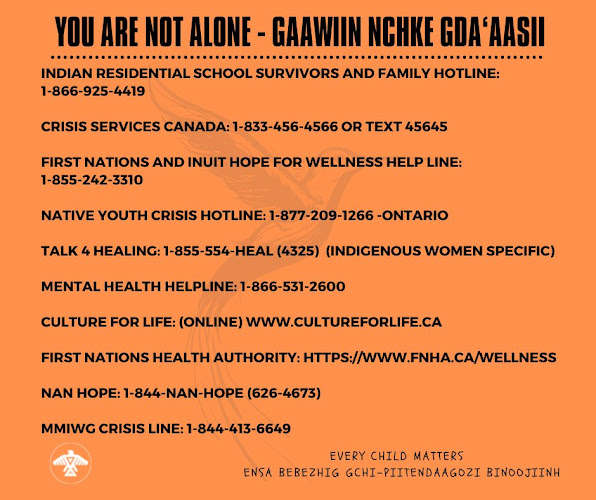
You are not alone

You are not alone

To Veronica Brown

Veronica, we adult adoptees are thinking of you today and every day. We will be here when you need us. Your journey in the adopted life has begun, nothing can revoke that now, the damage cannot be undone. Be courageous, you have what no adoptee before you has had; a strong group of adult adoptees who know your story, who are behind you and will always be so.

Diane Tells His Name


click photo

Lost Birds on Al Jazeera Fault Lines

Lost Birds on Al Jazeera Fault Lines
click to read and listen about Trace, Diane, Julie and Suzie

NO MORE STOLEN SISTERS

NO MORE STOLEN SISTERS
click image

ADOPTION TRUTH

As the single largest unregulated industry in the United States, adoption is viewed as a benevolent action that results in the formation of “forever families.”
The truth is that it is a very lucrative business with a known sales pitch. With profits last estimated at over $1.44 billion dollars a year, mothers who consider adoption for their babies need to be very aware that all of this promotion clouds the facts and only though independent research can they get an accurate account of what life might be like for both them and their child after signing the adoption paperwork.

Original Birth Certificate Map in the USA

Google Followers