They Took Us Away

They Took Us Away
click image to see more and read more

it's free

click

How to Use this Blog

BOOZHOO! We've amassed tons of information and important history on this blog since 2010. If you have a keyword, use the search box below. Also check out the reference section above. If you have a question or need help searching, use the contact form at the bottom of the blog.


We want you to use BOOKSHOP to buy books! (the editor will earn a small amount of money or commission. (we thank you) (that is our disclaimer statement)

This is a blog. It is not a peer-reviewed journal, not a sponsored publication... WE DO NOT HAVE ADS or earn MONEY from this website. The ideas, news and thoughts posted are sourced… or written by the editor or contributors.

EMAIL ME: tracelara@pm.me (outlook email is gone) THANK YOU CHI MEGWETCH!

SEARCH

Showing posts with label new film. Show all posts

Saturday, May 23, 2026

Stomping Freedom

New film revisits country's founding from Shawnee perspective in Ohio during American Revolution

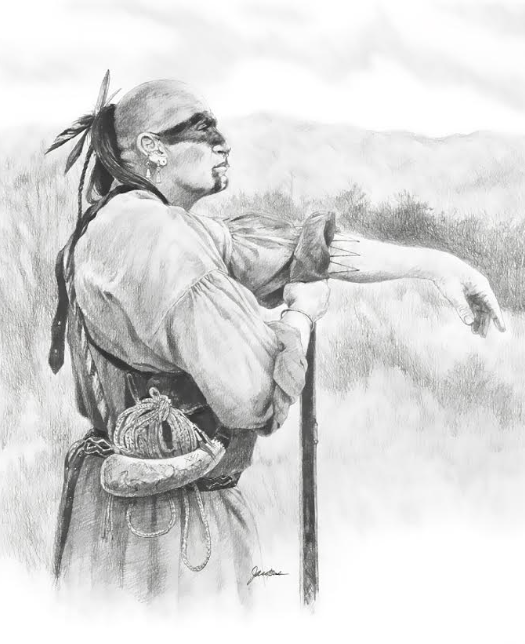
Still from the film "Stomping Freedom." It film will premiere for the first time at the Little Art Theatre on May 27.
Caesar's Ford Theatre/ Provided
A still from the film "Stomping Freedom." It will premiere for the first time at the Little Art Theatre on May 27.

The American Indian-led arts nonprofit Caesar’s Ford Theatre will premiere a new film called “Stomping Freedom” in Yellow Springs this month, ahead of America’s 250th anniversary.  The film examines who was in Ohio at that time.

Caesar’s Ford Theatre is a performing arts organization focused on telling American Indian historical dramas with American Indian actors.  Using the term “American Indian” is deliberate as well, as this is the legal term used by the United States government to identify citizens of federally-recognized tribal nations, which have specific legal rights.

“Stomping Freedom” is a political thriller that recounts the tension between Shawnee villagers and American settlers during the American Revolution in 1778.  The story begins at Caesar Creek, when an interpreter for the Shawnee tribe Caesar receives a letter with news he’s charged with delivering to Shawnee war chief Weyapiersenwah, also known as Blue Jacket.

Every American Indian role in the film is portrayed by actors from federally-recognized tribal nations. That includes the Seminole Nation of Oklahoma, Oneida Nation of Wisconsin as well as historic Ohio tribes like the Seneca-Cayuga Nation and Shawnee Tribe.

“This was the home of tribal nations that lived here and could trace their culture and heritage back thousands and thousands and thousand years to this area."

Kane Stratton, the director and screenwriter for the film said Caesar's Ford Theatre wants the audience to understand Ohio wasn’t part of the United States 250 years ago.

“This was the home of tribal nations that lived here and could trace their culture and heritage back thousands and thousands and thousand years to this area,” he said.

Jake Tiger (enrolled Seminole Nation of Oklahoma, Red Lake Ojibwe and Sac and Fox of Oklahoma descent) played Blue Jacket in the film. Although not Shawnee himself, he said he worked with Shawnee language specialists when speaking Shawnee in the film.

He said he tried to channel his own ancestor, the Seminole warrior Osceola, who also fought for the sovereignty of his people against the U.S. government, when portraying Blue Jacket.

“You know, that kind of grit and tenacity and that steadfastness of that lifestyle, and I tried to portray that in this dialog. So I took a lot of inspiration from my own cultural background and tried to do the best I could with due diligence and respectfully portray it as a Shawnee war leader,” he said.

Tiger said he appreciated the level of consultation that went into the screenplay, set design and attire to ensure everything was historically accurate and culturally appropriate.

“It felt like a movement, more than just one person doing this on their own and kind of dictating the narrative,” Tiger said.

The film was funded in part by the America 250-Ohio Commission to recognize the 250th anniversary of the Declaration of Independence. The Yellow Springs Community Foundation was also a major donor to this effort, Stratton said.

The film premieres at the Little Art Theatre on May 27 at 7 p.m. A donation is required for admission. Tickets can be reserved in advance.

The film includes mature language, so it may not be suitable to view for younger kids, Stratton said.

Following the screening, production team members will reflect on the filmmaking experience and share plans for Caesar’s Ford Theatre's future.

Stratton said if there’s enough interest from the first premier, there’s potential to put on more screenings.

SOURCE:  https://www.wyso.org/indigenous-affairs/2026-05-21/new-film-revisits-countrys-founding-from-shawnee-perspective-in-ohio-during-american-revolution 

Thursday, November 13, 2025

Revisit the country’s beginnings through a more inclusive Indigenous lens


(Photo/Cherokee Nation)

(Photo/Cherokee Nation)

As the nation observes Native American History Month, Cherokee Film is inviting audiences to revisit the country’s beginnings through a more inclusive lens — one that recognizes the deep role of Indigenous nations in shaping early America.

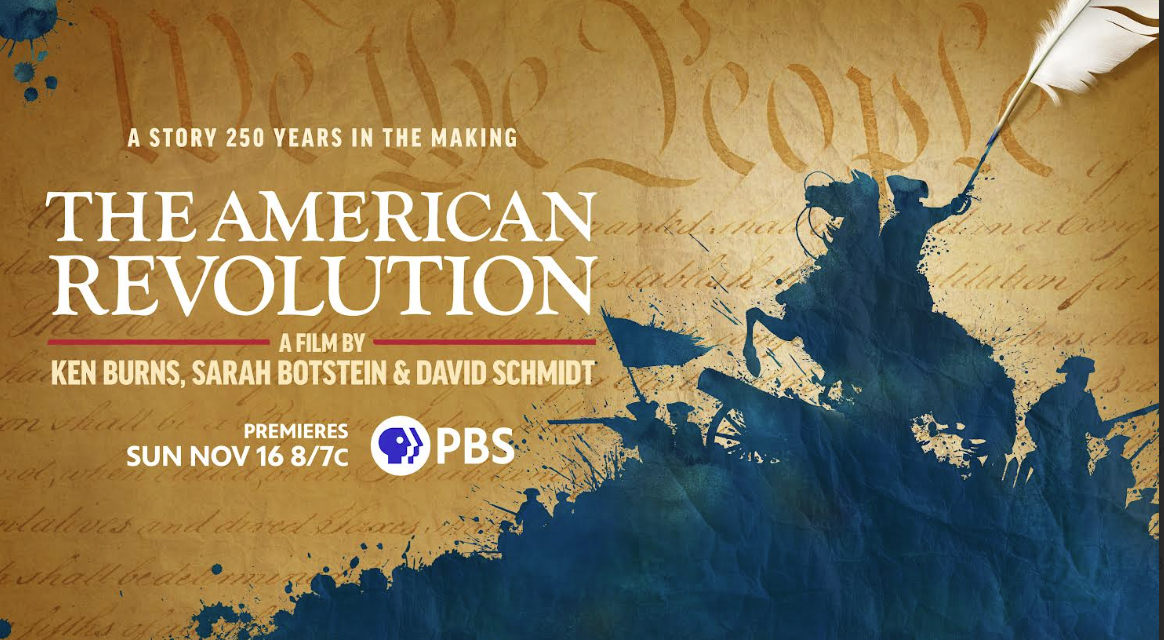
That story unfolds in The American Revolution, a sweeping new documentary series from Ken Burns, Sarah Botstein and David Schmidt, premiering Sunday, Nov. 16, on PBS stations nationwide.  The six-part, 12-hour series airs over six consecutive nights, offering a panoramic look at the nation’s eight-year War for Independence and the birth of the United States.

The project has been nearly a decade in the making, timed to coincide with the 250th anniversary of the war’s first battles in 1775 — a year before the signing of the Declaration of Independence.

“American Indian history is central to the story of the American Revolution,” Burns said. “We have been working with Native people and nations, including the Cherokee Film Office, since the start of editing to make sure we get that story right.”

Throughout the series, the filmmakers delve into the far-reaching consequences of the Revolution — not only for the 13 colonies but for the Indigenous nations whose homelands became the contested ground of a new republic.

“The American Revolution was a war for the future of North America,” Schmidt said. “The choices Native people and nations made during the war reflect careful consideration of how they could best protect their own sovereignty and independence.”

Cherokee Film Senior Director Jen Loren served as an advisor for the production, helping ensure that Indigenous voices and perspectives were woven authentically into the storytelling.

“This film sheds light on pivotal moments in our nation’s history and thoughtfully includes the stories of many Indigenous people and nations,” Loren said. “At Cherokee Film, we commend this production’s commitment to inclusive and accurate storytelling and look forward to audiences experiencing it.”

Cherokee warrior used in "The American Revolution." (Photo/Cherokee Film Office)


Among the Indigenous nations featured are the Anishinaabe, Chickasaw, Cherokee, Creek Confederacy (Muscogee), Delaware (Lenape), Mohawk, Seneca and Shawnee. Their leaders and warriors — including Tsiyu Gansini (Dragging Canoe), Thayendanegea (Joseph Brant), Solomon Uhhaunauwaunmut, Canassatego and Tecumseh — stand at the heart of the series’ exploration of diplomacy, conflict and resilience.

For the filmmakers, capturing those stories was essential to understanding the Revolution as a truly continental event.

“The story of the American Revolution belongs to everyone,” Botstein said. “And we owe it to the people who lived through it to tell that story faithfully.”

The full series will be available to stream beginning Sunday, Nov. 16, at PBS.org and on the PBS App, available on iOS, Android, Roku streaming devices, Apple TV, Android TV, Amazon Fire TV, Samsung Smart TV, Chromecast and VIZIO. Additional production details are available here.

Monday, September 29, 2025

Remaining Native + Clear Sky (films)


BIFF (Buffalo International Film Festival Premier) 

Ku Stevens (17) is the solo runner at his high school with no coach. Living on the Yerington Paiute reservation in Northwest Nevada, he is driven by his ambition to run for his dream school, the University of Oregon.

As Ku trains, unreconciled emotions unearth the memory of his great-grandfather, Frank Quinn. At 8 years old, Frank ran 50 miles across the desert to escape an Indian boarding school. Frank’s story becomes interwoven with Ku’s journey to run a collegiate qualifying time.

This coming-of-age documentary is told from Ku's perspective as he struggles to navigate his dream of becoming a collegiate athlete as the memory of his great grandfather's escape from an Indian boarding school begins to connect past, present, and future.

Will Ku outrun his history or will he learn to run in parallel with it to achieve his dreams?

Presented in partnership with the Office for Diversity, Equity, and Belonging for the College of Arts and Sciences at University at Buffalo – The State University of New York.

TICKETS and MORE:  https://www.buffalofilm.org/events/remaining-native/ 

Clear Sky October 16, 4 PM North Park Theatre
Director Michael Del Monte in attendance.

Given up for adoption the day he was born, Shawn’s life spirals into addiction as he struggles with a broken connection to his Anishinaabe culture and a deep resentment toward the mother who abandoned him.  Through intense psychedelic therapy and the relentless grind of distance running, CLEAR SKY follows Shawn’s fight to save his life, culminating in a cross-country road trip to confront the person he resents most: his mother.  Filmed over three years, this intimate story bridges ancient traditions and modern science.  Hailed by Derek Cianfrance (Blue Valentine) as 'a cinematic masterpiece,' CLEAR SKY is an unflinching portrait of one man’s journey to heal and find his place in the world.

Yurly | Country October 16, 11:30 AM North Park Theatre 

A vivid ode to land and an intimate, inspiring portrait of an Indigenous Elder’s final year as he fights to reclaim his homeland, scarred by the largest contaminated site in the Southern Hemisphere.  Banjima Elder Maitland Parker calls his yurlu (homeland) in the Pilbara region of Western Australia “poison country”; this haunting truth is etched into his body as he lives with terminal mesothelioma, an aggressive cancer resulting from asbestos exposure. Six decades prior, the Wittenoom mines left behind more than three million tonnes of waste rock laced with deadly asbestos fibres, turning 46,840 hectares of Banjima Country – an area eight times the size of Manhattan – into a toxic exclusion zone. Today, Aboriginal communities in Western Australia have the world’s highest mortality rate from mesothelioma. Yurlu | Country follows Maitland as he confronts government inaction and corporate greed in the hope of allowing his people to reconnect with and heal their ancestral lands. This powerful documentary bears witness to Australia’s very own – albeit largely unknown – Chernobyl-style disaster. Braiding imagery of beautiful yet contaminated terrain with poignant interviews and damning archival footage, the film stands as a testament to First Nations resilience amid ongoing dispossession, and is a rousing call to action to redress the cultural, environmental and physical wounds caused by colonisation and industry.


Shorts:
Climate Stories + Earth Works: “Kanenon:we - Original Seeds”
Next Gen: Peace Flags + 35,567 Yup'ik Stories
Racial Justice in View: My Name Is Not Amy
Resilience + Resistance: the Bone Comb 

Monday, August 18, 2025

Who are Museums Really For?


The film tells the story of the accidental discovery of the Cheguigo Monolith, an ancient stone figure, by a 14-year-old boy exploring the countryside in 1960.

It’s a stark reminder: Sometimes the best way to kill something and rob it of its history is to place it in a museum.

Binnigula’sa’ (Ancient Zapotec People) (2024) is directed by Jorge Ángel Pérez and was screened at the Blackstar Film Festival. It is available for viewing online. 

READ MORE: https://hyperallergic.com/1031896/jorge-angel-perez-binnigulasa-ancient-zapotec-people-film/?vgo_ee=ky%2B0bH0Hkh0ZfZImUhZc6T6FhVh601PcE66%2BMeqQyg%3D%3D%3AXQQhbg4hUPprXCbmwp2MEQT7bkdrds6i

Monday, February 10, 2025

Night Raiders (Netflix)


‘Night Raiders,’ the sci-fi thriller film, invites the viewers on an adventure in a dystopian future that parallels the cruelties of the past. In a world where the government mandates for children to be taken away from their families and raised as military, the narrative follows Niska, a single mother, and her young daughter, Waseese.  Despite Niska’s best attempts, she loses her daughter to the authorities.  Yet after discovering a secretive vigilante rebellion group on a mission to save as many children as possible, hope rekindles for Niska, who might just rescue her daughter from a brutal regime.

Cree storyline is excellent

The film maintains an engaging storyline that focuses on the raw emotional dynamic between Niska and Waseese and their unfortunate predicaments. Consequently, viewers must be curious to know how the tale ends for the mother-daughter duo. REVIEW:  https://thecinemaholic.com/native-american-movies-on-netflix/

Night Raiders is on NETFLIX and I watched - it's REALLY good and reminded me of the dystopian books I've read by Cherie Dimaline. ... Trace👇


The Marrow Thieves
is a young adult dystopian novel by Métis Canadian writer Cherie Dimaline, published on September 1, 2017, by Cormorant Books through its Dancing Cat Books imprint.[3] HUNTING BY STARS is a continuation of Marrow Thieves...

She is most notable for her 2017 young adult novel The Marrow Thieves, which explores the continued colonial exploitation of Indigenous peoples.

Dimaline won the award for Fiction Book of the Year at the Anskohk Aboriginal Literature Festival for her first novel, Red Rooms. She has since published the short story "Seven Gifts for Cedar", the novel The Girl Who Grew a Galaxy, and the short story collection A Gentle Habit. 

 Read More: Best Native American Movies and Shows On Netflix 


PAYWALL:  (2020)

‘We’ve Already Survived an Apocalypse’: Indigenous Writers Are Changing Sci-Fi

https://www.nytimes.com/2020/08/14/books/indigenous-native-american-sci-fi-horror.html  

Friday, February 7, 2025

Buffalo are our relatives and teachers, new documentary film explores


“These ribstones reconnect us to our kinship with our families and to Buffalo,” Hubbard explains as the camera’s gaze gently details the texture and colours of the stone.  “We sang to it, and, for a moment, we thought it sang back.” 

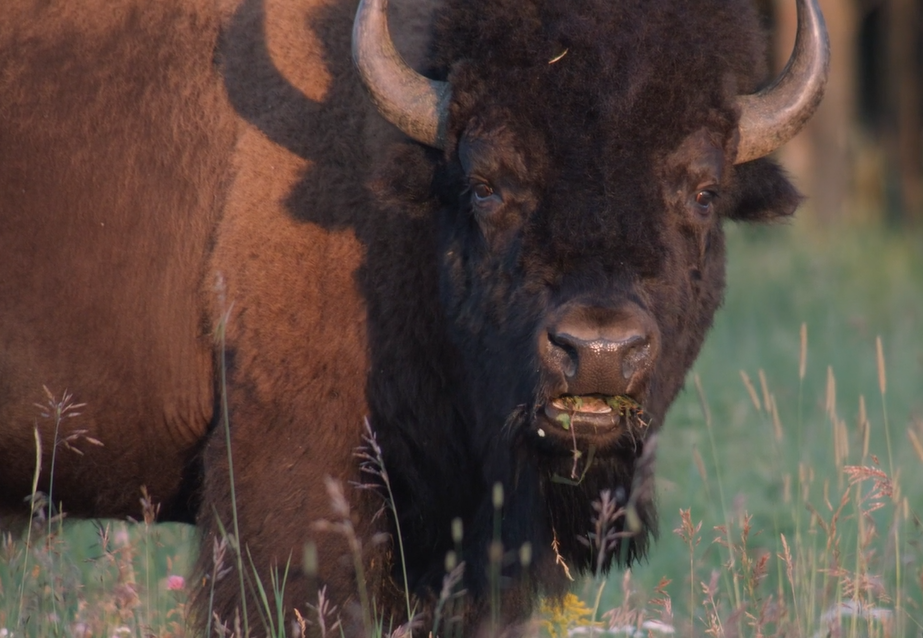
A bull Buffalo is seen grazing on a grassland.

UPDATE:

Singing Back the Buffalo, the new feature length documentary from award-winning Cree filmmaker Tasha Hubbard, will have its broadcast premiere March 6 at 9 p.m. (9:30 NT) on The Nature of Things on CBC TV and CBC Gem.

Singing Back the Buffalo follows Indigenous visionaries and communities who are rematriating the buffalo back to the lands they once defined.

Original Buffalo Spirit Story

By Odette Auger, Windspeaker’s Buffalo Spirit Reporter

Award-winning documentarian and Buffalo advocate Tasha Hubbard will premiere her feature-length film Singing Back the Buffalo at the 2024 Big Sky Documentary Film Festival in Missoula, Montana.

The film follows the work of the people, organizations and communities working together to renew and restore Buffalo to the territories where they once roamed free.

Hubbard’s documentary looks at the Buffalo Treaty, first signed between eight First Nations in 2014, and how it is expanding and changing the Buffalo landscape. The film folds in Elder stories and prophecies to demonstrate how Buffalo people, human people and the health of the land are intrinsically linked.

She explains the parallels between the impacts of the colonial genocide on the Buffalo relatives, the slaughter of which led to their near extinction, and the lost independence of Indigenous Nations, stripped of their movement and agency through government policy and legislation.

“Cree Elders spoke of how Indigenous people, confined to our reserves, resemble the state of the Buffalo. Both of us behind fences and unable to move across our lands. We are slowly tearing these fences down through resistance and undoing the impacts of colonization,” Hubbard says in the film.

“While the depletion of the Buffalo has been understood as a contributing factor in the subjugation of plains Indigenous people, what has had less attention is the attack on the integral relationship between the Buffalo and Indigenous people,” Hubbard says.

Elder
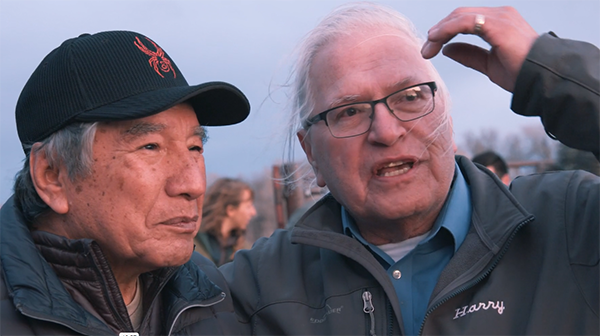
Dr. Leroy Little Bear, a scholar from the Blood Tribe, and driver of the Buffalo Treaty, speaks with Harry Barnes, chairperson of the Blackfeet Reservation on the day Buffalo returned to that Nation's territory. From the film Singing Back the Buffalo.

The wise ones remember, says Hubbard in Singing Back the Buffalo, that First Nations people stopped singing when the Buffalo were gone.

Hubbard is a writer, filmmaker and associate professor at the University of Alberta and did her Ph.D on Buffalo consciousness.


Happy Visitors!

NEW WEB ADDRESS

Because we don't want to lose information on this blog, we now have a domain name: American Indian Adoptees.com - click and save this link:

2026: WE HAVE A BACK UP BLOG COMING SOON: www.americanindianadoptees.blog (on wordpress) We are no longer on Facebook. We deleted our accounts.

WRITTEN BY HUMANS!

WRITTEN BY HUMANS!

Blog Archive

Featured Post

Your History Class Was a F*cking Lie | #NOMOAR

  Your History Class Was a F*cking Lie by Sean Sherman (Or: How the American Educational System Has Always Been a Racist Propaganda Program...


Native Circles

Native Circles
click logo for podcasts!

Most READ Posts

Bookshop

You are not alone

You are not alone

To Veronica Brown

Veronica, we adult adoptees are thinking of you today and every day. We will be here when you need us. Your journey in the adopted life has begun, nothing can revoke that now, the damage cannot be undone. Be courageous, you have what no adoptee before you has had; a strong group of adult adoptees who know your story, who are behind you and will always be so.

Diane Tells His Name


click photo

Lost Birds on Al Jazeera Fault Lines

Lost Birds on Al Jazeera Fault Lines
click to read and listen about Trace, Diane, Julie and Suzie

NO MORE STOLEN SISTERS

NO MORE STOLEN SISTERS
click image

ADOPTION TRUTH

As the single largest unregulated industry in the United States, adoption is viewed as a benevolent action that results in the formation of “forever families.”
The truth is that it is a very lucrative business with a known sales pitch. With profits last estimated at over $1.44 billion dollars a year, mothers who consider adoption for their babies need to be very aware that all of this promotion clouds the facts and only though independent research can they get an accurate account of what life might be like for both them and their child after signing the adoption paperwork.

Original Birth Certificate Map in the USA

Google Followers