They Took Us Away

They Took Us Away
click image to see more and read more

it's free

click

How to Use this Blog

BOOZHOO! We've amassed tons of information and important history on this blog since 2010. If you have a keyword, use the search box below. Also check out the reference section above. If you have a question or need help searching, use the contact form at the bottom of the blog.


We want you to use BOOKSHOP to buy books! (the editor will earn a small amount of money or commission. (we thank you) (that is our disclaimer statement)

This is a blog. It is not a peer-reviewed journal, not a sponsored publication... WE DO NOT HAVE ADS or earn MONEY from this website. The ideas, news and thoughts posted are sourced… or written by the editor or contributors.

EMAIL ME: tracelara@pm.me (outlook email is gone) THANK YOU CHI MEGWETCH!

SEARCH

Showing posts with label White Earth Ojibwe. Show all posts

Thursday, December 11, 2025

Tribes ponder blood quantum alternative


Native America Calling: https://www.nativeamericacalling.com/tuesday-december-9-2025-tribes-ponder-blood-quantum-alternative/

Crow leadership are working toward revamping their tribal citizenship requirements. If their proposal goes through, any currently enrolled tribal citizens would be designated as having 100% Crow blood.  The St. Croix Ojibwe Tribe in Wisconsin is seeing their first tribal enrollment gains in years after they got rid of their blood quantum requirement. They are among the tribes looking down the road and mapping a future away from the Indian blood requirement.

GUESTS

Levi Black Eagle (Apsáalooke), secretary of the Crow Tribe

Conrad St. John (St. Croix Chippewa Indians of Wisconsin), chairman of St. Croix Chippewa Indians of Wisconsin

Jill Doerfler (White Earth Anishinaabe), professor of American Indian Studies at the University of Minnesota-Duluth

Cheyenne Robinson (Omaha), treasurer for the Omaha Tribe of Nebraska

Jonaye Doney (Aaniih), student at the University of Montana

Wednesday, December 7, 2022

REUNION: ‘Where do I belong?’

Another White Earth Adoptee... are you one?  Were you raised in a Jewish family? Please leave a comment on our website.  Let's share your stories... Trace

Native roots, hard realities surface in woman’s search for her past

two women stand shoulder to shoulder
Anita Fineday (left) and Peggy Mandel, on the day they first met.
Courtesy Peggy Mandel- Fineday learned that family members at White Earth tried to adopt Peggy

Feeling trepidation and hope, Peggy Mandel dropped a letter in the mail to a woman she’d never met but who held the key to a secret piece of her past.

Adopted and raised in a loving middle-class Jewish family, Mandel didn’t know her own origin story. As a kid, she could remember people asking, “Are you sure you're Jewish? You're too tall to be Jewish.”

She wasn’t sure either but needed to find out.

After decades of searching, she’d come across a name — someone who might be a blood relative, someone who would lead her to a wrenching history of Native people in Minnesota she wasn’t supposed to find.

Mandel had been so scared she couldn’t write the letter. Her husband Joel wrote it. For weeks, there was silence. Then came a voicemail that changed lives across two families and three generations.

“I am pleasantly surprised. I'm shocked,” said the voice. “And I would like to connect with you.”

...

Mandel, who moved to the Twin Cities at age 11, started looking for her birth mother in the 1990s. However Kentucky adoption records were closed and no information was available.

About eight years ago she sought help from a staff member at the Children’s Home Society, a St. Paul adoption agency.

In early 2014, an agency staff member called. “She said, ‘We found her. She is alive and well. But we can't tell you where she lives. And she doesn't want anybody to know. She doesn't want to meet you,’” recalled Mandel.

READ

Saturday, December 1, 2012

2007: White Earth calling adoptees home

White Earth Nation welcomes adoptees home

by Dan Gunderson, Minnesota Public Radio October 5, 2007


This weekend the White Earth Nation is celebrating the return of children lost for years. Hundreds of American Indian children were taken from Minnesota reservations and adopted by non-Indian families in the 1950s and 60s. The White Earth Aniishinabe are the first tribe in the country to formally welcome the adoptees home.


White Earth Nation, Minnesota — It's difficult to know how many American Indian children were adopted by white families in the 1950s and 60s, because records are sketchy at best. White Earth Tribal Chair Erma Vizenor believes about 25 percent of the children on her reservation were adopted by non-Indian parents. Vizenor recently met one of those children when she stopped for gas on the way home from work. A young woman recognized the tribal leader and asked for help finding her family.
"It's about healing and learning how to be in balance and understanding who we are."
- Sandy Whitehawk
"She said, 'Did you know my mom?' I said, 'Of course I did. I knew your mom. She's not living anymore.' 'Oh,' she said, 'What was she like?' I said, 'Your mother was a bubbly happy person.'"
After a reflective pause, Vizenor continues the story.
"I knew her mom. I went to high school with her. She had a baby. The baby was just taken away. (She was told) 'You have no option. This is what's best for your baby.' She couldn't bring her baby home," recalls Vizenor.
Indian babies were put up for adoption for many reasons. Poverty and alcohol caused some mothers to give up their children. But there was also a government policy of assimilation designed to make Indians forget about their culture and history.
Many Indian women were told adoption was the only option. Adoption programs sponsored by church groups were facilitated by local, state, and federal government agencies. It's likely hundreds of American Indian children born in Minnesota were adopted by families across the country. The practice continued until Congress passed the Indian Child Welfare Act in 1978, giving tribes more control over adoptions.
Hearing from some of those adoptees prompted White Earth Tribal Chair Erma Vizenor to support a welcome home ceremony for those who want to reconnect with their tribal culture.
The idea came from Sandy Whitehawk, who runs a small non profit in Minneapolis that tries to help American Indian adoptees find their families.
Whitehawk is driven by her own story. Born on the Rosebud reservation in South Dakota, she was sent to live with a white family when she 18 months old. Growing up in a mostly white small town, she was encouraged to forget her birthplace.
"Don't grow up to be a good for nothing Indian. You're just going to be a drunken Indian like your mother. Those were things I heard all the time," says Whitehawk.
After struggling for years with substance abuse, Whitehawk realized she needed to understand where she came from, so at age 35, she made her first trip back to the reservation where she was born.
"The very first thing I noticed when I went on the reservation was that I finally looked like someone else," remembers Whitehawk. "I noticed I was more relaxed. There's something you can't put words to, to walk on your homeland where you know your relatives feet have also touched. That's healing, because it's where you began."
Sandy Whitehawk learned she was one of nine children. Seven were put up for adoption. She's reunited with some of her siblings, as well as aunts, uncles and cousins.
Many American Indian families were scattered with the wind. Some children were raised in affluent homes, afforded privilege their birth parents could never provide, but others found less charitable situations, essentially becoming indentured servants.
Whatever their adoption experience, in recent years many have found their way back to the reservation. Some have stayed and become enrolled tribal members.
Reclaiming that tribal identity can be a challenge. Adoptees don't have birth certificates in some cases, others have altered adoption documents, making it difficult to prove their family connections.
Sandy Whitehawk says most are following a simple urge to understand who they are.
"We're not about bashing white parents. We're not about bashing good foster parents," says Whitehawk. "It's about bringing out hard times that we may need to talk about, but more than anything it's about healing and learning how to be in balance and understanding who we are."
Reconnecting with family and culture might not be as easy as a trip to the reservation. White Earth elder Joe Bush gets calls every week from adoptees trying to find their birth family. They call him because he carries generations of family history in his head.
He knows from experience that coming home is the first step down a long path.
"There's going to be a lot of fear, a lot of resentment and a lot of joy. It's going to be hard for some of them, but we're going to welcome these adoptees that went out, adopt them back home, says Bush. "Coming back home. Nigiiwe, I'm going home."
White Earth officials don't know how many people to expect at the welcome home gathering, but they're hopeful the formal recognition of a sad chapter in their history will be a model for other American Indian tribes across the country.

White Earth was the first. Maine has a new Truth and Reconciliation Commission that includes adoptees. When will other tribes convene and do this? It's up to us to ask them... The idea is now spreading we need to write the Senate and Congress as a large group and ask for Congressional Hearings to let them know adoptees are still struggling after the Holocaust of the Indian Adoption Projects.. We need our records open so we can find our families and tribes. Email me if you'd like to add your name to the letters we send...  Trace (laratrace@outlook.com)

Wednesday, October 5, 2011

Return to Tradition on White Earth

Return to tradition on White Earth Reservation in fight against poverty, hunger
verty in Minnesota is on the rise. But census numbers released in September show poverty hits some groups harder than others -- including American Indians. On the White Earth reservation in northern Minnesota, tribal officials estimate up to 50 percent of American Indians live below the poverty line. See more photos and story here: http://minnesota.publicradio.org/display/web/2011/10/04/poverty-hunger-white-earth/#10


Pine Point, Minn. — Waasamoan Neeland, 5, of Round Lake, Minn., showed off her corn husk doll in Pine Point, Minn., on Sept 23, 2011. Neeland was attending Family Fun Day at Pine Point School, where her mother Ashley Martin, 23, was teaching a class on corn braiding to students and parents. The class is part of an effort to teach young people traditional ways of growing, harvesting, and preserving food. Corn braiding involves braiding together the husks of several ears of corn in order to dry and preserve them through the winter. The class was sponsored by the White Earth Land Recovery Project. (MPR Photo/Caroline Yang)     

NOTE: White Earth Elders were the first tribe to "call home" their adoptees in 2007... Trace         

Happy Visitors!

WRITTEN BY HUMANS!

WRITTEN BY HUMANS!

Blog Archive

Featured Post

Your History Class Was a F*cking Lie | #NOMOAR

  Your History Class Was a F*cking Lie by Sean Sherman (Or: How the American Educational System Has Always Been a Racist Propaganda Program...


Native Circles

Native Circles
click logo for podcasts!

Most READ Posts

Bookshop

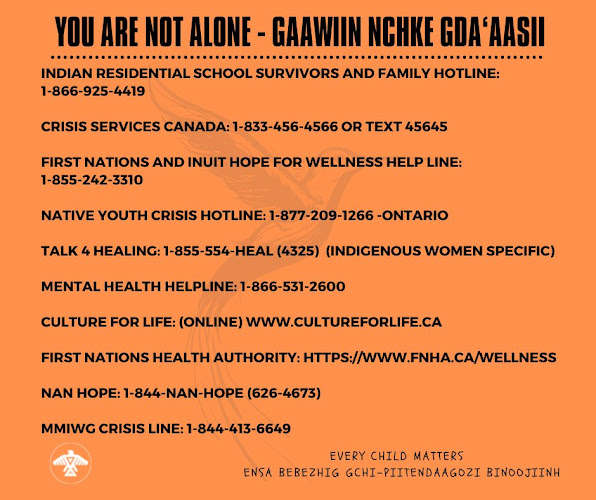
You are not alone

You are not alone

To Veronica Brown

Veronica, we adult adoptees are thinking of you today and every day. We will be here when you need us. Your journey in the adopted life has begun, nothing can revoke that now, the damage cannot be undone. Be courageous, you have what no adoptee before you has had; a strong group of adult adoptees who know your story, who are behind you and will always be so.

Diane Tells His Name


click photo

Lost Birds on Al Jazeera Fault Lines

Lost Birds on Al Jazeera Fault Lines
click to read and listen about Trace, Diane, Julie and Suzie

NO MORE STOLEN SISTERS

NO MORE STOLEN SISTERS
click image

ADOPTION TRUTH

As the single largest unregulated industry in the United States, adoption is viewed as a benevolent action that results in the formation of “forever families.”
The truth is that it is a very lucrative business with a known sales pitch. With profits last estimated at over $1.44 billion dollars a year, mothers who consider adoption for their babies need to be very aware that all of this promotion clouds the facts and only though independent research can they get an accurate account of what life might be like for both them and their child after signing the adoption paperwork.

Original Birth Certificate Map in the USA

Google Followers