👉 “Bounty” shows daily at the Old State House and can be viewed online
at the Upstander Project’s website, which also features a timeline and a
teacher’s guide to the film and the issues it deals with.
New film at Old State House highlights Cambridge’s ties to colonial ‘scalp bounties’
 |
| Spencer Phips’ scalp bounty proclamation issued in 1755. (Image: Penobscot Nation Museum) |
“Bounty,” the newly installed film at Boston’s Old State House, is
only nine minutes long, but its powerful and disturbing message looms
much larger for audiences. Whether tourists or locals, visitors to the
Old State House usually expect to tour the 1713 building to glimpse the
legislative history of Massachusetts, particularly the events and public
debates surrounding the Stamp Act, the Boston Massacre and other
aspects of Revolutionary history. Now part of Revolutionary Spaces,
which also oversees the Old South Meeting House, the Old State House is
sharing the history of brutal attacks on New England’s Indigenous
peoples as part of Massachusetts colonial policy – a legacy that is
surprising and unnerving to those used to a purely celebratory telling
of the colony’s story.
The exhibit, housed in the Old State House’s council chamber, tells
the story of so-called “scalp bounties” – one that has a direct
connection to Cambridge as a whole and, in particular, to History
Cambridge’s headquarters at 159 Brattle St. The adopted son of Sir
William Phips, the first governor of the Province of Massachusetts Bay,
Spencer Phips entered politics in his own right in 1721 when elected to
the provincial assembly. His family connections had set Phips up for
political and economic prominence and, several years after his
graduation from Harvard in 1703, he bought a large tract that
encompassed much of what is now East Cambridge and settled there with
his family.
Phips was appointed to the governor’s council in 1721, and from
1732-1757 was the lieutenant governor of the Province of Massachusetts
Bay, which included the Massachusetts Bay Colony, the Plymouth Colony,
the Province of Maine, Martha’s Vineyard, Nantucket, Nova Scotia and New
Brunswick. During two periods (1749-53 and 1756-57) Phips served as
acting governor while William Shirley was abroad.
As a prominent landowner and politician, Phips had set his children
up to marry well; in the 1730s Phips’ daughter Rebecca married the
up-and-coming merchant and land speculator Joseph Lee and settled into
159 Brattle St., known commonly as the Hooper-Lee-Nichols House. While
we do not have direct evidence that this house, which serves as the
headquarters of History Cambridge, was occupied by enslaved people on a
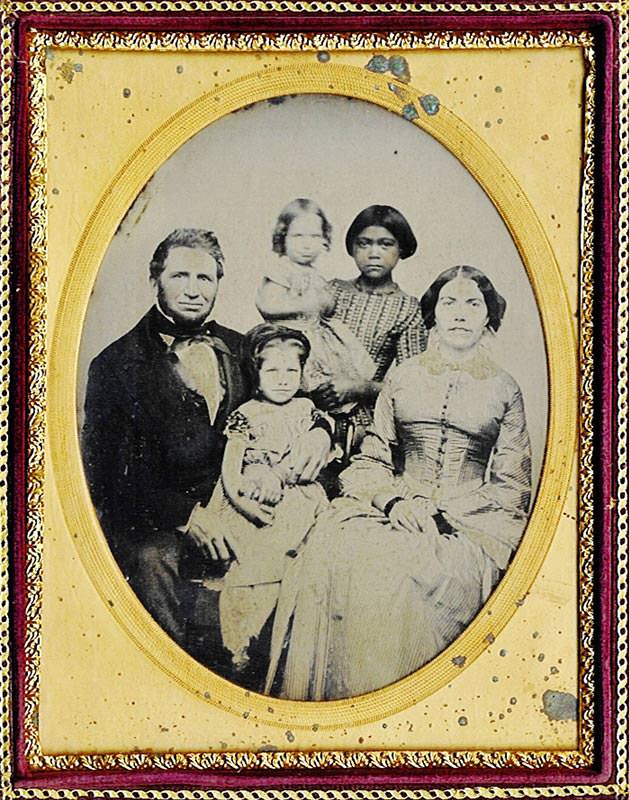
permanent basis, we know that Joseph Lee and Rebecca Phips enslaved two
men, Caesar and Mark Lee/Lewis, on other Massachusetts properties that
they owned, and it is likely that one or both stayed with the Lees when
they were at their Brattle Street property. Spencer Phips, too, was an
enslaver, holding five people in bondage, so his children would have
grown up expecting to be waited on by enslaved servants.
In addition to his land in Cambridge, Phips was part-owner of a large
tract on what is now the central coast of Maine (then part of the
Province of Massachusetts Bay). In 1719, the owners began to develop the
land for white settlement to the objection of the local Abenaki People,
who argued that their leaders had made land grants to the colonists
without authorization from the tribe. Conflicts increased in the 1720s,
leading to what is known as Dummer’s War from 1723-1727. For the next
several decades, tensions flared between the Abenaki and the colonists,
leading Shirley to declare war on the Abenaki in 1754.
In its declaration of war, Massachusetts made an exception for one
group of Abenaki: the Penobscot People, whom the colonial government
claimed were exempt from their attacks. In reality, the position of the
Penobscot made them vulnerable to the same brutality at the hands of
colonists as other Abenaki. In the ongoing colonial battles between the
English and the French, Indigenous peoples were pressured to take sides;
although the Penobscot desired to remain neutral, their geographic
location meant that they could not escape colonial politics. Seen as
pro-British by the French and pro-French by the Maine colonists, the
Penobscot found themselves pushed increasingly toward French alliance
because of incidents such as a 1755 attack by New England militiamen on a
Penobscot fishing party.
In 1755, while Shirley was away from the colony, Phips issued a
declaration of war against the Penobscot, offering cash rewards for each
scalp of a Penobscot person turned into the colonial government. Phips’
proclamation put a value of 50 pounds for males over age 12, while
women and male children under 12 were deemed to be worth 25 pounds and
female children were worth 20 pounds. The next year, the colonial
assembly voted to allow scalp bounties of up to 300 pounds – by far the
largest sum ever offered in a wartime declaration. In 1759,
Massachusetts Gov. Thomas Pownall seized control of the Penobscot River
and the homelands of the Penobscot people by force.
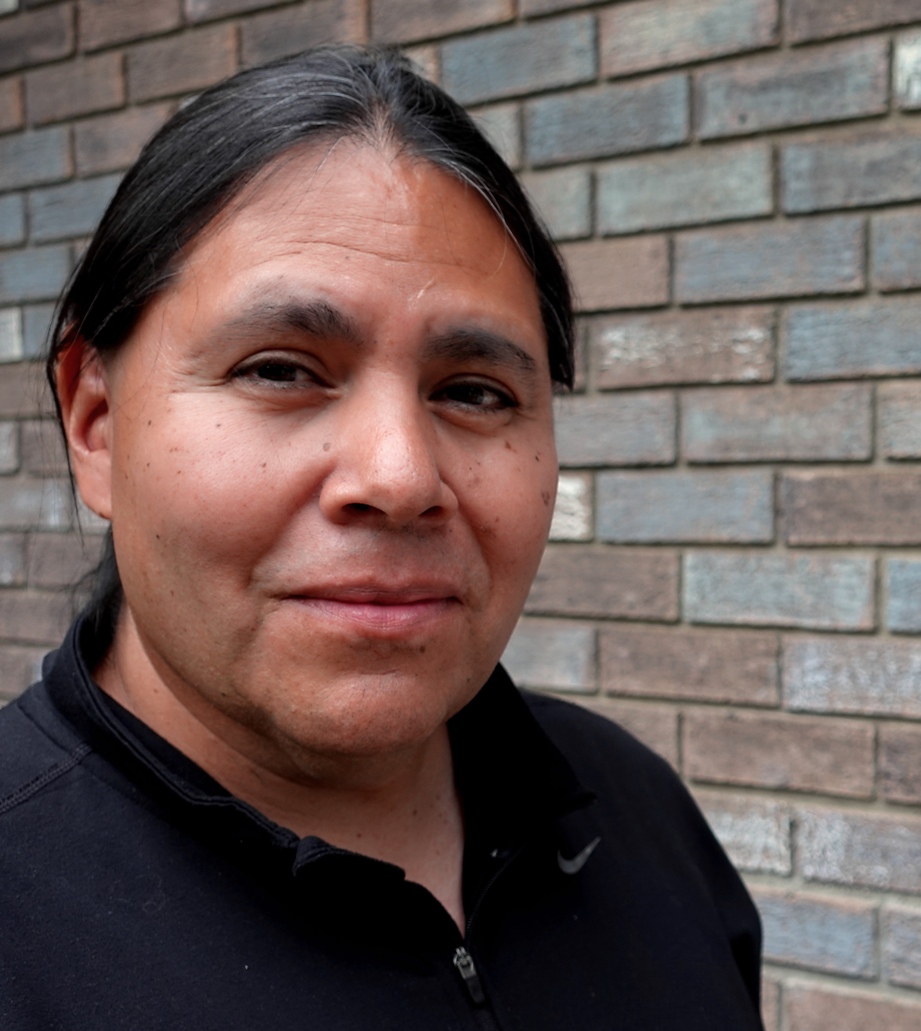
Phips signed the declaration of war and the scalp bounty proclamation in the council chamber of the Old State House; in 2021, Upstander Project
created a short film featuring several current-day Penobscot families
reading the text of the proclamation aloud in the chamber. Penobscot
Nation tribal ambassador Maulian Bryant emphasized the importance of not
only telling the story of the Phips Proclamation, but doing so in the
physical space where these and other decisions were made that so greatly
affected the Penobscot and other Indigenous peoples:
It conveys this empowering sense of resilience and that Penobscot
people, Indigenous people all over this country were not supposed to
still be here. That there were very systematic attempts to exterminate
our people in order to have our land taken. So the fact that we are
still living here in our home, and we will grapple with this trauma and
we will reflect on it and honor our ancestors, but we need to do that by
being strong, proud Penobscot people. And this project was a way to
reclaim some of that space.
SOURCE: https://www.cambridgeday.com/2024/11/11/new-film-at-old-state-house-highlights-cambridges-ties-to-colonial-scalp-bounties/
History
Cambridge is proud to partner with the Upstander Project to work toward
the amplification of Indigenous voices and a broader understanding of
local Indigenous histories during this Native American Heritage Month
and well beyond.
🦃THANKS BRADFORD?
Plymouth still celebrates (of course)
I do not... Trace
The National Day of Mourning plaque on
Cole's Hill in
Plymouth, MassachusettsThe first National Day of Mourning event was held on Thanksgiving Day, November 26, 1970 on Cole's Hill in Plymouth, Massachusetts. James delivered an amended speech[1] beside a statue of Ousamequin, including
| "We forfeited our country. Our lands have fallen into the hands of
the aggressor. We have allowed the white man to keep us on our knees.
What has happened cannot be changed, but today we must work towards a
more humane America, a more Indian America, where men and nature once
again are important; where the Indian values of honor, truth, and
brotherhood prevail.
You the white man are celebrating an anniversary. We the Wampanoags will
help you celebrate in the concept of a beginning. It was the beginning
of a new life for the Pilgrims. Now, 350 years later it is a beginning
of a new determination for the original American: the American Indian."
- Frank "Wamsutta" James, first National Day of Mourning, November 26, 1970[2][4]
|
The event was attended by close to 500 Native Americans from throughout the United States[1]
and has been held annually on the fourth Thursday in November every
year since. James' speech was one of the first public criticisms of the
Thanksgiving story from Native American groups.[2]
DAY OF MOURNING: NOVEMBER 28, 2024
HEADLINES
Seattle Magazine: Chef Overcomes Personal Troubles to Celebrate his Native American Roots
Arizona Republic: Thanksgiving always reflected culture. Indigenous chefs are reclaiming it





.jpg)


.jpg)









 Posts
Posts