They Took Us Away

They Took Us Away
click image to see more and read more

it's free

click

How to Use this Blog

BOOZHOO! We've amassed tons of information and important history on this blog since 2010. If you have a keyword, use the search box below. Also check out the reference section above. If you have a question or need help searching, use the contact form at the bottom of the blog.


We want you to use BOOKSHOP to buy books! (the editor will earn a small amount of money or commission. (we thank you) (that is our disclaimer statement)

This is a blog. It is not a peer-reviewed journal, not a sponsored publication... WE DO NOT HAVE ADS or earn MONEY from this website. The ideas, news and thoughts posted are sourced… or written by the editor or contributors.

EMAIL ME: tracelara@pm.me (outlook email is gone) THANK YOU CHI MEGWETCH!

SEARCH

Showing posts with label connecticut. Show all posts

Friday, November 15, 2024

US Treasurer Chief Lynn Malerba to step down after historic term

Treasurer Chief Lynn Malerba signs her name during a ceremonial signing at the Bureau of Engraving and Printing in September 2022, when she became the first Native American U.S. Treasurer. Her signature, which appears as "Lynn Roberge Malerba" in honor of her maiden name, was added to U.S. currency alongside that of Treasury Secretary Janet Yellen, shown on right. (Photo: Treasury) 


By Brian Edwards

November 14, 2024

U.S. Treasurer Chief Marilynn "Lynn" Malerba, the first Native American to hold the position, is stepping down this week after overseeing significant expansions in tribal economic development and investment programs during her two-year tenure at the Department of Treasury. 

Malerba made her decision to step down ahead of the 2024 election, according to sources familiar with the timing.

The lifetime chief of The Mohegan Tribe in Connecticut, Malerba realized a long-held vision as Treasurer: creating Treasury's first Office of Tribal and Native Affairs, which she had advocated for both as a tribal leader and member of the Treasury tribal advisory committee. Under her leadership, the office helped administer $30 billion in economic recovery funds, including $20 billion for tribes through the American Rescue Plan — the largest single investment in tribal nations in U.S. history.

When offered the historic appointment in 2021, Malerba acknowledged feeling some intimidation, but saw a greater opportunity. "It was a space that Indigenous people have not been represented in, and that's really very special to me, to be able to be the person that would then bring our voice forward in a bigger way," she said during a press call Wednesday, reflecting on her tenure at Treasury.

As Mohegan's first female chief, Malerba brought a unique perspective to the role of Treasurer. Prior to her appointment, she served as a critical care nurse and held various tribal government positions, including executive director of health and human services and chair of the Mohegan Tribal Council.

At Treasury, she helped the agency reach a milestone of more than $500 million in State Small Business Credit Initiative (SSBCI) Capital Program approvals for tribal nations, including an $83 million allocation for a consortium of 125 Alaska tribes. These investments are expected to leverage up to $5 billion in additional financing for Native entrepreneurs and small businesses. 

 SOURCE: TRIBAL BUSINESS NEWS

Wednesday, April 10, 2024

#60sScoop - How did he end up in Connecticut?


CT man taken from First Nation family as child finds purpose in sharing story: ‘I’m not the only one’

WILTON,  CONNECTICUT — Ripped from his sister’s arms and taken to a new country over a half-century ago, Canada native Taber Gregory said he’s still reconciling with how and why he wound up in Wilton.

About 20 years ago, the longtime Wiltonian and owner of Gregory’s Sawmill on Pimpewaug Road said he learned he was one of thousands of survivors of what’s known as the Sixties Scoop.

The Sixties Scoop refers to a decades-long period in Canadian history, from about 1951 and until as late as the 1990s, marked by the mass removal of Aboriginal children from their homes — in most cases without the consent of their families — into the child welfare system.

Many of the children were placed in non-Indigenous households in Canada, while others — including Taber Gregory, who was born Henry Desjarlais in the Canadian province of Alberta in 1968 — were relocated and adopted out to families outside the country. 

Gregory, now 55, said he always knew he was adopted but didn’t know about the early years of his life until connecting with biological family members in his early- to mid-30s.

“I started getting some random calls saying somebody wanted to talk to me, and the person claimed he was my father,” Gregory said. “I was a little confused and didn’t accept the phone call because I didn’t know what to think about it.”

The calls kept coming, and Gregory said he kept refusing. 

Then one day, he finally accepted and learned that the person calling was, in fact, his biological father, Louis Desjarlais. Gregory said his biological father has since died, but he has stayed in touch with one of his biological siblings in Canada.

Through telephone conversations, Gregory said he learned he was the youngest of seven children and had been taken from his family’s home in Canada when he was about one-and-a-half years old. He said his adopted parents had been unaware that he had been forcibly removed from his biological family. 

“My sister walked me through everything, and it kind of snowballed from there,” he said.

Gregory showed Hearst Connecticut Media an August 2001 letter from the Cold Lake First Nations, verifying his Cold Lake First Nation Registry List membership and identifying his biological parents, as well as their own membership. The letter said that since his biological parents were “of 100% North American Indian Blood Quantum,” Gregory “has at least a 100% North American Indian Blood Quantum” himself.

One of Gregory’s four biological sisters, Alicia Minoose, claimed to have been holding him when social service workers came into the house, took him out of her arms, put him in a vehicle and left.

“She told me she ran out the door, chasing after me, and that was the last time she ever saw me,” Gregory said. “She was the last one to hold me.”

According to Tony Merchant — a Canadian attorney whose law firm was involved in a Sixties Scoop survivors class-action lawsuit several years ago that Gregory benefited from — government-funded social services agencies involved in the removal of Indigenous children from their homes were not closely supervised and “intensified their search for likely candidates/victims for adoption” over time. 

“Grabbing children became a need-for-supply phenomenon, and this was particularly true for boys,” he said, noting that they were “significantly more popular for adoption than girls.”

According to Gregory’s sister, two of their siblings were taken as well. She said they were placed with foster parents and eventually brought home — but the family couldn’t find Gregory, whom she still refers to by his birth name of Henry.

“Somehow, mom found David and Margaret ... but they couldn’t find you,” she said over the phone during Gregory’s interview. “They didn’t know what happened to you. We were searching and searching, but there was no information.”

Gregory said he was told that his biological mother, Bella Desjarlais, “cried and cried” after he was taken and he believes stress and heartbreak from what happened may have contributed to her death — which he said occurred before he reconnected with his biological family.

Later learning what he and his family in Canada went through, Gregory said he “went into survival mode.”

“I went through some depression, but I was able to get help and kind of turn that around and stay motivated and positive,” he said. “I did have to take a step back and kind of digest everything.”

Adoption and life in Wilton

Wilton has been the only home he knows — or at least remembers. 

Gregory said he has no recollection of his time in the Canadian foster care system, traveling to the U.S. or when his name was changed from Henry to Taber — but he knows he ended up at an adoption agency in Pennsylvania. 

From there, Gregory said he was adopted by Steve and Judy Meier when he was around 3 years old, moved to Wilton and had two brothers — both of whom were also adopted, but from different places. One was born in Vietnam, and the other was born in Bridgeport, he said.

Gregory said his adoptive parents didn’t know he had been forcibly taken from his home.

“The Welcome House in Pennsylvania was like the first stop, and they just adopted me from there,” he said. “They had no idea how I got there, so I can’t blame them for anything like that. They had no idea what happened.”

According to the website of the Pearl S. Buck Foundation — the parent organization of Welcome House — the adoption program “matched more than 7,000 orphans and children from around the globe with adoptive families in the United States,” and was phased out in June 2014 “because of changes in international adoption regulations.”

Samantha Freis, a curator with the foundation, said the organization does not know what the adoption process was like during that period.

After his adoptive parents divorced, Gregory said his mother Judy Meier ended up working at Gregory’s Sawmill and meeting John Gregory. 

“They made a connection, and we ended up here with Mr. Gregory and kind of became a family,” he said. “We grew up on the Gregory farm (where) we had draft horses, oxen, pigs and chickens.”

After their adoptive mother died in 1985, Taber Gregory said he and his brothers stayed with John Gregory, whom he considered a father figure and legally changed his last name from Meier to Gregory at his request.

When John Gregory retired in the mid- to late-1990s and moved to Ohio, where he later died in 2006, Taber Gregory said he took over the sawmill business — which has been in the Gregory family since the 1850s — and has been keeping the family legacy alive ever since.

“I became a Gregory and have been continuing the family business,” he said.

Gregory said he never knew, nor suspected, that his separation from his biological family and subsequent adoption were forced — but he’s grateful to have learned the truth about his past, “survived the ordeal” and reconnect with his family in Canada, who he said he has not yet visited in person but hopes to see in the near future.

In the meantime, he said his sister keeps him informed about what’s going on with family members in Canada — many of whom Gregory said still reside on a First Nations reservation and speak Chipewyan. 

Class-action settlement 

Several years ago, the Canadian government reached an $800 million class-action agreement with Sixties Scoop survivors — $750 million of which was set aside for individual compensation — the Canadian Broadcasting Corp. reported in 2017.

The settlement, through which all First Nations and Inuit children who “were removed from their homes — and lost their cultural identities as a result — between 1951 and 1991 (were) entitled to compensation,” was less than the $1.3 billion sought on behalf of about 16,000 Indigenous children in Canada’s Ontario province, according to the CBC article.

The settlement agreement followed an Ontario Superior Court judge’s February 2017 ruling that the Canadian government not only “breached its ‘duty of care’ to the children and ignored the damaging effect” of the child welfare program, but also “breached part of the agreement that required consultation with First Nations” about it, the CBC reported.

The judge approved the distribution of $25,000 to $50,000 in payouts to about 22,000 Sixties Scoop survivors the following year as part of the settlement agreement, through which the Canadian government also agreed to establish a foundation designed to “enable change and reconciliation.”

According to a class-action claims process website set up for the settlement, 21,208 of the 34,816 claims received by the December 2019 late claim deadline had been approved as of January 2024.

Gregory — who showed Hearst a questionnaire he filled out for Merchant Law Group LLP, one of the law firms involved in the class action — said his claim was among the ones approved.  He wouldn’t disclose the exact payout amount he received — saying only that it was over $10,000. 

“Everything I know is consistent with him being a (Sixties) Scoop survivor who received compensation,” Merchant said.

He said Gregory did not become a client “because obtaining compensation was something done directly with the claims service providers,” but said his firm did provide assistance to Gregory.

Gregory, who feels the Sixties Scoop settlement payout isn’t enough to compensate for the harm caused to those taken from their biological families, said he shares his story not for pity, but for purpose — to raise awareness about what he and thousands of other Indigenous children went through and help prevent something like it from ever happening again.

“I know I’m not the only one, and I don’t want anybody going through what I did,” he said.

SOURCE: https://www.newstimes.com/news/article/taber-gregory-wilton-sixties-scoop-canada-18672082.php


Friday, April 8, 2022

Project engages federal Indian law to protect tribal self-determination

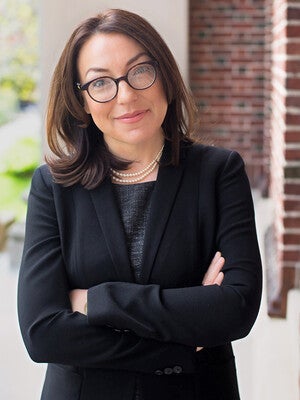
Maggie Blackhawk
Maggie Blackhawk

After the American Indian Sovereignty Project was established last summer, its leaders knew that they would be busy with scholarly engagements in contemporary issues in federal Indian law. But the group, a collaboration between Yale and New York University (NYU), had little idea how quickly they would become immersed in a series of immediate court challenges at the highest level.

In February, the project had one of its most visible moments to date when U.S. Supreme Court Associate Justice Stephen Breyer cited during oral arguments an amicus brief filed by the project’s team in the case Denezpi v. United States.

A joint initiative of Yale’s Faculty of Arts and Sciences (FAS) and the NYU School of Law, the Sovereignty Project brings together scholars, law students, graduate students, and a select number of undergraduates to study, research, and engage American Indian law and policy. The brief cited by Breyer is the second of three the project’s team has written for the high court, and the justice’s reference was an important recognition: It highlighted the impact their work can have in helping to elucidate federal Indian law and policy and in advocating more broadly for Native American tribal sovereignty, according to Ned Blackhawk (Te-Moak Tribe of Western Shoshone Indians of Nevada), the Howard R. Lamar Professor of History and of American Studies at Yale.

He and Maggie Blackhawk (Fond du Lac Band of Lake Superior Ojibwe), professor of law at New York University, co-founded the Sovereignty Project partly with the mission of providing support to Native tribes in legal cases involving Indian Country. The project, he said, also aims “to build an intellectual research community oriented around questions of American Indian legal concern as well as educational awareness about pressing contemporary tribal issues.”

In the six months since the Sovereignty Project was established, it has already been “flooded” with requests from the Tribal Supreme Court Project for assistance on federal court cases, according to Maggie Blackhawk.

KEEP READING


Thursday, April 20, 2017

My birth certificate is literally ‘fake news’

Connecticut is the home to many Native adoptees who were transferred and adopted there from Washington state - yes, all the way across the country! That is the Indian Adoption Projects and ARENA in action.


Older birth parents and relatives are dying off, so are some of the adoptees leaving their children and grandchildren with big holes in their personal family health histories.  Adds Caffery, “We feel strongly that time is of the essence. It’s time to end this failed social experiment of secrecy and shame. It’s time to threat us as full citizens of our country and our state.”

Monday, August 17, 2015

ATTENTION CONNECTICUT ADOPTEES!

On July 1, 2015 a new law became effective in Connecticut that gives certain adult adoptees the right to obtain a copy of their original birth certificate.
Your are eligible to receive your original birth certificate under the new law if:
  • You were born and adopted in Connecticut.
  • You will be 18 or older on or after July 1, 2015.
  • Your adoption was finalized on or after October 1, 1983.
Pursuant to the new law, you are also entitled to receive a Contact Preference Form and Medical History Form, if they have been filed by your biological parents with the Department of Children and Families.

You must file an application and pay a fee to the Department of Public Health in Hartford to receive your original birth certificate.  The Application Form to obtain an Original Birth Certificate can be obtained from the Department of Public Health.

Notice to Biological Parents: The new law provides that you may file a Contact Preference Form and updated Medical History Form with the Department of Children and Families, which will be provided upon request to your adult offspring. The Contact Preference Form allows you to indicate whether or not, and how, you wish to be contacted. The Medical History Form allows you to provide current, updated medical health information that may be critical to the health of your offspring and their children.

For more information, please contact:
Department of Public Health, Vital Records Office: (860) 509-7700
(Original Birth Certificates)
Department of Children and Families: (860) 550-6300
(Contact Preference and Medical History Forms)

Click here to print a copy of an InformationalFlyer regarding the new law.  Please feel free to distribute!

Wednesday, July 18, 2012

Adoption headlines

Adopted from China: Finding identity through heritage
CNN
When Maia Stack returned to the pagoda, or tower, where she had been abandoned as a baby she was overwhelmed by what had happened there 11 years earlier.
See all stories on this topic »
Mixed Roots Foundation Shoots for the Stars in Public Service Announcement ...
San Francisco Chronicle (press release)
Michael Reagan, adopted son of former president Ronald Reagan and actress Jane Wyman will make a call to action for the public to help identify positive role models and streamline more post adoption resources for adoptees and their families. [.
See all stories on this topic »

San Francisco Chronicle (press release)

Web1 new result for adoptees
A Push to Open Connecticut Birth Records to Adult Adoptees - News ...
Old secrets, new fears and emotional highs and lows — they all come into play when you talk about adoptees finding the truth about their roots. And the feelings ...
countytimes.com/articles/.../doc5004200f8a199566323240.txt

Happy Visitors!

NEW WEB ADDRESS

Because we don't want to lose information on this blog, we now have a domain name: American Indian Adoptees.com - click and save this link:

2026: WE HAVE A BACK UP BLOG COMING SOON: www.americanindianadoptees.blog (on wordpress) We are no longer on Facebook. We deleted our accounts.

WRITTEN BY HUMANS!

WRITTEN BY HUMANS!

Blog Archive

Featured Post

Your History Class Was a F*cking Lie | #NOMOAR

  Your History Class Was a F*cking Lie by Sean Sherman (Or: How the American Educational System Has Always Been a Racist Propaganda Program...


Native Circles

Native Circles
click logo for podcasts!

Most READ Posts

Bookshop

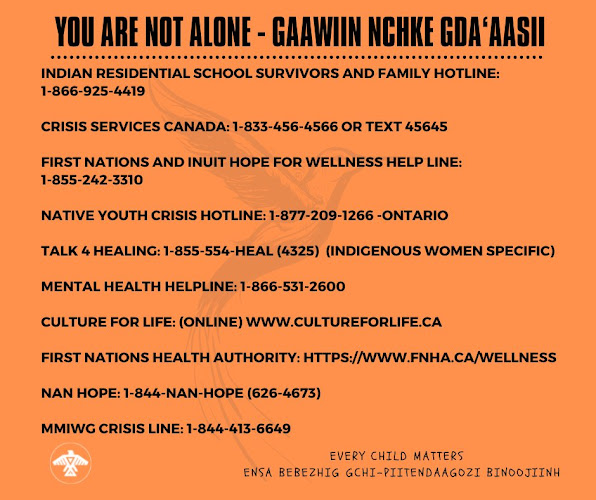
You are not alone

You are not alone

To Veronica Brown

Veronica, we adult adoptees are thinking of you today and every day. We will be here when you need us. Your journey in the adopted life has begun, nothing can revoke that now, the damage cannot be undone. Be courageous, you have what no adoptee before you has had; a strong group of adult adoptees who know your story, who are behind you and will always be so.

Diane Tells His Name


click photo

Lost Birds on Al Jazeera Fault Lines

Lost Birds on Al Jazeera Fault Lines
click to read and listen about Trace, Diane, Julie and Suzie

NO MORE STOLEN SISTERS

NO MORE STOLEN SISTERS
click image

ADOPTION TRUTH

As the single largest unregulated industry in the United States, adoption is viewed as a benevolent action that results in the formation of “forever families.”
The truth is that it is a very lucrative business with a known sales pitch. With profits last estimated at over $1.44 billion dollars a year, mothers who consider adoption for their babies need to be very aware that all of this promotion clouds the facts and only though independent research can they get an accurate account of what life might be like for both them and their child after signing the adoption paperwork.

Original Birth Certificate Map in the USA

Google Followers