They Took Us Away

They Took Us Away
click image to see more and read more

it's free

click

How to Use this Blog

BOOZHOO! We've amassed tons of information and important history on this blog since 2010. If you have a keyword, use the search box below. Also check out the reference section above. If you have a question or need help searching, use the contact form at the bottom of the blog.


We want you to use BOOKSHOP to buy books! (the editor will earn a small amount of money or commission. (we thank you) (that is our disclaimer statement)

This is a blog. It is not a peer-reviewed journal, not a sponsored publication... WE DO NOT HAVE ADS or earn MONEY from this website. The ideas, news and thoughts posted are sourced… or written by the editor or contributors.

EMAIL ME: tracelara@pm.me (outlook email is gone) THANK YOU CHI MEGWETCH!

SEARCH

Monday, June 29, 2020

Indian Lives Matter | The "Indian Problem"


Stanford Law Review Online Publishes “Indian Lives Matter — Pandemics and Inherent Tribal Powers”

by Matthew L.M. Fletcher

Fletcher's paper, "Indian Lives Matter -- Pandemics and Inherent Tribal Powers," is now available online (PDF).


The1918 and 1919 influenza pandemicdevastated American Indian communities.In several states in the west and southwest—Arizona, Colorado, Mississippi, New Mexico, and Utah—4%to 6%of American Indian people died.35“Among Alaskan Natives, entire communities were stricken, and some towns were abandoned.”36Nearly 3,400 Diné (Navajo) people walked on during this time.37Overall,2%of American Indian people walked on because of the pandemic.3


Saturday, June 27, 2020

Remembering Von Hughes #adopteerights

Von and her daughter
Lost Daughters is sad to announce the passing of one of our long-time members, Von Coates. Von was one of Australia’s stolen babies during an era which mirrored that of the “Baby Scoop Era” in the United States (and worldwide). She was instrumental in the official apology issued by the WA government. She stood unapologetically by the wronged mothers as they refused to accept. She was a pioneer in establishing Post-Adoption support in WA. She was also a tireless advocate for bird populations of her homeland and for justice everywhere. She lived a long, fulfilling life. She will be missed.

ETA: Von’s family has asked for donations for a mental health fundraiser in Von’s honor: https://www.mycause.com.au/page/230210/memorial-to-elizabeth-ann-hughes


Her death on May 17, 2020 has been devastating to family, friends and the online community


By Trace Hentz, Blog Editor

Every adoptee I know wants to understand why we feel the way we do, and that we are not alone. Von Coates Hughes in Australia was one of my best teachers and she was an outspoken adoptee. She gave in-depth, easy-to-read insight and had the words when I would struggle with how to explain how I felt about being adopted.
Von had a blog on blogger (Once was Von) and someone reported it was not good so it was taken down. What the HELL??? Criticizing the adoption industry and propaganda was dangerous, we soon discovered - and Von and I discussed it via email.  She came to my defense many times. She would openly argue with first mothers/birthmothers and adoptive parents on Facebook - battling as if there was only one victim in the adoption game.
She made many comments on this blog and interviewed me for her blog. Von was also a contributor to LOST DAUGHTERS blog.

Out of necessity, Von moved her blog to wordpress. Below: this was her first post in 2012.


It’s Just A Stage I’m Going Through!

I’m a cat person, a Greyhound person, a goose person – well, let’s just say an animal person or an ‘everything that lives and moves person’ and then some. I love fossils, rocks, gemstones, crystals, mushrooms, toadstools, lichens and all the non-green plants. Yes, I even love spiders and have a large Huntsman named Mathilda living in close proximity. Freaky!  It’s not normal in the eyes of some, but then I’ve got adoption to thank for that. My beloved maternal aGrandfather was the same. He loved and was fascinated by everything that moved, didn’t move, lived or had lived. He was born in Victorian times, so was also a collector, kept a pair of chimpanzees and a Cassowary in the garden.
Every Summer he camped out with his geologist mates from the city museum so that they could collect fossils and set up the collection which is still on show today, still neatly labelled with the source, which reminds me of him every time I visit!  I have photos of those times, taken long before I was born, when my amother was a child raised to a life of respect for living creatures and a love of the area I took my family to live in decades and decades later, long after she had died.
Continuity happens in families, whether they are biological families or adoptive families. Adoptees if they are lucky enough to experience reunion can connect with the bits they wish to, not the bits they don’t. Sometimes, just sometimes, we have choices others do not. Does it make up for not having a choice about losing our mothers, the trauma of adoption?  Of course not, nothing ever does. It can’t even be viewed as compensation; often too complicated or fraught for that, but at least it is choice of a sort. Mainly of the “I choose not to take any more of your shit” variety or “I choose not to go to this funeral” or take on a poisonous sister-in-law who hates our guts for being born and then turning up late to the party. At least we can choose not to let these people and situations abuse us, make us victims and categorise us.
In four lifetimes I’ve seen a lot of that!  Each part of my life as been so very different, it feels as if I have had four lifetimes so far, with another yet to come; not completely coinciding with Brodzinsky’s five stages of the adopted life, but fairly close, with some overlaps. I have no anger about my adoption, I don’t hate anyone, although I believe some of them could have behaved much, much better. I’m not bitter. I refuse to let anyone define my life, what it has been, what it is now and what it will be. I do not believe adoption is ethical or the best we humans can do for children and families, for those living in the poverty others created, manipulated or unsupported for the gains of others. I will not ever allow a group of damaged mothers to define what adoption is to me or stand by while they tell other adoptees what adoption is or is not for adult adoptees. Not in a million years. That is abusive, unacceptable and these days very ill-advised.
Adoption and the adoption industry needs to clean up it’s act, get real and begin to be about finding the very best families for the children who have to become adoptees because their parents cannot, should not or will not raise them. It needs to stop being about baby selling, commodification of human lives and filling orders, greed, profit and lies. Easy?? It could be with the right commitment, intentions and goals and a true belief that is is about the best interests of children and not adults.

Go read her blog - from the beginning. Von made us smart. I will miss her so much. My heart is broken.

This is the bio on Lost Daughters:
Von --Life &Wisdom Columnist
Von is an Australian adoptee of the forced adoption era and has lived the adopted life for 66 years. She is known by her family and dearest friends as someone who takes no prisoners and has a horror of bigotry and injustice.She is a strong believer in the rights of children, the power of love and the medicinal powers of chocolate. She speaks her truth and often describes herself as an adoptee who is 'out, proud and loud". She had the benefit of Yorkshire genes for direct speaking and Somerset genes for perseverance. The Grandmother in her avatar she never knew but has taken as a role model and an inspiration. She is still waiting to be told she is not the oldest blogger on adoption in the blogosphere. Von blogs regularly at her personal blog The Life of Von.

She was also known as Elizabeth Ann Hughes. 

QUOTE
For adoptees, the right to know, the belief in the fundamental human right of knowing who we are, where we came from and who our people are, keeps many of us moving forward, steadily, sometimes haltingly, sometimes fearfully and in trepidation and sometimes with confidence and always with the knowledge that we are right to want the truth, to clear away the lies and to hold liars and abusers accountable.  Adult adoptees won’t be going away any time soon, nor will they be keeping quiet or allowing gains to be lost. We have everything to gain – we already lost everything when we lost our mothers,our identity, our history and our names. 
Another post about Von

Friday, June 26, 2020

Friday, June 5, 2020

Sense of Place - Indigenous Perspectives on Earth and Sky, with Leroy Little Bear..

Go here for more information:

The Indigenous Education Institute is honored to announce a collaboration BLM called “A Sense of Place: Indigenous Perspectives on Land and Sky” and the first speaker is Dr. Leroy Little Bear.

READ Listening to Stones

Wednesday, June 3, 2020

I Can't Breathe

 Charles (left) and an actor playing Abe Lincoln.
By Trace L Hentz (taking a break/blog hiatus)
I can't breathe. That is the way I feel.

JUNE 2020: We have multiple pandemics: The 2020 Depression, Covid-19 and the murder of George Floyd, an unarmed man, shown on live TV.
Then I find out my cousin has died.  Dr. Charles Bland, a film scholar historian and genealogist, was almost 80 and he and I had been working on a Native history project for the better part of seven years. I have mentioned him many times on my wordpress blog.

For over a year Charles was suffering with Myasthenia Gravis.  The day before he died (on April 25), I texted and said I wanted to kidnap him and bring him here to western MA and break him out of that New York nursing home. (There were Covid-19 cases but he never caught the virus.)

He texted back, calling me Bonnie and my husband Clyde.
Sadly our rescue didn't succeed. Charlie stopped breathing.
I am raw. I can't breathe.


Everything we are seeing globally is seeding a new future. What kind of future? My husband is African-American and he is dealing with the murder of George Floyd in ways I am not. The violence, injustice, racism, what has been happening with the protests, has filled my husband's reality his entire life.  He can't breathe.
The scene in Minneapolis, where I lived for years, is beyond words.  I lived on James Avenue South near Lake Calhoun, or Bde Maka Ska, off West Lake St. I don't think I'd recognize it anymore.
James Avenue
I walked around the lake daily in good weather.  Recently the MN Supreme Court ruled that "Lake Calhoun" in Minneapolis will officially now be known as "Bde Maka Ska." Lake Calhoun was named after John C. Calhoun, the South Carolina senator who became vice president in 1825. Supporters of the change wanted to distance the lake from Calhoun, a documented supporter of slavery.  In 1837, Calhoun gave a speech on "the positive good" of slavery.   He also authored the Indian Removal Act. 
Bde Maka Ska is pronounced "b-day ma-kha skah" (translates to "White Earth Lake" in Dakota)

Mourning takes time. Protests take time. Changing the world takes time.


Headlines:

Migizi Communication burns in Minneapolis protests

NBC News| 5 days ago
Democrats on Friday slammed President Donald Trump for what they said was inciting violence against protesters who were demonstrating in Minneapolis over the death of George Floyd while he was in police custody.

Riots, arson leave Minnesota communities of color devastated

StarTribune|10 hours ago
When the nonprofit's executive director, Kelly Drummer, returned to the scene a few hours later and saw the destruction, she said, "I knelt down and I just cried." The riots and arson that followed protests of George Floyd's death have devastated organizations and businesses that serve communities of color.


The anger behind the protests, explained in 4 charts

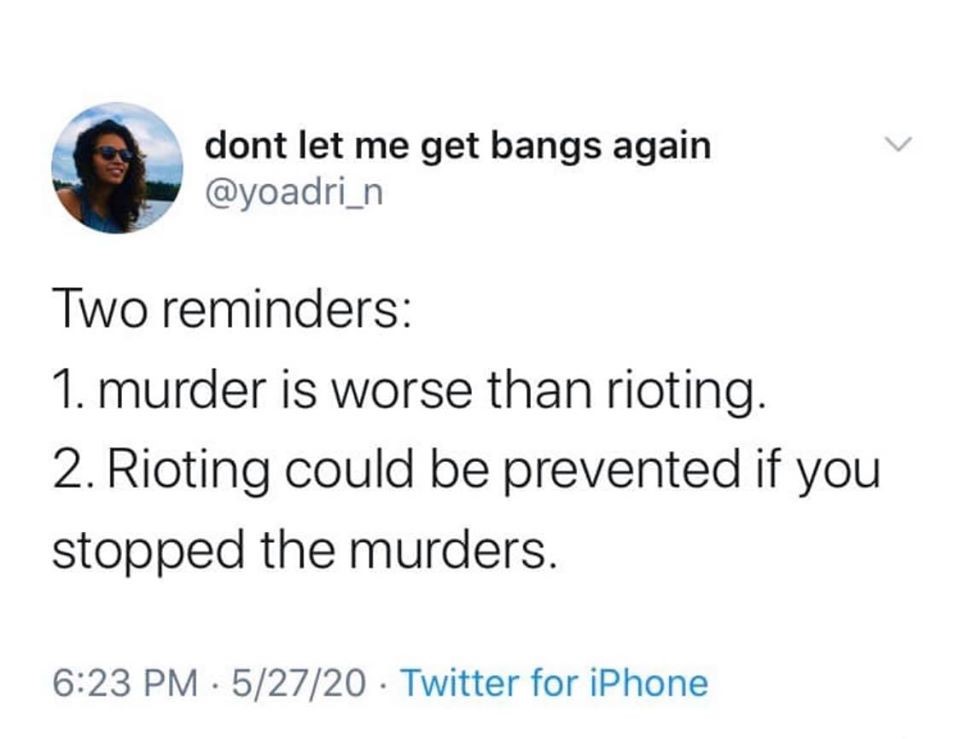
murder vs riot
Icantbreathe

Wednesday, May 27, 2020

Modern-day Colonialism

"All records stemming from the redress process of the Indian residential school legacy should be public record and not subject to more legal wrangling," said Garnet Angeconeb, who attended Pelican Lake Indian Residential School, near Sioux Lookout and received the Order of Canada, in an email. "We often hear that the Indian residential schools legacy is our 'collective' or 'shared' history as a country. Why then is that one side is driving this contemporary history through the use of law? It looks like, smells like, feels like modern-day colonialism at its best."

READ: Ottawa's move to block statistical reports on residential schools 'modern-day colonialism,' says survivor | CBC News

Tuesday, May 26, 2020

How Being Separated From My Family and Tribe Affected Me


By Jacqueline Davis, Activist          

Today the Supreme Court will hear Adoptive Couple v. Baby Girl, a case about a South Carolina Indian girl who the South Carolina Supreme Court ruled that the child must be returned to her Indian father. The child's mother ignored the Indian Child Welfare Act (ICWA) of 1978, a federal law designed to protect Indian families from "abusive child welfare practices that resulted in the separation of large numbers of Indian children from their families and tribes through adoption or foster case placement" and, as a result, both the tribe and the father were denied their rights under ICWA.
As the Supreme Court hears this case, the coverage has been largely one-sided. I thought it was important for people to hear my story, and how being separated from my family and tribe has affected me.

My name is Jacqueline Davis. I am one of six siblings affected by a decision made by the state of South Carolina. I am a member of the Cheyenne River Sioux Tribe in South Dakota and my grandfather is Chief Dave Bald Eagle. My father, who is African-American, met my mom and married her while he was stationed in the Air Force. They eventually moved off the reservation to South Carolina. Their lives changed one day when my mother applied for WIC and the nurse realized that she spanked her children as a form of discipline. Their children were taken and placed in foster care. We were split in pairs. The charges were piled on, and our parents lost custody. The Bald Eagle family offered to take us on the reservation and for reasons I still don't know they were told our case had nothing to do with ICWA. I can remember my parents coming to visit us for years.

Read the rest here:
http://www.aclu.org/blog/racial-justice/how-being-separated-my-family-and-tribe-affected-me

The Risk of Extinction due to #Covid-19

Native communities in the U.S. have suffered disproportionately from COVID-19, with higher rates of infection and death. The Navajo Nation has implemented a series of strict lockdown measures in an effort to protect its population, but health care facilities have still been overwhelmed. In fact, tribes across the country see the pandemic as representing an existential threat. Stephanie Sy reports.

Back in New Mexico, there are significant clusters of cases in the state's Pueblos. By one estimate, 11 percent of the Zia Reservation of only 646 members were infected. At that rate, leaders are concerned about the risk of extinction.

WATCH: Native communities have been hit hard by COVID-19 -- and fear for their survival

For more information on reports, helpful prevention tips, and more resources, please visit the Navajo Department of Health’s COVID-19 website at http://www.ndoh.navajo-nsn.gov/COVID-19.
To contact the Navajo Health Command Operations Center, please call (928) 871-7014.
For the latest news from the Office of the President and Vice President, please visit http://www.opvp.navajo-nsn.gov/ or find us on Facebook, Twitter, and Instagram

Thursday, May 14, 2020

Rural Matters — Coronavirus and the Navajo Nation

Navajo Nation Doc: Matthew L.M. Fletcher


From the New England Journal of Medicine, here.

The Navajo Nation, Diné Bikéyah, is 27,000 square miles of high-altitude desert, steep canyons, red rock spires, and extinct volcanoes, which, at this time of year, are still spotted with snow. The population density is among the lowest in the contiguous United States: seven people per square mile. If you didn’t know better, the vast landscape would seem a perfect setup for social distancing.
HIGHLY RECOMMENDED.

Monday, May 11, 2020

Midnight Shine - Sister Love (Celebration of Sisters!) @midnightshineon

FUN FACTS: 
Ø  Adrian
Sutherland, Midnight Shine founder and frontman, wrote Sister Love from a poem written by his sister Iris Sutherland – she shares co-writing credit on the song. 
Ø  Adrian’s
Mom played acoustic guitar, keyboard, and sang, instilling in him his love of music, and inspiring him to play. 
Ø  Sister
Love
 is Midnight Shine’s 2nd most streamed song on Spotify – second only to Heart of Gold (which now has more than 227,000 YouTube views).
Ø  Sister
Love
 reached #1 on Canada's Indigenous Music Countdown when it was released.

Friday, May 1, 2020

Coming Up: Native America Calling

Native America Calling is a national call-in program that invites guests and listeners to join a dialogue about current events, music, arts, entertainment and culture.

The program is hosted by Tara Gatewood (Isleta Pueblo) and airs live each weekday from 1-2 pm Eastern.

Friday, April 3, 2020

Covid-19 in Indian Country

Today's Headlines
April 3, 2020
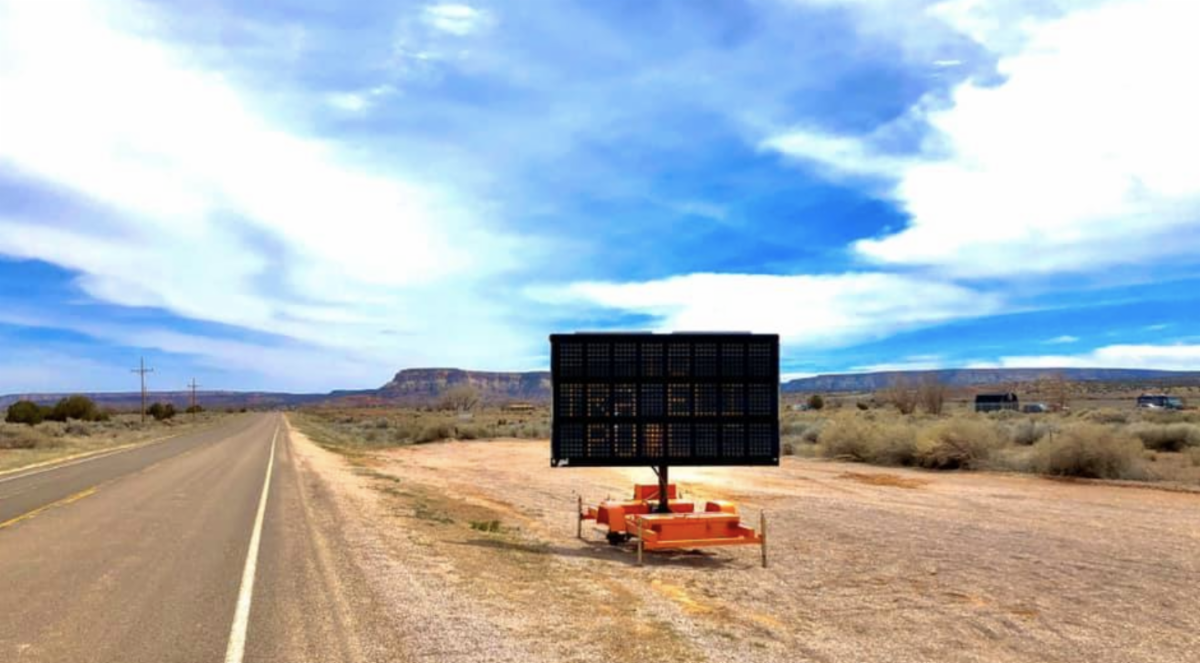
A travel advisory near Zuni Pueblo in New Mexico. The tribe has confirmed a COVID-19 case and is asking community members to limit travel outside the reservation. (Photo-Pueblo of Zuni, Facebook)
 
Some Pueblos communities confirm first cases of COVID-19

Volunteers deliver traditional herbs to elders in Rapid City

Doctor discusses anxiety and stress during the pandemic

Thursday, February 27, 2020

Oregon: Houses Passes Bill to Place Native American Foster Children in Culturally Appropriate Care #ICWA

  House Bill 4148 was passed in the Oregon House of Representatives on Thursday, February 20. The legislation seeks to place Native American and Alaska Native foster children in culturally appropriate care.  

WOULD ALIGN OREGON WITH FEDERAL LAW: This bill modifies the current dependency law in order to better fit with the Indian Child Welfare Act and mandates the Oregon Department of Human Services to provide reports every other year on American Indian and Alaska Native children in the welfare system.  
This new legislation essentially works to protect Native American children in culturally appropriate environments within Oregon’s foster care system. “Culturally appropriate” meaning that the cultural identity of Native American foster children will be protected through carrying on their traditions and connection to their family and tribe whilst they are in the foster care system.   
The bill is a response to the federal Indian Child Welfare Act, which was created “to protect the best interests of Indian children and to promote the stability and security of Indian tribes and families by the establishment of minimum Federal standards for the removal of Indian children from their families and the placement of such children in foster or adoptive homes which will reflect the unique values of Indian culture.”  
4148 is a direct follow up to concerns about over-representation of Native American children in the foster care system, who made up 4.8 percent of Oregon’s system in 2018, though they make up only 1.6 percent of the total population.  
SOURCE

Friday, February 21, 2020

How a white evangelical family could dismantle adoption protections for Native children- VOX

The federal court case could have a sweeping impact on Native families and tribal sovereignty.
This cultural difference — that a family’s fitness is determined by its wealth, and that those concerns should outweigh a child’s connection to their family and heritage — is essentially why the Indian Child Welfare Act was created in 1978. The law recognizes the history of federal policy aimed at breaking up Native families and mandates that, whenever possible, Native families should remain together.

Sarah Kastelic, the executive director of the National Indian Child Welfare Association, said that ICWA acknowledges important familial and tribal bonds that have long been disregarded, and that Native ways — such as extended families living under the same roof — have often been used to show unfitness in child welfare proceedings. “No matter the picket fences and swimming pools and things, most of the time, kids want to be with their families,” she said.

READ: The Native adoption case that could dismantle the Indian Child Welfare Act, explained - Vox

Thursday, February 20, 2020

Modern day treaty could help make Alaska a model for state-tribal child welfare partnership


House Bill 221 is "long overdue," according to Rep. Tiffany Zulkusky, Yup'ik, (D) Bethel, chair of the House Committee on Native Affairs.


Tribes say an end to hostilities with the state of Alaska is long overdue.

A bill that would require state acknowledgement of federally-recognized tribes had its second hearing Tuesday and was approved and moved out of the Alaska House Special Committee on Tribal Affairs.
At the hearing questions were raised and addressed about the impact of the legislation on state jurisdiction and sovereignty.

Two witnesses gave legislators a look at what could be a national model for a state-tribal partnership, in 2017 the state of Alaska and a dozen tribes signed an Alaska Tribal Child Welfare Compact.

Nicole Borromeo, Athabascan, general counsel for the Alaska Federation of Natives, said a compact is like a modern-day treaty. "[This one] specifically defines the services and supports that are going to be carried out by our tribes and tribal organizations on behalf of the state as well as the funding streams required," she said.

“I want to call the committee’s attention to the fact that this is the first ever compact that has been negotiated at the state level. And that is something for all of us to be proud of,” Borromeo said. “We [Alaskans] tend to be at the top of the list of undesirables and at the bottom of the good list. In this case we are truly breaking ground and we're on the cutting edge of law and policy. It's just something that all Alaskans should know about and be able to celebrate.”

Francine Eddy Jones, director of tribal family and youth services, Central Council of Tlingit and Haida Indian Tribes of Alaska. (Photo courtesy of Central Council of Tlingit and Haida Indian Tribes of Alaska)

Francine Eddy Jones, Tlingit, is director of tribal family and youth services at the Central Council of Tlingit and Haida Indian Tribes of Alaska.
🔻


The Journey Home: Wayne William Snellgrove

(reblog from 2013)
Wayne (center) with his brother and a-mom Ann Snellgrove
Torn Apart 32 Years Ago By Canadian Policy Toward Aboriginals, A Mother And Son Meet For The First Time.


September 21, 2003| BY MARGO HARAKAS


He called himself Lost Cub, and for years he tried futilely to find his way home.


Then in 2002, feeling that at last he was closing in, Wayne Snellgrove hired a private investigator to follow up on the final four names on his list. He needed a shield, a buffer from the searing pain of renewed rejection. When the Canadian investigator finally telephoned her news, Snellgrove took the phone to the bedroom, closed the door, and, lying down on the bed, braced himself.


http://articles.sun-sentinel.com/images/pixel.gif
"I found your mother," she said. Then it all tumbled out.


Nora Smoke, a Saulteaux Indian living on a reserve in Saskatchewan, told the investigator, she loved Wayne, always had, that it was the happiest day in her life that he had found her. She had never forgotten the child she'd never seen.


"Please tell my son," Smoke pleaded with the investigator, "I've always thought of him."


And the 6-foot-3-inch, 225-pound athlete sobbed, sobbed like a baby, sobbed with 32 years of repressed emotion, sobbed like a kidnapped child returned to his bereft mother.


The search had ended; however, the story of a newborn's disappearance three decades ago was yet to be told.


Snellgrove, like many Canadians, calls it kidnapping. Others call it cultural annihilation or cultural genocide. Officially, it's been dubbed the Sixties Scoop.


Throughout the 60s, 70s and into the mid 80s, thousands of native children were separated from their mothers and adopted out to middle-class, non-native families in the United States, Europe and elsewhere.


"Some communities lost an entire generation," says Darrell Racine, professor of native studies at Brandon University, in Manitoba, Canada.


At best, say the critics, the action of the Children's Aid Societies, authorized at the time to administer Canada's child welfare services, was misguided. At worst, it was racism.


"It goes back to the usual manifest destiny complex white people have over red people and the idea they are more civilized than aboriginal people. They thought they were doing the aboriginals a favor," says Emma LaRocque, professor of native studies at the University of Manitoba.


The problem was those removing the children were usually white and, because of bias or ignorance of aboriginal culture, they were, say critics, unqualified to determine what was in the best interest of the native child.


That the Sixties Scoop followed on the heels of the horrific residential school program was not coincidence. The thinking there, says Racine, "was the only way to civilize the Indians was to get the child away from the parents." So the children were forced into church-run boarding schools to be purged of their language, customs and culture. (Similar boarding schools were operational throughout most of the 20th century in the United States, as well.)


In the 1960s, with the closing of Canada's residential schools, aboriginal children continued to be removed, this time on the grounds of parental ambivalence, poverty, illness, or drug or alcohol addiction.
http://articles.sun-sentinel.com/images/pixel.gif


"Entire reserves would be assessed as dysfunctional and every child in the community would be removed," says Kenn Richard, director of Native Child and Family Services of Toronto.


And then "because of racism," says Richard, who is half native, "few white Canadians were willing to adopt aboriginal children, so placements were made through agencies in the U.S."


'I really don't belong'


Wayne Snellgrove came through an agency in Northampton, Mass. Six months before getting the 2 1/2-year-old Wayne, Richard and Ann Snellgrove, his adoptive parents, had taken home another boy, a white boy. They wanted to find for him a companion.


Despite loving and caring parents, Wayne says, "I've always had this feeling of being lost and misplaced, feeling I don't really belong here. Every time I looked in the mirror, I knew it. I had only to look at my brother to know I was different."


He describes his adoptive family as "wonderful." But his situation was far different from those that have made headlines in Canada and suggest there was little screening of prospective parents. Several stunning cases are recounted by the Native Child and Family Services of Toronto in its report titled "Research Project: Repatriation of Aboriginal Families -- Issues, Models and A Workplan." One Native child, placed with a bachelor in Kansas, was sentenced to 20 years in prison for killing his adoptive father with a baseball bat. The trial revealed that for years the youth had been sexually abused by his adoptive father.


Likewise, a native girl placed with a family who subsequently moved to Holland wound up a drug addict and prostitute after being impregnated twice by her adoptive father. After years of living abroad, she returned to Canada where, with the help of birth siblings, she established a new life.


 Please leave a comment! Wayne, an amazing artist and Olympic swimmer, is on Facebook.  He lives in Florida. This is his painting of a red hand.

Tuesday, February 18, 2020

New court designed to keep Native American kids close to tribes, pueblos

The court's goal is to work directly with tribal members, families, and state agencies on finding the best solution for the child, all while preserving cultural ties. It's only the 6th one in the country.


In the pueblo of Pojoaque, there's a saying they take to heart.
"No one gets left behind, and we don't shoot our wounded," said Joseph Talachy, the governor of the Pojoaque.
When a tribal member is down, the pueblo as a whole works to bring them back up.
"We're all wounded to some extent here in the pueblo, and in northern New Mexico in general we come from very historically traumatic background," Talachy said.
For Talachy, the trauma is all too familiar.
"It wasn't until fairly recently, when I figured out that this was all a traumatic experience," Talachy said. "I thought everyone got adopted. I thought everyone got put in a different home."
Talachy was born in an Illinois prison. His biological mother is a Pojoaque tribal member who wasn't able to financially care for her kids, so she put them up for adoption.
"But given the implementation of the Indian Child Welfare Act in 1978, it opened up the doors for me to come back to my pueblo," Talachy said.
The Indian Child Welfare Act, also known as ICWA, is a federal law that prevents state agencies from removing Native American children from their parents and placing them in outside communities. The goal is to keep the children as close to their cultures, traditions and tribes as possible.
"Actually under the obligations of the feds, they had to contact the tribe, in order to ask 'Hey tribe do you want your child back?'" Talachy said.
The Pojoaque governor at the time was able to find a tribal family to take Talachy in at the age of 4. Becasue of that he was able to be raised back in the pueblo, learning his culture, language and traditions. But that's not always the case for American Indian kids.
"I can't imagine what it's like for that 4-year-old child to be placed in another home and continue to be confused," Talachy said.
According to statistics from the New Mexico Children, Youth and Families Department, about 10 percent of kids in the foster care system are Native American. Native American children are also removed from their homes and communities at a much higher rate than non-Native American kids.
"There has been this historically trauma in this whole country," said Melody Wells with CYFD. "Having a distrust, and really not wanting to work with them."
Even though ICWA was enacted in 1978, many realized there was still a disconnect with state agencies and tribes.
"Sometimes it's as simple as walking into a courtroom and not seeing people who look like you," said Special Master Catherine Begaye. "Sometimes there's been some animosity between the tribes and CYFD, not knowing what one another is doing. For lots of families the way we've been doing things, doesn't always work for them."
Judges with the children's court ran an audit and found out that there were at least 100 children whose cases would likely end up in a courtroom, which is why Bernalillo County launched the ICWA court in January.
"That spoke to the need that we have to do much better," said Judge Marie Ward with the Second Judicial Court. "If we can do this better then, ultimately it's the kids and the families that get to stay together and have better lives."
The court's goal is to work directly with tribal members, families, and state agencies on finding the best solution for the child, all while preserving cultural ties.
"This new administration really looked at it and said why is this happening? That's really not how we want to be," Wells said. "I think as we see the ICWA unit working with more and more departments and individuals we will see a shift in how CYFD does things over, across the board."
Advocates of the program said structural racism, historical trauma, and institutional bias has had an impact with how New Mexico's courts treat Native American families, which is why many believe this court is long overdue.
"Native people should see a system that is changing to meet their needs, instead of them having to fit our cookie-cutter version of who their family should be," Begaye said. "Native people can thrive with the right support, and if that means a child who is 4 years old is in front of me, I want to be part of the group of people who want to set them on the course so that they can lead their people to a better future."
CYFD created an ICWA unit, that is composed of predominately native lawyers, case workers, and supervisors. The new court here in Bernalillo becomes only the sixth ICWA court in the country, joining cities like Billings, Denver, and Los Angeles. Since the court's launch, judges have heard two cases so far.
"We want to establish trust between us and the families, that we're really here for reunification," Begaye said.
For Talachy, his life was changed by the the ICWA system.
"Without the courts, I wouldn't have the opportunities that I've been given today. Who knows where I'd be?" Talachy said.
He knows who he is, he knows his roots, and he hopes every Native kid who ends up in the system will know theirs', too.
"Our children are our No. 1 asset, who we are ultimately gets passed down through our children; without their well-being, our culture dies, our language dies," Talachy said.


Currently the court is only hearing cases in Bernalillo County, but the judges hope to expand it statewide in the coming years.

THE NEW COURT IN BERNALILLO BECOMES THE 6TH ICWA COURT IN THE COUNTRY JOINING CITIES LIKE DENVER AND LOS ANGELES. SINCE JANUARY, THE COURT HAS HEARD TWO CASES. C.Y.F.D CREATED THIS UNIT, THAT IS COMPOSED OF PREDOMINATELY NATIVE LAWYERS, CASE WORKERS, AND SUPERVISORS. CURRENTLY THE COURT IS ONLY HEARING CASES IN BERNALILLO COUNTY, BUT THE JUDGES HOPES TO EXPAND IT STATEWIDE.


Source: Meeting the needs of Native kids through new court

Oklahoma Bar Journal Article on the Constitutionality of #ICWA

Turtle Talk Blog

by Matthew L.M. Fletcher

Whatever one believes about Native Americans as a racial archetype, however, is not relevant to an adequate under-standing of Indian status as a legal phenomenon. Judge O’Connor and others fail to grasp that concept. 
By Austin Vance, starting on page 12, here.

Wednesday, February 12, 2020

What does history tell us about adoption

By Trace Hentz (Blog Editor and adoptee)

The Dakota expression for child, wakan injan, can be translated as “they too are sacred,” according to Glenn Drapeau, Ihanktonwan Dakota and a member of the Elk Soldier Society on the Yankton Sioux Reservation in South Dakota.

“To us, children are as pure as the holy, moving energy of the universe,” he says, “and we treat them that way.”

What does history tell us about adoption? Most telling is the timeline of adoption history: https://pages.uoregon.edu/adoption/timeline.html

Can you see the curve American Adoption took to become a profitable industry after seeing that timeline?  Do you notice how some states stepped in and made laws? Can you see the influence of the religions and their judgements of single parents? What role did poverty and racism play? Can you see how secrecy and laws protects the industry and the people who adopt?

Twenty years I've studied adoption in my own investigations and I think 20 years later... adoption is not about child care at all but has morphed into child trafficking, a response to an infertility epidemic, lawyers and judges, billions of dollars, propaganda and bad history.

Supply and demand requires: Where do you find an available baby for an infertile couple in America?

What was born of this curve in 20 years: there are camps. The two most common camps for adoptees are "be grateful" and "the activist."

Not everyone wants to hear adoptees in any camp. I simply cannot believe the adoption debate has gone on as long as it has.

If adoption hurts anyone, then it should be abolished. Period.

When you see how adoption was used against Native people, then it was a criminal act. (This was important to document in the four-part book series LOST CHILDREN OF THE INDIAN ADOPTION PROJECTS: see the books in the sidebar of this blog)

My adoptive parents were miserable people, very sick. I cannot begin to calculate the source of their behaviors but their infertility and religion resulted in my being adopted by them through Catholic Charities and then abused by both of them.

If there had been careful awareness by the adoption industry's social workers prior...maybe it would not have happened. But the social workers never returned.

Who would create a system for children that would not check on adopted children?

Child trafficking via adoption is profitable. That seems to be why it won't go away.

I'm not bitter because that was the system and how it was created. But when you see the harm, and the trauma and the lifelong issues for the child in a closed adoption, how does adoption exist in any form?

Caring for children who are true orphans, without any biological family is so rare, a community could step in and care for the orphan.  It would not require a bureaucracy to do that. The decision could be made by tribal leaders. If you are a member of a tribe, the entire tribe is your family. Kinship care always worked for children who had lost their parents.

I was not an orphan. I had two biological parents who were in their 20s. Relatives told me later they could have and would have raised me.

But someone created a system that didn't allow that, and instead the adoption industry chose strangers to raise me.

I was born before the Indian Child Welfare Act was passed in 1978. I do not have my Original Birth Certificate.

I will never stop fighting for Native children. They deserve our protection.

Read my earlier post: What Being Adopted Cost Me.

Toni Morrison says that “facts can exist without human intelligence, but truth cannot.”

Tuesday, February 11, 2020

The Body Remembers

New research reveals that trauma experienced in childhood has long-term damaging effects on quality of life and lifespan. But the same research shows that adults play a critical role in helping children overcome this damage.

READ: The Body Remembers | On Being

Here’s a quick experiment about your past that will tell you a vast amount about your future.
Check all that apply:
  • Did you experience recurrent emotional abuse as a kid?
  • Physical?
  • Sexual?
  • Did you experience physical neglect?
  • Emotional neglect?
  • Did anyone in your childhood home have substance abuse issues?
  • Did anyone struggle with mental illness?
  • Did anyone participate in criminal behavior and/or go to jail?
  • Was your mother ever treated violently?
  • Did you experience divorce or parental separation?
How many checks do you have? This is what clinicians call your ACE score. It stands for “adverse childhood experiences” and study after study has confirmed that it has a huge influence on your lifetime health. For starters: The life expectancy of individuals with ACE scores of six or more is twenty years shorter than it is for people with no ACEs. And a person with four or more ACEs is twice as likely to develop heart disease and cancer.


Editor Note: Being adopted is high stress, too. We have posted about ACE on this blog - use the search bar.

Native American Court to Run Under Bigger Concept of Family

In 2017, Second Judicial District Children’s Court judge Marie Ward and ICWA court hearing officer Catherine Begaye (Diné/Navajo) sketched out an ICWA court blueprint for New Mexico.

But it wasn’t until a November 2018 visit by Judge Katherine Delgado, who helped start an ICWA court in Adams County, Colo., that pushed Ward and Begaye to accelerate. The Second Judicial Court in Albuquerque presides over the largest amount of overall child welfare cases as well as ICWA cases in the state, Ward said. A few months after Blalock’s January 2019 appointment to cabinet secretary, CYFD created an internal, all-Native female ICWA team of four ICWA caseworkers, an ICWA supervisor and two children’s court attorneys. The ICWA unit educates ICWA court caseworkers, guardian ad litems, lawyers and affiliated parties on the historical and intergenerational trauma that a Native family has experienced. “They need that expertise and knowledge so that Indian families can receive support,” Chavers said.

READ: Native American Court to Run Under Bigger Concept of Family - Youth Today

Happy Visitors!

NEW WEB ADDRESS

Because we don't want to lose information on this blog, we now have a domain name: American Indian Adoptees.com - click and save this link:

2026: WE HAVE A BACK UP BLOG COMING SOON: www.americanindianadoptees.blog (on wordpress) We are no longer on Facebook. We deleted our accounts.

WRITTEN BY HUMANS!

WRITTEN BY HUMANS!

Blog Archive

Featured Post

Your History Class Was a F*cking Lie | #NOMOAR

  Your History Class Was a F*cking Lie by Sean Sherman (Or: How the American Educational System Has Always Been a Racist Propaganda Program...


Native Circles

Native Circles
click logo for podcasts!

Most READ Posts

Bookshop

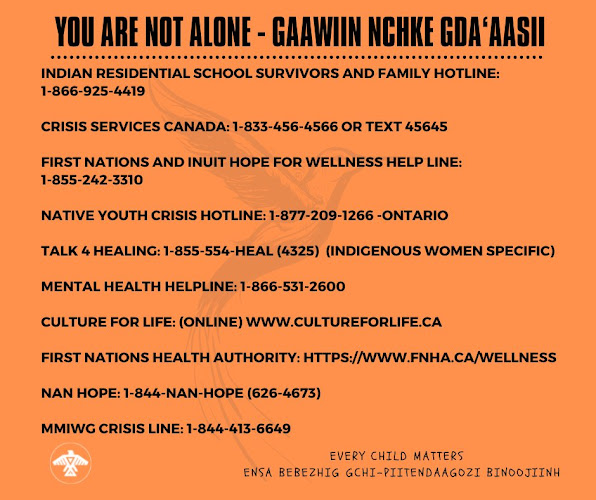
You are not alone

You are not alone

To Veronica Brown

Veronica, we adult adoptees are thinking of you today and every day. We will be here when you need us. Your journey in the adopted life has begun, nothing can revoke that now, the damage cannot be undone. Be courageous, you have what no adoptee before you has had; a strong group of adult adoptees who know your story, who are behind you and will always be so.

Diane Tells His Name


click photo

Lost Birds on Al Jazeera Fault Lines

Lost Birds on Al Jazeera Fault Lines
click to read and listen about Trace, Diane, Julie and Suzie

NO MORE STOLEN SISTERS

NO MORE STOLEN SISTERS
click image

ADOPTION TRUTH

As the single largest unregulated industry in the United States, adoption is viewed as a benevolent action that results in the formation of “forever families.”
The truth is that it is a very lucrative business with a known sales pitch. With profits last estimated at over $1.44 billion dollars a year, mothers who consider adoption for their babies need to be very aware that all of this promotion clouds the facts and only though independent research can they get an accurate account of what life might be like for both them and their child after signing the adoption paperwork.

Original Birth Certificate Map in the USA

Google Followers