BOOZHOO! We've amassed tons of information and important history on this blog since 2010. If you have a keyword, use the search box below. Also check out the reference section above. If you have a question or need help searching, use the contact form at the bottom of the blog.
We want you to use BOOKSHOP to buy books! (the editor will earn a small amount of money or commission. (we thank you) (that is our disclaimer statement)
This is a blog. It is not a peer-reviewed journal, not a sponsored publication... WE DO NOT HAVE ADS or earn MONEY from this website. The ideas, news and thoughts posted are sourced… or written by the editor or contributors.
EMAIL ME: tracelara@pm.me (outlook email is gone)
THANK YOU CHI MEGWETCH!
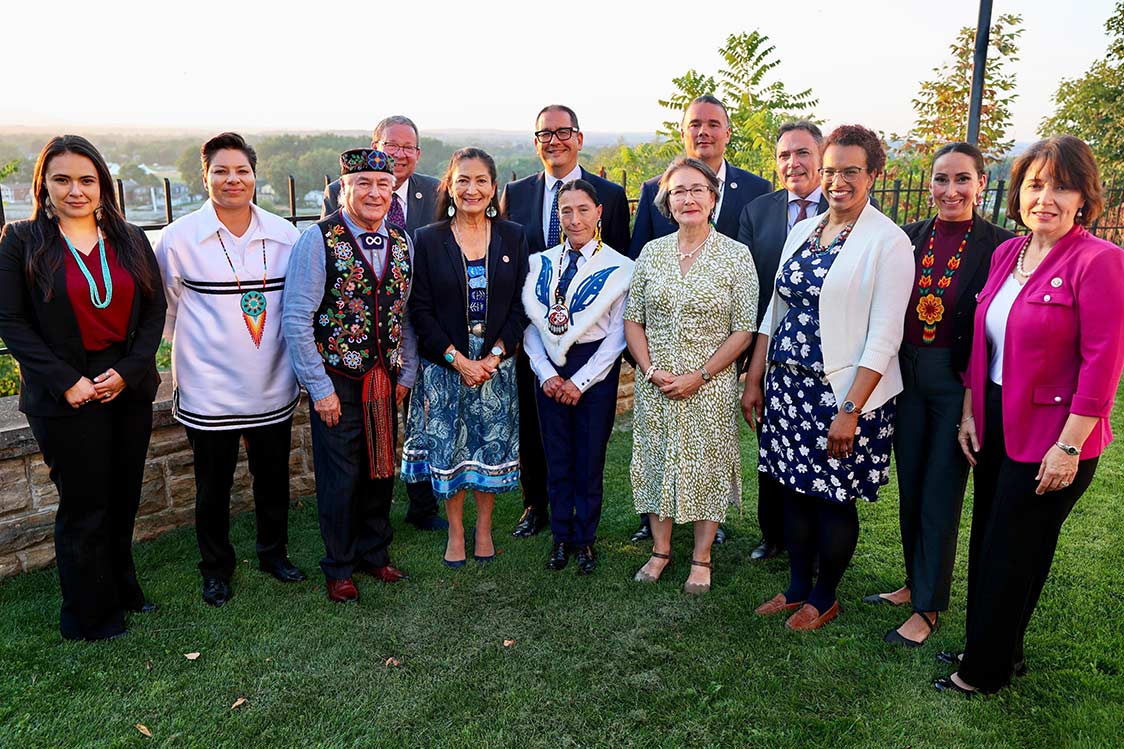
OTTAWA, CANADA – Secretary of the Interior Deb Haaland, Assistant
Secretary for Insular and International Affairs Carmen G. Cantor, and
Assistant Secretary for Indian Affairs Bryan Newland visited Ottawa,
Canada, to highlight the United States’ ongoing work with Canadian
leadership to ensure that Indigenous and First Nations communities have
the support and resources they need to prosper.
Secretary Haaland represented the United States during the fifth
convening of the Trilateral Working Group (TWG) on Violence Against
Indigenous Women and Girls, which was started by leaders from the United
States, Canada and Mexico. The Interior Department is working with
tribal governments, law enforcement agencies, survivors, families of the
missing, and all communities impacted to coordinate interagency and
international collaboration to address this crisis.
“No country is more important for the Department of the Interior’s
international work than Canada,” said Secretary Deb Haaland. “The
relationship we share is extensive and defined by our deep economic ties
and shared cultural heritage. Our work on behalf of Indigenous
communities is expansive, but our enduring success depends on our
international partnerships. The Biden-Harris administration, in
collaboration with our colleagues in Canada and Mexico, is putting the
full weight of the federal government into pursuing justice for missing
or murdered Indigenous peoples so that that current and future
generations of Native communities can enjoy a future free from the
violence that has plagued our countries for too long.”
Hosted by U.S. Ambassador to Canada David Cohen, the delegation met
with Canadian government officials to discuss issues of shared
importance and highlight continued collaboration to invest in United
States and Canadian communities. This included meetings with Minister
Gary Anandasangaree, Crown-Indigenous Relations; Minister Patty Hajdu,
Indigenous Services; and Minister Dan Vandal, Northern Affairs. The
delegation also met with Mary Simon, Governor General; Chris Forbes,
Deputy Minister of Environment and Climate Change Canada; and Michael
Vandergrift, Deputy Minister of Energy and Natural Resources Canada.
Ambassador Cohen, Secretary Haaland and the delegation hosted a
roundtable discussion with Indigenous leaders and stakeholders regarding
economic development issues in Indigenous communities.
During the
discussion, Secretary Haaland highlighted how funding from President
Biden’s Investing in America agenda is making historic investments in
Indigenous communities in the U.S., including for Indigenous economic
empowerment, sovereignty, and tribal climate resiliency.
Neighbors
are helping each other rebuild after the historic deadly fire on Maui.
The community is in line for hundreds of millions of dollars in federal
and state funds, in addition to private donations from all over the
world. More than a month after the blaze swept through the city of
Lahaina and the surrounding area, officials are still sorting out the
cause and the factors that contributed to its severity. And, while not
as bad as originally feared, the death toll approaches 100 people. We’ll
check back in with the rebuilding effort in Hawaii and what some of the
major challenges are as residents look to the future.
GUESTS
Kaliko Kaauamo (Kanaka Maoli), taro farmer, musician, and Hawaiian language advocate
(2017) According
to the census, the Navajo Nation consists of over 330,000
enrolled tribal members across Utah, Colorado, Arizona and New Mexico,
making it the second-largest tribal population in the United States,
after the Cherokee Nation. Because membership criteria varies from tribe
to tribe, there are no hard-and-fast, uniform membership requirements,
though generally a person must be at least 1/4 Navajo and able to
provide proof of Navajo ancestry.
While the following steps come recommended by the Navajo Nation's Washington Office, contacting the office directly should be the first step on your journey.
Gather
vital records about your family in order to conduct a trace of your
Navajo ancestry. These records include the names of ancestors, their
dates of birth, marriages and deaths, the places they lived, their
brothers and sisters, and their tribal affiliation.
Reach out to the National Archives and Records Administration
and the U.S. Department of the Interiors Division of Tribal Government
Services to help locate documents and establish a line of Navajo
ancestry.
A Certificate of
Degree of Indian Blood (CDIB) from the Bureau of Indian Affairs may
help expedite the process. To get one, fill out and send the BIA's
request form along with a certified copy of your birth certificate and
copies of your parents' and grandparents' birth or death certificates.
Contact
the tribe directly once you have acquired the proper documents in order
to find out if they have records of your ancestors. Likewise,
membership will only be given by contacting the Navajo Nation as
detailed membership criteria are set forth in the Navajo tribal
constitution.
You can find contact information at https://www.navajo-nsn.gov/, or reach
the Navajo Nation's Washington Office at (928) 871-6386 or at
info@nnwo.org.
If you are an adoptee, let them know when you call. Give them all the information you have available, like your birthdate and state where you were born, and the state where you were adopted. Let them help you with a court order to unseal your records using ICWA. - Trace
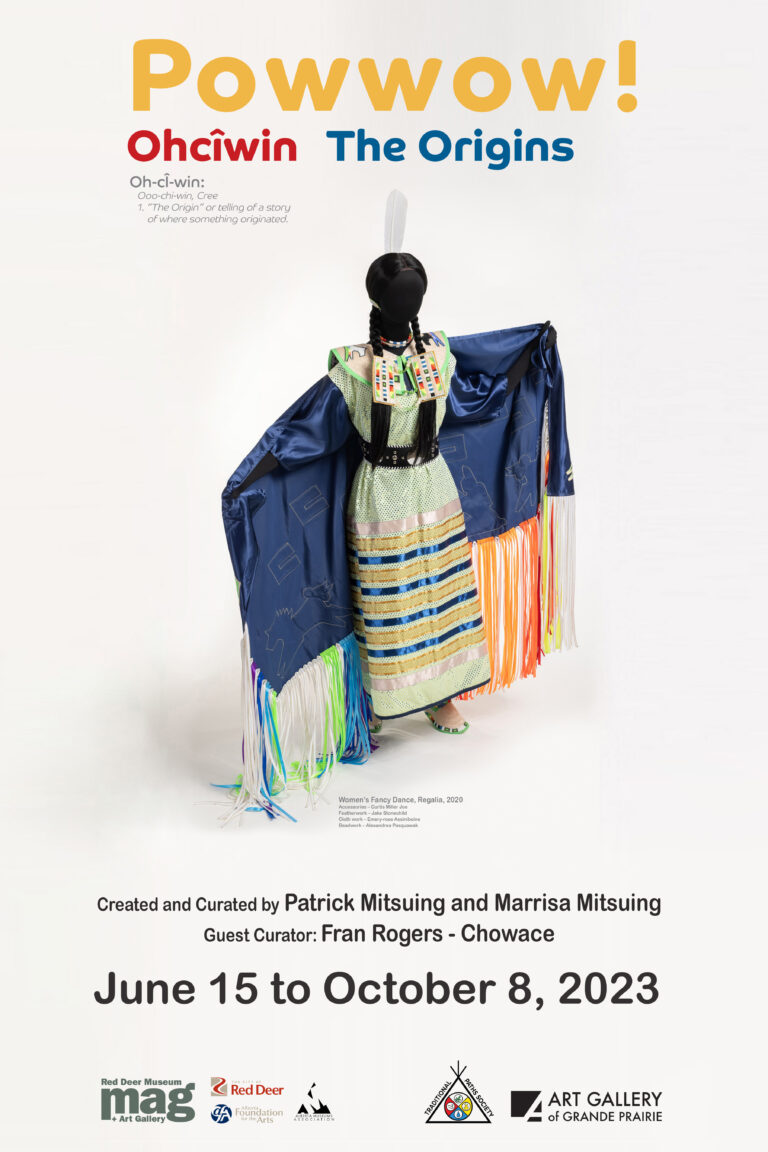
Powwow! Ohcîwin* The Origins features 7 powwow dance styles,
with full Regalia and craft work. Curators and creators, Patrick
Mitsuing and Marrisa Mitsuing, have gathered the stories, worked with
the Artisans, and carefully built the Regalia for this exhibition
organized by the Red Deer Museum + Art Gallery. Working with a diverse
team of Indigenous Artists from Western Canada and the US they assembled
each of the individual dance regalia on display. During the 2019 and
2020 Powwow season, they met with knowledge keepers across North America
to record the origin stories of the dances they perform.
The dances on display are : Men’s Traditional, Men’s Fancy, Men’s Chicken, Men’s Grass, Women’s Traditional, Women’s Fancy and Women’s Jingle.
Guest curator of the exhibition, Fran- Rogers Chowace, focus is to
create visual space for the local powwow dancers and Woodland Cree
history and people of this region to shine; featuring the Traditional
Paths’ Society dancers and local elders/knowledge keepers.
Exhibition organized and toured by the Red Deer Museum + Art Gallery
(MAG, Red Deer, AB). The MAG acknowledges the generous funding support
provided by the City of Red Deer, Alberta Foundation for the Arts,
Alberta Museums Association, Waskasoo Museum Foundation and Marguerite
Lerouge Watson.
* Ohcîwin is a Cree word meaning “The Origin” or telling of a story where something originated.
Dark Winds wrapped up its six-episode sophomore run, with a finale now streaming on AMC+ and airing Sunday night on AMC proper.
Should fans of the period crime drama look forward to a Season 3?
We won’t get into specific Season 2 finale spoilers here, but the
episode “Hózhó náhásdlii (Beauty Is Restored)” left viewers with a good
amount of closure. There was resolution to the Blond Man/B.J. Vines arc,
Joe and Emma sought much-needed “balance” for their household, and at
least three characters made career decisions.
Executive producer Chris Eyre, who directed this season’s first two
episodes and then the finale, believes there many more tales to tell —
and hopes Dark Winds gets to tell them.
“I don’t feel like we’ve hit our stride with this series,” Eyre told TVLine when asked about Dark Winds‘ future. (Dark Winds scored its Season 2 renewal just two weeks into its freshman run; AMC has no Season 3 updates at this time.)
“There are 18 [Leaphorn & Chee] books by Tony Hillerman and there
are five by Anne Hillerman,” Eyre noted, “so there’s enough
detective/Navajo police drama” to continue bringing to the small screen.
Of note, Eyre’s experience with the source material dates back to directing Skinwalkers: The Navajo Mysteries, a series of PBS Mystery movies based on Hillerman novels.
Executive Producer Chris Eyre (left) on set with Zahn McClarnon and Jessica Matten
“Somebody at my gym mentioned this to me, that ‘I just want to see
what happens to the characters now,'” Eyre related. Following a showrunner change for Season 2, “It feels like we’ve gotten the show on its feet. And now that it’s on its feet I want to know what happens to the characters, too.
“I think that their evolution could be a long time coming — and a great journey,” the EP avowed.
Dark Winds has been renewed for a third season on AMC and AMC+, TVLine has learned. The good news comes just weeks after the acclaimed drama released its Season 2 finale.
Season 3 is targeting an “early 2025” premiere date, we hear. A
confirmed episode count was not yet available, though the first two
seasons spanned six each.
Based on the Leaphorn & Chee series of novels by Tony Hillerman, Dark Winds was created for television by Graham Roland, with John Wirth (Hell of Wheels)
serving as Season 2’s showrunner. Other executive producers include
star Zahn McClarnon, Robert Redford, George R.R. Martin, Anne Hillerman,
Chris Eyre, Vince Gerardis and Tina Elmo.
Though the aforementioned finale, titled “Hózhó náhásdlii (Beauty Is
Restored),” left viewers with a good amount of closure, EP Chris Eyre —
who directed Season 2’s first two episodes and then the finale —
believes there are many more tales to tell.
“I don’t feel like we’ve hit our stride with this series,” Eyre told
TVLine. “There are 18 [Leaphorn & Chee] books by Tony Hillerman and
there are five by Anne Hillerman, so there’s enough detective/Navajo
police drama” to continue bringing to the small screen.
Dark Winds Season 2 was a Top 10 cable drama this season
(averaging 1.7 million viewers in Live+3 ratings), and it also delivered
significant acquisition gains vs. Season 1 on AMC+.
Also of note, more than 90% of the production team on both sides of the camera for Season 2 were Indigenous.
‘Leaphorn & Chee’ Novels
“We started this journey with very high hopes for this series, given
the remarkable source material and extraordinary creative team behind
it, and it has delivered on every level,” Dan McDermott, president of
entertainment and AMC Studios for AMC Networks, said in a statement.
“From the beloved novels, to an incredibly collaborative producing team
that includes Robert Redford, George R. R. Martin, showrunner John Wirth
and star Zahn McClarnon, to the entire cast and crew, there is so much
storytelling yet to come in this universe. Thanks to the fans for
embracing this series and the critics for celebrating and shining a
light on it.”
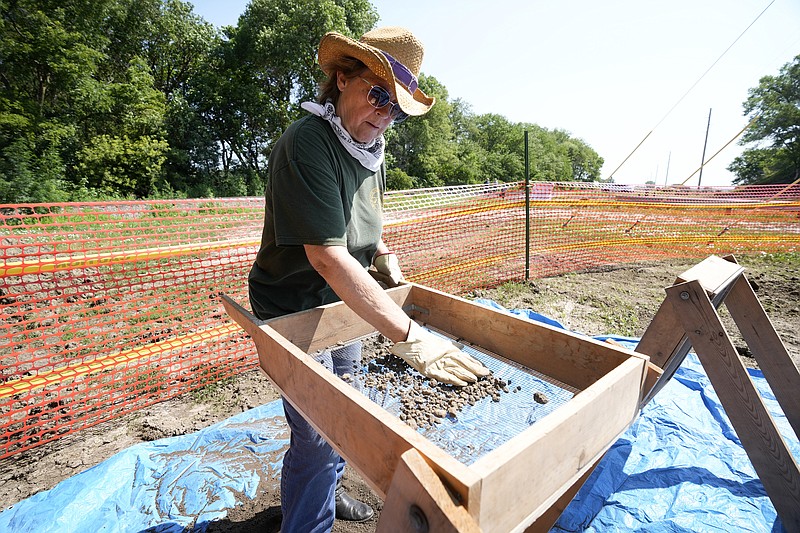
Volunteer Nancy Carlson sifts through dirt as
workers dig for the suspected remains of children who once attended the
Genoa Indian Industrial School, Monday, July 10, 2023, in Genoa, Neb.
The mystery of where the bodies of more than 80 children are buried
could be solved this week as archeologists dig in a Nebraska field that a
century ago was part of a sprawling Native American boarding school.
(AP Photo/Charlie Neibergall)
JULY 2023
GENOA, Neb. (AP) — Amid a renewed push for answers,
archeologists planned to resume digging Tuesday at the remote site of a
former Native American boarding school in central Nebraska, searching
for the remains of children who died there decades ago.
The search
for a hidden cemetery near the former Genoa Indian Industrial School in
Nebraska gained renewed interest after the discovery of hundreds of
children’s remains at Native American boarding school sites in the U.S.
and Canada since 2021, said Dave Williams, the state's archeologist
who's digging at the site with teammates this week.
The team hadn't found any remains by Monday afternoon, but the dig had only just begun.
“Where
is the cemetery and how many people are buried there? It's the big
question that's hanging in the air,” said Alyce Tejral, a board member
of the nearby Genoa U.S. Indian School Foundation Museum.
Genoa
was part of a national system of more than 400 Native American boarding
schools that attempted to assimilate Indigenous people into white
culture by separating children from their families, cutting them off
from their heritage and inflicting physical and emotional abuse.
Judi
gaiashkibos, the executive director of the Nebraska Commission on
Indian Affairs, whose mother attended the school in the late 1920s, has
been involved in the cemetery effort for years. She said it’s difficult
to spend time in the community where many Native Americans suffered, but
the vital search can help with healing and bringing the children’s
voices to the surface.
Williams, the archeologist, said finding
the location of the cemetery and the burials contained within it may
provide some peace and comfort to people who have suffered a long period
of not knowing exactly what happened to their relatives who were sent
to boarding schools and never came home.
The school, about 90
miles (145 kilometers) west of Omaha, opened in 1884 and at its height
was home to nearly 600 students from more than 40 tribes across the
country. It closed in 1931 and most buildings were long ago demolished.
Newspaper
clippings, records and a student’s letter indicate at least 86 students
died at the school, usually due to diseases such as tuberculosis and
typhoid, but at least one death was blamed on an accidental shooting.
Researchers
identified 49 of the children killed but have not been able to find
names for 37 students. The bodies of some of those children were
returned to their homes but others are believed to have been buried on
the school grounds at a location long forgotten.
As part of an
effort to find the cemetery, last summer dogs trained to detect the
faint odor of decaying remains searched the area and signaled they had
found a burial site in a narrow piece of land bordered by a farm field,
railroad tracks and a canal.
A team using ground-penetrating radar
last November also showed an area that was consistent with graves, but
there will be no guarantees until researchers finish digging into the
ground, Williams said.
The process is expected to take several days.
If
the dig reveals human remains, the State Archeology Office will
continue to work with the Nebraska Commission on Indian Affairs in
deciding what’s next. They could rebury the remains in the field and
create a memorial or exhume and return the bodies to tribes.
Last
year, the U.S. Interior Department — led by Secretary Deb Haaland, a
member of Laguna Pueblo in New Mexico and the first Native American
Cabinet secretary — released a first-of-its-kind report that named
hundreds of schools the federal government supported to strip Native
Americans of their cultures and identities.
At least 500 children
died at some of the schools, but that number is expected to reach into
the thousands or tens of thousands as research continues.
___
Ahmed reported from Minneapolis. Scott McFetridge contributed from Des Moines, Iowa.
**
No children's remains found in Nebraska dig near former Native American boarding school
July 22, 2023 by
TRISHA AHMED / Associated Press/Report for America
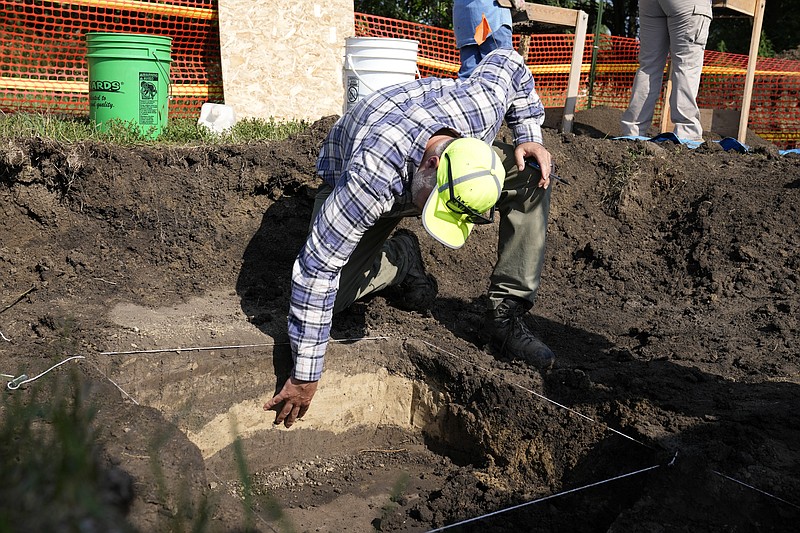
Nebraska State Archeologist Dave Williams
looks at layers of soil as workers dig for the suspected remains of
children who once attended the Genoa Indian Industrial School, Tuesday,
July 11, 2023, in Genoa, Neb. The mystery of where the bodies of more
than 80 children are buried could be solved this week as archeologists
dig in a Nebraska field that a century ago was part of a sprawling
Native American boarding school. (AP Photo/Charlie Neibergall)
An archeological dig for a lost children's cemetery near the
Nebraska site of a former Native American boarding school has ended
after two weeks — and no remains were found.
Dave Williams, the
state's archeologist, said the team searching near the former Genoa
Indian Industrial School plans to meet on Zoom with representatives of
40 tribes across the U.S. next week to determine next steps.
"I
would have preferred that we found the children," said Judi gaiashkibos,
a member of the Ponca Tribe of Nebraska and the executive director of
the Nebraska Commission on Indian Affairs. "But we have to remain
hopeful. They've been gone more than 90 years. I feel like I have to
remain steadfast and committed."
The search for gained renewed
interest after hundreds of children's remains were discovered at other
Native American boarding school sites across the U.S. and Canada in
recent years.
Dogs trained to detect the odor of decaying remains
searched the area last summer and indicated there could be a burial site
in a strip of land bordered by a farm field, railroad tracks and a
canal. In November, ground-penetrating radar identified four anomalies —
or areas of disturbed soil beneath the ground surface — in the shapes
of graves.
Williams and his team spent the last two weeks
excavating, but didn't find the first anomaly they were seeking, which
could've contained children's remains.
"That's one of the
challenges of archaeology," Williams said. "We can have a lot of
evidence that something should be where we think it's going to be. And
then once we actually get in and open up the ground and take a look,
it's not what we expected."
They'll spend the next few weeks
reevaluating the data and everything that led them to that location,
Williams said, and figure out a new plan in consultation with the dozens
of tribes that lost their children to the school.
There
are three other anomalies nearby. Crews could search for those, pursue
other leads or stop the search entirely if the tribes collectively
decide that's what they want, Williams said, but he hopes the team can
still help the tribes, find the children and "bring them to rest in a
satisfactory way."
Sunshine Thomas-Bear, a member of the Winnebago
Tribe of Nebraska and the cultural preservation director for the tribe,
said she wishes there had been more consultation with all 40 tribes —
and not just the tribes in Nebraska — before now. She's looking forward
to that happening more in this next phase.
"Nothing was found this
time. But perhaps that was because we weren't all ready yet,"
Thomas-Bear said. "There were tribes that weren't notified, there were
tribes that weren't there. We believe that everything happens for a
reason. I think that if we get on the right track together, perhaps
we'll be more successful."
The Genoa Indian Industrial School was
part of a national system of more than 400 Native American boarding
schools that attempted to assimilate Indigenous people into white
culture by separating children from their families, prohibiting them
from speaking their Native languages, cutting them off from their
heritage and inflicting abuse.
The school, about 90 miles (145
kilometers) west of Omaha, opened in 1884 and at its height was home to
nearly 600 students. It closed in the 1930s and most buildings were
demolished long ago.
The U.S. Interior Department — led by
Secretary Deb Haaland, a member of Laguna Pueblo in New Mexico and the
first Native American Cabinet secretary — released a first-of-its-kind
report last year that named hundreds of schools the federal government
supported to strip Native Americans of their cultures and identities.
At
least 500 children died at some of the schools, but that number is
expected to reach into the thousands or tens of thousands as efforts
like the Nebraska dig continue.
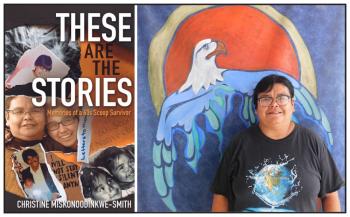
These are the Stories: Memories of a 60s Scoop Survivor was published by Kegedonce Press in December 2021. It is available through the publisher, Amazon, Indigo and local bookstores.
Free literary festival draws Indigenous writers of all genres
In a one-on-one session, Adler will be leading Christine Miskonoodinkwe
Smith, who will be video conferenced in from Toronto, in conversation
about the writing life and how “she’s really getting important stories
out there.” Smith is a journalist and memoir and fiction writer. She is
the author of These are the Stories: Memories of a 60s Scoop Survivor and editor of Silence to Strength: Writings and Reflections of a Sixties Scoop Survivor.
Indigenous writers will be featured prominently on Saturday at Word Vancouver’s Reading & Writing Festival.
And guest Indigenous curator Nathan Adler is hoping that writers and
audiences form a new bond at western Canada’s largest free literary
festival which runs until Sept. 23. See website here: WV/23 (wordvancouver.ca)
Miskonoodinkwe Smith’s life has also been a journey, one that saw her
decide to undertake higher education in her 30s, graduating from the
University of Toronto with a specialization in Aboriginal Studies in
2011. She earned her Master’s in Education in Social Justice in 2017.
Today she lives in Toronto and works as a data coordinator for the Miziwe Biik, an Aboriginal employment and training centre.
“I’m a lot stronger than I was. I’m more confident than I was. I’m
successful. I have a hard time talking about myself in a positive way
that way, but that’s just residual negative thinking that I had in the
past,” said Miskonoodinkwe Smith.
She has triumphed over those who thought she would never live past her 25th birthday.
“I think that’s the fighter in me,” she said.
Writing her story is not only about letting other Sixties Scoop survivors know they’re not alone.
“In order for the government and mainstream public to understand the
impact of how the Sixties Scoop affected Indigenous children, and still
has an impact to this day, I find it important to tell our stories,
because then it will be hopefully understood that there are many
children who were impacted in one way or another,” she said.
NEW
YORK — Seven generations of Métis, Dene and Cree children were taken
from their communities and placed into a Catholic-run, government-funded
residential school in Île-à-la-Crosse, Saskatchewan that is located in
northern Canada. However, the survivors were left out of the country's
reckoning with residential schools known globally as the Truth and
Reconciliation Commission of Canada.
Métis elder, Antoinette LaFleur, 80, is haunted by the 10 years she
spent at Île-à-la-Crosse. She was taken to the school at five-years-old
and left as a teenager. During those years, LaFleaur didn’t leave the
residential school to visit home. As her siblings started getting sent
to the residential school she didn’t even recognize them.
“I
never used to go home. Ten years I was in there, 10 years,” LaFleur said
during a side event at the United Nations headquarters in April.
LaFleur is part of a class action lawsuit against Canada and
Saskatchewan. During the Truth and Reconciliation Commission’s
investigations, the criteria for which institutions qualified was
narrow, leaving out schools like Île-à-la-Crosse, said vice-president of
Métis Nation Saskatchewan, Michelle LeClair, that represents some
80,000. This is because the school was supposedly run by Saskatchewan,
not the federal government. Although Saskatewan officials deny the school was owned or funded by the provincial government.
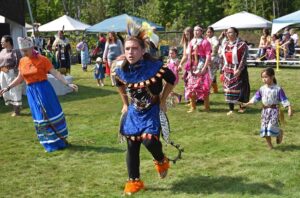
NIPISSING FIRST NATION — Nipissing First Nation’s 35th Traditional
Pow Wow took place September 3-4 in Garden Village attracting a bigger
crowd with more vendors.
MC Bob Goulais entertained while informing the dancers of upcoming
songs and pow wow protocol for the growing crowd as the Ottawa River
Singers and Eagle Flight sang to the beat of the big drums. Sunrise
ceremonies started the day Thursday to Sunday.
Jingle dancer Ava Couchie looks forward to the two-day Nbisiing Nation Dewegigewaad.
“It’s a really nice community and I am grateful to call this home.”
2023-2024 Miss Nipissing First Nation Sassa Linklater was also feeling grateful at the sunny, popular pow wow.
“I feel very welcomed, and cared for by the pow wow committee and the community of Nipissing.”
Head dancer Samantha Mianskum talked about community in the Nipissing First Nation powwow.
“It’s all about unity. It’s all about truth and reconciliation and us healing as a whole nation from all the trauma.”
Then Samantha spoke of a big event in her life early this summer,
meeting her sister Cynthia. Samantha’s son Tayton Mianscum acts in the
mini-series, Little Bird, a Crave drama about the Sixties Scoop that
released in Canada late May.
“I met my sister in June, a Sixties Scoop survivor. I didn’t know. We
didn’t know about her, nothing. We met her in June when that Little
Bird started to air. She came here today. She is in the ribbon skirt
right here. She would be the eldest of all of us. She’s here with us
today, visiting and getting to know our family and our culture.”
Cultural and Heritage Manager Mindy Lariviere called the Nipissing Traditional Pow Wow extra busy compared to last year.
“We have double the vendors this year than we did last year — it’s a
great turnout. Last year, we had about 1,500 come through; we are
anticipating between 2,000 and 2,500 people come through.”
Mindy explained the Nbisiing Nation Dewegigewaad theme is Trying to live a balanced life.
“We are trying to help our community to see that we don’t need to be
perfect, but we need to live good. A lot of our families in the
community are seeing a lot of trauma in alcoholism and drug abuse and
even excessive food eating. Our theme is really wrapped around just
people trying to live a healthy life, a balanced life; not perfect, but a
good life.”
Tory Fisher was asked by the pow wow committee to be arena director.
“My spirit name is Waswaabik and I am from the Oojiik (fisher) Clan.
Our pow wows are a time of celebration coming together in song and
dance. Also, it is a time of healing for our people through the drums,
songs, the dance and being together as a pow wow community. It is
showing our community a place to be safe and welcomed into the circle
and visit with family. A place to ask for help and healing through the
drums or Jingle Dress dancers. They will sing for us and dance for us.
It is part of our beautiful Anishinaabe way of life to look after each
other through our shared gifts.”
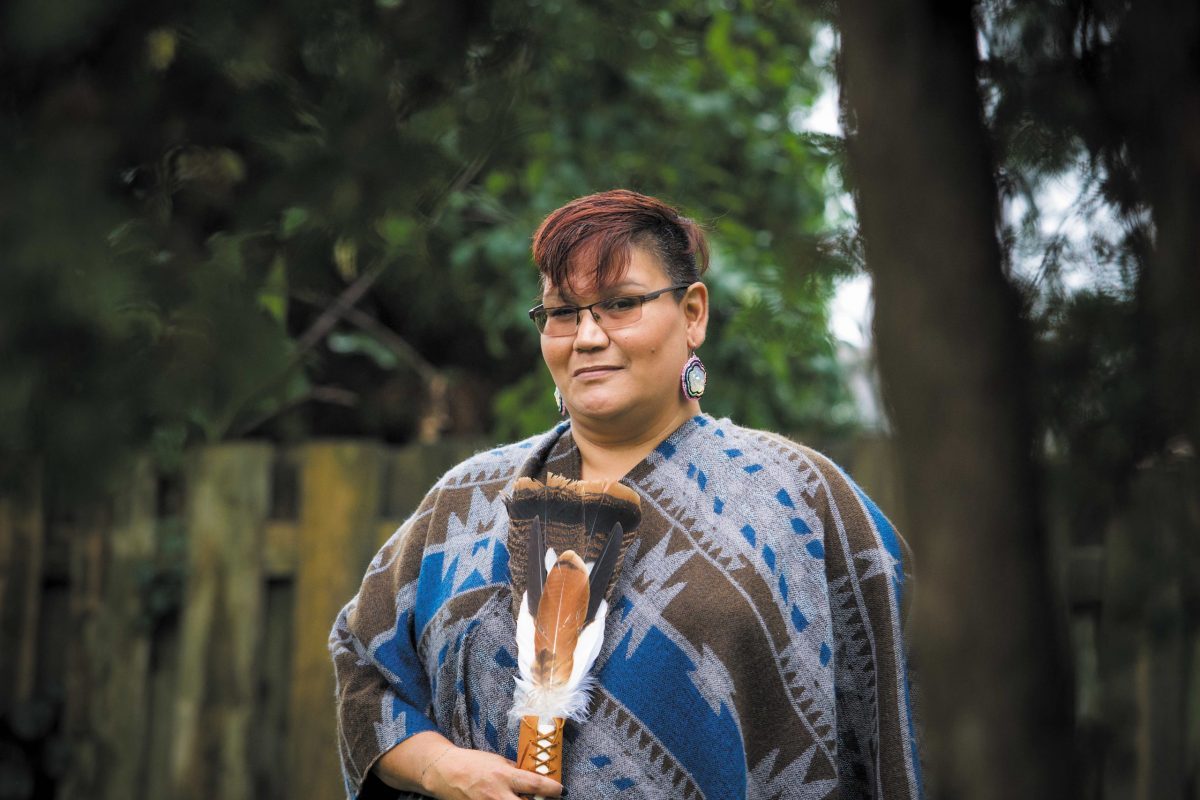
Colleen Hele-Cardinal co-founded
the Sixties Scoop Network, which launched an online map in 2019 to let
survivors plot their own stories. (Photo: Ashley Fraser/Ottawa Citizen)
Colleen Hele-Cardinal wants to set the record straight on one
of Canada’s most destructive chapters. In 1972, she and her two sisters
were put into foster care and later adopted by a white family. While in
post-secondary school, she realized she was part of the Sixties Scoop,
in which Indigenous children were removed from their families and
placed into the child welfare system. Now, Hele-Cardinal, who is Plains
Cree and lives in Ottawa, is raising awareness. The Sixties Scoop Network, which she co-founded, launched an online map in 2019 that allows survivors to plot their own stories.
Inspiration
When I moved to Ottawa, I was volunteering with a group of folks called No One Is Illegal.
I went to one of their conferences and they had a big white sheet up on
the wall and people were documenting their stories with brightly
coloured yarn, as if to say, “This is where I came from, this is where
I’ve been and this is where I am now.” I was like, “We need that.”
Survivors need to show what that displacement looks like too. We were
literally trafficked through child welfare policies across borders,
overseas and inter-provincially. People needed to see that displacement.
Mapping
I wanted the map to be sophisticated enough
to show where a survivor says they came from — for instance, I was from
Edmonton and was taken to Sault Ste. Marie, Ont. I wanted our map to
show that distance. Each province represents a different colour, and it
shows the displacement across the world. It’s pretty striking to see. At
the last update, we had about 112 interactions with the map.
Impact
People were just blown away that this was
allowed to happen. We’ve had folks who have been taken to New Zealand
and Australia, or overseas to England. They didn’t know anything about
being Indigenous. I’m still struggling with my identity. I don’t know
where I fit in. I don’t feel like I fit in. That’s one of the reasons
why we created the Sixties Scoop Network. Sometimes we hear from
survivors who didn’t even know there was a Sixties Scoop; they
just know they were adopted. They don’t know that it was part of a
larger systemic initiative to assimilate us. It can be difficult to
realize that you are part of something that was meant to erase you.
Challenges
The biggest problem is not enough
exposure, or maybe a lack of interest. Even with this mapping project,
it doesn’t get enough attention, it doesn’t get enough conversation.
We’re not part of the national conversation. The challenge is staying on
the radar and in the hearts and minds of Canadians.
We want to find all the survivors. That’s
always why I wanted to do this work because when I found out that my
sisters and I were Sixties Scoop survivors, adoptees, honestly, my
sisters and I, we thought we were pretty unique. And when I found out
there was 30,000 of us out there … Where are they all? You know, I want
to know where they all are. And I want to hear their stories. And I want
to know if they’re okay, and if they’re not okay, can we provide
support?
***
Charlotte Alden is a journalist working in Bellingham, Wash. and was a 2023 summer intern at Broadview.
This interview first appeared in Broadview’s October/November 2023 issue with the title “Colleen Hele-Cardinal.”
The husband of U.S. Rep. Mary Peltola (Yup'ik/D-AK) died after a plane crash on Tuesday. He was 57. As KNBA’s Rhonda McBride reports, Gene "Buzzy" Peltola is being remembered as both a supportive husband and a leader in his own right.
WATCH: LaMont Albertson shares memories about his longtime friend Buzzy Peltola on Native America Calling with Shawn Spruce.
Suicide rate 2000-2020: Up 130% for Native women, 90% for Native men
It’s National Suicide Prevention Week, and new data shows that the suicide rate in the U.S. has increased dramatically over the past 20 years.
As the Mountain West News Bureau’s Kaleb Roedel reports, that’s especially true for Native Americans and Alaska Natives.
The analysis was done by Pew Charitable Trusts.
It found that from 2000 to 2020, the national suicide rate grew 30%.
For Native American and Alaska Native women, the rate spiked more than 130%. For men, it jumped over 90%.
Emily Edmunds Haroz is with the Johns Hopkins Center for Indigenous Health.
She says a major factor is the historical trauma caused by colonization and the boarding school era.
“If
a parent is traumatized because of these experiences and experiences
those things and are not allowed to talk about it, and not allowed to
cope with it, they then pass along that trauma to their children and
sort of this cycle perpetuates itself.”
She says there’s also a lack of funding for mental healthcare services in tribal communities.
If you or someone you know needs help, call or text the National Suicide and Crisis Lifeline at 988. Or contact them via live chat.
In the United States
government’s long record of broken treaties, land theft, and genocide,
the taking of the Black Hills ranks as perhaps one of the most
disgraceful examples of imperial aggression against an Indigenous
people.
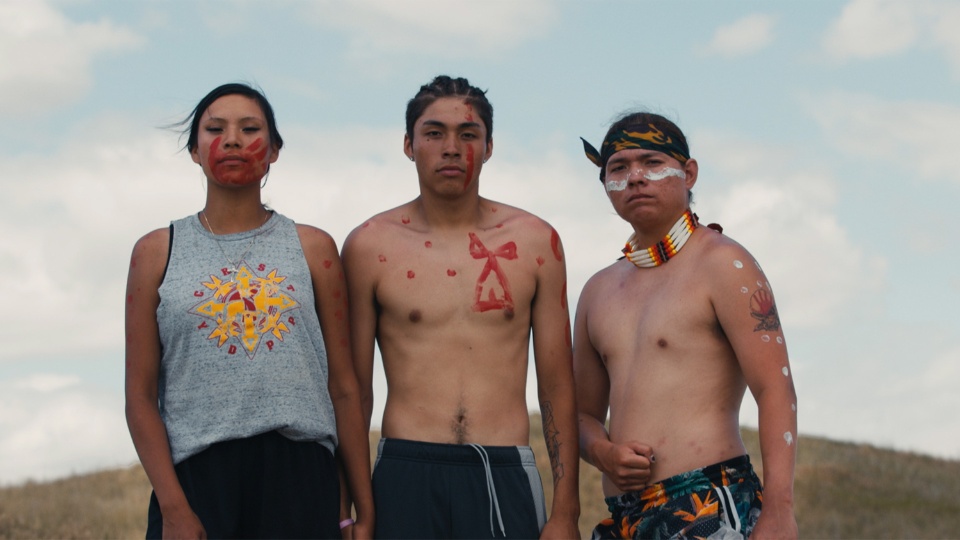
This is not just a historical episode; it is ongoing to this very
day. The magnificently illuminated and stunningly stellar documentary
film Lakota Nation vs. United States tells the story. It was screened at the Belcourt Theater in Nashville from Sept. 1 to 6.
The film was picked up for the Belcourt by Allison Inman, Director of
Education and Engagements at the theater, who saw it at the Milwaukee
Film Festival in April of this year.
Some information on the theater is in order first of all. The
Belcourt is a unique Nashville institution with a historic past and deep
community ties. It is a non-profit cultural facility dedicated to
presenting the most notable of independent, documentary, world,
repertory, and classic cinema. The Belcourt believes in “the power of
film.”
The opening night program for this documentary began with a land
acknowledgment given by Annabelle Littlejohn-Bailey, American Samoan and
President of the Indigenous Scholars Organization of Vanderbilt
University.
Lakota Nation vs. United States kicked off the Doc Spotlight
Series for the fall at the Belcourt. The two-hour documentary
chronicled the perfidious treatment of the Lakota people by the federal
government. Underlying the brazen theft of the sacred Black Hills was
the drive of imperial greed for the resources, primarily gold, beneath
the hallowed earth there, which is regarded with reverence by the Lakota
people.
The documentary, written and directed by celebrated Lakota poet Layli
Long Soldier and co-directed by Jesse Short Bull, is a resounding
herald to the never-ending resistance of the Native people who hold the
Black Hills as a source of resonating identity and existence.
A historical perspective will give the uninitiated viewer a greater
appreciation of this heroic struggle by the Lakota over the decades in
the face-off against the most powerful and predatory enemy ever to trod
the earth, the United States government.
The background to the seizure of the Black Hills is the violation of
the Fort Laramie Treaty of 1868, which promised that the Great Sioux
Reservation, including the Black Hills, would be “set apart for the
absolute and undisturbed use and occupation of the Indians,” meaning, of
course, the Lakota. The treaty ended the conflict known as “Red Cloud’s
War,” in which Indigenous forces defeated the U.S. military.
Following another U.S. defeat in June 1876 at the Battle of the
Little Horn and the subsequent military reversal of the Lakota and their
allies, the U.S. government imposed the Act of February 28, 1877, which
stopped all food rations to the Lakota until they ceded the Black Hills
to the United States.
This infamous legislation, also termed the “Sell or Starve Act,” was a
direct breach of the 1868 Fort Laramie Treaty and became and remains
the main focal point of legal contention over possession of the Black
Hills. This is an ongoing and hideous cardinal treaty violation largely
unparalleled in the odious U.S. history of treaty-breaking.
In June 1979, the U.S. Court of Claims ruled that the 1877 Act that
seized the Black Hills was in violation of the Fifth Amendment
prohibition on taking property without just compensation (which also
implicitly meant that the taking was in violation of the Treaty of
1868). Money was awarded which the Lakota refused to accept because
acceptance would mean termination of the claim that the Black Hills be
returned to the Lakota. The United States appealed the Court of Claims
decision to the U.S. Supreme Court.
In March 1980, the Supreme Court ruled, in United States v. Sioux Nation of Indians,
that just compensation had not been paid for the taking of the land and
ordered that such compensation “be paid.” The Lakota again refused the
money and uncompromisingly demanded the return of the Black Hills to
tribal jurisdiction.
But back to the film. It is filled with historical material,
contemporary footage, and interviews with Indigenous leaders (some of
whom I recalled from being at the Standing Rock protests in 2016). It is
an inspiring reminder that the struggle for Indigenous liberation
continues gloriously, courageously, and brilliantly.
Jennifer Podemski on Little Bird, the Firecracker Blaze Award, & Indigenous Storytelling
Annemarie Cutruzzola September 7, 2023
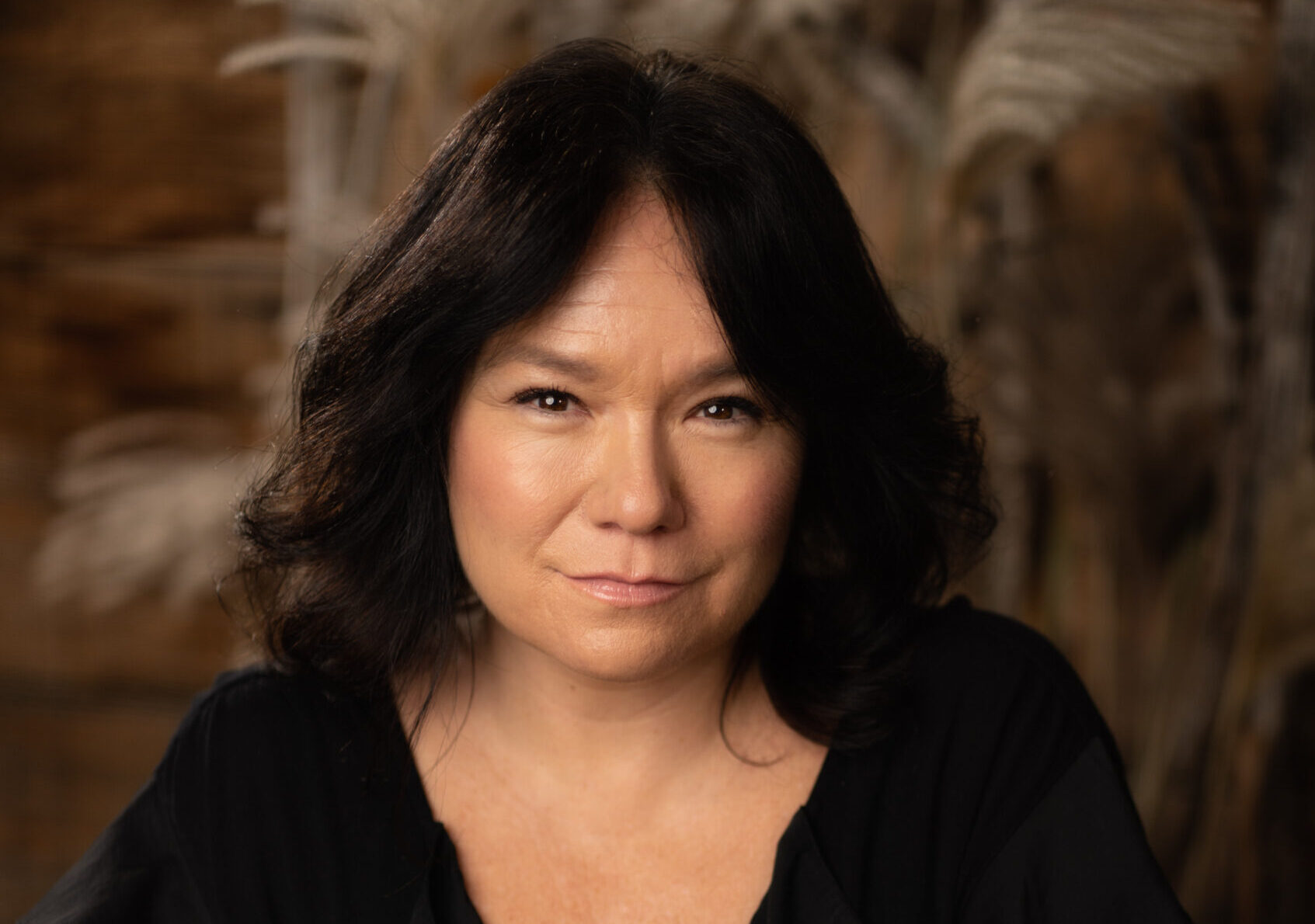
Jennifer
Podemski is an unstoppable force in Canadian film and TV. Over her 30+
year career, the Anishinaabe/Ashkenazi actor, writer, director and
producer has broken barriers and pushed Indigenous storytelling and
meaningful representation further, both on-screen and off.
As well as starring in titles like Dance Me Outside, Degrassi TNG, Empire of Dirt, and Reservation Dogs, she’s led a variety of series through her production company Redcloud Studios Inc. Most recently,Jennifer blew us away with Little Bird, a breathtaking six-part series about the Sixties Scoop, that will soon be airing on PBS.
Her commitment to uplifting
Indigenous creatives led her to founding The Shine Network Institute, a
non-profit organization dedicated to dismantling systemic barriers
Indigenous women face in film and TV, by providing training, mentorship
and professional development.
To honour her ground-breaking creative work across platforms, Jennifer will be awarded the Blaze Award
this week, an annual award given out by The Firecracker Department, an
empowering community of women and non-binary artists founded by Naomi
Snieckus. “I was caught off guard when I got the call from Naomi,” says
Jennifer. “She has built a beautiful and deeply meaningful platform and I
was just so honoured to be recognized!” Jennifer joins a star-studded
list of previous recipients, including Amanda Brugel, Jo Vannicola, Jann
Arden and Michelle Buteau.
Ahead of her receiving the Blaze
Award at the Firecracker Department TIFF Brunch on Saturday, we asked
Jennifer some questions about Little Bird and her remarkable career.
Can you tell us about what making Little Bird meant to you?
In the long road of repairing the damage done since the beginning of screen stories, a story like Little Bird dismantles harmful narratives and introduces a truth never told before. For me, Little Bird
was devastating to tell and make but as I moved through it, it became
the most healing and transformative thing I have ever made.
We heard the incredible news about Little Bird coming to PBS! What do you hope this wider audience takes away from the series?
I hope it touches people so deeply
that they stop themselves before they write us off. I hope it moves
people to their core and reminds them of our humanity and sheds light on
some of their own history that has been erased. People deserve to know
the truth and we, Indigenous People, deserve to have the truth told.
What needs to be done to ensure authentic Indigenous stories are being told on screen?
Indigenous-led process and
Indigenous-led storytelling combined with culturally informed
non-Indigenous partners and teams. This is the only way.
What do you think is missing in Canadian TV & film right now? Which kinds of stories do we need to hear more of?
Our screens are still dominated by
white people and that simply doesn’t reflect our society. There is often
a BIPOC character, usually supporting, but the way our screens look is
not how our society looks. The industry as a whole is still largely
focused on non-BIPOC people and stories and the centering of these
perspectives is inauthentic and not reflective of who we are as a
society.
Can you tell us more about your vision for the Shine Network Institute?
I fought the urge to launch it for
months, but after much consideration I just came to terms with the need.
It was a massive undertaking and I wasn’t sure I had it in me but the
Shine Network Institute is filling a very specific need that didn’t
exist. It’s grown over the past three years and I am so blown away by
what we have done but at its core, it is a solution-driven organization,
dedicated to creating safer spaces, access to opportunity and training
for Indigenous people within the sector with a special focus on women.
What was the first film you saw that made you realize the power of film, or really made an impact on you?
Wizard of Oz…that
was the first movie I watched over and over and just sat there
awestruck at how this thing could inspire me so much and make me feel
things that I had never felt before. It definitely changed the way I
watched movies.
What is your best wisdom for someone new to the industry?
You must think about your career as a
whole, from now for 30 + years. I realize now how important it is to
play the long game. This business is not about instant gratification, it
may look like that from the outside, and it may happen to a few but for
the majority, it is all long game and big vision and sticktoitiveness
and relationships. Everything in this business is built on
relationships.
What is a memorable moment from your career that will always stick with you?
I have so many!!! Recently, I got to be with both of my sisters on Reservation Dogs,
that was epic because it had never happened before. When I got to train
with Franco Dragone from Cirque Du Soleil for two weeks for a movie
called Bogus, I was a clown and flew on airplane wire for ten days. It
was amazing. When I was shooting my first drama series Moccasin Flats
in Regina, the Chief of Police told me that crime in the neighborhood
went down during shooting because of our presence and training program.
There have been too many to count.
Kim Wheeler was adopted during the Sixties Scoop and fought to find her way back to her culture My name is Kim Wheeler but some know me as...
Bookshop
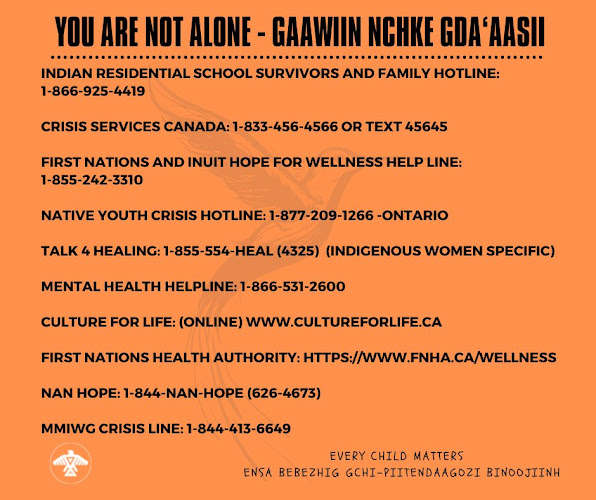
You are not alone
To Veronica Brown
Veronica, we adult adoptees are thinking of you today and every day. We will be here when you need us. Your journey in the adopted life has begun, nothing can revoke that now, the damage cannot be undone. Be courageous, you have what no adoptee before you has had; a strong group of adult adoptees who know your story, who are behind you and will always be so.
Diane Tells His Name
click photo
Lost Birds on Al Jazeera Fault Lines
click to read and listen about Trace, Diane, Julie and Suzie
NO MORE STOLEN SISTERS
click image
We conclude this series & continue the conversation by naming that adoption is genocide. This naming refers to the process of genocide that breaks kinship ties through adoption & other forms of family separation & policing 🧵#NAAM2022#AdoptionIsTraumaAND#AdopteeTwitter#FFY 1/6 pic.twitter.com/46v0mWISZ1
As the single largest unregulated industry in the United States, adoption is viewed as a benevolent action that results in the formation of “forever families.” The truth is that it is a very lucrative business with a known sales pitch. With profits last estimated at over $1.44 billion dollars a year, mothers who consider adoption for their babies need to be very aware that all of this promotion clouds the facts and only though independent research can they get an accurate account of what life might be like for both them and their child after signing the adoption paperwork.


















 Posts
Posts

