From StrongHearts Native HelplineThere is a severe resource gap (see current Resource Impact Summary)
impacting the ability of tribes to address intimate partner violence in
their communities. Presently, there are 259 Native-centered service
providers that are culturally appropriate for Native Americans and
Alaska Natives; and that includes only 62 shelters nationwide. In
addition to the Native service provider database, through an invaluable
partnership with the National Domestic Violence Hotline, StrongHearts’
advocates have access to more than 3,500 non-Native service providers in
the U.S.
What You Should Know
Shelters
prioritize clients based on the lethality of their situation. That is
why it is important to share all of the lethality concerns in your
situation. Consider the following:
● Has the perpetrator increased physical or sexual violence?
● Is there a history of strangulation, or threats of suicide or homicide?
● Are you pregnant?
● Are there weapons in the home?
Overcoming Challenges
A shelter can be very overwhelming if you have not been in one before. It’s important to differentiate between shelter types.
Avoid
saying the word "homeless" when looking for shelter. When fleeing an
abusive relationship, be careful not to say you are homeless. This could
result in being referred to a homeless shelter instead of a domestic
violence shelter. A shelter for unhoused people can be used in a pinch
but if you are a survivor of domestic and sexual violence it’s best to
seek assistance from an intimate partner violence service provider. They
will be more informed on your situation and rights and will likely have
other services available for you.
It’s
important to be aware of who may work at the shelter for your tribe.
Indian Country is small, and a relative or a friend of a family member
may work at your tribal shelter. If you feel like there may be a
conflict of interest or you feel unsafe, you may want to seek shelter on
other tribal lands if they allow citizens of other Native Nations.
If
you have no other options you may consider staying at a non-Native
shelter. You can still receive other services from a Native provider. If
you stay in a non-Native shelter, it may be a good idea to ask about
using your traditional medicines. Some shelters may have rules about
smudging or using traditional medicines/herbs inside or on-premises.
If
you struggle with substance abuse, it may be difficult to avoid other
users. Be aware that although the shelter may have rules around
substance use on their campus, oftentimes these rules are ignored. It’s
important to be aware that this may happen and find a system to help
keep yourself in check may be part of your safety plan.
If
you have livestock, farmlands or even ceremonial duties in your Native
community, it may be difficult to reach out to a shelter because of your
responsibilities. Be aware that although these are all important, your
safety is also important and should be prioritized. It can be helpful to
reach out to your trusted community network to get assistance to care
for your livestock and farmland or make arrangements to get support from
other community members to help with ceremonial duties.
You
may need to seek help from more than one organization to get all of
your needs met. Don’t be afraid to seek more than one resource.
Depending on how comfortable you are with churches, they often offer
programs to help with bill payments. You can also use AuntBertha.org and
search by zip code to find local resources for assistance, food,
health, housing and employment. Oftentimes depending on what's
available, you can find various programs that offer grants to help you
get back on your feet.
Native Parents and Children
Shelters
offer little privacy for families. If you have children the best
shelter type for you is a transitional housing facility. They are often
long-term, which means you will not need to leave every night and they
help set you up with permanent housing when you're ready to leave their
program.
Don't
be afraid to have a conversation with your children to make sure that
they understand what is happening. They should have the space to have
their feelings validated and understand that they are not at fault for
what is happening. Talk to them about your ground rules. It can be
challenging to a parent in a new environment with different rules and
other families with varying values. Remember, our children are sacred
beings and can help bring healing into our lives and our communities.
Native Men
Very few Native-centered shelters are able to house male victim-survivors though
several do offer non-residential services for men. Sometimes a shelter
may be able to help support a survivor with a hotel room, legal advocacy
or counseling services and case management. It can vary from shelter to
shelter so it’s always best to clarify what services they are able to
offer men.
Native LGBTQ2S+
Within the 2S+/LGBTQ+ community, intimate partner violence occurs at a rate equal to or higher than that of the cis-heterosexual community.
Additionally, they may have concerns about being outed, not having
inclusive restroom facilities, not being addressed with the correct
pronouns and facing bias from other residents and staff members may
prevent them from seeking a placement in a shelter. If you identify as a
part of the LGBTQ2S+ community and are seeking shelter, here are a few
questions to consider asking:
● Ask questions about sleeping arrangements, restrooms and privacy so you know what to expect
● Ask if there are any additional accommodations for your identity
● Ask if the staff has training in working with the LGBTQ2S+ community
● Ask about the safety and complaint procedures
If you experience bias or feel unsafe in the shelter, notify staff immediately and file a complaint.
Shelter Tips
Choosing to seek a shelter may be a part of your individual safety plan.
Be aware that sometimes shelters are not immediately available and your
safety plan should include some additional options while going through
the process. Shelters can be overcrowded and Native-centered shelters
may take some time to get into for families.
Important things to consider when seeking a shelter:
● It can take a while (and a lot of calls) to find shelter space.
● If
there is an emergency shelter directory in your area, our advocates may
suggest contacting them directly to help you find a vacancy. These
directories maintain current information on all of the shelter vacancies
in their area so calling them can be easier than calling each place
individually.
● Despite
the potential for uncertainty, be respectful of shelter advocates
during the intake process. They only want to help you. Speaking to a
StrongHearts advocate before calling the domestic violence program may
help you navigate some of the challenges.
● Remember
that some shelters won't serve people who live out of the county, or
out of state. If you desire to relocate to a different county or state,
some shelters require a referral from the local shelter. Call the
out-of-county/state program to learn more about the policies for
accepting survivors.
● Call
the shelter two to three times a day to check for space. Bed
availability changes very quickly every day and many times it is given
out on a first come, first served basis. Ask the shelter worker to
recommend the best time to make a return call.
● In the event that the shelter becomes undesirable, refrain from talking badly about it when speaking with a new shelter.
● If
the shelter is full, shelter workers may be able to provide motel
vouchers or know about alternative options at other nearby shelters.
Multiple needs
require multiple programs which take time and considerable effort on
the part of an advocate, please be as patient as possible. Our advocates
are working hard to keep you safe.
Staying in A Shelter
Every
shelter is different so get clarification on rules beforehand so there
are no surprises. Some may have different rules on cell phone use and
curfews.
Discrimination
and/or mistreatment by shelter staff is not okay and there may be a way
to address a grievance through proper channels. Contact the state
domestic violence program to ask if there is a way to address the issue
or file a complaint.
Avoid
the drama. It’s good to find support if you can but recognize this is
only temporary and sometimes it’s best to keep your head down and get
the services you need. It’s hard living in a place with so many varying
perspectives so be aware there may be conflicts among your new
neighbors.
Self-Care
Stress
can greatly impact your health so it is important to consider
self-care. Participating in self-care activities like exercise (if safe
to do so), eating healthily, counseling and journaling could be helpful.
Be gentle with yourself mentally and physically. Connecting with your
cultural pregnancy practices during this time can be uplifting. Also,
you can practice resilience by smudging, praying or sitting with your
traditional medicines.
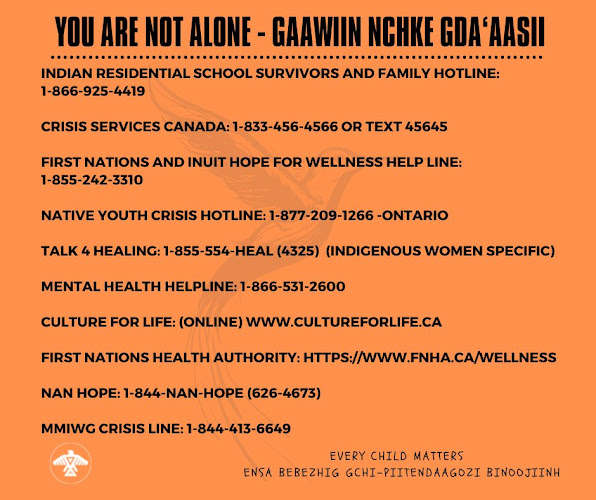
StrongHearts Native Helpline
If
you consider leaving an abusive partner, StrongHearts Native Helpline
can help you with safety planning and finding a Native-centered shelter.
StrongHearts
Native Helpline is a 24/7 culturally-appropriate, anonymous,
confidential and free service dedicated to serving Native survivors,
concerned family members and friends affected by domestic, dating and
sexual violence available by calling or texting 1-844-762-8483 or clicking on the chat icon on Strongheartshelpline.org







 The U.S. Army has begun another disinterment


 I am adopted, and I am pro-choice. So please hear me
when I say this: adoption and abortion are not interchangeable. Adoption
is not the solution to abortion.
I am adopted, and I am pro-choice. So please hear me
when I say this: adoption and abortion are not interchangeable. Adoption
is not the solution to abortion. 
.png)








 Posts
Posts

