They Took Us Away

They Took Us Away
click image to see more and read more

it's free

click

How to Use this Blog

BOOZHOO! We've amassed tons of information and important history on this blog since 2010. If you have a keyword, use the search box below. Also check out the reference section above. If you have a question or need help searching, use the contact form at the bottom of the blog.


We want you to use BOOKSHOP to buy books! (the editor will earn a small amount of money or commission. (we thank you) (that is our disclaimer statement)

This is a blog. It is not a peer-reviewed journal, not a sponsored publication... WE DO NOT HAVE ADS or earn MONEY from this website. The ideas, news and thoughts posted are sourced… or written by the editor or contributors.

EMAIL ME: tracelara@pm.me (outlook email is gone) THANK YOU CHI MEGWETCH!

SEARCH

Monday, March 7, 2022

Medicine for the Resistance podcast


TRANSCRIPT


An Afromystic and Anishinaabekwe talk about everything

Top of Form

Bottom of Form

Top of Form

Bottom of Form

Bottom of Form

The Land is My Ancestor Listen now (66 min) | with genomic researcher Dr. Keolu Fox

patty krawec

 Feb 1


Friday, March 4, 2022

IOWA: adoptees can get their files


WHAT STATES have open access to adoption records and your OBC (original birth certificate) - 9 states currently allow for unrestricted access to OBC  ::  read here

Access to Original Birth Certificates

IOWA Adoptees may now receive a noncertified copy of the certificate of birth prior to adoption

HF855 was signed into law on May 19, 2021. This new legislation allows an adult adoptee to apply for a noncertified copy of the original certificate of birth prior to adoption immediately. If the adult adoptee is deceased, an entitled family may apply for the record.

Beginning January 1, 2022, any adult adoptee 18 years old or older may apply for a noncertified copy of the original certificate of birth prior to adoption. If the adult adoptee is deceased, an entitled family may apply for the record.

  • Proper application, proof of identity and entitlement must exist before a noncertified copy of the original certificate of birth may be issued to any party.
  • Contact preference forms and medical history forms may be on file for the biological parent(s) named on the record. If the contact preference forms and medical history forms are on file, the forms will be released with the noncertified original certificate of birth.
  • Biological parents may state their preference to release their identity and option for contact, or for their identity to be redacted from the original certificate of birth prior to adoption.
  • An original noncertified certificate of birth prior to adoption may be released regardless of any contact preference forms being filed when proper application has been made and proof of entitlement exists.


EXPECTED PROCESSING TIME TO COMPLETE COPY REQUESTS SUBMITTED IS 6 TO 8 WEEKS


FREQUENTLY ASKED QUESTIONS

What does Iowa Code section 144.24A allow?
  • The new law allows an adult adoptee to request and receive a noncertified copy of their original certificate of birth that was created prior to their adoption. Biological parent information is listed on this document. 
  • The new law allows biological parents to file contact preference and medical history forms with the Bureau of Health Statistics. These forms shall be released to the adult adoptee or entitled person upon proper application.
Who else can request a noncertified copy of the original certificate of birth for an adoptee?
  • An entitled person may request and receive a noncertified copy of the original certificate of birth prior to adoption if the adoptee is deceased.
Who is an entitled person? 
  • An entitled person is the spouse of the adopted person who is deceased, or an adult related to the adopted person who is deceased within the second degree of consanguinity. The second degree of consanguinity is applied to individuals after adoption.
Who is within the second degree of consanguinity?
  • The following individuals are within the second degree of consanguinity of the adult adoptee: children, parents, grandchildren, siblings and grandparents.
Can an original noncertified copy of a birth certificate prior to adoption be released if no contact preference form has been filed?
  • Yes.
If I am a biological parent listed on an original certificate of birth prior to adoption, when can I filed a contact preference form and medical history form?
  • The Bureau will accept contact preference forms and medical history forms immediately.  If the contact preference form and medical history form is submitted to the Bureau of Health Statistics after the release dates noted above, adult adoptees or entitled persons may have requested the original certificate of birth prior to adoption. Contact preference forms and medical history forms are provided with the noncertified original certificate of birth once filed.


Applications for a noncertified copy of the original certificate of birth prior to adoption, contact preference and medical history forms will only be accepted via mail or in-person at the Bureau of Health Statistics. These forms will not be filed at any other issuing office.


Mail contact preference and medical history forms to:

Iowa Department of Public Health
Bureau of Health Statistics
Lucas State Office Building
1st Floor, 321 E. 12th Street
Des Moines, Iowa   50319-0075

Thursday, March 3, 2022

America's Indian Boarding School Discussions – Why Repatriation is Important


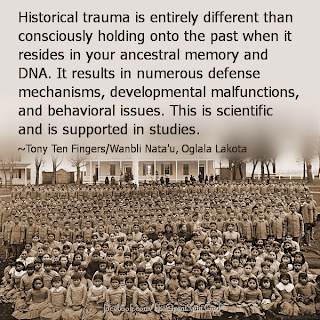
The upcoming Why Repatriation is Important livestream event will focus on repatriation of the children who died at Indian boarding schools as well as the healing that needs to take place in tribal communities to overcome the intergenerational trauma associated with Indian boarding school experiences. 

Across the United States, many former Indian boarding schools have cemeteries on their grounds, including the former Carlisle Industrial Boarding School in Pennsylvania. The graves of deceased Indian children buried at Carlisle fall under the control of the U.S. Army, which has taken the position that the graves of Indian children buried there are not subject to the Native American Graves Protection and Repatriation Act (NAGPRA). Many Indian law experts disagree with the U.S. Army’s stance.


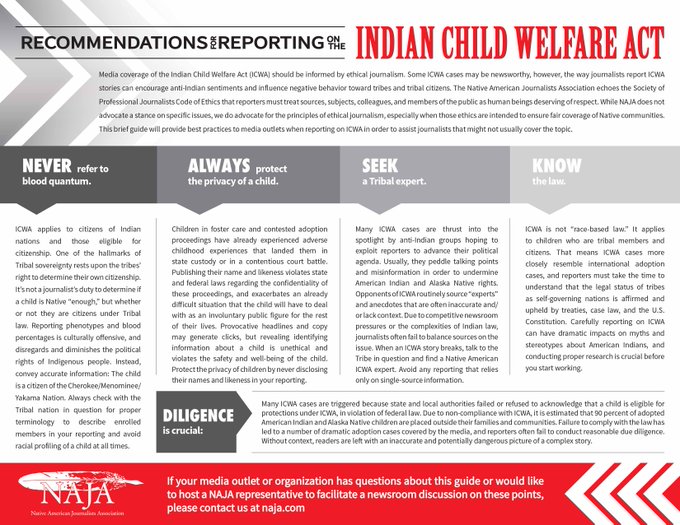
ICWA reporting guide | Dr. Phil "Hollywoodized" Adoption Propaganda


This blog posted many times about BABY V and the propaganda and misinformation and outright lies about the Baby Veronica case and how (adoption) trafficking in children (like her case) was rampant among affluent whites. Dr. Phil "Hollywoodized" Adoption Propaganda is what I called it.  TL Hentz, Blog Editor

Tuesday, March 1, 2022

Ground-penetrating radar, special drone used to find graves at Grouard Mission site

Kapawe'no First Nation said Tuesday that ground-penetrating radar and a specialized drone were used to find evidence of 169 potential graves at the former Grouard Mission site. This file photograph shows Bishop Émile Grouard with school children, circa 1924. (Submitted by the Catholic Archdiocese of Grouard-McLennan)
The residential school, also known as St. Bernard Mission School, was opened by the Roman Catholic Church in 1894 and ran until 1961.

Supreme Court to review ICWA case # Texas v. Haaland


This is a developing story. Watch “ICT’s Newscast with Aliyah Chavez” on Tuesday, March 1 at 5 p.m. EST for more.

The U.S. Supreme Court agreed to hear Texas v. Haaland, a case seeking to overturn the Indian Child Welfare Act.

The high court said Monday morning it would take the case reviewing the 1978 federal law. Many call the Indian Child Welfare Act a gold standard for child welfare policy.

A federal appeals court in April upheld the law and Congress' authority to enact it. But the judges also found some of the law's provisions unconstitutional, including preferences for placing Native American children with Native adoptive families and in Native foster homes.

“The far-reaching consequences of this case will be felt for generations,” stated the National Indian Child Welfare Association in a statement. “In a coordinated, well-financed, direct attack, Texas and other opponents aim to simultaneously exploit Native children and undermine tribal rights.”

ICWA has long been championed by tribal leaders to preserve Native families and cultures involving Native children, and it places reporting and other requirements on states. 

READ MORE👇

Supreme Court to review ICWA case


[AP Photo]

Conversation Series: Native Women in Film, Television and Allies

WHY WE WEAR RED

Who Tells the Story Matters


Film Festival

Who Tells The Story Matters. Creating Systemic Change through the Arts and Media

Native Women in Film & Television in All Media, Red Nation International Film Festival, Los Angeles, CA/USA

March 20-24, 2022

https://filmfreeway.com/NativeWomeninFILMFestival

https://www.nativewomeninfilm.com/

(virtual)

Native Women in Film & Television in All Media – Film Festival. The first and largest representation of Native and Indigenous Women Filmmakers. NWIFTV is a program of Red Nation Celebration Institute. NWIFTV serves under its fiscal partner Red Nation Celebration Institute The Creative Enterprise by Natives delivering to all people the stories that shape our world. RNCI the pioneer longest standing Native Women-Led Indigenous Media, Arts & Cultural nonprofit in the City of Los Angeles, Empowering Native and Indigenous Storytellers.

Film Submissions Open until March 7, 2022:  https://filmfreeway.com/NativeWomeninFILMFestival


Schedule & Tickets: https://www.nativewomeninfilm.com/festival-schedule-2022/


Friday, February 25, 2022

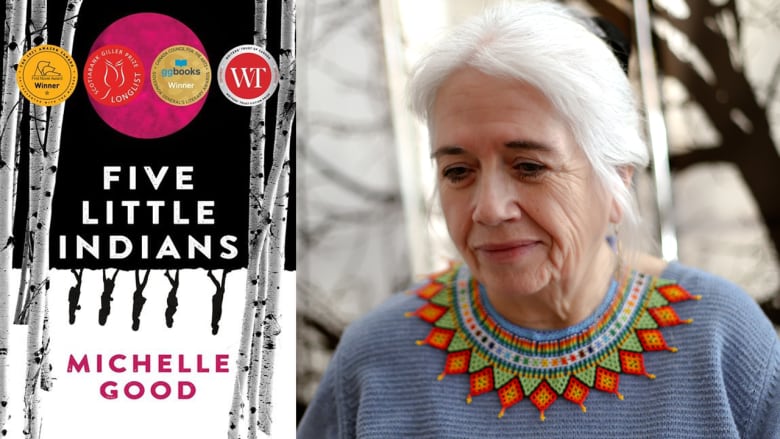
Michelle Good's Five Little Indians is a look at the legacy and trauma of Canada's residential school system


Christian Allaire is defending Five Little Indians by Michelle Good on Canada Reads 2022

Five Little Indians is a novel by Michelle Good. (HarperCollins, Silken Sellinger Photography)

WARNING: This story contains distressing details. 

Michelle Good is a writer, retired lawyer and a member of Red Pheasant Cree Nation in Saskatchewan. Her poems, short stories and essays have been published in magazines and anthologies across Canada. 

Good's debut novel Five Little Indians is a bestselling book that chronicles the quest of five residential school survivors — Kenny, Lucy, Clara, Howie and Maisie — to come to terms with their past and find a way forward. Released after years of detention, the five teens find their way to the seedy and foreign world of Downtown Eastside Vancouver, where they cling together, striving to find a place of safety and belonging in a world that doesn't want them.

Five Little Indians won the 2021 Amazon Canada First Novel Award and the 2020 Governor General's Literary Award for fiction. The novel has also been optioned by Prospero Pictures to be adapted to screen as a limited TV series

Five Little Indians will be championed by the journalist and author Christian Allaire on Canada Reads 2022.

Canada Reads will take place March 28-31. The debates will be hosted by Ali Hassan and will be broadcast on CBC Radio One, CBC TV, CBC Gem and on CBC Books.

In May 2021, the Tk'emlúps te Secwépemc First Nation in B.C., uncovered the remains of 215 children on the grounds of the former Kamloops Indian Residential School.

The news has had an emotional effect on Good, who is currently based in southern British Columbia. She spoke with Shelagh Rogers about why she wrote Five Little Indians — and why the legacy of Canada's residential school system stays with her.

Calls to action

"That first weekend after the Kamloops announcement was really rough. I told a friend of mine that I felt catatonic after that announcement. It's not because we didn't know. We did know. People have been talking about this for years and years. But there's never been any support to resolve this, to do what the band has done themselves. 

"But the thing that really, really bothers me — and it actually infuriates me and I try to stay away from being infuriated — is in 2015, when the Truth and Reconciliation report was issued, there are six calls to action, 71 through 76, that are up here under the heading of 'missing children and burial information.'

"Murray Sinclair and the other commissioners basically gave the federal government a roadmap for how to address this issue through those calls to action. They developed a budget to go with it. And the federal government said no.

I would bet you my bottom dollar, you're going to find one of these grave sites virtually at every residential school.

"So when I hear the prime minister speaking about how 'all children matter' and flying the flags at half mast, it's a lovely symbolic gesture. But it does nothing. What they need to be doing is providing the resources, the expertise and the support. 

"They need to protect these lands. I would bet you my bottom dollar, you're going to find these grave sites at virtually every residential school."

The half-life of trauma

"There was a reason that I chose to pick up the story upon the release of the characters, whether it's escape or when they age out or whatever. Through all of the work that's been done in the form of memoir, in the form of the Truth and Reconciliation report, I think that there is some understanding of the nature of the abuse that children suffered. 

"What was missing was how that trauma has a half-life that continues for generation upon generation upon generation. When people ask that question, 'Why can't they just get over it?' I've started to transpose that into another question, which is, 'What is it that they're asking us to forget and get over?'

We simply cannot forget 120 years of colonial brutality.

"It was 120 years of taking every school-aged child from our community — from their parents, grandparents, aunts, uncles, siblings. Are they asking us to forget that? And how could we? 

'It's had such an impact on the integrity of our cultural cohesion, which was the intent. So, no, we simply cannot forget 120 years of colonial brutality."

Creating community

"I went to the MFA program at UBC to write this book — but I had no idea what I was doing or what it was going to look like. It started with Kenny; it started with me writing about those first pages with that character. 

One of the impacts of this kind of abuse...is a real struggle to maintain meaningful relationships in your life.

"I immediately realized that I needed more characters because to be able to express the scope, the range of injury that was suffered by kids, I needed more than one person. There were so many forms of abuse: abuse that was specific to young girls, and abuse that was specific to young boys. 

"One of the impacts is a real struggle to maintain meaningful relationships in your life. So that was another thing that I wanted to demonstrate through the relationships between the characters. But the other thing is that when you have five characters, you have a community. And that's what these kids were to each other.

"They created a community for each other."

This week the Governor General's award for literary fiction was given to Michelle Good for her debut novel about residential school survivors. Breakaway guest host Peter Tardif talks with her about the book and the recent discovery in Kamloops, B.C. 9:30

What stays with me

"The characters from the novel have been in my life for many years. They came to feel like my kids, as though they were my children. I still find myself reaching for them in my mind. 

"Many, many survivors have reached out to me and given me some very strong and supportive feedback. They've told me that they could see themselves in these stories and that they were grateful to have these stories out in the world — for the same purpose that I have in putting them out in the world. 

The characters from the novel have been in my life for many years...I still find myself reaching for them in my mind.

"That, more than anything, is really, really satisfying."


Support is available to anyone affected by their experience at residential schools and to those who are triggered by the latest reports.

A national Indian Residential School Crisis Line has been set up to provide support to former students and those affected. People can access emotional and crisis referral services by calling the 24-hour national crisis line: 1-866-925-4419.

Healing through Indigenous crafting #60sScoop

A two-tone buffalo hide drum is one of Brenda Mercer's favourite creations. She feels it is a reflection of her life, having been born to an Indigenous mother but raised by a non-Indigenous family, only to reconnect with her heritage later in life

Stitch by stitch, Brenda Mercer brings people together in an act of reconciliation, healing and acknowledgement of Indigenous crafting tradition.

Mercer, the cultural co-ordinator at the Miywasin Friendship Centre and founder of White Horse Rider Co., enjoys sharing her passion for creating handmade Indigenous items, such as drums, rattles, earrings, keepsake pouches and more. She regularly teaches crafting at the Miywasin Centre and around the city. She has also been featured in shows like the Tongue on the Post Folk Music Festival and at the local TREX Space.

Mercer, who was removed from her birth mother and raised by a non-Indigenous family as part of the 60s Scoop, is entirely self-taught in the art of Indigenous crafting. She began learning in her 20s as a way to connect with her Indigenous heritage.

“I just needed to learn more about my culture,” Mercer told the News. “I think if you’re not raised in your culture, you have that yearning. You want to know, ‘Where am I from?'”

Not only is crafting a way to connect with a culture she was removed from, it also acts as a form of healing for Mercer, who was one of five Indigenous children in her Saskatchewan hometown, and as a result faced prejudice from certain non-Indigenous peers and town residents.

“It’s really brought a lot of healing to me because it was so hard being a 60s Scooper,” Mercer said.”Because I was raised in both worlds, I really believe (crafting) is a bridge and a connector.”

While Mercer is often considered a local expert on Indigenous crafts, she admits she is still learning about the crafting processes and the significance of each item.

“It’s a lot by trial and error when you don’t have people to teach you,” she said, “I started making drums, probably 15 years ago. I really liked it. I knew I wanted to do more, but when we did the drums, we didn’t get any teachings, it was just, make a drum. So I didn’t know what it symbolized or what it meant.”

Through her own journey to learn, Mercer realized she enjoyed sharing her knowledge with others and finds crafting and art-making are a non-threatening and inviting way to spark conversations about healing and reconciliation.

“Some of the best conversations I’ve had at Miywasin crafting is when we’re looking down (while working) and then you don’t feel like you have to look up, you can just talk and you make that connection and talk about some deep things,” she said. “We all need to connect as people more.”

Since she first started sharing her knowledge Mercer has noticed an increase in the number of people who wish to learn and listen, particularly non-Indigenous people.

“I see a lot more people wanting to engage,” she said. “I think it really started after the 215 (Indigenous children’s graves were unearthed at the site of a former residential school in Kamloops).”

Mercer is happy to see the increased engagement and hopes as more people learn of Indigenous crafting and artistry traditions, more will begin taking part.

“I think it’s important because I want to teach my kids and my grandkids, because if not, it stops here. It would be really nice to keep that tradition,” she said.

In an effort to stay true to the traditional crafting processes, Mercer usually uses materials purchased from Indigenous-owned stores, such as sinew and wild hides, but encourages creativity when it comes to using the items, as believes each item made is both a reflection of the individual making it and a connection to the Indigenous peoples long passed.

“Each person can create their own. I can guide them and then they can add whatever they want,” she said.

For Mercer, the most important feature of her creations is love.

“Everything I make, I make with love and good intentions,” she said. “I like the element of surprise. I go to Superstore sometimes, I’ll be in the line with somebody in front of me and I’ll go ‘Oh my goodness, I love your hair.’ I know, they’ve got 30 seconds before they check out, so I’ll pull some earrings out of my bag and I go ‘I want to gift you these earrings. I made them with all my love and best intentions.'”

While Mercer does sell her items online at the White Horse Rider Co., Etsy store, she still prefers to gift them out.

“I really like gifting people part of our culture,” she said.

For more information about Indigenous crafting and artistry, healing or reconciliation, Mercer invites Hatters to come to the Miywasin Centre or connect with her via phone at 403-878-5548.


Thursday, February 24, 2022

'Keep digging'

 Survivor has advice for officials probing possible graves at former residential school: 'Keep digging'

The 54 'hits' from ground-penetrating radar are just the start: Elaine Durocher

Elaine Durocher, a survivor of the St. Philip's Residential School in Keeseekoose, Sask., says she thinks searchers need to "keep digging" in Keeseekoose, where ground-penetrating radar has revealed 54 potential unmarked graves. (Andrew Lee/CBC News)

Warning: this story contains disturbing content 

Elaine Durocher, a Métis survivor of the St. Philip's Residential School, in Keeseekoose, Sask. was enrolled in the institution in the mid-1960s as a day student.

A child of the Sixties Scoop, she was born in Buffalo Narrows, Sask., more than 600 kilometres away from Keeseekoose. Durocher spent time with an adopted family before her mother was able to take her back into her care. She lived with her stepfather in Keeseekoose when she entered the residential school.

Though Durocher didn't live at the institution 24 hours a day as some of her "residential" peers, she knows firsthand the worst horrors experienced by those who were taken into the residential school system because of the time she spent there. 

She previously shared her experiences of sexual assault and abuse she experienced at the hands of teachers and peers through the Truth and Reconciliation Commission.

The commission found sexual abuse was widespread at the institution in Keeseekoose through the 1960s.

Durocher says the 54 potential grave sites found through the survey conducted at Keeseekoose shows her the number of missing children due to the residential school system is much higher than previously assumed.

"If you say 54 at St. Philip's, why don't you say 5,400; they had three reserves to pick and choose from, who they wanted. They had Key reserve, Cote reserve and Keeseekoose reserve," Durocher said. 

KEEP READING

B.C. First Nation to search for children who didn’t come home from Alert Bay residential school

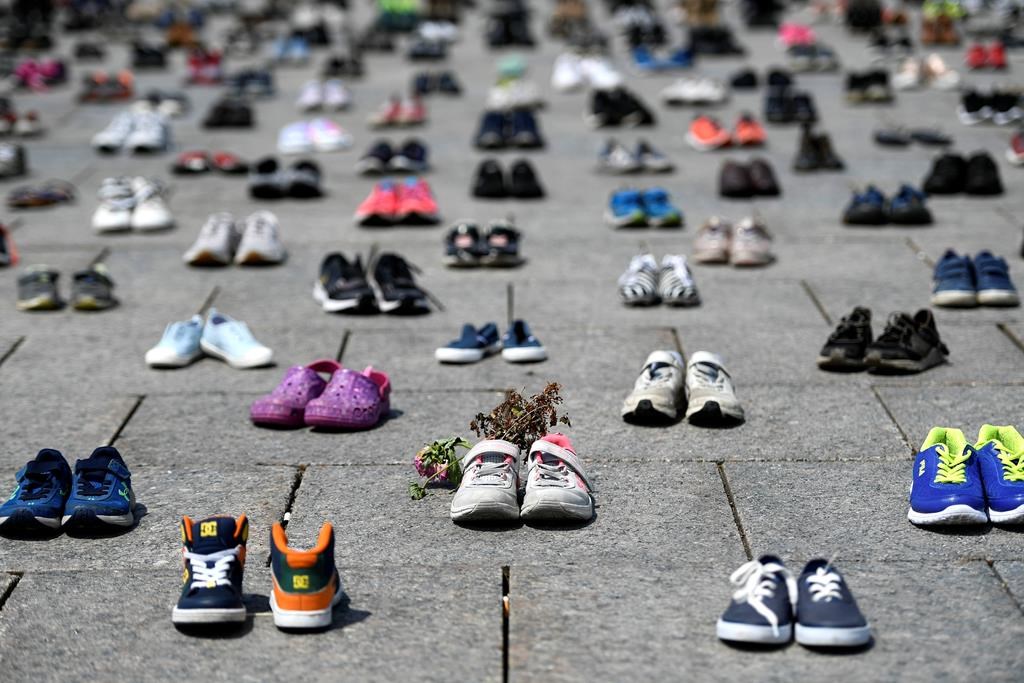
Dried flowers rest inside a pair of child's running shoes at a memorial for the 215 children whose remains were found at the grounds of the former Kamloops Indian Residential School at Tk’emlups te Secwépemc First Nation in Kamloops, B.C., on Parliament Hill in Ottawa on Friday, June 4, 2021. A British Columbia First Nation located off coast of northeastern Vancouver Island says it has started an investigation into the grounds of a former residential institution, following similar inquiries by a number of nations across the country. THE CANADIAN PRESS/Justin Tang. 
Dried flowers rest inside a pair of child's running shoes at a memorial for the 215 children whose remains were found at the grounds of the former Kamloops Indian Residential School at Tk’emlups te Secwépemc First Nation in Kamloops, B.C., on Parliament Hill in Ottawa on Friday, June 4, 2021. A British Columbia First Nation located off coast of northeastern Vancouver Island says it has started an investigation into the grounds of a former residential institution, following similar inquiries by a number of nations across the country. THE CANADIAN PRESS/Justin Tang. JDT/

Warning: This story deals with disturbing subject matter that may upset and trigger some readers. Discretion is advised.

A British Columbia First Nation located off the coast of northeastern Vancouver Island says it has started an investigation on the grounds of a former residential school, looking for the remains of children who didn’t return home.

A statement from ‘Namgis First Nation, located near Alert Bay on Cormorant Island, says its investigation into the former St. Michael’s Indian Residential School will happen in phases, starting with hiring a project manager to help the nation access funding and plan how to engage survivors.

It says survivors from 45 different nations will be invited to take part to help guide the examination of the grounds at the institution that first opened as a day school in 1878 and closed as a residential building in 1974.

KEEP READING  

Keeseekoose First Nation says 54 potential graves at former Saskatchewan residential schools


 Healing is not a political event 

Watch


Keeseekoose First Nation in eastern Saskatchewan says 54 potential graves have been found through ground-penetrating radar at the site of two former residential schools.

The chief says the graves were discovered on the grounds of St. Philip’s Indian Residential School and the Fort Pelly Indian Residential School.

“It’s going to be a very tough time for our community, knowing that we had unmarked graves in our community, in our common areas, that we drive every day, that we walk every day,” said Chief Lee Kitchemonia.

Ted Quewezance, project leader, said the ground-penetrating radar had 42 hits suggesting the possibility of unmarked graves on the Fort Pelly site and another 12 at St. Philip’s school.

Quewezance, a former chief who attended the schools, said the discovery supports what people from the community have been saying for years.

“It was not that they could not hear, but they did not believe our survivors,” Quewezance said.

Fort Pelly school ran from 1905 to 1913 on the First Nation near Kamsack, Sask.

The National Centre for Truth and Reconciliation (NCTR) said the principal was fired in 1911 after it was reported he was drunk and threatening everyone at the school. After it was closed, a day school opened in the same building.

The NCTR found St. Philip’s school had a widespread problem with sexual and physical abuse, which led to the dismissal of a school supervisor over the mistreatment of students during the school’s final decade.

St. Philip’s was run by the Roman Catholic Church from about 1927 to 1969 and has been described by survivors as hellish.

“These are not just instances where a principal or a teacher disciplined. These could potentially be murdered children, hidden,” Kitchemonia said. “We don’t know any of these answers.”

St. Philip’s survivor Fred Brass told the Truth and Reconciliation Commission (TRC), which documented stories from survivors from across the country, that the school was dominated by a violent regime of punishment. He said he lived in fear of abuse day and night.

“I saw my brother with his face held to a hot steaming pipe and then getting burned on the arm by a supervisor,” he said.

The TRC, which issued a final report in 2015, has a record of two student deaths at St. Philip’s and two at Fort Pelly.

An estimated 150,000 First Nations, Inuit and Metis children attended residential schools between the 1860s and 1996. The TRC documented at least 4,100 deaths.


Read More: 

Williams Lake research leads investigators into ‘darkest recesses of human behaviour 

Cowesses identifies 300 of 751 unmarked graves 


The St. Philip’s building at Keeseekoose, not far from the Saskatchewan-Manitoba boundary, was used as a boarding house for students from 1902 to 1914 before being closed due to poor conditions.

It was reopened in 1927 as a residential school.

In the TRC’s final report, Elaine Durocher said as soon as she entered the residential school “the abuse started right away.”

“We were stripped, taken up to a dormitory, stripped. Our hair was sprayed ? We were always praying. We were always on our knees. We were told we were little, stupid savages, and that they had to educate us,” Durocher said about her time at St. Philip’s school.

She said she received no meaningful education at the school.

“They were there to discipline you, teach you, beat you, rape you, molest you, but I never got an education.”

The Indian Residential Schools Resolution Health Support Program has a hotline to help residential school survivors and their relatives suffering trauma invoked by the recall of past abuse. The number is 1-866-925-4419.


more here

Tuesday, February 22, 2022

The Adoptee Rights Podcast

 GO LISTEN


Welcome to What Next:The Adoptee Rights Podcast. Each week we’ll talk about the state of adoptee rights and all that it is—or isn’t. We’ll feature state and federal legislative updates, interviews, and legal developments, plus we’ll discuss the frequent absurdities and complications of being an adopted person.

Join AU’s Gregory Luce and his guests each week as they discuss the state of adoptee rights. Fun and informative, with a constant bottom line of equality for all adopted people.

Latest Episode: Ireland

Greg talks with Claire McGettrick and Mari Steed about Ireland’s history of adoption and original birth records—which have always been public records—and the decades-long fight for Irish-born adopted people to secure the right to obtain all records related to their own identities and history.

You can read more about this issue and Claire and Mari’s work at Adoption Rights Alliance, which is also a partner in the rights-based research work of the CLANN Project.

And check out Claire and Mari’s (and others’) recent book, Ireland and the Magdalene Laundries: A Campaign for Justice, which provides “an overview of the social, cultural and political contexts of institutional survivor activism, the Irish State’s response culminating in the McAleese Report, and the formation of the Justice for Magdalenes campaign, a volunteer-run survivor advocacy group.”

Previous Episode: Omelette

Greg travels to Wisconsin for a legislative hearing and meets Diana Higgenbottom Anagnostopoulos, as well as other advocates, legislative staffers, and legislators.

Diana’s remarkable story is highlighted in this week’s episode, and we talk about the documentary film being produced about her life, the hard work of showing up for adoptee rights advocacy, and what it takes to keep moving forward in the face of adversity. Plus, what she means by the three-egg omelette of adoption.

Follow/Subscribe/Rate and all that on SpotifyAppleGoogle PodcastsPocket Casts

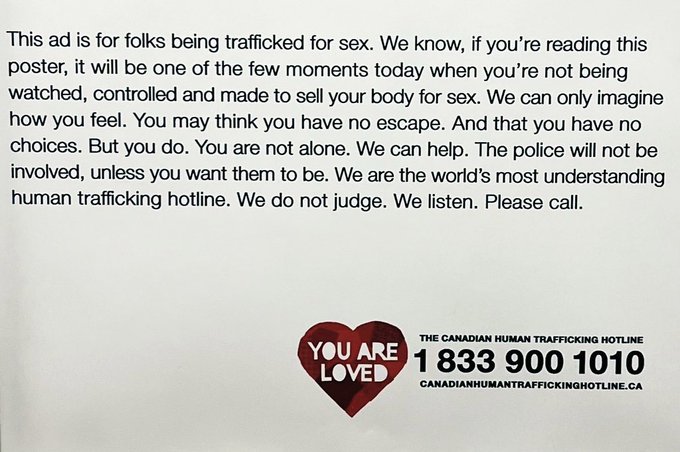
#nationalhumantraffickingawarenessday


Happy Visitors!

WRITTEN BY HUMANS!

WRITTEN BY HUMANS!

Blog Archive

Featured Post

Your History Class Was a F*cking Lie | #NOMOAR

  Your History Class Was a F*cking Lie by Sean Sherman (Or: How the American Educational System Has Always Been a Racist Propaganda Program...


Native Circles

Native Circles
click logo for podcasts!

Most READ Posts

Bookshop

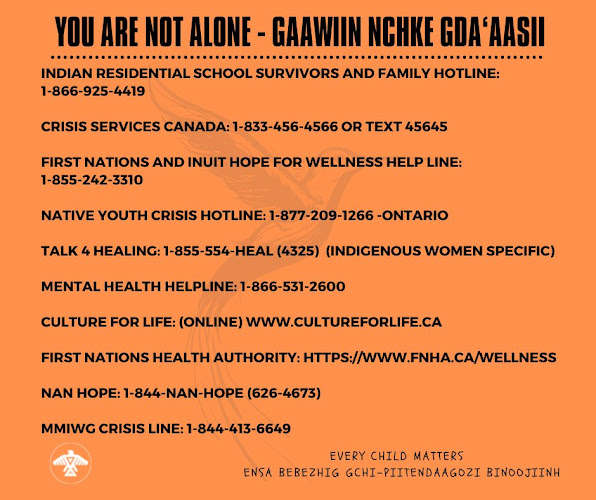
You are not alone

You are not alone

To Veronica Brown

Veronica, we adult adoptees are thinking of you today and every day. We will be here when you need us. Your journey in the adopted life has begun, nothing can revoke that now, the damage cannot be undone. Be courageous, you have what no adoptee before you has had; a strong group of adult adoptees who know your story, who are behind you and will always be so.

Diane Tells His Name


click photo

Lost Birds on Al Jazeera Fault Lines

Lost Birds on Al Jazeera Fault Lines
click to read and listen about Trace, Diane, Julie and Suzie

NO MORE STOLEN SISTERS

NO MORE STOLEN SISTERS
click image

ADOPTION TRUTH

As the single largest unregulated industry in the United States, adoption is viewed as a benevolent action that results in the formation of “forever families.”
The truth is that it is a very lucrative business with a known sales pitch. With profits last estimated at over $1.44 billion dollars a year, mothers who consider adoption for their babies need to be very aware that all of this promotion clouds the facts and only though independent research can they get an accurate account of what life might be like for both them and their child after signing the adoption paperwork.

Original Birth Certificate Map in the USA

Google Followers