They Took Us Away

They Took Us Away
click image to see more and read more

it's free

click

How to Use this Blog

BOOZHOO! We've amassed tons of information and important history on this blog since 2010. If you have a keyword, use the search box below. Also check out the reference section above. If you have a question or need help searching, use the contact form at the bottom of the blog.


We want you to use BOOKSHOP to buy books! (the editor will earn a small amount of money or commission. (we thank you) (that is our disclaimer statement)

This is a blog. It is not a peer-reviewed journal, not a sponsored publication... WE DO NOT HAVE ADS or earn MONEY from this website. The ideas, news and thoughts posted are sourced… or written by the editor or contributors.

EMAIL ME: tracelara@pm.me (outlook email is gone) THANK YOU CHI MEGWETCH!

SEARCH

Tuesday, September 23, 2025

North Dakota releases first updated tribal textbook


North Dakota releases first updated tribal textbook, with more on the way

By: - September 16, 2025 5:00 am

Display copies of updated tribal textbooks detailing the history and culture of the five Native nations that share land with North Dakota. (Mary Steurer/North Dakota Monitor)

The North Dakota Department of Public Instruction has released the first of a series of updated textbooks on the five Native nations that share land with North Dakota.

The book — titled “Journey to Understanding” — provides a brief introduction to the tribes’ history and culture. It’s the first time a new edition of the work has been released in more than two decades.

The textbook will soon be distributed to schools across the state, though a digital version is already available to download for free on the University of North Dakota’s Scholarly Commons website.

“Journey to Understanding” was first published in 2002 as cultural training material for social workers at the North Dakota Department of Human Services. The agency hired the Bismarck-based Native American Training Institute to write it to help its employees better understand the state’s Native communities.

Now, the Department of Public Instruction is promoting it as an educational resource for K-12 classrooms. 

The agency will also soon release updated versions of four tribe-specific textbooks on the Standing Rock Sioux Tribe, Mandan, Hidatsa and Arikara Nation, Turtle Mountain Band of Chippewa and Spirit Lake Nation.  Like “Journey to Understanding,” new editions of the books haven’t been published in more than 20 years.

The five books have long been considered leading sources for information on the tribes, and are referenced in K-12, college and professional settings, according to the Department of Public Instruction.

A first-ever textbook on the Sisseton-Wahpeton Oyate is also in the works.

The series is a collaborative effort between the state, the tribes, Native culture organizations and higher education institutions. The tribes and tribal colleges had full editorial oversight of the books’ content.

In addition to publishing all six books online, thousands of copies will be printed and distributed to schools across North Dakota.

The cover of “Journey to Understanding,” a recently updated textbook on the history and culture of the five Native tribes that share land with North Dakota. The cover art is by Paula TopSky, a member of the Shoshone-Bannock Chippewa Cree. (Photo courtesy of the North Dakota Department of Public Instruction)

“Journey to Understanding” is an ideal resource for anyone looking for a primer on the tribes, said Cheryl Ann Kary, executive director of Sacred Pipe Resource Center and the textbook’s author.

It covers topics including tribes’ status as sovereign nations, treaties and federal policies like the General Allotment Act, which reduced Native land ownership by distributing collectively owned tribal land to individual Native citizens. 

The book also details some of the spiritual beliefs, values and traditions common to many tribes.

Kary, a citizen of the Standing Rock Sioux Tribe, said many North Dakotans could benefit from resources like “Journey to Understanding”. Many state leaders try to tackle complicated issues involving the tribes despite lacking basic knowledge about their communities, she noted. Kary compared this to trying to read poetry without first learning the alphabet.

“There’s so much just fundamental, foundational knowledge you have to know first before you can even talk about these complex issues,” she said.

While most of the content in the first and second edition of “Journey to Understanding” is the same, the latter version includes some new content as well. For example, it includes more information on the federal Indian Child Welfare Act of 1978, a federal law that protects tribes’ right to keep Native children in their communities, Kary said.

It also includes information on the North Dakota Native American Essential Understandings project, a collection of resources developed by tribal elders and educators to help K-12 North Dakotans learn about Native traditions.

The Department of Public Instruction expects to release the other five books in the series over the next several months.

It’s partnering with United Tribes Technical College and Sisseton Wahpeton Oyate Publishing to print the textbooks. Each K-12 school across the state will receive free copies of the books, with middle and high schools getting at least 25 sets of the series. Eventually, members of the public will be able to purchase their own copies.

Sashay Schettler, the Department of Public Instruction’s assistant director of Indian and multicultural education, said making the books available both online and in print will make it easier than ever for young North Dakotans to learn about the tribes.

“Honestly, it makes my heart happy,” Schettler, a citizen of the MHA Nation, said.

She noted the books can be a resource that helps schools comply with a state law adopted in 2021 requiring K-12 schools in North Dakota to teach Native American history.

The textbooks are the culmination of several decades of work by hundreds of people, according to a reflection on the revision process by state employees included at the end of “Journey to Understanding”.

The first editions of the books on the Standing Rock Sioux Tribe, the MHA Nation, Spirit Lake Nation and Turtle Mountain Band of Chippewa were spearheaded by Cheryl Kulas, former director of Native education at the Department of Public Instruction and an Oglala tribal citizen.

The agency hopes to facilitate revisions of the books every few years going forward, staff indicate in the reflection.

North Dakota Monitor reporter Mary Steurer can be reached at msteurer@northdakotamonitor.com.

Sashay Schettler, left, and Lucy Fredericks present new editions of textbooks on the five tribes that share land with North Dakota at an April 10, 2025, reception. The original set of textbooks hadn’t received updates since their initial publication in the 1990s and early 2000s. (Mary Steurer/North Dakota Monitor)
SOURCE:  https://northdakotamonitor.com/2025/09/16/north-dakota-releases-first-updated-tribal-textbook-with-more-on-the-way/

Monday, September 22, 2025

Manitoulin Island has forests, coasts, ancient tradition

 The jingling of the bells becomes as loud as a waterfall, and that is her intention. The resonant jingle dance aims to imitate water and its healing power.
I have been to Manitoulin Island many times... If you can, please visit.

The Canadian island is located in Lake Huron, one of North America's Great Lakes. 

READ WHY: https://www.newstribune.com/news/2025/sep/14/canadas-manitoulin-island-has-forests-coasts/ 

Sunday, September 21, 2025

Robert Redford and George R.R. Martin Helped Bring 'Dark Winds' Into The World

 Full Circle Moment:

Robert Redford’s Final Acting Role Features Iconic Chess Scene with George R.R. Martin


Robert Redford
Robert Redford and George R.R. Martin Helped Bring 'Dark Winds' Into The World | Credit: AMC

Robert Redford’s final bow on screen arrived not with a bang, but a quiet, intense moment of strategy and silence: a chess game shared with none other than George R.R. Martin in AMC’s neo-Western series Dark Winds.  This unexpected yet profoundly significant cameo, debuting in the season three premiere of Dark Winds in March 2025, was the brainchild of Martin himself, both men executive producers of the show.

Watching these two giants sit across a dimly lit jail cell, moving pieces on a chessboard, crystallizes an extraordinary convergence of talent and legacy.  For Redford, who passed away on September 16, 2025, this was more than a final role; it was a full-circle moment in a career deeply intertwined with the stories of the American Southwest and authentic representation of Native American culture.

Redford’s final cameo in Dark Winds cements his enduring legacy, not just as an actor or director, but as a genuine ally who fought to bring Native voices to the forefront of cinema and television. His presence, brief yet profound, honors the stories he cherished and the people whose stories he wanted told truthfully. 

 Thank you Mr. Redford. Rest in Peace.

6 Inuit teens go on a journey to connect with their past (Short version)

Remember this: It’s a stark reminder: Sometimes the best way to kill something and rob it of its history is to place it in a museum.

Meet six kids from a small community in the Arctic who felt disconnected from their Inuvialuit identity — until they went on a journey to connect with their past.  The students teamed up with CBC Kids News to document a trip they took to see their ancestors' artwork and artifacts on display in museums across the country.  They discovered a connection that runs deeper than they thought.


LINK: https://www.cbc.ca/player/play/video/9.6906463 

8 Indigenous films screening at TIFF, including Ni-Naadamaadiz: Red Power Rising

 WATCH


WOW! 


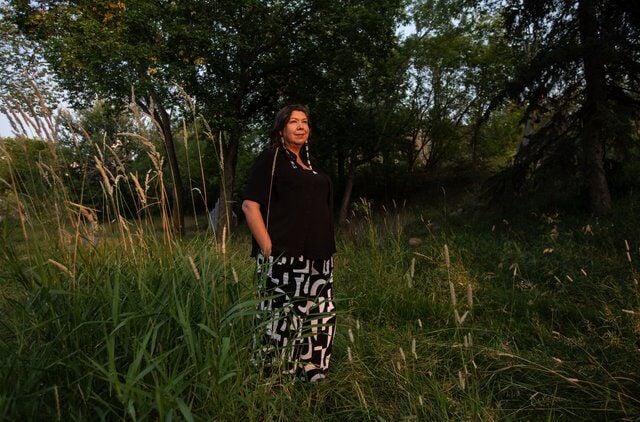
UI professor to return documents to survivors of Native American boarding schools

Professor Carrie Lowry Schuettpelz’s Project Return will launch nationally in October in an effort to support Native Nations.

Carrie Lowry Schuettpelz (University of Iowa)

In the dimly lit rooms of the National Archives, Joe Maxwell recalled digging through what he described as “the bowels” of the U.S. government as he and other student research assistants sifted through boxes full of paperwork as a part of Project Return, a nationwide project set to launch officially in October.

The project’s goal is to return documents to the survivors of Native American boarding schools who were taken from their families and attended abusive classrooms. 

These residential schools, which were located across the U.S., Canada, and more than 526 of which were federally funded, according to The National Native American Boarding School Healing Coalition, were often the site of abduction, acculturation, abuse, and death, with the U.S. Department of the Interior reporting at least 973 children died while attending these schools. 

Many people who survived were unaware documents from their time in the schools even existed. Report cards, photographs, and letters sent to and from the families of the children remained unreturned. 

“Most Indian boarding school survivors that I’ve ever met were not aware that there were records in the National Archives,” Carrie Lowry Schuettpelz said, the director of the Native Policy Lab and a UI associate professor of practice in the School of Planning and Public Affairs. 

Schuettpelz was recently awarded the Andrew W. Mellon Foundation grant to fund Project Return in July. 

“Part of the reason that I do this is that they don’t know they exist, and the process for getting them is not straightforward,” she said. 

As a part of the pilot for Project Return, the program partnered with the Chickasaw Nation, which provided Schuettpelz and the student research assistants with a list of student records they were interested in having repatriated and returned to their rightful owners. 

KEEP READING:  https://dailyiowan.com/2025/09/14/ui-professor-to-return-documents-to-survivors-of-native-american-boarding-schools/ 

Saturday, September 20, 2025

September 19, 2025 | ICT Newscast

Indian Country Today Channel on Youtube - subscribe!

Homelands


HOMELANDS

26 September – 31 December 2025

HOMELANDS celebrates the eightieth year in the life of Mvskoke artist Rick Grimster. Born to an English mother and a Native American father, war baby Rick was raised by adoptive parents in the UK.

In this series of acrylic paintings, Grimster playfully merges abstract impressions of England and America through masterful use of colour, pattern and texture. Together these autobiographical landscapes chart his remarkable passage through time on two continents and his lifelong journey of transformation from adoptee to Indigenous elder.


HOMELANDS is a love letter to the people and places that gave life to this extraordinary artist.

This exhibition coincides with National Adoption Week.

Exhibition opening Friday 26th September 5pm-7pm

MORE:  https://www.rainmakerart.co.uk/ 

The American Way Of Silencing And Oppression Is Nothing New If You Are Black Or Brown


Shut the F*ck Up by Sean Sherman

The American Way Of Silencing And Oppression Is Nothing New If You Are Black Or Brown

Read on Substack


excerpt:

The Shock of Being Silenced

The empire grows stronger and voices like Colbert, Kimmel, or basically anybody who says out loud that Charlie Kirk was a racist piece of white trash is being thrown aside through government pressure. Americans are acting like they just realized censorship can happen to white people also. While the media (and who owns the media nowadays?) is busy tiptoeing around the fall of democracy and ignoring the blatant authoritarian actions of the current White House agenda, Trump and clowns are busy defining their own brand of “cancel culture” wrapped in the typical nationalistic patriotic bullshit shielded by hypocritical Christian beliefs. We should all know by now it’s just more distraction to throw fuel on the fire of their division war and keep the conversation away from exposing the cheetoh stained Epstein files.

In reality, America as a government has been silencing people since 1776. The only thing new now is who’s feeling the muzzle. It’s not just Indigenous people, Black folks, immigrants, and the poor anymore. Now it’s nipping at privileged voices who always assumed their mic was untouchable.

KEEP READING:  https://substack.com/home/post/p-174075249 


Friday, September 19, 2025

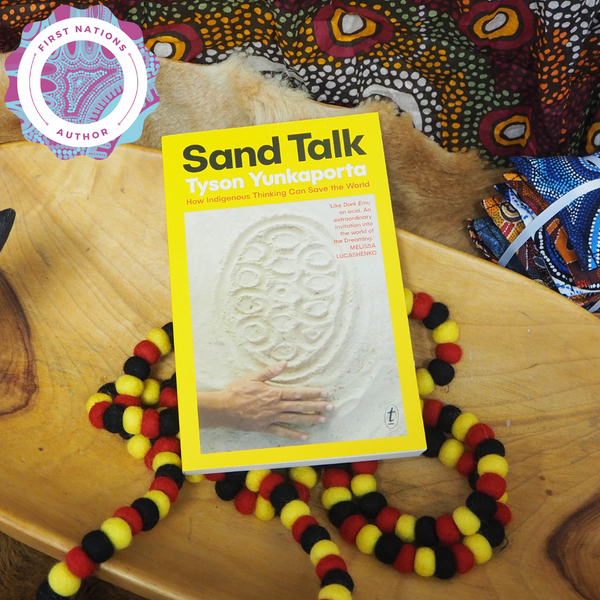
Sand Talk: How Indigenous Thinking Can Save the World

 "Sand Talk How Indigenous Thinking Can Save the World" By Tyson Yunkaporta


What happens when global systems are viewed from an Indigenous perspective? How does it affect the way we see history, money, power and learning? Could it change the world?

This remarkable book is about everything from echidnas to evolution, cosmology to cooking, sex and science and spirits to Schrodinger's cat.

Tyson Yunkaporta looks at global systems from an Indigenous perspective. He asks how contemporary life diverges from the pattern of creation. How does this affect us? How can we do things differently?

Sand Talk provides a template for living. It's about how lines and symbols and shapes can help us make sense of the world. It's about how we learn and how we remember. It's about talking to everybody and listening carefully. It's about finding different ways to look at things.

Most of all it's about Indigenous thinking, and how it can save the world.  

  • ISBN: 9781922790514
  • ISBN-10: 1922790516
  • Published: 29th August 2023
  • INTERVIEW 
  • Sometimes it is hard to write in English when you’ve been talking to your great-grandmother on the phone but she is also your niece, and in her language there are no separate words for time and space.  In her kinship system every three generations there is a reset in which your grandparents’ parents are classified as your children, an eternal cycle of renewal.  In her traditional language she asks you something that
    translates directly into English as ‘what place’ but actually means  ‘what time’, and you reluctantly shift yourself into that paradigm, because you know it will be hard as hell to shift back out of it again when you go back to work. Kinship moves in cycles, the land moves in seasonal cycles, the sky moves in stellar cycles and time is so bound up in those things that it is not even a separate concept from space.  We
    experience time in a very different way from people immersed in flat schedules and story-less surfaces.  In our spheres of existence, time does not go in a straight line, and it is as tangible as the ground we stand on. -  Tyson Yunkaporta, Sand Talk: How Indigenous Thinking Can Save the World

    Sand Talk: How Indigenous Thinking Can Save the World is a 2019 book by Tyson Yunkaporta that sets out to look at the world, especially sustainability, through Aboriginal perspectives.[1] Yunkaporta calls for fewer token gestures such as land acknowledgements and more meaningful inclusion.[2] The book engages with other Indigenous people to draw from their lived knowledge, which creates paradoxes for the reader.[3]


Thursday, September 18, 2025

Should States Guarantee a Right to Know Your Biological Parents?


Until recently, children of closed adoptions in Georgia would have to hire an attorney and make the case in court that they needed to know the identity of their biological parents. But a new law ensures that adoptees who are at least 18 years old can get access to a copy of their original birth certificates.

 STORY: https://www.governing.com/policy/should-states-guarantee-a-right-to-know-your-biological-parents

Wednesday, September 17, 2025

A Baby Adopted, and ICWA failed


A video leaks of a wealthy politician describing how he adopted a Native child, leading to outrage from the child’s biological family and members of her tribe. 

LISTEN:  https://revealnews.org/podcast/native-adoption-utah-politician-northern-cheyenne/

Tuesday, September 16, 2025

Sixties Scoop Survivors call for more support in reconnecting with families

STORY: https://www.ctvnews.ca/canada/article/its-been-a-painful-journey-sixties-scoop-survivor-recounts-difficulties-finding-biological-family/

“I always knew I was adopted, I always knew I was Indigenous, but I didn’t know what my connection to the community was,” she said. 


In 2015, Strongwind put in a request for her birth certificate, which had her biological mother’s name listed. Katherine Strongwind at four years old. (Handout)

Monday, September 15, 2025

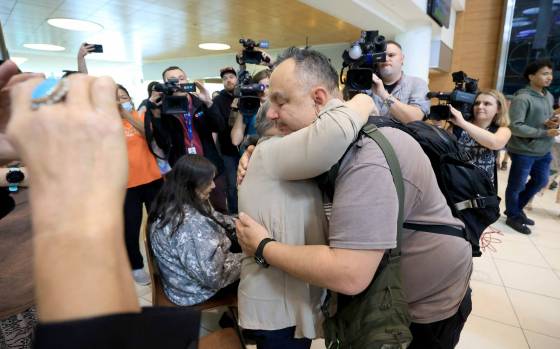
Sixties Scoop Survivor returns home

A Manitoban taken from his family during the Sixties Scoop has returned to Manitoba for the first time in decades. CTV’s Joseph Bernacki reports.


Hooker, who has lived his life in New Zealand, was never able to locate his birth mother, until now.

STORY: https://www.ctvnews.ca/canada/article/its-pretty-amazing-sixties-scoop-survivor-returns-home-to-manitoba-50-years-after-being-taken-from-his-home/

During 2020 Zoom Meeting, Boss Recognizes Employee as Child Who Disappeared...

WARNING: I think A.I. made this video.
 
This case involves child trafficking and illegals adoptions. SHOCKING!

Sunday, September 14, 2025

Roadblocks


A few years ago, I received an email request to help the daughter of an adoptee. She was writing a dissertation on forced assimilation practices from the boarding school movement to the current foster care system for Indigenous communities in the U.S. "And, for that, I am also writing segments about my own life," she told me.

 I told her that her story is about ROADBLOCKS.

I wrote to her:

I cannot stop thinking about your work. I am trying to research missing children, especially from Carlisle. Some died, but how? Some were placed with farm families off school grounds. Then disappear into thin air.
What the governments did in establishing these residential schools was to create hostages - so their parents wouldn't make war.
Abusing a child is a criminal act but because it was a church school, they got a free pass? No charges?
Like slavery, they made examples and tortured and killed kids to scare the rest of the students... to make them literally insane and fear for their lives.

With adoption it was more permanent - families would be torn apart forever. Sealed files prevent reunion. Adoptees lose everything.
YOUR story is about your truth, how you are running into every roadblock to find your own tribal identity after his adoption. Most of the men adoptees tell me they never had a good relationship with a woman. They could never trust anyone.
This interior trauma follows an adoptee their entire life.  Maybe it happened to your dad, too.  Lots of medical terms exist: severe narcissistic trauma, PTSD, etc.

YOUR story is the roadblock. The printed one-sided oppressor history is bad which is also the goal of oppression.
If you tell your story of the roadblock, people will understand how the gov't wanted this to play out. Not only your dad but you are on the outside as well.
 
Tribal sovereignty - gone. Measuring blood - eventually there won't be any Indian left with enough blood. All the plan.
Family lore is not enough anymore... you have to be able to prove your direct connection to a tribe and have relatives who know you and accept you.

I opened my adoption despite all the roadblocks and was 38 when I finally met my birthfather.  Am I enrolled? No. Why? I do not have a copy of my original birth certificate from Minnesota. I have met relatives on both sides.
 
Despite every roadblock, many many adoptees are finding their way home.  I have two close friends who live on their rez and have met all their relatives. Long process but they did it.


Saturday, September 13, 2025

Sibling drama ‘Meadowlarks’ examines ‘60s Scoop fallout


Family drama ‘Meadowlarks’ brings scattered ‘60s Scoop siblings together for one weekend

TORONTO - Indigenous performers Michael Greyeyes and Michelle Thrush say the power of film is in bringing light to dark places, and that’s what they hope they can do with their ‘60s Scoop drama, “Meadowlarks.”

Directed by Tasha Hubbard, the family saga about four scattered siblings brought together for one weekend makes its world premiere Sunday at the Toronto International Film Festival, and screens again Monday.

It’s inspired by Hubbard’s 2017 documentary “Birth of a Family,” in which four Cree siblings who were taken from their mother as children gather for the first time as adults to piece together their family history.

Reached before TIFF in Naples, Fla., Greyeyes said the government policy remains little-known and “tragically” misunderstood today, more than a generation after 20,000 Indigenous Canadian children were put into foster care or placed for adoption with white families.

"There are various things that we talk about in our culture and people are familiar with them, like MMIW (missing and murdered Indigenous women and girls), things like intergenerational trauma — this kind of stuff, people have an understanding of it. And when I go, 'It's about the '60s Scoop,' even people who are pretty versed are like, 'Hmm, what's that?',” Greyeyes said in a joint video call with Thrush, who was in Calgary.

“This is not something that either Canada or the United States are proud of and they buried it.  And part of our job as Indigenous artists is to make sure that the world knows our stories."

Thrush agreed, describing the job of an artist as "we bring light to places that were previously dark.”

“We often enter into territory that's not always talked about or safe or in general conversation," noted Thrush.

Thrush said much of the work involved conveying the inextricable bonds of siblings, but that it wasn't hard to forge a connection with her co-stars, also including Carmen Moore and Alex Rice.

“The characters, as siblings, they lost so many years together. And I felt like working with these three actors and Tasha as our leader, that was our mission, was to fill in that beauty and that love and that light for so many of our community members who are finding their way home,” said Thrush.

“And how incredibly courageous that is for so many people in our communities."  

Reached in Edmonton, where she is an associate professor at the University of Alberta, Hubbard said Indigenous characters are too often treated as set dressing and their stories reduced to sad and tragic tropes. Indigenous creators are changing that, she said.

"We're not just victims all the time, our characters in our films are complicated and beautiful and messy and struggling and overcoming. We have this range of humanity that's been denied for a long time when it comes to film,” said Hubbard.

“I want to send a shoutout to (APTN/Crave series) ‘Little Bird’ and that beautiful series that told the story from childhood to reconnection and the struggles around that."

"I think this film is in conversation with that, (this time focused) around five people in their 50s, which is a special time of life." 

“Meadowlarks” is set to open in theatres in November. The Toronto International Film Festival runs through Sept. 14.

This report by The Canadian Press was first published Sept. 7, 2025.  

Remains of Native American children to be returned to Oklahoma


This week, the U.S. Army announced that 19 Native American children will be disinterred from the Carlisle Indian School in Pennsylvania, where they were buried after being taken from their families more than a century ago.

After more than a century, Native American children buried at a Pennsylvania boarding school will be returned to their families, marking a significant step toward healing

VIDEO: https://www.koco.com/article/remains-of-native-american-children-returned-oklahoma/65985824 

"These children have been waiting anywhere from 145 years to 126 years to come home,” said Norene Starr, special projects coordinator for the Cheyenne Arapaho Tribes

The effort to bring the children home has been ongoing for years, as tribes have been asking for their relatives back from the boarding school where more than 200 children died and are now buried.

"They have been gone, they’ve been missing, all this time, their families had no idea where they went or what happened to them. Some of them were never notified,” Starr said.

The 19 children are from the Seminole Nation of Oklahoma and the Cheyenne and Arapaho Tribe.

The Cheyenne and Arapaho Tribe expressed hope that the journey to peace can begin, despite the long wait.

"It's going to bring a lot of peace, maybe not so much closure. It's something we have to do, and we have to do it for our people, and these children, we need to bring them home, so they can rest where they came from,” Starr said.

The tribes view the homecoming as a step toward healing after more than a century of loss.

"There is peace, and healing, and we have to be aware, we have to know and acknowledge everything that has happened before us," Starr said.

(Use the search bar to find all the coverage on Carlisle and the repatriation of these children...Trace) 


The Hug

 READ: https://www.winnipegfreepress.com/briefings/measuring-mistrust-polls-politics-and-power

IN PICTURES

Jonathan Hooker shares a hug with his biological mother, Patsy George. Hooker is among an estimated 20,000 Indigenous children taken from their families during the ’60s Scoop, (Ruth Bonneville / Free Press)

Jonathan Hooker shares a hug with his biological mother, Patsy George. Hooker is among an estimated 20,000 Indigenous children taken from their families during the ’60s Scoop. (Ruth Bonneville / Free Press)

MMIWG: Patricia Calahasen


True North True Crime podcast

Ep. 130/

It was the early hours of August 3rd, 2001, in Edmonton, Alberta, when fire crews responded to a dumpster blaze behind a central apartment building. Once the flames were out, they made a horrifying discovery — the burned remains of a young woman.

For nearly two weeks, investigators worked to find out who she was. They canvassed hundreds of apartments and narrowed their search to a short list of missing women. Dental records would confirm the victim was 18-year-old Patricia Calahasen.

What police uncovered next was a story of trust betrayed, a violent assault, and a desperate attempt to destroy the evidence. The person responsible was just 17 years old. But for Patricia’s family, the fight for justice has lasted decades.

--

This podcast is recorded on the territories of the Coast Salish people.

Memoir gives voice to #60sScoop experience of being raised outside of Indigenous culture


Brittany Penner. Photo supplied. Credit Michael Maren.
 

By Shari Narine, Windspeaker.com Books Feature Writer
September 4th, 2025  

Children Like Us: A Métis Woman's Memoir of Family, Identity and Walking Herself Home is Brittany Penner’s account of being adopted as a baby by a Mennonite family in Manitoba and searching for her birth parents.

Such an adoption practise—having white families raise Indigenous children—continues, points out Penner, who is now 36 years old.

“I really keep thinking about…how many children and teenagers are still facing realities like this where…they have been cut off from their first families, where they're being raised outside of their culture, and how it's not something that's in the past. It is something that is still very present across our country today,” said Penner, who has Anishinaabe, Cree and European settler lineage.

When Penner started writing her memoir, it was under a different title. But when she explained it to people, the phrase “children like us” kept coming up. 

“It was always in reference to…children who were Indigenous, who were placed for adoption or relinquished or apprehended or in foster care. And that was just how I think, and my siblings and my cousins, collectively, thought of ourselves,” she said.

Penner and the other Indigenous children who were fostered or adopted by her extended Mennonite family were part of the Sixties Scoop, a common practise by the Canadian government to place Métis, First Nations and Inuit children with non-Indigenous families in other provinces and sometimes in other countries.  The Sixties Scoop began in the 1950s, ramped up in the 1960s, and carried through until mid-1980. It’s estimated 20,000 children were taken.

Penner was the only child her parents adopted.  She had numerous foster siblings (21 before her seventh birthday), who she connected with as brothers and sisters only to have them torn away from her over the years.  Due to these losses, as a youngster she became obsessed with when she would be taken away, and it was a fear she lived with despite her mother’s attempted reassurances that that that would not happen to her. Her father’s Mennonite family, including his parents, adopted and fostered numerous Indigenous children. These were the Native aunts and uncles and cousins that Penner grew up with.

In offering her story, Penner cautions the reader in the book’s foreword that this is “not a memoir wherein I ask you to choose a side.” She says that mattered to her because, when she was growing up, she was told she “should be grateful” that her adoptive parents had chosen her.

As she writes in her memoir, “I’m adopted. I’m reminded of this again and again and again—until I begin to believe there is something inherently wrong with me for not feeling unendingly lucky.”

keep reading👇 


Happy Visitors!

WRITTEN BY HUMANS!

WRITTEN BY HUMANS!

Blog Archive

Featured Post

Your History Class Was a F*cking Lie | #NOMOAR

  Your History Class Was a F*cking Lie by Sean Sherman (Or: How the American Educational System Has Always Been a Racist Propaganda Program...


Native Circles

Native Circles
click logo for podcasts!

Most READ Posts

Bookshop

You are not alone

You are not alone

To Veronica Brown

Veronica, we adult adoptees are thinking of you today and every day. We will be here when you need us. Your journey in the adopted life has begun, nothing can revoke that now, the damage cannot be undone. Be courageous, you have what no adoptee before you has had; a strong group of adult adoptees who know your story, who are behind you and will always be so.

Diane Tells His Name


click photo

Lost Birds on Al Jazeera Fault Lines

Lost Birds on Al Jazeera Fault Lines
click to read and listen about Trace, Diane, Julie and Suzie

NO MORE STOLEN SISTERS

NO MORE STOLEN SISTERS
click image

ADOPTION TRUTH

As the single largest unregulated industry in the United States, adoption is viewed as a benevolent action that results in the formation of “forever families.”
The truth is that it is a very lucrative business with a known sales pitch. With profits last estimated at over $1.44 billion dollars a year, mothers who consider adoption for their babies need to be very aware that all of this promotion clouds the facts and only though independent research can they get an accurate account of what life might be like for both them and their child after signing the adoption paperwork.

Original Birth Certificate Map in the USA

Google Followers