BOOZHOO! We've amassed tons of information and important history on this blog since 2010. If you have a keyword, use the search box below. Also check out the reference section above. If you have a question or need help searching, use the contact form at the bottom of the blog.
We want you to use BOOKSHOP to buy books! (the editor will earn a small amount of money or commission. (we thank you) (that is our disclaimer statement)
This is a blog. It is not a peer-reviewed journal, not a sponsored publication... WE DO NOT HAVE ADS or earn MONEY from this website. The ideas, news and thoughts posted are sourced… or written by the editor or contributors.
EMAIL ME: tracelara@pm.me (outlook email is gone)
THANK YOU CHI MEGWETCH!
In
September of 2022, at the start of her senior year at Indiana’s Purdue
University, Mia Griffin was working in her bedroom, laptop propped up on her
knees, when an e-mail came in from 23andMe saying that her genetic testing was
completed. Mia was not in a hurry. She’d bought the kit a year before, when
she’d seen a sale on Amazon. It was an impulse buy for which her enthusiasm had
quickly waned. It took months before she got around to spitting into the tube
and mailing it back in the prepaid package.
When
she logged on, all seemed as anticipated. The test listed her ancestry as 99.9
per cent East Asian and Indigenous American. (At the time, the two were lumped
together by the company.) No great surprise there—she had been adopted in 2002
from China, one of more than a hundred and sixty thousand children sent abroad
to the United States and other countries in the course of three decades. Not
knowing her family’s medical history, she had taken the test mainly to find out
if she had a heightened genetic risk for cancer, and she was relieved to learn
that she did not, although the test showed a propensity for lactose intolerance
and an allergy to cats, two things she already knew about.
Mia
knew that finding family was a possibility, but it wasn’t on her mind. She
clicked anyway on the tab that listed genetic relatives. There it was at the
top of the list: Zhou Changqi, born in 1956.
Sixties Scoop survivor held in U.S. jail after attempted return to adoptive family
U.S. attorney dropped unlawful re-entry charge against James Mast because he is Cree
James Mast, a Cree Sixties Scoop survivor, says he was making his way
to Oklahoma so he could care for his ailing adoptive father when tribal
police on the U.S. side of the Akwesasne reservation arrested him and
turned him over to U.S. Border Patrol.
Mast, 60, has been held at
the Clinton County jail in Plattsburgh, N.Y., which sits about 115 km
southeast of Akwesasne, since his April 14 arrest by St. Regis Mohawk
Tribal Police. He was detained after crossing the St. Lawrence River by
boat and had no identification on him at the time.
...His adoptive parents never made him a U.S. citizen and Mast said he didn't know how to fight the deportation.
I am sure many of you saw the 1990 movie Dances With Wolves. It made Costner world-famous and beloved in Indian Country; there was even a small museum in Deadwood for the movie souvenirs. "Indians" were on film and the BIG SCREEN, and that seemed momentous back then.
What followed was 500 Nations in 1995.
Description: 500 Nations is an eight-part American
documentary television series that was aired on CBS in 1995 about the
Native Americans of North and Central America. It documents events from the Pre-Columbian era to the end of the 19th century. Much of the information comes from text, eyewitnesses, pictorials, and computer graphics. The series was hosted by Kevin Costner, narrated by Gregory Harrison, and directed by Jack Leustig. It
included the voice talents of Eric Schweig, Gordon Tootoosis, Wes
Studi, Cástulo Guerra, Tony Plana, Edward James Olmos, Patrick Stewart,
Gary Farmer, Tom Jackson, Tantoo Cardinal, Dante Basco, Sheldon Peters
Wolfchild, Tim Bottoms, Michael Horse, Graham Greene, Floyd Red Crow
Westerman, Amy Madigan, Frank Salsedo, and Kurtwood Smith.
Let me know if you like the new series... Trace
WATCH 500 Nations on ARCHIVE
His new project THE WEST, (8 part series) premiers tonight on The History Channel:
From Executive Producers Kevin Costner and Doris Kearns Goodwin, Kevin
Costner’s The West is an eight-part series that provides a fresh look at
the epic history of the American West by delving into the desperate
struggle for the land itself –and how it still shapes the America we
know today. The West has fired the imaginations of Americans since the
end of the Revolutionary War, when settlers first began their relentless
push beyond the Appalachians. In their quest for new lands and better
lives – or just hoping to strike it rich – many became legends: the
explorers of the Lewis and Clark Expedition, migrant families in covered
wagons beating the trail to Oregon, feared outlaws and the lawmen that
hunted them down, abolitionists who fought slavery on this new frontier,
cowboys and ranchers who sought to claim their piece of the American
dream through hard work. But the pioneers who staked their claims to the
West also sparked fierce conflicts with native nations, and The Miami,
Blackfeet, Comanche and Lakota brought together powerful alliances to
defend their ancestral lands. While the West offers a chance to explore,
to build, to strike it rich or start anew, there is a powerful truth at
the heart of all these dreams: this land has the unique power both to
promise bounty…and bring bloodshed.
(👆PLEASE LEAVE A COMMENT WHEN YOU WATCH THE SERIES)
Of course not everyone was happy with Costner's Dances With Wolves, a fictional movie and many people wanted to believe it was true. It was not.
The movie had many inaccuracies.
"...A different kind of deployment of Lakota history marked the 1990 motion picture Dances with Wolves, which
portrayed the Lakotas in the twilight of their buffalo-centered plains
existence, about to be mowed down by the U.S. Army. Capitalizing on the
Lakotas’ outsized place in popular consciousness, the
director-producer-star Kevin Costner and the screenwriter Michael Blake
had little use for the actual Native American history. They simply
replaced the Comanches, the protagonists of Blake’s 1988 novel on which
the film was based, with the Lakotas without changing the key historical
events. The result was a jarring mishmash whereby the formidable
Lakotas were victimized by bloodthirsty Pawnees, who in reality had been
at the receiving end in their long-lasting feuds and wars, and where a
Lakota elder holds the helmet of a Spanish conquistador while
reminiscing about his nation’s ancient clashes with Spanish
colonists—which would have been fine had the protagonists been the
Comanches in the southern Plains. In a 1991 interview, Blake explained
the change through numbers: “the Comanche pool (of actors) would have been too small
to utilize in terms of leading roles and extras. A bigger reason for
the change is that the largest buffalo herd on earth is kept near South
Dakota, where the film was ultimately shot, on territory the Sioux had
formerly inhabited.” It is not hard to imagine a different kind of logic
at play: the Lakotas, the vanquishers of Custer, could fill more seats."
New York Gov. Kathy Hochul presented perhaps the strongest worded
government apology to date for her state’s role in operating an Indian
boarding school from 1875 to 1957.
“Today, on behalf of the State of New York, I apologize to the Seneca
Nation of Indians – and the survivors and descendants from all Nations –
who attended the Thomas Indian School,” Hochul said. “We cannot change
the horrors of the past, but I recommit to the truth, justice,
reconciliation, accountability, and healing that are so essential to
move forward together.”
At an April conference, they also acknowledged more analysis is needed
to “better understand the timeline for Indigenization of tribal nations’
child welfare codes.” But their overall impressions of the data so far
reveal that more tribes than ever before are seeking to “reawaken,
reclaim, and revitalize their ways of knowing, being, and doing” by
codifying these beliefs into written law.
Berks Filmmakers Explore Adoption: Gift and Challenge in New Documentary
From Marabella Enterprises
Marabella Enterprises and Schott Productions are pleased to announce their feature documentary, IlMio Posto a Tavola (My Place at the Table), has
been completed. Produced in collaboration with the Film Commission of
Valle d’Aosta and Red Sled Films, the film tells the story of Santo D.
Marabella’s adoption from Italy by his American parents, Anna and Sam. But that’s only part of the story. It introduces the audience to the
Baby Scoop Era when un-wed mothers were forced to give up their babies
at birth, a practice with many similarities to modern-day child
trafficking.
Directed by Tracy Schott and executive produced by
Santo D. Marabella, the long-time artistic collaborators have been
working on the film since December 2024, when Santo approached Tracy
with the idea. He wanted to share his adoption story and explore some of
the aspects which he didn’t completely understand. “I had been
searching for years for a way, the best way, to tell this story,”
Marabella noted, “but I couldn’t figure out if it should be a play,
book, or a film.”
Then, it hit him. Schott had recently completed
the documentary film, From the River, a short film which looks at the
history of Reading and Berks County. A documentary film made good sense. Schott and Marabella have collaborated on many theatre and film
projects since 2008, including co-founding the ReadingFilmFEST in 2015. With the creative team in place, the research began!
Marabella was
adopted during Italy’s Baby Scoop Era, a period during which unwed
mothers were coerced or shamed into giving up their babies by the
Catholic Church and facilitated by both the Italian and United States
governments. This practice was not confined to Italy – Great Britain,
Belgium, Ireland, Spain, Australia, and others, were plagued by the same
practices from 1950s through the 1970s. The film tells Santo’s very
personal story of adoption, while also looking at the broader impact of
government and church control of family life.
This project would
present several challenges, not the least of which was the need to
travel four thousand miles to Aosta, Italy, where Marabella was born. The pair assembled an impressive team of film professionals including
director of photography, Sebastian Nieves, consulting producer, Tony
Gerber, editor, R. Bradley Bass, and composer, Chris Heslop. In
addition, they partnered with the Italy-based production company, Red
Sled Films, and their principals, Alessia Gasparella and Giorgio Vigna.
After months of research and development, the team shot three days in
Pennsylvania and seven days in Italy. Post-production was completed in
April, and film festival submissions have begun.
Director, Tracy
Schott, summed up her thoughts on the film’s contribution to the
adoption conversation in this way: “Initially, we thought we were making
a short film about Santo’s experience as an Italian-American adoptee. But, as we dug deeper into his story and learned more about the Baby
Scoop Era, we realized that Santo’s need to find his ‘place at the
table’ was shared by adoptees and their families worldwide. Through
Santo’s journey we discover what it means to belong.”
To honor those whose support made this film production
possible, a Private Screening, sponsored by Goggleworks Center for the
Arts and Lisa Fulmer, is being held in May. Public screenings will be
held after distribution planning and film festival submissions are
complete sometime later this year.
“The
core of our culture that existed before colonization is actually the
thing that’s allowing us to heal from colonization,” says author Chyana
Marie Sage.
"I
believe that in order to process and heal from something, we have to
confront the dark thing that haunts us," says author Chyana Marie Sage.
“Soft As Bones,” Sage’s debut projectthat drops on May 27,
is a prose-driven exploration of generational trauma that stems from
the systemic breakdown of her own family unit largely due to the Sixties Scoop, an era during which Canadian child welfare policies allowed for the forceful removal thousands of Native children from their families (they were rehomed to white households).
Her
storytelling, in a format she calls a “braided spiral” because of its
interwoven cultural mythology and tendency to loop back to the central
plot, is both poignant and whimsical. It’s with this balance that Sage,
who has previously written for HuffPost, is able to confront the agonizing and multilayered betrayal by her father — and create a new space for her family to heal.
Throughout
the book, especially in the passages of vibrantly detailed folklore and
magic realism, there is a levity of spirit that reflects the type of
Indigenous resilience that comes with time and reflection. Sage’s
message, as we come to understand toward the end, is that the wealth of
community is powerful enough to rebuild what’s been torn down in the
past. And the concept of “returning home” is more about releasing pain
and trusting our agency than anything else.
Editor's Note: My first family in Illinois, my dad's side, probably doesn't even know about this story and the ongoing tragedy, and the required NAGPRA repatriation of bone collections.
Why would Illinois have so many bones in collections? Really? Was it a money-making thing, people digging up my ancestor's graves? How exactly were these people "caring" for their bones? By leaving them in boxes? Charging money to see bones by displaying them? What kind of morbid sick people would do that?
Many of you who read this blog know terrorized Indigenous people moved and migrated west as more and more people flooded Turtle Island. When I was in southern Illinois, I was shocked to see so many of Virginia tribal names on various road signs. It's true Illinois was a landing place for tribes on the run from the growing and murdering colonizers. Murder? Oh God, yes. Read my book Almost Dead Indians and read about the scalp bounties. It's a horror story.
I get sad these looted bones are people who died tragically and now their names are lost. I get sad reading stories like this about Illinois. I get sad knowing that the people living there never questioned their own history. I get sad knowing people "hid" their identity as "Indian" out of fear but spoke about it in whispers to family members who would listen.
I get sad knowing tribes in Illinois also were forced to leave their homelands to escape.
Gov. Kathy Hochul will make what is
believed to be the first trip by a sitting New York governor to Seneca
Nation Territory next week, when she will apologize to the Seneca people
and thousands of former Indigenous students and descendants for what
she said was New York’s role in separating them from their families and
forcing them to assimilate at the Thomas Indian School in Western New
York’s Cattaraugus Territory.
Hochul’s Tuesday visit includes meetings with survivors of atrocities
committed at the residential boarding school, which the state owned and
operated from 1875 to 1957, she and Seneca President J. Conrad Seneca
announced Friday morning.
“The atrocities that our children suffered at the Thomas Indian
School have remained hidden in the shadows for far too long,” Seneca
said in a statement Friday. “At long last, our people will hear,
directly from the Governor, the words we have waited lifetimes for the
State of New York to say — ‘We’re sorry.’”
Native American children who attended the boarding schools were
stripped of their cultural identity and suffered abuse, violence, hatred
and in at least several hundred cases, death, at the hands of school
officials, according to the report.
The school system discouraged American Indian, Alaska Native and
Native Hawaiian languages, religions and cultural practices and used
corporal punishment to enforce rules, according to the more than
100-page report, which included information on marked and unmarked
burial sites at or near school facilites, the identification of children
and investigating abuses.
Seneca’s father attended Thomas Indian School, and his grandmother
was removed from her family at the age 11 and forced to attend Carlisle
Indian Industrial School in Pennsylvania, Hochul noted.
“I know the pain and the trauma because I have seen it and felt it in
my own family, just as countless families have borne that pain and
carried it every day for generations,” Seneca said.
Hochul said her visit will fulfill a pledge she made to Seneca in Albany earlier this year.
“No words or actions will ever be able to undo the pain and suffering
of the Seneca people and other Indigenous peoples across the State, but
by visiting the Seneca Nation and the site of the Thomas Indian School
we will mark a new day in our relations,” Hochul said in a statement.
Washington, DC – During a U.S. Senate Commerce,
Justice, Science, and Related Agencies Appropriations Subcommittee
hearing this week, U.S. Senator Lisa Murkowski (R-AK) secured
commitments from the Director of the Federal Bureau of Investigations
(FBI) to work with her on critical public safety issues for Alaska. As
Alaska struggles with Missing and Murdered Indigenous Women and Girls
cases and fentanyl-related deaths, Director Kash Patel pledged to make
Alaska a priority as the Bureau addresses these life-and-death matters. READ: https://alaska-native-news.com/murkowski-working-with-fbi-director-to-address-mmiwg-and-fentanyl-in-alaska/78708/
Kim Wheeler was adopted during the Sixties Scoop and fought to find her way back to her culture My name is Kim Wheeler but some know me as...
Bookshop
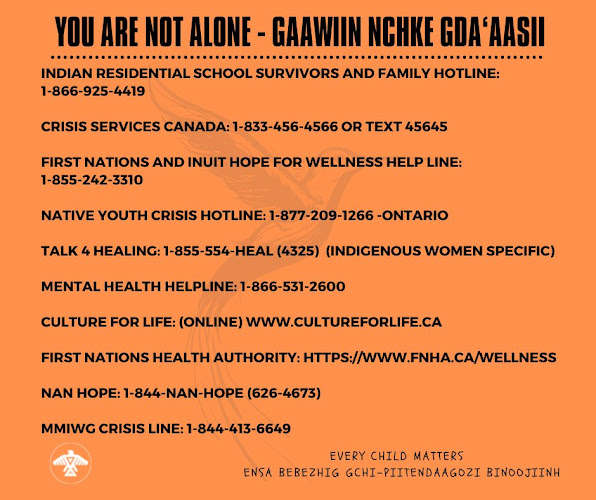
You are not alone
To Veronica Brown
Veronica, we adult adoptees are thinking of you today and every day. We will be here when you need us. Your journey in the adopted life has begun, nothing can revoke that now, the damage cannot be undone. Be courageous, you have what no adoptee before you has had; a strong group of adult adoptees who know your story, who are behind you and will always be so.
Diane Tells His Name
click photo
Lost Birds on Al Jazeera Fault Lines
click to read and listen about Trace, Diane, Julie and Suzie
NO MORE STOLEN SISTERS
click image
We conclude this series & continue the conversation by naming that adoption is genocide. This naming refers to the process of genocide that breaks kinship ties through adoption & other forms of family separation & policing 🧵#NAAM2022#AdoptionIsTraumaAND#AdopteeTwitter#FFY 1/6 pic.twitter.com/46v0mWISZ1
As the single largest unregulated industry in the United States, adoption is viewed as a benevolent action that results in the formation of “forever families.” The truth is that it is a very lucrative business with a known sales pitch. With profits last estimated at over $1.44 billion dollars a year, mothers who consider adoption for their babies need to be very aware that all of this promotion clouds the facts and only though independent research can they get an accurate account of what life might be like for both them and their child after signing the adoption paperwork.












 Posts
Posts

