They Took Us Away

They Took Us Away
click image to see more and read more

it's free

click

How to Use this Blog

BOOZHOO! We've amassed tons of information and important history on this blog since 2010. If you have a keyword, use the search box below. Also check out the reference section above. If you have a question or need help searching, use the contact form at the bottom of the blog.


We want you to use BOOKSHOP to buy books! (the editor will earn a small amount of money or commission. (we thank you) (that is our disclaimer statement)

This is a blog. It is not a peer-reviewed journal, not a sponsored publication... WE DO NOT HAVE ADS or earn MONEY from this website. The ideas, news and thoughts posted are sourced… or written by the editor or contributors.

EMAIL ME: tracelara@pm.me (outlook email is gone) THANK YOU CHI MEGWETCH!

SEARCH

Saturday, May 16, 2026

Still Here: Native American Resilience in New England

2026 marks a milestone in America’s history – 250 years since the signing of the Declaration of Independence. Our founding document put forward aspirations that have shaped America and inspired the world. But the Declaration may surprise you. It calls the Native peoples of America “merciless Indian Savages.”

For generations, stories of Native America have been kept separate and apart from the American story.

Take a fresh look at the history of our region — and hear today’s Indigenous voices. It’s part of Still Here: Native American Resilience in New England — a special series from Connecticut Public, featuring radio storytelling, in-depth videos, digital stories, pictures and a community conversation.

👉

VIDEO:  https://www.ctpublic.org/still-here-native-american-resilience-in-new-england 

Chapter 1: An enduring spiritual connection to the land

In the several hundred years since the arrival of Europeans to New England, known as "Dawnland" to its original inhabitants, Native peoples have been forced to live on a small fraction of their ancestral homelands.
Mark Mirko / Connecticut Public
In the several hundred years since the arrival of Europeans to New England, known as "Dawnland" to its original inhabitants, Native peoples have been forced to live on a small fraction of their ancestral homelands.

For more than 10,000 years before Europeans arrived, the Northeast was home to many tribes with organized leadership and governance; it was among the most prosperous parts of North America. A connection with the land endures – and you care for it like it’s a member of the family.

Watch, listen and read the story


Chapter 2: The hidden history of Indigenous slavery

This image — a portrait of the late Jacob Minors of St. David's Island — helped reconnect Indigenous peoples in Bermuda and New England. It appears in "Memorials of the discovery and early settlement of the Bermudas or Somers Islands, 1515-1685," with the caption, "A native Bermudian of strongly marked Indian features; reputed to be of Indian descent, and probably descended from one of the Pequod captives. He died 1875, aged 84."
Sir John Henry Lefroy / Cornell University Library
This image — a portrait of Jacob Minors of St. David's Island — helped reconnect Indigenous peoples in Bermuda and New England. Its caption contained a clue: "Reputed to be of Indian descent, and probably descended from one of the Pequod captives."

It's a surprising and overlooked story, a blind spot in the narrative of early America: the hidden history of Indigenous slavery. As colonial powers took over Native land, white settlers were enslaving Native people. Some worked in New England. Others were kidnapped and shipped to an isolated tropical island. For generations, a lost tribe in Bermuda wondered about its past. Centuries later, they’ve reconnected with family – in New England.

Watch, listen and read the story


Chapter 3: ‘An unsung hero:’ A runner puts his tribe on the map

Ellison "Tarzan" Brown's victory at the 1939 Boston Marathon is seen as a turning point in the visibility and official recognition of New England's Native people.
Courtesy of the Boston Public Library Leslie Jones Collection
Ellison "Tarzan" Brown's victory at the 1939 Boston Marathon is seen as a turning point in the visibility and recognition of New England's Native people.

In the 1930s, runner Tarzan Brown twice won the Boston Marathon – and carried the Narragansett tribe’s name out of obscurity and onto a global stage. “He was like an unsung hero for a long time,” his granddaughter says. “It’s just good to see him get the recognition he deserves.”

Watch, listen and read the story


Chapter 4: A reverence for water, celebrated with music

Jeremy Dutcher and Yo-Yo Ma greet the dawn with a song and music from We Are Water at the bank of Kwenitekw (the Connecticut River).
Katie Lenhart / Dartmouth University
Jeremy Dutcher and Yo-Yo Ma greet the dawn with a song and music from We Are Water at the bank of Kwenitekw (the Connecticut River).

A Connecticut singer is taking Native art and culture to new places. He invited Indigenous musicians – as well as one of the world’s most famous cello players – to perform at sunrise on the banks of the Connecticut River. The performance highlights Native peoples’ deep connection to nature and water.

Watch, listen and read the story


Chapter 5: The cultural power of a powwow

Mark Mirko/Connecticut Public
Visitors to the 2025 Schemitzun, one of the largest powwows in the Northeast and hosted by the Mashantucket Pequot Tribal Nation

As Native communities face continued challenges to their overall well-being, many find strength in cultural heritage and tradition. Powwow gatherings are a chance to reconnect with family, culture and values.

Watch, listen and read the story


Subscribe to the limited series podcast now.


No comments:

Post a Comment

Please: Share your reaction, your thoughts, and your opinions. Be passionate, be unapologetic. Offensive remarks will not be published. We are getting more and more spam. Comments will be monitored.
Use the comment form at the bottom of this website which is private and sent direct to Trace.


Happy Visitors!

WRITTEN BY HUMANS!

WRITTEN BY HUMANS!

Blog Archive

Featured Post

Your History Class Was a F*cking Lie | #NOMOAR

  Your History Class Was a F*cking Lie by Sean Sherman (Or: How the American Educational System Has Always Been a Racist Propaganda Program...


Native Circles

Native Circles
click logo for podcasts!

Most READ Posts

Bookshop

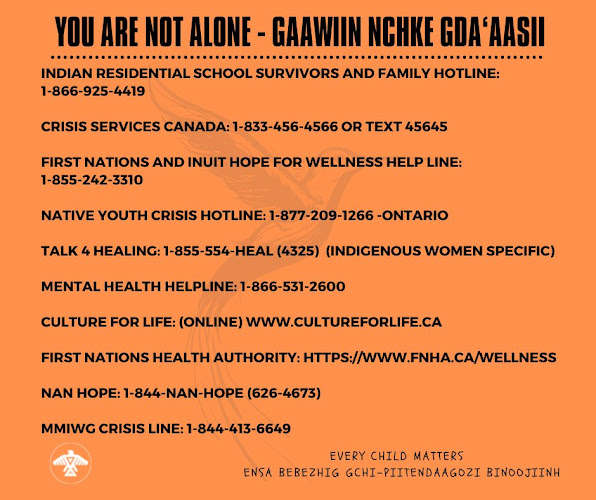
You are not alone

You are not alone

To Veronica Brown

Veronica, we adult adoptees are thinking of you today and every day. We will be here when you need us. Your journey in the adopted life has begun, nothing can revoke that now, the damage cannot be undone. Be courageous, you have what no adoptee before you has had; a strong group of adult adoptees who know your story, who are behind you and will always be so.

Diane Tells His Name


click photo

Lost Birds on Al Jazeera Fault Lines

Lost Birds on Al Jazeera Fault Lines
click to read and listen about Trace, Diane, Julie and Suzie

NO MORE STOLEN SISTERS

NO MORE STOLEN SISTERS
click image

ADOPTION TRUTH

As the single largest unregulated industry in the United States, adoption is viewed as a benevolent action that results in the formation of “forever families.”
The truth is that it is a very lucrative business with a known sales pitch. With profits last estimated at over $1.44 billion dollars a year, mothers who consider adoption for their babies need to be very aware that all of this promotion clouds the facts and only though independent research can they get an accurate account of what life might be like for both them and their child after signing the adoption paperwork.

Original Birth Certificate Map in the USA

Google Followers